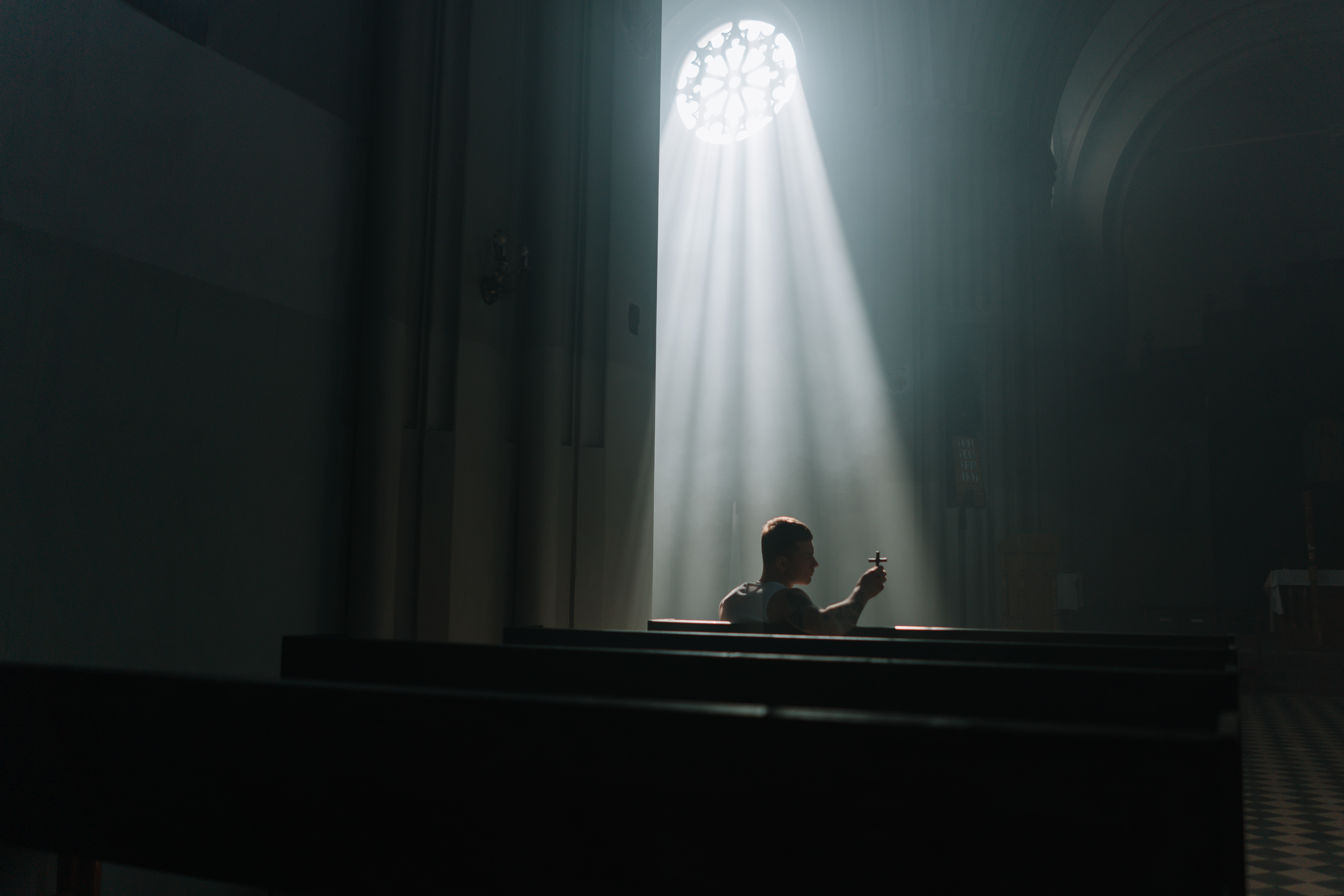
Every person’s life is a journey. We start out as babies and grow into our true selves. And if we’re honest with ourselves, we realize that our “selves” aren’t really ours, they belong to God. The question is, do we want ourselves to unite with God when our time on Earth is over, or do we spend our lives trying to keep our true selves to ourselves?
In today’s Gospel, Luke tells us Jesus’ parable of the Pharisee and the tax collector. The interesting thing is both men know their true selves, and they both speak it in their prayers. The Pharisee says he is not greedy, dishonest or adulterous. He fasts and pays his tithes. His examination of conscience determines he does what he is supposed to do.
The tax collector, on the other hand, prays simply that he is a sinner and begs for God’s mercy. He keeps his distance and cannot look up to heaven, in his shame and sorrow. He beats his breast, not from pride but from remorse. He prays, “O God, be merciful to me a sinner.”
The contrast between the two is obvious. The Pharisee takes his position, which would lead one to believe he has earned an assigned spot. Then Jesus says something that I believe is very deliberate: The Pharisee “spoke this prayer to himself.” Jesus did not say he prayed to God. The Pharisee spoke the prayer to himself. And suddenly we know that Jesus is speaking directly to us. Do we pray? Or do we pray to God?
Take as an example the Our Father, the prayer that Jesus taught us. We learn it at a young age, and we pray it often. But all too often I ask myself — or, probably more accurately, the Holy Spirit gives me a poke — am I praying these beautiful, meaningful words from our Lord, or am I just reciting them because I know the words by heart? God have mercy on me!
In our First Reading, Hosea might be talking to Ephraim and Judah, but he’s speaking to me: “Your piety is like a morning cloud, like the dew that early passes away”. I have every intention of being holy, but as the day wears on, that holiness burns off, not because of what happens during the day, but because of my reaction to it. When there is conflict or criticism or distress, I can choose the holy path, but do I? O God, be merciful to me, a sinner.
As we continue our Lenten journey, we must remain diligent. We try to deny things from our lives in a spirit of repentance, but that can’t be the whole story. God desires love, not sacrifice. So if we’re giving things up to free our hearts of them, we need to fill our hearts with something else, and that is love. Then, the sacrifice has meaning and worth, because a heart has changed.
Our faith, of course, is a big part of life’s journey. Communion with God is a process. The goal, the destination, is obviously to be with God in heaven, but so often we stray from the proper path. What better time and place to start over, to recommit our faith to being with God, than right here and right now? Jesus Christ, son of the living God, have mercy on me, a sinner.
La vida de cada persona es un camino. Comenzamos como bebés y crecemos hasta convertirnos en nuestro verdadero ser. Y si somos honestos con nosotros mismos, nos damos cuenta de que nuestro “yo” no es realmente nuestro, sino le pertenece a Dios. La pregunta es, ¿queremos unirnos con Dios cuando termine nuestro tiempo en la Tierra, o nos pasamos la vida tratando de mantener nuestro verdadero ser para nosotros mismos?
En el Evangelio de hoy, Lucas nos cuenta la parábola de Jesús sobre el fariseo y el recaudador de impuestos. Lo interesante es que ambos hombres se conocen a sí mismos y ambos lo expresan en sus oraciones. El fariseo dice que no es codicioso, deshonesto ni adúltero. Ayuna y paga el diezmo. Su examen de conciencia determina que hace lo que se supone que debe hacer.
El recaudador de impuestos, por otro lado, reza simplemente porque es un pecador y suplica la misericordia de Dios. Mantiene su distancia y no puede mirar hacia el cielo, en su vergüenza y dolor. Se golpea el pecho, no por orgullo sino por remordimiento. Reza diciendo: “Dios mío, apiádate de mí, que soy un pecador”.
El contraste entre los dos es obvio. El fariseo toma su posición y lo hace creer que se ha ganado un lugar asignado. Entonces Jesús dice algo que creo que es muy deliberado: el fariseo “oraba así en su interior”. Jesús no dijo que oraba a Dios. El fariseo pronunció la oración para sí mismo. Y de repente sabemos que Jesús nos está hablando directamente. ¿Oramos? ¿O rezamos a Dios?
Tomemos como ejemplo el Padre Nuestro, la oración que Jesús nos enseñó. Lo aprendemos a una edad temprana y lo rezamos a menudo. Pero con demasiada frecuencia me pregunto, o, probablemente más exactamente, el Espíritu Santo me da un empujón: ¿estoy orando estas hermosas y significativas palabras de nuestro Señor, o simplemente las estoy recitando porque me las sé de memoria? ¡Dios ten piedad de mí!
En nuestra Primera Lectura, Oseas podría estar hablando con Efraín y Judá, pero me está hablando a mí también: “Su amor es nube mañanera, es rocío matinal que se evapora”. Tengo toda la intención de ser santo, pero a medida que avanza el día, esa santidad se consume, no por lo que sucede durante el día, sino por mi reacción ante ello. Cuando hay conflicto, crítica o angustia, puedo elegir el camino sagrado, pero ¿lo hago? Oh Dios, ten piedad de mí, pecador.
A medida que continuamos nuestro camino de Cuaresma, debemos permanecer diligentes. Tratamos de negar cosas de nuestra vida con un espíritu de arrepentimiento, pero esa no puede ser toda la historia. Dios desea el amor, no el sacrificio. Entonces, si estamos renunciando a cosas para liberar nuestro corazón de ellas, necesitamos llenar nuestro corazón con algo más, y eso es el amor. Solo así el sacrificio tendrá sentido y valor, porque un corazón ha cambiado.
Nuestra fe, por supuesto, es una gran parte del camino de la vida. La comunión con Dios es un proceso. La meta, el destino, obviamente es estar con Dios en el cielo, pero muy a menudo nos desviamos del camino correcto. ¿Qué mejor momento y lugar para comenzar de nuevo, para volver a comprometer nuestra fe para estar con Dios, que aquí y ahora? Jesucristo, hijo del Dios vivo, ten piedad de mí, que soy pecador.
 Mike Karpus is a regular guy. He grew up in Michigan’s Upper Peninsula, graduated from Michigan State University and works as an editor. He is married to a Catholic school principal, raised two daughters who became Catholic school teachers at points in their careers, and now relishes his two grandchildren, including the older one who is fascinated with learning about his faith. He also has served on a Catholic school board, a pastoral council and a parish stewardship committee. He currently is a lector at Mass, a Knight of Columbus, Adult Faith Formation Committee member and a board member of the local Habitat for Humanity organization. But mostly he’s a regular guy.
Feature Image Credit: cottonbro studio, https://www.pexels.com/photo/man-sitting-on-a-pew-holding-a-cross-9588244/

 Christine Hanus currently lives in Upstate, NY. Though she enjoys writing and her work as a catechist, Christine is primarily a wife, mother, and more recently, grandmother!
 David Dashiell is a freelance author and editor in Nashville, Tennessee. He has a master’s degree in theology from Franciscan University, and is the editor of the anthology
 Emily Jaminet is a Catholic author, speaker, radio personality, wife, and mother of seven children. She earned a bachelor’s degree in mental health and human services from the Franciscan University of Steubenville. She is the co-founder of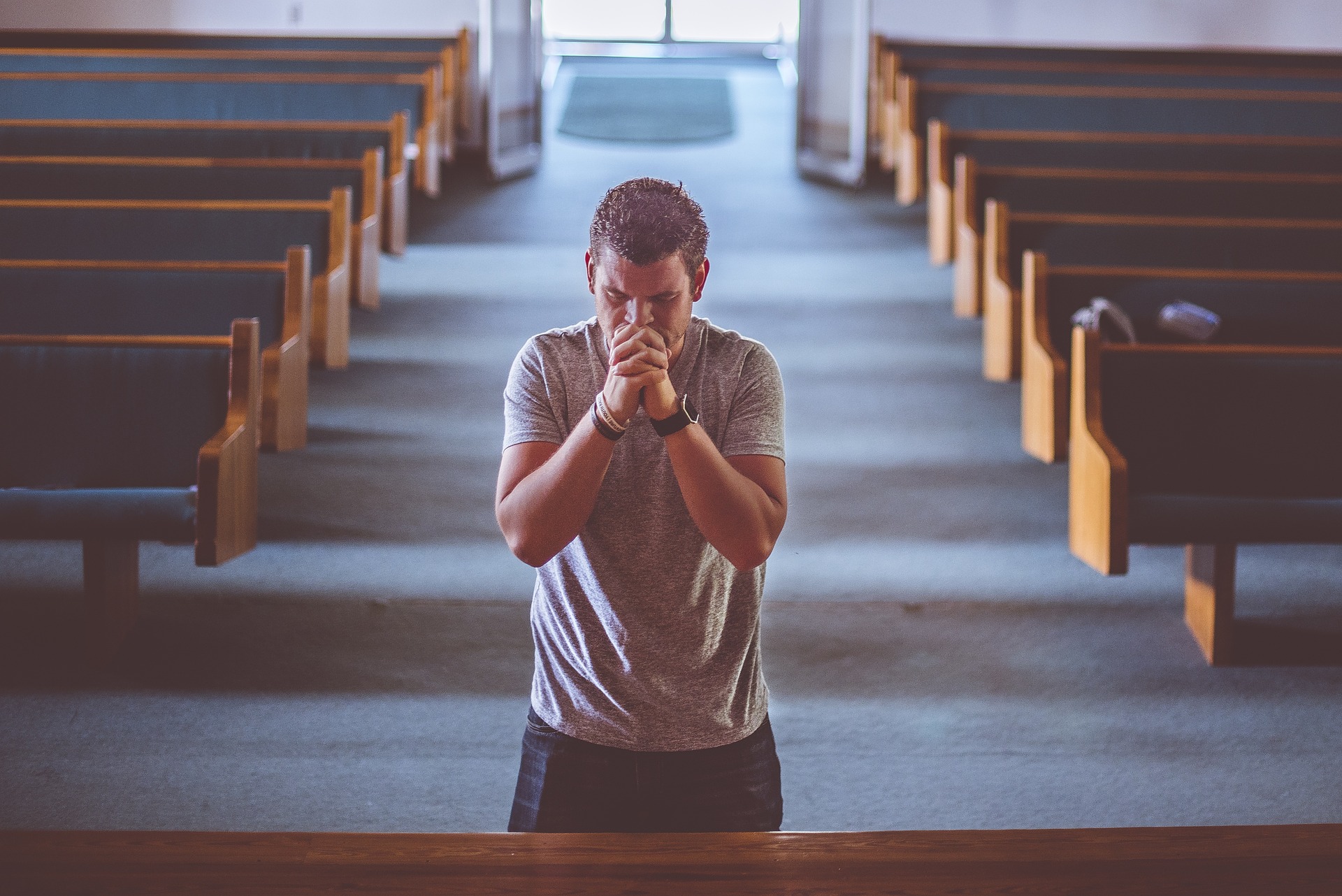
 J.M. Pallas has had a lifelong love of Scriptures. When she is not busy with her vocation as a wife and mother to her “1 Samuel 1” son, or her vocation as a public health educator, you may find her at her parish women’s bible study, affectionately known as “The Bible Chicks.”
 Dr. Alexis Dallara-Marsh is a board-certified neurologist who practices in Bergen County, NJ. She is a wife to her best friend, Akeem, and a mother of two little ones on Earth and two others in heaven above.
 Kate Taliaferro is an Air Force wife and mother. She is blessed to be able to homeschool, bake bread and fold endless piles of laundry. When not planning a school day, writing a blog post or cooking pasta, Kate can be found curled up with a book or working with some kind of fiber craft. Kate blogs at
 Tami Urcia grew up in Western Michigan, a middle child in a large Catholic family. She spent early young adulthood as a missionary in Mexico, studying theology and philosophy, then worked and traveled extensively before finishing her Bachelor’s Degree in Western Kentucky. She loves tackling projects, finding fun ways to keep her little ones occupied, quiet conversation with the hubby and finding unique ways to love. She works at for Christian Healthcare Centers, is a guest blogger on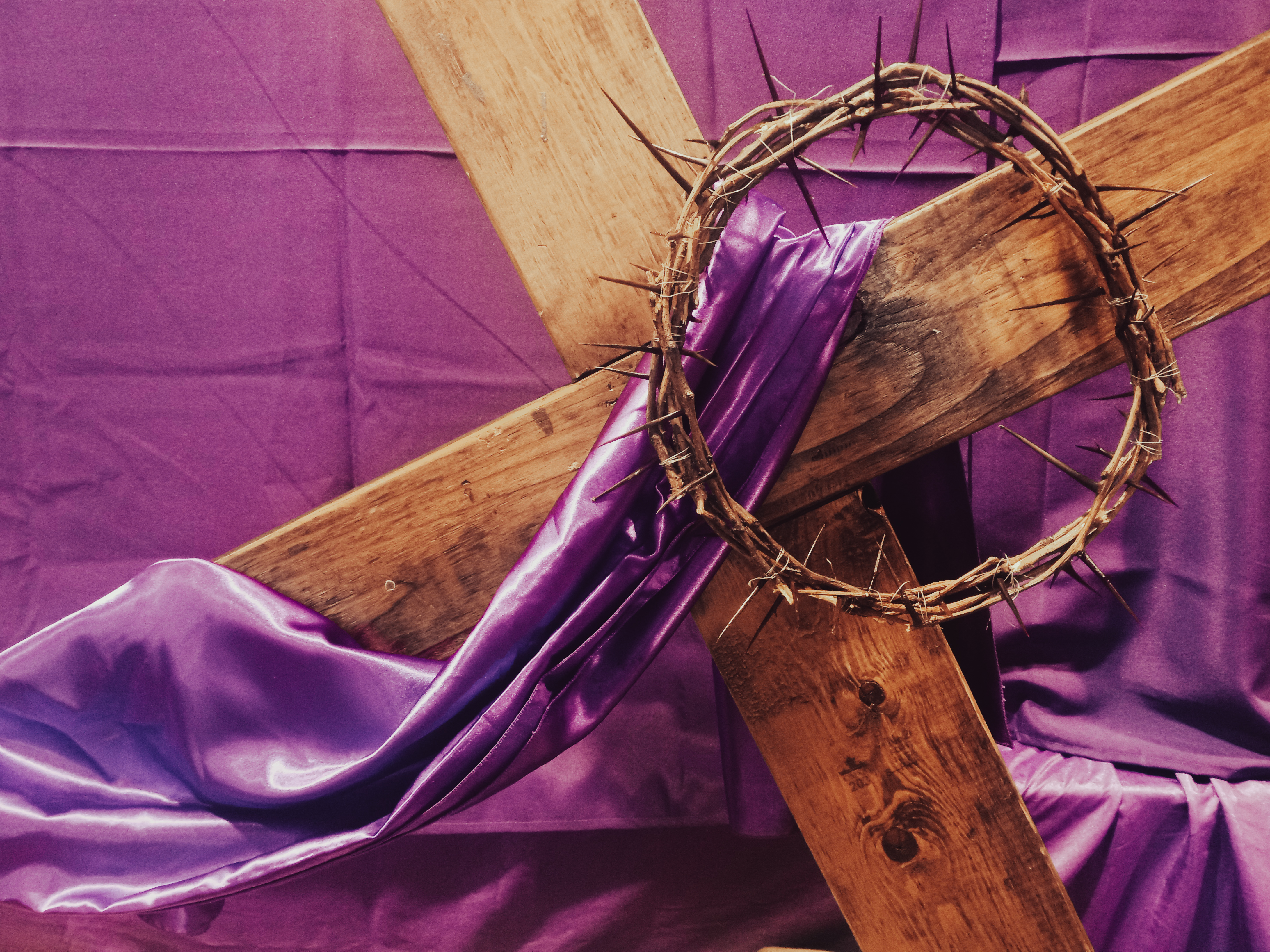
 Kathryn Mulderink, MA, is married to Robert, Station Manager for Holy Family Radio. Together they have seven children (including Father Rob), and seven grandchildren. She is President of the local community of Secular Discalced Carmelites and has published five books and many articles. Over the last 30 years, she has worked as a teacher, headmistress, catechist, Pastoral Associate, and DRE, and as a writer and voice talent for Catholic Radio. Currently, she serves the Church by writing and speaking, and by collaborating with various parishes and to lead others to encounter Christ and engage their faith. Her website is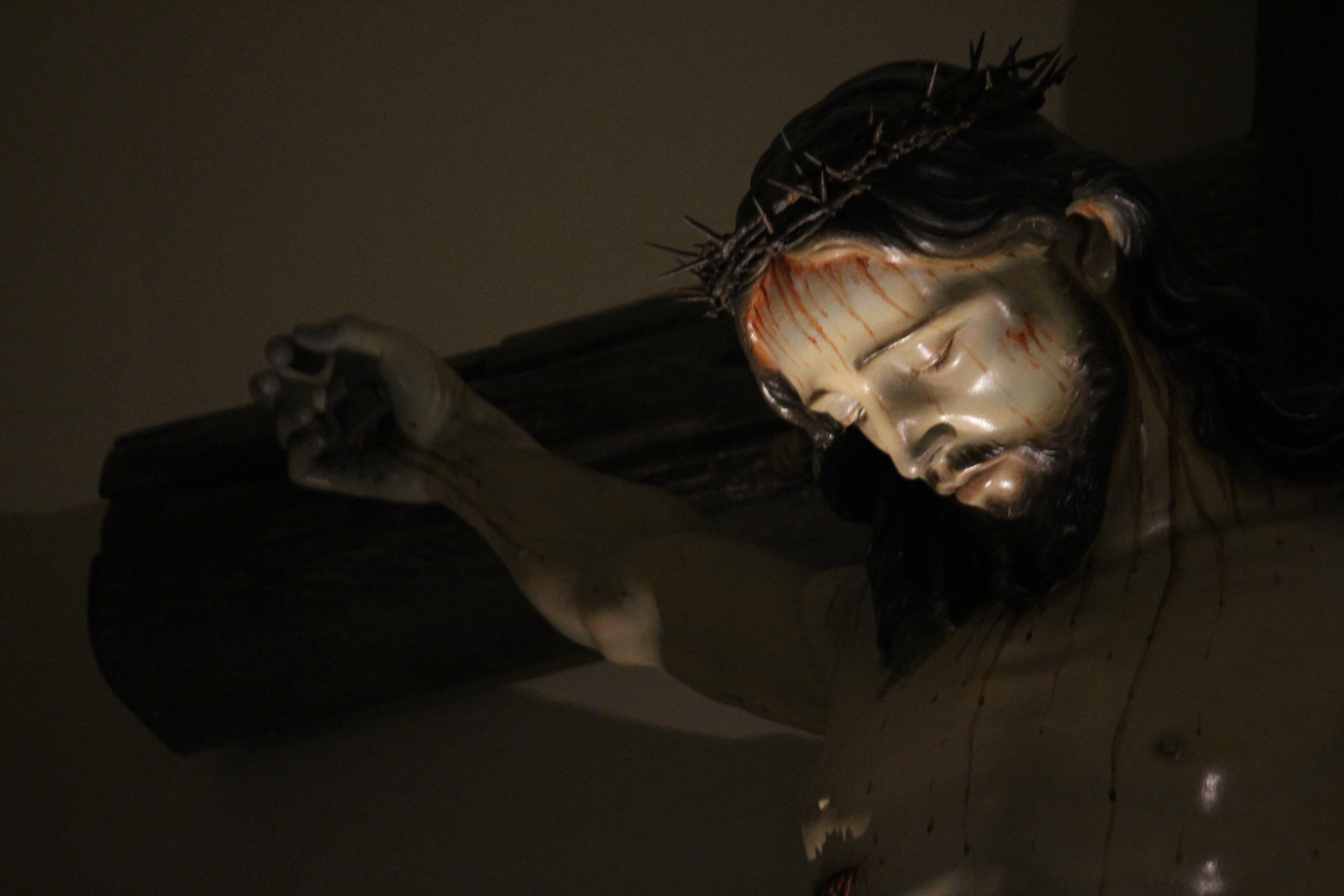
 Susan Ciancio has a BA in psychology and a BA in sociology from the University of Notre Dame, with an MA in liberal studies from Indiana University. For the past 19 years, she has worked as a professional editor and writer, editing both fiction and nonfiction books, magazine articles, blogs, educational lessons, professional materials and website content. Thirteen of those years have been in the pro-life sector. Currently Susan freelances and writes weekly for HLI, edits for American Life League, and is the executive editor of Celebrate Life Magazine. She also serves as executive editor for the Culture of Life Studies Program—an educational nonprofit program for K-12 students. You can reach her at

 1-800-994-9817