From my toddler days to my teens, I spent Fridays at my maternal grandparents’ house. An early reader, I was always scrounging for material – my grandmother’s collection of Reader’s Digests and Ladies’ Home Journals, my grandfather’s stockpile of Time and Newsweek, books left by my mother and her sister when they grew up and moved away.
The supply was limited, so I read my favorites over and over. I was very fond of a multi-volume illustrated series of excerpts from the Bible. I spent most of my time on Old Testament stories and I can still see many of the pictures in my mind’s eye.
In the stories of Adam and Eve, Cain and Abel, Noah, Abraham, Esau and Jacob, Moses and others, God was always talking to His people. Right out loud! I was fascinated. Why did God talk to them? I wondered. When did He stop talking to people? And especially, why couldn’t He talk to me like that? I imagined that if I prayed hard and if I was good enough, maybe, I too, would hear God’s voice.
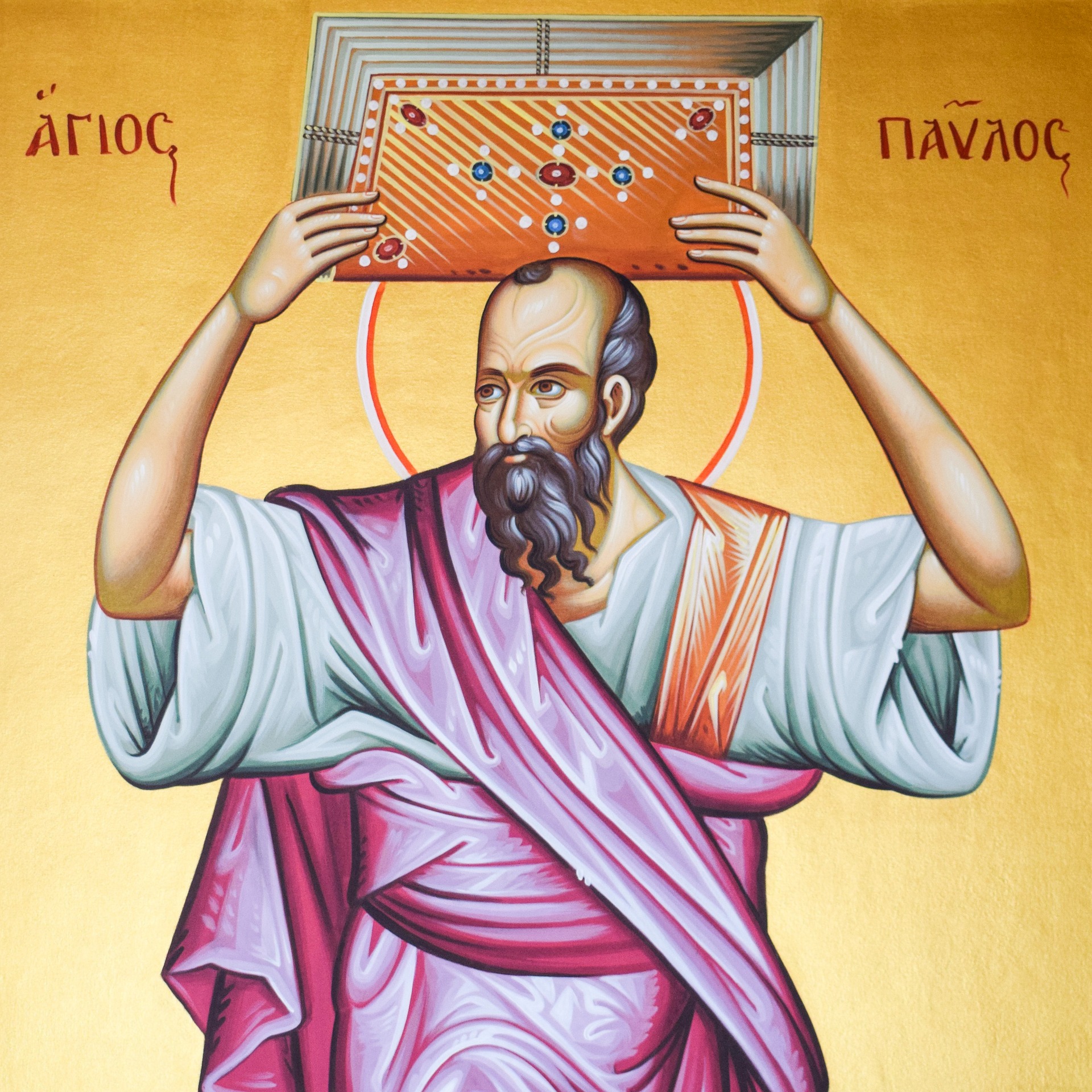
Eventually I realized that God still speaks to us today, even if we cannot hear Him with our ears, but I still thrill to stories like today’s reading from the Acts of the Apostles The conversion of Saul to Paul, from a man “breathing murderous threats” against Christians to God’s “chosen instrument . . . [to carry His name] before Gentiles, kings, and children of Israel” is powerful. With his own righteousness and zeal for persecuting Christians figuratively blinding Saul to the truth of the Way, it takes a flash of light, the voice of Jesus, and an attack of literal blindness to transform the Road to Damascus to the path God had planned for him.
Three days later, mirroring Jesus’ time in the tomb, Saul is reborn through baptism after Ananias (who had his own charge from the Lord) laid his hands upon him. Scales fall from his eyes and his blindness ends. He can see the world around him, and he can see the Truth. He is filled with the Holy Spirit and soon begins to “go out to all the world and tell the Good News.”
Paul became a great Apostle even though he never saw Jesus. And neither have we.
We have never seen Jesus, and we do not hear His actual voice. We have to listen hard for that still, small voice in our hearts. We have to discern what God is telling us through Scripture, the Sacraments, prayer, events, and the people around us. Our Damascus Road moments will look different from Saul’s, but if we listen we will have them just the same – moments when we know exactly what we are meant to do, when, guided by the promptings of the Holy Spirit, we are called to make radical change in our lives.
Desde mi niñez hasta mi adolescencia, pasé los viernes en la casa de mis abuelos maternos. Como lector precoz, siempre buscaba que cosa leer: la colección de revistas de mis abuelos o los libros que dejaron mi madre y su hermana cuando ya eran grandes y salieron de la casa.
Era limitado lo que encontraba, así que leí mis favoritos una y otra vez. Me gustaba mucho una serie ilustrada de varios volúmenes de extractos de la Biblia. Pasé la mayor parte de mi tiempo en las historias del Antiguo Testamento y todavía puedo ver muchas de las imágenes en mi mente.
En las historias de Adán y Eva, Caín y Abel, Noé, Abrahán, Esaú y Jacob, Moisés y otros, Dios siempre estaba hablando con Su pueblo. ¡En voz alta! Eso me fascinaba. Me preguntaba por qué Dios les habló y cuándo dejó de hablar con la gente y sobre todo, por qué no podía hablarme así. Imaginé que si rezaba mucho y si era muy buena, tal vez yo también escucharía la voz de Dios.
Eventualmente me di cuenta de que Dios todavía nos habla hoy, incluso si no podemos escucharlo con nuestros oídos, pero todavía me emociono con historias como la lectura de hoy de los Hechos de los Apóstoles. La conversión de Saulo a Pablo, de un hombre que “amenazando todavía de muerte” contra los cristianos al “escogido como instrumento, para que me dé a conocer a las naciones, a los reyes y a los hijos de Israel” es poderoso. Con su propia rectitud y celo por perseguir a los cristianos cegando figurativamente a Saulo a la verdad del Camino, se necesita un destello de luz, la voz de Jesús y un ataque de ceguera literal para transformar el camino a Damasco en el camino que Dios había planeado para él.
Tres días después, reflejando el tiempo que Jesús estaba en la tumba, Saulo renació a través del bautismo después de que Ananías le impuso las manos. Las escamas cayeron de sus ojos y ya no estaba ciego. Puede ver el mundo que lo rodea y puede ver la Verdad. Está lleno del Espíritu Santo y pronto comienza a “ir por todo el mundo y proclamar la Buena Nueva”.
Pablo se convirtió en un gran Apóstol aunque nunca vio a Jesús. Y nosotros tampoco.
Nunca hemos visto a Jesús, y no escuchamos Su voz de modo audible. Tenemos que escuchar atentamente esa voz apacible y pequeña dentro de nuestros corazones. Tenemos que discernir lo que Dios nos está diciendo a través de las Escrituras, los Sacramentos, la oración, los eventos y las personas que nos rodean. Nuestros momentos en el camino de Damasco se verán diferentes a los de Saulo, pero si escuchamos, los tendremos de la misma manera: momentos en los que sabemos exactamente lo que debemos hacer, en los que, guiados por la inspiración del Espíritu Santo, somos llamados a hacer cambio radical en nuestras vidas.
 Leslie Sholly is a Catholic, Southern wife and mother of five, living in her hometown, Knoxville, Tennessee. She graduated from Georgetown University with an English major and Theology minor. She blogs at Life in Every Limb, where for 11 years she has covered all kinds of topics, more recently focusing on the intersection of faith, politics, and social justice.
Feature Image Credit: dimitrisvetsikas1969, pixabay.com/illustrations/st-paul-saint-iconography-painting-2176669/

 Deacon Dan Schneider is a retired general manager of industrial distributors. He and his wife Vicki have been married for over 50 years. They are the parents of eight children and thirty grandchildren. He has a degree in Family Life Education from Spring Arbor University. He was ordained a Permanent Deacon in 2002. He has a passion for working with engaged and married couples and his main ministry has been preparing couples for marriage.
 Kathryn Mulderink, MA, is married to Robert, Station Manager for Holy Family Radio. Together they have seven children (including Father Rob), and seven grandchildren. She is President of the local community of Secular Discalced Carmelites and has published five books and many articles. Over the last 30 years, she has worked as a teacher, headmistress, catechist, Pastoral Associate, and DRE, and as a writer and voice talent for Catholic Radio. Currently, she serves the Church by writing and speaking, and by collaborating with various parishes and to lead others to encounter Christ and engage their faith. Her website is
 Tami Urcia grew up in Western Michigan, a middle child in a large Catholic family. She spent early young adulthood as a missionary in Mexico, studying theology and philosophy, then worked and traveled extensively before finishing her Bachelor’s Degree in Western Kentucky. She loves tackling projects, finding fun ways to keep her little ones occupied, quiet conversation with the hubby and finding unique ways to love. She works at for Christian Healthcare Centers, is a guest blogger on
 Allison Gingras (
 David Dashiell is a freelance author and editor in Nashville, Tennessee. He has a master’s degree in theology from Franciscan University, and is the editor of the anthology
 Sheryl is happy to be the number 1 cheerleader and supporter for her husband, Tom who is a candidate for the Permanent Diaconate in the Diocese of Kalamazoo. They are so grateful for the opportunity to grow together in this process. Sheryl’s day job is serving her community as the principal for St. Therese Catholic School in Wayland, Michigan. Since every time she thinks she gets life all figured out, she realizes just how far she has to go, St. Rita of Cascia is her go-to Saint for intercession and help. Home includes Carlyn, a very, very goofy Golden Retriever and Lucy, our not-so-little rescue puppy.
 Christine Hanus currently lives in Upstate, NY. Though she enjoys writing and her work as a catechist, Christine is primarily a wife, mother, and more recently, grandmother!
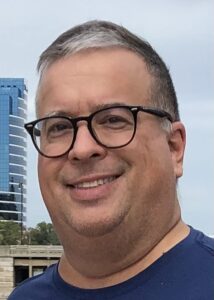 Mike Karpus is a regular guy. He grew up in Michigan’s Upper Peninsula, graduated from Michigan State University and works as an editor. He is married to a Catholic school principal, raised two daughters who became Catholic school teachers at points in their careers, and now relishes his two grandchildren, including the older one who is fascinated with learning about his faith. He also has served on a Catholic school board, a pastoral council and a parish stewardship committee. He currently is a lector at Mass, a Knight of Columbus, Adult Faith Formation Committee member and a board member of the local Habitat for Humanity organization. But mostly he’s a regular guy.
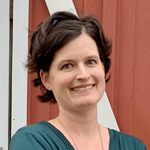 Kate Taliaferro is an Air Force wife and mother. She is blessed to be able to homeschool, bake bread and fold endless piles of laundry. When not planning a school day, writing a blog post or cooking pasta, Kate can be found curled up with a book or working with some kind of fiber craft. Kate blogs at
  1-800-994-9817