Easter: An Encounter that Changes Our Lives / La Pascua: Un encuentro que cambia nuestras vidas

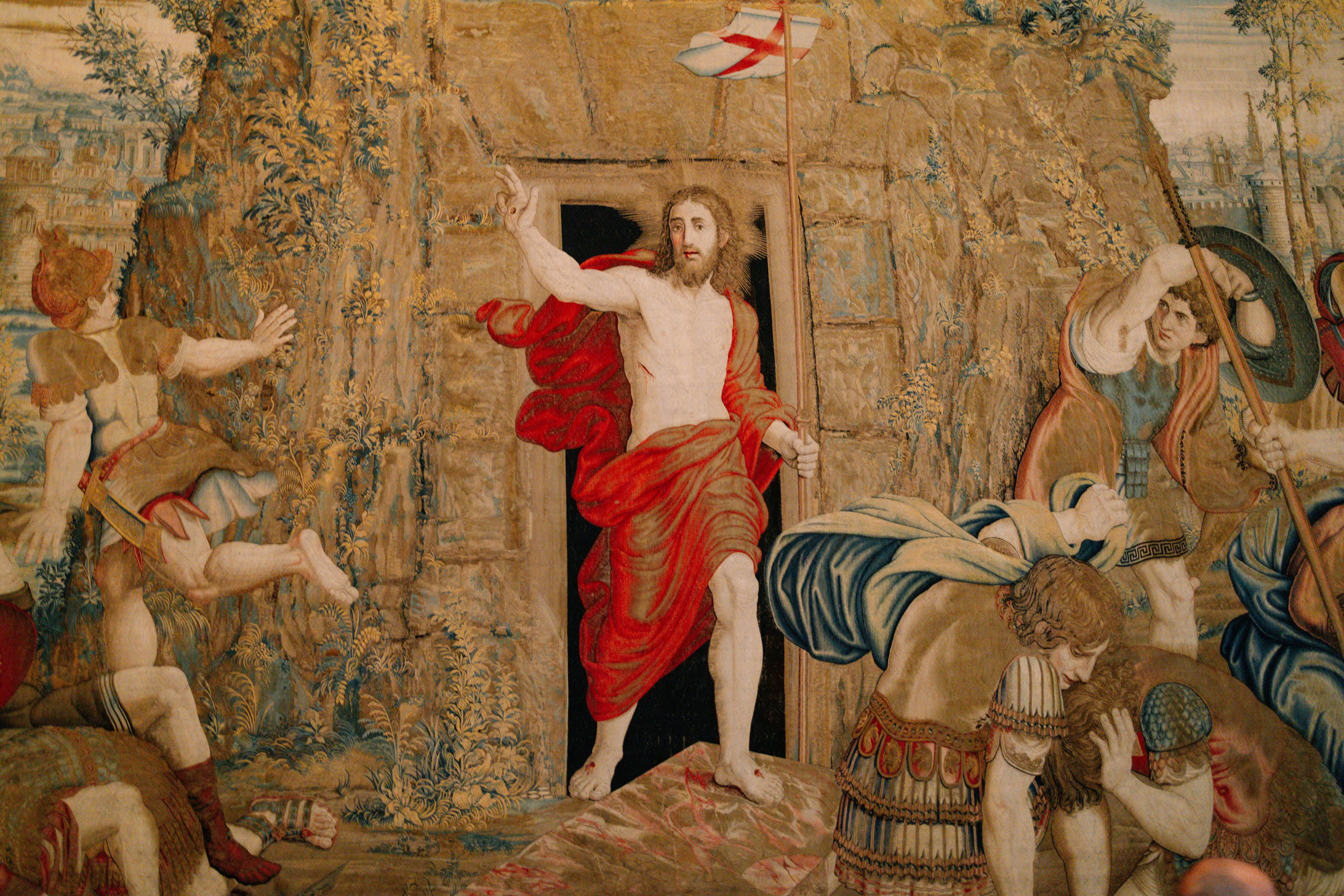
Mary Magdalene and the other Mary quietly set out to the place of their sorrow, where their Lord was laid in a tomb. What were the thoughts that swirled around in their hearts during the early hours after the Sabbath. Images of the Friday before, of Calvary, of the cold tomb, of the stone rolled between them and Jesus. They came to grieve, and yet, their desire to be near the Master they loved—and who so loved them—placed them at the heart of the greatest moment in history.

Suddenly the earth trembled. An angel of the Lord descended from heaven, rolling back the stone. Flashes of lightning lit up the inner shadows of their sadness, wiping away tears and memories and fear-filled anticipation, replacing it with the face of an angel. As they ran with hearts racing—carrying both fear and joy—Jesus Himself met them. He met them on the road, right where they were. And He repeated the words the angel had said moments before: “Do not be afraid. Go…” He would be going ahead of them and would meet them in Galilee. 

On Easter in 2012, Benedict XVI declared : “Every Christian relives the experience of Mary Magdalene. It involves an encounter which changes our lives: the encounter with a unique Man who lets us experience all God’s goodness and truth, who frees us from evil not in a superficial and fleeting way, but sets us free radically, heals us completely and restores our dignity…Dear brothers and sisters! If Jesus is risen, then – and only then – has something truly new happened, something that changes the state of humanity and the world. Then he, Jesus, is someone in whom we can put absolute trust; we can put our trust not only in his message but in Jesus himself, for the Risen One does not belong to the past, but is present today, alive” (Urbi et Orbi Message, 4/8/2012).

Friend, in all your busyness, in your care for others, in your worry over the state of the world,
hear this: you also are standing right now at the greatest moment in history as the clap of victory and the trumpet of glory announce: The tomb is empty. And Jesus is already ahead of you.

You do not carry this day alone. You are not holding the world together by your effort.
You are not running toward an uncertain end—You are being met by the Risen One who has already gone ahead of you. So breathe. Let this be your resurrection morning, too.

Jesus, Risen One, let your joy rise in my heart at dawn. Let me be a quiet bearer of the truth every soul so longs to hear: The tomb is empty. Christ is alive and present today among us. All is made new. Alleluia.

Contact the author


María Magdalena y la otra María se dirigieron en silencio al lugar de su dolor, donde su Señor yacía en un sepulcro. ¿Qué pensamientos les rondaban en el corazón durante la madrugada después del Sabbat? Imágenes del viernes anterior, del Calvario, de la tumba fría, de la piedra que se interponía entre ellas y Jesús. Vinieron a llorar, y sin embargo, su deseo de estar cerca del Maestro que amaban —y que tanto las amaba— las colocó en el corazón del momento más grande de la historia.

De repente, la tierra tembló. Un ángel del Señor descendió del cielo, removiendo la piedra. Relámpagos iluminaron las sombras internas de su tristeza, enjugando lágrimas, recuerdos y la anticipación llena de miedo, reemplazándolas con el rostro de un ángel. Mientras corrían con el corazón acelerado, cargando con miedo y alegría, Jesús mismo las encontró. Las encontró en el camino, justo donde estaban. Y repitió las palabras que el ángel había dicho momentos antes: “No tengan miedo. Vayan…”. Él iría delante de ellos y se encontraría con ellos en Galilea.

En la Pascua de 2012, el Papa Benedicto XVI declaró: “Todo cristiano revive la experiencia de María Magdalena. Es un encuentro que cambia la vida: el encuentro con un hombre único, que nos hace sentir toda la bondad y la verdad de Dios, que nos libra del mal, no de un modo superficial, momentáneo, sino que nos libra de él radicalmente, nos cura completamente y nos devuelve nuestra dignidadQueridos hermanos y hermanas: si Jesús ha resucitado, entonces –y sólo entonces– ha ocurrido algo realmente nuevo, que cambia la condición del hombre y del mundo. Entonces Él, Jesús, es alguien del que podemos fiarnos de modo absoluto, y no solamente confiar en su mensaje, sino precisamente en Él, porque el resucitado no pertenece al pasado, sino que está presente hoy, vivo” (Mensaje Urbi et Orbi, 4/8/2012). 

Amigo, en medio de tus ocupaciones, en tu cuidado de los demás, en tu preocupación por el estado del mundo, escucha esto: tú también te encuentras ahora mismo en el momento más grande de la historia, mientras el aplauso de la victoria y la trompeta de gloria anuncian: La tumba está vacía. Y Jesús ya está delante de ti.

No llevas este día solo. No estás sosteniendo el mundo con tu esfuerzo. No corres hacia un final incierto; te estás encontrando con el Resucitado que ya se ha adelantado. Así que respira. Que esta sea también tu mañana de resurrección.

Jesús, Resucitado, que tu alegría aflore en mi corazón al amanecer. Permíteme ser un portador silencioso de la verdad que toda alma anhela escuchar: La tumba está vacía. Cristo está vivo y presente hoy entre nosotros. Todo es nuevo. Aleluya.

Comunicarse con la autora

Sr. Kathryn J. Hermes

Sr. Kathryn James Hermes, FSP, is an author and offers online evangelization as well as spiritual formation for people on their journey of spiritual transformation and inner healing. Website: www.touchingthesunrise.com My Books: https://touchingthesunrise.com/books/
Public Facebook Group: https://www.facebook.com/groups/srkathrynhermes/ HeartWork Spiritual Formation Group: https://touchingthesunrise.com/heartwork/

Feature Image Credit: Josh Withers, pexels.com/photo/the-resurrection-of-christ-painting-in-tapestry-gallery-vatican-city-27063870/

The views and opinions expressed in the Inspiration Daily blog are solely those of the original authors and contributors. These views and opinions do not necessarily represent those of Diocesan, the Diocesan staff, or other contributors to this blog.
Good Friday / Viernes Santo

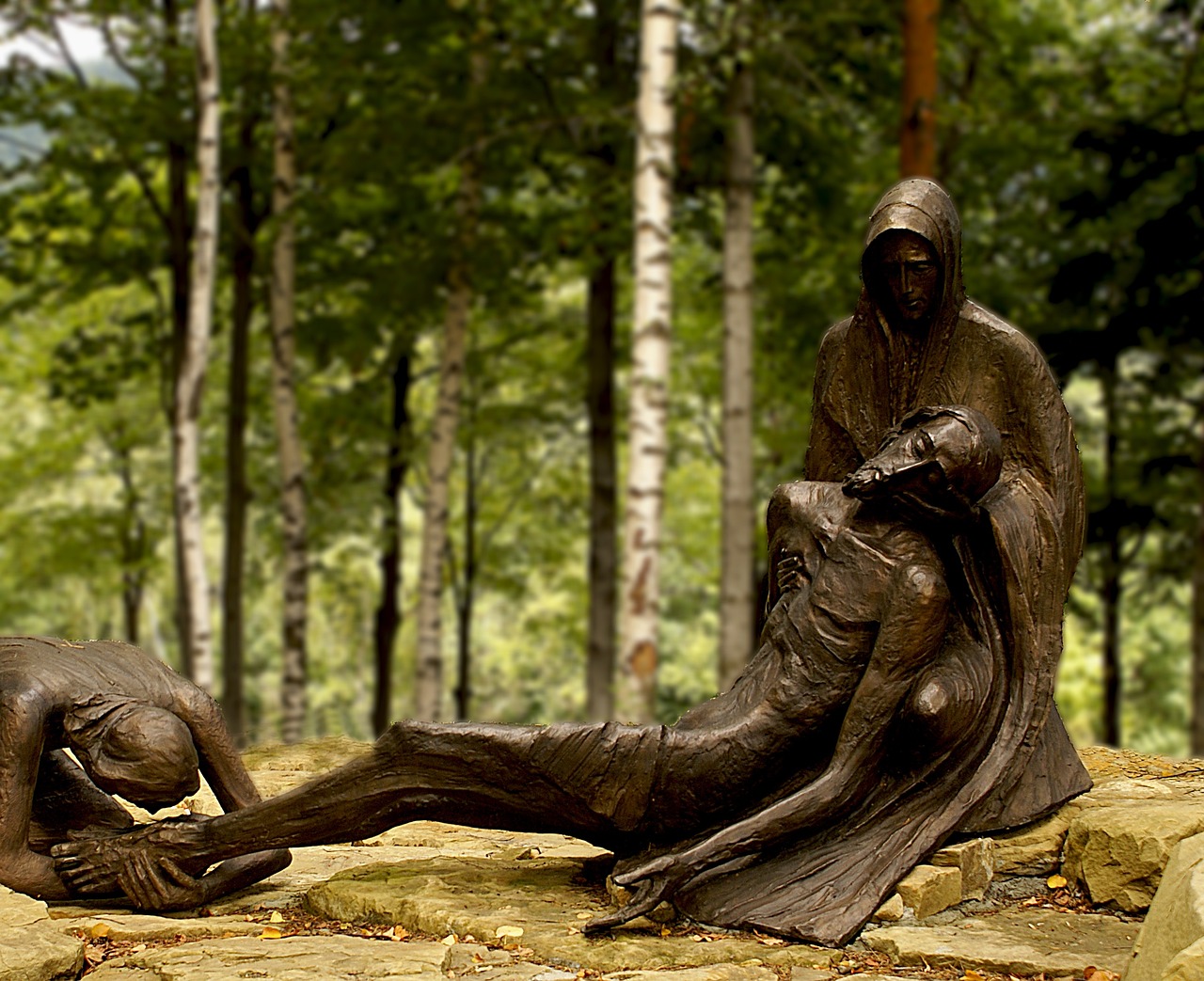
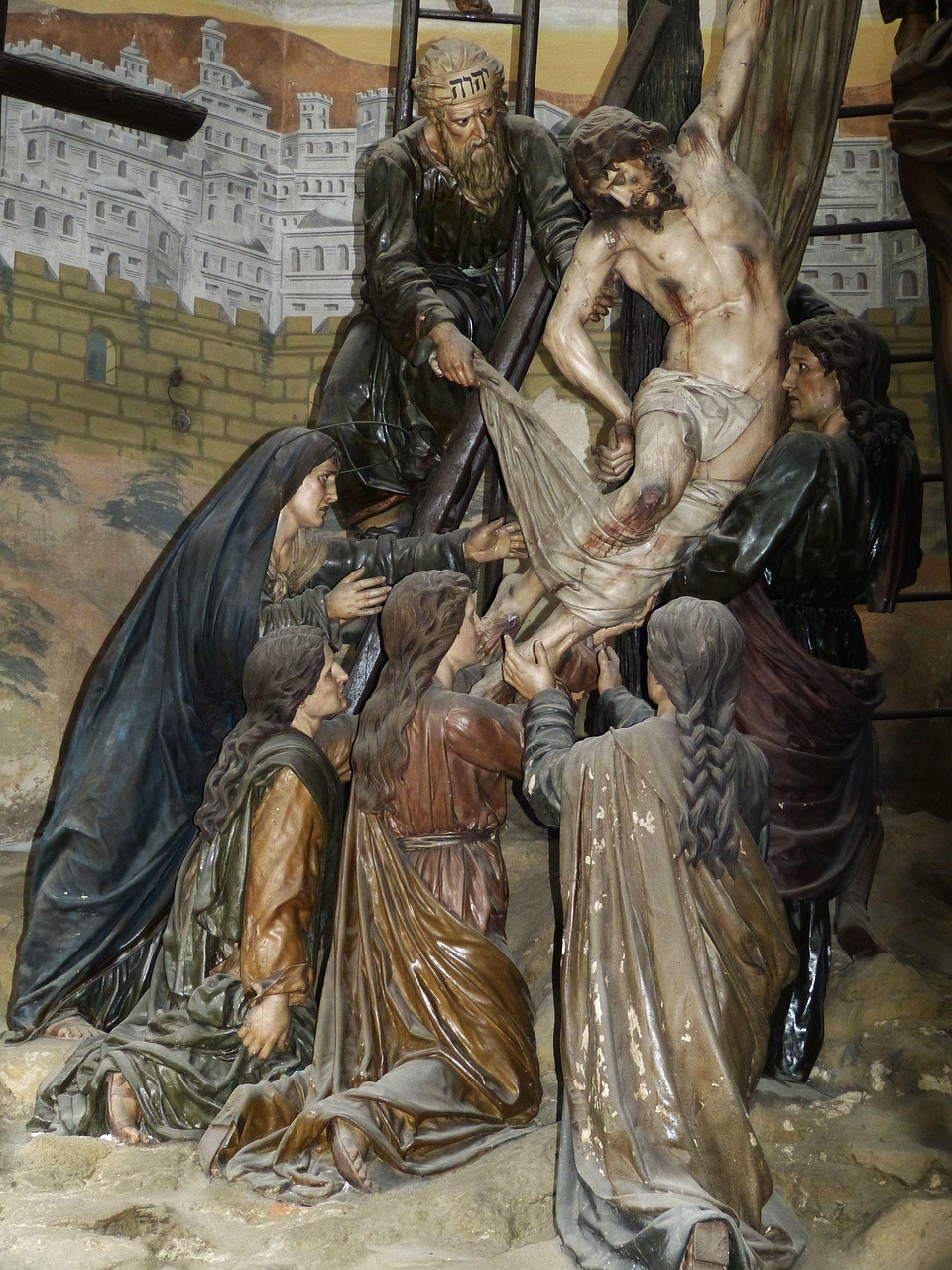
As we hear the Passion narrative read, it may be hard for us to enter into it because it is so familiar. The scourging is familiar. The crown of thorns is familiar. The mocking is familiar. The crucifix is familiar. The spear is familiar. Because of this familiarity, we may fail to be properly shocked. Because this kind of cruelty and mockery and suffering IS shocking. 

But even more shocking is the merciful love that motivates it. We may fail to be properly shocked by this stupendous mercy and love as well. Because we are accustomed to being those who have been saved, accustomed to having a Savior, accustomed to the way of grace and the closeness of our God in the sacraments, we often fail to see how absolutely helpless and hopeless we truly are on our own.

We were lost. Mankind, and each and every one of us individually, were hopelessly lost. We had been captured by the Enemy of all that is good, chained to sin and death and despair, ruled over by one who hates us. Filled with infirmity and stricken with suffering, alone and running in our own futile circles and unable to free ourselves. We were all lost sheep, in a land that was doomed to death.

But Love came to bear our infirmities, to endure our sufferings. Love entered our doomed world to overcome the enemy in the most surprising and shocking way: He was “pierced for our offenses, crushed for our sins… cut off from the land of the living and smitten for the sin of his people.” What we earned by our sin and selfishness, He absorbed into himself; “the Lord was pleased to crush him in infirmity.” He freely and peacefully surrendered His life as an offering for sin; He suffered, died, and was buried. For me. For you.

He became the Man of Sorrows so that we could know true joy. He took away our sins by carrying them in His own person to Calvary so that we could be redeemed. He endured darkness so that we could know light; he overcame death so that we could live forever.

May we be properly shocked and shaken at the mysterious ways of God, which wrought our salvation to eternal life with Him through the horrific execution of His only-begotten Son. May we be properly shocked at the infinite and incomprehensible love of the Savior, Who willingly laid down his life, pouring himself out utterly, for us poor sinners, whom he loves. 

There is no greater love. And that is what makes this Friday “Good”.

Contact the author


Al escuchar la narración de la Pasión, puede resultarnos difícil conmovernos profundamente porque nos resulta muy familiar. La flagelación es familiar. La corona de espinas es familiar. Las burlas son familiares. El crucifijo es familiar. La lanza es familiar. Debido a esta familiaridad, quizás no nos conmocionemos como deberíamos. Porque este tipo de crueldad, burla y sufrimiento ES impactante.

Pero aún más impactante es el amor misericordioso que lo motiva. Quizás tampoco nos conmocionemos como deberíamos ante esta estupenda misericordia y amor. Porque estamos acostumbrados a ser los que hemos sido salvados, acostumbrados a tener un Salvador, acostumbrados al camino de la gracia y a la cercanía de nuestro Dios en los sacramentos, a menudo no logramos ver cuán absolutamente indefensos y desesperados somos por nosotros mismos.

Estábamos perdidos. La humanidad, y cada uno de nosotros individualmente, estábamos irremediablemente perdidos. Habíamos sido capturados por el Enemigo de todo lo bueno, encadenados al pecado, a la muerte y a la desesperación, gobernados por alguien que nos odia. Llenos de debilidad y afligidos por el sufrimiento, solos y dando vueltas en nuestros propios círculos inútiles e incapaces de liberarnos. Éramos todas ovejas perdidas, en una tierra condenada a la muerte.

Pero el Amor vino a cargar con nuestras debilidades, a soportar nuestros sufrimientos. El Amor entró en nuestro mundo condenado para vencer al enemigo de la manera más sorprendente e impactante: Él fue “traspasado por nuestras rebeliones, triturado por nuestros crímenes... Lo arrancaron de la tierra de los vivos, lo hirieron de muerte por los pecados de mi pueblo”. Lo que merecíamos por nuestro pecado y egoísmo, Él lo absorbió en sí mismo; “El Señor quiso triturarlo con el sufrimiento”. Él entregó libre y pacíficamente su vida como ofrenda por el pecado; sufrió, murió y fue sepultado. Por mí. Por ti.

Se convirtió en el Hombre de Dolores para que pudiéramos conocer la verdadera alegría. Quitó nuestros pecados llevándolos en su propia persona al Calvario para que pudiéramos ser redimidos. Soportó la oscuridad para que pudiéramos conocer la luz; venció la muerte para que pudiéramos vivir para siempre.

Que nos conmocionemos y nos estremezcamos ante los misteriosos caminos de Dios, que obró nuestra salvación a la vida eterna con Él a través de la horrible ejecución de su Hijo unigénito. Que nos conmueva profundamente el amor infinito e incomprensible del Salvador, quien voluntariamente entregó su vida, entregándose por completo por nosotros, pobres pecadores, a quienes tanto ama.

No existe amor más grande. Y eso es lo que hace que este viernes sea “Santo”.

Comunicarse con la autora

Kathryn Mulderink, MA, is married to Robert, Station Manager for Holy Family Radio. Together they have seven children (including Father Rob), and eleven grandchildren. She is President of the local community of Secular Discalced Carmelites and has published five books and many articles. Over the last 30 years, she has worked as a teacher, headmistress, catechist, Pastoral Associate, and DRE, and as a writer and voice talent for Catholic Radio. Currently, she serves the Church by writing and speaking, and by collaborating with various parishes and to lead others to encounter Christ and engage their faith. Her website is www.KathrynTherese.com
Feature Image Credit: falco, pixabay.com/photos/passion-good-friday-church-christ-1138007/

The views and opinions expressed in the Inspiration Daily blog are solely those of the original authors and contributors. These views and opinions do not necessarily represent those of Diocesan, the Diocesan staff, or other contributors to this blog.

A Gift Received / Un don recibido

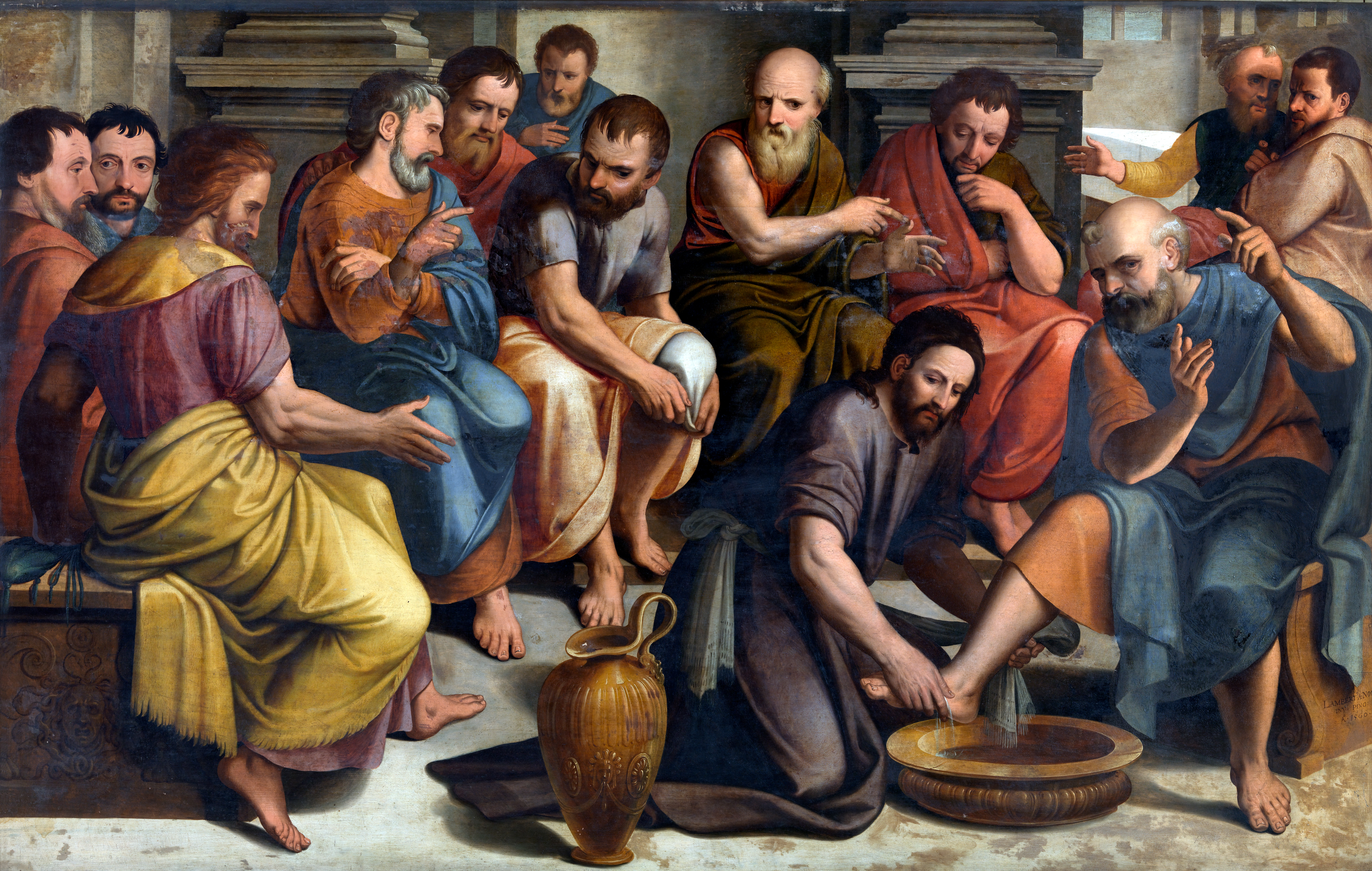
Today, Holy Thursday, we celebrate the Institution of the Eucharist, and we hear of the washing of the feet. The Eucharist is an unfathomable gift, God in the flesh, His Body and Blood, acting in us for our holiness and salvation. The washing of the feet was another gift, unfathomable to those who received it.

As Jesus said to Peter, “What I am doing, you do not understand now, but you will understand later” (John 13:7). Why was this so hard for Peter to accept? We know that washing feet was something more fit for a servant. Peter must have been embarrassed and ashamed, first expressing his bewilderment: “Master, are you going to wash my feet?” (John 13:6).

But Jesus insists. Let’s pause here. Jesus isn’t just doing a nice thing or giving an extraordinary gift. He’s saying something deeper. To wash another’s feet is, yes, to place oneself in the position of a servant. But it’s not just about humility. It’s an indication that the person being washed is worthy of being served.

Jesus confirms this when Peter shifts his intention: “Master, then not only my feet, but my hands and head as well” (John 13:9). Perhaps Peter thinks that Jesus is washing his feet because He believes that Peter is too sinful to proceed as His apostle and needs to be cleaned. Not so. Jesus says, “Whoever has bathed has no need except to have his feet washed, for he is clean all over; so you are clean, but not all” (John 13:10). John emphasizes the application of this statement to Judas, but we can also see that Jesus is acknowledging Peter’s cleanliness. He has bathed, so he only needs his feet washed. He is “clean all over.”

This is deeply affirming for Peter and for us. First, Peter thought it beneath Jesus to wash his feet, because he considered himself to be equal to a servant. Then he believes that Jesus is making a statement about his sinfulness, prompting him to ask to be washed all over rather than only in part, to make up for the filth that covers him completely. But Jesus revises his perception.

It is not that we are so depraved and sinful that God needs to stoop down and wash our feet, and it is not that we are so worthless that He can’t bring Himself to wash any more of us than that. It’s that He gives us the free gift of cleansing us because He made us good and worthy of such cleansing. We need His help not because we are hopeless, but because He desires to give to us and affirm the goodness in us, which is an echo of His infinite goodness.

The gift is freely given, and we are invited to freely accept it, as Peter did. Yes, God is infinitely greater than us. And yes, He made us good. And with His cleansing grace, we can be even better. 

Contact the author


Hoy, Jueves Santo, celebramos la Institución de la Eucaristía y escuchamos el relato del lavatorio de los pies. La Eucaristía es un don incomprensible, Dios hecho carne, su Cuerpo y su Sangre, actuando en nosotros para nuestra santidad y salvación. El lavatorio de los pies fue otro don, incomprensible para quienes lo recibieron.

Como Jesús le dijo a Pedro: “Lo que estoy haciendo tú no lo entiendes ahora, pero lo comprenderás más tarde”. ¿Por qué le resultaba tan difícil a Pedro aceptar esto? Sabemos que lavar los pies era una tarea propia de un siervo. Pedro debió sentirse avergonzado y humillado, expresando primero su desconcierto: “Señor, ¿me vas a lavar tú a mí los pies?”

Pero Jesús insiste. Detengámonos aquí. Jesús no solo está haciendo una buena acción ni dando un regalo extraordinario. Está diciendo algo más profundo. Lavar los pies de otro es, sí, ponerse en la posición de un siervo. Pero no se trata solamente de la humildad. Es una indicación de que la persona a la que se le lavan los pies es digna de ser servida.

Jesús lo confirma cuando Pedro cambia de parecer: “En ese caso, Señor, no sólo los pies, sino también las manos y la cabeza”. Quizás Pedro pensó que Jesús le lavaba los pies porque creía que era demasiado pecador para seguir siendo su apóstol y necesitaba ser purificado. No es así. Jesús dice: “El que se ha bañado no necesita lavarse más que los pies, porque todo él está limpio. Y ustedes están limpios, aunque no todos”. Juan enfatiza la aplicación de esta afirmación a Judas, pero también podemos ver que Jesús reconoce la pureza de Pedro. Se ha bañado, por lo que solo necesita que le laven los pies. “[T]odo él está limpio”.

Esto es profundamente reconfortante para Pedro y para nosotros. Primero, Pedro pensó que era indigno de Jesús lavarle los pies, porque se consideraba igual a un siervo. Luego creyó que Jesús estaba haciendo una declaración sobre su pecaminosidad, lo que lo llevó a pedir que lo lavaran por completo, en lugar de solo en parte, para compensar la suciedad que lo cubría por completo. Pero Jesús corrige su percepción. No es que seamos tan depravados y pecadores que Dios tenga que humillarse para lavarnos los pies, ni que seamos tan indignos que Él no pueda lavarnos más que eso. La verdad es que Él nos ofrece gratuitamente la purificación porque nos creó buenos y dignos de tal purificación. Necesitamos su ayuda no porque seamos casos perdidos, sino porque Él desea darnos y afirmar la bondad que hay en nosotros, que es un reflejo de su bondad infinita.

El don se nos da gratuitamente, y estamos invitados a aceptarlo libremente, como lo hizo Pedro. Sí, Dios es infinitamente más grande que nosotros. Y sí, Él nos creó buenos. Y con su gracia purificadora, podemos ser aún mejores.

Comunicarse con el autor

David Dashiell is a freelance author and editor in the Nashville, Tennessee area. He has three children, a degree in theology, and enjoys writing about philosophy, theology, culture, music, and comedy. You can find his personal blog, Serious Daydreams, on Substack. He is also the editor of the anthology Ever Ancient, Ever New: Why Younger Generations Are Embracing Traditional Catholicism, available through TAN Books.

Feature Image Credit: Lambert van Noort, art.diocesan.com/stock-photo/christ-washing-the-feet-of-apostles-7533/

The views and opinions expressed in the Inspiration Daily blog are solely those of the original authors and contributors. These views and opinions do not necessarily represent those of Diocesan, the Diocesan staff, or other contributors to this blog.

One, Holy, Catholic, and Apostolic Church / Una sola Iglesia santa, católica y apostólica

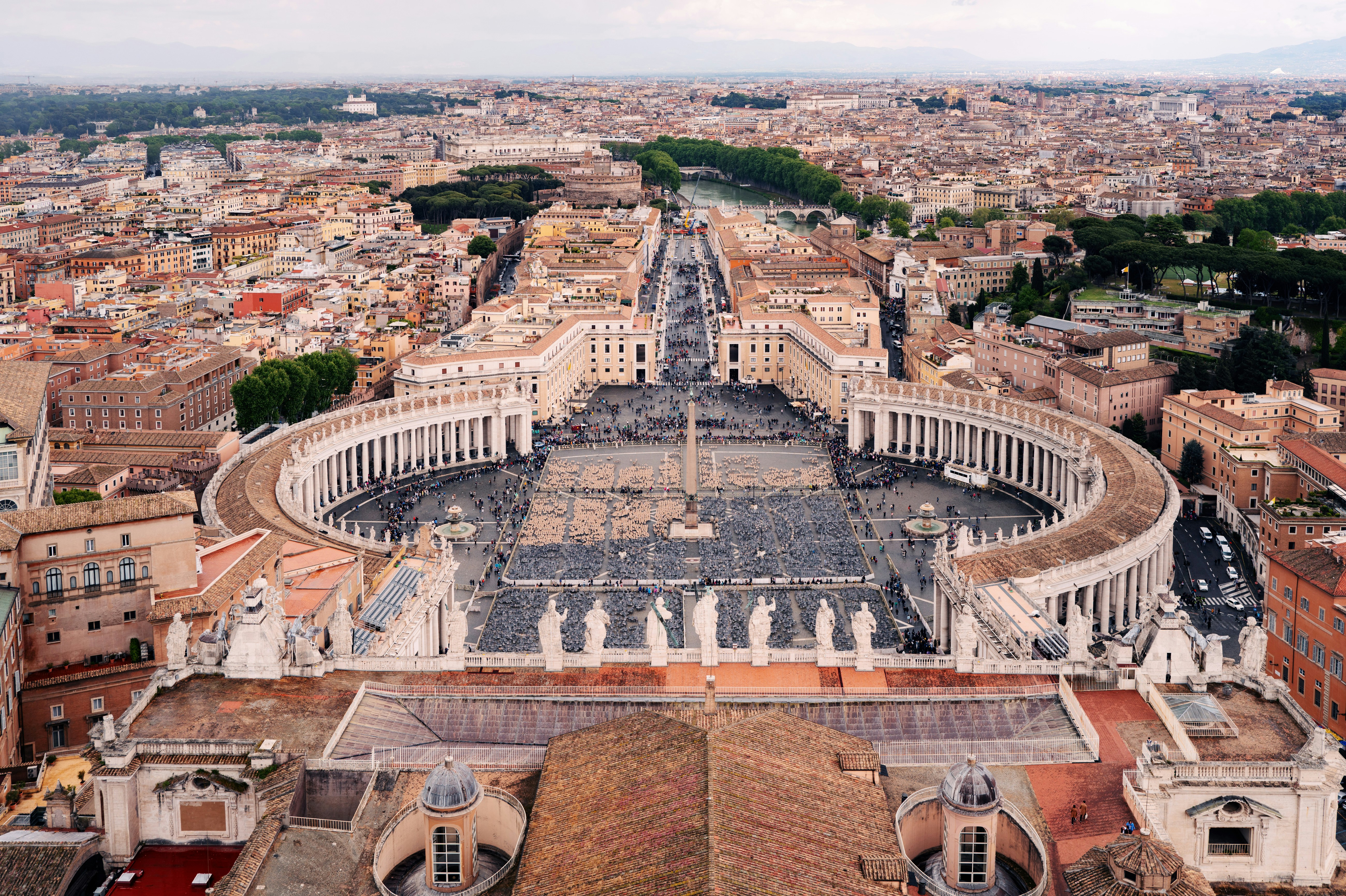
I love how today’s Gospel pairs with our feast day celebrating Pope St. Pius V. Both pronounce the overwhelming goodness of our God. God not only gifts humanity with life, which in and of itself is mind boggling, but he gives us the gift of Himself in the person of Jesus that we might live a fully abundant life with Him now and forever. Jesus tells us that His very life is a great testimony of God’s love for all of the world. 

God doesn’t shout down from Heaven to tell us He loves us. God comes down from Heaven to prove it, and God doesn’t have to prove anything to us. Out of love He chose to come so we would be assured of His unfailing love. But wait, there’s more and this is where Pope St. Pius V’s feast day comes in. 

Not only does God give us the gifts of life and Jesus, he also gives us the Church which Pope St. Pius V educated and reformed so brilliantly. 

God loved the world so much that He gave his only Son, that whoever believes in Him may not perish but may have eternal life (see Jn 3:16). Friends, this is not a one and done ordeal stuck back in 33 AD. Nobody is left out of God’s plan. This reality, accessible to all people across all time, is made possible through the Church. It allows everyone to witness the single-handedly most significant act of love: the Son’s gift of self to the Father for our redemption. 

Jesus gave us the sacraments, the Eucharist par excellence, and by them we are enveloped in God’s great mystery of love. We don’t merely witness it. Through the sacraments, we can stand at the foot of the cross with the Blessed Mother, Mary Magdalene, Mary of Clopas, and John to receive an outpouring of graces while the Son is lifted up to the Father; tongues of fire can fall upon our heads in the upper room alongside Mary and the disciples; we can be present at the breaking of the bread in Emmaus; we can stand among the cloud of witnesses in Heaven.

Men and women like Pope St. Pius V, who work tirelessly to defend and spread this Gospel message, keep the faith alive. To them we owe gratitude and reverence. To them we give our allegiance as co-workers in the vineyard. We should not abandon them in their efforts but join them instead. We beg for their intercession so we will have the faith and love to endure all trials for the sake of the kingdom. Pope St. Pius V, intercede for us, that we may receive and pour out love like you. Amen. 

Contact the author


Me encanta cómo el Evangelio de hoy se combina con la fiesta que celebramos del Papa San Pío V. Ambos pronuncian la inmensa bondad de nuestro Dios. Dios no solo nos da la vida a la humanidad, lo cual en sí mismo es alucinante, sino que nos da el don de Sí mismo en la persona de Jesús para que podamos vivir una vida plena y abundante con Él ahora y para siempre. Jesús nos dice que Su propia vida es un gran testimonio del amor de Dios por todo el mundo.

Dios no grita desde el Cielo para decirnos que nos ama. Dios desciende del Cielo para demostrarlo, y Dios no tiene que demostrarnos nada. Por amor, eligió venir para que tuviéramos la seguridad de Su amor infalible. Pero espere, hay más, y aquí es donde entra en juego la fiesta del Papa San Pío V.

Dios no solo nos da los dones de la vida y de Jesús, sino que también nos da la Iglesia que el Papa San Pío V educó y reformó de manera tan brillante.

Dios amó tanto al mundo que dio a su Hijo único, para que todo aquel que crea en Él no perezca, sino que tenga vida eterna (ver Jn 3,16). Amigos, esta no es una prueba unicamente del año 33 d. C. Nadie queda fuera del plan de Dios. Esta realidad, accesible a todas las personas de todos los tiempos, es posible gracias a la Iglesia. Permite a todos ser testigos del acto de amor más significativo: la entrega del Hijo al Padre para nuestra redención.

Jesús nos dio los sacramentos, la Eucaristía por excelencia, y por ellos estamos envueltos en el gran misterio del amor de Dios. No nos limitamos a ser testigos de Él. A través de los sacramentos, podemos estar al pie de la cruz con la Santísima Madre, María Magdalena, María de Cleofás y Juan para recibir un derramamiento de gracias mientras el Hijo es elevado al Padre; lenguas de fuego pueden caer sobre nuestras cabezas en el Cenáculo junto a María y los discípulos; podemos estar presentes en la fracción del pan en Emaús; podemos estar entre la multitud de testigos en el Cielo.

Hombres y mujeres como el Papa San Pío V, que trabajan incansablemente para defender y difundir este mensaje del Evangelio, mantienen viva la fe. A ellos les debemos gratitud y reverencia. A ellos les damos nuestra lealtad como colaboradores en la viña. No debemos abandonarlos en sus esfuerzos, sino unirnos a ellos. Rogamos por su intercesión para que tengamos la fe y el amor necesarios para soportar todas las pruebas por el bien del reino. Papa San Pío V, intercede por nosotros, para que podamos recibir y derramar el amor como tú. Amén.

Comunicarse con la autora

Former NPS Park Ranger, Catholic educator, and Youth Minister, Melissa Lucca now spends her days evangelizing family and neighbors as a stay-at-home mom. She holds an MA in Theology from the Augustine Institute and pursues personal study in her spare time. Melissa loves Ignatian Spirituality, Mother Mary, and rock climbing. If you don’t hear her and her kiddo laughing at home, then they are probably out on an adventure!

Feature Image Credit: Letian Zhang, unsplash.com/photos/an-aerial-view-of-the-city-of-rome-IClruOLmecI

The views and opinions expressed in the Inspiration Daily blog are solely those of the original authors and contributors. These views and opinions do not necessarily represent those of Diocesan, the Diocesan staff, or other contributors to this blog.

He is Not Here! He Has Risen! / ¡No está aquí, ha resucitado!

As we prepare to celebrate the highest feast of the liturgical year during this evening’s Easter Vigil, we joyfully proclaim: “Where, O death, is your victory? Where, O death, is your sting?” (1 Cor 15:55)

It is said that death is a terrible enemy, and it wounds all of us in one way or another. Christ was also afflicted by death, but through it demonstrates the necessity of offering everything to our Father in Heaven at all times. We must pray for the grace to also surrender our crosses to God. Such trials are not intended to weaken us, but rather bring us closer to our loving family in Heaven.

There are many examples of the inherent goodness in suffering and, paradoxically, sorrow. It often takes time and patience to recognize the connection. For example, when we have lost a loved one or are going through other difficult times (physical, financial or emotional struggles), they remind us just how much we rely on God. When bearing witness to the suffering of others, we can and should reach out to help them during their difficult times. These are the opportunities to act as God’s messengers of the Good News.

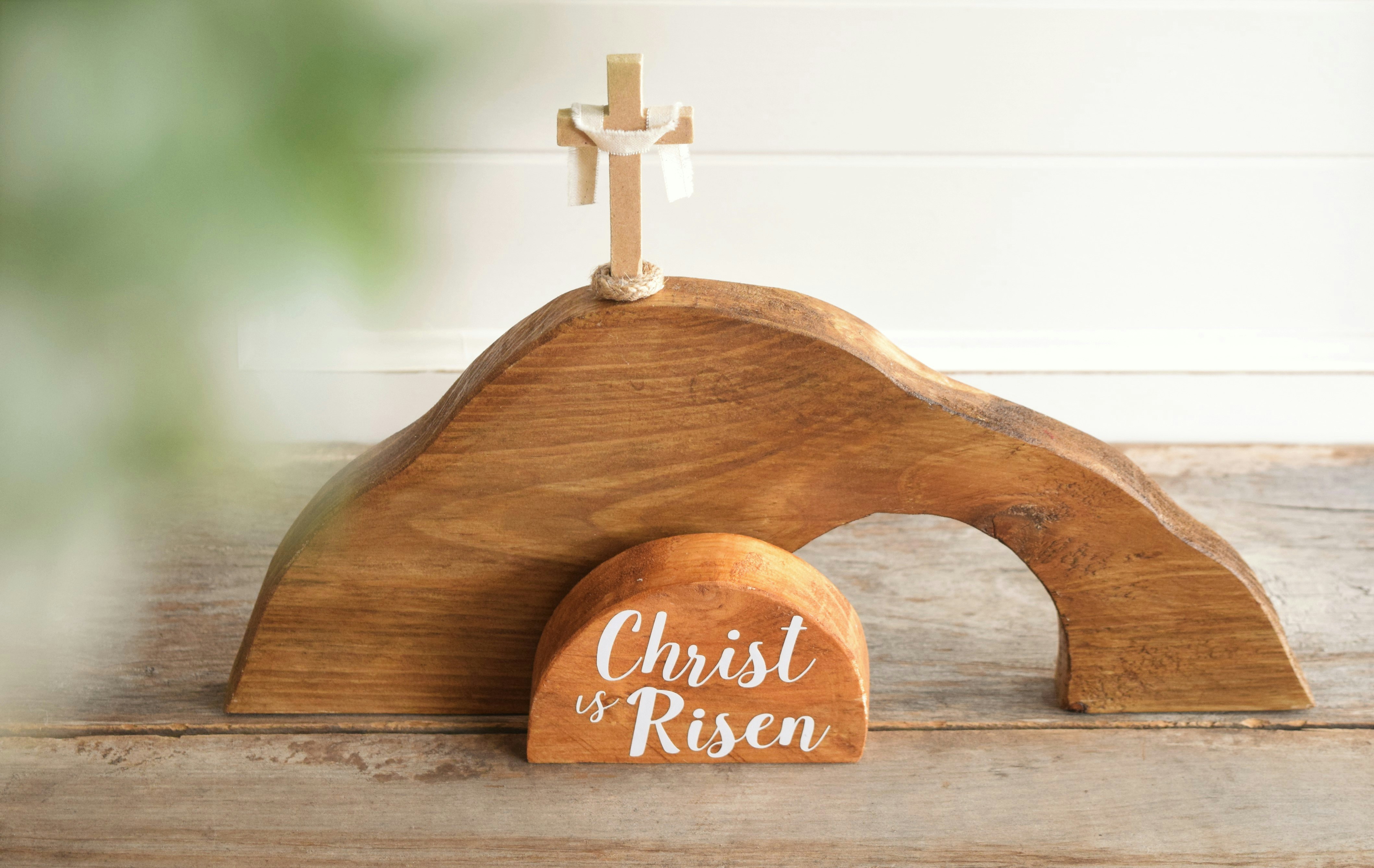
We can be confident that Christ has already done the heavy lifting for us. He has removed the stone guarding the entrance to the tomb. We should not be surprised or “puzzl[ed]” as the women at the empty tomb were. He will take care of our concerns. The tomb is empty and Jesus has been raised, just as He said. 

Christ, help us to love and believe in You at all times, both in our lowest of lows and highest of highs. May we always bask in the joy of that moment when You appeared in your risen glory and displayed to us eternal life!

Happy Easter!

Contact the author


Al prepararnos para celebrar la fiesta más importante del año litúrgico durante la Vigilia Pascual de esta tarde, proclamamos con alegría: “¿Dónde está, oh muerte, tu victoria? ¿Dónde está, oh muerte, tu aguijón?” (1 Cor 15,55)

Se dice que la muerte es un enemigo terrible, y nos hiere a todos de una manera u otra. Cristo también fue afligido por la muerte, pero a través de ella demuestra la necesidad de ofrecer todo a nuestro Padre Celestial en todo momento. Debemos orar por la gracia de entregar también nuestras cruces a Dios. Tales pruebas no tienen la intención de debilitarnos, sino más bien acercarnos a nuestra amada familia en el Cielo.

Hay muchos ejemplos de la bondad inherente del sufrimiento y, paradójicamente, de la tristeza. A menudo se necesita tiempo y paciencia para reconocer la conexión. Por ejemplo, cuando hemos perdido a un ser querido o estamos atravesando otros momentos difíciles (batallas físicas, financieras o emocionales), nos recuerdan cuánto dependemos de Dios. Al ser testigos del sufrimiento de los demás, podemos y debemos ayudarlos en sus momentos difíciles. Son oportunidades para actuar como mensajeros de la Buena Nueva de Dios.

Podemos estar seguros de que Cristo ya ha hecho el trabajo pesado por nosotros. Ha quitado la piedra que guardaba la entrada de la tumba. No debemos sorprendernos ni estar “desconcertad[os]” como las mujeres ante la tumba vacía. Jesucristo se ocupará de nuestras preocupaciones. La tumba está vacía y ha resucitado, tal como dijo.

Cristo, ayúdanos a amarte y creer en Ti en todo momento, tanto en nuestros momentos más bajos como en los más altos. ¡Que siempre podamos disfrutar de la alegría de ese momento en el que apareciste en tu gloria resucitada y nos mostraste la vida eterna!

¡Felices Pascuas!

Comunicarse con la autora

Dr. Alexis Dallara-Marsh is a board-certified neurologist who practices in Bergen County, NJ. She is a wife to her best friend, Akeem, and a mother of four little ones on Earth and two others in heaven above.

Feature Image Credit: Ch Photography, unsplash.com/photos/a-wooden-cross-on-top-of-a-wooden-stand–VpbHOgx1q4

The views and opinions expressed in the Inspiration Daily blog are solely those of the original authors and contributors. These views and opinions do not necessarily represent those of Diocesan, the Diocesan staff, or other contributors to this blog.

It Is Finished / Todo está cumplido

During this Triduum, we are focused closely on our Savior’s last and most difficult days on earth.

Reading St. John’s narrative of Christ’s Passion and Death, no more words are needed, and yet our hearts are overflowing with gratitude and awe at this graphic expression of the great love that overflows from the Heart of Jesus for each one of us.

He freely laid down His life for us, the life of the only Son of God in the flesh. He allowed His pure Heart, the Heart of Incarnate Love, to be pierced and poured out for us. As the great High Priest, Jesus offered the supreme Sacrifice to our eternal Father to atone for our sins, the Sacrifice that is offered each day on the altar at every Mass. Because of this great Sacrifice, we are able to become sons and daughters of God.

And as we look on Him whom we have pierced, whose beauty was distorted by our selfishness and whose wholeness was crushed for our sins, we begin to understand that he bore the guilt of us all. His serenity and his obedience to the Father were steadfast in spite of cruelty and mockery and torture. “Like a lamb led to the slaughter,” He allowed himself to be condemned and killed. He freely laid down His life, He “surrendered himself to death,” to give us the abundant life for which we are created.

Today, I look at the scene on Calvary and know that it is I who have crucified my Lord. My own selfwardness and refusal to love him and my neighbor as I should have caused the sufferings I see as He is sentenced, scourged, mocked, crowned with thorns, and nailed to the cross He embraced for love of me. Forgive me, Lord. Open my heart to this scene and teach me how to suffer with you, to be one with you, for others.

St. Paul tells us that we can make up in our own bodies what is lacking in the sufferings of Christ (Col 1:4). What was lacking? Did Jesus hold anything back? No. He gave everything for us. So what is lacking in the sufferings of Christ is the suffering of his Mystical Body – what is lacking is MY suffering. He did not hold anything back; Jesus just “left me a little room” to join Him there on the Cross. 

Lord, help me to understand that in bearing life’s difficulties with patience and generosity and offering them in union with your own Passion, you allow me to join you there, to take my place near you in this act of redemption, and in some mysterious way to help relieve the pain your heart bore. Teach me how to take up my own cross each day (Luke 9:23), and follow you more closely, in love and humility.  Lord, I thank you for dying on the cross for me.

Contact the author


Durante este Triduo Pascual, nos centramos de cerca en los últimos y más difíciles días de nuestro Salvador en la tierra.

Al leer el relato de San Juan sobre la Pasión y Muerte de Cristo, no se necesitan más palabras, y sin embargo nuestros corazones están rebosantes de gratitud y asombro ante esta expresión gráfica del gran amor que desborda del Corazón de Jesús por cada uno de nosotros.

Entregó libremente su vida por nosotros, la vida del único Hijo de Dios en la carne. Permitió que su Corazón puro, el Corazón del Amor Encarnado, fuera traspasado y derramado por nosotros. Como el gran Sumo Sacerdote, Jesús ofreció el Sacrificio supremo a nuestro Padre eterno para expiar nuestros pecados, el Sacrificio que se ofrece cada día en el altar en cada Misa. Debido a este gran Sacrificio, podemos convertirnos en hijos e hijas de Dios.

Y cuando miramos a Él que hemos traspasado, cuya belleza fue distorsionada por nuestro egoísmo y cuya integridad fue aplastada por nuestros pecados, comenzamos a entender que Él cargó con la culpa de todos nosotros. Su serenidad y su obediencia al Padre fueron firmes a pesar de la crueldad, la burla y la tortura. “Como un cordero llevado a degollar”, permitió que lo condenaran y lo mataran. Libremente entregó su vida, “se entregó a la muerte”, para darnos la vida abundante para la que fuimos creados.

Hoy, miro la escena del Calvario y sé que soy yo quien ha crucificado a mi Señor. Mi propio egoísmo y mi falta de amarlo a Él y a mi prójimo como debería haber ha causado los sufrimientos que veo mientras lo sentencian, lo azotan, lo burlan, lo coronan de espinas y lo clavan en la cruz que abrazó por amor a mí. Perdóname, Señor. Abre mi corazón a esta escena y enséñame a sufrir contigo, a ser uno contigo, por los demás.

San Pablo nos dice que podemos suplir en nuestro propio cuerpo lo que falta a los sufrimientos de Cristo (Col 1,4). ¿Qué faltaba? ¿Jesús no se entregó completamente? No. Él lo dio todo por nosotros. Así que lo que falta a los sufrimientos de Cristo es el sufrimiento de su Cuerpo Místico; lo que falta es MI sufrimiento. Jesús se entregó completamente; simplemente “me dejó un pequeño espacio” para unirme a Él allí en la Cruz.

Señor, ayúdame a entender que al soportar las dificultades de la vida con paciencia y generosidad y ofrecerlas en unión con tu propia Pasión, me permites unirme a Ti allí, tomar mi lugar cerca de Ti en este acto de redención, y de alguna manera misteriosa ayudar a aliviar el dolor que tu corazón soportó. Enséñame a tomar mi propia cruz cada día (Lc 9,23), y a seguirte más de cerca, en amor y humildad. Señor, te doy gracias por morir en la cruz por mí.

Comunicarse con la autora

Kathryn Mulderink, MA, is married to Robert, Station Manager for Holy Family Radio. Together they have seven children (including Father Rob), and eleven grandchildren. She is President of the local community of Secular Discalced Carmelites and has published five books and many articles. Over the last 30 years, she has worked as a teacher, headmistress, catechist, Pastoral Associate, and DRE, and as a writer and voice talent for Catholic Radio. Currently, she serves the Church by writing and speaking, and by collaborating with various parishes and to lead others to encounter Christ and engage their faith. Her website is www.KathrynTherese.com

Feature Image Credit: uroburos, pixabay.com/photos/way-of-the-cross-jesus-suffering-712001/

The views and opinions expressed in the Inspiration Daily blog are solely those of the original authors and contributors. These views and opinions do not necessarily represent those of Diocesan, the Diocesan staff, or other contributors to this blog.

Extra-Special Delivery / Una Entrega Muy Especial

We have arrived at the Easter Triduum, the summit of the Liturgical year, when Christ’s Paschal Mystery is unfolded for us in a continuous stream of worship, from the Mass of the Lord’s Supper this evening all the way through Evening Prayer on Easter Sunday.

The Scripture readings for Holy Thursday begin with the story of Passover, which might seem like a finicky set of directions for getting a lamb for dinner, but the eyes of faith reveal so much more. The Israelites can’t get just any lamb, it must be male and unblemished. The lamb then serves more than one function: It is food – nourishment for the Israelites’ coming journey; it is sacrifice – slaughtered to provide blood to mark the Israelites’ doorways; it is deliverance – the blood at the door will save the Israelites from death.

Yes, the Passover lamb prefigures the Paschal Lamb of God, Jesus Christ, His only Son. Jesus institutes the Eucharist, His very Body and Blood, as spiritual food to feed us on our way through life. Jesus is sacrifice, dying for us on the cross on Good Friday, shedding His blood to reunite us with the love of God the Father. And He is deliverer, for His death and resurrection conquer death and deliver us from our sins.

I have always found it interesting that Holy Thursday Mass does not use the Last Supper account of Matthew, Mark or Luke, which all tell us how Jesus said, “This is my Body.” Instead, we learn of the institution of the Eucharist from St. Paul, writing to the Corinthians.  Paul was not at table in the Upper Room, but he was told the story, and he tells it to us, in the same way the faith was spread in the early days of the Church.

So what we do hear in this evening’s Gospel instead is part of John’s account of the Last Supper. And while John was at table, he doesn’t mention the institution of the Eucharist. His Gospel was apparently written many years after Matthew’s, Mark’s and Luke’s, so perhaps he decided people already knew that part of the story, and he wanted us to know what else happened.

As John tells it, Jesus spent His last night with His Apostles teaching them — about faith, about love, about service. Jesus gave us His Body and Blood, but John reminds us He also gave us a new commandment: Love one another as Jesus has loved us. And He washed their feet to remind them, and us, to serve one another. 

Jesus did His job of feeding us, sacrificing Himself for us, and delivering us from sin and death. He also told the disciples to do their job of believing, loving and serving. Let us spend this Easter Triduum entering even deeper into the Paschal Mystery’s importance in our lives, and our roles in the world because of it.

Contact the author


Hemos llegado al Triduo Pascual, la cumbre del año litúrgico, cuando el Misterio Pascual de Cristo se revela para nosotros en un flujo continuo de adoración, desde la Misa de la Cena del Señor esta tarde hasta las Oraciones de la Noche en el Domingo de Pascua.

Las lecturas de las Sagradas Escrituras para el Jueves Santo comienzan con la historia de la Pascua del Antiguo Testamento, que puede parecer un conjunto de instrucciones meticulosas para conseguir un cordero para la cena, pero los ojos de la fe revelan mucho más. Los israelitas no podrían conseguir cualquier cordero, debe ser macho y sin defecto. Así el cordero cumple más de una función: es alimento – nutriente para el viaje venidero de los israelitas; es sacrificio – inmolado para proporcionar sangre para marcar las puertas de los israelitas; es liberación – la sangre en la puerta salvará a los israelitas de la muerte.

Sí, el cordero pascual prefigura al Cordero Pascual de Dios, Jesucristo, Su único Hijo. Jesús instituye la Eucaristía, su propio Cuerpo y su propia Sangre, como alimento espiritual para alimentarnos en el caminar de la vida. Jesús es sacrificio, muriendo por nosotros en la cruz el Viernes Santo, derramando su sangre para reunirnos con el amor de Dios Padre. Y es libertador, porque su muerte y resurrección vencen a la muerte y nos liberan de nuestros pecados.

Siempre me ha parecido interesante que en la Misa del Jueves Santo no leemos el relato de la Última Cena de Mateo, Marcos o Lucas, que nos cuentan que Jesús dijo: “Este es mi Cuerpo”. En cambio, aprendemos de la institución de la Eucaristía a través de San Pablo, que escribe a los corintios. Pablo no estaba a la mesa en el aposento alto, pero le contaron la historia y él nos la cuenta a nosotros, de la misma forma que se difundió la fe en los primeros días de la Iglesia.

Así que lo que escuchamos en el Evangelio de esta tarde es parte del relato de Juan sobre la Última Cena. Y mientras Juan estaba a la mesa, no menciona la institución de la Eucaristía. Su Evangelio fue escrito aparentemente muchos años después del de Mateo, Marcos y Lucas, así que tal vez decidió que la gente ya conocía esa parte de la historia y quería que supiéramos qué más sucedió.

Como lo cuenta Juan, Jesús pasó su última noche con sus apóstoles enseñándoles sobre la fe, el amor y el servicio. Jesús nos dio su Cuerpo y su Sangre, pero Juan nos recuerda que también nos dio un nuevo mandamiento: amarnos unos a otros como Jesús nos ha amado. Y les lavó los pies para recordarles a ellos y a nosotros que nos sirvamos unos a otros.

Jesús cumplió su misión de alimentarnos, sacrificarse por nosotros y liberarnos del pecado y la muerte. También les dijo a los discípulos que cumplieran su misión de creer, amar y servir. Pasemos este Triduo Pascual profundizando aún más en la importancia del Misterio Pascual en nuestras vidas y en nuestro papel en el mundo a causa de él.

Comunicarse con el autor

Mike Karpus is a regular guy. He grew up in Michigan’s Upper Peninsula, graduated from Michigan State University and works as an editor. He is married to a Catholic school principal, raised two daughters who became Catholic school teachers at points in their careers, and now relishes his two grandchildren, including the older one who is fascinated with learning about his faith. He also has served on a Catholic school board, a pastoral council and a parish stewardship committee. He currently is a lector at Mass, a Knight of Columbus, Adult Faith Formation Committee member and a board member of the local Habitat for Humanity organization. But mostly he’s a regular guy.

Feature Image Credit: Kat Smith, pexels.com/photo/shallow-focus-photography-of-white-sheep-on-green-grass-678448/

The views and opinions expressed in the Inspiration Daily blog are solely those of the original authors and contributors. These views and opinions do not necessarily represent those of Diocesan, the Diocesan staff, or other contributors to this blog.

Spy Wednesday / Miércoles del espía

I recently told Jesus that if “x”, “y”, and “z” were true about Him, then I didn’t want Him. Those words echoed in my mind for days with an anguish deeper than the pain that caused me to utter them. How could I speak to my Lord with such hatred? How could I treat my best Friend with such harsh and bitter distrust? Some of life’s trials are too hard for me to bear on my own and my behavior is obviously not always in line with my beliefs. 

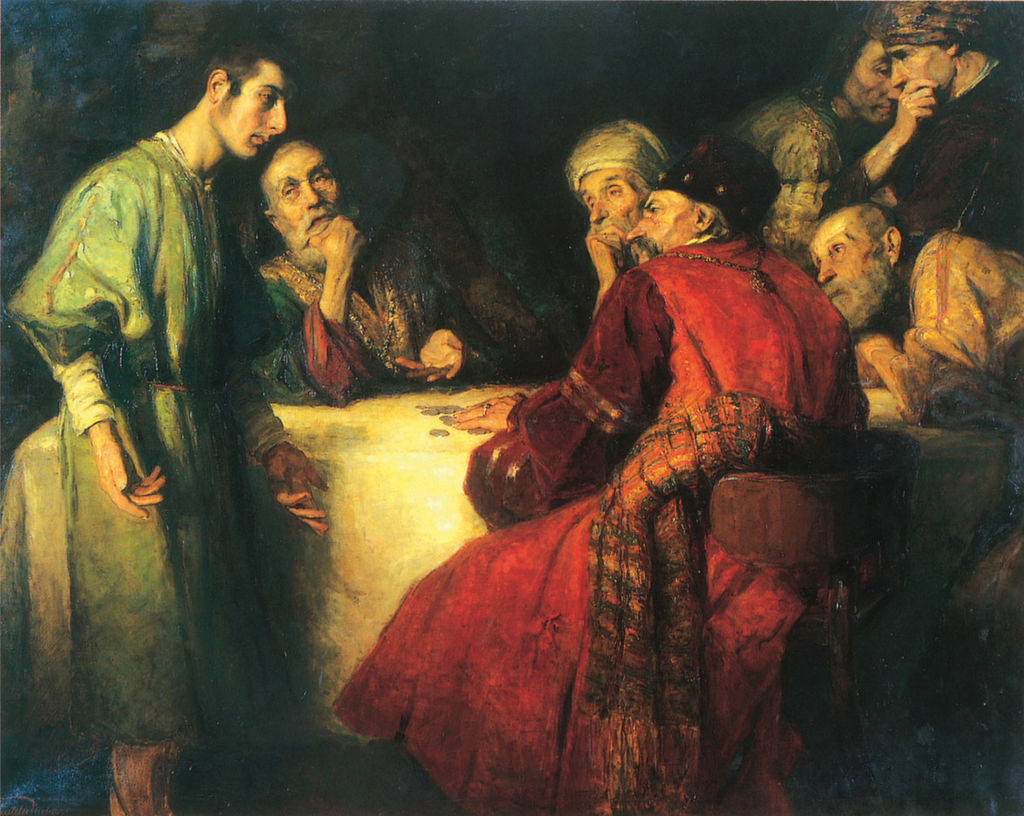
But, thank God it’s Wednesday of Holy Week (also known as “Spy Wednesday” due to Judas’ betrayal) and the hope of new beginnings is just around the bend. Judas’ story may hit hard if we recognize that all of us at one point or another have been in his shoes and have rejected our Lord. Today is a beautiful opportunity to let Jesus root out those wounds of sin to restore our loyalty to Him. We must first examine the reasons why we, like Judas, might betray Jesus.

Judas was a part of Jesus’s inner circle, an apostle entrusted to carry out the mission of growing the infant Church. I propose that Judas, like most of us, lost sight of God for a moment. Sometimes in our grief, self-centeredness, cynicism, and hopelessness we lose sight of who God is and what He is about. We forget that we are His and we are made for relationship with Him. 

Was Judas hoping to gain something by following Jesus? If Judas really believed that Jesus was the Messiah, perhaps he was disappointed when he realized that Jesus wouldn’t become a political ruler. There would be no status change for the Jews and no political gain for Judas. Many of us can relate to the anger and pain of dashed hopes. It may not be about social status, but the loss of a child, a job, the feeling of being stuck, or something else. Sometimes we allow life’s let downs to blind us from God and His plan. We hold too tightly to our dreams and unknowingly turn our backs on Jesus by slowly hardening our hearts, stonewalling God, and disbelieving that God has good plans for us.

Fear also motivates our sin. What could Judas have been afraid of? Maybe as Jesus’ imminent death sank in, the fear of wasting three years of his life prompted a yearning to get something out of the deal. Or, maybe he finally felt like he belonged to something greater and the impending doom of his Rabbi caused him to panic, so he tried to wiggle his way into another circle of belonging. Fear instigates many peculiar behaviors such as gossiping, betrayal, and altogether rejecting the other. 

Reflecting on the dispositions of our soul is essential to a relationship with God. I encourage you to enter into the Triduum with humility, honesty, and contrition. Know that God’s mercy is greater than our sins and his friendship is sweeter than any earthly gain.

Contact the author


Hace poco le dije a Jesús que si “x”, “y”, y “z” eran ciertas acerca de Él, entonces yo no lo quería. Esas palabras resonaron en mi mente durante días con una angustia más profunda que el dolor que me hizo pronunciarlas. ¿Cómo podría hablarle a mi Señor con tanto odio? ¿Cómo podría tratar a mi mejor amigo con una desconfianza tan dura y amarga? Algunas de las pruebas de la vida son demasiado duras para soportar sola y mi comportamiento obviamente no siempre está en línea con mis creencias.

Pero, gracias a Dios, es miércoles de Semana Santa (también conocido como “miércoles del espía” debido a la traición de Judas) y la esperanza de nuevos comienzos está a la vuelta de la esquina. La historia de Judas puede ser un duro golpe si reconocemos que todos nosotros en un momento u otro hemos estado en su lugar y hemos rechazado a nuestro Señor. Hoy es una hermosa oportunidad para dejar que Jesús arranque esas heridas del pecado para restaurar nuestra lealtad hacia Él. Primero debemos examinar las razones por las que nosotros, como Judas, podríamos traicionar a Jesús.

Judas era parte del círculo íntimo de Jesús, un apóstol encargado de llevar a cabo la misión de hacer crecer la Iglesia primitiva. Propongo que Judas, como la mayoría de nosotros, perdió de vista a Dios por un momento. A veces, en nuestro dolor, egocentrismo, cinismo y desesperanza, perdemos de vista quién es Dios y qué hace. Olvidamos que somos suyos y que estamos hechos para tener una relación con él. 

¿Judas esperaba ganar algo al seguir a Jesús? Si Judas realmente creía que Jesús era el Mesías, tal vez se sintió decepcionado cuando se dio cuenta de que Jesús no se convertiría en un gobernante político. No habría ningún cambio de estatus para los judíos ni ninguna ganancia política para Judas. Muchos de nosotros podemos identificarnos con la ira y el dolor de las esperanzas frustradas. Puede que no se trate de un estatus social, sino de la pérdida de un hijo, un trabajo, la sensación de estar estancados o algo más. A veces permitimos que las decepciones de la vida nos cieguen y nos impidan ver a Dios y su plan. Nos aferramos demasiado a nuestros sueños y, sin darnos cuenta, le damos la espalda a Jesús al endurecer lentamente nuestro corazón, poner trabas a Dios y no creer que Dios tiene buenos planes para nosotros.

El miedo también motiva nuestro pecado. ¿De qué podría haber tenido miedo Judas? Tal vez, cuando se dio cuenta de la muerte inminente de Jesús, el miedo de perder tres años de su vida provocó un anhelo de obtener algo a cambio. O tal vez por fin sintió que pertenecía a algo más grande y la inminente perdición de su rabino le hizo entrar en pánico, por lo que trató de abrirse camino hacia otro círculo de pertenencia. El miedo instiga muchos comportamientos peculiares, como el chisme, la traición y el rechazo total del otro.

Reflexionar sobre las disposiciones de nuestra alma es esencial para una relación con Dios. Los animo a entrar en el Triduo con humildad, honestidad y contrición. Sepan que la misericordia de Dios es más grande que nuestros pecados y su amistad es más dulce que cualquier ganancia terrenal.

Comunicarse con la autora

Former NPS Park Ranger, Catholic educator, and Youth Minister, Melissa Lucca now spends her days evangelizing family and neighbors as a stay-at-home mom. She holds an MA in Theology from the Augustine Institute and pursues personal study in her spare time. Melissa loves Ignatian Spirituality, Mother Mary, and rock climbing. If you don’t hear her and her kiddo laughing at home, then they are probably out on an adventure!

Feature Image Credit: János Pentelei Molnár, https://en.wikipedia.org/wiki/Thirty_pieces_of_silver

The views and opinions expressed in the Inspiration Daily blog are solely those of the original authors and contributors. These views and opinions do not necessarily represent those of Diocesan, the Diocesan staff, or other contributors to this blog.

What Should We Do on Holy Tuesday? / ¿Qué debemos hacer el Martes Santo?

Here we are on Tuesday of Holy Week. Take a wild guess as to what happens on this day. Really? It’s National, “take a wild guess day.” Do you think the Apostles had any guesses as to what lay ahead for them? 

I’ve always wondered what can be done to include Tuesday into the essence and activities of Holy Week. What are you doing today? Some follow the Jewish tradition of cleaning houses in preparation for the Passover. Sounds good, but I would much rather clean up my soul than my whole house. 

I am searching for that one ah-ha moment to add to today. Today is also called “Fig Tuesday”, based on Matthew 21:18-22. Jesus was returning to Jerusalem from Bethany and encountered a figless fig tree. He cursed the fig tree and it withered to show them the power of God. He ends by proclaiming that whatever you ask for in prayer with faith, you will receive. Now that’s an idea. 

Let’s start today by spending our Tuesday of Holy Week in prayer and blessings. Maybe we can even call it “Follow Tuesday”. Like the Apostles, you and I can follow Jesus to the Mount of Olives. We can start by going on a journey of prayer, planning, preparation, and blessings to guide us into the Tridium. First, we can pray for current needs and special intentions, and add a prayer for all those preparing to enter into the Catholic faith this Easter. Second, we can plan out how to follow Jesus to the Resurrection, maybe stopping by a local Catholic church and privately saying the Stations of the Cross? Third, we could clean our houses and say the sorrowful mysteries of the rosary. Typical ideas during Holy Week are fasting and contemplation, but maybe we could invite friends over and enjoy their presence like Jesus and the Apostles did on that Tuesday. Bake a fig dessert, and chat about what is to come. 

As Catholics, we respect Holy Week. We appreciate the tradition of observing our faith. It also gives us a sense of community as we gather together. Many of us have spent our whole lives enmeshed in these traditions, yet we haven’t incorporated the Tuesday of Holy Week. We don’t know much about it.  Jesus knew what lay ahead. His parables were presented to help the Apostles understand the journey of His Passion and Death. We can take all these examples and begin our journey with Him into His Passion, Death, and Resurrection this Tuesday of Holy Week. Now to look up a good fig recipe!

Contact the Author


Estamos en el martes de Semana Santa. Adivina qué sucede hoy día. ¿En serio? Es el día nacional de “adivinar”. ¿Crees que los Apóstoles podían adivinar lo que les esperaba?

Siempre me he preguntado qué se puede hacer para incluir el martes en la esencia y las actividades de la Semana Santa. ¿Qué estás haciendo hoy? Algunos siguen la tradición judía de limpiar las casas en preparación para la Pascua. Suena bien, pero yo preferiría limpiar mi alma que toda mi casa.

Estoy buscando ese momento de revelación para agregar al día de hoy. Hoy también se llama “Martes de higos”, según Mateo 21,18-22. Jesús regresaba a Jerusalén desde Betania y se encontró con una higuera sin higos. Maldijo a la higuera y se secó para mostrarles el poder de Dios. Termina proclamando que todo lo que pidas en oración con fe, lo recibirás. Esa sí que es una idea.

Comencemos hoy pasando nuestro martes de Semana Santa en oración y bendiciones. Tal vez incluso podamos llamarlo “Martes de seguimiento”. Como los Apóstoles, tú y yo podemos seguir a Jesús al Monte de los Olivos. Podemos comenzar por emprender un viaje de oración, planificación, preparación y bendiciones que nos guíen hacia el Triduo. Primero, podemos orar por las necesidades actuales y las intenciones especiales, y agregar una oración para todos aquellos que se preparan para entrar en la fe católica esta Pascua. Segundo, podemos planificar cómo seguir a Jesús hasta la Resurrección, tal vez pasando por una iglesia católica local y rezando en privado el Vía Crucis. Tercero, podríamos limpiar nuestras casas y rezar los misterios dolorosos del rosario. Las ideas típicas durante la Semana Santa son el ayuno y la contemplación, pero tal vez podríamos invitar a unos amigos y disfrutar de su presencia como lo hicieron Jesús y los Apóstoles ese martes. Hornear un postre de higos y charlar sobre lo que está por venir.

Como católicos, respetamos la Semana Santa. Apreciamos la tradición de observar nuestra fe. También nos da un sentido de comunidad cuando nos reunimos. Muchos de nosotros hemos pasado toda la vida enredados en estas tradiciones, pero no hemos sabido incorporar el martes de Semana Santa. No sabemos mucho sobre ello. Jesús sabía lo que nos esperaba. Sus parábolas fueron presentadas para ayudar a los Apóstoles a entender el recorrido de Su Pasión y Muerte. Podemos tomar todos estos ejemplos y comenzar nuestro recorrido con Él en Su Pasión, Muerte y Resurrección este martes de Semana Santa. ¡Ahora, a buscar una buena receta con higos!

Comunicarse con la autora


Marti Garcia’s passions are her retired life and growing deeper in her Catholic faith. Marti is a Sacristan/EM, facilitates small groups, and assists as a First Communion Catechist for parents. Being a parent educator and writer for 35 years, she recently published a children’s chapter book on Amazon, The Ladybugs. You can find her at her blog: MartiGarcia.org, or thewaterisshallow.com, or her cohost podcast, findingacommonthread.com, which is coming soon.

Feature Image Credit: Arina Krasnikova, pexels.com/photo/a-woman-kissing-the-sculpture-of-jesus-christ-5418221/

The views and opinions expressed in the Inspiration Daily blog are solely those of the original authors and contributors. These views and opinions do not necessarily represent those of Diocesan, the Diocesan staff, or other contributors to this blog.

Turn Your Gaze to Jesus / Dirige tu mirada hacia Jesús

For 40 days of the sacred season of Lent, we have been renewing and purifying our hearts, practicing self-denial and imitating God in his kindness by sharing with those who are in need, practicing virtue and fasting, overturning what the Preface for the First Sunday of Lent calls, “all the snares of the ancient serpent.”

Today, as we step over the threshold into the holiest of weeks, we encounter Mary of Bethany, her sister Martha, and their brother Lazarus. The Church puts the brakes on our preparation so that we may turn our gaze to Jesus, so that we may learn to serve Him, and love Him, and console Him, and surrender to Him. 

There is a silence and calm inside this little home of Martha, Mary, and Lazarus. Step into Holy Week by stopping in the house of Bethany. Martha is quietly providing for Jesus and His band of apostles. Unruffled by the demands placed on her as hostess, and also quietly confident in Jesus as the Resurrection and the Life, she finds a prayerful peace within her loving service of the Friend who has meant so much to her. 

Mary breaks a jar of costly nard and anoints the feet of Jesus. She had purchased the perfume with all the resources she had. Drying her Lord’s feet, not with a towel, but with her hair, she gave to Him all she was. Nard is a powerful fragrance used in preparation for burial. When applied to the skin or hair, its scent would fill an entire house and the aroma would remain for weeks. 

In a few days time, Jesus would be arrested, brought before the Sanhedrin, mocked and scourged and crowned with thorns, condemned by Pilate and crucified on Calvary. When He was alone in prison, when He sat on a mock throne and received the jeering of the guards who robed Him in purple as they pressed thorns into His head, as He struggled and stumbled to Calvary, the scent of Mary’s loving gift comforted Him. Even as He died, He knew that countless souls through history would, like Mary, seek to love and console Him.   

Lazarus, called out from the tomb four days after his death, sat beside Jesus. He knew that many were believing in Jesus now because of this miracle, and he realized that others wanted Jesus dead because of him. Perhaps he felt confused about what he should feel. Nevertheless, Lazarus remained at table with Jesus, staying near him, supporting him in any way he could.

So as you begin this Holy Week and you turn your gaze to Jesus, take a moment of peaceful prayer. Are you like Martha with her quiet service? Like Mary with her extravagant love? Like Lazarus, remaining near him? Or is there another way in which you are with Jesus this year as you enter Holy Week?

Contact the author


Durante los 40 días de la sagrada temporada de Cuaresma, hemos estado renovando y purificando nuestros corazones, practicando la abnegación e imitando a Dios en su bondad al compartir con los necesitados, practicando la virtud y el ayuno, derribando lo que el Prefacio del Primer Domingo de Cuaresma llama “todas las trampas de la serpiente antigua”.

Hoy, al cruzar el umbral hacia la semana más santa, nos encontramos con María de Betania, su hermana Marta y su hermano Lázaro. La Iglesia pone freno a nuestra preparación para que volvamos nuestra mirada hacia Jesús, para que aprendamos a servirlo, amarlo, consolarlo y entregarnos a Él.

Hay silencio y calma dentro de esta casita de Marta, María y Lázaro. Entremos en la Semana Santa deteniéndonos en la casa de Betania. Marta está cuidando silenciosamente a Jesús y a su grupo de apóstoles. Sin inmutarse por las exigencias que se le imponen como anfitriona, y también confiando tranquilamente en Jesús como la Resurrección y la Vida, encuentra una paz de oración en su servicio amoroso al Amigo que ha significado tanto para ella.

María rompe un frasco de nardo costoso y unge los pies de Jesús. Había comprado el perfume con todos los recursos que tenía. Secando los pies de su Señor, no con una toalla, sino con su cabello, le dio todo lo que era. El nardo es una fragancia poderosa que se utiliza en preparación para el entierro. Cuando se aplica sobre la piel o el cabello, su aroma llenaría una casa entera y permanecería durante semanas.

En pocos días, Jesús sería arrestado, llevado ante el Sanedrín, burlado, azotado y coronado de espinas, condenado por Pilato y crucificado en el Calvario. Cuando estaba solo en la prisión, cuando se sentaba en un trono simulado y recibía las burlas de los guardias que lo vestían de púrpura mientras le clavaban espinas en la cabeza, mientras luchaba y tropezaba hacia el Calvario, el aroma del regalo amoroso de María lo reconfortaba. Incluso mientras moría, sabía que innumerables almas a lo largo de la historia, como María, buscarían amarlo y consolarlo.

Lázaro, llamado a salir de la tumba cuatro días después de su muerte, se sentó al lado de Jesús. Sabía que muchos estaban creyendo en Jesús ahora debido a este milagro, y que, por lo mismo, otros querían que Jesús muriera. Tal vez se sentía confundido sobre lo que debía sentir. Sin embargo, Lázaro permaneció en la mesa con Jesús, permaneciendo cerca de él, apoyándolo en todo lo que podía.

Así que, al comenzar esta Semana Santa y dirigir tu mirada hacia Jesús, toma un momento para la oración silenciosa. ¿Eres como Marta con su servicio silencioso? ¿Como María con su amor extravagante? ¿Como Lázaro, permaneciendo cerca de él? ¿O hay otra manera en la que estás con Jesús este año al entrar en la Semana Santa?

Comunicarse con la autora

Sr. Kathryn J. Hermes

Sr. Kathryn James Hermes, FSP, is an author and offers online evangelization as well as spiritual formation for people on their journey of spiritual transformation and inner healing. Website: www.touchingthesunrise.com My Books: https://touchingthesunrise.com/books/
Public Facebook Group: https://www.facebook.com/groups/srkathrynhermes/ HeartWork Spiritual Formation Group: https://touchingthesunrise.com/heartwork/

Feature Image Credit: David Trinks, unsplash.com/photos/a-statue-of-a-man-holding-a-baby-hBcr0cYlvHU

The views and opinions expressed in the Inspiration Daily blog are solely those of the original authors and contributors. These views and opinions do not necessarily represent those of Diocesan, the Diocesan staff, or other contributors to this blog.

Christ’s Modesty and Our Own / La modestia de Cristo y la nuestra

Today we begin Holy Week, when we walk beside Jesus during the long and painful journey of His Passion, Death and Resurrection. Today we read the account of the Passion, and it can seem as long as this week. We don’t like to face the hard, the difficult and the painful, but if we want to grow, it is necessary.

One thing that strikes me is how they ripped off Jesus’ clothes before crucifying Him. He was a person who respected Himself and others. He was a man of modesty, and they left him hanging there naked. I can’t imagine the humiliation He suffered, all for us… at the same time it makes me think of how our society no longer values ​​modesty, and it makes me even more sad.

We should dress appropriately according to where we are, but we should always have respect for ourselves and others. A phrase from the philosopher Confucius comes to mind: “Respect yourself so that others will respect you.” Also, the second great commandment our Lord gave us is “Love your neighbor as yourself.” Many phrases from different sources could be analyzed more deeply regarding this topic and conclusions can be drawn.

I once heard a priest say in one of his homilies, “Girls come to church naked and boys come in shorts and sandals!” It may sound harsh, but the reality is that we should go to church to seek God, not a boyfriend or more attention by wearing short clothing, showing more skin than necessary or very short or tight shirts that leave nothing to the imagination. I have even noticed how uncomfortable many girls are, pulling down on their skirts or shorts to see if they will stretch any further.

Although all this may be controversial, it seems to me like sin at its finest. I understand that we are all different and not everyone has the same intentions, but dressing like this can be a temptation for those around them and a poor example for younger girls.

If we leave the church environment and go out into the “real world”, many will view them as sexual objects, a means to satisfy the flesh. There are many wolves in sheep’s clothing looking for their prey. So if you dress provocatively at church what can you expect when you are out in the world? Do not wait until you have a horrible experience to dress modestly. Although many think they know everything when they are young, they should listen to their closest relatives and true friends who will tell them the truth.

In conclusion, love yourselves more, so that others will respect you. Look at Jesus Christ on the cross to realize what true love is. He will help you love yourself more and find pure love with someone who loves you for who you are, not because you have shown off parts of your body. May the outpouring of grace from Christ’s Passion and Death help us to love God and love ourselves more.

Contact the author


Hoy empezamos la semana santa, cuando caminamos al lado de Jesús en el camino largo y doloroso de su pasión, muerte y resurrección. Hoy leemos el relato de la pasión, y puede parecer tan largo como esta semana. No nos gusta enfrentar lo duro, lo difícil y lo doloroso, pero si queremos crecer, es necesario. 

Una cosa que me llama la atención es cómo le arrancaron la ropa a Jesus antes de crucificarlo. Era una persona que se respetaba a sí mismo y a los demás. Era un hombre de pudor, y lo dejaron colgado allí desnudo. No puedo imaginarme la humillación que sufrió, todo por nosotros… y al mismo tiempo me hace pensar en cómo nuestra sociedad ya no valora la modestia, y me pone mas triste aun. 

El modo de vestir debe ser de acuerdo al lugar donde vayas, pero siempre debe haber un respeto para uno mismo y los demás. Una frase del filósofo Confucius “Respetate a ti mismo para que los demás te respeten” me viene a la mente. El segundo gran mandamiento que el Señor nos dio dice “Ama a tu prójimo cómo a ti mismo”. Varias frases al respeto se podrían analizar más profundamente para sacar conclusiones. 

Había un sacerdote que decía en una de sus homilías, “¡Las chicas vienen calatas a la iglesia y los chicos vienen en short y sandalias!” Puede sonar rudo, pero la realidad es que ir a la iglesia es ir en busca de Dios y no buscar novio o estar llamando la atención con la vestimenta corta,  mostrando la pierna más de lo debido o polos muy cortos o pegados que no dejan nada a la imaginación. Hasta se ve a muchas chicas incómodas para sentarse o pararse, y se están jalando la faldita o short para abajo para ver si se estira más. 

Aunque puede ser controversial todo esto, pareciera el pecado en su máxima expresión.  Entiendo que no todos son iguales y tampoco todos tienen las mismas intenciones, pero vistiéndose así se vuelven tentación para los que están alrededor y mal ejemplo para las niñas más jóvenes. 

Si salimos del ambiente de la iglesia, y salimos al “mundo real”, muchos van a verlas cómo un objeto sexual, el cual el objetivo es satisfacer la carne. Hay muchos lobos vestidos de corderos buscando su presa para saciarse. Entonces si en la iglesia se visten “llamativamente” ¿qué se puede esperar cuando están afuera? No esperen tener esa horrible experiencia para recién volver a la modestia. Aunque muchas piensan saberlo todo por la juventud, hay que escuchar a los familiares más cercanos y los verdaderos amigos que te dicen la verdad. 

En conclusión, ámense más, para que los demás te respeten. Miren a Jesucristo en la cruz y dense cuenta de lo que es el verdadero amor de Dios. Él te ayudará a quererte más y a encontrar el amor verdadero en una persona que te ame por quien eres, no porque has demostrado partes de tu cuerpo. Que la efusión de gracia de la pasión y muerte de Cristo nos ayude a amar a Dios y a amarnos más a nosotros mismos.

Comunicarse con el autor

Felix Urcia was born in Lima, Peru. He emigrated the U.S. to complete his college degree in Computer Science at Northern Kentucky University. He is passionate about his faith, his family, education and soccer. When he is not homeschooling and caring for his young children he enjoys personal programing projects and sports analysis. He and wife live in a small town in Western Michigan where they enjoy spending time with their five children.


Feature Image Credit: Joice Kelly, unsplash.com/photos/man-in-orange-long-sleeve-shirt-sitting-on-gray-couch-rXrMy7mXUEs

The views and opinions expressed in the Inspiration Daily blog are solely those of the original authors and contributors. These views and opinions do not necessarily represent those of Diocesan, the Diocesan staff, or other contributors to this blog.

God Does Not Make Mistakes / Dios Nunca se Equivoca

Today, Holy Saturday, there are no “readings of the day,” but those of us attending the Easter Vigil will have more than enough Scripture to make up for it. Hearing the readings, we will see a beautiful picture of our salvation won for us in the Paschal Mystery, the apex of human history. This salvation was planned for us from the beginning of time. The readings of the Easter Vigil take us from the creation of the world through the Fall, the wanderings of the Israelites, the promise of the New Covenant, and the Incarnation and Resurrection.

This is a unique opportunity to recognize the providence of God. God had always planned to become man: He knew that we would fall, and He intended to draw us into an even greater reality than that of the Garden of Eden. The Fall did not “surprise” God. He created all things knowing what it would mean. He knew exactly what would unfold, and knew that He would bring good out of it all.

We can hear the wonders of God at the Easter Vigil and still doubt about God’s preparedness, or His competence: Why would He have created Adam and Eve for them to fall, or made Abraham’s descendants into a great nation for them to constantly break faith with Him? Why would He set up a new and definitive covenant knowing that there would be many who would spurn it? If He knew that this would happen, why did He allow it?

The glory of Easter gives us a glimpse into this, a glory at once confusing and illuminating. We cannot fully grasp the meaning of the death of Jesus Christ. It is hard to understand why God would want to suffer if He could have just created the world differently. But the Resurrection is difficult to argue with. The glory that Jesus shows us we can attain is blinding, more than we could ever deserve.

We may not understand why or how, but God did not make a mistake in ordering the world in the way that He did. The Vigil readings show us that He created a mosaic, full of striking turns and flashes of color that coalesce into something beautiful.

Contact the author


Hoy, el Sábado Santo, no hay “lecturas del día”, pero todos nosotros que asistimos a la Vigilia Pascual tendremos más que suficiente Escrituras para compensarlo. Al escuchar las lecturas, veremos un hermoso cuadro de nuestra salvación ganada para nosotros en el Misterio Pascual, culmen de la historia humana. Esta salvación fue planeada para nosotros desde el principio de los tiempos. Las lecturas de la Vigilia Pascual nos llevan desde la creación del mundo hasta la Caída, los caminos de los israelitas, la promesa de la Nueva Alianza, la Encarnación y la Resurrección.

Es una oportunidad única para reconocer la providencia de Dios. Dios siempre había planeado hacerse hombre: sabía que caeríamos y tenía la intención de atraernos a una realidad aún mayor que la del Jardín del Edén. La Caída no “sorprendió” a Dios. Creó todas las cosas sabiendo lo que significaría. Sabía exactamente lo que sucedería y sabía que sacaría algo bueno de todo ello.

Podemos escuchar las maravillas de Dios en la Vigilia Pascual y todavía dudar sobre la preparación de Dios, o Su competencia: ¿Por qué habría creado a Adán y Eva para que cayeran, o habría convertido a los descendientes de Abraham en una gran nación para que constantemente rompieran su fe en él? ¿Por qué establecería una alianza nueva y definitiva sabiendo que habría muchos que lo despreciarían? Si sabía que esto sucedería, ¿por qué lo permitió?

La gloria de la Pascua nos da una idea de esto, una gloria a la vez confusa y esclarecedora. No podemos comprender plenamente el significado de la muerte de Jesucristo. Es difícil entender por qué Dios querría sufrir si hubiera podido crear el mundo de manera diferente. Pero es difícil discutir la Resurrección. La gloria que Jesús nos muestra que podemos alcanzar es cegadora, más de la que jamás podríamos merecer.

Puede que no entendamos por qué o cómo, pero Dios no cometió un error al ordenar el mundo de la manera en que lo hizo. Las lecturas de la Vigilia nos muestran que Él creó un mosaico, lleno de giros sorprendentes y destellos de color que se fusionan en algo hermoso.

Comunicarse con el autor

David Dashiell is a freelance author and editor in Nashville, Tennessee. He has a master’s degree in theology from Franciscan University, and is the editor of the anthology Ever Ancient, Ever New: Why Younger Generations Are Embracing Traditional Catholicism.

Feature Image Credit: Gerardo Hernandez Carrasquillo, cathopic.com/photo/23308-cross-with-stars