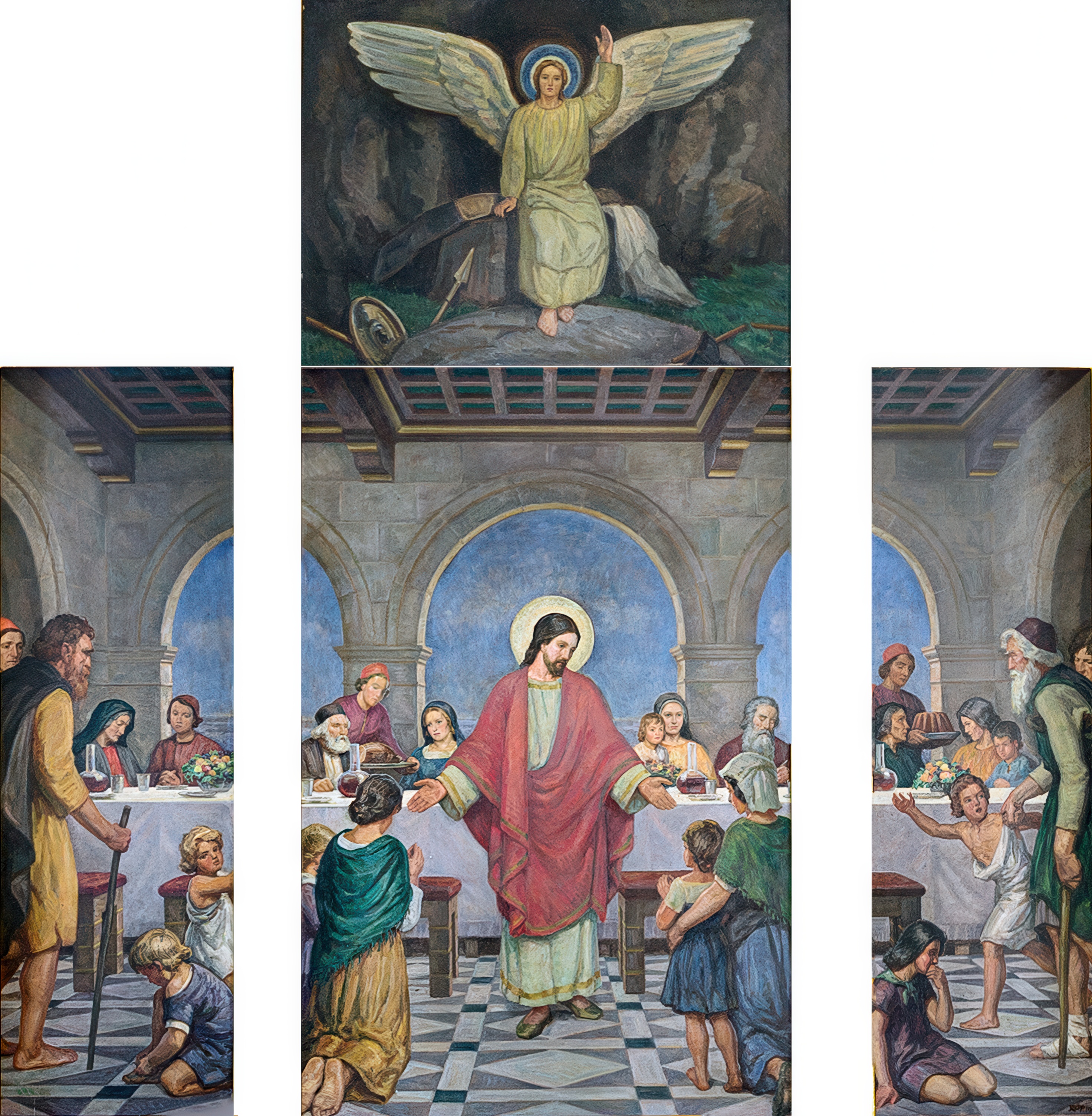
The Patience of God / La Paciencia de Dios

Parenting is the work of repetition, especially in families with multiple children. Something can never be said just once. “What’s for dinner?” is an oft repeated question in my home, as well as “What are we doing today?” My husband and I happen to have 6 kids, so there are some days that I feel like I’m experiencing an inordinate amount of déjà vu when I have to repeat the same thing over and over again. 

Sometimes, I wonder if Jesus felt the same way during his ministry. Or, when I’m really feeling like a failure in the patience department, I wonder if God ever feels that way about me. Can’t I just remember what He has told me over and over again? 

In today’s Gospel, we hear Jesus explaining to the people that it was God who gave the Israelites manna in the desert, not Moses. This is something the people ought to know and understand. God had been caring for and providing for His people throughout history. Didn’t they know it already? Wasn’t God tired of having to prove His trustworthiness over and over again?

Clearly not, and praise the Lord for it. God is not like me, or any of us, who lose our patience over repeated childlike requests. Not only did God provide for the Israelites in the desert, Jesus explains that He will continue to provide for us in a new and incredible way. The manna in the desert lasted only a time, but the bread from Heaven will last until the end of time. Jesus, our true Bread, sustains us and gives us access to the Father in a way never before had on earth. 

It’s even more amazing to consider that this isn’t a one and done thing. Jesus doesn’t offer himself to us once in the Eucharist. We are invited weekly, even daily, to the sacrifice of the Mass where we can receive our Lord in true food and drink to nourish our souls. Every day, every single day, Jesus offers Himself to us. He isn’t exasperated with our need for daily nourishment. He isn’t fed up with our consistent need for grace because we have sinned yet again. 

2nd Peter 3:15 tells us that, “Our Lord’s patience is directed toward salvation.” God knows we cannot get to heaven on our own. Because of sin, our desires are disordered and we are prone to fall into temptation. Like my children who ask over and over again what time we are going to the park, we return to God over and over again asking for forgiveness, for grace, for help. And God, over and over again, offers us the Eucharist to support and sustain us. God does not tire of us nor is He surprised when we fall. He is ever faithful, ever patient, and ever loving.

Contact the author


Ser padres es una tarea repetitiva, especialmente en familias con varios hijos. Algo nunca se puede decir solo una vez. “¿Qué hay para cenar?” es una pregunta que se repite con frecuencia en mi casa, al igual que “¿Qué vamos a hacer hoy?” Mi esposo y yo tenemos seis hijos, así que hay días en que siento una sensación de déjà vu desmesurada al tener que repetir lo mismo una y otra vez.

A veces, me pregunto si Jesús sintió lo mismo durante su ministerio. O, cuando me siento realmente impaciente, me pregunto si Dios alguna vez siente lo mismo por mí. ¿Acaso no puedo simplemente recordar lo que me ha dicho una y otra vez?

En el Evangelio de hoy, escuchamos a Jesús explicar al pueblo que fue Dios quien dio el maná a los israelitas en el desierto, no Moisés. Esto es algo que el pueblo debe saber y comprender. Dios había cuidado y provisto a su pueblo a lo largo de la historia. ¿Acaso no lo sabían ya? ¿No estaba Dios cansado de tener que demostrar su confiabilidad una y otra vez?

Claro que no, y alabado sea el Señor por ello. Dios no es como yo, ni como ninguno de nosotros, que perdemos la paciencia ante repetidas peticiones infantiles. Dios no solo proveyó para los israelitas en el desierto, sino que Jesús explica que continuará proveyendo para nosotros de una manera nueva e increíble. El maná en el desierto duró solo un tiempo, pero el pan del Cielo durará hasta el fin del mundo. Jesús, nuestro verdadero Pan, nos sustenta y nos da acceso al Padre como nunca antes en la tierra.

Es aún más asombroso considerar que esto no es algo que se hace una sola vez. Jesús no se ofrece a nosotros una sola vez en la Eucaristía. Somos invitados semanalmente, incluso diariamente, al sacrificio de la Misa, donde podemos recibir a nuestro Señor en verdadero alimento y bebida para nutrir nuestras almas. Cada día, todos los días, Jesús se ofrece a nosotros. No se exaspera con nuestra necesidad de alimento diario. Él no se cansa de nuestra constante necesidad de gracia porque hayamos pecado una vez más.

2 Pedro 3:15 nos dice que “la paciencia de nuestro Señor está dirigida a la salvación”. Dios sabe que no podemos llegar al cielo por nuestros propios medios. Debido al pecado, nuestros deseos están desordenados y somos propensos a caer en la tentación. Como mis hijos que preguntan una y otra vez a qué hora vamos al parque, volvemos a Dios una y otra vez pidiendo perdón, gracia y ayuda. Y Dios, una y otra vez, nos ofrece la Eucaristía para apoyarnos y sostenernos. No se cansa de nosotros ni se sorprende cuando caemos. Dios es siempre fiel, siempre paciente y siempre amoroso.

Comunicarse con la autora

Kate Taliaferro is an Air Force wife and mother. She is blessed to be able to homeschool, bake bread and fold endless piles of laundry. When not planning a school day, writing a blog post or cooking pasta, Kate can be found curled up with a book or working with some kind of fiber craft. Kate blogs at DailyGraces.net.

Feature Image Credit: Unknown Artist, art.diocesan.com/stock-photo/i-am-the-bread-of-life-25977/

The views and opinions expressed in the Inspiration Daily blog are solely those of the original authors and contributors. These views and opinions do not necessarily represent those of Diocesan, the Diocesan staff, or other contributors to this blog.
Multiplied Graces: The True Miracle / Las gracias multiplicadas son el verdadero milagro

In today’s Gospel we see this moment when the crowd, still buzzing from the miracle of the multiplication of the loaves and fishes, goes searching for Jesus—not because they want Him, but because they want more of what He can give. I’m not going to lie, this makes me squirm a bit because I realize how often this is me!  How many times have I come to prayer with a list of needs, hoping God will multiply something in my life—finances, quick resolutions, recognition—rather than simply asking for the grace to trust Him?

Jesus, with such gentleness, redirects the people’s desire. He doesn’t scold their hunger; He simply invites them to a deeper one. “Do not work for food that perishes,” He says, “but for the food that endures for eternal life.” He acknowledges their longing but shifts their gaze from the temporary to the eternal, from the surface to the soul. It’s such a tender correction—one I need far more often than I’d like to admit.

The crowd asks what they must do to accomplish God’s works, expecting some impressive task. Instead, Jesus gives them something beautifully simple: Believe. Sure, that might feel like a difficult task, but Jesus would never ask the impossible! Believing, trusting, and hoping in the unknown, are all possible with the grace of God. And we merely need to ask to receive it. Look beyond the miracle to the One who performed it. This is the daily invitation of discipleship—not to chase after the quick fix, the visible sign, or the material reassurance, but to place our confidence in the Christ who sustains us in ways the world never could.

In my own life, God has shown me again and again that the “bread” I think I need is rarely the nourishment my heart is truly craving. The real miracle is not the multiplied loaves but the multiplied grace that comes when I seek Jesus for who He is, not for what He can provide.

Contact the author


En el Evangelio de hoy vemos este momento en el que la multitud, aún entusiasmada por el milagro de la multiplicación de los panes y los peces, busca a Jesús, no porque lo deseen a él, sino porque desean más de lo que pueden recibir de Él. No voy a mentir, esto me incomoda un poco porque me doy cuenta de cuántas veces hago lo mismo. ¿Cuántas veces he venido a orar con una lista de necesidades, esperando que Dios multiplique algo en mi vida (finanzas, propósitos rápidos, reconocimiento) en lugar de simplemente pedir la gracia de confiar en Él?

Jesús, con tanta dulzura, redirige el deseo de la gente. No reprende su hambre; simplemente los invita a una más profunda. “No trabajen por ese alimento que se acaba, sino por el alimento que dura para la vida eterna”. Reconoce su anhelo, pero desvía su mirada de lo temporal a lo eterno, de la superficie al alma. Es una corrección tan tierna, una que necesito mucho más a menudo de lo que me gustaría admitir. 

La multitud pregunta qué deben hacer para realizar las obras de Dios, esperando una tarea impresionante. En cambio, Jesús les da algo hermosamente simple: Creer. Claro, puede parecer una tarea difícil, ¡pero Jesús nunca pediría algo imposible! Creer, confiar y tener esperanza en lo desconocido son posibles con la gracia de Dios. Y tan solo tenemos que pedirlo para recibirlo. Miremos más allá del milagro, a Aquel que lo realizó. Esta es la invitación diaria del discipulado: no a buscar la solución rápida, la señal visible ni la tranquilidad material, sino a depositar nuestra confianza en Cristo, quien nos sostiene de maneras que el mundo nunca podría.

En mi propia vida, Dios me ha mostrado una y otra vez que el “pan” que creo necesitar rara vez es el alimento que mi corazón realmente anhela. El verdadero milagro no son los panes multiplicados, sino la gracia multiplicada que llega cuando busco a Jesús por quién es, no por lo que me puede dar.

Comunicarse con la autora

Allison Gingras (www.ReconciledToYou.com ) shares an everyday Catholic faith with humor and honesty. Her writing includes The Handy Little Guide to Novenas (OSV), Encountering Signs of Faith (Ave Maria Press), the Stay Connected Journals for Catholic Women (OSV), and her newest book, Jesus Heals (OSV), published in 2025. Allison is the Director of Digital Evangelization for Family Rosary USA.

Feature Image Credit: Diego_torres, pixabay.com/photos/sunset-poppies-field-red-poppies-815270/

The views and opinions expressed in the Inspiration Daily blog are solely those of the original authors and contributors. These views and opinions do not necessarily represent those of Diocesan, the Diocesan staff, or other contributors to this blog.

Diligent Faith / La fe diligente

Around this time five years ago, our first granddaughter was baptized. Public gatherings were troublesome in pandemic days. Events that should have brought great rejoicing were muted by the fear of disease. Our pastor offered a private ceremony in which ten masked family members could attend. We stressed over who the ten should be. Our immediate family was six. Add the priest, the baby, her father, a non-family member godparent, and my parents and that was twelve. It left no room for aunts, uncles, cousins, significant others, or the father’s devout Baptist family. 

Worry over hurt feelings and directives from our diocese that no group baptisms should be held clouded my joy over the pending baptism. I felt a lot of responsibility for making sure she was baptized in the church and lamented my concerns to the sacristan at another church where I was an organist. He and I, a cantor, a lector, and a priest were the only ones allowed to be present while the Mass was being live streamed. 

“Your granddaughter’s baptism is not only for her, but for her parents and the rest of your family to receive that grace,” he said. That statement interrupted my drive into pious control and reminded me that the grace extended at baptism would help cover my sins too. Rather than concerning myself with the reception of a sacrament, I had been worrying about a ceremony and a celebration. 

Our diligence encourages the dissipation of the deceptive voice of the devil, who continually dares us to abandon our deliberate confidence in a loving God. Yet today’s first reading from Acts and the Responsorial Psalm remind us to persevere and not allow the concerns of the day to waiver our faith. “I set the Lord ever before me; with him at my right hand I shall not be disturbed,” the psalmist says. 

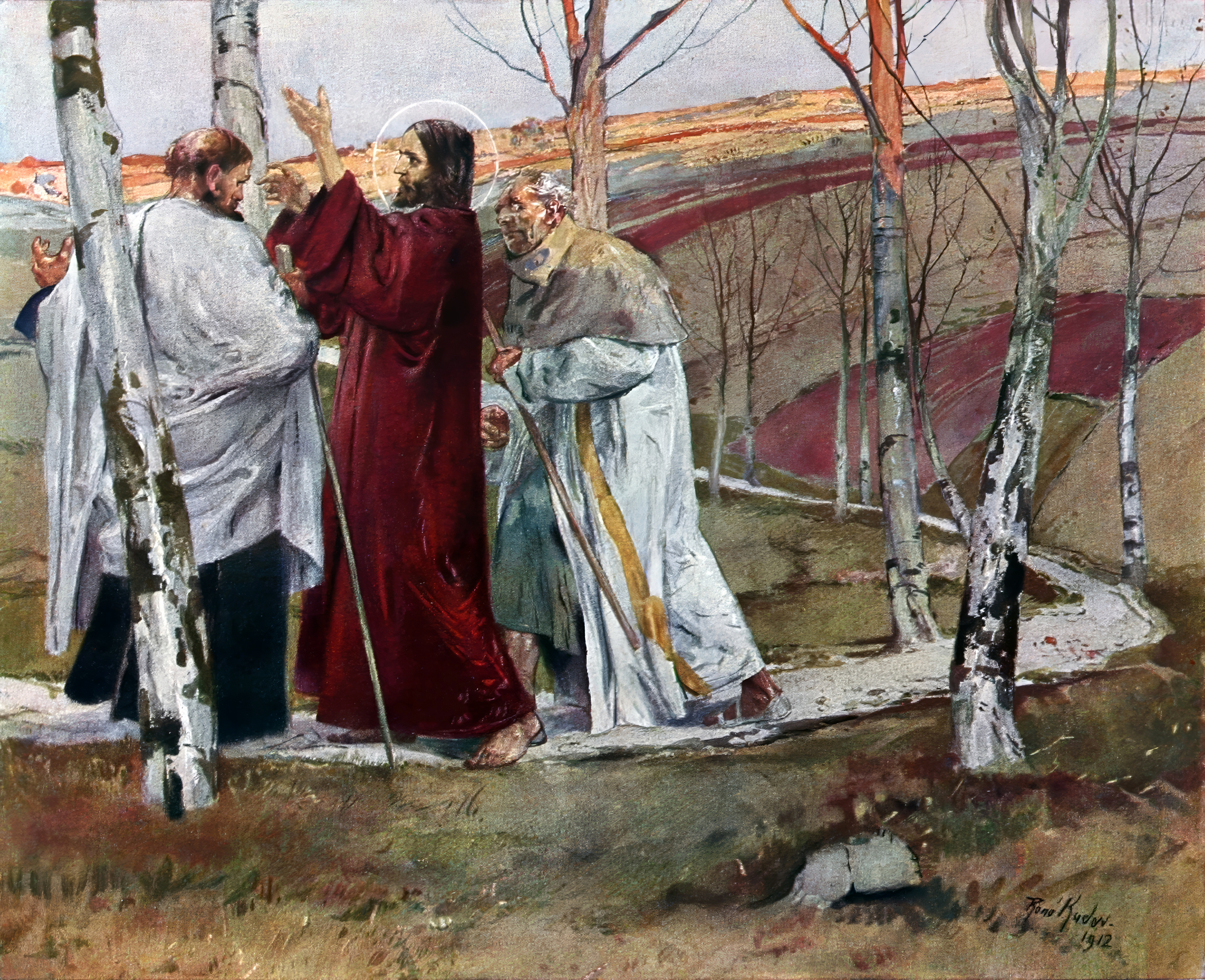
On the road to Emmaus, Cleopas says to Jesus, whom he does not recognize: “it is now the third day since this took place. Some women from our group, however, have astounded us: they were at the tomb early in the morning and did not find his body; they came back and reported that they had indeed seen a vision of angels who announced that he was alive.”

Jesus expresses disappointment in their initial lack of faith. “Oh, how foolish you are! How slow of heart to believe all that the prophets spoke!” It wasn’t until he broke the bread for them that “their eyes were opened and they recognized him.”

The sacristan’s words opened my eyes to the importance of spiritual diligence – doing everything needed for the salvation of my soul and the souls around me. Despite masks and a small “audience,” my granddaughter’s baptism brought great joy and when a few extra people showed up our priest welcomed them. 

Contact the Author


Hace cinco años, por estas fechas, bautizamos a nuestra primera nieta. Las reuniones públicas eran problemáticas en tiempos de pandemia. Eventos que deberían haber traído gran regocijo se vieron empañados por el miedo a la enfermedad. Nuestro párroco ofreció una ceremonia privada a la que podían asistir diez familiares con mascarilla. Nos preocupamos de quiénes serían esos diez. En tan solo nuestra familia inmediata éramos seis. Si a eso le sumamos el sacerdote, la bebé, su padre, un padrino que no era de la familia y mis padres, eran doce. No quedaba espacio para tías, tíos, primos, parejas ni para la devota familia bautista del padre.

La preocupación por los sentimientos heridos y las directivas de nuestra diócesis de que no se celebraran bautismos en grupo nublaron mi alegría por el bautismo pendiente. Sentía mucha responsabilidad por asegurarme de que se bautizara en la iglesia y lamenté mis preocupaciones al sacristán de otra iglesia donde yo era organista. Él y yo, un cantor, un lector y un sacerdote, éramos los únicos con permiso para estar presentes mientras se transmitía la misa en línea. 

“El bautismo de tu nieta no es solo para ella, sino para que sus padres y el resto de tu familia reciban esa gracia”, dijo. Esa declaración interrumpió mi impulso hacia el control piadoso y me recordó que la gracia otorgada en el bautismo también ayudaría a cubrir mis pecados. En lugar de preocuparme por la recepción de un sacramento, me había estado preocupando por una ceremonia y una celebración.

Nuestra diligencia fomenta la disipación de la voz engañosa del diablo, que continuamente nos reta a abandonar nuestra confianza deliberada en un Dios amoroso. Sin embargo, la primera lectura de hoy de los Hechos de los Apóstoles y el Salmo Responsorial nos recuerdan que debemos perseverar y no permitir que las preocupaciones del día debiliten nuestra fe. “Tengo siempre presente al Señor y con él a mi lado, jamás tropezaré”, dice el salmista. 

De camino a Emaús, Cleofás le dice a Jesús, a quien no reconoce: “han pasado ya tres días desde que estas cosas sucedieron. Es cierto que algunas mujeres de nuestro grupo nos han desconcertado, pues fueron de madrugada al sepulcro, no encontraron el cuerpo y llegaron contando que se les habían aparecido unos ángeles, que les dijeron que estaba vivo”.

Jesús expresa su decepción por su falta de fe inicial. “¡Qué insensatos son ustedes y qué duros de corazón para creer todo lo anunciado por los profetas!” No fue hasta que partió el pan que “se les abrieron los ojos y lo reconocieron”.

Las palabras del sacristán me abrieron los ojos a la importancia de la diligencia espiritual: hacer todo lo necesario para la salvación de mi alma y de las almas que me rodeaban. A pesar de las mascarillas y del reducido público, el bautizo de mi nieta me trajo una gran alegría y, cuando llegaron algunas personas de más, nuestro sacerdote les dio la bienvenida a ellos también.

Comunicarse con la autora


Beth Casteel, wife of 36 years, mother of four and grandmother of two, writes with a passion for uncovering the stories of ordinary people. She worked as a newspaper reporter and editor and has advanced degrees in communication studies and creative writing. She contributed to Cloud of Witnesses, 25 Stories of Saintly Inspiration and Intercession, and has written essays for both sacred and secular publications. Her work can be seen on substack bethcasteel.substack.com/ and at bethcasteel.com.

Feature Image Credit: Rene Kuder, art.diocesan.com/stock-photo/emmaus-20049/

The views and opinions expressed in the Inspiration Daily blog are solely those of the original authors and contributors. These views and opinions do not necessarily represent those of Diocesan, the Diocesan staff, or other contributors to this blog.

Few Yet Powerful Words / Pocas pero poderosas palabras

Imagine a child who climbs to the top of a playground structure. He excitedly ascends as high as he can go. He reaches the highest tower and for the first time looks down. His joy quickly melts into fear. The steep slide before him looks to him to be a path of sure death. Panic comes over him. He stands at the top of the playground structure, paralyzed with fear.

The boy hears a clanging noise from the tunnel he had recently emerged from. His eyes widen further. He doesn’t know what to do. Suddenly, a voice calls out from the tunnel, “It’s me.” With those two words, the child immediately feels his body relax. He recognizes that voice because he’s heard it every day of his life. He knows he’s safe because his father has come to rescue him. He knows his father’s voice, and before he can even see him, the boy benefits from his dad’s presence.

Though his father only spoke two words, the boy hears infinitely more meaning. He hears his dad saying, “You’re safe now. I’ve come to help you. You’re not alone.” Many times just a few words can have a profound impact on someone, especially when it’s a voice we recognize without even seeing their face.

The disciples in the boat during today’s Gospel had a similar experience. They rowed in the boat, excited after the miraculous multiplication of the loaves and fishes. It didn’t take long for the euphoria of the miracle to wear off. The “sea was stirred up,” and “they began to be afraid.” Though we don’t get many details in John’s account, we know about this storm from the other Gospels. How quickly their joy melted into fear. Then they saw something that was beyond their comprehension. A man walked on the water toward them. They didn’t understand or know what to do.

Jesus spoke to them and said, “It is I.” These few words said aloud meant a great deal to the Apostles. They recognized His voice and were comforted to know that He was there with them. Their fear melted knowing Jesus was near. They heard His voice and knew Him.

The words Jesus spoke were more than just letting His Apostles know that He was there. Jesus’ words could also be translated as, “I am,” as in the name that God gave to Moses from the burning bush. When Jesus identified Himself as the one walking on the water toward them, He simultaneously affirmed that He is the living and true God. His Apostles have nothing to fear because their Rabbi is more than just a man who can walk on water. He is the Lord.

Contact the Author


Imagina a un niño que sube a lo alto de una estructura de juegos infantiles. Sube emocionado lo más alto que puede. Llega a la torre más alta y, por primera vez, mira hacia abajo. Su alegría se convierte rápidamente en miedo. El tobogán empinado que tiene delante le parece un camino a la muerte segura. El pánico se apodera de él. Permanece en lo alto de la estructura, paralizado por el miedo.

El niño oye un ruido metálico proveniente del túnel del que acababa de salir. Sus ojos se abren aún más. No sabe qué hacer. De repente, una voz grita desde el túnel: “Soy yo”. Con esas dos palabras, el niño siente inmediatamente que su cuerpo se relaja. Reconoce esa voz porque la ha oído todos los días de su vida. Sabe que está a salvo porque su padre ha venido a rescatarlo. Reconoce la voz de su padre, e incluso antes de verlo, el niño se beneficia de su presencia.

Aunque su padre sólo pronunció dos palabras, el niño escucha un significado infinitamente mayor. Oye a su padre decir: “Ahora estás a salvo. He venido a ayudarte. No estás solo”. Muchas veces, solo unas pocas palabras pueden tener un profundo impacto en alguien, especialmente cuando se trata de una voz que reconocemos sin siquiera ver su rostro.

Los discípulos en la barca durante el Evangelio de hoy tuvieron una experiencia similar. Remaban en la barca, emocionados después de la milagrosa multiplicación de los panes y los peces. La euforia del milagro no tardó en desvanecerse. El mar se agitó y comenzaron a tener miedo. Aunque no obtenemos muchos detalles en el relato de Juan, conocemos esta tormenta por los otros Evangelios. ¡Qué rápido su alegría se convirtió en miedo! Entonces vieron algo que estaba más allá de su comprensión. Un hombre caminaba sobre el agua hacia ellos. No entendían ni sabían qué hacer.

Jesús les habló y dijo: “Soy yo”. Estas pocas palabras pronunciadas en voz alta significaron mucho para los Apóstoles. Reconocieron su voz y se consolaron al saber que Él estaba allí con ellos. Su miedo se disipó al saber que Jesús estaba cerca. Oyeron su voz y lo reconocieron.

Las palabras que Jesús pronunció fueron más que simplemente hacerles saber a sus Apóstoles que Él estaba allí. Las palabras de Jesús también podrían traducirse como “Yo soy”, al igual que el nombre que Dios le reveló a Moisés desde la zarza ardiente. Cuando Jesús se identificó como aquel que caminaba sobre las aguas hacia ellos, afirmó simultáneamente que Él es el Dios vivo y verdadero. Sus apóstoles no tienen nada que temer, porque su Maestro es mucho más que un hombre que podía caminar sobre el agua. Es el Señor.

Comunicarse con la autora


Maria Riley is a passionate Catholic author and speaker who loves volunteering or playing board games when she’s not writing or mom-ing around with her four daughters. Her award-winning Catholic children’s chapter book series, Adventures with the Saints, is endorsed by her bishop. Visit her at MariaRileyAuthor.com or on social media @mariarileyauthor. She and her family live in Kansas.

Feature Image Credit: Airgilstudio, pixabay.com/illustrations/jesus-storm-disciples-boat-trust-8748516/

The views and opinions expressed in the Inspiration Daily blog are solely those of the original authors and contributors. These views and opinions do not necessarily represent those of Diocesan, the Diocesan staff, or other contributors to this blog.

Trust and Surrender / Confianza y entrega

Although my husband and I have been married for forty-six years, I still enjoy hearing some of his childhood stories about growing up in a family of ten children, where everything ran smoothly. Every few weeks, my husband went with Mom to the commissary while his two older sisters stayed home to take care of the other children. They loaded four carts with food, transported them from the store to the car, and then filled the house’s cupboards, refrigerator, and freezer.     

His mother used to stand at the front door and ring a dinner bell, announcing that dinner was ready at five o’clock. They gathered as a family to eat and stayed afterward to share stories. There were many stews, casseroles, and roasts, along with variations of spaghetti, once a week. A popular dinner was four dozen tacos. A roast would quickly disappear, and a 13-by-9-inch cake was cut into twelve even pieces. They always trusted that there would be enough food on the table.     

In today’s Gospel, Jesus feeds a crowd so large that Philip cannot imagine two hundred days’ wages covering the cost of the food. They had just traveled with Jesus through towns, across the Sea of Galilee, and up a mountain. It would have been natural for them to get their own food. Yet Jesus knows each of them personally and shows compassion. After Simon Peter notices a boy with five barley loaves and two fish, Jesus announces His plan: “Have the people recline.”  

If I had been in the crowd, I would have wondered why we were told to sit when common sense would have suggested we find the nearest town to buy food first. I admire the trust and obedience of the disciples at that moment as they surrendered to Jesus’ plan. And later, they would echo, “This is truly the Prophet, the one who is to come into the world.” 

Where is my trust? I trust that God is in control, but sometimes I take the reins into my own hands and try to find my own way. Most of us probably tend to switch back and forth following God’s way and our own. My trust and surrender fluctuate; some days are easy, and others feel like reaching for the sky. Still, when I am weak and willing, the Lord steps in. 

Is there something in your life that God wants you to surrender? If we loosen our grip, we might discover that all our needs are fulfilled—if not all our desires—and that we can love and cherish God even more.

Contact the Author


Aunque mi esposo y yo llevamos ​​cuarenta y seis años de casados, todavía disfruto escuchando algunas de sus historias de la infancia, de cuando creció en una familia de diez hijos, donde todo funcionaba a la perfección. Cada dos o tres semanas, mi esposo iba con su mamá al supermercado mientras sus dos hermanas mayores se quedaban en casa cuidando a los demás niños. Llenaban cuatro carritos con comida, los transportaban de la tienda al carro y luego llenaban las despensas, la refrigeradora y la congeladora de la casa.

Su madre solía pararse en la puerta principal y tocar una campanita para anunciar que la cena estaba lista a las cinco en punto. Se reunían en familia para comer y después se quedaban a compartir historias. Había muchos guisos, estofados y asados, junto con variaciones de espagueti, una vez por semana. Una cena popular eran cuatro docenas de tacos. Un asado desaparecía rápidamente, y un pastel de 33 x 23 centímetros se cortaba en doce trozos iguales. Siempre confiaban en que habría suficiente comida en la mesa.

En el Evangelio de hoy, Jesús alimenta a una multitud tan grande que Felipe no puede imaginar que el salario de doscientos días cubra el costo de la comida. Acababan de viajar con Jesús por pueblos, cruzando el Mar de Galilea y subiendo una montaña. Habría sido natural que buscaran su propia comida. Sin embargo, Jesús conoce a cada uno de ellos personalmente y muestra compasión. Después de que Simón Pedro ve a un niño con cinco panes de cebada y dos peces, Jesús anuncia su plan: “Diganle a la gente que se siente”.

Si yo hubiera estado dentro de la multitud, me habría preguntado por qué nos decían que nos sentáramos cuando el sentido común habría sugerido que primero buscáramos el pueblo más cercano para comprar comida. Admiro la confianza y la obediencia de los discípulos en ese momento, al entregarse al plan de Jesús. Y más tarde, repetirían: “Éste es, en verdad, el profeta que habría de venir al mundo”.

¿Dónde está mi confianza? Confío en que Dios tiene el control, pero a veces tomo las riendas en mis propias manos e intento encontrar mi propio camino. La mayoría de nosotros probablemente tendemos a alternar entre seguir el camino de Dios y el nuestro. Mi confianza y mi entrega fluctúan; algunos días son fáciles y otros se sienten como si estuviera intentando alcanzar el cielo. Aun así, cuando soy débil y estoy dispuesta, el Señor interviene.

¿Hay algo en tu vida que Dios quiere que le entregues? Si soltamos las las riendas un poquito, podríamos descubrir que todas nuestras necesidades están satisfechas —si no todos nuestros deseos— y que podemos amar y apreciar a Dios aún más.

Comunicarse con la autora


Charlene Unterkofler is a Catholic convert who nurtures her spiritual growth by serving the poor in the Society of St. Vincent de Paul and guiding the formation of other Vincentians through her writing and workshops. She co-authored “Cloud of Witnesses, 25 Stories of Saintly Inspiration and Intercession,” with the PraiseWriters community. She enjoys playing cribbage with her husband and reading to her grandsons. Discover more at gentleservant.com.

Feature Image Credit: Wallace Fonseca, unsplash.com/photos/a-person-is-parasailing-over-a-mountain-range-WHSr8lfJd_4

The views and opinions expressed in the Inspiration Daily blog are solely those of the original authors and contributors. These views and opinions do not necessarily represent those of Diocesan, the Diocesan staff, or other contributors to this blog.

Believe It, Live It / Créelo, Vívelo

There are many days when I sit with my Bible and I am puzzled. What is God trying to say? Why can’t Paul be clearer? Did Jesus mean that the way I think He did, or in some other way, because this does not make sense to me.

But today’s readings are crystal clear. In the first reading, we hear Peter tell the high priest, we are not going to stop talking about Jesus. You may not like it but that’s not our problem. I am compelled to continue by two things – our witness of the passion, death and resurrection of Jesus and the Holy Spirit. Peter and the Apostles have the Holy Spirit because they obey God. We too have the Holy Spirit by virtue of our Baptism first, and then are sealed with the gifts of the Holy Spirit at Confirmation. 

Are we talking about Jesus? It is not always natural, fun, or easy to talk about Him, is it? But we can ask for that holy boldness to do so, to be compelled to speak because we know and believe that Jesus is the Son of God. Indeed, John reminds us in today’s Gospel that the Father gave all to the Son and believing in Him leads to eternal life. But if we disobey the Son, we experience not life, but the justice of God, as the last verse indicates, with a promise and a punishment. 

It is clear that it is not enough to believe passively. We are called to live out our faith in active, tangible ways. As we read through Acts during this Easter season, allow it to stir you to action. During Lent, you may have taken up extra prayer, made more sacrifices, and spent more time serving others. Maybe you can pick up those practices again so that they become a part of your walk. Or look for new ways to put your faith into action. Volunteer your time at your parish or in your community. Keep in touch with those who have left the Church and invite them back. 

Allow your belief in Christ to form and shape your actions.

Contact the author


Muchas veces cuando reflexiono con la Biblia y me siento confundida. ¿Qué está intentando decir Dios? ¿Por qué Pablo no puede hablar más claramente? ¿Lo quiso decir Jesús como creo que lo quiso decir, o de otra forma? porque esto no me resulta comprensible.

Pero las lecturas de hoy son muy claras. En la primera lectura, escuchamos a Pedro decirle al sumo sacerdote que no van a dejar de hablar de Jesús. Puede que no te guste, pero ese no es nuestro problema. Dos cosas me impulsan a continuar: nuestro testimonio de la pasión, muerte y resurrección de Jesús y el Espíritu Santo. Pedro y los Apóstoles tienen el Espíritu Santo porque obedecen a Dios. Nosotros también tenemos el Espíritu Santo en virtud de nuestro Bautismo primero, y luego somos sellados con los dones del Espíritu Santo en la Confirmación.

¿Hablamos de Jesús con los demás? No siempre es natural, divertido ni fácil hablar de Él, ¿verdad? Pero podemos pedir esa santa valentía para hacerlo, para sentirnos impulsados ​​a hablar porque sabemos y creemos que Jesús es el Hijo de Dios. De hecho, Juan nos recuerda en el Evangelio de hoy que el Padre lo entregó todo al Hijo y que creer en Él conduce a la vida eterna. Pero si desobedecemos al Hijo, no experimentamos la vida, sino la justicia de Dios, como indica el último versículo, con una promesa y un castigo.

Es evidente que no basta con creer pasivamente. Estamos llamados a vivir nuestra fe de manera activa y tangible. Al leer los Hechos de los Apóstoles durante esta temporada de Pascua, deja que te impulse a la acción. Durante la Cuaresma, puede que hayas recurrido a la oración, hecho más sacrificios y dedicado más tiempo al servicio de los demás. Quizás puedas retomar esas prácticas para que formen parte de tu vida. O busca nuevas maneras de poner en práctica tu fe. Ofrece tu tiempo como voluntario en tu parroquia o en tu comunidad. Mantente en contacto con quienes han abandonado la Iglesia e invítalos a regresar.

Permite que tu fe en Cristo moldee tus acciones.

Comunicarse con la autora

Deanna G. Bartalini, M.Ed., M.P.A. is a certified spiritual director, retreat leader, speaker, and writer with decades of experience serving the Church. She is the founder of LiveNotLukewarm.com, works on the retreat team at Our Lady of Florida Passionist Spiritual Center, and is an Unbound prayer minister.  She has served as a religious education director, youth minister, liturgical coordinator, and stewardship director. She writes for SpiritualDirection.comCatholicMom.comDiocesan.com, and Women in the New Evangelization (WINE). Deanna is the author of The Stay Connected Journals for Catholic Women, Invite the Holy Spirit into your Life, and has contributed to the Catholic Mom’s Prayer Companion, as well as Digital Ministry and Leadership in Today’s Church.

Feature Image Credit: adrianna geo, unsplash.com/photos/woman-in-black-long-sleeve-shirt-and-blue-denim-jeans-holding-woman-in-beige-sweater-5hNLxvOAxuY

The views and opinions expressed in the Inspiration Daily blog are solely those of the original authors and contributors. These views and opinions do not necessarily represent those of Diocesan, the Diocesan staff, or other contributors to this blog.

Into the Light / Hacia la luz

“For God so loved the world…” (John 3:16)

Pretty much everyone knows this Bible verse. Even if you asked someone with no religious affiliation of any kind if they knew any Scripture, they’d probably be able to dig this up out of some fuzzy memory from a roadside billboard or an old church sign. But the beauty of Scripture is that because God is eternal and alive, His Word is also eternal, and very much alive. The Holy Spirit, present with us since Christ’s Ascension, breathes new life into us every time we truly read and meditate on these words.

We’ve heard this verse countless times, but do we know what’s happening here in John’s Gospel? This is part of a longer conversation between Jesus and Nicodemus the Pharisee, a faithful man speaking with Him under cover of night for fear of the other Pharisees. Nicodemus truly seeks to learn the truth. He’s asking the right questions, and he doesn’t turn away when Christ’s answers don’t immediately make sense. Yet he still approaches Christ under cover of darkness. He isn’t sure whether his heart fully belongs to Christ yet, like the hearts of the Apostles do. 

With that in mind, let’s look at the final verse of the Gospel today: “But whoever lives the truth comes to the light, so that his works may be clearly seen as done in God.” These verses take on a far more personal meaning when we know who Jesus is speaking to. Nicodemus wants to believe. He wants to take the final steps out into the deep. But he’s also afraid. He is a Pharisee, a leader of his people. He’s very aware that Jesus is not popular among the Pharisees. Open loyalty to Jesus comes with some pretty heavy consequences, and Nicodemus isn’t even sure whether he can step out into the deep when he still doesn’t understand much of what Jesus is telling him.

Jesus seems to realize this. His words aren’t a condemnation. Just a little bit earlier, he told Nicodemus, “God did not send his son into the world to condemn the world.” These are words of encouragement – a call. This is, in fact, Nicodemus’ vocation. And it is our vocation, too. Jesus is speaking to us as much as he is speaking to Nicodemus. The Holy Spirit moves outside of time, touching our hearts as He touched the heart of Nicodemus that night. We are who Jesus is speaking to. You are who Jesus is speaking to.

Have you been hesitating to step into the light? What are the corners of your heart that are still in the dark? What are you afraid that He might see – or that others might see? What’s holding you back? Ask the Holy Spirit to bring light into the dusty corners and closed-up rooms. The Lord of Life is here, and He’s asking for you, calling you into the light, so the whole world can know that you love Him and that He loves you.

Contact the author


“Tanto amó Dios al mundo…” (Juan 3,16)

Prácticamente todo el mundo conoce este versículo de la Biblia. Incluso si le preguntaras a alguien sin ninguna afiliación religiosa si conoce alguna Escritura, probablemente podría recordarlo de algún vago recuerdo de una valla publicitaria o un viejo cartel de iglesia. Pero la belleza de las Escrituras radica en que, como Dios es eterno y está vivo, Su Palabra también es eterna y está muy viva. El Espíritu Santo, presente con nosotros desde la Ascensión de Cristo, nos infunde nueva vida cada vez que leemos y meditamos verdaderamente en estas palabras.

Hemos escuchado este versículo innumerables veces, pero ¿sabemos lo que está sucediendo aquí en el Evangelio de Juan? Esto forma parte de una conversación más larga entre Jesús y Nicodemo el fariseo, un hombre fiel que hablaba con Él al amparo de la noche por temor a los demás fariseos. Nicodemo busca sinceramente conocer la verdad. Hace las preguntas correctas y no se aparta cuando las respuestas de Cristo no tienen sentido de inmediato. Sin embargo, todavía se acerca a Cristo en la oscuridad. No está seguro de si su corazón pertenece completamente a Cristo, como el de los apóstoles.

Con esto en mente, veamos el último versículo del Evangelio de hoy: “el que obra el bien conforme a la verdad, se acerca a la luz, para que se vea que sus obras están hechas según Dios”. Estos versículos adquieren un significado mucho más personal cuando sabemos a quién se dirige Jesús. Nicodemo quiere creer. Quiere dar los últimos pasos hacia lo profundo. Pero también tiene miedo. Es un fariseo, un líder de su pueblo. Es muy consciente de que Jesús no es popular entre los fariseos. La lealtad abierta a Jesús conlleva consecuencias muy graves, y Nicodemo ni siquiera está seguro de poder dar el paso hacia lo profundo cuando todavía no comprende gran parte de lo que Jesús le dice.

Jesús parece darse cuenta de esto. Sus palabras no son una condena. Poco antes, le dijo a Nicodemo: “Dios no envió a su Hijo al mundo para condenar al mundo”. Estas son palabras de aliento, una llamada. Esta es, de hecho, la vocación de Nicodemo. Y también es nuestra vocación. Jesús nos habla a nosotros tanto como le habló a Nicodemo. El Espíritu Santo actúa fuera del tiempo, tocando nuestros corazones como tocó el corazón de Nicodemo aquella noche. Nosotros somos a quienes Jesús se dirige. Tú eres a quien Jesús se dirige.

¿Has estado dudando en salir a la luz? ¿Cuáles rincones de tu corazón permanecen aún en la oscuridad? ¿Qué temes que Él vea, o que otros vean? ¿Qué te detiene? Pídele al Espíritu Santo que lleve esos rincones polvorientos y habitaciones cerradas hacia la luz. El Señor de la Vida está aquí, y te busca, te llama a la luz, para que el mundo entero sepa que lo amas y que Él te ama.

Comunicarse con la autora

Hailing from Nashville, Catherine is a graduate of Christendom College with a lifelong passion for words. Her love of writing and her Catholic Faith continue to shape her as a freelance editor, copywriter, and (aspiring) novelist, where she pursues her passions for the love and greater glory of God.

Feature Image Credit: RuslanSikunov, pixabay.com/photos/dawn-mountains-fog-sun-morning-8361032/

The views and opinions expressed in the Inspiration Daily blog are solely those of the original authors and contributors. These views and opinions do not necessarily represent those of Diocesan, the Diocesan staff, or other contributors to this blog.

The Wind and the Holy Spirit / El viento y el Espíritu Santo

“The wind blows where it wills, and you can hear the sound it makes, but you do not know from where it comes from or where it goes; so it is with everyone who is born of the Spirit” (John 3:8).

If a Chinese restaurant took the above passage, subtracted the sentence that follows the semicolon and stuck it in a fortune cookie, I’d have no idea that it was Jesus who said it. Part of the difficulty I am having in writing about this passage, especially in regard to His analogy about wind, is that it is so ordinary. What can I say about a typical aspect of the weather?

Wind is often a phenomenon I don’t consider unless it is somehow interrupting my plans because it is so strong or I wish there was more of it to abate my suffering from a humid summer day.  Ah… maybe Jesus was onto something. Maybe my relationship to the Holy Spirit and the wind are more similar than I’d like to admit. 

How often have I felt the Holy Spirit interrupt my plans? How often have I wished that the Holy Spirit were more present to console me when I experienced spiritual fear, doubt and confusion? It takes great humility and trust to submit to the mysterious movements of the Holy Spirit. Which way is He moving in your heart today?

Contact the Author


“El viento sopla donde quiere y oyes su ruido, pero no sabes de dónde viene ni a dónde va. Así pasa con quien ha nacido del Espíritu” (Juan 3,8).

Si un restaurante chino tomara este pasaje, eliminara la frase que sigue al punto y coma y la incluyera en una galleta de la fortuna, yo no tendría ni idea de que fue Jesús quien lo dijo. Parte de la dificultad que tengo al escribir sobre este pasaje, especialmente en lo que respecta a su analogía con el viento, es que es algo tan común. ¿Qué puedo decir sobre un aspecto tan cotidiano del clima?

El viento suele ser un fenómeno en el que no pienso mucho, a menos que de alguna manera interfiera con mis planes por ser demasiado fuerte, o a menos que desee que sople más para aliviar el calor de un día de verano húmedo. Ah… quizás Jesús sabía porque lo dijo así. Quizás mi relación con el Espíritu Santo y el viento sean más similares de lo que me gustaría admitir.

¿Cuántas veces he sentido que el Espíritu Santo interrumpe mis planes? ¿Cuántas veces he deseado que el Espíritu Santo estuviera más presente para consolarme cuando he experimentado miedo, duda y confusión espiritual? Se necesita mucha humildad y confianza para someterse a los misteriosos movimientos del Espíritu Santo. ¿Hacia dónde se mueve en tu corazón el día de hoy?

Comunicarse con el autor


Matthew is a student at the Catholic Psych Institute to one day provide Mentorship  – a daily service that integrates and aligns the best of the Psychological sciences with Catholic Anthropology and Spirituality. To learn more about Mentorship or read more from Matthew, join his newsletter (coming soon).

Feature Image Credit: Andrew D, unsplash.com/photos/a-red-object-on-a-pole-0zfhSTsriTg

The views and opinions expressed in the Inspiration Daily blog are solely those of the original authors and contributors. These views and opinions do not necessarily represent those of Diocesan, the Diocesan staff, or other contributors to this blog.

The Power of Baptism / El poder del bautismo

I always find it interesting in the Gospels that people get very confused about seemingly simple statements. It is easy to look back and wonder how certain people, in today’s case, Nicodemus, can get things so wrong or be so confused. I quickly realize that I have the benefit of thousands of years of Church history and people much smarter than me who have synthesized the Gospels and the teachings of the Church into understandable soundbites. It is not fair to look back at people who had no concept of a savior or baptism or sacraments in general and treat them as if they had no clue what they were doing. This was all brand new to them. 

Fast forward to today and we still have the same problem even though we have the benefit of good catechesis. I may know in my mind that baptism gives me grace and makes me a child of God, but then there are days that I don’t act in accord with that reality. In today’s Gospel, Jesus is talking about the need for baptism and Nicodemus thinks he means actual rebirth where you are placed back inside a womb. This is an understandable train of thought given that baptism was such a new concept. We don’t have the same excuse. We know exactly what baptism is. The question is, what is our excuse when we don’t live up to our baptismal promises? 

Unfortunately, I think baptism has started to go the way of marriage. It becomes much more about the celebration and the gifts and the pictures than it does about the sacrament that makes us children of God and gives us God’s life in such a way that we receive a mark on our soul that can never be erased. The beauty of this sacrament cannot be overlooked and Jesus in the Gospel today makes it very clear that it is necessary for salvation. Is that important to us? Do you know the day you were baptized? Do you know when you became part of God’s family? 

If we are willing to celebrate our birthday every year, shouldn’t it be all the more important to celebrate the date that we became a child of God every year? Something I want to implement in our house for my boys is celebrating their day of baptism every year. I think there is a great need in our culture today for all of us to take a second to realize the profound spiritual reality that happens at baptism. 

During this Easter season it is a perfect time to regroup and to understand exactly what Christ did when he conquered death. He rose from the dead and by our baptism we all share in that power over death, sin, destruction, hurt, fear, loneliness, and pain. Let’s take some time today to thank God for the amazing gift we have as children of our loving God.

From all of us here at Diocesan, God bless!

Contact the author


Siempre me parece interesante que en los Evangelios la gente se confunda tanto con afirmaciones aparentemente simples. Es fácil mirar atrás y preguntarse cómo ciertas personas, como Nicodemo en el Evangelio de hoy, pueden equivocarse tanto o estar tan confundidas. Enseguida me doy cuenta de que cuento con miles de años de historia de la Iglesia y con personas mucho más inteligentes que yo que han sintetizado los Evangelios y las enseñanzas de la Iglesia en frases fáciles de entender. No es justo recordar a personas que no tenían ni idea de un salvador, del bautismo ni de los sacramentos en general, y tratarlas como si no tuvieran ni idea de lo que hacían. Todo esto era completamente nuevo para ellas.

Hoy en día, seguimos teniendo el mismo problema, aunque tengamos el beneficio de una buena catequesis. Puedo saber en mi mente que el bautismo me da gracia y me convierte en hijo de Dios, pero hay días en que no actúo conforme a esa realidad. En el Evangelio de hoy, Jesús habla de la necesidad del bautismo y Nicodemo cree que se refiere al renacimiento, en el que uno vuelve a estar dentro del vientre materno. Esta es una línea de pensamiento comprensible, dado que el bautismo era un concepto tan nuevo. No tenemos la misma excusa. Sabemos exactamente qué es el bautismo. La pregunta es: ¿cuál es nuestra excusa cuando no cumplimos nuestras promesas bautismales?

Lamentablemente, creo que el bautismo ha empezado a seguir el mismo camino que el matrimonio. Se trata mucho más de la celebración, los regalos y las fotos que del sacramento que nos hace hijos de Dios y nos da la vida de Dios de tal manera que recibimos una marca imborrable en nuestra alma. La belleza de este sacramento es innegable, y Jesús, en el Evangelio de hoy, deja muy claro que es necesario para la salvación. ¿Es eso importante para nosotros? ¿Sabes el día en que te bautizaste? ¿Sabes cuándo te convertiste en miembro de la familia de Dios?

Si estamos dispuestos a celebrar nuestro cumpleaños cada año, ¿no debería ser aún más importante celebrar la fecha en que nos convertimos en hijos de Dios cada año? Algo que quiero implementar en casa para mis hijos es celebrar su día de bautismo cada año. Creo que en nuestra cultura actual es muy necesario que todos nos detengamos un momento para comprender la profunda realidad espiritual del bautismo.

Esta Pascua es el momento perfecto para reflexionar y comprender exactamente lo que Cristo hizo al vencer a la muerte. Resucitó de entre los muertos y, por nuestro bautismo, todos compartimos ese poder sobre la muerte, el pecado, la destrucción, el dolor, el miedo, la soledad y el sufrimiento. Tomemos un tiempo hoy para agradecer a Dios por el maravilloso don que tenemos como hijos de nuestro Dios amoroso.

De parte de todos nosotros aquí en Diocesan, ¡Dios los bendiga! 

Comunicarse con el autor

Tommy Shultz is a Business Development Representative for Diocesan. In this role he is committed to bringing the best software to dioceses and parishes while helping them evangelize on the digital continent. Tommy has worked in various diocese and parish roles since his graduation from Franciscan University with a Theology degree. He hopes to use his skills in evangelization, marketing, and communications, to serve the Church and bring the Good News to all. His favorite quote comes from St. John Paul II, who said, “A person is an entity of a sort to which the only proper and adequate way to relate is love.”

Feature Image Credit: Josh Applegate, unsplash.com/photos/toddler-baptized-mjn1LcoU1Cw

The views and opinions expressed in the Inspiration Daily blog are solely those of the original authors and contributors. These views and opinions do not necessarily represent those of Diocesan, the Diocesan staff, or other contributors to this blog.

A Well of Mercy / Un pozo de misericordia

How I wish I could be Thomas at the moment when Jesus says, “Put your finger here and see my hands, and bring your hand and put it into my side” (John 20:27). Thomas touched Divine Mercy when he touched Christ’s side. Jesus invited him to put his hand into the very wound from which blood and water had flowed.

Jesus’ wounds have been transformed. They have been redeemed. They are not simply flesh wounds. They are the wounds of redemption and salvation. They are the wounds of love and mercy, from which grace is poured out to the world.

To St. Faustina, Jesus said, “From all My wounds, like from streams, mercy flows for souls, but the wound in My Heart is the fountain of unfathomable mercy. From this fountain spring all graces for souls…. I desire greatly to pour them out upon souls…” (Diary of St. Faustina, #1190).

What surge of love Thomas must have felt as he experienced this mercy! What an intimate encounter he must have had with our Lord! Jesus’ glorified wounds are not only transformed, they are transformative. They are not only redeemed, they are redemptive. Thomas’ heart must have been on fire as He realized the depths of Christ’s love and experienced the transformation and redemption Christ died to give us. With what passion must he have proclaimed, “My Lord and my God!” (John 20:28)

As with Thomas, often a sudden realization of God’s great love and mercy incites our worship and cracks our hearts open as well. By accepting the invitation to bring our doubts, pain, woundedness, and sinfulness to Him, approaching Him and seeing what He has done for us, surrendering ourselves to Him as we do, He can touch our hearts. It is communion with His limitless love that transforms us when we receive Our Lord and offer our hearts as His abode.

In a very powerful way, the wound in Christ’s side is the very passageway we are invited to travel to encounter His Heart. His wounds cannot be separated from Divine Mercy, for it is through His suffering and the giving of Himself, through His death and His wounds, especially the wound created by the spear driven into His Heart, that His merciful, redemptive work was released.

We can no longer physically put our hand into Christ’s wound as Thomas did. We are called to believe without seeing or touching. But we do have the gift of Divine Mercy and the gift of the Eucharist, in which we can have an equally powerful experience of Christ’s love and mercy, of redemption and transformation. This Divine Mercy Sunday, let us come to Our Lord. Let us pray to Him and venerate Him. Let us receive Him into our bodies. And let us cry out in worship and awe together with Thomas, “My Lord and my God!”

Contact the author


¡Cuánto desearía ser Tomás en el momento en que Jesús dice: “Aquí están mis manos; acerca tu dedo. Trae acá tu mano, métela en mi costado” (Juan 20,27)!  Tomás tocó la Divina Misericordia cuando tocó el costado de Cristo. Jesús lo invitó a poner su mano en la misma herida de la que habían brotado sangre y agua.

Las llagas de Jesús han sido transformadas. Han sido redimidas. No son simplemente heridas físicas. Son las llagas de la redención y la salvación. Son las llagas del amor y la misericordia, de las cuales la gracia se derrama sobre el mundo.

A Santa Faustina, Jesús le dijo: “De todas mis llagas, como de arroyos, fluye misericordia para las almas, pero la herida de mi Corazón es la fuente de la misericordia insondable. De esta fuente brotan todas las gracias para las almas… Deseo ardientemente derramarlas sobre las almas…” (Diario de Santa Faustina, n.º 1190).

¡Qué oleada de amor debió sentir Tomás al experimentar esta misericordia! ¡Qué encuentro tan íntimo debió tener con nuestro Señor! Las llagas glorificadas de Jesús no solo están transformadas, sino que son transformadoras. No solo están redimidas, sino que son redentoras. El corazón de Tomás debió arder al comprender la profundidad del amor de Cristo y experimentar la transformación y la redención que Cristo murió para darnos. ¡Con qué pasión debió proclamar: “¡Señor mío y Dios mío!” (Juan 20,28)!

Al igual que con Tomás, a menudo una comprensión repentina del gran amor y la misericordia de Dios incita nuestra adoración y abre nuestros corazones. Al aceptar la invitación a llevarle nuestras dudas, dolor, heridas y pecados, al acercarnos a Él y ver lo que ha hecho por nosotros, al entregarnos a Él, puede tocar nuestros corazones. Es la comunión con su amor ilimitado lo que nos transforma cuando recibimos a Nuestro Señor y ofrecemos nuestros corazones como su morada.

De una manera muy poderosa, la herida en el costado de Cristo es el mismo camino que estamos invitados a recorrer para encontrar su Corazón. Sus llagas no pueden separarse de la Divina Misericordia, pues es a través de su sufrimiento y de su entrega, a través de su muerte y sus llagas, especialmente la herida causada por la lanza clavada en su Corazón, que se manifestó su obra misericordiosa y redentora. 

Ya no podemos tocar físicamente la herida de Cristo con nuestras manos, como hizo Tomás. Estamos llamados a creer sin ver ni tocar. Pero sí tenemos el don de la Divina Misericordia y el don de la Eucaristía, en los que podemos experimentar de una manera igualmente poderosa el amor y la misericordia de Cristo, la redención y la transformación. En este Domingo de la Divina Misericordia, acerquémonos a Nuestro Señor. Oremos a Él y venerémoslo. Recibámoslo en nuestros cuerpos. Y exclamemos con adoración y asombro, junto con Tomás: “¡Señor mío y Dios mío!”

Comunicarse con la autora

Kimberly Andrich writes from the perspective of having a hidden, chronic illness and experiencing a deep, continuous conversion through being yoked to Jesus in the day-to-day trials and joys of life. She is a wife, mother of 5, and daughter of the King. Kimberly also writes for Catholicmom.com and on fallingonhisgrace.substack.com.

Feature Image Credit: Elizabeth Stefanick, art.diocesan.com/stock-photo/divine-mercy-16720/

The views and opinions expressed in the Inspiration Daily blog are solely those of the original authors and contributors. These views and opinions do not necessarily represent those of Diocesan, the Diocesan staff, or other contributors to this blog.

Go Into the World and Preach! / Ir por todo el mundo a predicar

Why is it so hard for us to speak about our Lord? He has given up everything for us. Despite the many miracles and abundant proof that we have, we can be avoidant, passive and lukewarm. I have often told myself that, had I lived in Biblical times, it would be so much easier for me to believe. Having face to face contact with Jesus, with Him right in front of me, how could I deny Him? But even Peter, the future head of the Church struggled, so why do I really think I would be different? 

So I ask myself, what can I do to spread the Good News? Where do I begin? I have recently joined “the enemy” of AI to try and use it for good, mainly by using it to further my faith. When typing in terms such as “lukewarm” and “2025 Catholics”, I found some disheartening facts. For example, only about three in ten U.S. Catholics say they attend Mass weekly, the number of Americans who were raised Catholic but no longer identify as such (43%) far exceeds the number of adult converts (1.5% of U.S. adults), and almost half of U.S. Catholics (47%) report never going to confession. 

While reading the above statistics was disheartening, I also came across a glimmer of hope. Despite the overall decline, recent 2025 data from sources like the Pew Research Center and Leadership Roundtable point to several positive or shifting trends. For example, young adults (ages 18-29) are now reported as the most engaged demographic in parish activities, attending Mass and other events at higher rates than older age groups. Additionally, recent data suggests that more people may be entering the Catholic Church rather than leaving it, indicating a potential “significant turning point” for American Catholicism.

There is an iconic moment in the recent television series The Chosen, where Jesus touches the head of Mary Magdalene. His healing power appears physically and viscerally. If we choose not to participate in the sacraments, we are missing out on the visible, tangible gifts Christ has given us. We are missing out on the grace He wants to give us in order to better spread His love to the world.  

Lord, I ask that you fill us with the same level of excitement and amazement that your disciples had when You walked the Earth. Help us to feel you and share your joy with others.

Contact the author


¿Por qué nos resulta tan difícil hablar de nuestro Señor? Él lo ha dado todo por nosotros. A pesar de los muchos milagros y las abundantes pruebas que tenemos, podemos ser evasivos, pasivos y tibios. A menudo me he dicho a mí mismo que, si hubiera vivido en tiempos bíblicos, me habría resultado mucho más fácil creer. Teniendo contacto cara a cara con Jesús, con Él justo delante de mí, ¿cómo podría negarlo? Pero incluso Pedro, el futuro jefe de la Iglesia, tuvo dificultades, así que ¿por qué creo que yo sería diferente?

Así que me pregunto: ¿qué puedo hacer para difundir la Buena Nueva? ¿Por dónde empiezo? Recientemente me he unido al “enemigo” de la IA para intentar usarla para el bien, principalmente para fortalecer mi fe. Al buscar términos como “tibio” y “católicos de 2025”, encontré algunos datos desalentadores. Por ejemplo, sólo alrededor de tres de cada diez católicos estadounidenses dicen que asisten a misa semanalmente, el número de estadounidenses que fueron criados como católicos pero que ya no se identifican como tales (43%) supera con creces el número de conversos adultos (1,5% de los adultos estadounidenses), y casi la mitad de los católicos estadounidenses (47%) informan que nunca se confiesan.

Si bien leer estas estadísticas fue desalentador, también encontré un rayo de esperanza. A pesar del declive general, los datos recientes de 2025 de fuentes como el Pew Research Center y Leadership Roundtable apuntan a varias tendencias positivas o cambiantes. Por ejemplo, los adultos jóvenes (de 18 a 29 años) son ahora el grupo demográfico más comprometido con las actividades parroquiales, asistiendo a misa y otros eventos con mayor frecuencia que los grupos de mayor edad. Además, los datos recientes sugieren que más personas podrían estar ingresando a la Iglesia Católica en lugar de abandonarla, lo que indica un posible “punto de inflexión significativo” para el catolicismo estadounidense.

Hay un momento icónico en la reciente serie de televisión The Chosen, donde Jesús toca la cabeza de María Magdalena. Su poder sanador se manifiesta física y visceralmente. Si elegimos no participar en los sacramentos, nos estamos perdiendo los dones visibles y tangibles que Cristo nos ha dado. Nos estamos perdiendo la gracia que Él quiere darnos para difundir mejor su amor al mundo. 

Señor, te pido que nos llenes del mismo entusiasmo y asombro que sintieron tus discípulos cuando caminaste sobre la Tierra. Ayúdanos a sentir tu presencia y a compartir tu alegría con los demás.

Comunicarse con la autora

Dr. Alexis Dallara-Marsh is a board-certified neurologist who practices in Bergen County, NJ. She is a wife to her best friend, Akeem, and a mother of four little ones on Earth and two others in heaven above.

Feature Image Credit: Ben White, unsplash.com/photos/person-giving-something-to-man-ejpzqDLBFiA

The views and opinions expressed in the Inspiration Daily blog are solely those of the original authors and contributors. These views and opinions do not necessarily represent those of Diocesan, the Diocesan staff, or other contributors to this blog.

It is the Lord! / ¡Es el Señor!

Lately one of my children has been calling me out on things quite a bit. “Mommy, you lied.” “Mommy, you used a bad word.” “Mommy, you yelled at me.” And while the lying may have actually been something I said I would do and then forgot, and the bad word may have been “crap”, and the yelling may have been a raised voice due to his own misbehavior, he reminds me that I am far from perfect and that little eyes are always watching and little ears are always listening. 

Our children, spouses, friends, coworkers and even perfect strangers are either edified or scandalized by our example. It’s not only little eyes and ears that are watching and listening. What kind of example am I giving? What kind of example am I called to give? Surely one that is much more virtuous than what I am giving currently, as my son can attest to. 

Each evening after night prayers, my children and I listen to a short biography of the saint of the day. Each of these men and women led difficult lives. Some ridden with strife, others with persecution, others with sickenness, others with heresy. Yet each of them arose victorious by having Christ at the center of their lives. Pleasing Him was what mattered to them most. Why can’t I be more like that? What matters most to me?

I can think of a whole lot of things… Maintaining a tight ship, keeping the house in order, providing for the family, making sure my husband doesn’t overdo it, demanding obedience from my active and often mischievous children… but where does God fall in all of this? Sure, sure, I pray daily and go to Mass and serve at church and all that, but when it comes to the minute by minute of daily life, does pleasing God matter to me most? Why can’t I be more like Peter and John in today’s first reading who could not stop preaching despite repeated accusations, persecution and arrests?

Perhaps it’s because, like the disciples in today’s Gospel, I don’t recognize Him at first. I fail to see God in my children, my spouse, my neighbor. I fail to recognize this life as a pilgrimage, as part of the bigger picture of God’s infinite plan. Yet, all is not lost. We are in the Easter Octave, the season of hope and of resurrection. A season for us to watch and listen to our risen Lord. A season to learn to love better. 

I hope one day soon, instead of calling me out on something I have done wrong, my son will be able to recognize God in me and call out like Peter, “It is the Lord [working through you]!”

Contact the Author


Últimamente, uno de mis hijos me ha estado señalando mis errores con bastante frecuencia. “Mamá, me has mentido”. “Mamá, dijiste una mala palabra”. “Mamá, me gritaste”. Y si bien la mentira puede haber sido algo que dije que haría y luego olvidé, y la mala palabra puede haber sido “estupido”, y el grito puede haber sido un tono de voz elevado debido a su propio mal comportamiento, él me recuerda que estoy lejos de ser perfecta y que los ojos pequeños siempre están mirando y los oídos pequeños siempre están escuchando.

Nuestros hijos, esposos, amigos, compañeros de trabajo e incluso los desconocidos son edificados o escandalizados por nuestro ejemplo. No son solo los ojos y oídos pequeños los que observan y escuchan. ¿Qué tipo de ejemplo estoy dando? ¿Qué tipo de ejemplo estoy llamada a dar? Sin duda, uno mucho más virtuoso que el que estoy dando actualmente, como mi hijo puede atestiguar.

Cada noche, después de las oraciones nocturnas, mis hijos y yo escuchamos una breve biografía del santo del día. Cada uno de estos hombres y mujeres llevó vidas difíciles. Algunos plagados de conflictos, otros de persecución, otros de enfermedad, otros de herejía. Sin embargo, cada uno de ellos salió victorioso al tener a Cristo en el centro de sus vidas. Agradarle a Él era lo que más les importaba. ¿Por qué no puedo ser más como ellos? ¿Qué es lo que más me importa a mí?

Puedo pensar en muchísimas cosas… Mantener todo bajo control, mantener la casa en orden, proveer para la familia, asegurarme de que mi esposo no haga demasiado y se ponga mal, exigir obediencia a mis hijos activos y a menudo traviesos… pero ¿dónde queda Dios en todo esto? Claro, claro, rezo a diario, voy a Misa y sirvo en la iglesia y todo eso, pero cuando se trata del día a día, ¿agradar a Dios es lo que más me importa? ¿Por qué no puedo ser más como Pedro y Juan en la primera lectura de hoy, que no pudieron dejar de predicar a pesar de las repetidas acusaciones, persecuciones y arrestos?

Quizás sea porque, como los discípulos en el Evangelio de hoy, no lo reconozco al principio. No logro ver a Dios en mis hijos, mi esposo, mi prójimo. No logro reconocer esta vida como una peregrinación, como parte del panorama general del plan infinito de Dios. Sin embargo, no todo está perdido. Estamos en la Octava de Pascua, una temporada de esperanza y de resurrección. Una temporada para contemplar y escuchar a nuestro Señor resucitado. Una temporada para aprender a amar mejor.

Espero que pronto, en lugar de reclamarme mis errores, mi hijo sea capaz de reconocer a Dios en mí y exclame como Pedro: “¡Es el Señor [quien obra a través de ti]!”.

Comunicarse con la autora


Tami Urcia is a midwestern gal from a large Catholic family. As a young adulthood she was a missionary in Mexico, where she studied theology and philosophy. After returning stateside bilingual, she gained a variety of work experience, traveled extensively and finished her Bachelor’s Degree at Brescia University. She loves organizing and simplifying things, watching her children play sports, deep conversations with close family and friends and finding unique ways to brighten others’ day with Christ’s love. She works full time at Diocesan in the Software Department and manages the Inspiration Daily reflections. She is also a contributing writer on CatholicMom.com and BlessedIsShe.net.

Feature Image Credit: Sebastiano Ricci, art.diocesan.com/stock-photo/the-miraculous-draught-of-fishes-25222/

The views and opinions expressed in the Inspiration Daily blog are solely those of the original authors and contributors. These views and opinions do not necessarily represent those of Diocesan, the Diocesan staff, or other contributors to this blog.