
Be Opened / Ábrete

“‘Ephphatha!’ (that is, ‘Be opened!’)” The only time this Aramaic word is found in the New Testament is in this passage from Mark. Even more interesting, the man is likely not even Jewish. Christ is visiting the district of Decapolis, which is primarily Greek, the home of  philosophers who seek truth through their own understanding. 

But truth is not just a concept. Truth is a Person, and Christ hears the pleas of the deaf man’s friends. He desires to open all of their ears and mouths to the truth. 

“Ephphatha” was spoken with a groan to heaven and with the tangible acts of touching the man’s ears and tongue. The miracle itself is very sacramental, using outward signs to signify a deeper reality, as well as the actual restoration of hearing and speech. It is not just the man’s body that has been healed; his soul is now open to hear words of truth – truth that he might never have encountered on his own.

What was it like for that man? Imagine the first five minutes after his healing. The first voice he ever heard was the voice of his Creator. Shortly after, he heard the voices of the others, those who had brought him to Christ, lifted in praise. His ears and mouth are opened. It would not be  surprising if he spent the rest of his life using those gifts to recount the story of the miracle, the Truth that is a Person, not just a philosophy.

This is also true for the people who witness the miracle. They experience a deeper spiritual reality than they ever could have encountered through their own philosophical efforts. They recognize the miracle immediately. Their mouths are opened as well; they “proclaim” His praises: “He has done all things well.”

The Greeks considered human beings “rational animals” because we have an intellect and a free will, not just physical bodies. That much is true, but Christ takes us even deeper. A human being is not just a mortal body, but an immortal soul with the capacity to recognize Truth as a Person, and to be transformed by that Person forever.

You and I may be able to hear and speak perfectly well. But what are those gifts for? What is their purpose? Do we seek to listen to truth? Do we speak it? Christ’s healing is for us to go back to “how things used to be.” Every encounter with Him is meant to take us deeper, to open us further to His love, to His truth. 

“Ephphatha!” Be opened. What are the impediments that prevent you from hearing or speaking the truth He has given us? Is it fear? Self-doubt? Indecision? Uncertainty? Indifference? Christ speaks to you what He spoke to the deaf man: Be opened. 

Contact the author


“‘¡Effetá!’ (es decir, ‘¡Ábrete!’)” La única vez que se encuentra esta palabra aramea en el Nuevo Testamento es en este pasaje de Marcos. Aún más interesante, es probable que el hombre ni siquiera sea judío. Cristo visita la región de Decápolis, de mayoría griega, cuna de filósofos que buscan la verdad a través de su propio entendimiento.

Pero la verdad no es solo un concepto. La verdad es una Persona, y Cristo escucha las súplicas de los amigos del sordo. Desea abrirles los oídos y las bocas a la verdad.

“Effetá” fue pronunciado con un gemido al cielo y con el acto tangible de tocar los oídos y la lengua del hombre. El milagro en sí es muy sacramental, ya que utiliza signos externos para significar una realidad más profunda, así como la restauración actual de la audición y el habla también. No solo el cuerpo del hombre ha sido sanado; su alma ahora está abierta a escuchar palabras de verdad, una verdad que tal vez nunca habría encontrado por sí solo.

¿Cómo fue la experiencia de ese hombre? Imagine los primeros cinco minutos después de su sanación. La primera voz que escuchó fue la de su Creador. Poco después, escuchó las voces de los demás, los que lo habían llevado a Cristo, alabando a Dios. Sus oídos y su boca se abrieron. No sería sorprendente si pasara el resto de su vida usando esos dones para contar la historia del milagro, la Verdad que es una Persona, no solo una filosofía.

Esto también aplica a quienes presencian el milagro. Experimentan una realidad espiritual más profunda de la que jamás habrían podido experimentar por sus propios esfuerzos filosóficos. Reconocen el milagro de inmediato. Sus bocas también se abren y “proclaman” sus alabanzas: “¡Qué bien lo hace todo!”

Los griegos consideraban a los seres humanos “animales racionales” porque poseemos intelecto y libre albedrío, no solo cuerpos físicos. Eso es cierto, pero Cristo nos lleva aún más lejos. Un ser humano no es solo un cuerpo mortal, sino un alma inmortal con la capacidad de reconocer la Verdad como Persona y ser transformado por Él para siempre.

Tú y yo podemos oír y hablar perfectamente. Pero ¿para qué sirven esos dones? ¿Cuál es su propósito? ¿Buscamos escuchar la verdad? ¿La proclamamos? La sanación de Cristo nos permite volver a “como eran las cosas antes”. Cada encuentro con Él tiene como objetivo llevarnos a una profundidad mayor, abrirnos más a su amor, a su verdad.

“¡Effetá!” Ábrete. ¿Cuáles son los impedimentos que te impiden escuchar o expresar la verdad que Él nos ha dado? ¿El miedo? ¿La duda? ¿La indecisión? ¿La incertidumbre? ¿La indiferencia? Cristo te dice lo mismo que le dijo al sordo: Ábrete.

Comunicarse con la autora

Hailing from Nashville, Catherine is a graduate of Christendom College with a lifelong passion for words. Her love of writing and her Catholic Faith continue to shape her as a freelance editor, copywriter, and (aspiring) novelist, where she pursues her passions for the love and greater glory of God.

Feature Image Credit: Joana Abreu, unsplash.com/photos/grayscale-photo-of-2-hands-aFkzShngdaw

The views and opinions expressed in the Inspiration Daily blog are solely those of the original authors and contributors. These views and opinions do not necessarily represent those of Diocesan, the Diocesan staff, or other contributors to this blog.


Whole Again / Sanos de nuevo

“Which is easier, to say to the paralytic, ‘Your sins are forgiven,’ or to say, ‘Rise, pick up your mat, and walk’?”

This is Christ’s question to the skeptical scribes who doubt Him after He forgives the sins of the paralyzed man. He challenges their doubt by not only forgiving the paralyzed man’s sins but also healing the man’s body. In doing so, He reveals to His onlookers, believers and skeptics alike, that He has authority over body and soul, the kind of authority that belongs to God alone. Only the Author of Life can fully heal physical and spiritual illness.

Yet Christ’s healing here isn’t just about His divine authority. It also reveals His deep love for us, His desire for us to know the deadly consequences of sin and the salvific power of His grace. This, and all His miracles of healing, are meant to show His followers, including us, two incredibly important truths.

The first is the debilitating nature of sin. Christ’s earthly ministry often involved healing the sick and afflicted. But more importantly than that, He forgave sins, and He ultimately died for our sins. His death and Resurrection are proof of the tragic cost of sin, the ultimate cost. Yet His suffering is also what has freed us from the chains of sin and its eternal punishment, death. 

In today’s Gospel, Christ forgives the paralytic man’s sins even before healing his body, revealing to us that sickness of the soul is serious, far more serious than even a lifelong physical disability. Modern medicine might heal some ailments, but it can’t erase sin or prevent death. God’s forgiveness can. He sent His Son to become Man, to tell us and show us through His death and Resurrection that His Love restores us completely. He is the great Healer, not only of the body, but more importantly, of the soul. 

This is the second truth, greater even than the first: Christ loves us to the point of wholeness. He is Love and Life Itself. His love is torrential; it completely wipes out not only our sins, but even the physical consequences of sin, like suffering, and death without resurrection. He loves us back to life again.

Christ’s greatest gift to us, the truth about His life and death and Resurrection, is that His love is infinitely more powerful than even sin and death. He is the Healer and the Life-giver. He restores us and makes us new – not just “fine,” or “back to normal,” but new. He can create good out of nothing. His love can restore us wholly from the ravages of sin.

Your forgiveness has already been earned. All He asks is that you receive it from Him. Do we have the same humility, the same faith as the paralyzed man? Are we also willing to break through walls to ask Christ for His healing love? How desperately do you want to be made new? He wants it even more than that. Trust in Him!

Contact the author


“¿Qué es más fácil, decirle al paralítico: ‘Tus pecados te son perdonados’ o decirle: ‘Levántate, recoge tu camilla y vete a tu casa’?

Esta es la pregunta de Cristo a los escribas escépticos que dudaban de Él después de perdonar los pecados del paralítico. Él desafía sus dudas no sólo perdonando los pecados del paralítico, sino también sanando su cuerpo. Al hacerlo, revela a quienes lo observaban, creyentes y escépticos por igual, que Él tiene autoridad sobre el cuerpo y el alma, la clase de autoridad que solo le pertenece a Dios. Solo el Autor de la Vida puede sanar completamente la enfermedad física y espiritual.

Sin embargo, el hecho de que Cristo sana no se trata solo de su autoridad divina. También revela su profundo amor por nosotros, su deseo de que conozcamos las consecuencias mortales del pecado y el poder salvífico de su gracia. Esto, y todos sus milagros de sanación, tienen el propósito de mostrar a sus seguidores, incluyéndonos a nosotros, dos verdades increíblemente importantes. 

La primera es la naturaleza debilitante del pecado. El ministerio terrenal de Cristo a menudo implicó sanar a los enfermos y afligidos. Pero aún más importante, perdonó los pecados y, finalmente, murió por los nuestros. Su muerte y resurrección son prueba del trágico costo del pecado, el costo máximo. Sin embargo, su sufrimiento es también lo que nos ha liberado de las cadenas del pecado y de su castigo eterno: la muerte.

En el Evangelio de hoy, Cristo perdona los pecados del paralítico incluso antes de sanar su cuerpo, revelándonos que la enfermedad del alma es grave, mucho más grave que una discapacidad física de por vida. La medicina moderna puede curar algunas dolencias, pero no puede borrar el pecado ni evitar la muerte. El perdón de Dios sí puede. Envió a su Hijo a hacerse hombre, para decirnos y mostrarnos mediante su muerte y resurrección que su amor nos restaura por completo. Es el gran Sanador, no solo del cuerpo, sino, aún más importante, del alma.

Esta es la segunda verdad, mayor aún que la primera: Cristo nos ama hasta la plenitud. Él es Amor y Vida Misma. Su amor es torrencial; borra por completo no solo nuestros pecados, sino incluso las consecuencias físicas del pecado, como el sufrimiento y la muerte sin resurrección. Nos devuelve la vida con su amor.

El mayor regalo de Cristo para nosotros, la verdad sobre su vida, muerte y resurrección, es que su amor es infinitamente más poderoso que incluso el pecado y la muerte. Él es el Sanador y el Dador de Vida. Él nos restaura y nos hace nuevos; no solo “más o menos” o “normales de nuevo”, sino nuevos. Él puede crear algo bueno de la nada. Su amor puede restaurarnos completamente de los estragos del pecado.

Tu perdón ya se ha ganado. Solo te pide que lo recibas de Él. ¿Tenemos la misma humildad, la misma fe que el paralítico? ¿Estamos dispuestos a derribar muros para pedirle a Cristo su amor sanador? ¿Cuánto deseas ser renovado? Él lo desea aún más. ¡Confía en Él!

Comunicarse con la autora

Hailing from Nashville, Catherine is a graduate of Christendom College with a lifelong passion for words. Her love of writing and her Catholic Faith continue to shape her as a freelance editor, copywriter, and (aspiring) novelist, where she pursues her passions for the love and greater glory of God.

Feature Image Credit: Luis Ruiz, pexels.com/photo/person-stand-on-sand-1774929/

The views and opinions expressed in the Inspiration Daily blog are solely those of the original authors and contributors. These views and opinions do not necessarily represent those of Diocesan, the Diocesan staff, or other contributors to this blog.

The Power of Silence / El poder del silencio

Today’s reading is unusual to say the least. Zechariah and Elizabeth are a childless elderly couple living ordinary lives as they serve their community. We ourselves might know one or two couples like them in our area. Yet their lives are changed forever when God’s message arrives through Gabriel the Archangel. 

Strangely enough, the main theme of this story seems to be “silence.” Zechariah endures silence quite literally, since he cannot speak until the birth of their son. Elizabeth “keeps to herself” for five months, praising God in her heart for the gift of a child. And, of course, there is John the Baptist, growing silently in his mother’s womb – so silently that Elizabeth is reassured of his life within her after he leaps for joy at Mary’s coming. 

Imagine the months of silence that must have passed in that little house. Picture the silence of Zechariah, isolated in a way from everyone else because he cannot speak. His silence is not natural but occurs through God’s mysterious will. In the absence of his own speech, he has a lot of time to meditate on that divine will. Speech is a gift from God, but when we leave no room for His voice, we lose the ability to hear Him. Zechariah’s silence teaches us the importance of recognizing and trusting God’s voice when He speaks to us – whether through Scripture, or a friend, or the silence of our hearts.

Picture the silence of Elizabeth, an older woman with a beautiful desire for children which was never fulfilled. Barreness is considered a “humiliation” and a curse during her time, yet she trusts God’s will and serves Him faithfully. When God promises a child to her and Zechariah, she spends her pregnancy in silence, and because she has not harbored resentment toward God, she has room in her heart for a spirit of praise. Her gratitude to God shows us that the emptiness we experience in life will always bear fruit when we invite God into it.  

Picture the silence of John the Baptist, growing in his mother’s womb for nine months without a sound. He will become the voice calling out in the wilderness, but his powerful message will not be heard for a while yet. Instead, the miracle of life takes place in silence, over time. When Christ approaches in His Mother’s womb John the Baptist stirred to joyful action, which continues for the rest of his life as he proclaims the coming of Christ. His silent beginning is a reminder to us that all our efforts and activities in life, whether great or small, begin in silence, and the activity of grace in us begins and ends with Christ.

If silence is room for God, how often do you make time for silence in your life? Daily? Weekly? As you meditate on the Gospel passage today, consider how God may be inviting you to spend some time in silence with Him.

Contact the author


La lectura de hoy es algo fuera de lo normal. Zacarías e Isabel son una pareja de ancianos sin hijos que viven vidas normales mientras sirven a su comunidad. Quizás conozcamos a una o dos parejas como ellos en nuestra zona. Sin embargo, sus vidas cambian para siempre cuando el mensaje de Dios llega a través del arcángel Gabriel.

Curiosamente, el tema principal de esta historia parece ser “el silencio”. Zacarías soporta el silencio literalmente, ya que no puede hablar hasta el nacimiento de su hijo. Isabel se mantiene aislada durante cinco meses, alabando a Dios en su corazón por el don de tener bebé. Y, por supuesto, allí está Juan el Bautista, creciendo silenciosamente en el vientre de su madre; tan silenciosamente que Isabel está asegurada de su vida dentro de ella después de que salta de alegría ante la llegada de María.

Imaginen los meses de silencio que debieron pasar en esa pequeña casa. Imaginen el silencio de Zacarías, aislado de todos los demás porque no puede hablar. Su silencio no es natural, sino que surge por la misteriosa voluntad de Dios. Por la ausencia del habla, tiene mucho tiempo para meditar en esa voluntad divina. El habla es un don de Dios, pero cuando no dejamos espacio para su voz, perdemos la capacidad de escucharlo. El silencio de Zacarías nos enseña la importancia de reconocer y confiar en la voz de Dios cuando nos habla, ya sea a través de las Escrituras, de un amigo o del silencio de nuestro corazón.

Imaginemos el silencio de Isabel, una mujer mayor con un hermoso deseo de tener hijos que nunca se cumplió. La esterilidad se considera una “humillación” y una maldición durante su época, pero ella confía en la voluntad de Dios y le sirve fielmente. Cuando Dios les promete un hijo a ella y a Zacarías, ella pasa su embarazo en silencio, y como no ha albergado resentimiento hacia Dios, tiene espacio en su corazón para un espíritu de alabanza. Su gratitud a Dios nos muestra que el vacío que experimentamos en la vida siempre dará fruto cuando invitamos a Dios a entrar en él.

Imaginemos el silencio de Juan el Bautista, creciendo en el vientre de su madre durante nueve meses sin un sonido. Él se convertirá en la voz que clama en el desierto, pero su poderoso mensaje tardará un tiempo en ser escuchado. En cambio, el milagro de la vida ocurre en silencio, con el tiempo. Cuando Cristo se acerca en el vientre de su madre, Juan el Bautista se conmueve con alegría, una acción que continúa durante el resto de su vida al proclamar la venida de Cristo. Su comienzo silencioso nos recuerda que todos nuestros esfuerzos y actividades en la vida, grandes o pequeños, comienzan en silencio, y la acción de la gracia en nosotros comienza y termina con Cristo.

Si el silencio es espacio para Dios, ¿con qué frecuencia dedicas tiempo al silencio en tu vida? ¿Diariamente? ¿Semanalmente? Al meditar en el pasaje del Evangelio de hoy, considera cómo Dios podría estar invitándote a pasar un tiempo en silencio con Él.

Comunicarse con la autora

Hailing from Nashville, Catherine is a graduate of Christendom College with a lifelong passion for words. Her love of writing and her Catholic Faith continue to shape her as a freelance editor, copywriter, and (aspiring) novelist, where she pursues her passions for the love and greater glory of God.

Feature Image Credit: Mathew Thomas, pexels.com/photo/man-standing-on-rock-during-sunset-90651/

The views and opinions expressed in the Inspiration Daily blog are solely those of the original authors and contributors. These views and opinions do not necessarily represent those of Diocesan, the Diocesan staff, or other contributors to this blog.

Cleansing / La purificación

“Jesus entered the temple area and proceeded to drive out those who were selling things…” Most of us are familiar with this Gospel passage. It’s often used to point out that the Christian response to others is not always soft words, but sometimes righteous anger. Yet what is it really about and how does it relate to us?

I read a reflection once about this passage right before Christ drove the sellers out of the Temple: He braided a whip in preparation. Braiding a whip out of leather cords can take hours. Christ’s effort makes it clear that He prepared to cleanse the Temple. This was not an outburst of rage, nor a particularly bad day for Him. This was true justice in action.

What is justice? Is it taking out our anger on whoever is frustrating us? No, of course not. Perhaps we are rightfully angry with someone else for what they’ve done against us or others, or even against God. Perhaps it is in everyone’s best interest to share a few stern words in private. But no matter the circumstance, we are called to virtue, and that looks different in different situations, as Christ shows us here.

We know that He is the Man of perfect virtue. And justice is the virtue of giving to God and to others what they are owed. We owe God reverence, respect, obedience, and worship, to name a few. And we owe others charity, honesty, generosity, prudence, and so on.

The Temple was the Jews’ primary place of worship. In obedience to Old Testament laws, faithful Jews offered animal sacrifices when praying at the Temple – giving God His due. But the sellers here are deliberately taking advantage of those laws to make a profit. We know this because Christ condemns them as a “den of thieves.” Far, far worse than that, they are desecrating the Temple, stabling their smelly wares inside the sanctified walls of God’s holy house. Christ’s righteous anger is an act of restorative justice that amends the wrongs committed against God and others (the faithful Jews). 

Our worship as Catholics today looks very different from that of ancient Judaism. Yet like the Jews, we also ought to give God and others what they are owed. The call of today’s Gospel is to turn inward to the temple of our God-given souls. Are you consistently giving God and others their due? Or is there an internal cleansing that needs to take place? 

Take a few minutes out of your day and ask the Holy Spirit to open your eyes to the ways you have practiced justice toward God and others, and the ways you have fallen short. Then, take up the cords along with Christ, and accompany Him in the spiritual cleaning of your heart. The cords are painful, but they are also fruitful: we are restoring virtue and ultimately restoring our relationships with God and others.

Contact the author


“Jesús entró en el templo y comenzó a echar fuera a los que vendían y compraban allí…” La mayoría de nosotros conocemos este pasaje del Evangelio. Se usa a menudo para señalar que la respuesta cristiana a los demás no siempre consiste en palabras suaves, sino a veces en una ira justificada. Sin embargo, ¿de qué se trata realmente y cómo se relaciona con nosotros?

Leí una reflexión una vez sobre este pasaje justo antes de que Cristo expulsara a los vendedores del Templo: Trenzó un látigo en preparación. Trenzar un látigo con cuerdas de cuero puede llevar horas. El esfuerzo de Cristo deja claro que se preparó para purificar el Templo. No fue un arrebato de ira, ni un día particularmente malo para Él. Fue verdadera justicia en acción.

¿Qué es la justicia? ¿Es descargar nuestra ira contra quien nos frustra? No, claro que no. Quizás estemos legítimamente enojados con alguien por lo que ha hecho contra nosotros, contra otros o incluso contra Dios. Quizás sea lo mejor para todos compartir unas palabras severas en privado. Pero sin importar la circunstancia, estamos llamados a la virtud, y esto se manifiesta de manera diferente en distintas situaciones, como Cristo nos muestra aquí.

Sabemos que Él es el Hombre de virtud perfecta. Y la justicia es la virtud de dar a Dios y a los demás lo que se les debe. Le debemos a Dios reverencia, respeto, obediencia y adoración, por nombrar solo algunas. Y a los demás les debemos caridad, honestidad, generosidad, prudencia, etc.

El Templo era el lugar principal de culto de los judíos. En obediencia a las leyes del Antiguo Testamento, los judíos fieles ofrecían sacrificios de animales al orar en el Templo, dándole a Dios lo que le corresponde. Pero los vendedores aquí se aprovechan deliberadamente de esas leyes para obtener ganancias. Lo sabemos porque Cristo los condena como una “cueva de ladrones”. Mucho peor que eso, están profanando el Templo, guardando sus malolientes mercancías dentro de los muros santificados de la santa casa de Dios. La justa ira de Cristo es un acto de justicia restauradora que repara los daños cometidos contra Dios y los demás (los judíos fieles).

Nuestro culto como católicos hoy es muy diferente al del judaísmo antiguo. Sin embargo, al igual que los judíos, también debemos dar a Dios y a los demás lo que se les debe. El Evangelio de hoy nos llama a mirar hacia adentro, al templo de las almas que Dios nos otorgó. ¿Le das constantemente a Dios y a los demás lo que les corresponde? ¿O necesitas una limpieza interior?

Tómate unos minutos de tu día y pídele al Espíritu Santo que te abra los ojos a las maneras en que has practicado la justicia hacia Dios y los demás, y a las maneras en que has fallado. Luego, toma las cuerdas junto con Cristo y acompáñalo en la limpieza espiritual de tu corazón. Las cuerdas son dolorosas, pero también fructíferas: estamos restaurando la virtud y, en última instancia, restaurando nuestra relación con Dios y los demás.

Comunicarse con la autora

Hailing from Nashville, Catherine is a graduate of Christendom College with a lifelong passion for words. Her love of writing and her Catholic Faith continue to shape her as a freelance editor, copywriter, and (aspiring) novelist, where she pursues her passions for the love and greater glory of God.

Feature Image Credit: Cocoparisienne, pixabay.com/photos/rope-ropes-node-braided-close-up-326566/

The views and opinions expressed in the Inspiration Daily blog are solely those of the original authors and contributors. These views and opinions do not necessarily represent those of Diocesan, the Diocesan staff, or other contributors to this blog.

How Great Is My Anguish / Cuán grande es mi angustia

Today’s Gospel is quite an impassioned statement from Christ: “I have come to set the earth on fire, and how I wish it were already blazing! There is a baptism with which I must be baptized, and how great is my anguish until it is accomplished!” For a man who measures words with such care, He speaks now with a shocking fierceness. The rest of His statement no less so: “Do you think that I have come to establish peace on the earth? No, I tell you, but rather division.” What does that mean? Christ is the Prince of Peace. How could He wish division on His own creation?

When we read more difficult passages like this, it is important to remember two things. First, these are divinely inspired Gospels. God sent His Holy Spirit to inspire the hearts of these writers so that His message would endure to this very day. Second, God, not us, is the One with infinite wisdom. These passages are difficult, not because the Truth Himself is untrue, but because our human minds are limited. We do not see with His eyes.

It is also important to keep in mind that Christ’s Kingdom is not of this earth. He spent most of His earthly ministry patiently repeating that to His disciples. He isn’t establishing eternal peace in this world. After all, we weren’t made for this flawed, broken world either. We were made for eternity with Him. So what does this mean for us pilgrims in this earthly life? Will we have peace? What about division between loved ones? Why would a good God allow a family to be torn apart because of His word?

The truth is not always soft. Sometimes, truth is painful. The truth of Transubstantiation sent many of Christ’s disciples away. The truth of sin caused the Crucifixion. The truth of Catholicism has led to the death of the martyrs, and to other kinds of martyrdom as well, not all of them physical. Christ’s truth cannot bring peace to a world that rejects Him. Embracing your Faith may bring suffering. Perhaps you’ve already experienced it. 

We cannot see with His eyes, but He does give us the grace to trust in Him. And we can trust without a shadow of a doubt that His truth is worth dying for. If you had to die for your Faith, for Him, would you do it? And what if that death wasn’t physical? Would you still do it?

Division between loved ones is one of the most painful interior deaths. In all times and places, we are called to approach each other with charity and patience. But we must never forget what  and Whom we are living and dying for. Remember that your cross was His first, and He still carries it with you. The first to die for the Catholic Faith was our very own God, and He gives you the grace to bear that cross, too. Do not be afraid.

Contact the author


El Evangelio de hoy es una declaración apasionada de Cristo: “He venido a traer fuego a la tierra, ¡y cuánto desearía que ya estuviera ardiendo! Tengo que recibir un bautismo, ¡y cómo me angustio mientras llega!” Para un hombre que mide sus palabras con tanto cuidado, ahora habla con una ferocidad impactante. El resto de su declaración sigue en la misma vaina: “¿Piensan acaso que he venido a traer paz a la tierra? De ningún modo. No he venido a traer la paz, sino la división”. ¿Qué significa eso? Cristo es el Príncipe de la Paz. ¿Cómo podría desear división en su propia creación?

Al leer pasajes más difíciles como este, es importante recordar dos cosas. Primero, estos son Evangelios divinamente inspirados. Dios envió a su Espíritu Santo para inspirar los corazones de estos escritores para que su mensaje perdurara a lo largo de los tiempos. Segundo, Dios, no nosotros, es quien posee la sabiduría infinita. Estos pasajes son difíciles, no porque la Verdad misma sea falsa, sino porque nuestras mentes humanas son limitadas. No vemos con sus ojos.

También es importante recordar que el Reino de Cristo no es de esta tierra. Dedicó la mayor parte de su ministerio terrenal repitiéndolo pacientemente a sus discípulos. No está estableciendo la paz eterna en este mundo. Después de todo, tampoco fuimos creados para este mundo imperfecto y quebrantado. Fuimos creados para la eternidad con Él. Entonces, ¿qué significa esto para nosotros, peregrinos en esta vida terrenal? ¿Tendremos paz? ¿Qué hay de la división entre seres queridos? ¿Por qué un Dios bueno permitiría que una familia sea destrozada por su palabra?

La verdad no siempre es suave. A veces, la verdad es dolorosa. La verdad de la Transubstanciación alejó a muchos de los discípulos de Cristo. La verdad del pecado causó la Crucifixión. La verdad del catolicismo ha llevado a los mártires hasta la muerte, y también a otros tipos de martirio, no todos físicos. La verdad de Cristo no puede traer paz a un mundo que lo rechaza. Abrazar tu fe puede traer sufrimiento. Quizás ya lo hayas experimentado. No podemos ver con sus ojos, pero nos da la gracia de confiar en Él. Y podemos confiar sin la menor duda que vale la pena morir por su verdad. Si tuvieras que morir por tu fe, por Él, ¿lo harías? ¿Y si esa muerte no fuera física, lo harías de todos modos?

La separación entre seres queridos es una de las muertes interiores más dolorosas. En todo momento y lugar, estamos llamados a acercarnos al otro con caridad y paciencia. Pero nunca debemos olvidar por qué y por quién vivimos y morimos. Recuerda que tu cruz primero fue la de Jesús, y todavía la carga contigo. El primero en morir por la fe católica fue nuestro propio Dios, y Él te da la gracia de llevar esa cruz también. No tengas miedo.

Comunicarse con la autora

Hailing from Nashville, Catherine is a graduate of Christendom College with a lifelong passion for words. Her love of writing and her Catholic Faith continue to shape her as a freelance editor, copywriter, and (aspiring) novelist, where she pursues her passions for the love and greater glory of God.

Feature Image Credit: Federico Maucci, unsplash.com/photos/a-close-up-of-a-fire-vTPp0FnWivQ

The views and opinions expressed in the Inspiration Daily blog are solely those of the original authors and contributors. These views and opinions do not necessarily represent those of Diocesan, the Diocesan staff, or other contributors to this blog.

Second Chances / Segundas Oportunidades

“Young man, I tell you, arise!”

Our Lord’s miracle, recounted by Luke in today’s Gospel, takes place in Nain, a small Galilean city. As far as we know, this is His only visit to Nain, but it is hardly unimportant. He resurrects the only son of a widow. The reading includes the people’s reaction after the miracle: “A great prophet has arisen in our midst” and “God has visited His people.” What the story doesn’t tell us is the young man’s reaction after being resurrected. Which raises the question: What would you do if you had a second chance at life? 

Surely, that man was overjoyed to be reunited with his mother, but perhaps the reality was more complicated. Death is sometimes compared to sleep. The dead are at rest, free from the labors of this world. Life means effort, work, sacrifice, pain. Perhaps the young man rejoiced at first, but soon realized that he’d have to experience death all over again—interior death, in the form of personal sacrifice and hard labor, and then eventually, physical death, arguably the worst natural suffering of all. He likely wouldn’t be very happy about enduring death twice

Yet Our Lord chose him specifically, not someone else, to bring back to life. And no work of His is ever fruitless. That man had more life yet to live. Perhaps he’d spend the rest of his days testifying to Christ’s glory. Perhaps he’d spend them grappling with why he was resurrected and what purpose he might have. Either way, if the Lord of all creation brings you back to life, you’d probably reflect a little more carefully on what He sees in you, or what He hopes to see in you before you die (again).

We do not know how that young man died. We do not know how he lived his second chance at life. But thanks to the Gospels, we do have a glimpse into the heart of Christ. And Christ came that we might have life, and have it more abundantly. He has visited His people, and because He is the Creator of life itself, He brings life with Him. We are beyond blessed as Catholics to be able to receive that life anew—daily, if we desire—through the Eucharist and the other graces He pours out on us through the sacraments.

In this world, death is inevitable. That is not the question. It may come tomorrow, or twenty years from now. Even “when” is not the question. The question is, what are you doing with the life He has given you? Make no mistake, we are alive again today by His hand. Our Lord chooses you, today, right now, to live. Regardless of who you are or how old you are, He has a plan for your life that is far greater than can be easily imagined, just as He had a plan for that young man of Nain. 

Every new day is our “second chance” at life. What are you doing with yours?

Contact the author


“Joven, yo te lo mando: Levántate”.

El milagro de nuestro Señor, narrado por Lucas en el Evangelio de hoy, ocurre en Naín, una pequeña ciudad de Galilea. Hasta donde sabemos, esta es su única visita a Naín, pero no deja de ser importante. Resucita al hijo único de una viuda. La lectura incluye la reacción del pueblo tras el milagro: “Un gran profeta ha surgido entre nosotros. Dios ha visitado a su pueblo”. Lo que la historia no nos dice es la reacción del joven después de resucitar. Lo que nos lleva a preguntarnos: ¿Qué harías tú si tuvieras una segunda oportunidad a la vida?

Sin duda, ese hombre estaba encantado de reencontrarse con su madre, pero quizás la realidad era más compleja. La muerte a veces se compara con el sueño. Los muertos descansan, libres de las fatigas de este mundo. La vida significa esfuerzo, trabajo, sacrificio, y dolor. Quizás el joven se regocijó al principio, pero pronto se dio cuenta de que tendría que experimentar la muerte de nuevo: la muerte interior, en forma del sacrificio personal y trabajo duro, y luego al final, la muerte física, posiblemente el peor sufrimiento natural de todos. Probablemente no estaría muy contento de sufrir la muerte dos veces.

Sin embargo, Nuestro Señor lo eligió específicamente a él, no a otra persona, para devolverle la vida. Y ninguna obra suya queda sin dar fruto. A ese hombre aún le quedaba vida por vivir. Quizás pasaría el resto de sus días dando testimonio de la gloria de Cristo. Quizás los pasaría lidiando con el motivo de su resurrección y su propósito de ser. De cualquier manera, si el Señor de toda la creación te devuelve la vida, probablemente reflexionarías un poco más cuidadosamente sobre lo que Él ve en ti, o lo que espera ver en ti antes de que mueras (de nuevo).

No sabemos cómo murió ese joven. No sabemos cómo vivió su segunda oportunidad de vida. Pero gracias a los Evangelios, podemos vislumbrar el corazón de Cristo. Y Cristo vino para que tengamos vida, y la tengamos en abundancia. Él ha visitado a su pueblo, y como Creador de la vida misma, trae vida consigo. Como católicos, somos sumamente bendecidos al poder recibir esa vida de nuevo —diariamente, si así lo deseamos— a través de la Eucaristía y las demás gracias que Él derrama sobre nosotros a través de los sacramentos.

En este mundo, la muerte es inevitable. Esa no es la pregunta. Puede llegar mañana o dentro de veinte años. La pregunta ni siquiera es “cuándo”. La pregunta es: ¿qué estás haciendo con la vida que Él te ha dado? No lo tomas por hecho, hoy hemos vuelto a vivir por Su mano. Nuestro Señor te elige, hoy, ahora mismo, para vivir. Sin importar quién seas o cuántos años tengas, Él tiene un plan para tu vida mucho más grande de lo que se puede imaginar, tal como lo tuvo para el joven de Naín.

Cada día nuevo es nuestra “segunda oportunidad” en la vida. ¿Qué estás haciendo con la tuya?

Comunicarse con la autora

Hailing from Nashville, Catherine is a graduate of Christendom College with a lifelong passion for words. Her love of writing and her Catholic Faith continue to shape her as a freelance editor, copywriter, and (aspiring) novelist, where she pursues her passions for the love and greater glory of God.

Feature Image Credit: Nataliya Vaitkevich, pexels.com/photo/a-close-up-shot-of-letter-dice-6120219/

The views and opinions expressed in the Inspiration Daily blog are solely those of the original authors and contributors. These views and opinions do not necessarily represent those of Diocesan, the Diocesan staff, or other contributors to this blog.

Faithful in Small Things / Fiel en lo Pequeño

“Well done, my good and faithful servant. Since you were faithful in small matters, I will give you great responsibilities. Come, share in your master’s joy.” Christ offers this and a few other parables to His Apostles in private to answer some of their questions about the end days. Most of these answers are more on the abstract side, perhaps a little difficult to grasp, but this parable is a bit easier to understand. 

Three men. Three sets of talents. One instruction. The master departs after entrusting his possessions to the three. In human understanding, it is merely coincidental that the word “talent” used here (indicating money or a material measure) is the same as our modern word for “skill set” or “gift.” Then again, in the divine order of life, there is no such thing as coincidence.

God has given gifts to each one of us as natural talents: a disposition to certain virtues, a certain ability or skill, or sometimes, it does indeed mean material goods. It may take time for us to discover some of these gifts, while others are more easily recognizable. You likely have more than one, perhaps even many gifts of different kinds. 

But the question is not “How many were you given?” The man who began with five talents was given the same glad reward as the man who began with ten. No, the question is, what do you do with your talents? Or rather, what have you done? 

Chances are, you already know your gifts. If the Master comes back today and asks how you used the gifts He gave you, what would you tell Him? Would you look Him in the eye and honestly say, “I did all I knew how to do with what You gave me”? Or are there gifts you have hidden out of fear? Fear of loss or discomfort, fear of the unknown, fear of ridicule, fear of loneliness.

“Out of fear, I went off and buried your talent in the ground. Here it is.”

For example, I’ve always loved writing. It is a gift I hope to continuously improve. But for years, I feared showing my writing to others, and that fear kept me from improving. I hid my writing, staying “safe” and comfortable. But He did not make me to be comfortable. Nor you.

Along with every gift is the mission to use it in a way that glorifies Him. Your gift might touch ten people or ten thousand. The number is not what matters. All He asks is that we give as generously as He does. In the evening of this life, you will stand before Him with your life as an open book. What will be in that book? What is the record of all that you did and didn’t do? He did not make us to be fearful or comfortable. He made us to share in His joy, and that begins by giving what He first gave us. 

Contact the author


“Te felicito, siervo bueno y fiel. Puesto que has sido fiel en cosas de poco valor, te confiaré cosas de mucho valor. Entra a tomar parte en la alegría de tu señor”. Cristo ofrece esta y otras parábolas a sus apóstoles en privado para responder algunas de sus preguntas sobre el fin de los tiempos. La mayoría de estas respuestas son abstractas y difíciles de comprender, pero esta parábola es un poco más fácil de entender.

Tres hombres. Tres conjuntos de talentos. Una sola instrucción. El señor se va después de confiar sus posesiones a los tres. En el entendimiento humano, es mera coincidencia que la palabra “talento” que se utiliza aquí (que indica dinero o una medida material) sea la misma que nuestra palabra moderna para “habilidad” o “don”. Sin embargo, en el orden divino de la vida, no existe la coincidencia.

Dios nos ha dado dones a cada uno como talentos naturales: una disposición a ciertas virtudes, una cierta habilidad o destreza, o, a veces, incluso bienes materiales. Puede que nos lleve tiempo descubrir algunos de estos dones, mientras que otros sean más fáciles de reconocer. Probablemente tengas más de uno, quizás incluso muchos dones de diferentes tipos.

Pero la pregunta no es: “¿cuántos te dieron?” – el hombre que empezó con cinco talentos recibió la misma recompensa que el que empezó con diez – sino la pregunta es: ¿qué haces con tus talentos? O mejor dicho, ¿qué has hecho?

Probablemente ya conoces tus dones. Si el Maestro volviera hoy y te preguntara cómo usaste los dones que te dio, ¿qué le dirías? ¿Lo mirarías a los ojos y le dirías honestamente: “Hice todo lo que pude con lo que me diste”? ¿O hay dones que has ocultado por miedo? Miedo a la pérdida o a la incomodidad, miedo a lo desconocido, miedo al ridículo, miedo a la soledad.

“[T]uve miedo y fui a esconder tu talento bajo tierra. Aquí tienes lo tuyo”.

Por ejemplo, siempre me ha gustado escribir. Es un don que espero mejorar continuamente. Pero durante años, temí mostrar mis escritos a otros, y ese miedo me impidió mejorar. Escondí mis escritos, manteniéndome “segura” y cómoda. Pero Él no me creó para estar cómoda. Ni a ti tampoco.

Junto con cada don está la misión de utilizarlo de una forma que glorifique a Dios. Tu don podría tocar a diez personas o a diez mil. El número no es lo que importa. Solo pide que demos tan generosamente como Él lo hace. Al atardecer de esta vida, estarás ante Él con tu vida como un libro abierto. ¿Qué habrá en ese libro? ¿Cuál es el registro de todo lo que hiciste y lo que no hiciste? Él no nos creó para ser temerosos ni cómodos. Nos creó para compartir su alegría, y eso comienza con dar lo que Él nos ha dado primero.

Comunicarse con la autora

Hailing from Nashville, Catherine is a graduate of Christendom College with a lifelong passion for words. Her love of writing and her Catholic Faith continue to shape her as a freelance editor, copywriter, and (aspiring) novelist, where she pursues her passions for the love and greater glory of God.

Feature Image Credit: Eugene Chystiakov, unsplash.com/photos/person-writing-on-white-paper-wcMysLw5ROM

The views and opinions expressed in the Inspiration Daily blog are solely those of the original authors and contributors. These views and opinions do not necessarily represent those of Diocesan, the Diocesan staff, or other contributors to this blog.

Blessed Are Your Eyes / Benditos sean tus ojos

“Amen, I say to you, many prophets and righteous people longed to see what you see but did not see it.”

Christ addresses His Apostles here right after He preaches to the crowds about the parable of seed sown in good soil. The Apostles are asking Him privately about His use of parables, and His explanation is simple: “Because knowledge has been granted to you, but not to them.” At first, we might think that Christ’s words make it sound like only the “elite” get to know the truth. That’s not a very happy thought! What if we aren’t part of the “club”? Shouldn’t everyone know the truth?

But as Christ explains, we realize that He isn’t saying that the Apostles are elite. The fact is, He wants to share the truth with everyone, but not everyone wants to receive it. After all, some truths are hard to hear. The parable Christ just told about good soil also reveals what happens when seed falls on bad soil. The listeners who haven’t tended well to the “soil” in their hearts are probably not too happy to hear that they need to change!

Christ can’t tell those big crowds about the truth in a more direct way because they have closed their eyes. In other words, it’s not because they aren’t qualified to hear the truth, but because they aren’t willing. What sets the Apostles apart from the rest? How are they able to know the truth outside of parables? Because they are willing. Each Apostle willingly left behind his old way of life to follow Christ. They committed their lives fully to His teaching. And Christ reveals the fruit of their choice: “To everyone who has, more will be given, and he will grow rich.”

The Apostles began by accepting the first truth that Christ is more important than anything. Ever since then, they’ve come deeper into truth with Him. In contrast, the people who aren’t open to receiving that first truth more easily lose their sense of truth entirely. 

Christ’s parables provide “glimmers” of truth to hearts that have been mostly hardened against Him. But the Apostles’ hearts are open. They can see Truth more clearly. That is why He calls them blessed. We are called to have the same openness to Truth. Some of those truths might be painful or challenging at first, but if we don’t start with them, we will never experience the fullness of Truth that He wants to share with us.

How can you and I be open to a little bit more of His Truth today? In prayer, in conversation with others, in examining our daily lives and the things we prioritize? Where can we sense that we are being called deeper into truth today?

Contact the author


“Yo les aseguro que muchos profetas y muchos justos desearon ver lo que ustedes ven y no lo vieron”. (Mateo 13,17)

En este pasaje, Cristo se dirige a sus apóstoles justo después de predicar a las multitudes sobre la parábola de la semilla sembrada en tierra fértil. Los apóstoles le preguntan en privado sobre su uso de parábolas, y su explicación es simple: “A ustedes se les ha concedido conocer los misterios del Reino de los cielos; pero a ellos no”. Al principio, podríamos pensar que las palabras de Cristo dan la impresión de que solo la “élite” llega a conocer la verdad. ¡Ese no es un pensamiento muy feliz! ¿Y si no somos parte del “club”? ¿No debería saber la verdad todo el mundo?

Pero cuando Cristo lo explica, nos damos cuenta de que no está diciendo que los apóstoles sean la élite. El hecho es que quiere compartir la verdad con todos, pero no todos quieren recibirla. Después de todo, algunas verdades son difíciles de escuchar. La parábola que Cristo acaba de contar sobre la tierra fértil también revela lo que sucede cuando la semilla cae en tierra seca. Los oyentes que no han cuidado bien de la “tierra” de sus corazones probablemente no estén muy contentos de oír que deben cambiar.

Cristo no puede hablarles a esas grandes multitudes acerca de la verdad de una manera más directa porque han cerrado los ojos. En otras palabras, no es porque no estén calificados para escuchar la verdad, sino porque no están dispuestos. ¿Qué distingue a los Apóstoles del resto? ¿Cómo pueden conocer la verdad fuera de las parábolas? Porque están dispuestos. Cada Apóstol dejó atrás voluntariamente su antigua forma de vida para seguir a Cristo. Entregaron sus vidas por completo a Su enseñanza. Y Cristo revela el fruto de su decisión: “Al que tiene se le dará más y nadará en la abundancia”.

Los Apóstoles comenzaron aceptando la verdad primordial de que Cristo es más importante que todo. Desde entonces, han profundizado en la verdad con Él. En contraste, las personas que no están abiertas a recibir esa verdad primordial pierden más fácilmente el sentido de la verdad por completo. Las parábolas de Cristo brindan “destellos” de verdad a corazones que se han endurecido casi completamente contra Él. Pero los corazones de los Apóstoles están abiertos. Pueden ver la Verdad con mayor claridad. Por eso los llama dichosos. Estamos llamados a tener la misma apertura a la Verdad. Algunas de esas verdades pueden ser dolorosas o desafiantes al principio, pero si no comenzamos con ellas, nunca experimentaremos la plenitud de la Verdad que Él quiere compartir con nosotros.

¿Cómo podemos tú y yo estar abiertos a un poco más de Su Verdad hoy? ¿En la oración, en la conversación con otros, al examinar nuestra vida diaria y las cosas que priorizamos? ¿Dónde  sentimos que estamos llamados a profundizar en la verdad hoy?

Comunicarse con la autora

Hailing from Nashville, Catherine is a graduate of Christendom College with a lifelong passion for words. Her love of writing and her Catholic Faith continue to shape her as a freelance editor, copywriter, and (aspiring) novelist, where she pursues her passions for the love and greater glory of God.

Feature Image Credit: Nitin Mendekar, unsplash.com/photos/persons-green-and-black-eye-aeEk5WY9L_s

The views and opinions expressed in the Inspiration Daily blog are solely those of the original authors and contributors. These views and opinions do not necessarily represent those of Diocesan, the Diocesan staff, or other contributors to this blog.

Tomorrow / Mañana

“But seek first the kingdom of God and His righteousness, and all these things will be given you besides.” The Gospel reading today is part of the bigger Sermon on the Mount, which spans three chapters (Matthew 5-7) that are still relevant today. Christ’s words to his listeners about dependence on God are more important than ever in the twenty-first century.

We live in a world that has removed most of the inconveniences of daily life. No need to wash or clean by hand; we have machines for that. No need to travel on foot or by horse; we have cars and planes. There are some great blessings to this era, including safer, better ways to live, and that is a gift we shouldn’t take for granted! However, the control we have in many areas of our lives comes with a downside: the temptation to try to control every part of our lives.

It is an easy and understandable mistake to make. We already take charge of so many things. We press a button, and the problem gets fixed. Unfortunately, that method only works with machines, and human beings are not machines. Our lives cannot be programmed. Truthfully, the most important things in life – God and others, living and dying, love and loss – are not the kind of things we can control.

That was no less true for Christ’s audience two thousand years ago. His listeners were people from a world very different from ours with no modern conveniences, no easy way of life. He told them, “Therefore I tell you, do not worry about your life.” Not a single part of it. 

As always, He gives us a practical reason and a deeper philosophical reason for that. The practical reason is simple: Worry never did anybody any good. In fact, as we know from experience, worry often makes a situation worse! And the philosophical reason is this: We truly have no reason to worry.

We have a Father Who loves us so dearly that He will do anything to give us whatever we need to come home to Him. Anything. My brother once said to me, “God loved you enough that He let His only Son die for you. You really think He isn’t going to take care of your problems?” Lost keys. A missed job interview. A falling-out with a family member or friend. The loss of a loved one. No matter how convenient our modern age is, we still can’t control the things that matter most to us. And we aren’t supposed to.

Who should be in charge, you or me, imperfect humans who can’t always see the deeper picture? Or our loving Father, Who sees and wills all things for our good (even lost keys!)? He will not let a single thing happen to you that will take you away from Him. All He asks, as He reminds us in today’s Gospel, is that we trust Him to take care of it all, today, tomorrow and always.

Contact the author


“[B]usquen primero el Reino de Dios y su justicia, y todas estas cosas se les darán por añadidura”. La lectura del Evangelio de hoy forma parte del Sermón del Monte, que abarca tres capítulos (Mateo 5-7) que siguen siendo relevantes el día de hoy. Las palabras de Cristo a sus oyentes sobre la dependencia de Dios son más importantes que nunca en el siglo XXI.

Vivimos en un mundo que ha eliminado la mayoría de los inconveniencias de la vida diaria. No es necesario lavar o limpiar a mano; tenemos máquinas para eso. No es necesario viajar a pie o a caballo; tenemos vehículos y aviones. Esta época tiene grandes bendiciones, incluidas formas de vida más seguras y mejores, ¡y ese es un regalo que no deberíamos tomar por hecho! Sin embargo, el control que tenemos en muchas áreas de la vida tiene un lado negativo: la tentación de tratar de controlar cada parte de la vida.

Es un error fácil y comprensible de cometer. Ya nos hacemos cargo de muchas cosas. Apretamos un botón y el problema se soluciona. Desafortunadamente, este método sólo funciona con máquinas, y los seres humanos no son máquinas. Nuestras vidas no pueden ser programadas. La verdad es que las cosas más importantes de la vida – Dios y los demás, vivir y morir, el amor y la pérdida – no son cosas que podemos controlar.

Eso no era menos cierto para la audiencia de Cristo hace dos mil años. Sus oyentes eran personas de un mundo muy diferente al nuestro, sin comodidades modernas, sin un estilo de vida fácil. Él les dijo: “Por eso les digo que no se preocupen por su vida”. Ni una sola parte de ella.

Como siempre, Él nos da una razón práctica y una razón filosófica más profunda para eso. La razón práctica es simple: la preocupación nunca le hizo ningún bien a nadie. De hecho, como sabemos por experiencia, ¡la preocupación a menudo empeora una situación! Y la razón filosófica es esta: realmente no tenemos ninguna razón para preocuparnos.

Tenemos un Padre que nos ama tanto que hará cualquier cosa para darnos lo que necesitemos para volver a casa con Él. Cualquier cosa. Mi hermano una vez me dijo: “Dios te amó lo suficiente como para permitir que Su único Hijo muriera por ti. ¿De verdad crees que Él no se va a encargar de tus problemas? Llaves perdidas. Una entrevista de trabajo perdida. Una pelea con un familiar o un amigo. La pérdida de un ser querido. No importa cuán conveniente sea nuestra era moderna, todavía no podemos controlar las cosas que más nos importan. Y no debamos poder hacerlo.

¿Quién debería estar a cargo, tú o yo, seres humanos imperfectos que no siempre podemos ver el panorama más profundo? ¿O nuestro Padre amoroso, que ve y quiere todas las cosas para nuestro bien (incluso las llaves perdidas)? Él no permitirá que te suceda ni una sola cosa que te aleje de Él. Lo único que te pide, como nos recuerda en el Evangelio de hoy, es que confiemos que Él se encargará de todo, hoy, mañana, y siempre.

Comunicarse con la autora

Hailing from Nashville, Catherine is a graduate of Christendom College with a lifelong passion for words. Her love of writing and her Catholic Faith continue to shape her as a freelance editor, copywriter, and (aspiring) novelist, where she pursues her passions for the love and greater glory of God.

Feature Image Credit: Guillaume de Germain, unsplash.com/photos/man-standing-under-orange-sky-rEVQCk1dqrA

The views and opinions expressed in the Inspiration Daily blog are solely those of the original authors and contributors. These views and opinions do not necessarily represent those of Diocesan, the Diocesan staff, or other contributors to this blog.
Amen, Amen, I Say to You / Amén, amén, les digo

“[Y]ou will grieve, but your grief will become joy.”

Christ’s words here are part of the Last Supper Discourse, His final words of wisdom for His Apostles at the Last Supper, just before His death on the Cross. He is confirming that they will experience anguish like His – not only at His death, but also later in life, when all of them except John the Beloved would become martyrs. 

And surely, as Our Lord spoke these words, He was also thinking of His own Passion. In mere hours, He would be in the Garden of Gethsemane, pleading with the Father on His knees to let the cup of suffering pass. And then He would accept it. In the twenty-four hours after that, He would be betrayed by one of His closest friends, sentenced to death in place of a murderous rebel, scourged and mockingly crowned, driven through the streets in shame, and crucified between two criminals, abandoned by all His Apostles except John.

Christ knew all this, and yet He accepted the cup of His Passion willingly, because He loves us desperately, and His joy in saving us outweighs His grief. He was in anguish during His hour, yet I wonder if, like a woman in labor, He too “no longer remembers the pain” due to the joy He experiences when even one soul chooses to love Him and follow Him. His is a joy that endures beyond all grief. And He promises the same for us. 

“Amen, Amen, I say to you.” The word “Amen” means “it is so” or “it shall be so.” Not “I hope so” or “I’d like that.” No, the word “Amen” carries a certainty that is almost unparallel in any other language. And Christ says it twice here, indicating the greatness of His promise: the promise of enduring joy. 

“I will see you again, and your hearts will rejoice, and no one will take your joy away from you.” A three-fold promise: Christ will come to His faithful, they will rejoice, and their joy they experience will be unshaken. 

Following Him means taking the path He took. Loving Him means suffering as He suffered. We will experience great grief in this life, but there is more to the story, and that is the key – “your grief will become joy.” Not “it might.” It will. “Amen, amen, I say to you…”

This is the infallible hope of the Christian. Our joy does not come from worldly success or even spiritual consolation. Even if our lives are nothing but grief here on earth, that does not determine our eternity. Our joy comes from Christ’s promise. If we follow Him, we will emerge beyond grief into His joy. There will be grief, and that grief will become joy. Of those two things we can be absolutely certain – and the second part is infinitely more important. It is the promise of eternity with Him.

Contact the author


Ustedes estarán tristes, pero su tristeza se transformará en alegría”.

Las palabras de Cristo aquí son parte del Discurso de la Última Cena, Sus últimas palabras de sabiduría para Sus Apóstoles en la Última Cena, justo antes de Su muerte en la Cruz. Él está confirmando que ellos experimentarán una angustia como la Suya – no sólo en Su muerte, sino también más tarde en la vida, cuando todos ellos excepto Juan el Amado se convertirían en mártires.

Y seguramente, cuando Nuestro Señor pronunció estas palabras, Él también estaba pensando en Su propia Pasión. En pocas horas, Él estaría en el Huerto de Getsemaní, suplicando al Padre de rodillas que dejara pasar la copa del sufrimiento. Y luego la aceptaría. En las veinticuatro horas siguientes, Él sería traicionado por uno de Sus amigos más cercanos, sentenciado a muerte en lugar de un rebelde asesino, azotado y coronado burlonamente, conducido por las calles en vergüenza, y crucificado entre dos criminales, abandonado por todos Sus Apóstoles excepto Juan.

Cristo sabía todo esto, y sin embargo aceptó voluntariamente el cáliz de su Pasión, porque nos ama desesperadamente, y su alegría al salvarnos supera su dolor. Estuvo angustiado durante su hora, pero me pregunto si, como una mujer en labor de parto, Él también “ya no recuerda el dolor” debido a la alegría que experimenta cuando incluso una sola alma elige amarlo y seguirlo. La suya es una alegría que perdura más allá de todo dolor. Y Él promete lo mismo para nosotros.

“Amén, amén, les digo” (en la Misa la traducción dice “Les aseguro…”) La palabra “Amén” significa “así es” o “que así sea”. No “espero que así sea” o “me gustaría que así sea”. No, la palabra “Amén” trae consigo una certeza que casi no tiene paralelo en ningún otro idioma. Y Cristo lo dice dos veces aquí, indicando la grandeza de su promesa: la promesa de alegría duradera.

“[L]os volveré a ver, se alegrará su corazón y nadie podrá quitarles su alegría”. Una promesa triple: Cristo vendrá a sus fieles, ellos se alegrarán, y experimentarán un gozo inquebrantable.

Seguirlo significa seguir el camino que Él siguió. Amarlo significa sufrir como Él sufrió. Experimentaremos un gran dolor en esta vida, pero la historia no se acaba allí, y esa es la clave: “su tristeza se transformará en alegría”. No “podría ser”. Así va a ser. “Amén, amén, les digo…”

Ésta es la esperanza infalible del cristiano. Nuestro gozo no proviene del éxito mundano y ni siquiera del consuelo espiritual. Incluso si nuestras vidas no son más que dolor aquí en la tierra, eso no determina nuestra eternidad. Nuestro gozo proviene de la promesa de Cristo. Si lo seguimos, surgiremos no en el dolor sino en su gozo. Habrá dolor, y ese dolor se convertirá en gozo. De esas dos cosas podemos estar absolutamente seguros, y la segunda parte es infinitamente más importante. Es la promesa de la eternidad con Él.

Comunicarse con la autora

Hailing from Nashville, Catherine is a graduate of Christendom College with a lifelong passion for words. Her love of writing and her Catholic Faith continue to shape her as a freelance editor, copywriter, and (aspiring) novelist, where she pursues her passions for the love and greater glory of God.

Feature Image Credit: simon wood, https://unsplash.com/photos/photo-of-staircase-and-blue-sky-VhlUwbkdl-A

The views and opinions expressed in the Inspiration Daily blog are solely those of the original authors and contributors. These views and opinions do not necessarily represent those of Diocesan, the Diocesan staff, or other contributors to this blog.

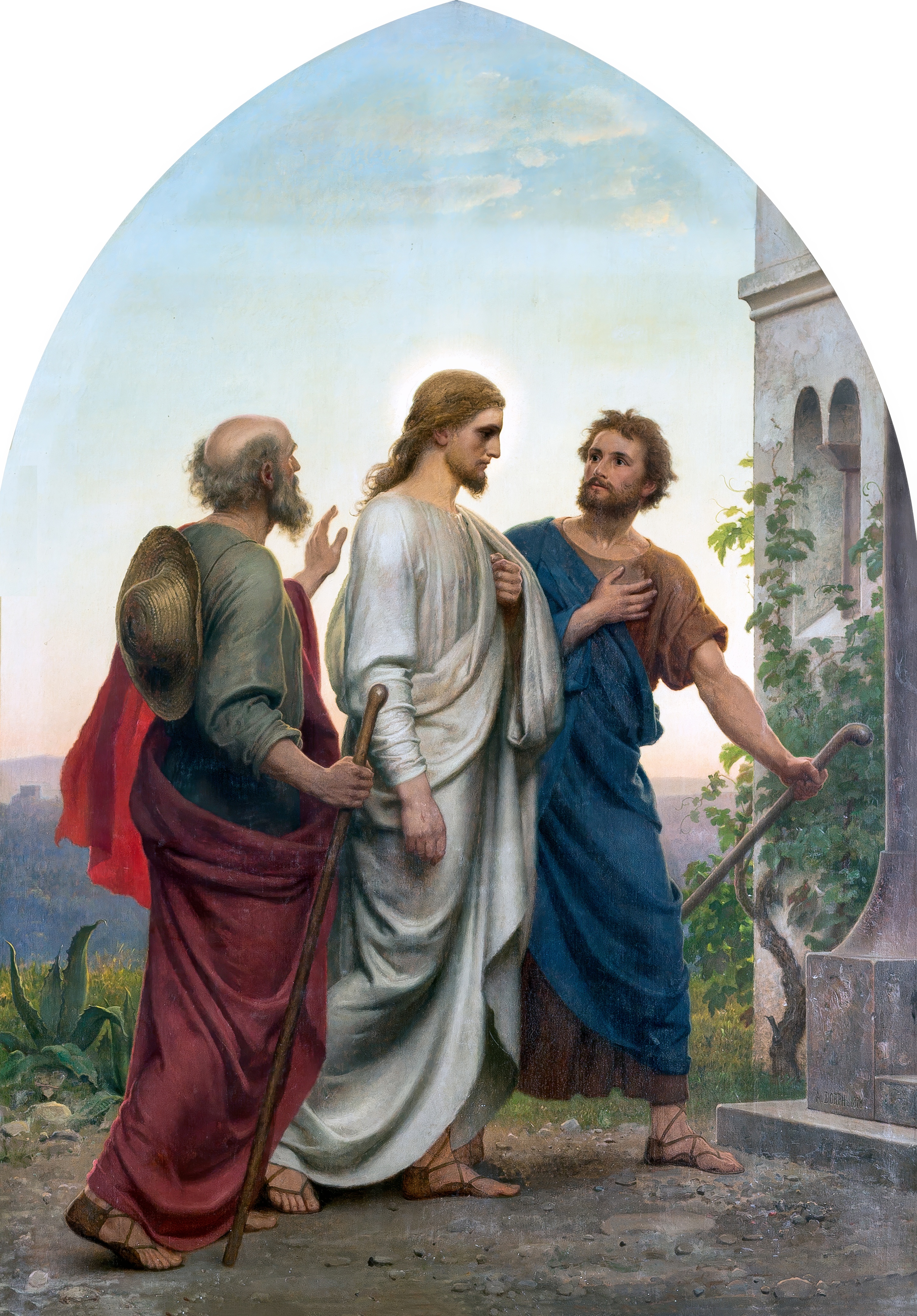
Stay With Us, Lord / Quédate con nosotros, Señor

“Oh, how foolish you are! How slow of heart to believe all that the prophets spoke!”

What harsh words to hear from Christ! True, the disciples on the road to Emmaus did not realize (yet) that He was the one speaking. But even after this gentle rebuke, they still invite Him to stay with them after a long day of travel. There is something in their hearts that longs for more words from their Teacher. After all, the truth Christ speaks to them is what they were made for – not the panic and worry of the town they’ve just left behind.

“Were not our hearts burning within us while He spoke to us on the way?” Even before Christ made Himself known in the breaking of the bread, He was revealing Himself to them. In their heart of hearts, they recognized Truth when He spoke, and it brought them courage and hope. 

How often in the journey of life are we discouraged along the way? The news programs, the media outlets, our next-door neighbor, the tabloids in the check-out aisle … the sources of disheartening news go on and on, and there seem to be more of them every day. We can imagine the disciples from Emmaus felt much the same. They have faithfully followed Christ, only to see Him tried unfairly and then brutally killed, and His followers virtually disbanded. They were sure Christ must have been the Messiah – but where are all His promises now? 

Naturally, they are surprised when Christ asks them about the cause of their dismay. What traveler in or out of Jerusalem wouldn’t know about the death of the Christ? “Haven’t you heard? It’s all over town!” For these disciples, the blustering and blowing of temporary news has nearly drowned out the lasting words of Scripture and of Christ’s teachings before His death.

So, Christ journeys with them, both literally and figuratively, encouraging them on the road. He delves into Scripture, explaining how each Old Testament prophecy has been fulfilled in Him. His gentle rebuke, His explanation of Scripture, and His sanctifying presence at their meal, all remind them – and us, thousands of years later – about lasting truths: God’s promises in Scripture, His enduring love for us, the hope He has been offering us since man’s fall from grace. He has not left us alone for a single moment. 

Christ’s presence in this passage serves as a reminder of a much deeper, lasting peace that endures beyond the tempests of the world. Are we, like those disciples, also foolish sometimes? Have we been slow of heart to believe His promises, the truths that endure even after empires fall and peoples perish? His word has been true from the very beginning of time, and it will be true to the very end. No matter what storms the journey of life brings, He reminds us that we will always encounter Him in Scripture and the sacraments, and in Him, find true and enduring peace.

Contact the author


“¡Qué insensatos son ustedes y qué duros de corazón para creer todo lo anunciado por los profetas!”

¡Qué palabras tan duras escuchar de Cristo! Es cierto que los discípulos en el camino a Emaús no se dieron cuenta (todavía) de que Él era el que les hablaba. Pero incluso después de esta suave reprimenda, todavía lo invitan a quedarse con ellos después de un largo día de viaje. Hay algo en sus corazones que anhela más palabras de su Maestro. Después de todo, fueron creados para la verdad que Cristo les habla, no para el pánico y la preocupación del pueblo que acababan de dejar atrás.

¡Con razón nuestro corazón ardía, mientras nos hablaba por el camino y nos explicaba las Escrituras!” Incluso antes de que Cristo se diera a conocer al partir el pan, se les estaba revelando. En lo más profundo de su corazón, reconocieron la Verdad cuando Él habló, y eso les trajo valor y esperanza.

¿Con qué frecuencia en el transcurso de la vida nos desanimamos a lo largo del camino? Los programas de noticias, los medios de comunicación, nuestro vecino de al lado, los tabloides en el pasillo de la caja… Las fuentes de noticias desalentadoras siguen y siguen, y parece que hay más cada día. Podemos imaginar que los discípulos de Emaús sintieron algo semejante. Habían seguido fielmente a Cristo, solo para verlo juzgado injustamente y luego asesinado brutalmente, y sus seguidores prácticamente desbandados. Estaban seguros de que Cristo debía haber sido el Mesías, pero ¿dónde están ahora todas sus promesas?

Naturalmente, se sorprenden cuando Cristo les pregunta cuál es la causa de su consternación. ¿Qué viajero que entra o sale de Jerusalén no sabría acerca de la muerte de Cristo? “¿No te has enterado? ¡Se sabe por toda la ciudad!” Para estos discípulos, el alboroto de las noticias temporales casi han ahogado las palabras duraderas de las Escrituras y de las enseñanzas de Cristo antes de su muerte.

Así que Cristo viaja con ellos, tanto literal como figurativamente, alentándolos en el camino. Profundiza en las Escrituras, explicando cómo cada profecía del Antiguo Testamento se ha cumplido en Él. Su suave reprensión, Su explicación de las Escrituras y Su presencia santificadora en la cena, todo les recuerda a ellos – y a nosotros, miles de años después – verdades duraderas: las promesas de Dios en las Escrituras, Su amor perdurable por nosotros, la esperanza que nos ha estado ofreciendo desde la caída del hombre. No nos ha dejado solos ni un solo momento.

La presencia de Cristo en este pasaje sirve como recordatorio de una paz mucho más profunda y duradera que perdura más allá de las tempestades del mundo. ¿Somos nosotros, como aquellos discípulos, también insensatos a veces? ¿Hemos sido duros de corazón para creer en Sus promesas, las verdades que perduran incluso después de que los imperios caen y los pueblos perecen? Su palabra ha sido verdadera desde el principio de los tiempos, y será verdadera hasta el final. No importa qué tormentas traiga la vida, nos recuerda que siempre lo encontraremos en las Escrituras y los sacramentos, y en Él, encontraremos una paz verdadera y duradera.

Comunicarse con la autora

Hailing from Nashville, Catherine is a graduate of Christendom College with a lifelong passion for words. Her love of writing and her Catholic Faith continue to shape her as a freelance editor, copywriter, and (aspiring) novelist, where she pursues her passions for the love and greater glory of God.

Feature Image Credit: Anton Dorph, art.diocesan.com/stock-photo/the-walk-to-emmaus-20055/

The views and opinions expressed in the Inspiration Daily blog are solely those of the original authors and contributors. These views and opinions do not necessarily represent those of Diocesan, the Diocesan staff, or other contributors to this blog.

Unconditionally / Sin condiciones

For if you love those who love you, what recompense will you have?So be perfect, just as your heavenly Father is perfect.”

This is part of Christ’s Sermon on the Mount, when He gave us the Beatitudes. This is a powerful moment in the history of the world and the Catholic Church. Christ is transforming the entire narrative of the Scriptures – our story of salvation. Remember that in the Old Testament, God wanted what was best for His Chosen People, but they often didn’t want it for themselves. They struggled to keep His Commandments, and they often learned discipline through great suffering. Most of the time, the only language they seemed to understand was “an eye for an eye and a tooth for a tooth.”

But Christ has arrived, and everything has changed. He speaks a deeper language, a language of love. The whole point of the Old Testament discipline was to lay the foundation for Christ’s message. We had to learn justice before we could learn how to love. Then, when Christ came, He preached and He was the perfect example of love, the kind of love that is truly unconditional. The Sermon on the Mount, the Beatitudes, and our Gospel reading today are His instructions about how to live out the unconditional love awaiting us in the Heart of God.

Christ reminds us that while being good to good people is a good thing, it is not the best we can be. We were made for more. We were made to love others even when we receive nothing in return – in fact, even when we are persecuted! “Love your enemies, and pray for those who persecute you.” And on top of that, Christ even calls us to be “perfect!” What does that mean? How are we to be as perfect as God? We’re fallen human beings, after all.

Well, Matthew carefully chose the Greek word “teleios”, the word for “perfect.” This is a unique word that only appears one other time, when Christ asks the rich young man to give up everything and follow Him. Both times, Christ is calling His listeners (including us) to something greater than goodness. He’s calling us to unconditional love and holiness, the kind that empties us of all of our selfishness and fills us up completely with His love. Christ’s words and His death show us that “keeping things even” will never be enough for us, because God made us to love unconditionally. “Give and take” is the gospel of the world, but it isn’t Christ’s Gospel. He calls us to love others as He loves us: unconditionally.

The driver who cut you off in traffic. The poky person in the grocery line. The screaming baby on the airplane. The insensitive relatives. The careless friend. The irritable customer or coworker who blames you for a problem that wasn’t your fault. Christ loves each of them unconditionally – enough to die for them. Do you?

Contact the author


Porque, si ustedes aman a los que los aman, ¿qué recompensa merecen?Sean, pues, perfectos como su Padre celestial es perfecto”.

Esto es parte del Sermón de Cristo en el Monte, cuando nos dio las Bienaventuranzas. Este es un momento poderoso en la historia del mundo y de la Iglesia Católica. Cristo está transformando toda la narrativa de las Escrituras: nuestra historia de salvación. Recordemos que en el Antiguo Testamento, Dios quería lo mejor para Su Pueblo Elegido, pero a menudo ellos no lo querían para sí mismos. Luchaban por cumplir Sus Mandamientos y a menudo aprendían la disciplina a través de un gran sufrimiento. La mayor parte del tiempo, el único lenguaje que parecían entender era “ojo por ojo y diente por diente”.

Pero Cristo ha llegado y todo ha cambiado. Habla un lenguaje más profundo, un lenguaje de amor. El objetivo de la disciplina del Antiguo Testamento era formar la cimienta para el mensaje de Cristo. Tuvimos que aprender la justicia antes de aprender a amar. Luego, cuando Cristo vino, predicó y fue el ejemplo perfecto de amor, el tipo de amor que es verdaderamente incondicional. El Sermón en el Monte, las Bienaventuranzas y el Evangelio de hoy son sus instrucciones sobre cómo vivir el amor incondicional que nos espera en el Corazón de Dios. Cristo nos recuerda que, si bien ser bueno con las personas buenas es algo bueno, no es lo mejor que podemos ser. Fuimos hechos para más. Fuimos hechos para amar a los demás incluso cuando no recibimos nada a cambio; de hecho, ¡incluso cuando somos perseguidos! “Amen a sus enemigos, hagan el bien a los que los odian y rueguen por los que los persiguen y calumnian”. Y, además, ¡Cristo incluso nos llama a ser “perfectos”! ¿Qué significa eso? ¿Cómo podemos ser tan perfectos como Dios? Después de todo, somos seres humanos caídos.

Mateo eligió cuidadosamente la palabra griega “téleios”, que significa “perfecto”. Esta es una palabra única que sólo aparece una vez más, cuando Cristo le pide al joven rico que lo deje todo y lo siga. En ambas ocasiones, Cristo está llamando a sus oyentes (incluidos nosotros) a algo más grande que la bondad. Nos está llamando al amor incondicional y a la santidad, el tipo de amor que nos vacía de todo egoísmo y nos llena completamente con su amor. Las palabras de Cristo y su muerte nos muestran que “mantener las cosas en orden” nunca será suficiente para nosotros, porque Dios nos hizo para amar incondicionalmente. “Dar y recibir” es el evangelio del mundo, pero no es el evangelio de Cristo. Nos llama a amar a los demás como Él nos ama: incondicionalmente.

El conductor que te cerró el paso en el tráfico. La persona lenta en la fila del supermercado. El bebé que llora en el avión. Los parientes insensibles. El amigo descuidado. El cliente o compañero de trabajo irritable que te culpa por un problema que no fue tu culpa. Cristo ama a cada uno de ellos incondicionalmente, lo suficiente como para morir por ellos. ¿Y tú?

Comunicarse con la autora

Hailing from Nashville, Catherine is a graduate of Christendom College with a lifelong passion for words. Her love of writing and her Catholic Faith continue to shape her as a freelance editor, copywriter, and (aspiring) novelist, where she pursues her passions for the love and greater glory of God.

Feature Image Credit: mauro mora, https://unsplash.com/photos/timelapse-photo-of-people-passing-the-street-31-pOduwZGE

The views and opinions expressed in the Inspiration Daily blog are solely those of the original authors and contributors. These views and opinions do not necessarily represent those of Diocesan, the Diocesan staff, or other contributors to this blog.