Easter: An Encounter that Changes Our Lives / La Pascua: Un encuentro que cambia nuestras vidas

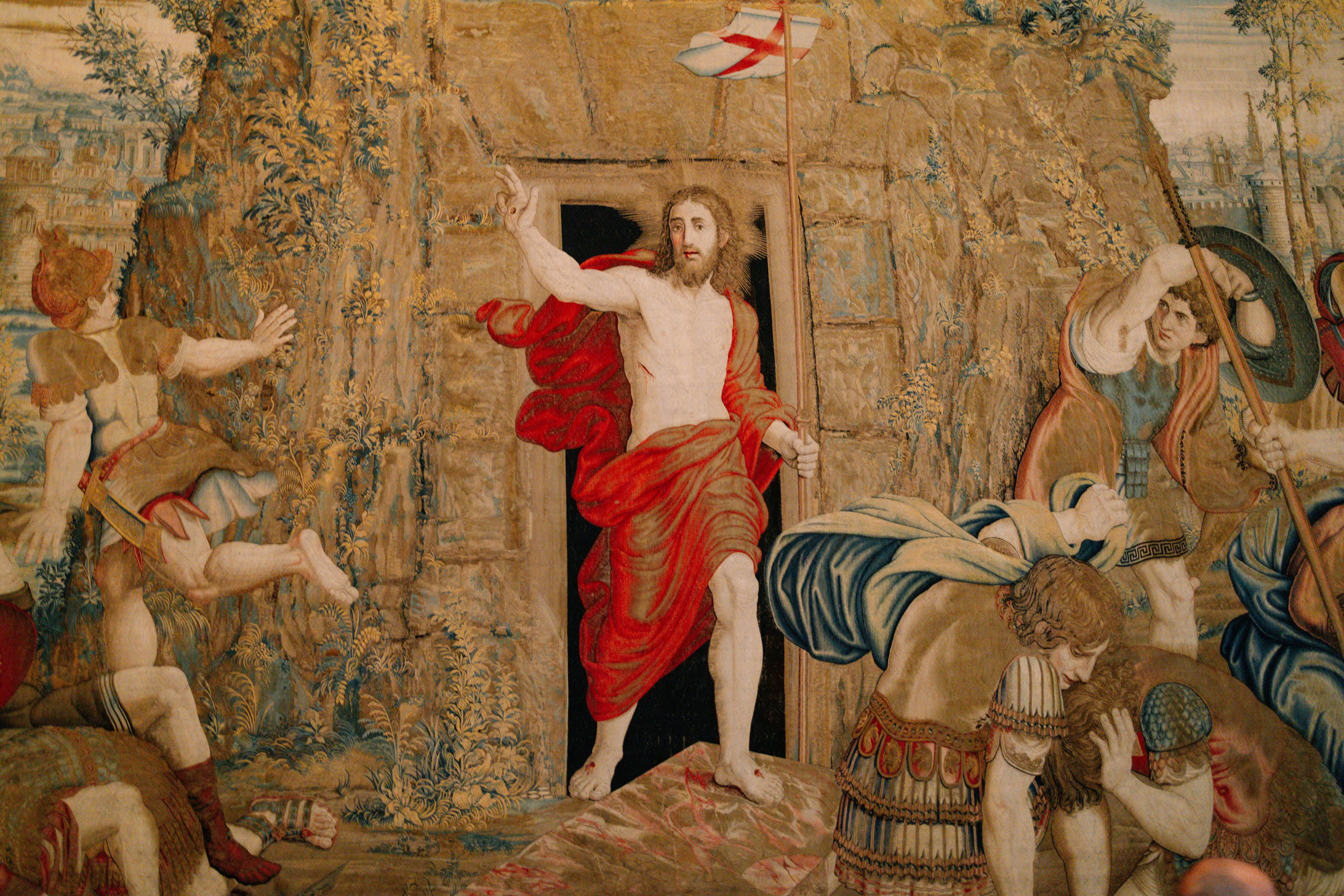
Mary Magdalene and the other Mary quietly set out to the place of their sorrow, where their Lord was laid in a tomb. What were the thoughts that swirled around in their hearts during the early hours after the Sabbath. Images of the Friday before, of Calvary, of the cold tomb, of the stone rolled between them and Jesus. They came to grieve, and yet, their desire to be near the Master they loved—and who so loved them—placed them at the heart of the greatest moment in history.

Suddenly the earth trembled. An angel of the Lord descended from heaven, rolling back the stone. Flashes of lightning lit up the inner shadows of their sadness, wiping away tears and memories and fear-filled anticipation, replacing it with the face of an angel. As they ran with hearts racing—carrying both fear and joy—Jesus Himself met them. He met them on the road, right where they were. And He repeated the words the angel had said moments before: “Do not be afraid. Go…” He would be going ahead of them and would meet them in Galilee. 

On Easter in 2012, Benedict XVI declared : “Every Christian relives the experience of Mary Magdalene. It involves an encounter which changes our lives: the encounter with a unique Man who lets us experience all God’s goodness and truth, who frees us from evil not in a superficial and fleeting way, but sets us free radically, heals us completely and restores our dignity…Dear brothers and sisters! If Jesus is risen, then – and only then – has something truly new happened, something that changes the state of humanity and the world. Then he, Jesus, is someone in whom we can put absolute trust; we can put our trust not only in his message but in Jesus himself, for the Risen One does not belong to the past, but is present today, alive” (Urbi et Orbi Message, 4/8/2012).

Friend, in all your busyness, in your care for others, in your worry over the state of the world,
hear this: you also are standing right now at the greatest moment in history as the clap of victory and the trumpet of glory announce: The tomb is empty. And Jesus is already ahead of you.

You do not carry this day alone. You are not holding the world together by your effort.
You are not running toward an uncertain end—You are being met by the Risen One who has already gone ahead of you. So breathe. Let this be your resurrection morning, too.

Jesus, Risen One, let your joy rise in my heart at dawn. Let me be a quiet bearer of the truth every soul so longs to hear: The tomb is empty. Christ is alive and present today among us. All is made new. Alleluia.

Contact the author


María Magdalena y la otra María se dirigieron en silencio al lugar de su dolor, donde su Señor yacía en un sepulcro. ¿Qué pensamientos les rondaban en el corazón durante la madrugada después del Sabbat? Imágenes del viernes anterior, del Calvario, de la tumba fría, de la piedra que se interponía entre ellas y Jesús. Vinieron a llorar, y sin embargo, su deseo de estar cerca del Maestro que amaban —y que tanto las amaba— las colocó en el corazón del momento más grande de la historia.

De repente, la tierra tembló. Un ángel del Señor descendió del cielo, removiendo la piedra. Relámpagos iluminaron las sombras internas de su tristeza, enjugando lágrimas, recuerdos y la anticipación llena de miedo, reemplazándolas con el rostro de un ángel. Mientras corrían con el corazón acelerado, cargando con miedo y alegría, Jesús mismo las encontró. Las encontró en el camino, justo donde estaban. Y repitió las palabras que el ángel había dicho momentos antes: “No tengan miedo. Vayan…”. Él iría delante de ellos y se encontraría con ellos en Galilea.

En la Pascua de 2012, el Papa Benedicto XVI declaró: “Todo cristiano revive la experiencia de María Magdalena. Es un encuentro que cambia la vida: el encuentro con un hombre único, que nos hace sentir toda la bondad y la verdad de Dios, que nos libra del mal, no de un modo superficial, momentáneo, sino que nos libra de él radicalmente, nos cura completamente y nos devuelve nuestra dignidadQueridos hermanos y hermanas: si Jesús ha resucitado, entonces –y sólo entonces– ha ocurrido algo realmente nuevo, que cambia la condición del hombre y del mundo. Entonces Él, Jesús, es alguien del que podemos fiarnos de modo absoluto, y no solamente confiar en su mensaje, sino precisamente en Él, porque el resucitado no pertenece al pasado, sino que está presente hoy, vivo” (Mensaje Urbi et Orbi, 4/8/2012). 

Amigo, en medio de tus ocupaciones, en tu cuidado de los demás, en tu preocupación por el estado del mundo, escucha esto: tú también te encuentras ahora mismo en el momento más grande de la historia, mientras el aplauso de la victoria y la trompeta de gloria anuncian: La tumba está vacía. Y Jesús ya está delante de ti.

No llevas este día solo. No estás sosteniendo el mundo con tu esfuerzo. No corres hacia un final incierto; te estás encontrando con el Resucitado que ya se ha adelantado. Así que respira. Que esta sea también tu mañana de resurrección.

Jesús, Resucitado, que tu alegría aflore en mi corazón al amanecer. Permíteme ser un portador silencioso de la verdad que toda alma anhela escuchar: La tumba está vacía. Cristo está vivo y presente hoy entre nosotros. Todo es nuevo. Aleluya.

Comunicarse con la autora

Sr. Kathryn J. Hermes

Sr. Kathryn James Hermes, FSP, is an author and offers online evangelization as well as spiritual formation for people on their journey of spiritual transformation and inner healing. Website: www.touchingthesunrise.com My Books: https://touchingthesunrise.com/books/
Public Facebook Group: https://www.facebook.com/groups/srkathrynhermes/ HeartWork Spiritual Formation Group: https://touchingthesunrise.com/heartwork/

Feature Image Credit: Josh Withers, pexels.com/photo/the-resurrection-of-christ-painting-in-tapestry-gallery-vatican-city-27063870/

The views and opinions expressed in the Inspiration Daily blog are solely those of the original authors and contributors. These views and opinions do not necessarily represent those of Diocesan, the Diocesan staff, or other contributors to this blog.

Good Friday / Viernes Santo

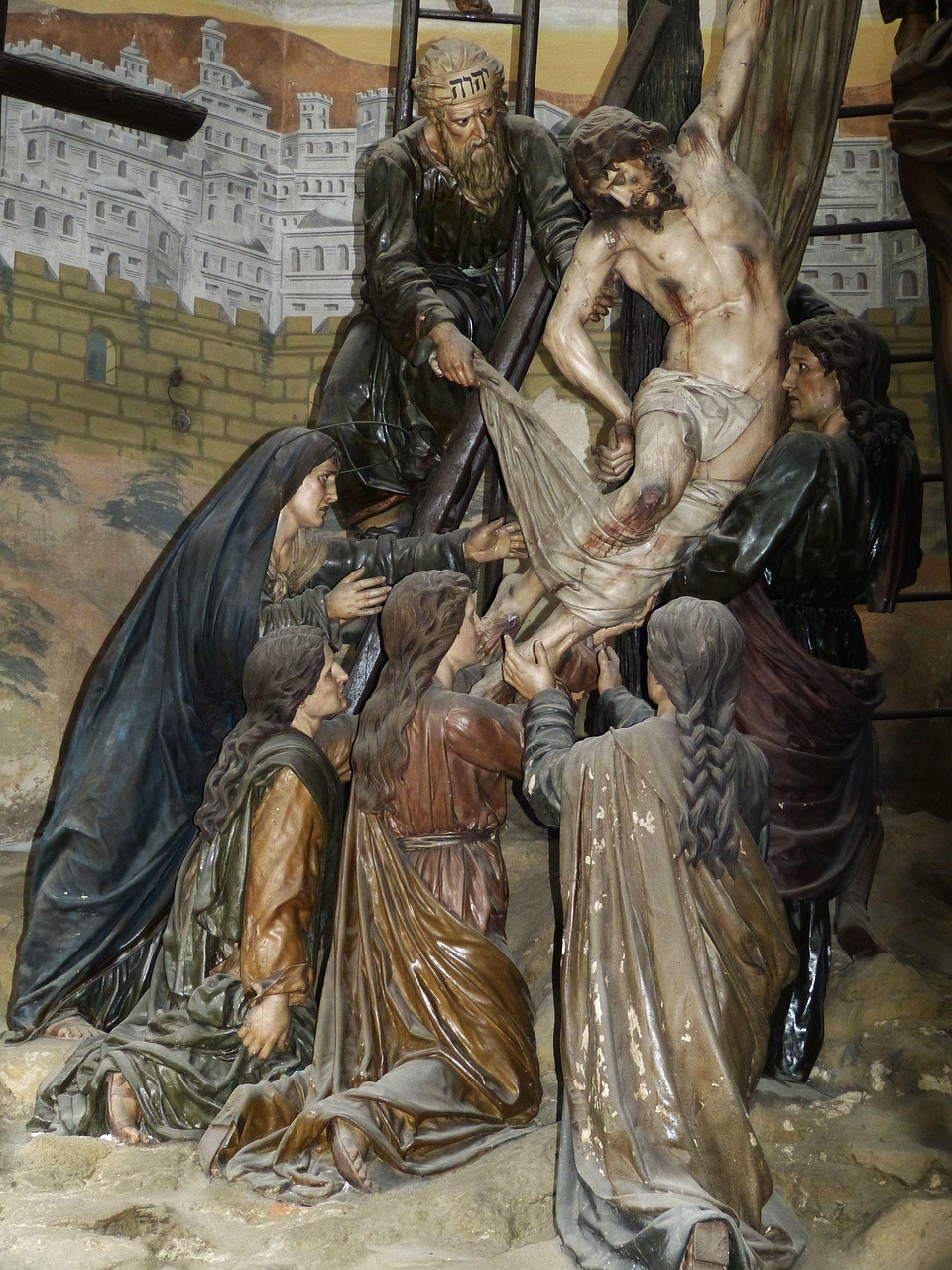
As we hear the Passion narrative read, it may be hard for us to enter into it because it is so familiar. The scourging is familiar. The crown of thorns is familiar. The mocking is familiar. The crucifix is familiar. The spear is familiar. Because of this familiarity, we may fail to be properly shocked. Because this kind of cruelty and mockery and suffering IS shocking. 

But even more shocking is the merciful love that motivates it. We may fail to be properly shocked by this stupendous mercy and love as well. Because we are accustomed to being those who have been saved, accustomed to having a Savior, accustomed to the way of grace and the closeness of our God in the sacraments, we often fail to see how absolutely helpless and hopeless we truly are on our own.

We were lost. Mankind, and each and every one of us individually, were hopelessly lost. We had been captured by the Enemy of all that is good, chained to sin and death and despair, ruled over by one who hates us. Filled with infirmity and stricken with suffering, alone and running in our own futile circles and unable to free ourselves. We were all lost sheep, in a land that was doomed to death.

But Love came to bear our infirmities, to endure our sufferings. Love entered our doomed world to overcome the enemy in the most surprising and shocking way: He was “pierced for our offenses, crushed for our sins… cut off from the land of the living and smitten for the sin of his people.” What we earned by our sin and selfishness, He absorbed into himself; “the Lord was pleased to crush him in infirmity.” He freely and peacefully surrendered His life as an offering for sin; He suffered, died, and was buried. For me. For you.

He became the Man of Sorrows so that we could know true joy. He took away our sins by carrying them in His own person to Calvary so that we could be redeemed. He endured darkness so that we could know light; he overcame death so that we could live forever.

May we be properly shocked and shaken at the mysterious ways of God, which wrought our salvation to eternal life with Him through the horrific execution of His only-begotten Son. May we be properly shocked at the infinite and incomprehensible love of the Savior, Who willingly laid down his life, pouring himself out utterly, for us poor sinners, whom he loves. 

There is no greater love. And that is what makes this Friday “Good”.

Contact the author


Al escuchar la narración de la Pasión, puede resultarnos difícil conmovernos profundamente porque nos resulta muy familiar. La flagelación es familiar. La corona de espinas es familiar. Las burlas son familiares. El crucifijo es familiar. La lanza es familiar. Debido a esta familiaridad, quizás no nos conmocionemos como deberíamos. Porque este tipo de crueldad, burla y sufrimiento ES impactante.

Pero aún más impactante es el amor misericordioso que lo motiva. Quizás tampoco nos conmocionemos como deberíamos ante esta estupenda misericordia y amor. Porque estamos acostumbrados a ser los que hemos sido salvados, acostumbrados a tener un Salvador, acostumbrados al camino de la gracia y a la cercanía de nuestro Dios en los sacramentos, a menudo no logramos ver cuán absolutamente indefensos y desesperados somos por nosotros mismos.

Estábamos perdidos. La humanidad, y cada uno de nosotros individualmente, estábamos irremediablemente perdidos. Habíamos sido capturados por el Enemigo de todo lo bueno, encadenados al pecado, a la muerte y a la desesperación, gobernados por alguien que nos odia. Llenos de debilidad y afligidos por el sufrimiento, solos y dando vueltas en nuestros propios círculos inútiles e incapaces de liberarnos. Éramos todas ovejas perdidas, en una tierra condenada a la muerte.

Pero el Amor vino a cargar con nuestras debilidades, a soportar nuestros sufrimientos. El Amor entró en nuestro mundo condenado para vencer al enemigo de la manera más sorprendente e impactante: Él fue “traspasado por nuestras rebeliones, triturado por nuestros crímenes... Lo arrancaron de la tierra de los vivos, lo hirieron de muerte por los pecados de mi pueblo”. Lo que merecíamos por nuestro pecado y egoísmo, Él lo absorbió en sí mismo; “El Señor quiso triturarlo con el sufrimiento”. Él entregó libre y pacíficamente su vida como ofrenda por el pecado; sufrió, murió y fue sepultado. Por mí. Por ti.

Se convirtió en el Hombre de Dolores para que pudiéramos conocer la verdadera alegría. Quitó nuestros pecados llevándolos en su propia persona al Calvario para que pudiéramos ser redimidos. Soportó la oscuridad para que pudiéramos conocer la luz; venció la muerte para que pudiéramos vivir para siempre.

Que nos conmocionemos y nos estremezcamos ante los misteriosos caminos de Dios, que obró nuestra salvación a la vida eterna con Él a través de la horrible ejecución de su Hijo unigénito. Que nos conmueva profundamente el amor infinito e incomprensible del Salvador, quien voluntariamente entregó su vida, entregándose por completo por nosotros, pobres pecadores, a quienes tanto ama.

No existe amor más grande. Y eso es lo que hace que este viernes sea “Santo”.

Comunicarse con la autora

Kathryn Mulderink, MA, is married to Robert, Station Manager for Holy Family Radio. Together they have seven children (including Father Rob), and eleven grandchildren. She is President of the local community of Secular Discalced Carmelites and has published five books and many articles. Over the last 30 years, she has worked as a teacher, headmistress, catechist, Pastoral Associate, and DRE, and as a writer and voice talent for Catholic Radio. Currently, she serves the Church by writing and speaking, and by collaborating with various parishes and to lead others to encounter Christ and engage their faith. Her website is www.KathrynTherese.com
Feature Image Credit: falco, pixabay.com/photos/passion-good-friday-church-christ-1138007/

The views and opinions expressed in the Inspiration Daily blog are solely those of the original authors and contributors. These views and opinions do not necessarily represent those of Diocesan, the Diocesan staff, or other contributors to this blog.

A Gift Received / Un don recibido

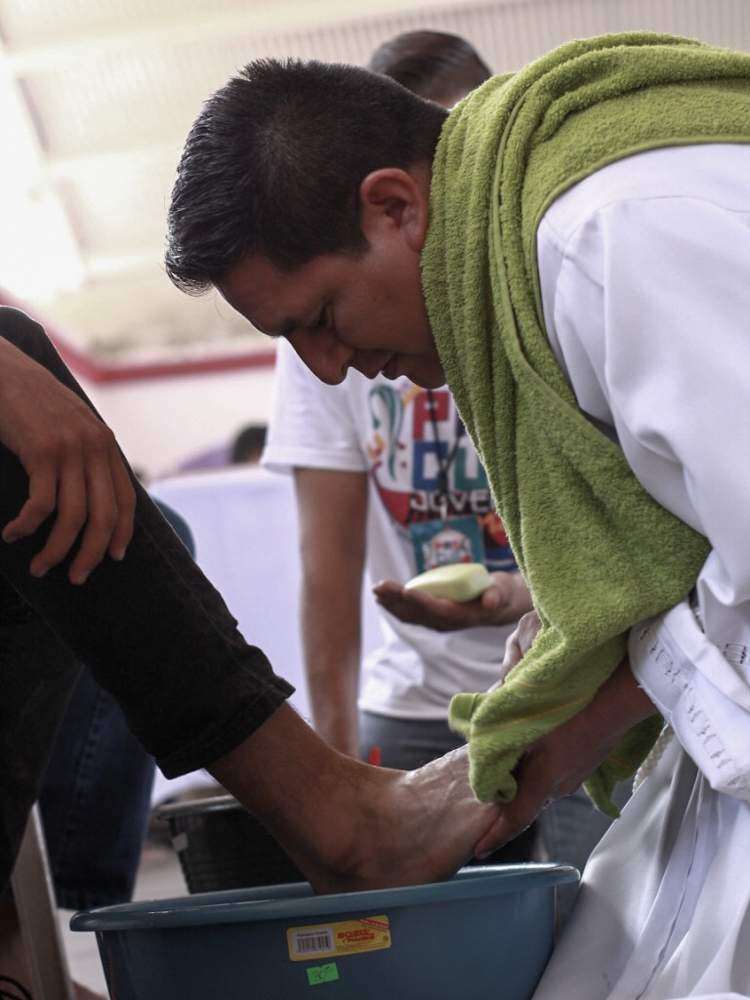
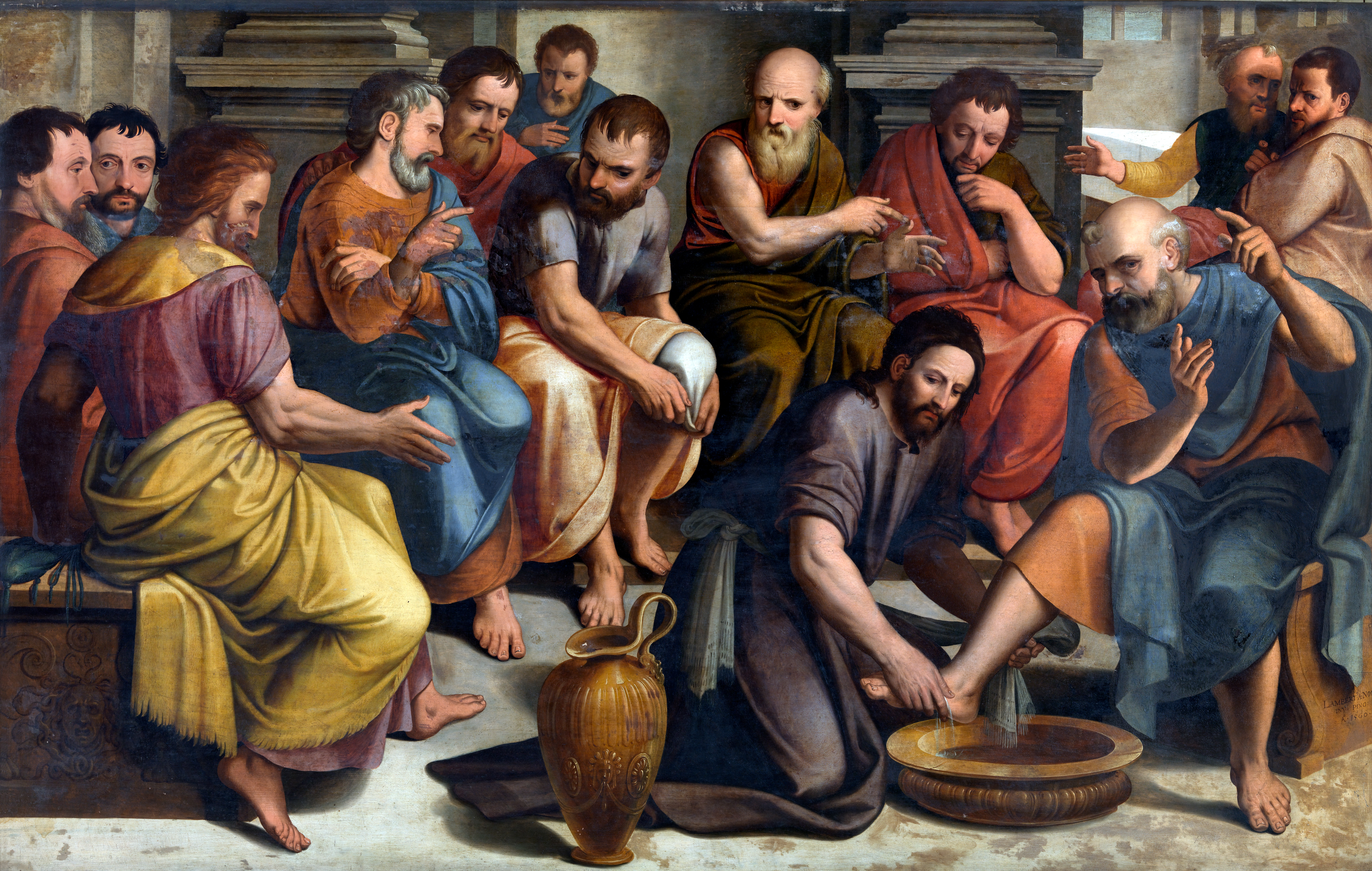
Today, Holy Thursday, we celebrate the Institution of the Eucharist, and we hear of the washing of the feet. The Eucharist is an unfathomable gift, God in the flesh, His Body and Blood, acting in us for our holiness and salvation. The washing of the feet was another gift, unfathomable to those who received it.

As Jesus said to Peter, “What I am doing, you do not understand now, but you will understand later” (John 13:7). Why was this so hard for Peter to accept? We know that washing feet was something more fit for a servant. Peter must have been embarrassed and ashamed, first expressing his bewilderment: “Master, are you going to wash my feet?” (John 13:6).

But Jesus insists. Let’s pause here. Jesus isn’t just doing a nice thing or giving an extraordinary gift. He’s saying something deeper. To wash another’s feet is, yes, to place oneself in the position of a servant. But it’s not just about humility. It’s an indication that the person being washed is worthy of being served.

Jesus confirms this when Peter shifts his intention: “Master, then not only my feet, but my hands and head as well” (John 13:9). Perhaps Peter thinks that Jesus is washing his feet because He believes that Peter is too sinful to proceed as His apostle and needs to be cleaned. Not so. Jesus says, “Whoever has bathed has no need except to have his feet washed, for he is clean all over; so you are clean, but not all” (John 13:10). John emphasizes the application of this statement to Judas, but we can also see that Jesus is acknowledging Peter’s cleanliness. He has bathed, so he only needs his feet washed. He is “clean all over.”

This is deeply affirming for Peter and for us. First, Peter thought it beneath Jesus to wash his feet, because he considered himself to be equal to a servant. Then he believes that Jesus is making a statement about his sinfulness, prompting him to ask to be washed all over rather than only in part, to make up for the filth that covers him completely. But Jesus revises his perception.

It is not that we are so depraved and sinful that God needs to stoop down and wash our feet, and it is not that we are so worthless that He can’t bring Himself to wash any more of us than that. It’s that He gives us the free gift of cleansing us because He made us good and worthy of such cleansing. We need His help not because we are hopeless, but because He desires to give to us and affirm the goodness in us, which is an echo of His infinite goodness.

The gift is freely given, and we are invited to freely accept it, as Peter did. Yes, God is infinitely greater than us. And yes, He made us good. And with His cleansing grace, we can be even better. 

Contact the author


Hoy, Jueves Santo, celebramos la Institución de la Eucaristía y escuchamos el relato del lavatorio de los pies. La Eucaristía es un don incomprensible, Dios hecho carne, su Cuerpo y su Sangre, actuando en nosotros para nuestra santidad y salvación. El lavatorio de los pies fue otro don, incomprensible para quienes lo recibieron.

Como Jesús le dijo a Pedro: “Lo que estoy haciendo tú no lo entiendes ahora, pero lo comprenderás más tarde”. ¿Por qué le resultaba tan difícil a Pedro aceptar esto? Sabemos que lavar los pies era una tarea propia de un siervo. Pedro debió sentirse avergonzado y humillado, expresando primero su desconcierto: “Señor, ¿me vas a lavar tú a mí los pies?”

Pero Jesús insiste. Detengámonos aquí. Jesús no solo está haciendo una buena acción ni dando un regalo extraordinario. Está diciendo algo más profundo. Lavar los pies de otro es, sí, ponerse en la posición de un siervo. Pero no se trata solamente de la humildad. Es una indicación de que la persona a la que se le lavan los pies es digna de ser servida.

Jesús lo confirma cuando Pedro cambia de parecer: “En ese caso, Señor, no sólo los pies, sino también las manos y la cabeza”. Quizás Pedro pensó que Jesús le lavaba los pies porque creía que era demasiado pecador para seguir siendo su apóstol y necesitaba ser purificado. No es así. Jesús dice: “El que se ha bañado no necesita lavarse más que los pies, porque todo él está limpio. Y ustedes están limpios, aunque no todos”. Juan enfatiza la aplicación de esta afirmación a Judas, pero también podemos ver que Jesús reconoce la pureza de Pedro. Se ha bañado, por lo que solo necesita que le laven los pies. “[T]odo él está limpio”.

Esto es profundamente reconfortante para Pedro y para nosotros. Primero, Pedro pensó que era indigno de Jesús lavarle los pies, porque se consideraba igual a un siervo. Luego creyó que Jesús estaba haciendo una declaración sobre su pecaminosidad, lo que lo llevó a pedir que lo lavaran por completo, en lugar de solo en parte, para compensar la suciedad que lo cubría por completo. Pero Jesús corrige su percepción. No es que seamos tan depravados y pecadores que Dios tenga que humillarse para lavarnos los pies, ni que seamos tan indignos que Él no pueda lavarnos más que eso. La verdad es que Él nos ofrece gratuitamente la purificación porque nos creó buenos y dignos de tal purificación. Necesitamos su ayuda no porque seamos casos perdidos, sino porque Él desea darnos y afirmar la bondad que hay en nosotros, que es un reflejo de su bondad infinita.

El don se nos da gratuitamente, y estamos invitados a aceptarlo libremente, como lo hizo Pedro. Sí, Dios es infinitamente más grande que nosotros. Y sí, Él nos creó buenos. Y con su gracia purificadora, podemos ser aún mejores.

Comunicarse con el autor

David Dashiell is a freelance author and editor in the Nashville, Tennessee area. He has three children, a degree in theology, and enjoys writing about philosophy, theology, culture, music, and comedy. You can find his personal blog, Serious Daydreams, on Substack. He is also the editor of the anthology Ever Ancient, Ever New: Why Younger Generations Are Embracing Traditional Catholicism, available through TAN Books.

Feature Image Credit: Lambert van Noort, art.diocesan.com/stock-photo/christ-washing-the-feet-of-apostles-7533/

The views and opinions expressed in the Inspiration Daily blog are solely those of the original authors and contributors. These views and opinions do not necessarily represent those of Diocesan, the Diocesan staff, or other contributors to this blog.

He is Not Here! He Has Risen! / ¡No está aquí, ha resucitado!

As we prepare to celebrate the highest feast of the liturgical year during this evening’s Easter Vigil, we joyfully proclaim: “Where, O death, is your victory? Where, O death, is your sting?” (1 Cor 15:55)

It is said that death is a terrible enemy, and it wounds all of us in one way or another. Christ was also afflicted by death, but through it demonstrates the necessity of offering everything to our Father in Heaven at all times. We must pray for the grace to also surrender our crosses to God. Such trials are not intended to weaken us, but rather bring us closer to our loving family in Heaven.

There are many examples of the inherent goodness in suffering and, paradoxically, sorrow. It often takes time and patience to recognize the connection. For example, when we have lost a loved one or are going through other difficult times (physical, financial or emotional struggles), they remind us just how much we rely on God. When bearing witness to the suffering of others, we can and should reach out to help them during their difficult times. These are the opportunities to act as God’s messengers of the Good News.

We can be confident that Christ has already done the heavy lifting for us. He has removed the stone guarding the entrance to the tomb. We should not be surprised or “puzzl[ed]” as the women at the empty tomb were. He will take care of our concerns. The tomb is empty and Jesus has been raised, just as He said. 

Christ, help us to love and believe in You at all times, both in our lowest of lows and highest of highs. May we always bask in the joy of that moment when You appeared in your risen glory and displayed to us eternal life!

Happy Easter!

Contact the author


Al prepararnos para celebrar la fiesta más importante del año litúrgico durante la Vigilia Pascual de esta tarde, proclamamos con alegría: “¿Dónde está, oh muerte, tu victoria? ¿Dónde está, oh muerte, tu aguijón?” (1 Cor 15,55)

Se dice que la muerte es un enemigo terrible, y nos hiere a todos de una manera u otra. Cristo también fue afligido por la muerte, pero a través de ella demuestra la necesidad de ofrecer todo a nuestro Padre Celestial en todo momento. Debemos orar por la gracia de entregar también nuestras cruces a Dios. Tales pruebas no tienen la intención de debilitarnos, sino más bien acercarnos a nuestra amada familia en el Cielo.

Hay muchos ejemplos de la bondad inherente del sufrimiento y, paradójicamente, de la tristeza. A menudo se necesita tiempo y paciencia para reconocer la conexión. Por ejemplo, cuando hemos perdido a un ser querido o estamos atravesando otros momentos difíciles (batallas físicas, financieras o emocionales), nos recuerdan cuánto dependemos de Dios. Al ser testigos del sufrimiento de los demás, podemos y debemos ayudarlos en sus momentos difíciles. Son oportunidades para actuar como mensajeros de la Buena Nueva de Dios.

Podemos estar seguros de que Cristo ya ha hecho el trabajo pesado por nosotros. Ha quitado la piedra que guardaba la entrada de la tumba. No debemos sorprendernos ni estar “desconcertad[os]” como las mujeres ante la tumba vacía. Jesucristo se ocupará de nuestras preocupaciones. La tumba está vacía y ha resucitado, tal como dijo.

Cristo, ayúdanos a amarte y creer en Ti en todo momento, tanto en nuestros momentos más bajos como en los más altos. ¡Que siempre podamos disfrutar de la alegría de ese momento en el que apareciste en tu gloria resucitada y nos mostraste la vida eterna!

¡Felices Pascuas!

Comunicarse con la autora

Dr. Alexis Dallara-Marsh is a board-certified neurologist who practices in Bergen County, NJ. She is a wife to her best friend, Akeem, and a mother of four little ones on Earth and two others in heaven above.

Feature Image Credit: Ch Photography, unsplash.com/photos/a-wooden-cross-on-top-of-a-wooden-stand–VpbHOgx1q4

The views and opinions expressed in the Inspiration Daily blog are solely those of the original authors and contributors. These views and opinions do not necessarily represent those of Diocesan, the Diocesan staff, or other contributors to this blog.

God Does Not Make Mistakes / Dios Nunca se Equivoca

Today, Holy Saturday, there are no “readings of the day,” but those of us attending the Easter Vigil will have more than enough Scripture to make up for it. Hearing the readings, we will see a beautiful picture of our salvation won for us in the Paschal Mystery, the apex of human history. This salvation was planned for us from the beginning of time. The readings of the Easter Vigil take us from the creation of the world through the Fall, the wanderings of the Israelites, the promise of the New Covenant, and the Incarnation and Resurrection.

This is a unique opportunity to recognize the providence of God. God had always planned to become man: He knew that we would fall, and He intended to draw us into an even greater reality than that of the Garden of Eden. The Fall did not “surprise” God. He created all things knowing what it would mean. He knew exactly what would unfold, and knew that He would bring good out of it all.

We can hear the wonders of God at the Easter Vigil and still doubt about God’s preparedness, or His competence: Why would He have created Adam and Eve for them to fall, or made Abraham’s descendants into a great nation for them to constantly break faith with Him? Why would He set up a new and definitive covenant knowing that there would be many who would spurn it? If He knew that this would happen, why did He allow it?

The glory of Easter gives us a glimpse into this, a glory at once confusing and illuminating. We cannot fully grasp the meaning of the death of Jesus Christ. It is hard to understand why God would want to suffer if He could have just created the world differently. But the Resurrection is difficult to argue with. The glory that Jesus shows us we can attain is blinding, more than we could ever deserve.

We may not understand why or how, but God did not make a mistake in ordering the world in the way that He did. The Vigil readings show us that He created a mosaic, full of striking turns and flashes of color that coalesce into something beautiful.

Contact the author


Hoy, el Sábado Santo, no hay “lecturas del día”, pero todos nosotros que asistimos a la Vigilia Pascual tendremos más que suficiente Escrituras para compensarlo. Al escuchar las lecturas, veremos un hermoso cuadro de nuestra salvación ganada para nosotros en el Misterio Pascual, culmen de la historia humana. Esta salvación fue planeada para nosotros desde el principio de los tiempos. Las lecturas de la Vigilia Pascual nos llevan desde la creación del mundo hasta la Caída, los caminos de los israelitas, la promesa de la Nueva Alianza, la Encarnación y la Resurrección.

Es una oportunidad única para reconocer la providencia de Dios. Dios siempre había planeado hacerse hombre: sabía que caeríamos y tenía la intención de atraernos a una realidad aún mayor que la del Jardín del Edén. La Caída no “sorprendió” a Dios. Creó todas las cosas sabiendo lo que significaría. Sabía exactamente lo que sucedería y sabía que sacaría algo bueno de todo ello.

Podemos escuchar las maravillas de Dios en la Vigilia Pascual y todavía dudar sobre la preparación de Dios, o Su competencia: ¿Por qué habría creado a Adán y Eva para que cayeran, o habría convertido a los descendientes de Abraham en una gran nación para que constantemente rompieran su fe en él? ¿Por qué establecería una alianza nueva y definitiva sabiendo que habría muchos que lo despreciarían? Si sabía que esto sucedería, ¿por qué lo permitió?

La gloria de la Pascua nos da una idea de esto, una gloria a la vez confusa y esclarecedora. No podemos comprender plenamente el significado de la muerte de Jesucristo. Es difícil entender por qué Dios querría sufrir si hubiera podido crear el mundo de manera diferente. Pero es difícil discutir la Resurrección. La gloria que Jesús nos muestra que podemos alcanzar es cegadora, más de la que jamás podríamos merecer.

Puede que no entendamos por qué o cómo, pero Dios no cometió un error al ordenar el mundo de la manera en que lo hizo. Las lecturas de la Vigilia nos muestran que Él creó un mosaico, lleno de giros sorprendentes y destellos de color que se fusionan en algo hermoso.

Comunicarse con el autor

David Dashiell is a freelance author and editor in Nashville, Tennessee. He has a master’s degree in theology from Franciscan University, and is the editor of the anthology Ever Ancient, Ever New: Why Younger Generations Are Embracing Traditional Catholicism.

Feature Image Credit: Gerardo Hernandez Carrasquillo, cathopic.com/photo/23308-cross-with-stars

Jesus, the Savior of the World / Jesús, el Salvador del Mundo

Our hearts sink with sadness as we recall the Death of our Lord on this day. The Church invites us to fast and pray as we seek to unite our hearts with His. We read in today’s Gospel how our Lord humbled himself and was treated like a criminal, on the way to Calvary. 

Today’s Gospel opens up with our Lord in the Kedron Valley, where he used to meet with the disciples. He went to a garden, the very same place where Adam and Eve fell into sin thousands of years before. But this time, Jesus would not fall into sin but rather be the sacrifice and give His life up for us, so the devil would not be victorious.

Jesus was met with the cohort and guards sent by the chief priests and the Pharisees with the desire to embrace Christ like a criminal, with torches and weapons. The Pharisees were determined for Jesus to be “caught,” and yet, they still didn’t know Him; they didn’t know His teachings, for His ways are not a way of violence and hatred but instead sacrifice and love. 

Jesus proclaims to the crowd, “Who are you looking for?” and they respond, “Jesus the Nazarene.” He responded, “I am He.” He is the king of kings, the Lord of Lords, and the great Savior of the universe, but to the Pharisees, He was just Jesus the Nazarene. If Jesus had freely destroyed his enemies that night, he would not have solved the problem He came to this world to fix: sin. Instead, Jesus is the King of Love and will conquer hearts through love and not force or violence.

Jesus continues to lead the conversation and takes the authority of this moment; He says, “Who are you looking for?” They reply again, Jesus the Nazarene. Jesus replies, “I told you, I am He.” for the third time, He affirms His identity and hands himself over freely, asking for His disciples to be let go. With that, the passion of our Lord continues. Jesus is showing us the way to heaven through humility and following the will of God.  

Jesus died for each of us. He died to open the gates of heaven to us on Easter Sunday, but we need to choose to be a friend of Christ. We need to open our hearts to the Lord so that He can change them and remove anything that resides within that prevents us from loving others. Jesus desires to forgive us, but we must go to Him for that forgiveness. 

Lord Jesus, thank you for the ultimate sacrifice that you made on the cross to conquer sin and death and win for us eternal salvation. 

Contact the author


Nuestros corazones se hunden de tristeza al recordar la Muerte de nuestro Señor en este día. La Iglesia nos invita a ayunar y orar mientras buscamos unir nuestros corazones al suyo. Leemos en el Evangelio de hoy cómo nuestro Señor se humilló y fue tratado como un criminal, camino al Calvario.

El evangelio de hoy comienza con nuestro Señor en el valle de Kedron, donde solía reunirse con los discípulos. Fue a un jardín, el mismo lugar donde Adán y Eva cayeron en pecado miles de años antes. Pero esta vez, Jesús no caería en pecado sino que sería el sacrificio y daría Su vida por nosotros, para que el diablo no saliera victorioso.

Jesús se encontró con la cohorte y los guardias enviados por los sumos sacerdotes y los fariseos con el deseo de agarrar a Cristo como un criminal, con antorchas y armas. Los fariseos estaban decididos a que Jesús fuera “atrapado” y, sin embargo, todavía no lo conocían; no conocían Sus enseñanzas, porque Sus caminos no son un camino de violencia y odio sino de sacrificio y amor.

Jesús proclama a la multitud: “¿A quién buscan?” y ellos responden: “A Jesús el Nazareno”. Él respondió: “Yo soy”. Jesús es el rey de reyes, el Señor de señores y el gran Salvador del universo, pero para los fariseos, era simplemente Jesús el Nazareno. Si Jesús hubiera destruido libremente a sus enemigos esa noche, no habría resuelto el problema que vino a solucionar a este mundo: el pecado. En cambio, Jesús es el Rey del Amor y conquistará los corazones a través del amor y no de la fuerza o la violencia.

Jesús continúa liderando la conversación y toma la autoridad de este momento diciendo: “¿A quién buscas?” Ellos responden nuevamente: “A Jesús, el Nazareno.” Jesús respondió: “Les he dicho que yo soy”. Por tercera vez afirma su identidad y se entrega libremente, pidiendo que dejen ir a sus discípulos. Con eso continúa la pasión de nuestro Señor. Jesús nos está mostrando el camino al cielo a través de la humildad y siguiendo la voluntad de Dios.

Jesús murió por cada uno de nosotros. Murió para abrirnos las puertas del cielo el Domingo de Pascua, pero tenemos que elegir ser amigos de Cristo. Tenemos que abrir el corazón al Señor para que pueda cambiarlo y eliminar todo lo que reside por dentro que nos impide amar a los demás. Jesús desea perdonarnos, pero debemos acudir a Él para obtener ese perdón.

Señor Jesús, gracias por el máximo sacrificio que hiciste en la cruz para vencer el pecado y la muerte y ganar para nosotros la salvación eterna.

Comunicarse con la autora

Emily Jaminet is a Catholic author, speaker, radio personality, wife, and mother of seven children. She earned a bachelor’s degree in mental health and human services from the Franciscan University of Steubenville.  She is the co-founder of www.inspirethefaith.com and the Executive Director of The Sacred Heart Enthronement Network www.WelcomeHisHeart.com. She has co-authored several Catholic books and her next one, Secrets of the Sacred Heart: Claiming Jesus’ Twelve Promises in Your Life, comes out in Oct. 2020. Emily serves on the board of the Columbus Catholic Women’s Conference, contributes to Relevant Radio and Catholic Mom.com.

Feature Image Credit: Manuel Guerrero, unsplash.com/photos/brown-concrete-statue-of-man-1lQLWqww4mQ

Washing Other’s Feet / Lavar los Pies a los Demás

In today’s reading, Christ takes on the ultimate work of service and radical love for his disciples by washing their feet. We are instructed by Christ to love God with all our heart, soul, and mind, and to love our neighbor as ourselves. To do this, we are given vocations, or callings, where we can best serve God. 

Saint Therese, Doctor of the Church, declared “In the heart of all things I shall be love – thus I shall be everything”. She strove to be the bride of Jesus as soldier and martyr, doing anything and everything she could in service to her love, beginning with the smallest things, in order  to make the greatest impact. 

We too can offer actions of love to those God puts in our path. Whether through the vocation of marriage or holy orders, we too should strive to be saints. Christ first loved us and displayed his extraordinary love through service to me, a poor sinner. Shouldn’t I then live in the same manner amongst those closest to me as well as strangers? 

We must ask ourselves how we can help the vulnerable, the youngest and oldest members of society, the lonely, the poor, and the rejected. We will be judged one day on how we loved, on love alone. Do we show up? Do we say, “Here I am”, to those who need us? Do we care for those Christ has entrusted to us? 

God, soften my heart. Set me free from the bondage of putting myself first and instead, help me to humbly care for others, just as you have first done for me.

Contact the author


En la lectura de hoy, Cristo asume la obra suprema de servicio y amor radical por sus discípulos al lavarles los pies. Cristo nos instruye a amar a Dios con todo nuestro corazón, alma y mente, y a amar al prójimo como a nosotros mismos. Para hacer esto, se nos dan vocaciones o llamadas donde podemos servir mejor a Dios.

Santa Teresa, Doctora de la Iglesia, declaró: “En el corazón de todas las cosas seré amor, así seré todo”. Ella se esforzó por ser la esposa de Jesús como soldado y mártir, haciendo todo lo que podía al servicio de su amor, comenzando por las cosas más pequeñas, para lograr el mayor impacto.

Nosotros también podemos ofrecer acciones de amor a quienes Dios pone en nuestro camino. Ya sea dentro de la vocación del matrimonio o el orden sagrado, nosotros también debemos esforzarnos por ser santos. Cristo nos amó primero y mostró su amor extraordinario a través del servicio a mí, un pobre pecador. ¿No debería entonces vivir de la misma forma entre los  más cercanos e incluso con los extranjeros?

Debemos preguntarnos cómo podemos ayudar a los vulnerables, a los miembros más jóvenes y mayores de la sociedad, a los solitarios, los pobres y los rechazados. Un día seremos juzgados por cómo hemos amado, sólo por el amor. ¿Llegamos cuando se nos necesite? ¿Le decimos: “Aquí estoy” a los necesitados? ¿Nos preocupamos por aquellos que Cristo se nos ha confiado?

Dios, suaviza mi corazón. Libérame de la esclavitud de ponerme a mí mismo en primer lugar y, en cambio, ayúdame a cuidar humildemente a los demás, tal como tú lo hiciste primero por mí.

Comunicarse con la autora

Dr. Alexis Dallara-Marsh is a board-certified neurologist who practices in Bergen County, NJ. She is a wife to her best friend, Akeem, and a mother of two little ones on Earth and two others in heaven above.

Feature Image Credit: Vianney Saray, https://cathopic.com/photo/6531-holy-thursday-rite

Our Betrayal of Jesus / Cuando Traicionamos a Jesús

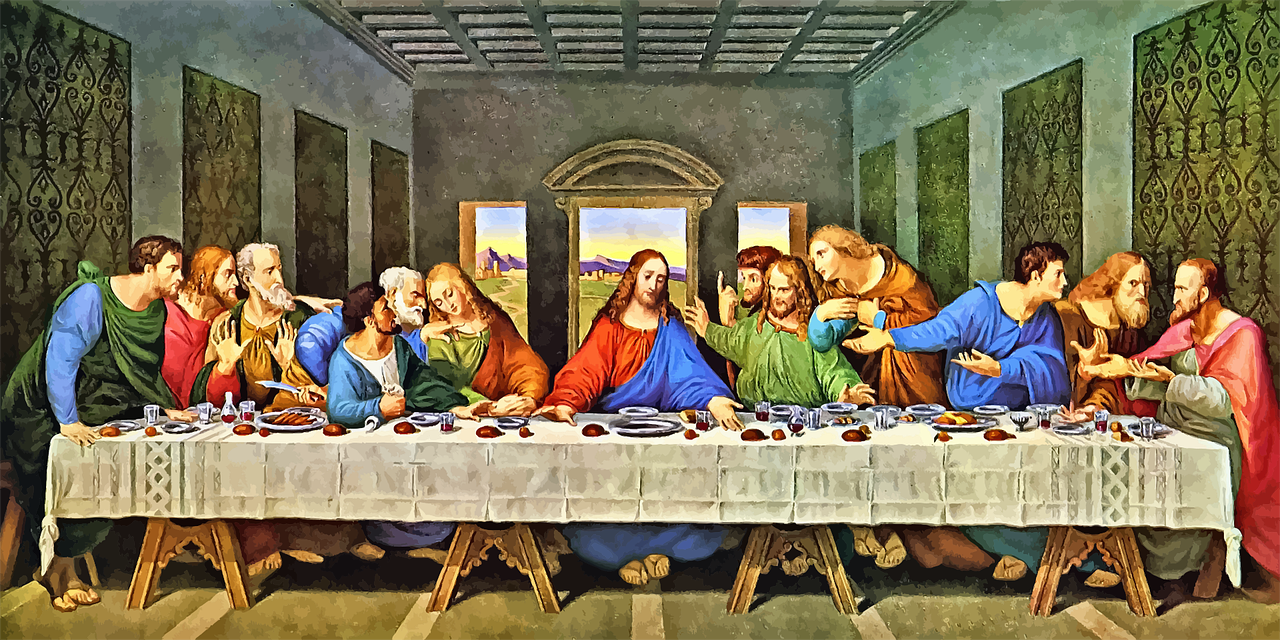
In today’s Gospel, we read about the Judas’ betrayal of Jesus. At the Last Supper, Jesus tells the Apostles, “Amen, I say to you, one of you will betray me.” All except Judas are astonished. Judas’ betrayal of Jesus not only breaks our hearts, but it should make us think about the ways that we have also betrayed Him. What are the things we have done in our lives to hurt God? 

Judas betrayed Jesus for thirty pieces of silver, but how have we betrayed Him? Have we stopped going to Mass or gone sporadically? Have we set aside our faith and adopted a secular worldview? Have we decided there are some Catholic teachings we don’t want to believe in or follow? Have we stayed silent when people are discussing life issues such as abortion or euthanasia? Have we hurt our spouse or our children? Have we conformed to the lie that there are more than two genders or that gender is fluid?

All sins are ways that we have driven the nails deeper into the feet and hands of our Lord. And many times we may not have even realized what we did. Other times, we may not have even cared. But our Lord is merciful, and He loves us more than we could ever imagine. He wants us to return to Him. He wants us to repent, to pick ourselves up, and to make changes in our lives. 

With Easter just a few days away, now is the perfect time of year to reflect on how we have hurt Jesus, to go to confession, and to take action to stay faithful. What that looks like is different for everyone, but it involves more than simply being kind to others. After all, even an atheist can be kind. Living our Catholic faith requires us to proudly and strongly speak up for what we believe in. That means speaking up for our faith, having the courage to live it openly and proudly, and standing up and proclaiming the truths that the Church teaches.

Our Catholic faith should be the most important thing in our lives, and when we put something before God, we betray Him. Yet Jesus forgives all of our transgressions, and He is waiting for us with open arms. He wants us to return to Him. In just two days, we will agonize over His death. Three days later, we will rejoice. Imagine how He will rejoice when we decide to put Him first, to say yes to Him, and to love Him with all of our hearts.

Contact the author


En el Evangelio de hoy leemos sobre la traición de Judas a Jesús. En la Última Cena, Jesús les dice a los Apóstoles: “Yo les aseguro que uno de ustedes va a entregarme.” Todos, menos Judas, quedan asombrados. La traición de Judas a Jesús no sólo nos rompe el corazón, sino que debería hacernos pensar en las formas en que también lo hemos traicionado. ¿Cuáles son las cosas que hemos hecho en nuestras vidas para herir a Dios?

Judas traicionó a Jesús por treinta monedas de plata, pero ¿cómo lo hemos traicionado nosotros? ¿Hemos dejado de ir a Misa o hemos ido esporádicamente? ¿Hemos dejado a un lado nuestra fe y adoptado un punto de vista mundano? ¿Hemos decidido que hay algunas enseñanzas católicas en las que no queremos creer ni seguir? ¿Hemos permanecido en silencio cuando la gente discute temas de la vida como el aborto o la eutanasia? ¿Hemos lastimado a nuestro cónyuge o a nuestros hijos? ¿Nos hemos conformado a la mentira de que hay más de dos géneros o que el género es fluido?

Todos los pecados son formas en las que hemos metido los clavos más profundamente en los pies y las manos de nuestro Señor. Y muchas veces puede que ni siquiera nos hayamos dado cuenta de lo que hicimos. Otras veces, puede que ni siquiera nos haya importado. Pero nuestro Señor es misericordioso y nos ama más de lo que jamás podríamos imaginar. Quiere que regresemos a Él. Quiere que nos arrepintamos, nos levantemos y hagamos un cambio de vida.

Faltando solo unos días para la Pascua, ahora es el momento perfecto para reflexionar sobre cómo hemos lastimado a Jesús, confesarnos y tomar medidas para permanecer fieles. Esto es diferente para cada uno, pero implica más que simplemente ser amable con los demás. Después de todo, incluso un ateo puede ser amable. Vivir la fe católica requiere que defendamos con orgullo y firmeza lo que creemos. Eso significa defender la fe, tener el valor de vivirla abierta y orgullosamente, y levantarnos y proclamar las verdades que enseña la Iglesia.

Nuestra fe católica debería ser lo más importante en nuestras vidas, y cuando ponemos a otras cosas antes de Dios, lo traicionamos. Sin embargo, Jesús perdona todas nuestras transgresiones y nos espera con los brazos abiertos. Quiere que regresemos a Él. En sólo dos días, vamos a agonizar por Su muerte. Tres días después, nos vamos a regocijar. Imagínate cómo se regocijará cuando decidamos ponerlo a Él en primer lugar, decirle que sí y amarlo con todo el corazón.

Comunicarse con la autora

Susan Ciancio has a BA in psychology and a BA in sociology from the University of Notre Dame, with an MA in liberal studies from Indiana University. For the past 19 years, she has worked as a professional editor and writer, editing both fiction and nonfiction books, magazine articles, blogs, educational lessons, professional materials and website content. Thirteen of those years have been in the pro-life sector. Currently Susan freelances and writes weekly for HLI, edits for American Life League, and is the executive editor of Celebrate Life Magazine. She also serves as executive editor for the Culture of Life Studies Program—an educational nonprofit program for K-12 students. You can reach her at slochner0.wixsite.com/website.

Feature Image Credit: GDJ, https://pixabay.com/vectors/last-supper-jesus-leonardo-da-vinci-4997322/

Uncomfortable Questions and Answers / Preguntas y Respuestas Incómodas

It’s been said that you shouldn’t ask questions you don’t want an honest answer to. Did you notice in the Gospel how the curiosity of Peter leads to another revelation he does not want to hear? Judas is going to betray Jesus, sure, but so is Peter. 

We have to be prepared to realize truths about ourselves that we don’t want to realize. We are a people marred by sin. We choose sin when righteousness stares us in the face. Time and time again, I’m back in the confessional, confessing the same old sins. That which I do not want to do, I do, and that which I want to do, I do not do. It’s an exhausting, never ending cycle. 

In the end, both Judas and Peter betray Jesus. And we will betray Jesus at some point, too. It’s part of human existence. 

The difference lies in what happened after Judas and Peter betrayed Jesus. Judas is overcome with guilt, and instead of running back to the Lord for forgiveness, he tragically ends his own life. (This is not to say that those who commit suicide are not forgiven by God! No, God saves by ways known to God alone.) Peter denies Jesus, but instead of despairing of God’s mercy, he runs to the tomb on Easter morning and finds it empty. We see full restoration of relationship later in the Gospel when Jesus asks Peter three times if he loves Him (Jn 21:15-19), making recompense for his three denials (Jn 18:17)

This Holy Week, let us continue to walk with Jesus toward Calvary by recognizing our sinfulness and never despairing of His mercy. Let us avail ourselves of the Sacrament of Reconciliation when we stumble, and have the courage to accompany Him all the way to the Cross. In doing so, we bear witness to the Ultimate Answer: Christ’s saving Death and Resurrection. 

Contact the author


Se ha dicho que no debes hacer preguntas si no quieres una respuesta honesta. ¿Notaste en el Evangelio cómo la curiosidad de Pedro lleva a otra revelación que no quiere escuchar? Judas va a traicionar a Jesús, claro, pero Pedro también lo va a negar.

Tenemos que estar preparados para darnos cuenta de verdades sobre nosotros mismos que no queremos darnos cuenta. Somos un pueblo estropeado por el pecado. Elegimos el pecado cuando la justicia nos mira a la cara. Una y otra vez vuelvo al confesionario, confesando los mismos pecados de siempre. Lo que no quiero hacer, lo hago, y lo que quiero hacer, no lo hago. Es un ciclo agotador e interminable.

Al final, tanto Judas como Pedro traicionan a Jesús. Y en algún momento, nosotros también traicionaremos a Jesús. Es parte de la existencia humana.

La diferencia radica en lo que sucedió después de que Judas y Pedro traicionaron a Jesús. Judas se siente abrumado por la culpa y, en lugar de volver corriendo al Señor en busca del perdón, termina trágicamente con su propia vida. (¡Esto no quiere decir que aquellos que se suicidan no sean perdonados por Dios! Dios salva de maneras que sólo Dios conoce.) Pedro niega a Jesús, pero en lugar de desesperarse de la misericordia de Dios, corre hacia la tumba en la mañana de Pascua y lo encuentra vacío. Vemos la restauración completa de la relación más adelante en el Evangelio cuando Jesús le pregunta a Pedro tres veces si lo ama (Jn 21,15-19), recompensando sus tres negaciones (Jn 18,17).

Esta Semana Santa, sigamos caminando con Jesús hacia el Calvario reconociendo nuestra pecaminosidad y nunca desesperándonos de Su misericordia. Aprovechemos el Sacramento de la Reconciliación cuando tropecemos, y tengamos la valentía de acompañarlo hasta la Cruz. Al hacerlo, damos testimonio de la respuesta definitiva: la muerte y la resurrección salvadoras de Cristo.

Comunicarse con la autora

Mary Thissen is a St. Louis native living in East Central Illinois with her husband and children. She is blessed with twin boys Earthside and four children now living in Heaven. When she is not working as a healthcare data analyst or caring for her boys, she enjoys studying and writing about the Catholic faith and ministering to women who are suffering through miscarriage or infertility. You can connect with Mary on Instagram @waitingonmiracles. 

Feature Image Credit: brenkee, pixabay.com/photos/man-pray-sit-sitting-praying-1350599/

Hide and Seek: Adult Version / Escondidas: Versión de Adultos

As children, most of us enjoyed playing hide and seek. Whether outside among the trees or inside among the furniture or in the dark simply standing in a corner, we felt a surge of adrenaline when the seeker shouted, “Ready or not, here I come!” Sometimes we hadn’t found that perfect hiding place yet. We weren’t ready. Yet, we stood as still as statues waiting and hoping we wouldn’t be the first one to be found. 

I sometimes feel a similar sentiment at the beginning of Holy Week. Whether I’m ready or not, it has come. It is now here. We can feel a mix of emotions, knowing beforehand all that Jesus will go through, not wanting him to suffer, yet knowing he has to. We also probably feel some joy, knowing that our Lenten journey is almost over and that Easter is on the horizon. Sometimes we simply don’t know what we feel or how we’re supposed to feel. 

The one thing that we can’t do is hide. Because contrary to our childhood playtime, Holy Week is definitely not a game. We can’t find some obscure place where Our Lord’s Passion and Death cease to exist. We cannot run away to a recess of our mind where we pretend that the disciples never betrayed, denied and abandoned Jesus. We cannot stop following Christ when it gets hard. 

In today’s first reading from Isaiah we hear: “I, the LORD, have called you for the victory of justice, I have grasped you by the hand; I formed you, and set you as a covenant of the people, a light for the nations, To open the eyes of the blind, to bring out prisoners from confinement, and from the dungeon, those who live in darkness.” How was this victory won? Through his death on the cross. How did he grasp us by the hand? By extending his arms out to us on the cross. How did he complete the covenant he had made with us? By breathing his last breath on the cross. How did he show us how to be a light for the nations? By his example of selfless sacrifice on the cross. How did he set us free from blindness, prison, the dungeon and darkness? By giving himself up for us on the cross. 

In the Gospel he tried to give his disciples a warning by defending the woman who anointed him with costly perfumed oil saying: “Leave her alone. Let her keep this for the day of my burial.” He knew his death was imminent, and he did not sugarcoat it. Yet the disciples were still surprised when it happened. And what did they do? They fled and hid, playing their own version of hide and seek. 

Let us hear the words of today’s readings and truly take them to heart. Let us recognize how they drip with pure, selfless, unfathomable love and let us love our dear Lord in the same way in return for all he has done and will do for us. 

Contact the Author


Cuando éramos niños, a la mayoría de nosotros nos gustaba jugar al escondite. Ya sea afuera entre los árboles o adentro entre los muebles o en la oscuridad simplemente parados en un rincón, sentimos una subida de adrenalina cuando el buscador gritaba: “¡Listo o no, allá voy!” A veces todavía no habíamos encontrado el lugar perfecto para escondernos. No estábamos listos. Sin embargo, nos quedamos tan quietos como estatuas esperando no ser los primeros en ser encontrados.

A veces siento un sentimiento semejante al comienzo de la Semana Santa. Ya sea que esté lista o no, ha llegado. Ahora está aquí. Podemos sentir una mezcla de emociones, sabiendo de antemano todo lo que Jesús va a sufrir, no queriendo que sufra, pero sabiendo que tiene que hacerlo. Es probable que también sintamos algo de alegría al saber que la Cuaresma casi ha terminado y que la Pascua está por venir. A veces simplemente no sabemos lo que sentimos o cómo se supone que deberíamos sentirnos.

Lo único que no podemos hacer es escondernos. Porque, a diferencia del tiempo de juego de nuestra infancia, la Semana Santa definitivamente no es un juego. No podemos encontrar algún lugar oscuro donde la Pasión y Muerte de Nuestro Señor dejen de existir. No podemos huir a un rincón de nuestra mente donde finjimos que los discípulos nunca traicionaron, negaron y abandonaron a Jesús. No podemos dejar de seguir a Cristo cuando las cosas se ponen difíciles.

En la primera lectura de hoy de Isaías escuchamos: “Yo, el Señor, te llamé y te tomé por la mano, para que seas instrumento de salvación; yo te formé, pues quiero que seas señal de mi alianza con el pueblo, luz de las naciones. Quiero que des vista a los ciegos y saques a los presos de la cárcel, del calabozo donde viven en la oscuridad.” ¿Cómo se obtuvo esta salvación? Por su muerte en la cruz. ¿Cómo nos tomó de la mano? Extendiendo sus brazos hacia nosotros en la cruz. ¿Cómo completó la alianza que había hecho con nosotros? Al dar su último respiro en la cruz. ¿Cómo nos mostró cómo ser luz para las naciones? Por su ejemplo de sacrificio desinteresado en la cruz. ¿Cómo nos liberó de la ceguera, la cárcel, el calabozo y la oscuridad? Entregándose por nosotros en la cruz.

En el Evangelio trató de dar una advertencia a sus discípulos defendiendo a la mujer que lo ungió con un costoso aceite perfumado, diciendo: “Déjala. Esto lo tenía guardado para el día de mi sepultura”. Sabía que su muerte era inminente y no la endulzó. Sin embargo, los discípulos aún se sorprendieron cuando sucedió. ¿Y qué hicieron? Huyeron y se escondieron, jugando su propia versión del escondite.

Escuchemos las palabras de las lecturas de hoy y tomémoslas realmente en serio. Reconozcamos cómo gotean del amor puro, desinteresado e insondable y amemos de la misma manera a nuestro querido Señor a cambio de todo lo que ha hecho y hará por nosotros.

Comunicarse con la autora

Feature Image Credit: Ivan Aleksic, unsplash.com/photos/woman-in-black-long-sleeve-shirt-covering-her-face-hko-iWhYdYE


Tami Urcia grew up in Western Michigan, a middle child in a large Catholic family. She spent early young adulthood as a missionary in Mexico, studying theology and philosophy, then worked and traveled extensively before finishing her Bachelor’s Degree in Western Kentucky. She loves tackling projects, finding fun ways to keep her little ones occupied, quiet conversation with the hubby and finding unique ways to love. She works full time, is a guest blogger on CatholicMom.com and BlessedIsShe.net, and has been doing Spanish translations on the side for over 20 years.

Palm Sunday of the Lord’s Passion / Domingo de Ramos de la Pasión del Señor

What more can be said about today’s Gospel? We hear the proclamation of this Gospel in several voices, to help us enter into these final days of Jesus’ earthly life. The scheming of the chief priests and scribes before the Passover, the woman with the alabaster jar of oil prefiguring the anointing of his body for burial, Judas’ plan to betray him, the Last Supper and Jesus’ knowledge that he would soon be betrayed, the institution of the Eucharist so that he could remain with us until the end of time, Jesus’ prediction that the apostles would be scattered and their faith shattered. And then, all the events of Jesus’ profound Passion and Death.

We see his generous Heart, his agonizing Heart, the Heart that moans silently for someone to keep vigil with him for even an hour, the Heart that does not hesitate or draw back from the terrible execution for love of the Father and of us. Throughout all this long suffering, we see Jesus remaining steadfast before the will of the Father and concerned with consoling and strengthening those around him.

We also hear Jesus cry out the first words of Psalm 22: “My God, my God, why have you forsaken me?” While we hear in that cry of his Heart the depths to which he was allowed to sink – to the sense of being forsaken by the Father, to the brink of despair – the psalm is really a painful prayer of hope. Jesus has certainly not given up on his relationship with the Father. He has not let go. Psalm 22 (which those at the foot of the Cross would have known well) begins with an accurate description of the scene on Calvary, from the vicious attack of Jesus’ enemies, to the details of the suffering he endured, to the dividing of his clothes. But the psalm then reaches out to God to come and deliver, to save him from this torture, and then moves on to praise the Lord. In his utter agony, Jesus enters into our own suffering and reminds us to cling to hope and to continue to offer praise.

While part of Psalm 22 was heard today as the Responsorial Psalm, we might pause to pray the whole psalm some time during this Holy Week; it is a profound meditation on the words of Jesus’ own agonizing Heart from the Cross. It gives us a glimpse of how low he descended into our own suffering, to redeem every last bit of physical, emotional, psychological, and spiritual pain for us.

In His Cross, because of the Resurrection, we are all freed to bear our own crosses with love and hope.

Contact the author


¿Qué más se puede decir sobre el evangelio de hoy? Escuchamos el anuncio de este Evangelio en varias voces, para ayudarnos a entrar en estos últimos días de la vida terrena de Jesús. Las intrigas de los sumos sacerdotes y los escribas antes de la Pascua, la mujer con el frasco de perfume con nardo que prefiguraba la unción de su cuerpo para el entierro, el plan de Judas para traicionarlo, la Última Cena y el conocimiento de Jesús de que pronto sería traicionado, la institución de la Eucaristía para que pudiera permanecer con nosotros hasta el fin de los tiempos, la predicción de Jesús de que los apóstoles serían dispersados y su fe destrozada. Y luego, todos los acontecimientos de la profunda Pasión y Muerte de Jesús.

Vemos su Corazón generoso, su Corazón agonizante, el Corazón que gime en silencio para que alguien vigile con Él aunque sea una hora, el Corazón que no duda ni retrocede ante la terrible ejecución por amor al Padre y a nosotros. A lo largo de todo este largo sufrimiento, vemos a Jesús permanecer firme ante la voluntad del Padre y preocupado por consolar y fortalecer a quienes lo rodean.

También escuchamos a Jesús gritar las primeras palabras del Salmo 22: “Dios mío, Dios mío, ¿por qué me has abandonado?” Si bien escuchamos en ese grito de su Corazón las profundidades en las que se dejó caer–hasta sentirse abandonado por el Padre, al borde de la desesperación–el salmo es en realidad una dolorosa oración de esperanza. Ciertamente Jesús no ha renunciado a su relación con el Padre. No lo ha soltado. El Salmo 22 (que aquellos que estaban al pie de la Cruz habrían conocido bien) comienza con una descripción precisa de la escena en el Calvario, desde el feroz ataque de los enemigos de Jesús, hasta los detalles del sufrimiento que soportó, hasta la división de su ropa. Pero el salmo luego se acerca a Dios para que venga y lo libere, para salvarlo de esta tortura, y luego pasa a alabar al Señor. En el momento de su inmensa agonía, Jesús entra en nuestro propio sufrimiento y nos recuerda que debemos aferrarnos a la esperanza y continuar ofreciendo alabanzas.

Si bien escuchamos una parte del Salmo 22 hoy durante el Salmo Responsorial, podríamos hacer una pausa para rezar el salmo completo en algún momento durante esta Semana Santa; es una profunda meditación sobre las palabras del propio Corazón agonizante de Jesús desde la Cruz. Nos da una idea de cuán bajo descendió en nuestro propio sufrimiento, para redimir hasta el último fragmento de dolor físico, emocional, psicológico y espiritual por nosotros.

En Su Cruz, gracias a la Resurrección, todos somos libres de llevar nuestras propias cruces con amor y esperanza.

Comunicarse con la autora

Kathryn Mulderink, MA, is married to Robert, Station Manager for Holy Family Radio. Together they have seven children (including Father Rob), and seven grandchildren. She is President of the local community of Secular Discalced Carmelites and has published five books and many articles. Over the last 30 years, she has worked as a teacher, headmistress, catechist, Pastoral Associate, and DRE, and as a writer and voice talent for Catholic Radio. Currently, she serves the Church by writing and speaking, and by collaborating with various parishes and to lead others to encounter Christ and engage their faith. Her website is www.KathrynTherese.com

Feature Image Credit: Matías Medina, cathopic.com/photo/63-jesus-crucified

betrayal

The Denial of Peter And Judas

How often do we take advantage of God’s merciful nature to say one thing and do another? We intend to say that Rosary each morning, but, well, God will understand if I just stop at a Hail Mary. At least I did that! We promise that we will not gossip, but then let a tidbit out and rationalize that we are only venting to a friend. We race through our day and fail to appreciate a blue sky, a field of flowers, or a healthy child, only to complain if something inconveniences us. We tell little “white” lies, cheat when “no one” will get hurt, and give only out of our surplus.

Every time we choose not to follow His commands, we betray His love for us, and we deny His authority.

Sometimes we like to use the examples of Judas and Peter to justify our own sinfulness. “Well, if he did that, and Jesus still forgave Him, then I’m not that bad.” Judas, unfortunately, relied upon his own understanding, and turned completely away from God. Peter, on the other hand, repented and found His new life in Christ.

So you have a choice: Do you continue to justify your own understanding of how you should live your life and betray what Jesus has asked of you, or do you deny your pride and your “old” self to find your new life in Him? Are you a Judas or a Peter?

And in the end, would you rather die because you ran away from Christ, or die because you followed Him?

Make a list. How do you betray or deny God, even in the smallest way, by your words, actions, or omissions?

Lord, please grant me the grace to be morally courageous in every way, never denying You in my thoughts, words, actions or omissions.


After marrying her husband, Jim Roberts, in 1980, Cynthia Millen graduated from law school and practiced in Ohio for a short while. Excited about having a large family, Jim and Cindy were blessed more quickly than expected with the birth of five children in four years (two set of twins). Her love for reading and writing grew into the publication of several children’s books (under the name C. M. Millen), poems and short stories (including a 2014 Tuscany Prize winner). Millen earned her Masters in Literature from Trinity College, Dublin, and relishes the teaching (and learning) of reading, writing, and grammar with middle school students at Christ the King School in Toledo, Ohio. Most of all, she treasures attending Mass there with wonderful parishioners and truly marvelous priests. [This reflection is used by permission of CatholicMom.com.]