The Patience of God / La Paciencia de Dios

Parenting is the work of repetition, especially in families with multiple children. Something can never be said just once. “What’s for dinner?” is an oft repeated question in my home, as well as “What are we doing today?” My husband and I happen to have 6 kids, so there are some days that I feel like I’m experiencing an inordinate amount of déjà vu when I have to repeat the same thing over and over again. 

Sometimes, I wonder if Jesus felt the same way during his ministry. Or, when I’m really feeling like a failure in the patience department, I wonder if God ever feels that way about me. Can’t I just remember what He has told me over and over again? 

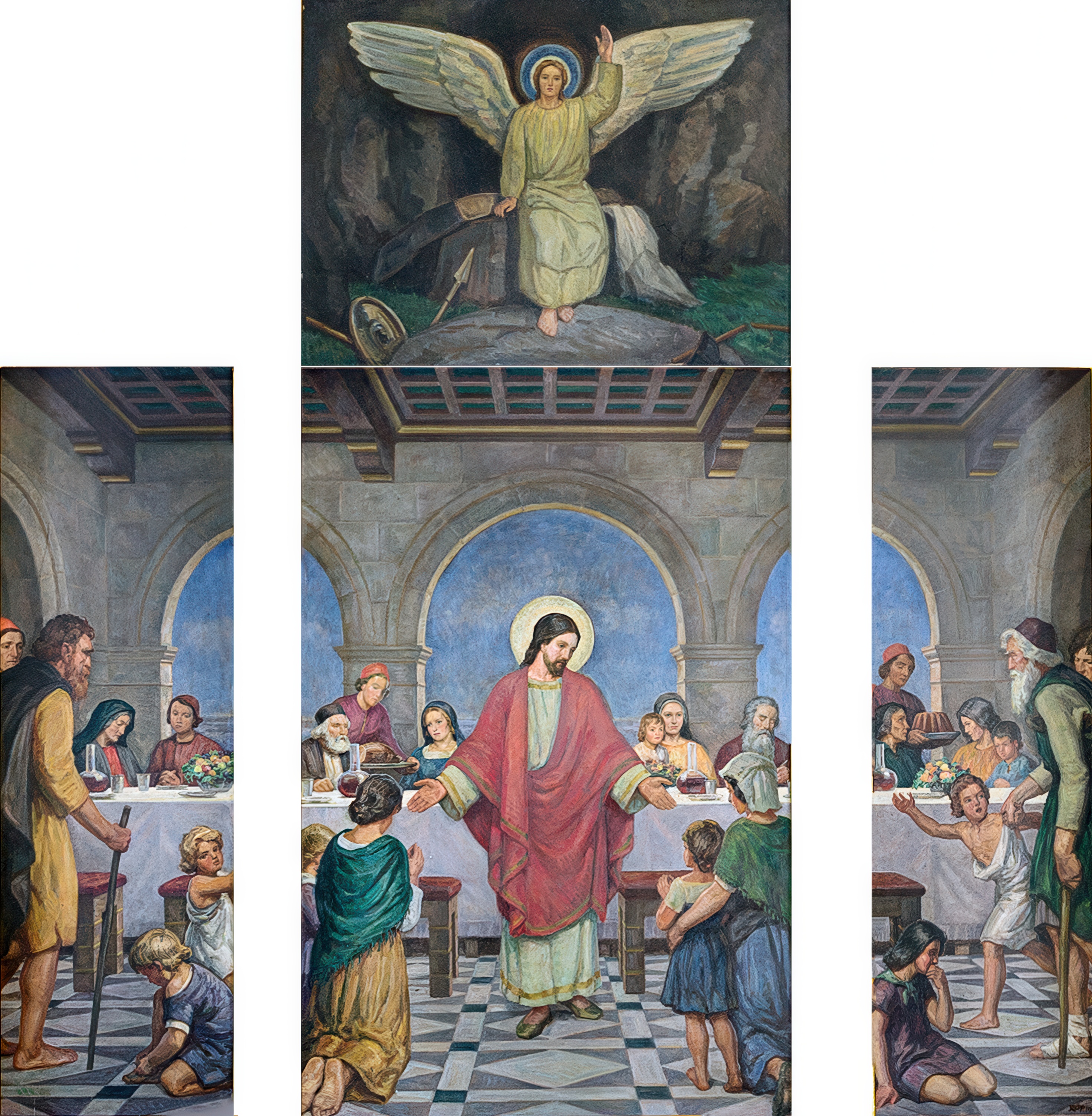
In today’s Gospel, we hear Jesus explaining to the people that it was God who gave the Israelites manna in the desert, not Moses. This is something the people ought to know and understand. God had been caring for and providing for His people throughout history. Didn’t they know it already? Wasn’t God tired of having to prove His trustworthiness over and over again?

Clearly not, and praise the Lord for it. God is not like me, or any of us, who lose our patience over repeated childlike requests. Not only did God provide for the Israelites in the desert, Jesus explains that He will continue to provide for us in a new and incredible way. The manna in the desert lasted only a time, but the bread from Heaven will last until the end of time. Jesus, our true Bread, sustains us and gives us access to the Father in a way never before had on earth. 

It’s even more amazing to consider that this isn’t a one and done thing. Jesus doesn’t offer himself to us once in the Eucharist. We are invited weekly, even daily, to the sacrifice of the Mass where we can receive our Lord in true food and drink to nourish our souls. Every day, every single day, Jesus offers Himself to us. He isn’t exasperated with our need for daily nourishment. He isn’t fed up with our consistent need for grace because we have sinned yet again. 

2nd Peter 3:15 tells us that, “Our Lord’s patience is directed toward salvation.” God knows we cannot get to heaven on our own. Because of sin, our desires are disordered and we are prone to fall into temptation. Like my children who ask over and over again what time we are going to the park, we return to God over and over again asking for forgiveness, for grace, for help. And God, over and over again, offers us the Eucharist to support and sustain us. God does not tire of us nor is He surprised when we fall. He is ever faithful, ever patient, and ever loving.

Contact the author


Ser padres es una tarea repetitiva, especialmente en familias con varios hijos. Algo nunca se puede decir solo una vez. “¿Qué hay para cenar?” es una pregunta que se repite con frecuencia en mi casa, al igual que “¿Qué vamos a hacer hoy?” Mi esposo y yo tenemos seis hijos, así que hay días en que siento una sensación de déjà vu desmesurada al tener que repetir lo mismo una y otra vez.

A veces, me pregunto si Jesús sintió lo mismo durante su ministerio. O, cuando me siento realmente impaciente, me pregunto si Dios alguna vez siente lo mismo por mí. ¿Acaso no puedo simplemente recordar lo que me ha dicho una y otra vez?

En el Evangelio de hoy, escuchamos a Jesús explicar al pueblo que fue Dios quien dio el maná a los israelitas en el desierto, no Moisés. Esto es algo que el pueblo debe saber y comprender. Dios había cuidado y provisto a su pueblo a lo largo de la historia. ¿Acaso no lo sabían ya? ¿No estaba Dios cansado de tener que demostrar su confiabilidad una y otra vez?

Claro que no, y alabado sea el Señor por ello. Dios no es como yo, ni como ninguno de nosotros, que perdemos la paciencia ante repetidas peticiones infantiles. Dios no solo proveyó para los israelitas en el desierto, sino que Jesús explica que continuará proveyendo para nosotros de una manera nueva e increíble. El maná en el desierto duró solo un tiempo, pero el pan del Cielo durará hasta el fin del mundo. Jesús, nuestro verdadero Pan, nos sustenta y nos da acceso al Padre como nunca antes en la tierra.

Es aún más asombroso considerar que esto no es algo que se hace una sola vez. Jesús no se ofrece a nosotros una sola vez en la Eucaristía. Somos invitados semanalmente, incluso diariamente, al sacrificio de la Misa, donde podemos recibir a nuestro Señor en verdadero alimento y bebida para nutrir nuestras almas. Cada día, todos los días, Jesús se ofrece a nosotros. No se exaspera con nuestra necesidad de alimento diario. Él no se cansa de nuestra constante necesidad de gracia porque hayamos pecado una vez más.

2 Pedro 3:15 nos dice que “la paciencia de nuestro Señor está dirigida a la salvación”. Dios sabe que no podemos llegar al cielo por nuestros propios medios. Debido al pecado, nuestros deseos están desordenados y somos propensos a caer en la tentación. Como mis hijos que preguntan una y otra vez a qué hora vamos al parque, volvemos a Dios una y otra vez pidiendo perdón, gracia y ayuda. Y Dios, una y otra vez, nos ofrece la Eucaristía para apoyarnos y sostenernos. No se cansa de nosotros ni se sorprende cuando caemos. Dios es siempre fiel, siempre paciente y siempre amoroso.

Comunicarse con la autora

Kate Taliaferro is an Air Force wife and mother. She is blessed to be able to homeschool, bake bread and fold endless piles of laundry. When not planning a school day, writing a blog post or cooking pasta, Kate can be found curled up with a book or working with some kind of fiber craft. Kate blogs at DailyGraces.net.

Feature Image Credit: Unknown Artist, art.diocesan.com/stock-photo/i-am-the-bread-of-life-25977/

The views and opinions expressed in the Inspiration Daily blog are solely those of the original authors and contributors. These views and opinions do not necessarily represent those of Diocesan, the Diocesan staff, or other contributors to this blog.


Jesus’ Timing / El momento de Jesús

Jesus loved Mary, Martha, and Lazarus, so He waited. This is such a difficult passage to swallow. Like Martha who cries to Jesus, “Lord, if you had been here, my brother would not have died,” we, too, cry out to Jesus when the answers we seek are long in coming. 

I found the disciples’ reaction to Jesus’ decision to wait in place, then go back to Judea, to be fascinating. They are concerned for Jesus’ wellbeing as the Jews in Judea had recently tried to stone Jesus. I had to pause and wonder if, perhaps, they had been glad during the two day wait. Perhaps they were sad for Jesus since His friend was sick, but glad for themselves because they weren’t going to go back to a place of danger.

Then, Jesus announces it’s time to go back. The surprise and shock are evident, especially in Thomas’s defeated statement that they are going to their death. It would seem that no one is very pleased with Jesus’ timing. 

What do we do when Jesus’ timing is not our own?  The Gospel offers us two options. The first is that of the disciples. They are resistant, uncertain, and while they do go along with Jesus, they lack an attitude of trust in His wisdom. Then there is Martha, who also wonders and questions Jesus’ timing. However, she makes a bold statement of faith immediately afterwards, demonstrating that she trusts Jesus knows what He’s doing even if she doesn’t.

“But even now, I know that whatever you ask of God, God will give you” (John 11:22). 

Martha’s faith is not dependent on her knowledge of Jesus’ plans. The plans and timing aren’t the important thing. Her focus is on the person of Jesus, the Son of God. Nothing is too impossible for Him, even if it seems beyond our measure of understanding.

Contact the author


Jesús amaba a María, a Marta y a Lázaro, y por eso esperó. Este pasaje es difícil de asimilar. Al igual que Marta, que clama a Jesús: “Señor, si hubieras estado aquí, no habría muerto mi hermano”, nosotros también clamamos a Jesús cuando las respuestas que buscamos tardan en llegar.

Me pareció fascinante la reacción de los discípulos ante la decisión de Jesús de esperar un tiempo y luego regresar a Judea. Les preocupaba el bienestar de Jesús, ya que los judíos de Judea habían intentado apedrearlo recientemente. Tuve que detenerme a pensar si, tal vez, se habían alegrado durante los dos días de espera. Quizás sentían tristeza por Jesús, pues su amigo estaba enfermo, pero se alegraban por sí mismos porque no iban a regresar a un lugar peligroso.

Luego Jesús anuncia que es hora de regresar. La sorpresa y la conmoción son evidentes, especialmente en la expresión de derrota de Tomás, quien afirma que van a ir a la muerte. Al parecer, a nadie le agrada la decisión de Jesús.

¿Qué hacemos cuando el tiempo de Jesús no coincide con el nuestro? El Evangelio nos ofrece dos opciones. La primera es la de los discípulos. Se muestran resistentes e inseguros, y aunque siguen a Jesús, carecen de confianza en su sabiduría. Luego tenemos a Marta, quien también duda del momento que escoge Jesús. Sin embargo, inmediatamente después hace una firme declaración de fe, demostrando que confía en que Jesús sabe lo que hace, aunque ella no lo entienda.

“Pero aun ahora estoy segura de que Dios te concederá cuanto le pidas” (Juan 11,22). 

La fe de Marta no depende de su conocimiento de los planes de Jesús. Los planes y el momento no son lo importante. Su atención se centra en la persona de Jesús, el Hijo de Dios. Nada es imposible para Él, aunque parezca estar más allá de nuestra comprensión.

Comunicarse con la autora

Kate Taliaferro is an Air Force wife and mother. She is blessed to be able to homeschool, bake bread and fold endless piles of laundry. When not planning a school day, writing a blog post or cooking pasta, Kate can be found curled up with a book or working with some kind of fiber craft. Kate blogs at DailyGraces.net.

Feature Image Credit: hodgesce13,pixabay.com/photos/watch-watches-luxury-time-1935514/

The views and opinions expressed in the Inspiration Daily blog are solely those of the original authors and contributors. These views and opinions do not necessarily represent those of Diocesan, the Diocesan staff, or other contributors to this blog.

Teach With Words / Enseñar con palabras

I think St. Francis Assisi would be a little upset with the often attributed (but not historically verified) quote: “Preach the Gospel always, when necessary, use words.” We are absolutely called to preach the Gospel with our lives. However, Jesus tells us very specifically in today’s Gospel that, “whoever obeys and teaches these commandments will be called greatest in the Kingdom of Heaven” (Matthew 5:19). Jesus calls us to be obedient and to teach.

First up is obedience. Another oft-used phrase is, “You can’t give what you don’t already have.” It would be very challenging indeed to stand up in front of a classroom and teach students on a subject matter you yourself have never studied. In order to know the Commandments, we have to learn about them. And in learning about them, we come to learn that they require obedience, trust, and faith. Commandments are not rules like, “Eat your vegetables” or “Wash your hands before supper.” They provide the framework for relationship. The Commandments invite us into relationship with God, and with one another.

As we come to know the Commandments more fully, we enter more deeply into our relationship with God. This, then, is what we are teaching. It’s not just a laundry list of rules. It’s relationship. Relationships require communication in order to grow. That means we have to talk with one another about our relationship with God, with the Church, and with the Commandments. We have to share our experiences of life with one another. 

This is where the teaching comes into play. Society loves experts, people who know what they know and talk about it often with authority. Teachers, through training and experience, are authorities on learning. But they are not the only ones when it comes to sharing the Good News. Jesus doesn’t say that only teachers with certificates get to teach about God, as if Sunday morning catechists have a monopoly on matters of faith. He calls all people to announce the Good News of the Kingdom. To announce, to proclaim – with words as well as with deeds. That means you and I are specifically called in our present circumstance to speak about Jesus and our relationship with him. The work of teaching isn’t something we can pass on or think we aren’t good enough for.

Thankfully, we don’t do this work alone. Jesus sent the Holy Spirit to fill us and guide us as we obey and teach. We can open ourselves and our situations up to the Holy Spirit, asking Him to infuse our speech with his wisdom. We do not teach from our own authority but from humility, recognizing that we are sinners in need of mercy, just like the person we are talking to. When we speak about Jesus, when we share our experiences of faith, we are teaching and modeling what Christian discipleship looks like. It is a relationship built upon obedience and love for God.

Contact the author


Creo que San Francisco de Asís se molestaría un poco con la cita que se le atribuye con frecuencia (pero que no está históricamente verificada): “Predica siempre el Evangelio; si es necesario, utiliza palabras”. Estamos llamados a predicar el Evangelio con nuestras vidas. Sin embargo, Jesús nos dice muy específicamente en el Evangelio de hoy que el que “cumpla [estos preceptos] y los enseñe, será grande en el Reino de los cielos” (Mateo 5,19). Jesús nos llama a ser obedientes y a enseñar.

Primero viene la obediencia. Otra frase común es: “No se puede dar lo que no se tiene”. Sería muy difícil ponerse frente a un aula y enseñar a los alumnos sobre un tema que uno mismo nunca ha estudiado. Para conocer los mandamientos, tenemos que aprender sobre ellos. Y al aprender sobre ellos, comprendemos que requieren obediencia, confianza y fe. Los mandamientos no son reglas como “Come tus verduras” o “Lávate las manos antes de cenar”. Forman el marco para la relación interpersonal. Los Mandamientos nos invitan a una relación con Dios y entre nosotros.

A medida que conocemos mejor los Mandamientos, profundizamos nuestra relación con Dios. Esto, pues, es lo que enseñamos. No se trata solo de una lista de normas, sino de una relación. Las relaciones requieren comunicación para crecer. Esto significa que debemos hablar entre nosotros sobre nuestra relación con Dios, con la Iglesia y con los Mandamientos. Debemos compartir nuestras experiencias de vida.

Aquí es donde entra en juego la enseñanza. La sociedad valora a los expertos, a quienes saben lo que saben y hablan de ello con autoridad. Los maestros, gracias a su formación y experiencia, son autoridades en el conocimiento. Pero no son los únicos a la hora de compartir la Buena Nueva. Jesús no dice que solo los maestros titulados puedan enseñar sobre Dios, como si los catequistas de los domingos tuvieran el monopolio de la fe. Él llama a todos a anunciar la Buena Nueva del Reino. A anunciarla, a proclamarla, tanto con palabras como con obras. Eso significa que tú y yo estamos llamados específicamente, en nuestra situación actual, a hablar de Jesús y de nuestra relación con él. La labor de enseñar no es algo que podamos delegar ni para lo que podamos sentirnos incapaces.

Afortunadamente, no hacemos esta labor solos. Jesús envió al Espíritu Santo para llenarnos y guiarnos mientras obedecemos y enseñamos. Podemos abrirnos al Espíritu Santo, tanto a nosotros mismos como a nuestras circunstancias, pidiéndole que ilumine nuestras palabras con su sabiduría. No enseñamos desde nuestra propia autoridad, sino desde la humildad, reconociendo que somos pecadores necesitados de misericordia, al igual que la persona con quien hablamos. Cuando hablamos de Jesús, cuando compartimos nuestras experiencias de fe, enseñamos y mostramos cómo es el discipulado cristiano. Es una relación basada en la obediencia y el amor a Dios.

Comunicarse con la autora

Kate Taliaferro is an Air Force wife and mother. She is blessed to be able to homeschool, bake bread and fold endless piles of laundry. When not planning a school day, writing a blog post or cooking pasta, Kate can be found curled up with a book or working with some kind of fiber craft. Kate blogs at DailyGraces.net.

Feature Image Credit: Jarmoluk, pixabay.com/photos/apple-books-classroom-red-apple-256263/

The views and opinions expressed in the Inspiration Daily blog are solely those of the original authors and contributors. These views and opinions do not necessarily represent those of Diocesan, the Diocesan staff, or other contributors to this blog.

Recognizing Jesus in My Neighbor / Reconocer a Jesús en el prójimo

This Gospel is one we have heard many times over. It was one of Mother Theresa’s favorites, as well as so many other saints, popes, holy men and women, and everyday ordinary people. We derive the Corporal Works of Mercy from this list, which Jesus uses as a measure for who will be welcomed into the Kingdom. While I love a good list as much as the next person (and this is absolutely a good and important list), I wonder if we can look a little beyond that list today.

Jesus says to those on the right, “Whatever you did for one of these least brothers of mine, you did for me.” The people in this parable were doing good works because they observed a need and took steps to fill it. They did not realize they were serving Jesus through their service to someone in need. In the same way, those on the left did not observe well the needs of those around them and therefore missed the opportunity to love Jesus through their neighbor.

We, the listeners, now have a different starting point than those in the parable. We know we are supposed to act like the ones on the right, but we have a new responsibility to see our neighbor in a different light. In order to enter the Kingdom, Jesus makes it clear that we must see our neighbor as Himself. 

We are surrounded by neighbors – we work with them, walk past them in the grocery store, stand in line with them, make breakfast for them, see them on the news. Each person we encounter is a child of God and presents us with an opportunity to love Jesus in that person. 

Jesus is clear, these works of mercy are essential to our salvation. We have to put our faith into practice in real, practical ways that give preferential option to the poor, lonely, and those in need. But, because of the Gospel today, we have new knowledge that has to be taken into account. These neighbors are not nameless, faceless boxes or tasks to be checked off on a checklist. They are Jesus. When we give, when we serve, when we act with love and mercy, do we recognize Jesus’ face in the person before us?

Contact the author


Este Evangelio lo hemos escuchado muchas veces. Era uno de los favoritos de la Madre Teresa, así como de tantos otros santos, papas, hombres y mujeres santos, y gente laica. De esta lista derivamos las Obras Corporales de Misericordia, que Jesús utiliza como medida para determinar quién será bienvenido en el Reino. Aunque me encanta una buena lista igual que cualquiera (y esta es sin duda una lista buena e importante), me pregunto si hoy podemos mirar un poco más allá.

Jesús les dice a los de la derecha: “cuando lo hicieron con el más insignificante de mis hermanos, conmigo lo hicieron”. Las personas de esta parábola hacían buenas obras porque percibieron una necesidad y se pusieron manos a la obra para satisfacerla. No se dieron cuenta de que estaban sirviendo a Jesús al servir a alguien necesitado. Del mismo modo, los de la izquierda no observaron bien las necesidades de quienes los rodeaban y, por lo tanto, perdieron la oportunidad de amar a Jesús a través del prójimo.

Nosotros, los oyentes, ahora tenemos un punto de partida diferente al de los de la parábola. Sabemos que debemos actuar como los de la derecha, pero tenemos la nueva responsabilidad de ver al prójimo desde una perspectiva diferente. Para entrar en el Reino, Jesús deja claro que debemos ver al prójimo como a Él mismo.

Estamos rodeados de prójimos: trabajamos con ellos, nos cruzamos con ellos en el supermercado, hacemos cola con ellos, les preparamos el desayuno, los vemos en las noticias. Cada persona que encontramos es un hijo de Dios y nos brinda la oportunidad de amar a Jesús en esa persona.

Jesús lo deja bien claro: estas obras de misericordia son esenciales para nuestra salvación. Debemos poner en práctica nuestra fe de maneras reales y prácticas que den preferencia a los pobres, los solitarios y los necesitados. Pero, gracias al Evangelio de hoy, tenemos un nuevo conocimiento que debemos tomar en cuenta. Estos vecinos no son casillas sin nombre ni rostro, ni tareas que marcar en una lista. Son Jesús. Cuando damos, cuando servimos, cuando actuamos con amor y misericordia, ¿reconocemos el rostro de Jesús en la persona que tenemos enfrente nuestro?

Comunicarse con la autora

Kate Taliaferro is an Air Force wife and mother. She is blessed to be able to homeschool, bake bread and fold endless piles of laundry. When not planning a school day, writing a blog post or cooking pasta, Kate can be found curled up with a book or working with some kind of fiber craft. Kate blogs at DailyGraces.net.

Feature Image Credit: viarami, pixabay.com/photos/woman-broom-workers-street-cleaner-7494708/

The views and opinions expressed in the Inspiration Daily blog are solely those of the original authors and contributors. These views and opinions do not necessarily represent those of Diocesan, the Diocesan staff, or other contributors to this blog.

The Age Old Story / La misma historia de siempre

In classic Gospel of Mark fashion, there isn’t a lot of transition time between scenes. In the passage immediately prior to this Gospel reading, we hear about how Jesus teaches only in parables. But, “To his own disciples he explained everything in private” (Mark 4:34). Only a few chapters into the Gospel of Mark and the disciples clearly have a privileged place in Jesus’ circle. Even though Jesus is generally teaching in abstractions and parables, he has a different relationship with those closest to him. They get the meanings, the inner message, the fuller explanation. Even in today’s passage, the disciples are the ones in the boat with Jesus, not merely alongside in other boats.

I think it’s interesting to consider where Jesus had chosen to fall asleep. Mark tells us Jesus is in the stern of the boat. For those of us, myself included, who might need to google where the stern is, it’s the back of the boat. Jesus is, in a real way, behind the disciples who are looking out to sea, their eyes filling with waves and storm clouds. In four short chapters, the disciples had already seen Jesus heal a paralytic, Simon’s mother-in-law, and countless others in the towns around Capernaum and Galilee. Jesus had given them every reason to have hearts full of faith in a moment of need or a hopeless situation.

The disciples are continuing a cycle of relationship with God we see played out over and over again in the Old Testament, and indeed in our very lives. The cycle goes something like this: Step 1. We are close to God, following His words and commands. 

Step 2. We grow comfortable and complacent, beginning to rely on ourselves rather than God. 

Step 3. We fail, we lose faith and begin to worship something or someone other than God. 

Step 4. We feel the consequences of our failing and cry out to God to restore us to right relationship with him. 

For the disciples, they had come close to Jesus and listened attentively to his every word (Step 1). As human nature is inclined toward sin and pride, we could imagine there was some pride involved in the disciples’ intimate relationship with Jesus (Step 2). In their pride and confidence as fishermen and Jesus’ close friends, they must have tried to handle the storm on their own (Step 3). Realizing the gravity of the situation, they turn to Jesus in fear, rather than in faith, desperate for Him to keep them safe (Step 4).

Can we recognize this pattern in our own lives? In what ways can we avoid steps 2-4 and rest secure in a rightly ordered relationship with the Lord?

Contact the author


Al estilo clásico del Evangelio de Marcos, no hay mucho tiempo de transición entre escenas. En el pasaje anterior a esta lectura del Evangelio, escuchamos cómo Jesús enseña en parábolas  pero “a sus discípulos les explicaba todo en privado” (Marcos 4,34). Después de tan solo unos cuantos capítulos del Evangelio de Marcos, vemos claramente que los discípulos ocupan un lugar privilegiado en el círculo de Jesús. Aunque Jesús generalmente enseña con abstracciones y parábolas, tiene una relación diferente con sus compañeros más cercanos. Ellos captan los significados, el mensaje interior, la explicación más completa. Incluso en el pasaje de hoy, los discípulos son quienes están en la barca con Jesús, no solo junto a otras barcas.

Creo que es interesante considerar dónde Jesús había elegido dormirse. Marcos nos dice que Jesús está en la popa de la barca. Para quienes, no sabemos donde queda la popa, yo incluida, es la parte de atrás. Jesús está, de una manera real, detrás de los discípulos que miran al mar, con los ojos llenos de olas y nubes oscuras. En cuatro breves capítulos, los discípulos ya habían visto a Jesús sanar a un paralítico, a la suegra de Simón y a innumerables personas más en los pueblos de los alrededores de Capernaúm y Galilea. Jesús les había dado todas las razones para tener corazones llenos de fe en momentos de necesidad o en una situación desesperante.

Los discípulos continúan un ciclo de relación con Dios que vemos repetido una y otra vez en el Antiguo Testamento, y de hecho en nuestras propias vidas. El ciclo es más o menos así: 

Paso 1. Nos acercamos a Dios, siguiendo sus palabras y mandatos.

Paso 2. Nos volvemos cómodos y complacientes, comenzando a confiar en nosotros mismos en lugar de en Dios.

Paso 3. Fallamos, perdemos la fe y comenzamos a adorar algo o a alguien que no es Dios.

Paso 4. Sentimos las consecuencias de nuestro fracaso y clamamos a Dios para que nos restaure una relación correcta con él.

Los discípulos se acercaron a Jesús y escucharon atentamente cada una de sus palabras (Paso 1). Como la naturaleza humana tiende al pecado y al orgullo, podríamos imaginar que había cierto orgullo en la relación íntima de los discípulos con Jesús (Paso 2). En su orgullo y confianza como pescadores y amigos cercanos de Jesús, debieron haber intentado afrontar la tormenta por sí solos (Paso 3). Al comprender la gravedad de la situación, acudieron a Jesús con miedo, en lugar de con fe, desesperados que los mantuviera a salvo (Paso 4).

¿Podemos reconocer este patrón en nuestras propias vidas? ¿De qué maneras podemos evitar los pasos 2 a 4 y descansar seguros en una relación correcta con el Señor?

Comunicarse con la autora

Kate Taliaferro is an Air Force wife and mother. She is blessed to be able to homeschool, bake bread and fold endless piles of laundry. When not planning a school day, writing a blog post or cooking pasta, Kate can be found curled up with a book or working with some kind of fiber craft. Kate blogs at DailyGraces.net.

Feature Image Credit: ELG21, pixabay.com/photos/lightning-storm-sea-ocean-8970716/

The views and opinions expressed in the Inspiration Daily blog are solely those of the original authors and contributors. These views and opinions do not necessarily represent those of Diocesan, the Diocesan staff, or other contributors to this blog.
Transition Time / Tiempo de transición

I am a little breathless as I read today’s Gospel passage. Mark doesn’t give us a lot of time to breathe between one event and the next. Jesus shows up, “immediately” begins healing, then heals some more, then it’s evening and He’s still healing. Jesus gets up very early to pray, is sought out almost immediately, and goes out to keep healing all over Galilee. Phew! 

There is urgency and immediacy in Jesus’ attitude in the Gospel of Mark. He doesn’t wait to get started but dives right into the needs before Him. It reminds me of a quote by J.R.R. Tolkien in The Lord of the Rings: “It’s the job that’s never started that takes longest to finish.” Jesus’ public ministry was only three years long and we can really feel the press of time in the way Mark chooses to write his Gospel. 

While rest is obviously an important part of life, it is not what life revolves around. Even in the midst of pressure, Jesus takes time to be alone with His Father in solitude, but when the Apostles come to Him He doesn’t grow exasperated that they interrupted His prayer time. He doesn’t say, “Five more minutes guys, come on!” He hears the needs of the people and goes out to them, ready to continue His work. 

There are many things we can consider from this passage and the Gospel of Mark in general. What stands out to me is Jesus’ lack of transition time. He just moves from one thing to the next. It challenges me to consider how I often use transition time as an excuse to not do something I need to do. I don’t really want to clean the bathroom, and I just finished cleaning the stove, so surely I’ve earned a five minute scroll on my phone before moving onto the next job. As you may have guessed, it is rarely ever just five minutes. 

Instead of doing the work I know I need to do, I find excuses to drag things out, which ultimately, as Tolkien rightly points out, makes the whole ordeal even longer. Again, rest is important, but it must be part of a rightly ordered day and not used as an excuse to avoid what needs doing.

Contact the author


Me quedo sin aliento al leer el pasaje del Evangelio de hoy. Marcos no nos da mucho tiempo para respirar entre un evento y otro. Jesús llega, “enseguida” comienza a sanar, luego sana un poco más, luego anochece y sigue sanando. Jesús se levanta muy temprano para orar, lo buscan casi de inmediato y sale a seguir sanando por toda Galilea. ¡Uf!

Hay urgencia e inmediatez en la actitud de Jesús en el Evangelio de Marcos. No espera para empezar, sino que se sumerge completamente en las necesidades que tiene a la mano. Me hace acordar de una cita de J.R.R. Tolkien en El Señor de los Anillos: “El trabajo que nunca se empieza es el que tarda más en finalizarse”. El ministerio público de Jesús duró solo tres años y podemos sentir la presión del tiempo en la forma en que Marcos decide escribir su Evangelio.

Si bien el descanso es, sin duda, una parte importante de la vida, no es lo primordial. Incluso en medio de la presión, Jesús se toma un tiempo para estar a solas con su Padre, pero cuando los apóstoles se le acercan, no se desespera porque han interrumpido su tiempo de oración. No dice: “¡Hombre! ¡Cinco minutos más, por favor muchachos!” Escucha las necesidades de la gente y sale a su encuentro, dispuesto a continuar su obra.

Hay muchas cosas que podemos considerar de este pasaje y del Evangelio de Marcos en general. Lo que más me llama la atención es la falta de tiempo de transición de Jesús. Simplemente pasa de una cosa a otra. Me reta a pensar en cómo a menudo utilizo el tiempo de transición como excusa para no hacer algo que necesito hacer. No tengo muchas ganas de limpiar el baño y acabo de limpiar la estufa, así que seguramente me he ganado cinco minutos de ver mi teléfono antes de pasar a la siguiente tarea. Como habrán adivinado, rara vez son solo cinco minutos.

En lugar de hacer el trabajo que sé que tengo que hacer, busco excusas para alargar las cosas, lo que, a fin de cuentas, como señala Tolkien, alarga aún más el asunto. Nuevamente, el descanso es importante, pero debe ser parte de un día bien ordenado y no utilizado como excusa para evitar lo que hay que hacer.

Comunicarse con la autora

Kate Taliaferro is an Air Force wife and mother. She is blessed to be able to homeschool, bake bread and fold endless piles of laundry. When not planning a school day, writing a blog post or cooking pasta, Kate can be found curled up with a book or working with some kind of fiber craft. Kate blogs at DailyGraces.net.

Feature Image Credit: RuslanSikunov, pixabay.com/photos/clock-alarm-clock-coffee-cup-8592484/

The views and opinions expressed in the Inspiration Daily blog are solely those of the original authors and contributors. These views and opinions do not necessarily represent those of Diocesan, the Diocesan staff, or other contributors to this blog.

Openness to God’s Will / Apertura a la voluntad de Dios

Everyone finds themselves, at some point or another, faced with a seemingly impossible decision. All the choices seem awful and you’re just stuck. You have to pick one, even though you don’t like any of them. Joseph knows this feeling. He was faced with an impossible decision. 

Joseph was a good, upstanding Jewish man. He knew the laws of the Torah and followed them to the best of his ability. He was a simple man, a craftsman who worked hard to earn enough to be able to support a wife and one day, a family. He thought he was on the path to this very ordinary life when the extra-ordinary happened. Mary comes to him with this incredible news. She’s pregnant, and it’s not in the usual way.

Now what is Joseph to do, this average man who expected to lead an average life? He prays and he discerns. He knows the law and knows he has every right to have Mary cast out of the community and stoned for her supposed indiscretion. But he knows Mary, has likely known her all his life. He can’t bring himself to subject her to such an end, especially when she explains so clearly what happened. Even though he doesn’t understand the Annunciation, he can’t dismiss Mary’s words.

And so, after his prayer and wrestling with the Lord, he chooses to divorce her quietly. He thought he had come to the best solution to a horrible situation. Yet here is the genius and the sanctity of St. Joseph on display. He made a choice, but he remained open to God’s will following his decision. Joseph allowed his mind to be changed by the message in his dream.

When we find ourselves facing difficult decisions we can ask St. Joseph to accompany us in our moments of doubt and discernment. May we make the best decision available to us, no matter how painful. And, like St. Joseph, may we always remain open to God’s will, even after we think we have made the right choice.

Contact the author


Todos nos encontramos, en algún momento, ante una decisión aparentemente imposible. Todas las opciones parecen horribles y uno se queda atascado. Tienes que elegir una, aunque no te guste ninguna. José entiende este sentimiento. Se enfrentaba a una decisión imposible.

José era un judío bueno y recto. Conocía las leyes de la Torá y las seguía al máximo de sus posibilidades. Era un hombre sencillo, un artesano que trabajaba duro para ganar lo suficiente para mantener a su esposa y, algún día, a su familia. Pensaba que estaba en el camino hacia una vida ordinaria cuando sucedió algo extraordinario. María acude a él con esta increíble noticia: está embarazada, y no es de la forma habitual.

¿Qué debe hacer José, este hombre ordinario que esperaba llevar una vida ordinaria? Reza y discierne. Conoce la ley y sabe que tiene todo el derecho a que María sea expulsada de la comunidad y apedreada por su supuesta indiscreción. Pero conoce a María, probablemente la ha conocido toda su vida. No puede someterla a ese fin, especialmente cuando ella explica con tanta claridad lo que sucedió. Aunque no comprende la Anunciación, no puede ignorar las palabras de María.

Y así, tras rezar y luchar con el Señor, decide divorciarse de ella en secreto. Creía haber encontrado la mejor solución para una situación terrible. Sin embargo, aquí se manifiestan la genialidad y la santidad de San José. Tomó una decisión, pero permaneció abierto a la voluntad de Dios. José permitió que el mensaje de su sueño cambiara su opinión.

Cuando nos encontremos ante decisiones difíciles, podemos pedirle a San José que nos acompañe en nuestros momentos de duda y discernimiento. Que tomemos la mejor decisión posible, por dolorosa que sea. Y, como San José, que permanezcamos siempre abiertos a la voluntad de Dios, incluso después de creer que hemos tomado la decisión correcta.

Comunicarse con la autora

Kate Taliaferro is an Air Force wife and mother. She is blessed to be able to homeschool, bake bread and fold endless piles of laundry. When not planning a school day, writing a blog post or cooking pasta, Kate can be found curled up with a book or working with some kind of fiber craft. Kate blogs at DailyGraces.net.

Feature Image Credit: MART PRODUCTION, pexels.com/photo/a-religious-man-praying-solemnly-7220101/

The views and opinions expressed in the Inspiration Daily blog are solely those of the original authors and contributors. These views and opinions do not necessarily represent those of Diocesan, the Diocesan staff, or other contributors to this blog.

Heavenly Realities / Realidades Celestiales

When it’s all said and done, the vast majority of all human hang ups, concerns, rules, and boundaries will pass away. The structures for governing society, social norms, and even morality itself, will no longer be needed when we arrive in the heavenly Jerusalem. Here on earth, we are limited human beings, broken by sin and inclined to go against God’s will in service of lesser goods. We seek after power, prestige, wealth, and pleasure rather than love of God and love of neighbor. 

In today’s Gospel, the Sadducees come to Jesus with a very human, earthly focused question about the “rules” of heaven. They are taking human logic and trying to apply it to heavenly realities. The Sadducees do not believe in the resurrection of the dead, so they have come up with a ridiculous situation of a woman in heaven with seven husbands. They contest that the functions and realities of the present society will continue in heaven and ask whose wife she will be. 

Jesus explains that they do not understand what’s really going on here. When the resurrection happens, all things will be made new in ways we cannot understand. There will be a new heaven and a new earth, where human laws and societal norms are no longer needed. We will be restored to perfection in God’s perfect will for humanity. We will experience a new, perfect, freedom in the resurrection. Even our relationships will be transformed and perfected. After all, what is the point of marriage here on earth? 

The Catechism tells us: “‘By reason of their state in life and of their order, [Christian spouses] have their own special gifts in the People of God.’ This grace proper to the sacrament of Matrimony is intended to perfect the couple’s love and to strengthen their indissoluble unity. By this grace they ‘help one another attain holiness in their married life and in welcoming and educating their children.’” (1641).

The first point of the Sacrament of Marriage is holiness. Holiness has many definitions, but one of the simplest is to be close to God here on earth so that we can remain close to Him in heaven. That’s the goal and what all married couples ought to discern before their marriage and throughout their marriage. Will this person who I am choosing to spend my life with help me get to heaven and will I help them get to heaven? 

God intended humanity for relationship, we can see this in the first chapters of Genesis. What these relationships will look like in a resurrected state of being, we do not know. But, we can trust that God, who is the Creator of all things, will be able to handle, transform, and perfect whatever relationships we have had on earth into new and glorified heavenly realities. 

Contact the author


Cuando todo esté dicho y hecho, la gran mayoría de los complejos, preocupaciones, reglas y límites humanos desaparecerán. Las estructuras que gobiernan la sociedad, las normas sociales e incluso la moralidad misma ya no serán necesarias cuando lleguemos a la Jerusalén celestial. Aquí en la tierra, somos seres humanos limitados, quebrantados por el pecado e inclinados a ir en contra de la voluntad de Dios en pos de bienes inferiores. Buscamos poder, prestigio, riqueza y placer en lugar de amar a Dios y al prójimo.

En el Evangelio de hoy, los saduceos acuden a Jesús con una pregunta muy humana y terrenal sobre las “reglas” del cielo. Intentan aplicar la lógica humana a las realidades celestiales. Los saduceos no creen en la resurrección de los muertos, por lo que han inventado la ridícula situación de una mujer en el cielo con siete maridos. Discuten que las funciones y realidades de la sociedad actual continuarán en el cielo y preguntan cuál de los siete la tendrá como esposa.

Jesús explica que no comprenden lo que realmente está sucediendo. Cuando ocurra la resurrección, todo será renovado de maneras que no podemos comprender. Habrá un cielo nuevo y una tierra nueva, donde las leyes humanas y las normas sociales ya no serán necesarias. Seremos restaurados a la perfección en la perfecta voluntad de Dios para la humanidad. Experimentaremos una nueva y perfecta libertad en la resurrección. Incluso nuestras relaciones serán transformadas y perfeccionadas. Después de todo, ¿qué sentido tiene el matrimonio aquí en la tierra?

El Catecismo nos dice: “‘En su modo y estado de vida, los cónyuges cristianos tienen su carisma propio en el Pueblo de Dios’. Esta gracia propia del sacramento del Matrimonio está destinada a perfeccionar el amor de los cónyuges, a fortalecer su unidad indisoluble. Por medio de esta gracia ‘se ayudan mutuamente a santificarse en la vida conyugal y en la acogida y educación de los hijos’” (1641).

El primer punto del Sacramento del Matrimonio es la santidad. La santidad tiene muchas definiciones, pero una de las más sencillas es estar cerca de Dios aquí en la tierra para poder permanecer cerca de Él en el cielo. Ese es el objetivo y lo que todas las parejas casadas deben discernir antes y durante su matrimonio. ¿Estoy eligiendo a una persona con quien pasar mi vida que me ayudará a llegar al cielo, y viceversa?

Dios diseñó a la humanidad para que tuviera relaciones; podemos verlo en los primeros capítulos del Génesis. No sabemos cómo serán estas relaciones en un estado de ser resucitado. Pero podemos confiar en que Dios, quien es el Creador de todas las cosas, podrá manejar, transformar y perfeccionar cualquier relación que hayamos tenido en la tierra, y convertirlas en glorificadas realidades celestiales.

Comunicarse con la autora

Kate Taliaferro is an Air Force wife and mother. She is blessed to be able to homeschool, bake bread and fold endless piles of laundry. When not planning a school day, writing a blog post or cooking pasta, Kate can be found curled up with a book or working with some kind of fiber craft. Kate blogs at DailyGraces.net.

Feature Image Credit: StockSnap, pixabay.com/photos/valentines-day-background-people-2561053/

The views and opinions expressed in the Inspiration Daily blog are solely those of the original authors and contributors. These views and opinions do not necessarily represent those of Diocesan, the Diocesan staff, or other contributors to this blog.

A Laser-Focused Schedule / Un horario bien enfocada

I just love Jesus’ attitude in this Gospel passage. He’s a man on a mission and can’t be bothered by what other people are saying. Of course, this is true throughout the Gospels, but there’s something about the matter-of-fact way Jesus lays out his weekly schedule that gets me.

In a world full of distractions, some good, some not so much, it is easy to get overwhelmed with everything we “need” to get done: work, family, sports practice, volunteering, watching the big game, gardening, learning a new language or hobby, laundry, and ample time scrolling social media. It’s no wonder we are overwhelmed and over scheduled. While social media and the internet weren’t around in Jesus’ time, gossip and societal pressure were just as alive and pervasive. 

Jesus clearly had a reputation if Herod’s plans were so plainly known. Herod felt threatened by Jesus because Jesus was doing all the things the Messiah was prophesied to do – heal the sick, cure the lame, make the blind see. Jesus was traveling, casting out demons and preaching to large crowds. He was busy.

And yet, Jesus also appears laser-focused on what he is doing in the present moment. He tells the Pharisees who are warning him about Herod’s intentions that it doesn’t matter what Herod plans. Today and tomorrow (meaning the present and the near future), Jesus will be focused on casting out demons and healing people. He isn’t looking to the left or to the right, considering how His actions are impressing or threatening others. He isn’t pausing to bask in the honor many are giving him. He has no plans to shy away from threats, concerns, or questions from societal authorities. He knows what he is about and the work that is necessary to accomplish.

Do we know what we are about? When I look at my schedule, does it identify me as a follower of Christ? Am I laser-focused on the things of Heaven, on the mission God has for my life? Or, am I floundering through the whims and demands of a more short-sighted schedule?

It is interesting. In being intensely focused on the present moment, Jesus is able to have a heavenly perspective. He knows where the mission has called Him, He says as much when He explains that on the third day He will accomplish His purpose. But this doesn’t distract Him from the necessary work of the day He is living in. 

We can live our lives in a similar manner. We can make plans and schedules but it is critical to remember that they serve us and our God-given mission, not the other way around. Everything Jesus did drew him closer to the day His mission was fulfilled on the cross. Everything we choose to do, or not do, should be considered in the same manner. As we plan our week we  can ask ourselves, how is this going to bring me closer to God and closer to heaven?

Contact the author


Me encanta la actitud de Jesús en este pasaje del Evangelio. Es un hombre con una misión y no le importa lo que digan los demás. Claro, esto es cierto en todos los Evangelios, pero hay algo en la forma práctica en que Jesús organiza su agenda semanal que me conmueve.

En un mundo lleno de distracciones, algunas buenas, otras no tanto, es fácil sentirse abrumado con todo lo que “tenemos que” hacer: trabajo, familia, entrenamiento deportivo, voluntariado, ver el gran partido, jardinería, aprender un nuevo idioma o pasatiempo, lavar la ropa y pasar bastante tiempo navegando en las redes sociales. No es de extrañar que estemos abrumados y sobrecargados. Si bien las redes sociales e internet no existían en la época de Jesús, los chismes y la presión social eran igual de fuertes y omnipresentes.

Si los planes de Herodes se conocieran tan claramente, Jesús tenía una reputación. Herodes se sintió amenazado por Jesús porque estaba haciendo todo lo que se profetizó que haría el Mesías: sanar a los enfermos, curar a los cojos, dar vista a los ciegos. Jesús viajaba, expulsaba demonios y predicaba a grandes multitudes. Estaba ocupado.

Y, sin embargo, Jesús también parecía estar completamente concentrado en lo que hacía en el momento presente. Les dijo a los fariseos que le advertían sobre las intenciones de Herodes que no importaba lo que Herodes tenía planeado. Hoy y mañana (es decir, el presente y el futuro cercano), Jesús se centraría en expulsar demonios y sanar a la gente. No miraba a la izquierda ni a la derecha, considerando cómo sus acciones impresionaban o amenazaban a otros. No se detenía a disfrutar del honor que muchos le concedían. No planeaba eludir las amenazas, preocupaciones o preguntas de las autoridades sociales. Sabía lo que hacía y el trabajo que debía realizar.

¿Sabemos lo que hacemos? Cuando miro mi agenda, ¿me identifica como seguidor de Cristo? ¿Estoy completamente concentrado en las cosas del Cielo, en la misión que Dios tiene para mi vida? ¿O me dejo llevar por los caprichos y las exigencias de una agenda más limitada?

Es interesante. Al estar intensamente enfocado en el momento presente, Jesús puede tener una perspectiva celestial. Sabe adónde lo ha llamado la misión; lo dice al explicar que al tercer día cumplirá su propósito. Pero esto no lo distrae de la obra esencial del día en que vive.

Podemos vivir nuestras vidas de manera semejante. Podemos hacer planes y horarios, pero es fundamental recordar que estos nos sirven a nosotros y a la misión que Dios nos ha encomendado, no al revés. Todo lo que Jesús hizo lo acercó al día en que su misión se cumplió en la cruz. Todo lo que elegimos hacer o no hacer, debemos considerar de la misma manera. Al planificar la semana, podemos preguntarnos: ¿cómo esto me va a acercar a Dios y al cielo?

Comunicarse con la autora

Kate Taliaferro is an Air Force wife and mother. She is blessed to be able to homeschool, bake bread and fold endless piles of laundry. When not planning a school day, writing a blog post or cooking pasta, Kate can be found curled up with a book or working with some kind of fiber craft. Kate blogs at DailyGraces.net.

Feature Image Credit: stevepb, pixabay.com/photos/diary-journal-pen-notebook-january-614149/

The views and opinions expressed in the Inspiration Daily blog are solely those of the original authors and contributors. These views and opinions do not necessarily represent those of Diocesan, the Diocesan staff, or other contributors to this blog.

When You’re Stuck / Cuando estás estancado

Jesus speaks of the sign of Jonah. But which part of the Jonah story is he referring to? Jonah’s refusal to go to Nineveh? The whale? The fact that the Ninevites repented when they heard Jonah’s preaching? When I happen across a passage like this, where I have more questions than answers, I have a few places I consistently turn to which can help me unravel the verses. Perhaps they will help you as you read through Scripture.

  1. Try another translation. Sometimes, it’s just a matter of hearing the words in a different way. At Mass, we use NABRE for the lectionary readings, but there are many approved translations that may be used for personal study (see list on USCCB website). My personal favorites are the Word on Fire Bible and The Great Adventure Bible. 
  2. Check the footnotes and cross-references. I really get to know my Bible when I take the time to look up the cross-references. It’s amazing to see all the different passages that correlate across both the Old and New Testaments. Take today’s Gospel, for example. There is one footnote which encourages us to consider reading Matthew’s account of this same passage. There are also a number of cross-references to passages in Mark, John, 1 Corinthians, 1 Kings, and 2 Chronicles. We can really dig deeply into what’s going on in this passage by taking the time to read up these connected passages.
  3. If I’m really stuck, or if I’m planning to write a reflection and I’m not sure where the Holy Spirit is prompting me, I will do some internet searches for the Gospel passage and a specific pope, often John Paul II, Benedict XVI, or Francis, because everything they preached is digitized and usually quickly available. We are so blessed by these shepherds and many times their homilies and reflections have been exactly the lens I needed in order to see the Gospel more clearly.

So, what about today’s passage and the sign of Jonah? Looking at the footnotes and cross-references are what helped me today. In Matthew’s Gospel, Jesus clearly spells out: “Just as Jonah was in the belly of the whale three days and three nights, so will the Son of Man be in the heart of the earth for three days and three nights” (12:40). The people of Nineveh believed Jonah’s words and repented. But here the crowd is demanding a sign from Jesus when His words are so much more powerful than Jonah’s. Jonah was miraculously saved by the whale but Jesus’s death and resurrection saved the whole world. 

We might ask ourselves today who we are more like, the Ninevites who heard Jonah’s story and believed, or the crowd that demanded a sign when the miracle was right before their eyes? May the study of God’s Word strengthen our faith when we find ourselves stuck. 

Contact the author


Jesús habla de la señal de Jonás. Pero ¿a qué parte de la historia de Jonás se refiere? ¿Al hecho que rehusó ir a Nínive? ¿A la ballena? ¿Al hecho de que los ninivitas se arrepintieron al escuchar la predicación de Jonás? Cuando me encuentro con un pasaje como este, donde tengo más preguntas que respuestas, recurro constantemente a algunos recursos que me ayudan a desentrañar los versículos. Quizás te ayuden mientras lees las Escrituras.

  1. Intenta otra traducción. A veces, solo se trata de escuchar las palabras de otra manera. En la misa, usamos la Biblia de la Iglesia en América para las lecturas del leccionario, pero hay muchas traducciones aprobadas que se pueden usar para el estudio personal (consulta la lista en el sitio web de la USCCB). Mis favoritas son The Word on Fire Bible y The Great Adventure Bible.
  1. Revisa las notas a pie de página y las referencias cruzadas. Realmente me ayuda a conocer la Biblia cuando me tomo el tiempo de consultar las referencias cruzadas. Es asombroso ver todos los diferentes pasajes que se correlacionan tanto en el Antiguo como en el Nuevo Testamento. Tomemos como ejemplo el Evangelio de hoy. Hay una nota a pie de página que sugiere leer el relato de Mateo sobre este mismo pasaje. También hay varias referencias cruzadas a pasajes de Marcos, Juan, 1 Corintios, 1 Reyes y 2 Crónicas. Podemos profundizar en lo que sucede en este pasaje si nos tomamos el tiempo de leer estos pasajes conectados.
  1. Si me quedo estancado, o si estoy escribiendo una reflexión y no estoy seguro por cuál dirección me está impulsando el Espíritu Santo, busco el pasaje del Evangelio por internet en conjunto con un papa específico, a menudo Juan Pablo II, Benedicto XVI o Francisco, porque todo lo que predicaron está digitalizado y suele estar disponible rápidamente. Hemos sido muy bendecidos por estos pastores, y muchas veces sus homilías y reflexiones han sido justo la lente que necesitaba para ver el Evangelio con mayor claridad.

Entonces, ¿cómo interpretamos el pasaje de hoy y la señal de Jonás? Mirar las notas a pie de página y las referencias cruzadas me ayudó hoy. En el Evangelio de Mateo, Jesús explica claramente: “como estuvo Jonás en el vientre del monstruo marino tres días y tres noches, así estará el Hijo del Hombre tres días y tres noches en el corazón de la tierra” (12,40). Los ninivitas creyeron en las palabras de Jonás y se arrepintieron. Pero aquí la multitud exige una señal de Jesús cuando sus palabras son mucho más poderosas que las de Jonás. Jonás fue salvado milagrosamente por el pez, pero la muerte y resurrección de Jesús salvaron al mundo entero.

Hoy podríamos preguntarnos a quiénes nos parecemos más: a los ninivitas que escucharon la historia de Jonás y creyeron, o a la multitud que exigió una señal cuando el milagro estaba ante sus ojos. Que el estudio de la Palabra de Dios fortalezca nuestra fe cuando nos encontramos estancados.

Comunicarse con la autora

Kate Taliaferro is an Air Force wife and mother. She is blessed to be able to homeschool, bake bread and fold endless piles of laundry. When not planning a school day, writing a blog post or cooking pasta, Kate can be found curled up with a book or working with some kind of fiber craft. Kate blogs at DailyGraces.net.

Feature Image Credit: pexels, pixabay.com/photos/bible-book-open-open-bible-1868359/

The views and opinions expressed in the Inspiration Daily blog are solely those of the original authors and contributors. These views and opinions do not necessarily represent those of Diocesan, the Diocesan staff, or other contributors to this blog.

Missionary Disciples / Discípulos misioneros

This may come as a shock to some, but each person reading this is called to be a missionary disciple. Your mission field is the person sitting next to you, the one you just spoke with and whomever you encounter next in your day. In our Gospel today, Jesus sends the twelve disciples out into the world. They were both disciples and missionaries. As followers of Christ, we fall into this same category.

In the apostolic exhortation Evangelii Gaudium, Pope Francis explained: “Every Christian is challenged, here and now, to be actively engaged in evangelization; indeed, anyone who has truly experienced God’s saving love does not need much time or lengthy training to go out and proclaim that love. Every Christian is a missionary to the extent that he or she has encountered the love of God in Christ Jesus: we no longer say that we are ‘disciples’ and ‘missionaries’, but rather that we are always ‘missionary disciples’” (#120).

We can look to today’s Gospel for how to go about fulfilling this call. Jesus asks his disciples to do a few things that we can do in our everyday lives:

  1. He tells them to preach the Kingdom of God. What does that look like? It’s sharing the Good News of Jesus, of his love and mercy, of God’s love and faithfulness, of the sacraments, the Church, prayer, the saints – it’s being excited to share our faith!
  2. He tells them to heal the sick. In Jesus’ time, a sick person was not considered a full member of the community. There was a whole series of purification rituals necessary for someone to re-enter ordinary life and especially the life of worship in the community. By healing the sick, Jesus is asking his disciples to restore people back into their communities. When considered in this light, there are many opportunities to reach out to those on the margins of society. We can visit the sick, including them in our time and efforts. We can reach out to the person sitting alone at lunch or offer to carpool with a lonely co-worker. 
  3. He tells them to take nothing but the basics for the journey. This one is challenging for today’s materialistic society. It has always been challenging, regardless of the historical period, and it is supposed to be. Jesus is insisting that His disciples rely on God’s providence and on the people they will encounter. How well do we trust God to provide for us? How open are we with our family, friends, and neighbors when we are in need? Are things always “fine” or can we be honest when they are not?

No matter who you are and how widely you travel, you have been called and chosen to go on a mission for God. As a disciple of Jesus, He wishes you to go and announce the Good News of the Kingdom and to help bring everyone into right relationship with one another and with God. 

Contact the author


Puede resultar chocante para algunos, pero cada persona que lee esto está llamada a ser un discípulo misionero. Tu campo de misión es la persona que tienes a tu lado, con la que acabas de hablar y con quienquiera que te encuentres a continuación en tu día. En el Evangelio de hoy, Jesús envía a los doce discípulos al mundo. Eran discípulos y misioneros. Como seguidores de Cristo, nosotros también pertenecemos a esta misma categoría.

En la exhortación apostólica Evangelii Gaudium, el Papa Francisco explicó que hay “un llamado dirigido a cada cristiano, para que nadie postergue su compromiso con la evangelización, pues si uno de verdad ha hecho una experiencia del amor de Dios que lo salva, no necesita mucho tiempo de preparación para salir a anunciarlo, no puede esperar que le den muchos cursos o largas instrucciones. Todo cristiano es misionero en la medida en que se ha encontrado con el amor de Dios en Cristo Jesús; ya no decimos que somos ‘discípulos’ y ‘misioneros’, sino que somos siempre ‘discípulos misioneros’” (#120).

Podemos leer el Evangelio de hoy para saber cómo cumplir con este llamado. Jesús pide a sus discípulos que hagan algunas cosas que nosotros podemos hacer en la vida diaria también:

  1. Les dice que prediquen el Reino de Dios. ¿En qué consiste eso? Es compartir la Buena Nueva de Jesús, su amor y misericordia, el amor y la fidelidad de Dios, los sacramentos, la Iglesia, la oración, los santos; ¡es sentir entusiasmo por compartir la fe!
  2. Les dice que sanen a los enfermos. En tiempos de Jesús, un enfermo no era considerado miembro de pleno derecho de la comunidad. Existían toda una serie de rituales de purificación necesarios para reincorporarse a la vida cotidiana, y especialmente a la vida de culto en la comunidad. Al sanar a los enfermos, Jesús pide a sus discípulos que reintegren a las personas a sus comunidades. Desde esta perspectiva, existen muchas oportunidades para llegar a quienes viven al margen de la sociedad. Podemos visitar a los enfermos, incluyéndolos en nuestro tiempo y esfuerzo. Podemos acercarnos a la persona que está almorzando a solas u ofrecernos a recoger a un compañero que se siente solo para irnos juntos al trabajo. 
  3. Les dice que no lleven nada más que lo básico para el viaje. Esto es un desafío para la sociedad materialista actual. Siempre lo ha sido, independientemente del período histórico, y se supone que lo sea. Jesús insiste en que sus discípulos confíen en la providencia de Dios y en las personas que encontrarán. ¿Cuánta confianza le tenemos a Dios para que nos provea? ¿Cuán abiertos somos con nuestra familia, amigos y vecinos cuando necesitamos algo? ¿Siempre va “todo bien” o podemos ser honestos cuando no lo está?

No importa quién seas ni cuán lejos viajes, has sido llamado y elegido para ir en una misión para Dios. Como discípulo de Jesús, Él desea que vayas y anuncies la Buena Nueva del Reino y que ayudes a todos a tener una relación correcta entre sí y con Dios.

Comunicarse con la autora

Kate Taliaferro is an Air Force wife and mother. She is blessed to be able to homeschool, bake bread and fold endless piles of laundry. When not planning a school day, writing a blog post or cooking pasta, Kate can be found curled up with a book or working with some kind of fiber craft. Kate blogs at DailyGraces.net.

Feature Image Credit: Josealbafotos, pixabay.com/photos/mother-child-walking-walk-1077334/

The views and opinions expressed in the Inspiration Daily blog are solely those of the original authors and contributors. These views and opinions do not necessarily represent those of Diocesan, the Diocesan staff, or other contributors to this blog.

Humility, Humility, Humility / Humildad, humildad, humildad

In one of his many letters, St. Augustine declared, “The way to Christ is first through humility, second through humility, third through humility” (Letters 118:22). I think the young man in today’s Gospel could have benefitted from this piece of advice.

Let’s consider all the things he believed he did well. He hadn’t killed anyone, he hadn’t committed adultery. He wasn’t a thief or a liar. He honored his parents and, according to his own estimation, he loved his neighbor as he loved himself. Based on the young man’s answer to Jesus, he appears to be very self assured that he is doing all the right things. Perhaps he was even asking Jesus as a mere formality, just looking for confirmation of the status he was already confident of.

Jesus doesn’t confirm or deny the man’s apparent perfection according to the commandments. It is possible that he truly was perfect in all these things. But he wasn’t humble about it, and this is the crux of the issue. 

For all the good works the man was doing, he had something besides God as his motivating factor. If God were truly the center of his life, the source of his joy, and the concern of his every action, then Jesus’ request would not have been a problem. This young man desired to do good work, yes, but for the sake of the reward. He even states it in his opening question: “What good must I do to gain eternal life?” His pride, his occupation with status and comfort, blind him to the possibility that his heart is not in the right place. He is like a student who, with inflated pride, believes he already knows all the answers before the class even begins.

Jesus turns the tables on the man and hones in on the man’s preoccupation with reward. By asking him to give up what he had so carefully acquired, Jesus is stripping him of what he perceived to be the greatest good. The point isn’t a reward to be checked off on a list of many accomplishments. To follow Jesus means to follow Him wherever He takes you. 

As Catholics we believe that Jesus, especially Jesus in the Eucharist, is the source and summit of our faith. This means that when we follow Jesus, we are being nourished and strengthened by Him as the source of our journey. And at the same time, we are already in the midst of the Kingdom of God because where Jesus is, there the Kingdom is. If we walk with Jesus, we walk as Kingdom people, already living in some mysterious way in the light of the Kingdom of Heaven. When we are humble, we fix our eyes on Jesus and order the rest of our lives according to this truth.

Contact the author


En una de sus muchas cartas, San Agustín declaró: “Ese camino [a Cristo] es: primero, la humildad; segundo, la humildad; tercero, la humildad” (Cartas 118,22). Creo que el joven del Evangelio de hoy podría haberse beneficiado de este consejo.

Consideremos todas las cosas que creía haber hecho bien. No había matado a nadie, no había cometido adulterio. No era ladrón ni mentiroso. Honraba a sus padres y, según su propia opinión, amaba al prójimo como a sí mismo. Según la respuesta del joven a Jesús, parece estar muy seguro de estar haciendo todo bien. Quizás incluso le preguntaba a Jesús como una mera formalidad, buscando confirmar la posición en la que ya estaba seguro.

Jesús no confirma ni niega la aparente perfección del hombre según los mandamientos. Es posible que realmente fuera perfecto en todas estas cosas. Pero no fue humilde al respecto, y este es el punto decisivo del asunto.

A pesar de todas las buenas obras que este hombre realizaba, tenía algo más que Dios como su motivación. Si Dios fuera realmente el centro de su vida, la fuente de su alegría y la preocupación de cada una de sus acciones, entonces la petición de Jesús no habría sido un problema. Este joven deseaba hacer buenas obras, sí, pero por la recompensa. Incluso lo expresa en su pregunta inicial: “¿Qué cosas buenas tengo que hacer para conseguir la vida eterna?” Su orgullo, su preocupación por el estatus y la comodidad lo ciegan a la posibilidad de que su corazón no esté en el lugar correcto. Es como un estudiante que, con orgullo inflado, cree que ya sabe todas las respuestas antes de que comience la clase.

Jesús le da la vuelta a la tortilla y se centra en su preocupación por la recompensa. Al pedirle que renuncie a lo que había adquirido con tanto esfuerzo, lo despoja de lo que percibía como el mayor bien. No se trata de una recompensa para marcar en una lista de muchos logros. Seguir a Jesús significa seguirlo adondequiera que Él te lleve.

Como católicos, creemos que Jesús, especialmente Jesús en la Eucaristía, es la fuente y la cumbre de nuestra fe. Esto significa que cuando seguimos a Jesús, Él nos nutre y nos fortalece como fuente de nuestro camino. Y, al mismo tiempo, ya estamos en medio del Reino de Dios, porque donde está Jesús, allí está el Reino. Si caminamos con Jesús, caminamos como personas del Reino, viviendo ya, de alguna manera misteriosa, en la luz del Reino de los Cielos. Cuando somos humildes, fijamos nuestra mirada en Jesús y ordenamos el resto de nuestras vidas según esta verdad.

Comunicarse con la autora

Kate Taliaferro is an Air Force wife and mother. She is blessed to be able to homeschool, bake bread and fold endless piles of laundry. When not planning a school day, writing a blog post or cooking pasta, Kate can be found curled up with a book or working with some kind of fiber craft. Kate blogs at DailyGraces.net.

Feature Image Credit: Artem Podrez, pexels.com/photo/grayscale-photo-of-man-looking-at-boxes-5025628/

The views and opinions expressed in the Inspiration Daily blog are solely those of the original authors and contributors. These views and opinions do not necessarily represent those of Diocesan, the Diocesan staff, or other contributors to this blog.