The Tempting of the King / La Tentación del Rey

“Man shall not live by bread alone, but by every word that proceeds from the mouth of God.”

“You shall not tempt the Lord your God.”

“You shall worship the Lord your God and him only shall you serve.”

 In Matthew 4:1-11, Jesus is tempted by the devil. Three trials are given, each tempting Jesus to avoid suffering and death. The first attacked the human preference for security (through hunger), when the devil tempted Jesus to make bread from stone. The second was to put God to the test by telling Jesus to throw himself down from the top of the temple. The final temptation was idolatry, or worshiping a false God, tempting Jesus with all the world’s riches. Each time, Jesus fights back with his knowledge and application of Scripture as the living word. 

We recognize through these examples that we must rely on God for all our needs and recognize that our greatest hunger is for God himself. (CCC 2835). During Lent, “the Church is united to Jesus in the desert” (CCC 540), reminiscent of being in the wilderness over the course of 40 days. As Israel was tested for 40 years, Lent is a time for God’s followers to learn to trust Him through trials and tribulations. The tools we are given are prayer, fasting and alms (which teach us discipline), and penance. 

Jesus is our living example of complete trust in the Father. Ultimately in this Gospel, the devil is questioning the identity of Jesus as the Son of God and likewise, you and I as children of God. I encourage you today to reflect on your true identity. God loves you and you belong to Him- this is how we must identify ourselves first and above all else.

Contact the author


“No sólo de pan vive el hombre, sino también de toda palabra que sale de la boca de Dios”.

“No tentarás al Señor, tu Dios.”

“Adorarás al Señor, tu Dios, y a él sólo servirás”.

 En Mateo 4:1-11, Jesús es tentado por el diablo. Se dan tres pruebas, cada una tentando a Jesús para evitar el sufrimiento y la muerte. El primero atacó la preferencia humana por la seguridad (a través del hambre), cuando el diablo tentó a Jesús para que hiciera pan de piedra. La segunda fue poner a Dios a prueba diciéndole a Jesús que se arrojara desde lo alto del templo. La tentación final fue la idolatría, o adorar a un dios falso, tentando a Jesús con todas las riquezas del mundo. Cada vez, Jesús responde con su conocimiento y aplicación de las Escrituras como la palabra viva.

Reconocemos a través de estos ejemplos que debemos confiar en Dios para todas nuestras necesidades y reconocemos que nuestra mayor hambre es de Dios mismo. (CIC 2835). Durante la Cuaresma, “la Iglesia se une a Jesús en el desierto” (CIC 540), que recuerda estar en el desierto durante 40 días. Como Israel fue probado durante 40 años, la Cuaresma es un tiempo para que los seguidores de Dios aprendan a confiar en Él a través de pruebas y tribulaciones. Las herramientas que se nos dan son la oración, el ayuno y la limosna (que nos enseñan la disciplina), y la penitencia.

Jesús es nuestro ejemplo vivo de la plena confianza en el Padre. En última instancia, en este Evangelio, el diablo está cuestionando la identidad de Jesús como el Hijo de Dios y, del mismo modo, tú y yo como hijos de Dios. Os animo hoy a reflexionar sobre vuestra verdadera identidad. Dios te ama y le perteneces, así es como debemos identificarnos ante todo y por encima de todo.

Comunicarse con la autora

Dr. Alexis Dallara-Marsh is a board-certified neurologist who practices in Bergen County, NJ. She is a wife to her best friend, Akeem, and a mother of two little ones on Earth and two others in heaven above.

Feature Image Credit: Keith Hardy, unsplash.com/photos/PP8Escz15d8
Get Up and Follow Christ / LevƔntate y Sigue a Cristo

“Leaving everything behind, [Levi] got up and followed him.”

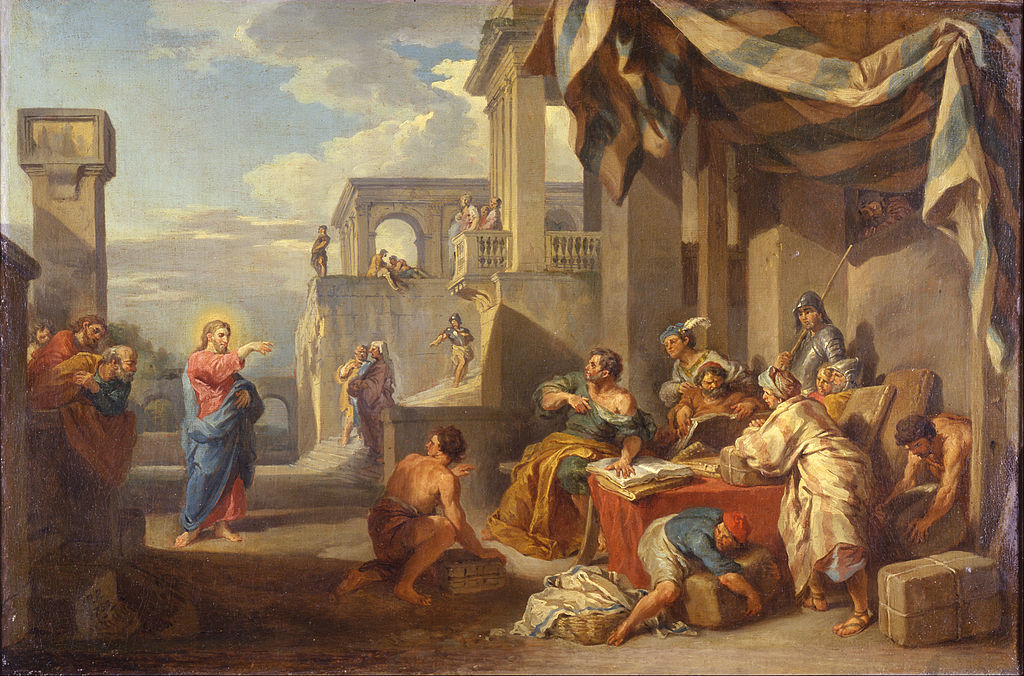
Jesus invites people individually and personally to follow him. Levi, despite the fact that he was truly an unlikely candidate, was truly blessed. As a tax collector, his friends were other tax collectors and sinners. He was not in good standing in the community. He amassed his obvious riches by overtaxing members of the community and then threw a “great” banquet for Jesus in his house. His relationships there were broken and bridges burned through greed and corruption.

Yet Jesus, going out and walking along, saw Levi sitting at the customs post and knew exactly who and what he was. Jesus offered Levi an invitation to become one of the intimate Twelve who would abide with him, build relationships with him, and become the foundation stones of the new Jerusalem. There was no mistake. Jesus wanted Levi. Jesus chose Levi. And Levi chose Jesus.

It was Jesus who first called Levi to follow him. Levi did not call himself. Instead he was irresistibly drawn. He was encountered by the Savior of the world, the King of Kings and Prince of Peace, the Christ. The glorious person of Jesus Christ exerted such an attraction on him, that Levi immediately got up without hesitation, walked away from his occupation that benefited the Roman occupiers and himself, and began to walk after Jesus. 

To follow Jesus is to move, to get up, to leave something behind, to enter into a new and unknown life, to be drawn into relationships where the one inviting sets the terms, to be drawn into utter obedience and submission to the demands of the Gospel.

There is a decision to be made. It may or may not have been easy for Levi to leave behind his lucrative career, but in doing so, in following Jesus, he was walking into poverty. He was walking towards the cross. He was walking into the glorious power of the resurrection. “Leaving everything behind, [Levi] got up and followed him.”

Where have you heard these words from the lips of the Master, “Follow me.” Was it long ago during a retreat, a sacred moment of Eucharistic adoration, at a decisive moment of your vocational journey? To follow Jesus is the most important thing you can do with your life.

It doesn’t mean you must sign away your house, your finances, your career. Levi left his tax collector’s post with all the greedy practices by which he overtaxed his fellow Jews. Yet shortly afterwards he threw a large and expensive party for Jesus and invited his friends to meet the one who had become such an important part of his new life. He put his considerable wealth, property, and relationships at the service of the Kingdom in one of the first and most astounding moments of evangelization on record. He knew he was following not a project but a Person, so parties and friendships were now a part of his call, his love, and his loyalty to Christ.

So, again, where are you hearing right now the invitation of Christ to follow him? He is walking by and he is choosing you. This, by itself, is astounding. He is worthy of your time, of your attention, of your creative response. He desires your presence at Mass, for you are his friend. He waits for you in the chapel of Eucharistic adoration because he wants to be there for you in good times and in difficult times. He hopes that you will introduce him to your friends in the way that reflects your temperament and creativity. 

Leave everything behind today. Get up and follow Christ. 

Contact the author


“Dejándolo todo, [Levi] se levantó y lo siguió.”

Jesús invita a las personas a seguirlo individual y personalmente. Levi, a pesar de que realmente era un candidato poco probable, fue realmente bendecido. Como recaudador de impuestos, sus amigos eran otros recaudadores de impuestos y pecadores. No estaba en buena posición en la comunidad. Amasó sus evidentes riquezas sobrecargando a los miembros de la comunidad y luego organizó un “gran” banquete para Jesús en su casa. Sus relaciones allí estaban rotas y los puentes se habían quemado por la codicia y la corrupción.

Sin embargo, Jesús, saliendo a caminar, vio a Leví sentado en el puesto de aduana y supo exactamente quién y qué era. Jesús le ofreció a Levi una invitación para que se convirtiera en uno de los Doce íntimos que morarían con él, construirían relaciones con él y se convertirían en las piedras fundamentales de la nueva Jerusalén. No hubo error. Jesús quería a Leví. Jesús eligió a Leví. Y Levi escogió a Jesús.

Fue Jesús quien primero llamó a Leví para que lo siguiera. Levi no llamó a sí mismo. En cambio, estaba irresistiblemente atraído. El Salvador del mundo, el Rey de Reyes y Príncipe de Paz, el Cristo, lo encontró. La gloriosa persona de Jesucristo ejerció tal atracción sobre él, que Leví inmediatamente se levantó sin dudarlo, se alejó de su ocupación que beneficiaba a los ocupantes romanos y a él mismo, y comenzó a caminar tras Jesús.

Seguir a Jesús es moverse, levantarse, dejar algo atrás, entrar en una vida nueva y desconocida, dejarse llevar por relaciones donde el que invita pone las condiciones, y dejarse llevar por la total obediencia y sumisión a las exigencias del Evangelio.

Hay una decisión que tomar. Puede o no haber sido fácil para Levi dejar atrás su lucrativa carrera, pero al hacerlo, al seguir a Jesús, estaba caminando hacia la pobreza. Iba caminando hacia la cruz. Estaba caminando hacia el glorioso poder de la resurrección. “Dejándolo todo, [Levi] se levantó y lo siguió.”

¿Dónde has oído estas palabras de labios del Maestro: “Sígueme”? ¿Fue hace mucho tiempo durante un retiro, un momento sagrado de adoración eucarística, en un momento decisivo de vuestro camino vocacional? Seguir a Jesús es lo más importante que puedes hacer con tu vida.

No significa que debas ceder tu casa, tus finanzas, tu carrera. Levi dejó su puesto de recaudador de impuestos con todas las prácticas codiciosas con las que exigía impuestos excesivos a sus compatriotas judíos. Sin embargo, poco después organizó una fiesta grande y costosa para Jesús e invitó a sus amigos a conocer al que se había convertido en una parte tan importante de su nueva vida. Puso su considerable riqueza, propiedades y relaciones al servicio del Reino en uno de los primeros y más asombrosos momentos de evangelización registrados. Sabía que no estaba siguiendo un proyecto sino a una Persona, por lo que las fiestas y las amistades ahora eran parte de su llamado, su amor y su lealtad a Cristo.

¿Dónde estás escuchando en este momento la invitación de Cristo para seguirlo? Él está caminando y te está eligiendo a ti. Esto, por sí mismo, es asombroso. Él es digno de tu tiempo, de tu atención, de tu respuesta creativa. Él desea tu presencia en la Misa, porque eres su amigo. Él te espera en la capilla de adoración eucarística porque quiere estar allí para ti en las buenas y en las malas. Él espera que lo presentes a tus amigos de una manera que refleje tu temperamento y creatividad.

Deja todo atrás hoy. Levántate y sigue a Cristo.

Comunicarse con la autora

Sr. Kathryn J. Hermes

Sr. Kathryn James Hermes, FSP, is an author and offers online evangelization as well as spiritual formation for people on their journey of spiritual transformation and inner healing. Website: www.touchingthesunrise.com My Books: https://touchingthesunrise.com/books/
Public Facebook Group: https://www.facebook.com/groups/srkathrynhermes/ HeartWork Spiritual Formation Group: https://touchingthesunrise.com/heartwork/

Feature Image Credit: commons.wikimedia.org/wiki/File:Giovanni_Paolo_Panini_-_The_Calling_of_Saint_Matthew_-_Google_Art_Project.jpg

New Wine and the New Wineskin / Vino Nuevo y Odre Nuevo

When the disciples of John the Baptist approached Jesus and asked, “Why do the Pharisees and we fast (much), but your disciples do not fast?” At that time, fasting was emphasized as a public way to give up food and appear pious to others. In the Jewish religion, the external practice was essential, for that was how a person measured their ability to practice their faith. For example, they had rules about what they ate, when they ate, how much they ate, and how they prepared their food. It was easy to “judge” others based on their ability to follow these rules and to fast. 

Jesus came to fulfill and complete the law of the Jewish faith, but not be limited by these restrictions. We encounter the newness of Christ in this Gospel and how we are invited to follow Jesus and be fed by the Lord. The New Covenant instituted by Christ could not be contained in the Old Covenant structure.

Joy: Jesus invites us to be joyful and see the connection between faith and Christian joy. Jesus shares, “Can the wedding guests mourn as long as the bridegroom is with them?” Jesus reminds the people of the joy of the wedding. One of the universal factors of a wedding is the joy it brings. Weddings reinforce the love, the excitement, and the newness of life to come. The “wedding party” are the best friends of the bride and groom who spend the most time with them during this life-changing event. They share in the celebration of the anticipation of the life their friends will live, and the joy of finding a life partner. 

How often do we trade in our Christian joy for worry and despair? Our hearts can easily be overcome by anxiety and worry instead of seeing the Lord and coming to know Him personally. When we place our eyes and focus on Christ, we allow Him to lead us to a deep and joyful encounter with God. 

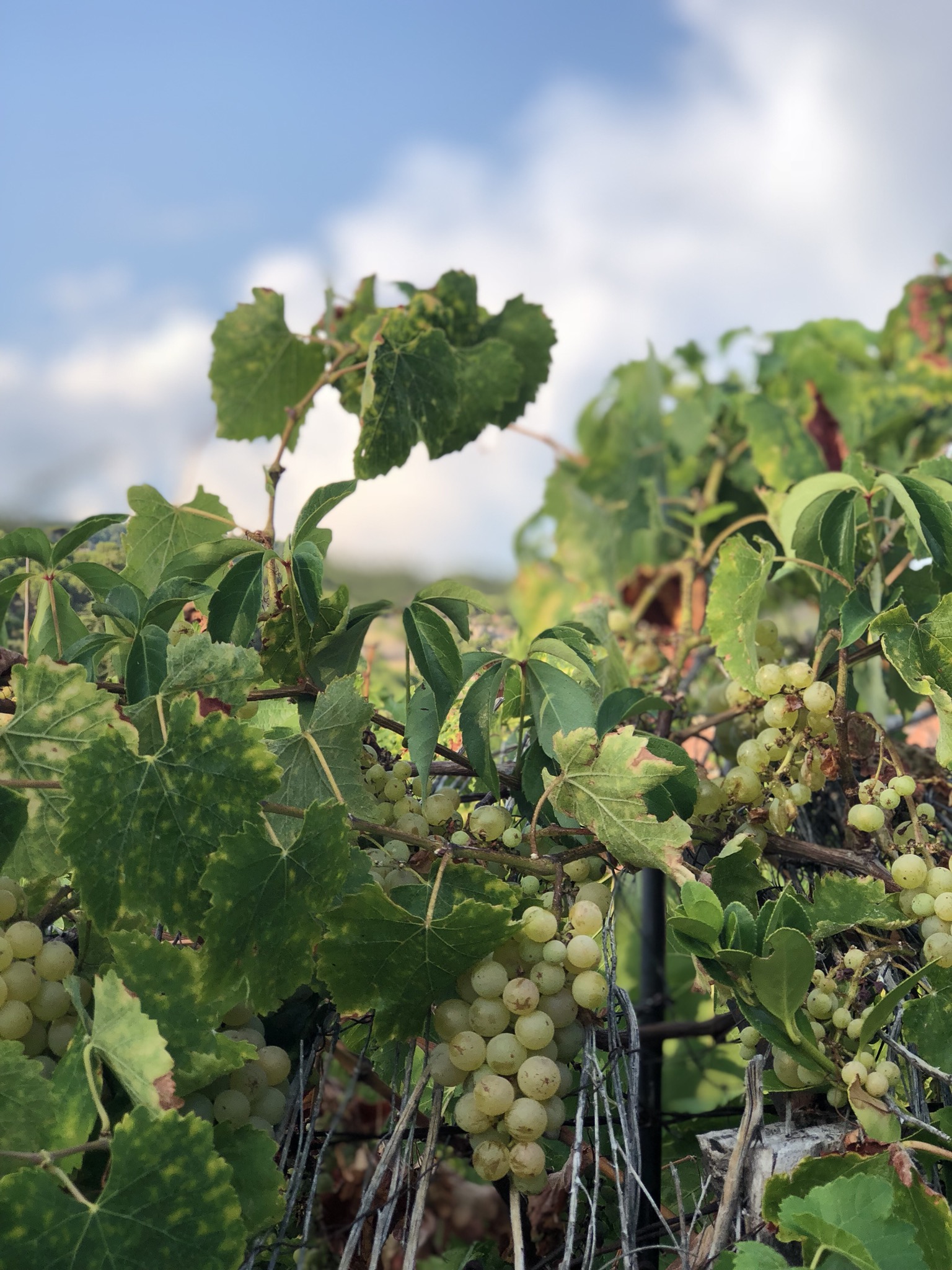
Newness: Jesus shares that “something new is coming” as He says, “No one pours new wine into old wineskins”. This analogy might mean little to us today, but in Jesus’ time, that was common knowledge. The wineskin would break if you used an old one. We must let go of our fallen nature, cling to eternal life, and give up the sins that keep us from living out our faith.

Contact the author


Cuando los discípulos de Juan el Bautista se acercaron a Jesús y le preguntaron: “Por qué tus discípulos no ayunan, mientras nosotros y los fariseos sí ayunamos?” En ese momento, el ayuno era enfatizado como una forma pública de renunciar a la comida y parecer piadoso ante los demás. En la religión judío, la práctica externa era esencial, porque así era como una persona medía su posibilidad de practicar la fe. Por ejemplo, tenían reglas sobre lo que comían, cuándo comieron, cuánto comieron y cómo prepararon su comida. Era fácil “juzgar” a los demás basado en su habilidad de seguir estas reglas y ayunar.

 Jesús vino a cumplir y completar la ley de la fe judía, pero no se limitó a estas restricciones. Encontramos la novedad de Cristo en este Evangelio y cómo somos invitados a seguir a Jesús y ser alimentados por el Señor. La Nueva Alianza instituida por Cristo no pudo ser contenida en la estructura de la Antigua Alianza.

 Alegría: Jesús nos invita a estar alegres y ver la conexión entre la fe y la alegría cristiana. Jesús comparte: “¿Cómo pueden llevar luto los amigos del esposo, mientras él está con ellos?” Jesús recuerda a la gente la alegría de la boda. Uno de los factores universales de una boda es la alegría que trae. Las bodas refuerzan el amor, la emoción y la novedad de la vida por venir. El cortejo nupcial son los mejores amigos de los novios que pasan la mayor parte del tiempo con ellos durante este evento que cambia la vida. Comparten la celebración de la anticipación de la vida que vivirán sus amigos y la alegría de encontrar un compañero de vida.

 ¿Con qué frecuencia cambiamos nuestro gozo cristiano por preocupación y desesperación? Nuestros corazones pueden ser vencidos fácilmente por la ansiedad y la preocupación en lugar de ver al Señor y llegar a conocerlo personalmente. Cuando ponemos nuestra mirada y nos enfocamos en Cristo, permitimos que Él nos guíe a un encuentro profundo y gozoso con Dios.

 Novedad: Jesús comparte que “algo nuevo viene” cuando dice: “Nadie echa vino nuevo en odres viejos”. Esta analogía puede significar poco para nosotros hoy, pero en la época de Jesús, eso era de conocimiento común. El odre se rompería si usaras uno viejo. Debemos dejar ir nuestra naturaleza caída, aferrarnos a la vida eterna y renunciar a los pecados que nos impiden vivir nuestra fe.

Comunicarse con la autora

Emily Jaminet is a Catholic author, speaker, radio personality, wife, and mother of seven children. She earned a bachelor’s degree in mental health and human services from the Franciscan University of Steubenville.  She is the co-founder of www.inspirethefaith.com and the Executive Director of The Sacred Heart Enthronement Network www.WelcomeHisHeart.com. She has co-authored several Catholic books and her next one, Secrets of the Sacred Heart: Claiming Jesus’ Twelve Promises in Your Life, comes out in Oct. 2020. Emily serves on the board of the Columbus Catholic Women’s Conference, contributes to Relevant Radio and Catholic Mom.com.

Feature Image Credit: malenymedina, cathopic.com/photo/7501-vinas

Losing Yourself / Perderte a Ti Mismo

There are seasons in life when it seems we are losing. I think back to when I was the mother of babies – I lost: sleep, quick trips to the store, quiet at Mass, clothes that stayed clean and other things that at this moment no longer seem important at all. Those losses passed, and yes, were replaced with other losses. But mixed in with the losses was joy, so much joy. I knew that the loss would pass, it would not and did not last forever. Most things in this life pass away. The most difficult times in my life have passed and yet, I remain. By the grace of God, I remain standing and believe that each cross taught me something and formed me a bit more into a person who will go to heaven one day. Do I like my crosses? Usually not. In my worst moments, I rail at God about them. In my better moments, I ask, “What do You want me to learn from this?” 

Crosses teach us that we are able to overcome adversity, to see the bigger picture and focus on what is ahead. Gold is forged in fire, iron sharpens iron and crosses can teach us something about ourselves. I’m not saying to go out and seek crosses; life brings us plenty! But by willingly picking up our crosses we share in the suffering of Christ, we become a living example to others of faithfulness and can lead others to know Christ more deeply by that example.

The other compelling reason to pick up our cross is that when we do, we gain eternal life. Picking up our cross shifts the focus from ourselves to others, which is what Jesus did when He died on the cross. He did that for others, for us, not Himself.

As Lent begins, let us pick up our cross each day, and deny ourselves some small comfort or pleasure. If you are in a difficult season, try to bear the suffering without complaining. Whatever it is that you have chosen for Lent this year, do it with an eye on the cross and the thought of eternal life.

Contact the author


Hay temporadas en la vida donde parece que estamos perdiendo. Pienso en cuando era madre de bebés, perdía: sueño, salidas rápidas a la tienda, silencio durante la misa, ropa que se mantenía limpia y otras cosas que en este momento ya no me parecen tan importantes. Esas pérdidas pasaron, y sí, fueron reemplazadas por otras pérdidas. Pero mezclado con las pérdidas estaba la alegría, mucha alegría. Sabía que la pérdida pasaría, no duraría para siempre. La mayoría de las cosas en esta vida pasan. Los momentos más difíciles de mi vida han pasado y, sin embargo, permanezco. Por la gracia de Dios, sigo de pie y creo que cada cruz me enseñó algo y me formó un poco más en una persona que algún día irá al cielo. ¿Me gustan mis cruces? Normalmente no. En mis peores momentos, critico a Dios por ellos. En mis mejores momentos, pregunto: “¿Qué quieres que aprenda de esto?”

Las cruces nos enseñan que somos capaces de superar la adversidad, de ver el panorama completo y enfocarnos en lo que está por venir. El oro se forja en el fuego, el hierro se afila con el hierro y las cruces pueden enseñarnos algo sobre nosotros mismos. No digo que debemos salir a buscar cruces; ¡la vida nos trae muchas! Pero al levantar nuestras cruces voluntariamente, compartimos el sufrimiento de Cristo, nos convertimos en un ejemplo vivo de fidelidad para otros y podemos guiar a otros a conocer a Cristo más profundamente mediante ese ejemplo.

La otra razón convincente para tomar nuestra cruz es que cuando lo hacemos, ganamos la vida eterna. Tomar nuestra cruz cambia el enfoque de nosotros mismos a los demás. Lo mismo hizo Jesús cuando murió en la cruz, lo hizo por los demás, por nosotros, no por sí mismo.

Al comenzar la Cuaresma, tomemos nuestra cruz cada día y neguémonos algún pequeño consuelo o placer. Si estás en una temporada difícil, trata de soportar el sufrimiento sin quejarte. Sea lo que sea que hayas elegido para la Cuaresma este año, hazlo con la mirada puesta en la cruz y el pensamiento de la vida eterna.

Comunicarse con la autora

Deanna G. Bartalini, M.Ed.; M.P.A., is a certified spiritual director, writer, speaker and content creator. The LiveNotLukewarm.com online community is a place to inform, engage and inspire your Catholic faith. Her weekly Not Lukewarm Podcast gives you tips and tools to live out your faith in your daily life.

Feature Image Credit: Lia Mendez, cathopic.com/photo/8244-rostro-de-cristo-en-la-cruz

Seeing is Believing / Ver es Creer

I have a confession to make: I don’t notice things. I’ll have spent half an hour with someone, and they’ll finally ask, “So what do you think of my new glasses?” I never realized they were wearing new glasses—or a new haircut, or a new dress, or whatever the fairly obvious to anyone but me change might be. A friend of mine drives a very noticeable bright aqua Jeep, and she’ll say, “I drove right by you this morning and waved,” and of course, I had no idea. I’d like to think it’s because I’m constantly thinking deep thoughts, but I’m afraid that’s not the answer. I just don’t notice things.

Seeing is important. Seeing others, really seeing them, is an essential part of living in community. It enables us to transcend differences, to form bonds, to delight in shared values. And despite my apparent inability to notice the world around me, I always feel that the most traumatic loss of a sense would be the loss of sight. It’s difficult enough to navigate life with my eyes open; I can’t imagine doing it were they to be permanently closed.

And that’s where we start with today’s Gospel reading: with a blind man. You’ve probably noticed the number of blind people referenced in Scripture. There was little those afflicted could do by way of work, so most were reduced to begging. And so it was with Bartimaeus, who is on the roadside outside Jericho. He is poor, he is blind, and he is clearly a nuisance; when he learns that Jesus is passing and calls out, everyone around tells him to be quiet.

It’s a small story, but it’s worth taking a second look—noticing— what those storylines are. First, there’s the fact that this blind man, someone who clearly lived on the fringes of society, knew who Jesus was. He’s well-informed and attentive. He notices things. He notices the size of the crowd and knows what that means; and when he’s told who is passing, he knows exactly who Jesus is and what he can do.

Second, he is willing to claim his rights. He shouts; the good citizens around him try to hush him, but he shouts. He’s determined. He doesn’t let them tell him how he should behave. He doesn’t let them make decisions for him.

Third—and this is particularly interesting—Jesus asks him a question. “What do you want me to do for you?” Of course he wants to be cured! What else could he possibly want? But Jesus didn’t make any assumptions. He let the man choose. He showed this blind beggar the respect no one else had. He treated him as a valued human being and He cured him.

What do you want me to do for you? When we can ask that of others, instead of assuming we know best what someone else needs, then we too will be closer to Jesus, on that road to Jericho, and in our own modern lives. It really is all about noticing!


Quiero confesar algo: no me doy cuenta de las cosas. Habré pasado media hora con alguien y finalmente me preguntan: “¿Qué piensas de mis lentes nuevos?” Nunca me di cuenta que traían lentes nuevos, o un corte de cabello nuevo, o un vestido nuevo, o lo que sea el cambio bastante obvio para cualquier otro menos yo. Una amiga mía conduce un Jeep aguamarina brillante muy notable, y ella dice: “Pasé junto a ti esta mañana y te saludé”, y por supuesto, no tenía ni idea. Me gustaría pensar que es porque constantemente estoy pensando en pensamientos profundos, pero lastimosamente no es la razón. Simplemente no me doy cuenta de las cosas.

Ver es importante. Ver a los demás, realmente verlos, es una parte esencial de vivir en comunidad. Nos permite trascender las diferencias, formar coneciones, deleitarnos en los valores compartidos. Y a pesar de mi aparente incapacidad para notar el mundo que me rodea, siempre siento que la pérdida más traumática de un sentido sería perder la vista. Ya es bastante difícil navegar por la vida con los ojos abiertos; No puedo imaginar hacerlo si estuvieran cerrados permanentemente.

Y ahí es donde comenzamos con la lectura del Evangelio de hoy: con un ciego. Probablemente haya notado la cantidad de personas ciegas a las que se hace referencia en las Escrituras. Era poco lo que los afligidos podían hacer a modo de trabajo, por lo que la mayoría se vio reducido a mendigar. Y así fue con Bartimeo, que está al borde del camino a las afueras de Jericó. Es pobre, es ciego y claramente es una molestia; cuando se entera de que Jesús pasa y grita, todos a su alrededor le dicen que se calle.

Es una historia pequeña, pero vale la pena echarle un segundo vistazo y notar cuáles son los puntos principales. Primero, está el hecho de que este hombre ciego, alguien que claramente vivía al margen de la sociedad, sabía quién era Jesús. Está bien informado y atento. Se da cuenta de las cosas. Se da cuenta del tamaño de la multitud y sabe lo que eso significa; y cuando le dicen quién está pasando, sabe exactamente quién es Jesús y lo que puede hacer.

En segundo lugar, está dispuesto a reclamar sus derechos. Grita y los buenos ciudadanos que lo rodean tratan de silenciarlo, pero grita. Está decidido. No deja que le digan cómo debe comportarse. No deja que tomen decisiones por él.

Tercero, y esto es particularmente interesante, Jesús le hace una pregunta. “¿Qué quieres que haga por ti?” ¡Claro que quiere curarse! ¿Qué más podría querer? Pero Jesús no hizo ninguna suposición. Dejó que el hombre eligiera. Mostró a este mendigo ciego el respeto que nadie más tenía. Lo trató como a un ser humano valioso y luego lo curó.

¿Qué quieres que haga por ti? Cuando podamos pedir eso a los demás, en lugar de asumir que sabemos mejor lo que alguien más necesita, entonces también estaremos más cerca de Jesús, en ese camino a Jericó, y en nuestra propia vida moderna. ¡Realmente se trata de darse cuenta!

This reflection was reposted from Diocesan Archives. Author: Jeannette de Beauvoir

Feature Image Credit: Jon Tyson, unsplash.com/photos/rbz1hVh7_LM

The Liturgy of the Magnificent Easter Vigil

Holy Saturday…

A day of quiet and calm. A day of intimacy and hope.

A day when all creation sighed in exhaustion after witnessing the sorrowful and tragic events of Calvary the day before.

A day when the earth trembled as it held the sacred Body of the Savior as it lay in the silent darkness.

A day of waiting….

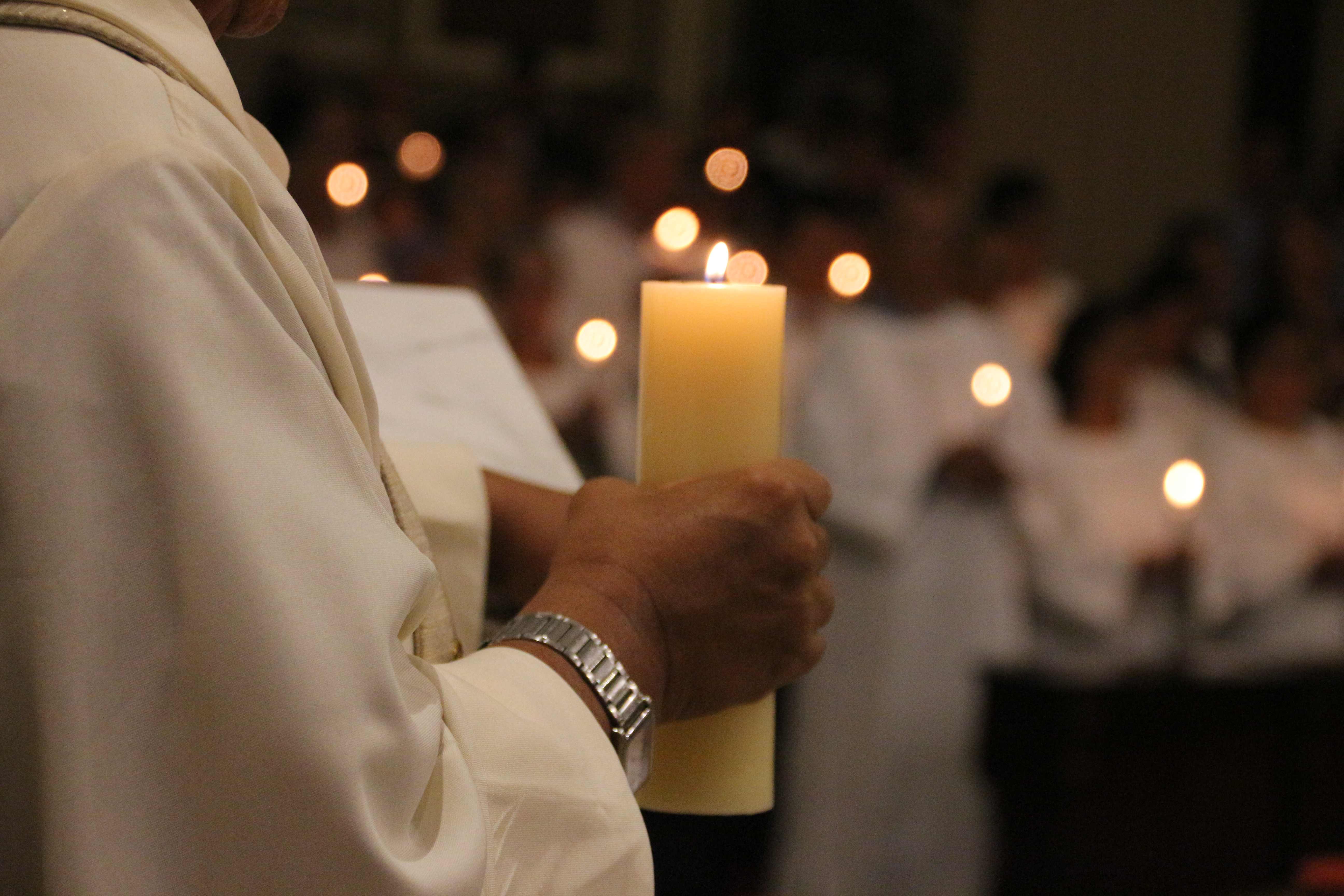
The liturgy on Holy Saturday, the magnificent Easter Vigil, teaches us the divine art of waiting. We wait in the dark around the Easter Fire, usually shivering in the early spring evening for the service to begin. We wait as the Paschal candle precedes us into a darkened church and our tiny candles gradually become a sea of lights punctuating the shadows. We wait for everyone to take their place before the lovely Exultet is proclaimed in song. And then finally we wait for the reading of the Gospel of the resurrection as the Liturgy of the Word “takes us by the hand” in the words of Benedict XVI and walks us through the whole trajectory of salvation history. If your parish proclaims all the readings for Holy Saturday Liturgy there will be seven Old Testament readings and one from the Epistles in the New Testament.

As these readings follow upon each other, one after another, I feel that in some way I take my place in the long centuries of creation waiting for redemption as I look through the “scrapbook” of memories and miracles, of suffering and assurance that is the heartbeat of the Liturgy of the Word of the Easter Vigil. Story after story is read from creation through the promise made to Abraham and the miraculous freeing of the Hebrew slaves as they raced across the path made by the Lord for them through the Red Sea, to the prophecies of how God has chosen Israel, making with them a covenant, inviting them to fidelity, through to God sorrowing over his unfaithful people to whom he promises a new heart and a new spirit. 

Every baptized person stands in this arc of salvation, this mysterious longing of the Father’s heart for our return to him. We are baptized into Christ’s death and rise with him.

In the Easter Vigil, the readings assure us with the unmistakable echoes of a Father’s heart: “I love you. All of this was for love of you. I have always stood by my covenanted people and I will do so forever. I will stand by you. Even if you walk away. Even if you are weak and wobbly in your love for me, I will love you. You do not need to be afraid.”

And lastly, the community breaks out with joy as we celebrate the Baptisms of those who have waited many months of preparation. I always feel more complete as we welcome them among us, each of us holding them spiritually to our hearts.

If you have never been to an Easter Vigil, someday give yourself that gift. Don’t wait any longer!

Contact the author

Sr. Kathryn J. HermesKathryn James Hermes, FSP, is the author of the newly released title: Reclaim Regret: How God Heals Life’s Disappointments, by Pauline Books and Media. An author and spiritual mentor, she offers spiritual accompaniment for the contemporary Christian’s journey towards spiritual growth and inner healing. She is the director of My Sisters, where people can find spiritual accompaniment from the Daughters of St. Paul on their journey. Website: www.touchingthesunrise.com Public Facebook Group: https://www.facebook.com/groups/srkathrynhermes/ For monthly spiritual journaling guides, weekly podcasts and over 50 conferences and retreat programs join my Patreon community: https://www.patreon.com/srkathryn.

Feature Image Credit: paulcamposraw, https://www.cathopic.com/photo/17957-luz-cristo

Behold The Wood Of The Cross

Lent has come to an end; it ends when the Mass on Holy Thursday begins and we enter into these three holy days (“Triduum”), which are the summit of the Liturgical Year, unfolding for us the unity of Christ’s Paschal Mystery. The Triduum begins with the Holy Thursday Mass of the Lord’s Supper and ends with Evening Prayer on Easter Sunday.

The number 40 always signifies a preparation period, and the 40 days of Lent have been a preparation for us to enter into these holy days and also a preparation for our own participation in Christ’s mission in the world.

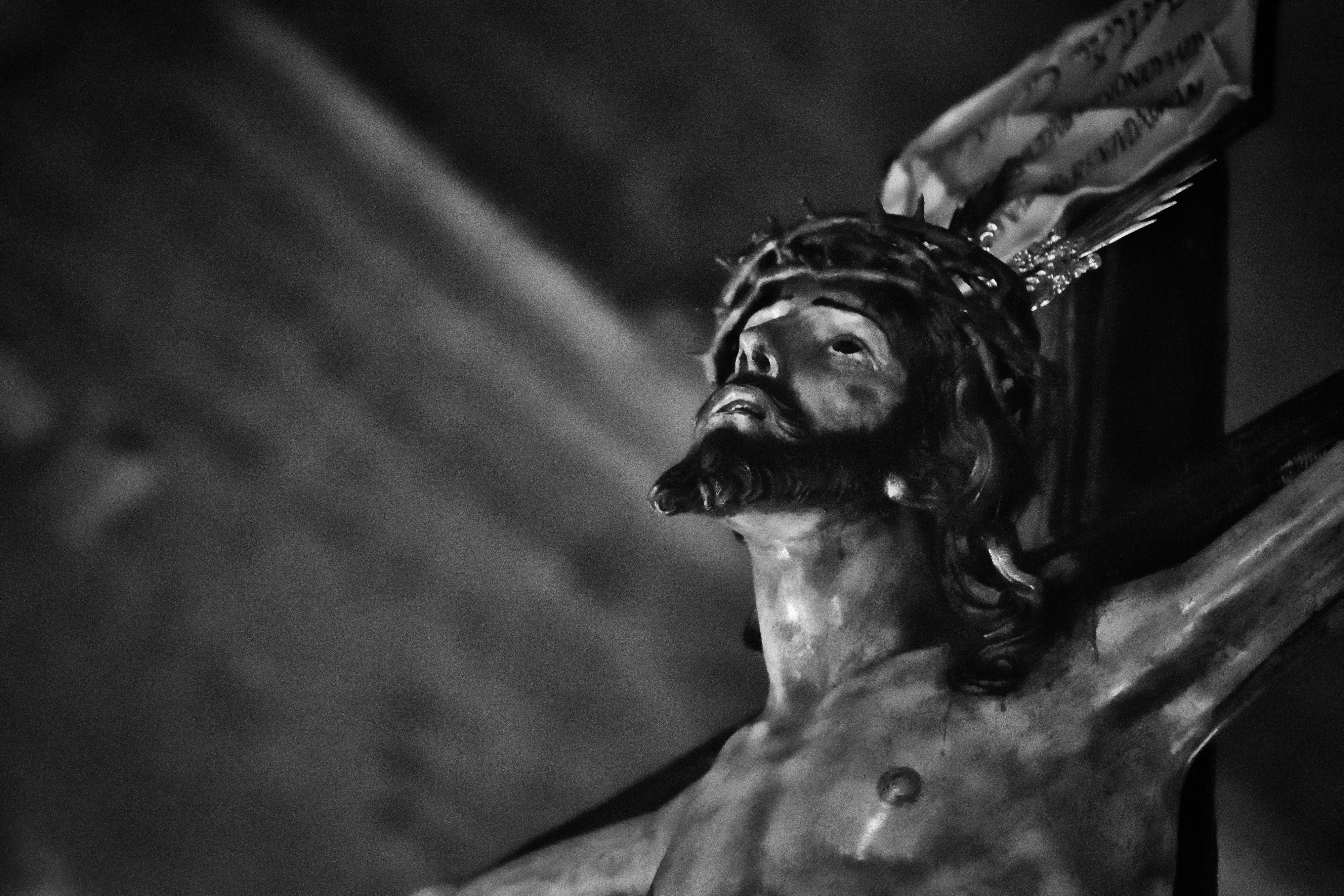
On Good Friday, we are invited to look deeply into the Passion and Death of Jesus, to look at his final Word, his final Gifts, his final Suffering. We must look at his suffering face, which should lead us to his suffering Heart; we must look at him, and not look away! In the agony of Jesus we really see that the enemy is real, that sin is real, that the wages of sin is death, and that our redemption comes at great cost. God redeems us, not by patting us on the head and telling us it’s all fine, but by taking on the whole mess of us – our sinfulness, our brokenness, our pain, our sorrow, our loss, our fear, and our aloneness – and lifting it up on the Cross. And as the Israelites in the desert had to look up to the serpent to be saved from its poisonous venom, we are directed to “look on him whom we have pierced,” to be saved from the certain death which is the result of our sin.

We look up to Christ nailed, immobile, suffering, suffocating, surrendering, pouring himself out, offering himself fully to the Father, so that we might be saved. “The collapse of the opened Heart is the content of the Easter mystery” (BXVI). He is betrayed for our betrayal, scourged for our sins of the flesh, crowned for our pride, bearing the weight of our sin to free us of the burden, crucified to show us what Love looks like. Love takes on suffering for the sake of others, without counting the cost. Love sees first the good of the other. On the Cross, Jesus was thinking of you and me, and he was willing to bear the whole horrific humiliation and execution so that we might be with him in the joy and glory of the Father. Forever.

The 40 days of Lent prepare us for these great Three Days, which lead us through this Suffering of Love to the silence of Holy Saturday, and then through an empty tomb to the Octave (8 days) of celebrating the Resurrection – liturgically, Easter Sunday is eight full days, through and including Divine Mercy Sunday, the culmination of Easter Day. Today, we look on the suffering and pierced Heart of Jesus; on Divine Mercy Sunday, we celebrate the outpouring of mercy through that very Heart! 

Contact the author

Kathryn Mulderink, MA, is married to Robert, Station Manager for Holy Family Radio. Together they have seven children (including Father Rob), and four grandchildren. She is President of the local community of Secular Discalced Carmelites and has published five books and many articles. Over the last 30 years, she has worked as a teacher, headmistress, catechist, Pastoral Associate, and DRE, and as a writer and voice talent for Catholic Radio. Currently, she serves the Church by writing and speaking, and by collaborating with various parishes and to lead others to encounter Christ and engage their faith. Her website is www.KathrynTherese.com

Feature Image Credit: Policraticus, https://www.cathopic.com/photo/10564-miada-cristo-cruz

What Makes You Think That You’re So Special?

I have the good fortune to work in an office that is on the same grounds as a Catholic retreat center. Because of this, I often come into contact with a lot of great Christ-centered wisdom. This past week, a woman was staying in one of the rooms below my office and I talked to her when I walked into work, on my lunch breaks, and then when I left work. Over these short, passing conversations, I felt the Lord calling me to take the time to talk with her, to truly give her my time, so one day before leaving work, I knocked on her door to chat. 

This woman shared with me that nearly six years ago, she was given another shot at life. She suffered an embolism that should have killed her, or left her with only 6 months to live, but instead, the doctors working her case considered her a miracle. 

She knew it was a miracle. She knew it was a miracle because as soon as she was given her diagnosis, she prayed and immediately felt peace. Enough peace to make jokes with the nurses as she was life-flighted from one hospital to another. She knew it was God and it changed everything. 

Still…she told me that there was someone in her life, someone she considered a good  friend, that told her, “What makes you think you’re so special that God would want to save YOUR life?” At first, it hurt her to think that her friend didn’t think that she was special. Then it hurt her heart even more when she realized that her friend didn’t know that she was also so special that God wanted to save her life, too. 

This woman’s realization is something I have not been able to stop thinking about. How many times have I failed to realize that I am so special that God wants to save my life. In fact, He sent His only Son to be arrested, ridiculed, crucified, stabbed, and ultimately face death… all to save me. All to save you

As we prepare for the Easter Triduum, let us stop and marvel at the fact that our God, our Father, loves us so dearly and wants to save us so badly, that Christ paid the ultimate sacrifice… and then CONQUERED THE GRAVE for our sins! He wants to wash away the shame, the fear, the sadness, and all we have to do is say “yes.”

So forget “What makes you think you’re so special that God would want to save your life?” because the better question is “What makes you think that an all-loving, all-powerful God wouldn’t want to save your life?” God is calling us. By name. So why don’t we listen this time?

Contact the Author

Image Credit: Mert Talay, https://unsplash.com/photos/KYZoOmpn1Aw


Veronica Alvarado is a born and raised Texan currently living in Pennsylvania. Since graduating from Texas A&M University, Veronica has published various Catholic articles in bulletins, newspapers, e-newsletters, and blogs. She continued sharing her faith after graduation as a web content strategist and digital project manager. Today, she continues this mission in her current role as communications director and project manager for Pentecost Today USA, a Catholic Charismatic Renewal organization in Pittsburgh. 


Be Better

We are in the middle of Holy Week, people! Less than a week until Easter! Less than a week until we commemorate the greatest gift of all! Is your soul refreshed? Are your hopes and desires getting you a step closer to heaven? Can you feel the deep waves of forgiveness pulling you into God’s great ocean of peace?  

If your answer is without a doubt yes, then please, do tell me your secrets. I feel like I have done my best to be prepared for the memorial of Jesus’ resurrection, but I wouldn’t say that I’m 100 percent heaven-ready. Luckily, God understands that we are not perfect by default and has given us the Bible as a tool to use.

As I read over today’s first reading, it sounds like just the kind of quick guide that I need. I have a tongue, so I should speak to the weary. I have ears, so I should listen to the true word of Christ. My body, though beaten by people that make fun of me and scoff at my beliefs, has the Lord God at my side to hold me up. Going into the responsorial Psalm, we ask, “Lord, in your great love, answer me,” as we admit to being weak, picked on, an outcast, insulted. We praise him because we are thankful, but our thanks must go further than just words. It should be evident in our actions.

As Catholics, we must understand that we will always have more to strive for. Our God challenges us in everyday situations to step up and live out our faith, whether it is with the people around us or in our own hearts. Instead of seeing our faith as a burden or as an annoyance (because sometimes we do), we should instead see it as an opportunity to become a better person. Instead of trying to please our critics, society, or our parents, we should try to become someone our heavenly Father would be proud of.

So if your Lent didn’t go as planned, know that it’s okay because it is a journey. As you attend each Mass this Holy Week, ask God for what you need. Ask Him to bless your body with the skills and strengths you need. He wants you to succeed and is willing to give you the tools because He wants nothing more than to be in communion with Him in heaven. It is a simple matter of who you want to be and if you are willing to work on it. Do you want to be better? Will you allow your Lenten sacrifice to carry on after Sunday and continue to bring you closer to God? Or will you allow Jesus’ Lenten sacrifice be for nothing?

Contact the Author

Image Credit: Volodymyr Hyshchenko, https://unsplash.com/photos/L0oJ4Dlfyuo


Veronica Alvarado is a born and raised Texan currently living in Pennsylvania. Since graduating from Texas A&M University, Veronica has published various Catholic articles in bulletins, newspapers, e-newsletters, and blogs. She continued sharing her faith after graduation as a web content strategist and digital project manager. Today, she continues this mission in her current role as communications director and project manager for Pentecost Today USA, a Catholic Charismatic Renewal organization in Pittsburgh. 


God’s Plan for You

As I sit down to write this reflection, my daughter-in-law is in labor! Like the servant in the passage from today’s First Reading, our grandson is known by God, even in the womb of his mother. The same God who brought this little boy into being at the moment of his conception has a unique purpose and plan for his life. Praise God!

And our loving Father has a plan for each one of us as well. We mustn’t doubt it.

Often, we are tempted to judge the worth of our lives by very different standards than the standard God has for us. Like the servant in this passage from Isaiah, we often toil and strain and feel as though we have spent all of our strength, just to experience defeat, loss, or rejection. We wonder what purpose our life has and doubt whether we are making a difference.

We can and will make a difference if we follow the example of Christ, the ultimate servant of God, whose faithfulness is prefigured in today’s First Reading.

First, we need to be in tune with what God the Father wants for us every day. The goal is to do His will. Jesus spent time in prayer, communing with the Father and strengthening Himself to do the Father’s will. If we are doing what seems good to us, but not really submitting ourselves to God, we might experience worldly success, but eventually we will realize how shallow that kind of success is. It may even be dangerous to our souls.

The second way we must imitate Christ is by faithfulness and perseverance. For many years, Jesus worked, lived, and suffered just like any person of His day before radically pouring Himself out in public ministry. Finally, our Savior gave every drop of his blood to do the Father’s will and, as He hung naked on the cross, all of His effort, His entire life, appeared to be in vain.

In our own ways, we too experience “failure,” as we strive to live as authentic Catholic Christians. Seeking to do God’s will, we may try to start a business, write a book, or enter religious life. Years of effort and sacrifice may pass with little or no positive results. Think of the couple who loses a child. Or a parent who raises his or her children in the faith, just to see them reject a relationship with God. These “failures” can make us feel that all of our effort to radically follow God’s will is pointless. 

We can’t always see what God is doing, but He is always working marvelously for those who are faithful. When Jesus Christ rose from the dead on Easter Sunday, He brought about the greatest come-back victory of all time! 

We must believe that if our priorities are in order, and we are constantly seeking to do God’s will, our Easter Sunday will come. We will rejoice with an endless joy when we realize what God has done in and though us. In the words of St. Catherine of Siena, “Be who God meant you to be and you will set the world on fire.”

Contact the author

Christine Hanus is a thwarted idealist who, nevertheless, lives quite happily in Upstate NY. She is a wife and mother of five grown children.
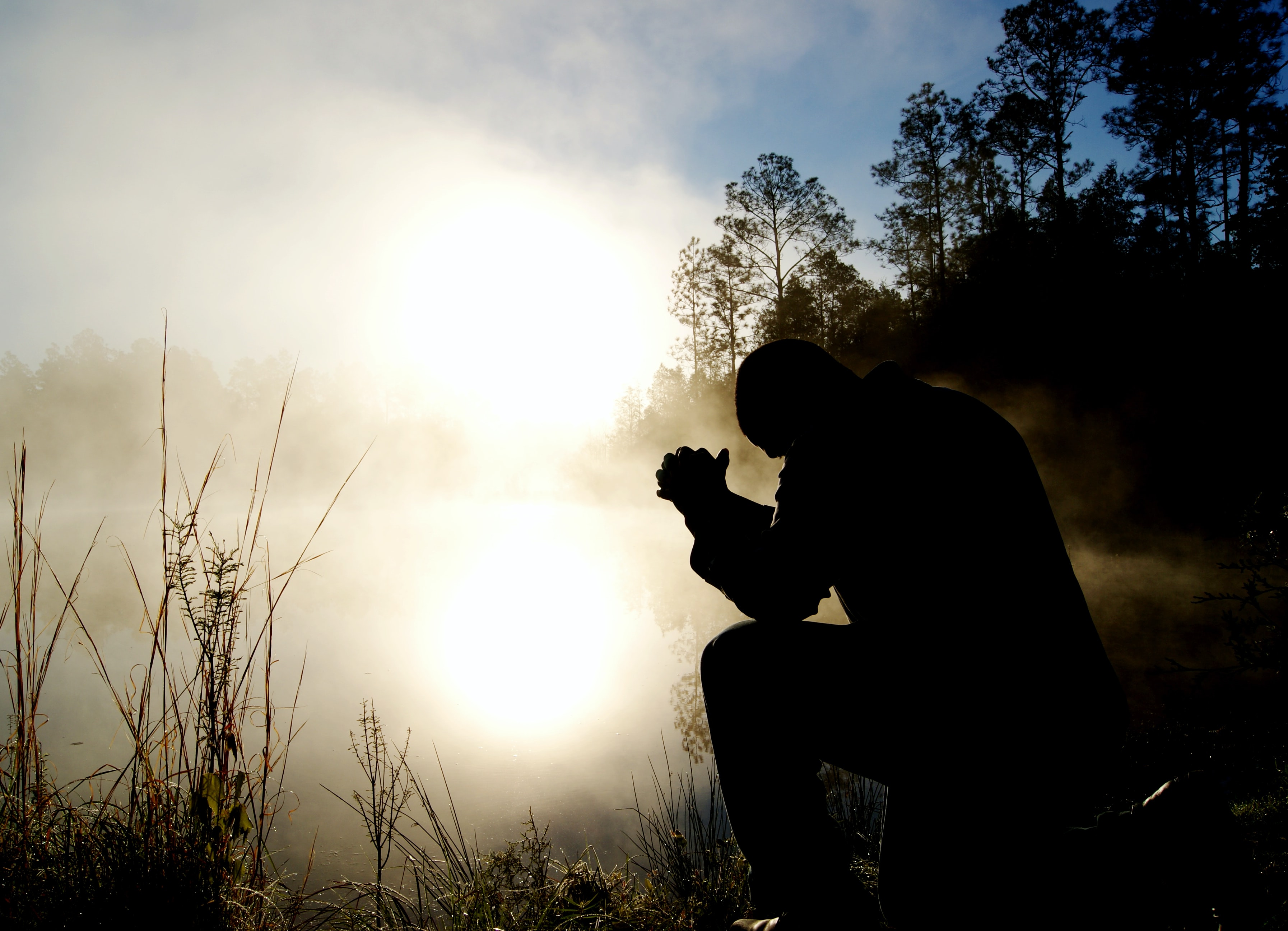

Feature Image Credit: Christian Bowen, https://unsplash.com/photos/I0ItPtIsVEE

A Word on Vocation

The word vocation comes with a lot of baggage. It tends to bring to my mind old posters of seminarians, half of whom have dropped out by now but the poster remains, or conjures up ideas of job, work, occupation, etc. It’s one of those words similar to stewardship where we have made it mean so many things, that it almost means nothing. It is stretched thin in its general form but at the same time so focused in its particular form that it becomes exclusive to a specific group. 

Today I want to focus on the first reading which perfectly summarizes both stewardship and vocation. 

“Thus says God, the LORD, who created the heavens and stretched them out, who spreads out the earth with its crops, Who gives breath to its people and spirit to those who walk on it: I, the LORD, have called you for the victory of justice, I have grasped you by the hand; I formed you, and set you as a covenant of the people, a light for the nations, To open the eyes of the blind, to bring out prisoners from confinement, and from the dungeon, those who live in darkness.”

What can we take from this? First, God is the creator of all things. Anything we have including the breath in our lungs and our family and friends is all due to God being Gift. Next, we see that we are called. This calling comes from God and fits with the gifts God has given us. What is the calling? To be a light to the nations. 

John Paul II realized this well when he said, “The fundamental vocation of every human person is to love.” Our general vocation is to love, our particular vocation is how God has called us specifically to do it. While I was discerning the priesthood in seminary, one of the most helpful things I was told was that our vocation is the way that God has called us to get to heaven and bring the most people with us. 

Now, most people reading these posts are probably thinking that you are already well into the particular vocation that God has given you. Maybe you don’t need to discern this part, but I think we all could breathe fresh air into our vocations with the general vocation of love. I like to think of this in terms of Jesus going into the desert. As we are in Lent, we contemplate how Jesus knew his particular vocation, but he took time to pray before entering into his public ministry. 

With all the focus we have on self help and care I think it’s important to use these models for our vocation as well. If stewardship is using the gifts God has given us in service, then first we must work on our relationship with God, then take this grace and apply it to our gifts, and finally we will have the power needed in order to be a light to the nations. Lent is the perfect time to try this model out. Let’s pray for the gifts in order to be a gift to others and fully live out our calling to love. 

From all of us here at Diocesan, God bless!

Tommy Shultz is a Business Development Representative for Diocesan. In this role he is committed to bringing the best software to dioceses and parishes while helping them evangelize on the digital continent. Tommy has worked in various diocese and parish roles since his graduation from Franciscan University with a Theology degree. He hopes to use his skills in evangelization, marketing, and communications, to serve the Church and bring the Good News to all. His favorite quote comes from St. John Paul II, who said, “A person is an entity of a sort to which the only proper and adequate way to relate is love.”

Feature Image Credit: Aaron Burden, https://unsplash.com/photos/lPCu8HnGU2E

Christ Is Truly Present

Today is Palm Sunday. In the Gospel, we read about the Last Supper and the institution of the Eucharist. At the table, Christ took the bread, raised it, and said to His Apostles: “This is my body, which will be given for you; do this in memory of me.” And then He took the cup, saying: “This cup is the new covenant in my blood, which will be shed for you.”

This was not the only time Christ said something like this to His followers. In the Gospel of John, He told them: “Unless you eat the flesh of the Son of Man and drink his blood, you do not have life within you. Whoever eats my flesh and drinks my blood has eternal life, and I will raise him on the last day. For my flesh is true food, and my blood is true drink.”

As Catholics, we believe in transubstantiation—that through the priest, God really does send a miracle at every Mass. The bread and wine become the body, blood, soul, and divinity of Christ.

Christ did not say that He wanted the bread and wine to just be mere symbols of Him. He told us that they are His body and blood. He told us that He is the living bread. In fact, His birth in Bethlehem foreshadowed this, as the name Bethlehem literally means house of bread.

It is an awesome privilege and blessing that we, as Catholics, can receive Him every single day—if we are free of mortal sin.

Yet, a 2019 Pew Research survey tells us that just one-third of Catholics believe in the real presence of Christ. Why is this? It’s because they have not been properly catechized.

So what are we to do? First, we understand and believe. Second, we teach—our children, our families, our friends, and our fellow parishioners. We must all take it upon ourselves to speak up and defend Christ in the Eucharist.

Christ gives Himself to us to nourish and renew us, but we must be worthy of this wonderful gift. How do we make ourselves worthy? We must be free of all mortal sin. This isn’t a suggestion. This is part of our Catechism, which teaches: “Anyone aware of having sinned mortally must not receive Communion without having received absolution in the sacrament of penance.”  

Anyone who has committed a mortal sin and who has not sought forgiveness in the confessional should not present himself for Communion until he has been to confession. This is so because God has given us the most phenomenal gift imaginable—Himself. 

So, today, as we think about that Last Supper and Christ’s sacrifice, let us not only thank Him for that sacrifice but for the gift of Himself in the Eucharist at every Mass. 

Contact the author

Susan Ciancio has a BA in psychology and a BA in sociology from the University of Notre Dame, with an MA in liberal studies from Indiana University. For the past 17 years, she has worked as a professional editor and writer, editing both fiction and nonfiction books, magazine articles, blogs, educational lessons, professional materials and website content. Eleven of those years have been in the pro-life sector. Currently Susan freelances and writes weekly for HLI, edits for American Life League, and is the editor of Celebrate Life Magazine. She also serves as executive editor for the Culture of Life Studies Program-an educational nonprofit program for K-12 students.

Feature Image Credit: emiliogb, https://www.cathopic.com/photo/17727-jesus-doble-entrega