When Life Gives You Lemons

We have all heard the phrase “When life gives you lemons, make lemonade.” But what if life just keeps throwing you lemon after lemon after lemon, so that everything seems to turn sour? After getting through my young son’s illness, giving birth to our 5th child and recovering from the C-section, it seemed like life was finally getting “back to normal”, when we got hit with the dreaded virus. 

I fell ill right after saying goodbye to my grandmother and I couldn’t even go to her funeral. One by one, the kids all got sick and then finally my husband. While the kids and I all recovered within a few days, he did not fare so well. We ended up in the ER and he was diagnosed with pneumonia. 

So here I sit, taking care of five littles and a sick husband, while simultaneously homeschooling, breastfeeding and working from home. As a stay at home dad, he normally takes care of all the cooking, cleaning, dishes and laundry so we’ll just throw that in too as the icing on the cake. 

Yes, I feel a bit overwhelmed and stretched thin, yet as I did before when my son was sick, I call on my Lord and Savior to BE my strength. Not to give me strength, but to BE my strength. And I am not overcome. The kids pitch in to help out a little more, the baby sits in her high chair a little longer and somehow, life just keeps moving on. 

Now that we have entered into this beautiful season of Lent, I don’t even have to look around for sacrifices and penance. Jesus lovingly gives it to me of His own accord! All I have to do is accept it, embrace it and offer it up for others. 

Today’s First Reading reminds me to “Cry out full-throated and unsparingly, lift up [my] voice like a trumpet blast…seek [God] day after day and desire to know [His] ways.” It reminds me to abandon my cares to Him, forget myself and my woes and think rather of others. The oppressed, the hungry, the homeless, the naked, all those who have it much worse than I do.

I recall talking to a fellow parishioner. She has four boys, lives in a broken down trailer and her husband was deported. Yet she does not complain, but rather gives thanks to God that she has a roof over her head, (barely) enough to pay her bills and she and her children are healthy. She even goes so far as to say that others are worse off than she is. She embodies today’s Psalm “A heart contrite and humbled, O God, you will not spurn”. 

So as we navigate through this first week of Lent, let us recognize our own lemons, i.e. crosses, offer them up to the Lord, and seek to alleviate the crosses of others. “For the sake of His sorrowful passion, have mercy on us and on the whole world.” 

Contact the author

Tami Urcia grew up in Western Michigan, a middle child in a large Catholic family. She spent early young adulthood as a missionary in Mexico, studying theology and philosophy, then worked and traveled extensively before finishing her Bachelor’s Degree in Western Kentucky. She loves tackling projects, finding fun ways to keep her little ones occupied, quiet conversation with the hubby and finding unique ways to love. She works at her parish, is a guest blogger on CatholicMom.com and BlessedIsShe.net, runs her own blog at https://togetherandalways.wordpress.com and has been doing Spanish translations on the side for over 20 years.

Feature Image Credit: ERnest Porzi, https://unsplash.com/photos/Z-Y6I45f9kQ

Our Crosses and How We Carry Them

When I read today’s readings, I am drawn to the reality that how I understand what my cross is and how I carry it will define the lens of how I comprehend these readings. My hope is that Holy Spirit will refine your understanding as well as mine through this reflection.

I was joking with some friends that I am not ready for Lent since the past two years have felt like a perpetual Lent. In self-reflection, that joke is telling of how I often slip into viewing my approach to Lent and sacrifice. What I find myself focusing on is the sacrifice itself rather than the resurrection that comes to follow. I think that for me these past few years I have relied on a variety of sources of entertainment or pleasures to cope with the isolation and pain that we are feeling as a society. Admittedly, when I reflect on my joke, I realize that I am not ready for Lent due to the hardships of the past few years but rather because of my affection for the good things of this world. I have given them greater importance than what they deserve in my inability to cope well. Even though I do not worship my streaming services or food and drink, God wants freedom for me that cannot be gained when I am held back in an inverted affection for these things.

In the First Reading, Moses says, “Today I have set before you life and prosperity, death and doom. If you obey the commandments of the LORD, your God, which I enjoin on you today, loving him, and walking in his ways, and keeping his commandments, statutes, and decrees…” Moses continues to describe that life and goodness come from fidelity to God and pain and sorrow come from turning away to ‘adore and serve other gods.’ In our day and age, not too many of us are tempted to carve a statue and worship it. However, God still wants our affection and love and our use of the things in this world in the right order. He does not want us to be bound by the affection that creates a need for the things of this world. Admittedly, when I examine my thinking patterns, my ability to listen and be empathetic is usually limited when I have a nagging need or desire to be doing my own thing that ‘makes me happy.’ 

So as we move through Lent, I want to encourage myself and you to look at how we sacrifice and what we sacrifice, with hope in the Lord for a new life and new freedom. I want to leave you with the last bit of the Gospel to reflect on what your cross is and what you need to deny yourself of. Not for the sake of denying yourself but for the sake of new life in Jesus Christ. 

“If anyone wishes to come after me, he must deny himself

and take up his cross daily and follow me.

For whoever wishes to save his life will lose it,

but whoever loses his life for my sake will save it.

What profit is there for one to gain the whole world

yet lose or forfeit himself?”

Contact the author

Featured Image Credit: Tima Miroshnichenko, https://www.pexels.com/photo/close-up-shot-of-a-person-holding-a-cross-pendant-5206048/

Arthur Richardson is married to his wonderful wife, Gabby Richardson. They will be married for two years this January! Most of his work experience is in ministry. He was a retreat missionary in Wisconsin for two years and a youth minister for three years. He is now the Web Project Manager here at Diocesan, and loves it!


The Sacrifice of Words

In the Gospel, we are told by Jesus of the importance of prayer, fasting, and almsgiving as well as the proper way to participate in those sacrifices. When we pray, fast, and give alms, we should do so not to gain praise from those around us, but rather for the sake of praising God. The intention of our sacrifice should be to honor our Lord in Heaven so that “your Father who sees you in secret will repay you”. 

During this season of Lent we are called to enter into fasting, prayer, and almsgiving in a more profound way than during other seasons of the year. In the weeks leading up to the start of Lent, today, I saw a lot of reflections, journals, and calendars advertising “how to make your Lent more meaningful/sacrificial/powerful”. These resources are all encouraging people to go deeper than just abstaining from meat on Fridays and giving up coffee or chocolate or social media. In fact, this year I noticed a common theme: changing our language so it better reflects the love of Christ. That has really stuck with me; how can changes in the way we speak and what we say be sacrifices? We can abstain from gossip. We can give up the tendency to say the first thing that comes to mind and more intentionally think before we speak. We can fast from swearing. We can ask others to join us in prayer before meals. We can humbly ask others to pray for us. 

I think the most powerful thing we can do this Lent is be joyful through our sacrifice. That is at the heart of what Jesus tells His disciples. May we be joyful in our sacrifice and in our words so that others may see the mercy and love of Christ through us. May we spend this Lent with the words “Be merciful, O Lord, for we have sinned” readily in our hearts and minds.

Contact the author

Dakota currently lives in Denver, CO and teaches English Language Development and Spanish to high schoolers. She is married to the love of her life, Ralph. In her spare time, she reads, goes to breweries, and watches baseball. Dakota’s favorite saints are St. John Paul II (how could it not be?) and St. José Luis Sánchez del Río. She is passionate about her faith and considers herself blessed at any opportunity to share that faith with others. Check out more of her writing at https://dakotaleonard16.blogspot.com.

Feature Image Credit: catholicpicture, https://www.cathopic.com/photo/4002-imposicion-cenizas

Final Preparations

As a child, this day seemed to drag on and on. Sure, we tried to fill the time by boiling eggs and coloring them, helping Mom with final Easter preparations or going to the store to get the ham, but nothing seemed to fill the void. The anticipation of Easter Sunday was enough to pull me through, but I remember thinking that this was the only day that God was dead. He was gone. He wasn’t there. He was absent from the tabernacles throughout the world and I just felt so empty.

This is it. In just a few hours, many of us will be participating in the Easter Vigil Mass, the high point of the entire liturgical year. We will walk through history, from Creation to Salvation. Candidates and Catechumens will be brought into full Communion with the Church. We will sing a joyful Alleluia for the first time in over 40 days.

But what can we do with ourselves in the meantime? How do we fill this day of seemingly endless waiting? Perhaps silence and simplicity are the best answer. Today is not quite as sad and solemn as yesterday, since we know the end of the story, but it is still a day of preparation. Our Lent is coming to a close, but we have these last few hours to focus our minds and our hearts on the incredible mystery that we are about to experience.

Perhaps the very first line of the creation story sums it up best for us: “Then God said, ‘Let there be light,’ and there was light.” Isn’t that what the Resurrection is all about? God coming into our darkness, our sinfulness, our fallen nature, and filling it with light?

Yes, it can be just as simple as that. Christ is our light. And on that Easter morn he broke the natural rule of every life ending in death and showed us that we could live again. Darkness does not have to prevail, will not prevail, because the light of the Resurrection is more powerful, and it overcomes.

I cannot fathom how bright that Easter morning must have been. Surely it was intense! Yet instead of blinding, it was revealing. And although it may take a while for the eyes of our souls to adjust to the light, we eventually come to grips with its reality. Death is not the end. Christ has died so that we might live. What an incredible truth!

Contact the author

Tami Urcia grew up in Western Michigan, a middle child in a large Catholic family. She spent early young adulthood as a missionary in Mexico, studying theology and philosophy, then worked and traveled extensively before finishing her Bachelor’s Degree in Western Kentucky. She loves tackling home improvement projects, finding fun ways to keep her four boys occupied, quiet conversation with the hubby and finding unique ways to love. She works at her parish, is a guest blogger on CatholicMom.com and BlessedIsShe.net, runs her own blog at https://togetherandalways.wordpress.com and has been doing Spanish translations on the side for almost 20 years.

Feature Image Credit: Sixteen Miles Out, https://unsplash.com/photos/PUjAEwV9PeQ

The Merit of Suffering

Good Friday is the darkest day in history, but it is also a day of hope. God has been crucified, but He will rise before long. We know that he will soon rise, but today is a day of solemn grief. The Savior of the World has been handed over to men to be scourged and killed.

We hear the culmination of the Suffering Servant songs in Isaiah’s prophecies. Jesus is “crushed for our sins, pierced for our offenses”. We hear his cry in the Psalm: “Father, into your hands I commend my spirit.” The Son of God experiences the depths of loss, ridicule, and pain. He takes on the weight of our sins.

But this suffering is not all darkness: it bears fruit. Not simply in the sense that it is the occasion for Jesus to show His glory. Christ’s suffering itself is fruitful: “Because of his affliction he shall see light in fullness of days; through his suffering, my servant shall justify many, and their guilt he shall bear” (Isaiah 53:11, my emphasis).

What does this mean? We know that there is a purpose in suffering, but how do we understand that suffering itself can be fruitful, regardless of the result? This is one of the greatest mysteries of our Faith, and it is placed before us on Good Friday.

Jesus Christ freely accepted His Passion, knowing the pain that it would cause Him. He endured the harshest treatment, never losing His peace and never complaining. He knew that He would endure the greatest suffering of all — great because of the pain, infinitely greater because of the sacrilege.

Our Lord did this of His own free will, even in His fully human will, firmly resolving to be conformed to His divine will in the Garden of Gethsemane. He knew full well that He would endure great suffering, and He also knew that it was this that would best atone for the sins of man. If a true man suffered the penalty of sin with the infinite merit of God, the curse would be broken. Our sin, though its guilt can be forgiven, nevertheless merits divine punishment. The suffering itself pays the price. 

This is one key truth of suffering. Our suffering is a participation in the Cross. Of course, we need to know what exactly the suffering of Christ on the Cross was meant to accomplish to understand what this means. Being united to Christ’s sufferings means that our sufferings are done in expiation for the sins of men. We are pierced for others’ (and our own) afflictions, just as Christ was pierced for ours. Through His salvific work, our own sufferings bear fruit.

There are many other reasons for suffering, more than could be described in a blog post. But for today, let’s focus on one more reason. For all of the explanations we can give, we never really come to terms with suffering. It never ceases to be painful. However, even in our most difficult times, we can fall back on the firm conviction that Jesus suffered. Not only did He suffer, but He suffered greatly. He suffered the worst pain of all, and did it confidently, preserving His dignity and choosing not to spurn any of it. Though we may not always understand, Jesus Christ will always be with us in our sufferings. That was His choice. Today we celebrate that choice and join Him on Calvary.

Contact the author

David Dashiell is a freelance writer, editor, and proofreader based in the Pittsburgh, Pennsylvania area. His writing has been featured in Crisis Magazine and The Imaginative Conservative, and his editing is done for a variety of publishers, such as Sophia Institute and Scepter. He can be reached at ddashiellwork@gmail.com.
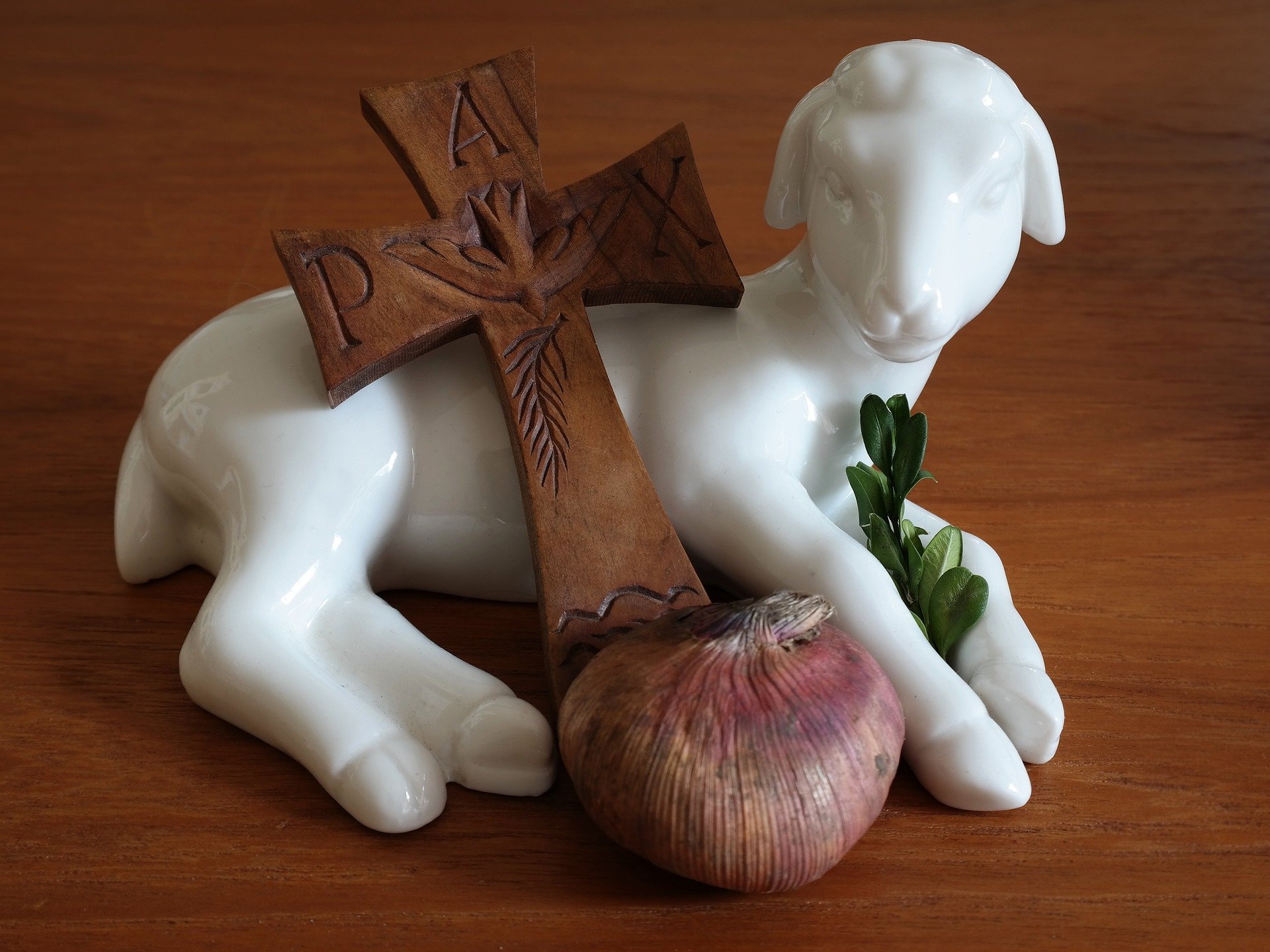
Feature Image Credit: Angelo Senchuke, LC, https://www.cathopic.com/photo/10001-cruz-murio-hijo-dios

Saving Sacrifices and Service

It’s no coincidence that Jesus instituted the Eucharist at the Passover meal. Nearly every part of the Passover is a foreshadowing of Christ’s saving sacrifice.

The Israelites were enslaved in Egypt; humanity is enslaved to sin. The blood of a lamb without blemish is what saved them from death; the blood of our sinless Savior saves from final death. The Israelites were to keep the lamb with them before sacrificing it; Jesus dwelt among us before His sacrifice. They were instructed to eat the flesh of the sacrificed lamb; Christ instructs us to eat His flesh in the Eucharist, and it has become a perpetual institution.

John’s Gospel, interestingly enough, does not include a direct account of the institution of the Eucharist, as the other Gospels do. Some say this is because he addresses the Eucharist in John 6. In any event, in the washing of the disciples’ feet, perhaps Christ is calling us to join in His sacrifice in our own way. None of us will ever be blameless as Jesus is, but we can sacrifice and serve others to help them bring about God’s kingdom, as He did. We can become more Christ-like by humbling ourselves in the service of God.

Contact the author

J.M. Pallas has had a lifelong love of Scriptures. When she is not busy with her vocation as a wife and mother to her “1 Samuel 1” son, or her vocation as a public health educator, you may find her at her parish women’s bible study, affectionately known as “The Bible Chicks.”

Feature Image Credit: Didgeman, https://pixabay.com/photos/easter-lamb-cross-easter-greeting-709524/

Be Attentive

Today is “Spy Wednesday,” the day that Judas betrayed Our Lord. Our First Reading and Psalm speak eloquently of the Suffering Servant of God, the Messiah, who will come to save His people from their sins. He will bear beatings, insults, and ultimately death, but will do so willingly, ready to accept anything to accomplish the will of the Father. We have been hearing these prophecies from Isaiah all week, and we will continue to hear them through Good Friday.

It is good to reflect on just how humble and confident the Lord must have been to allow Himself to be betrayed, beaten, abused, insulted, stripped, and killed so mercilessly. Today, however, I want to focus on Judas Iscariot. Why would he betray Our Lord? This is a good question on its own, but for Judas it is all the more baffling. Why would he betray Jesus Christ, whom he walked with for years and saw as a friend and master?

Judas was a Zealot, a member of a radical Jewish sect that sought to overthrow the Roman government and encourage the Messiah to come forward and lead the insurrection in the process. Many Jews thought that the Messiah would hold secular political power. The Zealots thought that they could help the Messiah achieve victory. Iscariot, Judas’ surname, gives away his Zealot sympathies. This is a title meaning “dagger man,” referring to the Zealots who would carry daggers at all times.

Over the course of Jesus’ ministry, it’s likely that Judas became disillusioned. Somewhere along the line, it became obvious to him that Jesus did not want political authority, at least not in the sense that many of the Jews thought that the Messiah would. He did come to rule and to lead, but in a very unexpected way. Judas may have hung around because of Jesus’ holiness, or simply because he wanted to get back at Him later. Either way, he remained until his betrayal, the fatal move.

Judas’ betrayal was a result of his failure to pay attention to Our Lord. He expected one Messiah, got another, and couldn’t stop and consider that he might be the misguided one. Later on, he understood his error, but was too crestfallen to make amends. Instead, he took his own life, crushed by the weight of his sin.

Job presents another way for us. He too had a misguided view of God. Though he was always righteous, unlike the sin-prone Judas, he too thought that God was different than in reality. Job, afflicted by Satan, expected the Lord to give him a comprehensive explanation. Instead, the Lord says that Job simply can’t understand: “Who is this that darkens counsel with words of ignorance? Gird up your loins now, like a man; I will question you, and you tell me the answers!” (Job 38:2–3).

In the end, Job repents in dust and ashes, admitting that God’s ways are unfathomable. He was attentive, and by listening understood that the Lord’s ways are greater, much more marvelous than his. He allowed God to change his perspective in a radical way, and humbly accepted the consequences. Let us do the same this Triduum, attending to the Lord and allowing Him to transform our lives, even if it means giving up what we might want from Him. On Good Friday and beyond, we will see Him surpass even our wildest expectations, giving the ultimate explanation for suffering.

Contact the author

David Dashiell is a freelance writer, editor, and proofreader based in the Pittsburgh, Pennsylvania area. His writing has been featured in Crisis Magazine and The Imaginative Conservative, and his editing is done for a variety of publishers, such as Sophia Institute and Scepter. He can be reached at ddashiellwork@gmail.com.

Feature Image Credit: parroquiacristoresucitado, https://www.cathopic.com/photo/7244-santisimo-sacramento

The Glory

What is the glory of God? How do we glorify Him? How is God glorified in us?

Here at the beginning of Holy Week, we read in the Gospel of John that as soon as Judas left the Last Supper, Jesus declared, “Now is the Son of Man glorified, and God is glorified in him…”

This does not seem to correspond to our ideas of glory, which probably include greatness, power, bright lights, and myriads of angels singing polyphonic hosannas. At least, that’s what we see in art and cinema, and our imaginations can be flattened by these ideas. We can also have “flattened” ideas about Christ’s suffering and death! Because the crucifix is familiar, and the truth that we are saved by it is repeated so often, we can lose sight of the reality of the life of the Lord and the way it transformed our lives!

Jesus truly came from the Father, setting aside his glory, to dwell among us and act and teach and willingly suffer to save us! Jesus laid down his life so that we might be truly alive, and so that he could please his Father by fulfilling His will for our eternal life. The Catechism tells us that “The world was created for the glory of God.” Not a glory that insists on its own gloriousness, but a glory that delights in pouring out immeasurable and infinite LOVE.

As we ponder the Passion this week, we must ask for the grace to see anew that God is glorified by Christ’s (and our) loving obedience. As Judas sets out with determination to betray Jesus, the Way of the Cross is set in motion, and it is this Way that glorifies the Father because it demonstrates the Son’s total loving obedience: Jesus passed onto his disciples the living truth of the Father, and then “humbled himself and became obedient, even unto death, death on a cross” (Phil 2:8).

Jesus’ self-gift is more than words; his love for the Father is more than words. It isn’t enough to say, “I give myself completely to you.” Complete self-giving is demonstrated when we pour ourselves out (in time, energy, attention, and love), not when we talk about how generous we are. I can say that I love you, but you know it’s true when I set aside what I want to help give you what YOU want. I can say I would give someone one of my kidneys, but it is only words until I have the opportunity to submit myself to surgery! Words must be proved by action.

Jesus prayed in the Garden, “Not my will, but Yours be done.” On the Cross, Jesus proves that his words are true. It is by his complete immolation on the Cross that Jesus fulfills the Father’s will wholly, without reserving anything for himself. It is this complete self-gift, for love of the Father and for us, that glorifies Jesus, and the Father in him.

Contact the author

Kathryn Mulderink, MA, is married to Robert, Station Manager for Holy Family Radio. Together they have seven children (including newly ordained Father Rob and seminarian Luke ;-), and two grandchildren. She is a Secular Discalced Carmelite and has published five books and many articles. Over the last 25 years, she has worked as a teacher, headmistress, catechist, Pastoral Associate, and DRE. Currently, she serves the Church as a writer and voice talent for Catholic Radio, by publishing and speaking, and by collaborating with the diocesan Office of Catechesis, various parishes, and other ministries to lead others to encounter Christ and engage their faith. Her website is https://www.kathryntherese.com/.
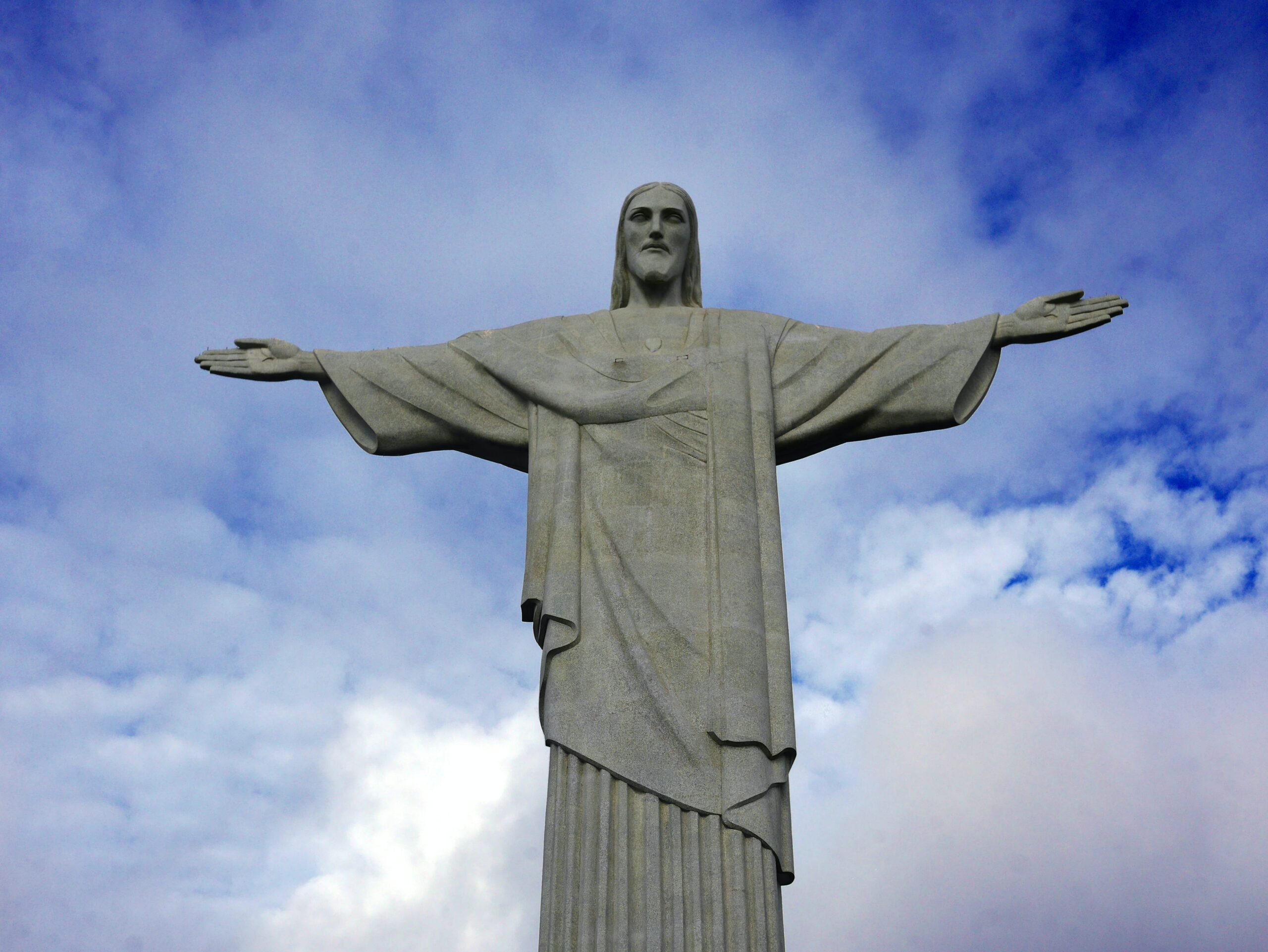
Feature Image Credit: Policraticus, https://www.cathopic.com/photo/10564-miada-cristo-cruz

Give Christ the Best of You

In the Gospel reading today, we read of Jesus’ visit to the house of Mary, Martha, and Lazarus. As Jesus sat, Mary anointed His feet with an expensive oil and then wiped them with her hair.

Judas Iscariot became upset by her actions, but Jesus told him to leave Mary alone, for He understood what she was doing.

She was giving her best to Christ.

Imagine having Christ over for dinner. Imagine Him by your side to talk with, to eat with, and to laugh with. He was a friend to these three siblings, but they knew He was much more than a friend. They understood that He was the Messiah. And Mary treated Him as such. She gave the best of what she had to Him.

We can learn so much from this Gospel and from Mary’s actions. God has given us many blessings; in return, we must give Him our first fruits—the best of what we have.

What does that mean? It means that we must put Him first and foremost into our days. It means that we don’t forget about Him all day and remember Him two minutes before we drop into an exhausted sleep. We take time for Him. 

Upon waking up, we say a prayer of thanks. During the day, we pause to pray for others, to talk to God, and to thank Him for the blessings we have. We set aside time in the evening to pray. We make sure that, for this amount of time, we are not distracted. We talk, and we listen.

In addition, we make time throughout our days to perform acts of kindness for people—even if these acts are small. They could include a simple gesture like holding an elevator for someone, smiling at someone, or paying for the person behind you in the fast-food line. Or they could include larger and more time-consuming acts like teaching CCE or volunteering at a homeless shelter or a crisis pregnancy center.  

Remember that Christ taught that, in doing for others, we also do for Him. So everything we do for the people around us, we do for Our Lord. 

And all of these things we do for God and for others show our love for Him.

God’s love for us is infinite. In fact, though we try, we cannot even imagine the depth of His love. As Christians, it is our duty and our responsibility to imitate that love and to show it to others. 

Putting Christ first and doing good for others is giving Him the best of us. 

And for this, He is surely pleased.

Contact the author

Susan Ciancio has a BA in psychology and a BA in sociology from the University of Notre Dame, with an MA in liberal studies from Indiana University. For the past 17 years, she has worked as a professional editor and writer, editing both fiction and nonfiction books, magazine articles, blogs, educational lessons, professional materials and website content. Eleven of those years have been in the pro-life sector. Currently Susan freelances and writes weekly for HLI, edits for American Life League, and is the editor of Celebrate Life Magazine. She also serves as executive editor for the Culture of Life Studies Program-an educational nonprofit program for K-12 students.
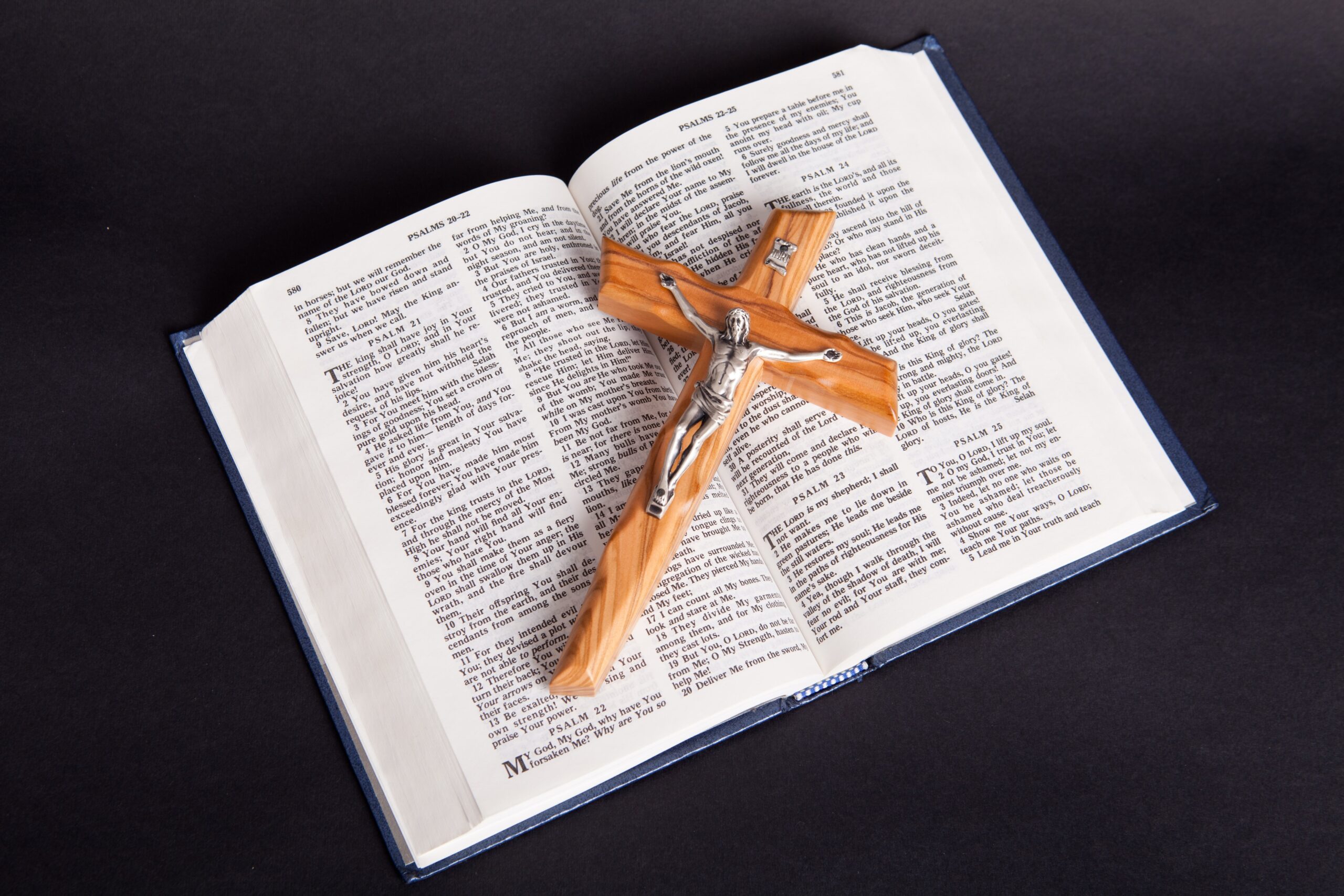

Feature Image Credit: Hannah Wernecke, https://unsplash.com/photos/8mqaLDl95I4

Be Not Afraid

I have always found it hard to pray. To find the words. And so recently I have become invested in studying the Psalms, as the Psalms give the words and prayers bestowed to us by God Himself. How moving in particular is today’s Psalm, which strikes such a chord deep in our hearts!
 
Ps 22:1 My God, my God, why have you forsaken me? Why are you so far from saving me, from the words of my groaning?
 
In today’s reading, we should note that just before Psalm 23, undoubtedly the best known of all the Psalms, is Psalm 22. I recognize now that Psalm 22 and Psalm 23 are complementary. Christ experienced to the very fullest both the human suffering of Psalm 22 and the love, peace and security of His Father in Psalm 23. Today’s Gospel notes the striking of the shepherd so that the sheep will be dispersed, but just after reminds us to not have our faith be shaken. It is through the difficult times that God can make his glory most magnified.
 
I attended a session this evening that reviewed the significance of hope. Particularly this year in the light of the Covid-19 pandemic. The speaker noted that the joys of Easter Sunday could not exist without first having the sorrow of the Passion. He also noted that the most common words of Christ in the Bible are to “Be not afraid”. Today’s readings remind me of the importance of steadfast prayer; to hold onto God through all times, both the good and the bad. It is because we are in darkness that we can strive to leap towards the light. The speaker also noted that the most common miracle Christ performed was in fact, curing the blind. This includes the physically blind but I would also think of all us who were spiritually blind in the dark. 
 
In further researching Psalm 22 and Psalm 23, I also came across quotes including, “A more complete picture of Christ’s work probably can not be seen anywhere else in the Old Testament.” And another that noted Psalm 22, The Suffering Shepherd; Psalm 23, The Good Shepherd; Psalm 24, the Great Shepherd! How powerful that we come in a full circle from the readings of the Old Testament to that of the fulfillment of the New Testament through that of Christ’s ultimate sacrifice and love for us, his precious sheep.
May the love of Christ be shown unto all during this most sacred week of the year. God bless you all.

Contact the author

Dr. Alexis Dallara-Marsh is a board-certified neurologist who practices in Bergen County, NJ. She is a wife to her best friend, Akeem, and a mother of two little ones on Earth and two others in heaven above.



Feature Image Credit: Damir Spanic, https://unsplash.com/photos/BBERnAZGNYIutm_source=unsplash&utm_medium=referral&utm_content=creditShareLink

All Will Believe

“What are we going to do? This man is performing many signs. If we leave him alone, all will believe in him.” ~John 11:48

Although I have never personally met George Washington, I believe he crossed the Delaware River.  I never met Amelia Earhart, yet I do not doubt she flew solo across the Atlantic. I am not personally acquainted with Christopher Columbus; however, I trust that he sailed the ocean blue in 1492.  Why then did I struggle for so long to believe the story of Jesus? Since His ministry included performing signs, I take solace in recognizing I am not alone in this struggle.

Like the previously mentioned historical figures, the story of Jesus becomes part of history because those who witnessed it shared it.

They observed his miracles, heard his teachings, and were present for his gruesome crucifixion. Actual people saw, spoke, and dined with Jesus after his resurrection. More importantly, testimonies included “hostile” witnesses trying to squelch excitement about Jesus, who would have much preferred his legacy not continue for the last 2000-plus years. 

This epiphany of recognizing Jesus as a historical figure was a game-changer.  Understanding the Scripture and tradition in light of eyewitness accounts opened my eyes to the truth, the reality, about Jesus. As Catholic tradition holds, one such witness was the soldier at the foot of the Cross, St. Longinus.

“But one of the soldiers pierced His side with a spear, and immediately blood and water came out. And he who has seen has testified, and his testimony is true; and he knows that he is telling the truth, so that you also may believe.”  It is said that Longinus was nearly blind and healed when some of the blood and water from Jesus fell into his eyes. It was then he exclaimed, “Indeed, this was the Son of God!” [Mark 15:39].  This encounter converted the centurion.

How often I am blind to the truth of who Jesus is.  Witness accounts, such as St. Longinus, remind me of the reality of Jesus’ existence.  People who gave testimony, so that I may also believe. Ironically, the very ones who wanted to silence Jesus, so more would not believe, became the conduit. 

The signs Jesus performed were not just for the witnesses of that day but continue to be seen today, most especially in the Sacraments. In 2015, my family was going through a difficult time. To cope, I started taking walks around my yard and praying the Rosary. One day as my frustration overwhelmed me and I shouted to the Lord, “What do you want from me?” As I turned the corner and faced the road, a truck drove past with the word “FIDELITY” along the side.  I actually laughed out loud; this Latin-rooted word emblazoned on the side of a semi, at the exact moment I prayed for clarity, was no coincidence.  The message filled my heart with peace. Jesus asks for me to be faithful.

While I still want to be that person who believes, I am grateful the Lord knows my heart. Therefore, I gleam great joy from the Fidelity trucks, the occasional butterfly, and the homilies that appear written just for me. Those signs remind me that my faith is not misplaced, that God is real.  Even the hostile witnesses knew, if many saw these signs, they’d all believe.

Contact the author

Allison Gingras works for WINE: Women In the New Evangelization as National WINE Steward of the Virtual Vineyard. She is a Social Media Consultant for the Diocese of Fall River and CatholicMom.com. She is a writer, speaker, and podcaster, who founded ReconciledToYou.com and developed the Stay Connected Journals for Catholic Women (OSV).   

Feature Image Credit: Danigeza, https://pixabay.com/photos/poppies-field-sunset-dusk-sunlight-174276/

Fresh Insight

The scene in the Gospel today has many Jews picking up rocks to stone Jesus for blasphemy, for making himself God. The people do not recognize that Jesus’ teachings and his works (miracles) have been done to help them believe and understand, “that the Father is in me and I am in the Father.”

How many times have I made a judgement in my mind about a situation, and yet there is an unsettled feeling (if I’m paying attention) deep in my heart? Maybe there is more going on in a circumstance than I’m willing to admit to myself.

A wise woman once said, “Sometimes the longest journey we make is the sixteen inches from our heads to our hearts.” It could be that I am blind to a different perspective, position, interpretation or view of a situation. Am I willing to be honest with myself, to take some time in prayer and to delve more deeply into that instance from a different angle or voice?

On this fifth Friday of our Lenten journey, let us pray for the Holy Spirit to bring a fresh breath of insight into our minds, our hearts and our prayers this Holy Week.

PRAYER TO THE HOLY SPIRIT

Come Divine Spirit –

Rattle our cages –

Break into our locked houses –

Water our parched land –

Undo our bends and twistedness –

Awaken our hearts –

Help us to overflow with kindness –

And – 

Give us unending joy!

AMEN!     
(From an Ancient Pentecost Liturgy)

Contact the author

Beth Price is part of the customer care team at Diocesan. She brings a unique depth of experience to the group due to her time spent in education, parish ministries, sales and the service industry over the last 25 yrs. She is a practicing spiritual director as well as a Secular Franciscan (OFS). Beth is quick to offer a laugh, a prayer or smile to all she comes in contact with. Reach her here bprice@diocesan.com.

Feature Image Credit: Jong Marshes, https://unsplash.com/photos/79mNMAvSORg