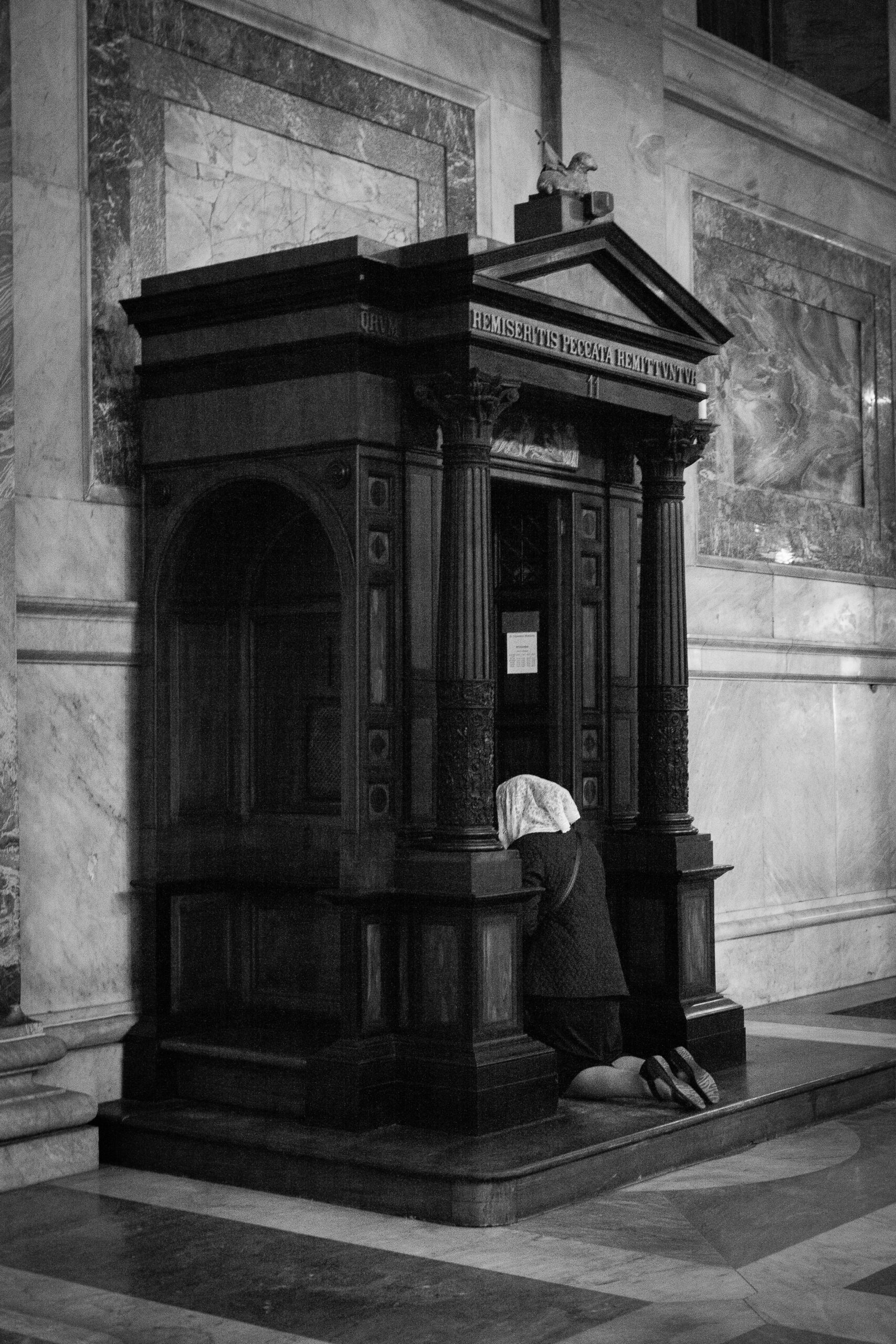
“Repent, for the kingdom of heaven is at hand” (Matt 4:17).
These are the first words of Jesus’ public ministry. Today, Ash Wednesday, we have greater occasion to reflect on them. Of course, we know the basics of Lent: prayer, fasting, and almsgiving. We’re probably still thinking about what to do in each of these areas, and I’m sure our friends and pastors will have some helpful advice. But today more than ever, we ought to have an oft-neglected subject in mind: repentance.
Our readings are shot through with contrition, intense sorrow of the heart for sin. We hear Joel’s powerful call to “proclaim a fast” and to return to the Lord with “weeping and mourning” (Joel 2:12, 15), and we read from the famous Psalm 51, which David created after committing murder and adultery. The Scriptures express a sorrow that we often do not experience.
Sure, we’re familiar with sorrow. We have plenty of occasions to mess up, and therefore plenty of occasions to apologize. But can we relate to the intensity of Joel’s sorrow? Can we relate to David’s profound contrition? It’s important to remember that the people of the Old Testament, at certain times, were accustomed to expressing their sorrow for sin by wearing sackcloth and covering themselves in ashes. Why go so far?
In our psalm, David says “against you [the Lord] only have I sinned, and done what is evil in your sight” (Psalm 51:6). By saying this, he acknowledges that ultimately, all sin can be referred back to God. When we take that perspective, we can understand his contrition more clearly.
Sin is, at its core, a turning away from God, elevating some created person or thing above Him. In sinning, we’re saying, “That’s nice, God, but I’d really prefer to listen to myself (or someone else) right now. I know that You created me and that everything You ask of me is for my own good and happiness, but I don’t really believe that right now.”
Knowing what sin really is and how much it offends Our Lord, why would we ever deliberately do it? How can we get so carried away by our own desires and by the temptations of the world and Satan that we forget who our Creator is? Do we really want to give Him another reason for His ultimate sacrifice on the Cross? “God, I appreciate what You’re doing for me, and I know it’s painful, but could you stay up there a bit longer? There are some things I’d like to do.”
Now, we aren’t usually so callous when we sin. However, we need to understand that each sin against God (which all sins are) is saying these things to a greater or lesser degree. When we see this, we can begin to understand Joel and David. We can begin to understand the point of such great lengths as sackcloth, ashes, and public penance. We can embark on our Lenten prayer, fasting, and almsgiving practices with greater fervor.
This perspective, coupled with the firm confidence (also in our readings) that God will accept our repentance and replace our sin with grace, will allow us to have a truly fruitful Lent. We can foster these attitudes through prayer, fasting, almsgiving, and frequent Confession. This is a powerful time, when the entire Church atones for its sins, experiencing a purgative season. We experience discomfort and sorrow for forty days, but these days bear great fruit. In the end, we experience the mercy, love, and forgiveness of the Savior, and we merit grace for the salvation of souls.
 David Dashiell is a freelance writer, editor, and proofreader based in the Pittsburgh, Pennsylvania area. His writing has been featured in Crisis Magazine and The Imaginative Conservative, and his editing is done for a variety of publishers, such as Sophia Institute and Scepter. He can be reached at ddashiellwork@gmail.com.
Feature Image Credit: Yael Portabales, https://www.cathopic.com/photo/2856-padre-ten-misericordia-mi-

 Today’s guest blogger is Michael Kavan, currently the Associate Dean for Student Affairs at Creighton University School of Medicine. He is also a psychologist and a Professor of Family Medicine and Professor of Psychiatry. A faculty member at Creighton since 1988, Kavan teaches classes on a variety of topics related to behavioral medicine, depression, anxiety, and interviewing skills for medical students and residents. He also practices psychology at a family medicine clinic.
 Tommy Shultz is Diocesan Publication’s Solutions Evangelist. He is also a full time speaker who was most recently the Director of youth and young adult ministries for the Diocese of Baker, OR. As an experienced speaker on all things Catholic, he has addressed thousands of teens and young adults on topics such as the Sacraments, chastity, and boldly living the Catholic faith. He has given many talks and hosted retreats across the nation. Driven by his passion for Theology of the Body, Tommy studied at the Theology of the Body Institute and has spoken at numerous Theology of the Body conferences. From 2012-2013, he served as a missionary of purity, speaking to over 20 thousand youth about the message of purity across the state of Pennsylvania. He is also a founder of the Corpus Christi Theology of the Body campus organization at Franciscan University. To book Tommy for an event or for further information please visit
 Amy Oatley is a wife, mother, and Secular Franciscan (OFS), passionate about social justice, advocating for the dignity of every human life. She encounters Christ through Prison and Jail Ministry in the Diocese of Grand Rapids and as a Sidewalk Advocate for Life. A journalist for the past thirty years, she is currently a freelance writer for FAITH Magazine and works at St. Thomas the Apostle Parish. Her home parish is Our Lady of Consolation in Rockford, Michigan.
 Elise Hilton is an author, blogger and speaker. Her role at Diocesan Publications is Editor & Writer with the Marketing Team. She has worked in parish faith formation and Catholic education for over 25 years. A passionate student of theology, Elise enjoys sharing her thoughts on parish communication, the role of social media in the Church, Franciscan spirituality and Catholic parenting. To enquire about booking her as a speaker, please contact her at

 Allison Gingras, founder




 1-800-994-9817