
Signs are Everywhere / Las señales están por todas partes

Remember when traffic signs used to mean something? OK, that’s a bit of an exaggeration, but the older I get, the more I think people have come to think that the red octagon with the white “STOP” on it actually means “Slow down, and if something is coming, stop; if not, roll on through.” The “Speed Limit 55” sign, for the 40-some years I have been driving, never really meant “Drive no faster than 55.” At first it was something like 58 or 60; but over the years it became 62, then 63 or 64. Now I think it means “See no police? Then see what you can get away with.”

Today’s readings are about words, but they’re also about signs. Jonah’s words to the Ninevites, “Forty days more and Nineveh shall be destroyed,” are pretty straightforward. Jonah is saying something is wrong, and Nineveh is in trouble because of it. For their part, the Ninevites take those words to heart, and they act upon them. But they also recognize the sign that Jonah is a foreigner preaching the will of God to them. They then display signs of their own: fasting, wearing sackcloth, sitting in ashes, and repenting of their sin and evil. The king’s words are a confession, and he knows Nineveh must turn away from evil and hope in God’s mercy. There was no “let’s see what we can get away with” in his response.

In the Gospel, Jesus reminds the crowd how Jonah was a sign to the Ninevites, and they recognized that sign as being sent from God. Yet what is Jonah’s preaching compared to the sign right before their eyes? Jesus is their stop sign, their speed limit, right there for them to see and easy to interpret. Yet he knows their reaction is “what can we get away with?” Love God with your whole heart, soul, mind, strength. Love your neighbor as yourself. Pick up your cross and follow Jesus. His burden is easy and His yoke is light. 

The greatest sign of all has been shown to us. The message has been sent to us. Repent and believe in the Gospel. We have 40 days of Lent, which might not be 40 days until doomsday like Nineveh had, but our end will one day come. It’s never too late to repent, until it’s too late. Jesus is our sign. May we follow Him this Lent and always, for just like all those road signs out there, He always has our best interest in mind.

Contact the author


¿Recuerdan cuando las señales de tráfico significaban algo? Bueno, es una pequeña exageración, pero al transcurrir los años, más y más creo que la gente ha llegado a pensar que el octágono rojo con la palabra “STOP” (ALTO) significa en realidad: “Disminuya la velocidad, y si viene algo, deténgase; si no, siga adelante”. La señal de “Speed Limit 55” (Límite de Velocidad), durante más de 40 años que llevo manejando, nunca ha significado realmente: “No manejas a más de 55”. Al principio era algo así como 58 o 60; pero luego se convirtió en 62, luego en 63 o 64. Ahora creo que significa: “¿No hay policía por aca? Entonces voy a ver qué tan rápido puedo ir “.

Las lecturas de hoy se tratan de palabras, pero también de señales. Las palabras de Jonás a los ninivitas: “Dentro de cuarenta días Nínive será destruida”, son bastante directas. Jonás está diciendo que algo anda mal, y que Nínive está en problemas por ello. Por su parte, los ninivitas tomaron esas palabras en serio y las pusieron en práctica. Pero también reconocieron la señal de que Jonás era un extranjero que les predicaba la voluntad de Dios. Entonces mostraron sus propias señales: ayunaron, se vistieron de cilicio, se sentaron en ceniza y se arrepintieron de su pecado y maldad. Las palabras del rey son una confesión, y sabía que Nínive debía alejarse del mal y confiar en la misericordia de Dios. No hubo un “veamos cuánto podemos empujar los límites” en su respuesta.

En el Evangelio, Jesús le recuerda a la multitud cómo Jonás era una señal para los ninivitas, y ellos reconocieron esa señal como enviada por Dios. Sin embargo, ¿qué es la predicación de Jonás comparada con la señal que tenían ante sus ojos? Jesús es su señal de alto, su límite de velocidad, a la vista de todos y fácil de interpretar. Sin embargo, él sabía que su reacción era “¿cómo podemos empujar los límites?” Ama a Dios con todo tu corazón, alma, mente y fuerzas. Ama a tu prójimo como a ti mismo. Toma tu cruz y sigue a Jesús. Su carga es ligera y su yugo ligero.

La mayor señal de todas nos ha sido mostrada. El mensaje nos ha sido enviado. Arrepiéntanse y crean en el Evangelio. Tenemos 40 días de Cuaresma, que quizá no sean 40 días hasta el fin del mundo como los de Nínive, pero nuestro fin llegará algún día. Nunca es tarde para arrepentirse, hasta que sea demasiado tarde. Jesús es nuestra señal. Que lo sigamos esta Cuaresma y siempre, porque, al igual que todas esas señales de tráfico, él siempre tiene en mente nuestro bien mayor.

Comunicarse con el autor

Mike Karpus is a regular guy. He grew up in Michigan’s Upper Peninsula, graduated from Michigan State University and works as an editor. He is married to a retired Catholic school principal, raised two daughters who became Catholic school teachers at points in their careers, and now relishes his three young grandchildren. He serves on a Catholic school board and has served on pastoral councils, a building committee and a parish stewardship committee. He currently is a lector at Mass, a Knight of Columbus, vice president of a memorial scholarship committee and a board member of the local Habitat for Humanity organization. But mostly he’s a regular guy.

Feature Image Credit: Ray Reyes, unsplash.com/photos/white-and-black-speed-limit-55-sign-pafeEJXTDMI

The views and opinions expressed in the Inspiration Daily blog are solely those of the original authors and contributors. These views and opinions do not necessarily represent those of Diocesan, the Diocesan staff, or other contributors to this blog.

Bits and Pieces / Solamente fragmentos

Let’s say every day you go to work, you take the city bus. You get on and there are already people riding that route. While most people riding a bus adhere to a strict code of silence, some people inevitably start chatting. When you disembark at your stop, those chatty people may still be at it. So while you couldn’t help hearing some of their conversation, it was only bits and pieces, with important parts occurring before and after your little bus ride to work.

And so it is with today’s Scripture readings. You read them and you can’t help but feel you’re missing something. The opening reading, from the second Book of Samuel, is the very beginning of the book, yet the opening sentence tells us something went on before that: “David returned from his defeat of the Amalekites …” (2 Samuel 1:1) OK, so there was a battle. But David’s battle victory isn’t even the issue here, because a stranger arrives to tell him that Saul was in a battle, it didn’t go well, and he perished. That account is at the end of the first Book of Samuel.

David then mourns Saul’s death. But wait a minute — wasn’t Saul actively trying to kill David in that first book? Saul did not take kindly to David being anointed by Samuel to replace him, but even though he had cause and the opportunity to do so, David never tried to end Saul’s life. David remained righteous even while enduring torment from Saul. 

The snippet of Mark’s Gospel we read today is even shorter and more obscure. Jesus returns to the house He stayed at in Capernaum. The crowds followed and kept Him from doing typical things at home like eating. And his relatives decided he was crazy.

In Mark’s Gospel things happen at a pretty rapid pace. Earlier in Mark Chapter 3, Jesus healed a man’s withered hand, and He named his 12 Apostles. After our passage, He is accused of being from Beelzebul and counters how can that even work? With those vivid passages, it makes you wonder why today’s passage was even chosen.

Let’s put ourselves in the scene, just as if we would have gotten on the morning bus and it was playing out right before us. Whose side would we be on? That of the crowd, who wanted to see more and know more about Jesus? Or that of His relatives, who thought they knew Him and disapproved of these latest events? If nothing else, today’s Gospel should entice us to learn more — more about Jesus, His mission, His work, His goals, His purpose, and His purpose for us. Bits and pieces can be compelling, just as these ones should compel us to want to know more so as to love and serve Him better.

Contact the author


Digamos que todos los días vas al trabajo y tomas el autobús urbano. Te subes y ya hay gente en esa ruta. Aunque la mayoría de los que viajan en autobús se adhieren a un estricto código de silencio, es inevitable que algunos empiecen a charlar. Al bajar en tu parada, puede que esas personas sigan charlando. Así que, aunque no pudiste evitar escuchar parte de su conversación, solamente eran fragmentos, con partes importantes que ocurrían antes y después de tu breve viaje en autobús al trabajo.

Y lo mismo ocurre con las lecturas bíblicas de hoy. Las lees y sientes que te estás perdiendo algo. La lectura inicial, del segundo libro de Samuel, es el comienzo mismo del libro; sin embargo, la frase inicial nos dice que algo sucedió antes: “En aquellos días, después de derrotar a los amalecitas, David se fue a Siquelag…” (2 Samuel 1,1). Bueno, hubo una batalla. Pero la victoria de David ni siquiera es el asunto principal, porque un extraño llega para decirle que Saúl estaba en una batalla, que no salió bien y que pereció. Ese relato se encuentra al final del primer libro de Samuel.

David lamenta la muerte de Saúl. Pero esperen un momento: ¿no intentaba Saúl activamente matar a David en ese primer libro? A Saúl no le agradó que Samuel ungiera a David para reemplazarlo, pero aunque tenía motivos y la oportunidad para hacerlo, David nunca intentó acabar con su vida. David permaneció justo incluso mientras soportaba el tormento de Saúl.

El fragmento del Evangelio de Marcos que leemos hoy es aún más corto y confuso. Jesús regresa a la casa donde se alojaba en Capernaúm. La multitud lo seguía y le impedía hacer cosas típicas de casa, como comer. Y sus familiares pensaron que estaba loco.

En el Evangelio de Marcos, los acontecimientos suceden a un ritmo bastante rápido. Anteriormente, en el capítulo 3 de Marcos, Jesús sanó la mano seca de un hombre y nombró a sus doce apóstoles. Después del pasaje de hoy, se le acusa de ser de Beelzebul y se pregunta cómo puede ser eso. Con esos vívidos pasajes, uno se pregunta por qué se eligió el de hoy.

Pongámonos en la escena, como si hubiéramos subido al autobús de la mañana y todo estuviera sucediendo delante de nuestros ojos. ¿De qué lado estaríamos? ¿El de la multitud, que quería ver y saber más sobre Jesús? ¿O el de sus familiares, que creían conocerlo y desaprobaban estos últimos acontecimientos? Como mínimo, el Evangelio de hoy debería motivarnos a aprender más: más sobre Jesús, su misión, su obra, sus metas, su propósito y su propósito para nosotros. Los fragmentos pueden ser cautivadores, así como estos deberían impulsarnos a querer saber más para amarlo y servirlo mejor.

Comunicarse con el autor

Mike Karpus is a regular guy. He grew up in Michigan’s Upper Peninsula, graduated from Michigan State University and works as an editor. He is married to a retired Catholic school principal, raised two daughters who became Catholic school teachers at points in their careers, and now relishes his three young grandchildren. He serves on a Catholic school board and has served on pastoral councils, a building committee and a parish stewardship committee. He currently is a lector at Mass, a Knight of Columbus, vice president of a memorial scholarship committee and a board member of the local Habitat for Humanity organization. But mostly he’s a regular guy.

Feature Image Credit: Jakob Scholz, pexels.com/photo/bus-bench-seats-808846/

The views and opinions expressed in the Inspiration Daily blog are solely those of the original authors and contributors. These views and opinions do not necessarily represent those of Diocesan, the Diocesan staff, or other contributors to this blog.

The Word Became Flesh / El Verbo se hizo carne

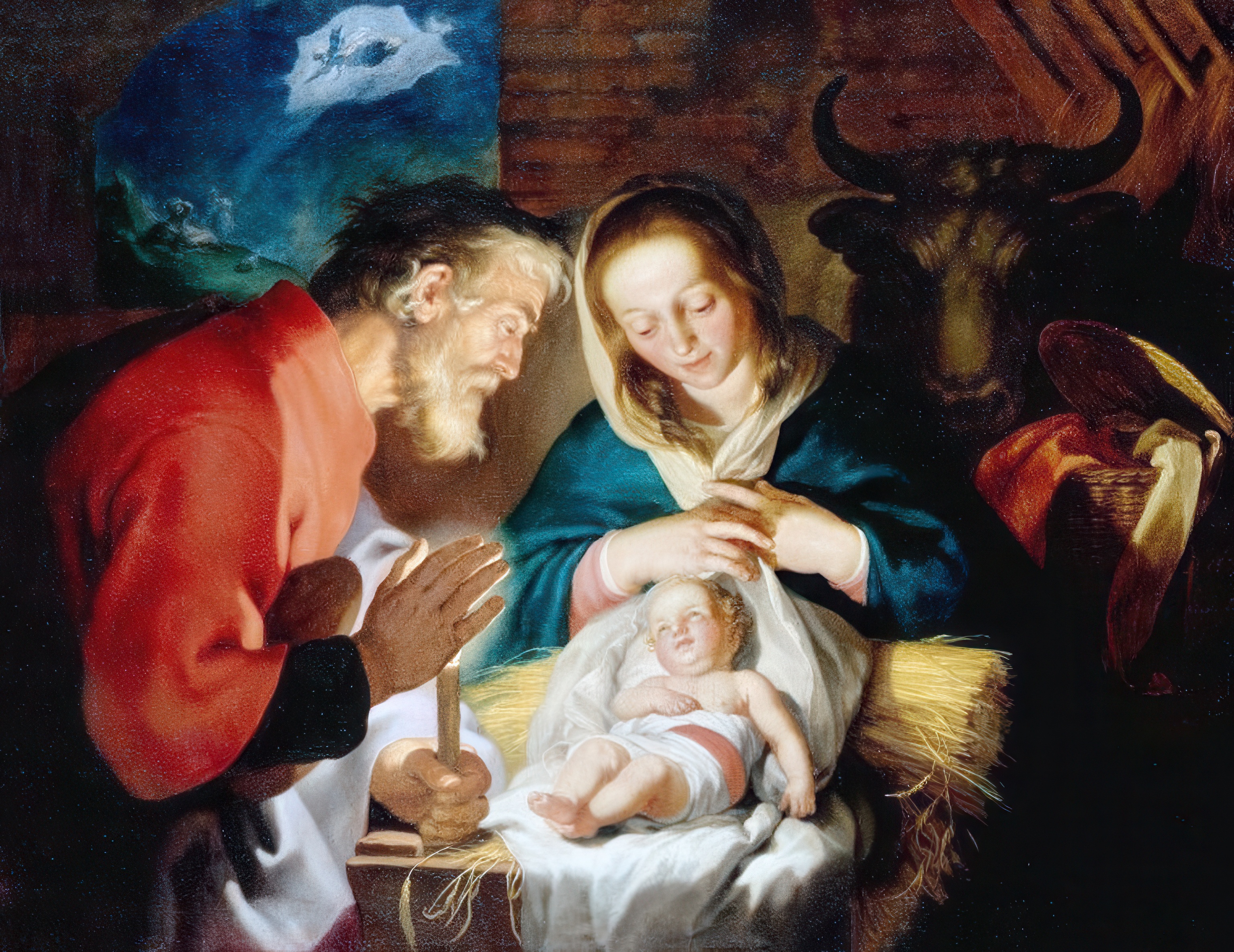
Joy to the world! Today is, as the Church tells us, “The Nativity of our Lord, Jesus Christ”, or what we commonly call “Christmas”. That term comes from an Old English word meaning Christ’s Mass, which is the religious celebration of our Lord’s birth. Christ, of course, is not Jesus’ last name, but a translation of the Hebrew term “Messiah”, meaning “anointed.” Mass comes from the Latin word “missa,” which means “sending forth.” Scholars believe that Jesus’ real name in Aramaic and was “Yeshua”, which means “God saves.”

The whole point is that names matter, titles matter, words matter. The Gospel the Church chooses for Christmas Day is not the familiar Nativity story from Luke, it’s the very conceptual beginning of the Gospel of John. “In the beginning was the Word, and the Word was with God, and the Word was God.” (John 1:1) John’s point is to tell us that yes, Jesus came into the world, but He transcends the world, existing before the world. He tells us that God sent forth His Son: “And the Word became flesh and made his dwelling among us (John 1:14).” 

Why did John choose to call Jesus “the Word”? The New Testament, in fact, has many names and titles for Jesus: the Bread of Life, the Lamb of God, the Good Shepherd, the Way the Truth and the Life, the Light of the World, the Resurrection and the Life, the Alpha and Omega, the Son of God. The list is far longer, each phrase and title attempting to give us some idea of who and what Jesus is. Words matter, but human words fail to capture the full glory and truth of God’s Only Begotten Son come into the world to save us from our sins. “The Word” is a very basic translation of the Greek “logos,” which implies order, reason, discourse, explanation, power, and logic.

Despite the first sin of Adam and Eve, God chose not to abandon His fallen creation, but to save it. John is telling us that Jesus is the power — the order, the reason, the explanation, the logic — that brings about our salvation. And it all starts on Christmas, the birth of Jesus, the Word becoming flesh and dwelling among us. Let us pray that Jesus will continue to come into our hearts today and every day, that we may receive “grace in place of grace” (John 1:16), that the Son may reveal the Father to us, and we may rejoice in our salvation forever. To borrow from Luke’s account: “Glory to God in the highest!”

Contact the author


¡Alegría para el mundo! Hoy es, como nos dice la Iglesia, “La Natividad del Señor”, o lo que comúnmente llamamos “la Navidad”. El término “Christmas” proviene de una palabra del inglés antiguo que significa Misa de Cristo, la celebración religiosa del nacimiento de nuestro Señor Jesucristo. Cristo, por supuesto, no es el apellido de Jesús, sino una traducción del término hebreo “Mesías”, que significa “ungido”. Misa proviene del latín “missa”, que significa “ser enviado”. Los eruditos creen que el verdadero nombre de Jesús en arameo era “Yeshua”, que significa “Dios salva”.

La cuestión es que los nombres, los títulos y las palabras importan. El Evangelio que la Iglesia elige para el día de Navidad no es el conocido relato de la Natividad de San Lucas, sino el comienzo conceptual del Evangelio de Juan. “En el principio era el Verbo, y el Verbo estaba con Dios, y el Verbo era Dios”. (Juan 1,1) El objetivo de Juan es decirnos que sí, Jesús vino al mundo, pero trasciende el mundo, existiendo antes que el mundo. Nos dice que Dios envió a su Hijo: Y aquel que es la Palabra se hizo hombre y habitó entre nosotros. (Juan 1,14).

¿Por qué Juan eligió llamar a Jesús “la Palabra”? De hecho, el Nuevo Testamento tiene muchos nombres y títulos para Jesús: el Pan de Vida, el Cordero de Dios, el Buen Pastor, el Camino, la Verdad y la Vida, la Luz del Mundo, la Resurrección y la Vida, el Alfa y la Omega, el Hijo de Dios. La lista es mucho más larga; cada frase y título intenta darnos una idea de quién y qué es Jesús. Las palabras importan, pero los seres humanos no logran captar la gloria y la verdad plena del Hijo Unigénito de Dios que vino al mundo para salvarnos de nuestros pecados. “la Palabra” es una traducción muy básica del griego “logos”, que implica orden, razón, discurso, explicación, poder y lógica.

A pesar del primer pecado de Adán y Eva, Dios decidió no abandonar su creación caída, sino salvarla. Juan nos dice que Jesús es el poder – el orden, la razón, la explicación, la lógica – que nos salva. Y todo comienza en Navidad, el nacimiento de Jesús, el Verbo hecho carne y morando entre nosotros. Oremos para que Jesús siga entrando en nuestros corazones hoy y cada día, para que recibamos “gracia sobre gracia” (Juan 1,16), para que el Hijo nos revele al Padre y nos regocijemos en nuestra salvación para siempre. Como dice en el relato de San Lucas: “¡Gloria a Dios en las alturas!”

Comunicarse con el autor

Mike Karpus is a regular guy. He grew up in Michigan’s Upper Peninsula, graduated from Michigan State University and works as an editor. He is married to a retired Catholic school principal, raised two daughters who became Catholic school teachers at points in their careers, and now relishes his three young grandchildren. He serves on a Catholic school board and has served on pastoral councils, a building committee and a parish stewardship committee. He currently is a lector at Mass, a Knight of Columbus, vice president of a memorial scholarship committee and a board member of the local Habitat for Humanity organization. But mostly he’s a regular guy.

Feature Image Credit: Abraham Bloemaert, art.diocesan.com/stock-photo/the-adoration-of-jesus-by-mary-and-joseph-21936/

The views and opinions expressed in the Inspiration Daily blog are solely those of the original authors and contributors. These views and opinions do not necessarily represent those of Diocesan, the Diocesan staff, or other contributors to this blog.
The Wisdom of God / La Sabiduría de Dios

“O Wisdom of our God Most High, guiding creation with power and love: come to teach us the path of knowledge!” 

I never knew my maternal grandfather; he died a year and a half before I was born. But I have learned the stories about him: how he lied about his age so he could join a brother in coming to America; how he drove an ambulance in France for the U.S. Army during World War I; how he, just like the usual Greek stereotype, owned a “greasy spoon” restaurant; how he was an older man when he married the feisty Sicilian woman who was my grandmother. It’s a little funny how, my whole life, I’ve been asked, “So, you’re Greek?” and I’ve always said, “Why, yes, on my mother’s side.”

Yes, people make assumptions (for example, “Can anything good come from Nazareth?”) when they see that my last name is a Greek word (which means “fruit,” by the way). So I have to explain that I’m Polish on my father’s side, but I have no idea how a Polish family took a Greek word for their surname. I did know my grandfather on that side, perhaps the kindest and most generous man I’ve ever known. But he was also opinionated, opportunistic, and an alcoholic.

We can’t choose our ancestry, and yet it is very important in our lives because we are the culmination of it; it is the foundation of who we fundamentally are. Both Matthew and Luke use a genealogy of Jesus to show the importance of ancestry, especially how Jesus was the culmination of Old Testament prophecies and covenants, putting him in direct line with Abraham, Isaac, Jacob, Judah and King David. 

No, we can’t choose our ancestors, but today’s Gospel shows that God can and does do that choosing. And for Jesus, as well as for us, that ancestry chosen by God contains both the faithful and the sinner. Judah, as the First Reading tells us, may have been destined for greatness, with kings as descendants; and he may have saved his brother Joseph from their other brothers’ wrath, but he also sold Joseph into slavery. Jesus is considered a descendant of David, but he’s also a descendant of Ahaz, the guy who wouldn’t listen to Isaiah about asking the Lord for a sign. And God, in his infinite wisdom, used them all to fulfill his plan. His promises to Abraham, Jacob, David, and even Ahaz, are fulfilled in the birth of Jesus, the Messiah.

I began this reflection with today’s “O antiphon,” the ancient exhortations the Church has used since the eighth century to accompany the Magnificat canticle of Evening Prayer from December 17-23. As the U.S. Conference of Catholic Bishops says on its website, the antiphons “are a magnificent theology that uses ancient biblical imagery drawn from the messianic hopes of the Old Testament to proclaim the coming Christ as the fulfillment not only of Old Testament hopes, but present ones as well.” And today, when we say Come, O Wisdom, we know that that Wisdom is Jesus Christ, our very Lord and Savior. Christmas is just a week away: Come, Lord Jesus, Come!

Contact the author


“¡Oh Sabiduría de nuestro Dios Altísimo, que guías con poder y amor la creación: ven a enseñarnos el camino del conocimiento!”

Nunca conocí a mi abuelo materno; murió un año y medio antes de que yo naciera. Pero me han contado sobre su historia: como mintió de su edad para poder unirse a un hermano para venir a los Estados Unidos; cómo condujo una ambulancia en Francia para el ejército de los Estados Unidos durante la Primera Guerra Mundial; cómo él, al igual que el estereotipo griego habitual, era dueño de un restaurante de “cuchara grasienta”; cómo era un hombre mayor cuando se casó con la fuerte mujer siciliana que era mi abuela. Es un poco divertido cómo, toda mi vida, me han preguntado: “Entonces, ¿eres griego?” y siempre he dicho: “Pues sí, por parte de mi mamá”.

Sí, la gente hace suposiciones (por ejemplo, “¿Puede salir algo bueno de Nazaret?”) cuando ven que mi apellido es una palabra griega (que significa “fruto”). Así que tengo que explicar que soy polaco por parte de mi padre, pero no tengo idea de cómo una familia polaca tomó una palabra griega como apellido. Conocí a mi abuelo por ese lado, quizás el hombre más amable y generoso que he conocido. Pero también era obstinado, oportunista y alcohólico.

No podemos elegir nuestra ascendencia, y sin embargo es muy importante en nuestra vida porque somos la culminación de ella; es la base de lo que somos fundamentalmente. Tanto Mateo como Lucas usan una genealogía de Jesús para mostrar la importancia de la ascendencia, especialmente cómo Jesús fue la culminación de las profecías y pactos del Antiguo Testamento, poniéndolo en línea directa con Abraham, Isaac, Jacob, Judá y el rey David.

No, no podemos elegir a nuestros antepasados, pero el Evangelio de hoy muestra que Dios puede y hace esa elección. Y para Jesús, como para nosotros, esa estirpe escogida por Dios contiene tanto al fiel como al pecador. Judá, como nos dice la Primera Lectura, pudo haber estado destinado a la grandeza, con reyes como descendientes; y pudo haber salvado a su hermano José de la ira de sus otros hermanos, pero también vendió a José como esclavo. Jesús es considerado descendiente de David, pero también es descendiente de Acaz, el tipo que no escuchó a Isaías acerca de pedirle una señal al Señor. Y Dios, en su infinita sabiduría, se sirvió de todos ellos para cumplir su plan. Sus promesas a Abraham, Jacob, David e incluso Acaz se cumplen en el nacimiento de Jesús, el Mesías.

Comencé esta reflexión con la “O antífona” de hoy, las antiguas exhortaciones que la Iglesia ha utilizado desde el siglo VIII para acompañar el cántico Magnificat de la oración de la tarde del 17 al 23 de diciembre. Como dice la Conferencia de Obispos Católicos de Estados Unidos en su sitio web, las antífonas “son una teología magnífica que usa imágenes bíblicas antiguas extraídas de las esperanzas mesiánicas del Antiguo Testamento para proclamar la venida de Cristo como el cumplimiento no solo de las esperanzas del Antiguo Testamento, sino también del presente.” Y hoy, cuando decimos Ven, oh Sabiduría, sabemos que esa Sabiduría es Jesucristo, nuestro mismo Señor y Salvador. Falta una semana para la Navidad: ¡Ven, Señor Jesús, ven!

Comunicarse con el autor

Mike Karpus is a regular guy. He grew up in Michigan’s Upper Peninsula, graduated from Michigan State University and works as an editor. He is married to a retired Catholic school principal, raised two daughters who became Catholic school teachers at points in their careers, and now relishes his three young grandchildren. He serves on a Catholic school board and has served on pastoral councils, a building committee and a parish stewardship committee. He currently is a lector at Mass, a Knight of Columbus, vice president of a memorial scholarship committee and a board member of the local Habitat for Humanity organization. But mostly he’s a regular guy.

Feature Image Credit: GidonPico, pixabay.com/photos/dead-sea-caravan-camel-red-brown-1930735/

The views and opinions expressed in the Inspiration Daily blog are solely those of the original authors and contributors. These views and opinions do not necessarily represent those of Diocesan, the Diocesan staff, or other contributors to this blog.

Jesus Wept / Jesús lloró

Way back in 1971, there was a TV movie called “The Homecoming: A Christmas Story.” It introduced the world to the Depression-era Walton family, which became a TV series a year or so later. One scene from the original movie always stuck with me: The Walton kids were teaching younger kids Bible verses at a Christmas Eve service, and those children would then recite the verses in order to receive a Christmas present. One Walton girl was feeding verses to a little boy, who would say, “That’s too long” or “I can’t remember that.” Finally, exasperated, the Walton daughter told the boy, “Jesus wept.” He ran to the minister, said those two words and happily accepted his gift.

Scripture tells us three times that Jesus shed tears. Hebrews Chapter 5 says, “In the days when he was in the flesh, he offered prayers and supplications with loud cries and tears to the one who was able to save him from death, and he was heard because of his reverence.”

In Chapter 11 of the Gospel of John, Jesus goes to raise Lazarus from the dead, and we are told, “When Jesus saw (Mary) weeping and the Jews who had come with her weeping, he became perturbed and deeply troubled, and said ‘Where have you laid him?’ They said to him, ‘Sir, come and see.’ And Jesus wept. So the Jews said, ‘See how he loved him.’”

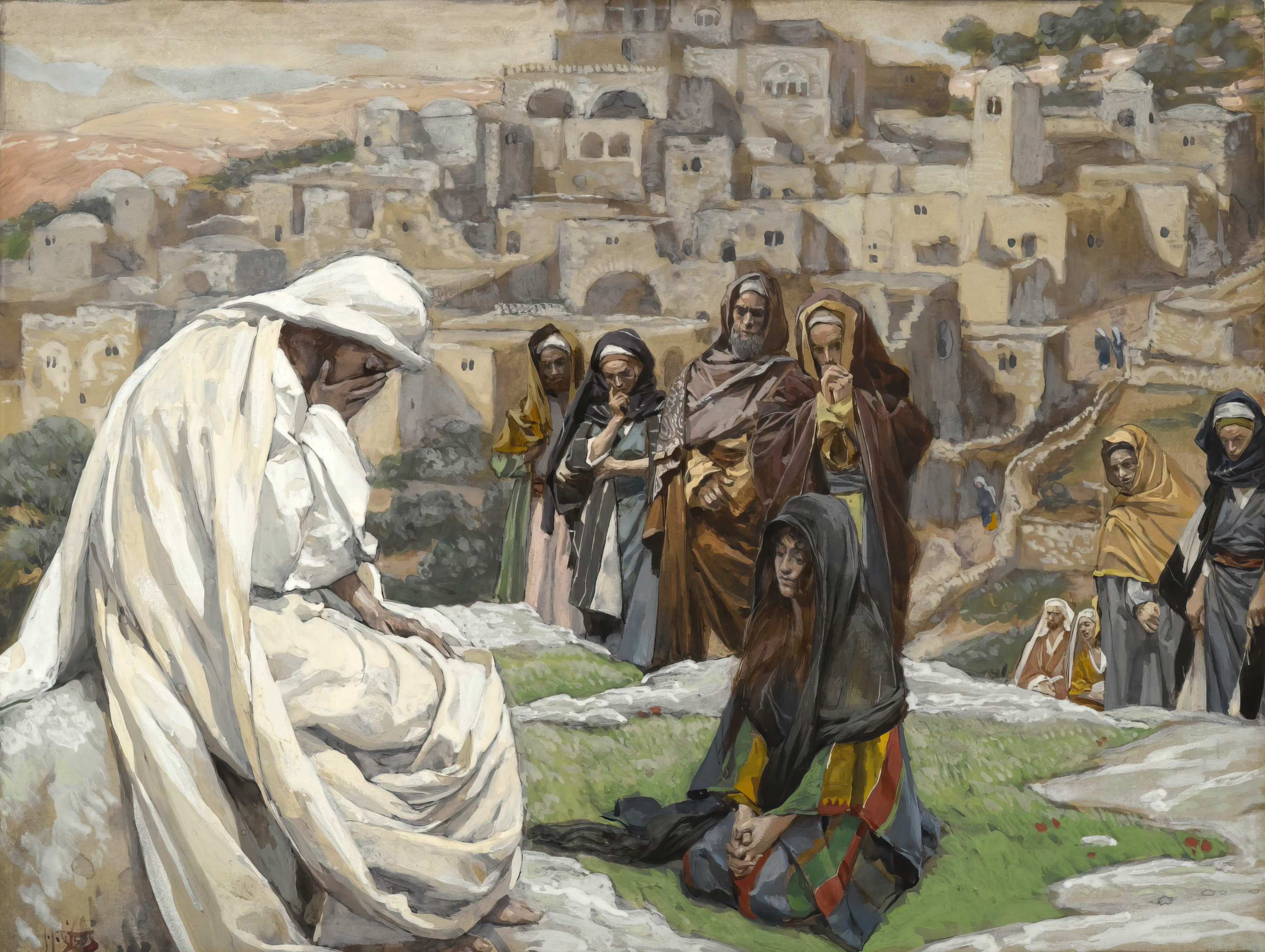
Today’s Gospel, from Luke Chapter 19, gives us the third mention, during or just after his entry into Jerusalem on Palm Sunday: “As Jesus drew near Jerusalem, he saw the city and wept over it, saying, ‘If this day you only knew what makes for peace – but now it is hidden from your eyes.”

Jesus’ tears are because of His great love for those He loves, for those He came to save but reject His message, for the suffering that He must endure because of our sinfulness. I always think of that: Jesus came to suffer and die for me. Thanks be to God, but I’m the one who sinned in the first place that made it necessary. Jesus died for me, but Jesus also died because of me.

Are we still out here not recognizing the time of our visitation? Are we like the Jews in our first reading from Maccabees, sacrificing on the altar of our modern-day apostasies? Or are we like Mattathias when he invited others to follow the Lord saying, “Let everyone who is zealous for the law and who stands by the covenant follow after me!”?

Today’s readings make it a good day to ask God for the grace we need to have zeal for Him and His law, for His love and His truth, and for the role He has for us. May we not cause Him more tears, but rather love Him and serve Him in this life so that we can be with Him in true, unending joy in the life to come.

Contact the author


En el año 1971, se estrenó una película para televisión llamada “The Homecoming: A Christmas Story.” (El regreso a casa: Una historia de Navidad). Presentó al mundo a la familia Walton, de la época de la Gran Depresión, que se convirtió en una serie de televisión aproximadamente un año después. Una escena de la película original siempre me quedó grabada: los niños Walton enseñaban versículos bíblicos a niños más pequeños en un servicio de Nochebuena, y luego los recitaban para recibir un regalo de Navidad. Una niña Walton le daba versículos a un niño pequeño, quien decía: “Es demasiado largo” o “No puedo acordarme”. Finalmente, exasperada, la hija Walton le dijo al niño: “Jesús lloró”. Corrió hacia el ministro, dijo esas dos palabras y aceptó con alegría su regalo.

Las Escrituras nos cuentan tres veces que Jesús derramó lágrimas. Hebreos, capítulo 5, dice: “En los días de su vida terrenal, ofreció oraciones y súplicas con gran clamor y lágrimas al que podía salvarlo de la muerte, y fue escuchado a causa de su reverencia”. En el capítulo 11 del Evangelio de Juan, Jesús va a resucitar a Lázaro, y se nos dice: “Cuando Jesús vio a María llorando y a los judíos que la acompañaban, se turbó y se conmovió profundamente, y preguntó: “¿Dónde lo han puesto?”. Le respondieron: “Señor, ven a verlo”. Y Jesús lloró. Entonces los judíos dijeron: “Miren cuánto lo amaba”.

El Evangelio de hoy, del capítulo 19 de Lucas, nos da la tercera mención, durante o justo después de su entrada en Jerusalén el Domingo de Ramos: “cuando Jesús estuvo cerca de Jerusalén y contempló la ciudad, lloró por ella y exclamó: ‘¡Si en este día comprendieras tú lo que puede conducirte a la paz! Pero eso está oculto a tus ojos.’”

Las lágrimas de Jesús se deben a su gran amor por quienes ama, por aquellos a quienes vino a salvar pero que rechazan su mensaje, por el sufrimiento que debe soportar debido a nuestro pecado. Siempre pienso en eso: Jesús vino a sufrir y morir por mí. Gracias a Dios, pero soy yo quien pecó en primer lugar, soy yo quien lo hizo necesario. Jesús murió por mí, pero también murió a causa de mí.

¿Seguimos aquí sin reconocer el momento de nuestra visitación? ¿Somos como los judíos de la primera lectura de los Macabeos, sacrificando en el altar de nuestras apostasías modernas? ¿O somos como Matatías cuando invitó a otros a seguir al Señor diciendo: “Todo aquel que sienta celo por la ley y quiera mantener la alianza, que me siga”?

Las lecturas de hoy nos invitan a pedirle a Dios la gracia que necesitamos para tener celo por Él y su ley, por su amor y su verdad, y por el papel que Él tiene para nosotros. Que no le causemos más lágrimas, sino que lo amemos y le sirvamos en esta vida para que podamos estar con Él en verdadera alegría eterna.

Comunicarse con el autor

Mike Karpus is a regular guy. He grew up in Michigan’s Upper Peninsula, graduated from Michigan State University and works as an editor. He is married to a Catholic school principal, raised two daughters who became Catholic school teachers at points in their careers, and now relishes his two grandchildren, including the older one who is fascinated with learning about his faith. He also has served on a Catholic school board, a pastoral council and a parish stewardship committee. He currently is a lector at Mass, a Knight of Columbus, Adult Faith Formation Committee member and a board member of the local Habitat for Humanity organization. But mostly he’s a regular guy.

Feature Image Credit: James Tissot, art.diocesan.com/stock-photo/jesus-wept-7136/

The views and opinions expressed in the Inspiration Daily blog are solely those of the original authors and contributors. These views and opinions do not necessarily represent those of Diocesan, the Diocesan staff, or other contributors to this blog.

Let’s Talk About Sin / Vamos a hablar del pecado

You and I are sinners. We may be sitting here — me writing this and you reading it — having gone to the Sacrament of Reconciliation and having been forgiven, but the fact of the matter is we have sinned in the past, we may have sinned already today, and there’s a chance, even if in a forgiven state, that we will sin in the future.

We may blame our sinfulness on our fallen nature, that original sin of Adam and Eve that tainted all of humanity. We may blame our sinfulness on the devil, but let’s face it, the devil can tempt us and lure us and trick us, but Satan can never force us to sin. That is a choice that we make for ourselves. And it is a choice we do make, in our weakness, or selfishness, or anger, or envy, or pride. 

Our minds, bodies and souls are fertile ground where sin is ready to take root and sprout and, if unattended, grow big and strong. Think of the weeds in a garden. But, in just the same way, fertile ground also can nurture love and patience and sorrow for sin and joy in the Lord and belief in a loving God. And that’s just what today’s readings are conveying to us.

In the first reading, Paul is telling the Romans that Abraham received righteousness from God as a payment — that is, it was “credited” to him. And why is that? Because Abraham believed in the Lord and what he had been told. The payment for belief is righteousness.

In the psalm, David reminds us that confessing our sins to God and seeking His mercy and forgiveness is the right relationship between our Lord God and us, His people. Our joy comes when God, in His love, takes away those sins and forgives us our faults. That certainly is a reason to exult and rejoice.

In the Gospel, Jesus reminds us of a very important truth that we may not like to admit: God is all-knowing. Once that sin has been committed, God knows it, even if we think it was in the dark or whispered behind closed doors, and He will exact justice for it. 

But Jesus also reminds us of one other facet of God: God loves us. “Do not be afraid,” Jesus tells us. God knows every move of the sparrows, but we are worth more than sparrows. In spite of everything we do wrong, God loves us and wants us to be with Him. He wants us to choose Him, not sin. So we need to remember, we can make that choice — to be sorry, to ask for forgiveness, to go forth and sin no more, to continuously strive to be better. Yes, let’s talk about sin, admit that sin, but then let’s talk about sorrow, and confession, and mercy, and forgiveness and the joy of salvation.

Contact the author


Tú y yo somos pecadores. Puede que estemos aquí sentados —yo escribiendo esto y tú leyéndolo— tras haber acudido al Sacramento de la Reconciliación y haber sido perdonados, pero lo cierto es que hemos pecado en el pasado, puede que ya hayamos pecado hoy, y existe la posibilidad, incluso estando perdonados, de que pequemos en el futuro.

Podemos culpar nuestra pecaminosidad a la naturaleza caída, a ese pecado original de Adán y Eva que contaminó a toda la humanidad. Podemos culparla al diablo, pero seamos sinceros: el diablo puede tentarnos, atraernos y engañarnos, pero Satanás nunca puede obligarnos a pecar. Esa es una decisión que tomamos por nosotros mismos. Y es una decisión que tomamos, en nuestra debilidad, egoísmo, ira, envidia u orgullo.

Nuestra mente, cuerpo y alma son tierra fértil donde el pecado está listo para echar raíces y brotar, y si no se atiende, puede crecer con fuerza. Pensemos en la mala hierba de un jardín. Pero, de la misma manera, la tierra fértil también puede nutrir el amor, la paciencia, el dolor por el pecado, la alegría en el Señor y la fe en un Dios amoroso. Y eso es precisamente lo que nos transmiten las lecturas de hoy.

En la primera lectura, Pablo les dice a los romanos que Abraham recibió la justicia de Dios como pago; es decir, le “valió” la justificación. ¿Y por qué? Porque Abraham creyó en el Señor y en lo que se le había dicho. El pago por la fe es la justificación.

En el salmo, David nos recuerda que confesar los pecados a Dios y buscar su misericordia y perdón es la relación correcta entre el Señor Dios y nosotros, su pueblo. La alegría llega cuando Dios, en su amor, quita esos pecados y nos perdona nuestras faltas. Sin duda, eso es motivo de júbilo y regocijo.

En el Evangelio, Jesús nos recuerda una verdad muy importante que quizás no queramos admitir: Dios es omnisciente. Una vez cometido ese pecado, Dios lo sabe, aunque pensemos que fue en la oscuridad o susurrado tras puertas cerradas, y Él exigirá justicia por él.

Pero Jesús también nos recuerda otra faceta de Dios: Dios nos ama. “No teman”, nos dice Jesús. Dios conoce cada movimiento de los gorriones, pero nosotros valemos más que ellos. A pesar de todo lo que hacemos mal, Dios nos ama y quiere que estemos con Él. Quiere que lo elijamos a Él, no al pecado. Así que debemos recordar que podemos tomar esa decisión: arrepentirnos, pedir perdón, seguir adelante y no pecar más, esforzarnos continuamente por ser mejores. Sí, vamos a hablar del pecado, admitámoslo, pero luego hablemos del dolor por ello, la confesión, la misericordia, el perdón y la alegría de la salvación.

Comunicarse con el autor

Mike Karpus is a regular guy. He grew up in Michigan’s Upper Peninsula, graduated from Michigan State University and works as an editor. He is married to a Catholic school principal, raised two daughters who became Catholic school teachers at points in their careers, and now relishes his two grandchildren, including the older one who is fascinated with learning about his faith. He also has served on a Catholic school board, a pastoral council and a parish stewardship committee. He currently is a lector at Mass, a Knight of Columbus, Adult Faith Formation Committee member and a board member of the local Habitat for Humanity organization. But mostly he’s a regular guy.

Feature Image Credit: Anastasiya Badun, pexels.com/photo/elegant-hand-holding-a-red-apple-on-black-background-29254089/

The views and opinions expressed in the Inspiration Daily blog are solely those of the original authors and contributors. These views and opinions do not necessarily represent those of Diocesan, the Diocesan staff, or other contributors to this blog.

Deliver Me, Jesus / Líbrame, Jesús

O Jesus, meek and humble of heart, Hear me. From the desire of being esteemed, Deliver me, Jesus.

Thus starts the Litany of Humility, attributed to an unknown Roman Catholic clergyman. With a subject such as humility, the author, of course, is not as important as the prayer’s requests themselves. And what a collection of requests it is! We ask for delivery from the desire of being honored, praised, consulted or approved; delivery from the fear of being humiliated, forgotten or ridiculed; grace to want others to be chosen, praised or preferred. The kicker is the final line of the prayer: “That others may become holier than I, provided that I may become as holy as I should, Jesus, grant me the grace to desire it.” 

Simon the Pharisee in today’s Gospel from Luke probably could benefit from such a prayerful plea. When Jesus is kind and accepting of the sinful, sorrowful woman bathing his feet with her tears, Simon thinks in terms of condescension. Jesus recognizes this and lets Simon know that the forgiveness of sins is not a contest. God wants to forgive all sins, no matter how bad they might be. We, the sinners, however, have to be sorry for them and want them to be forgiven. God will not force forgiveness upon those who don’t seek it. Jesus reminds Simon that those with great sin will have even greater joy from forgiveness, and at no point should there be jealousy about it. 

Realization of sin, great sorrow because of that sin, and firm desire to repent and leave that sin behind all grows from a place of humility. Perhaps we could ask ourselves the question, “Who do I think I am?” An honest answer would be — a sinner, a person who has failed to love, a person who has failed to serve others, a person who has put self ahead of God and other people — is a step in the right direction toward humility, repentance and ultimately forgiveness. We must never forget the power of the Sacrament of Reconciliation. God is waiting for us there. What are we waiting for?

Jesus, grant that I may become as holy as I should, and may that be enough for me.

Contact the author


Oh Jesús, manso y humilde de corazón, escúchame. Del deseo de ser estimado, líbrame, Jesús.

Así comienza la Letanía de la Humildad, atribuida a un clérigo católico romano desconocido. En un tema como la humildad, el autor, por supuesto, no es tan importante como las peticiones de la oración, y ¡qué colección de peticiones es! Pedimos liberación del deseo de ser honrado, alabado, consultado o aprobado; liberación del miedo a ser humillado, olvidado o ridiculizado; gracia para desear que otros sean elegidos, alabados o preferidos. El broche de oro es la última línea de la oración: “Que otros lleguen a ser más santos que yo, con tal de que yo llegue a ser tan santo como debiera, Jesús, concédeme la gracia de desearlo”.

Simón el fariseo, en el Evangelio de hoy según san Lucas, probablemente podría beneficiarse de una súplica tan efusiva. Cuando Jesús se muestra bondadoso y tolerante con la mujer pecadora y afligida que le lava los pies con lágrimas, Simón piensa en términos de condescendencia. Jesús reconoce esto y le hace saber que el perdón de los pecados no es una competencia. Dios quiere perdonar todos los pecados, sin importar cuán graves sean. Nosotros, los pecadores, sin embargo, debemos sentir pena por ellos y desear su perdón. Dios no impondrá el perdón a quienes no lo buscan. Jesús le recuerda a Simón que los que han cometido grandes pecados tendrán un gozo aún mayor por el perdón, y en ningún momento se debe sentir envidia por ello.

La comprensión del pecado, el profundo dolor por él y el firme deseo de arrepentirse y dejarlo atrás surgen de la humildad. Quizás podríamos preguntarnos: “¿Quién me creo ser?” Una respuesta honesta sería—un pecador, una persona que no ha amado, una persona que no ha servido a los demás, una persona que se ha puesto a sí misma por encima de Dios y de los demás—es un paso en la dirección correcta hacia la humildad, el arrepentimiento y, en última instancia, el perdón. Nunca debemos olvidar el poder del Sacramento de la Reconciliación. Dios nos espera allí. ¿Para qué esperamos?

Jesús, ayúdame a llegar a ser tan santo como debo, y que eso me baste.

Comunicarse con el autor

Mike Karpus is a regular guy. He grew up in Michigan’s Upper Peninsula, graduated from Michigan State University and works as an editor. He is married to a Catholic school principal, raised two daughters who became Catholic school teachers at points in their careers, and now relishes his two grandchildren, including the older one who is fascinated with learning about his faith. He also has served on a Catholic school board, a pastoral council and a parish stewardship committee. He currently is a lector at Mass, a Knight of Columbus, Adult Faith Formation Committee member and a board member of the local Habitat for Humanity organization. But mostly he’s a regular guy.

Feature Image Credit: cottonbro studio, pexels.com/photo/woman-leaning-on-a-bench-6284260/

The views and opinions expressed in the Inspiration Daily blog are solely those of the original authors and contributors. These views and opinions do not necessarily represent those of Diocesan, the Diocesan staff, or other contributors to this blog.

Working for the Lord / Trabajando para el Señor

Some days I go to work and I’m so busy, the day flies by. Sometimes, it’s a joy to do my duties, and I find it hard to quit at the end of the day. Some days, I don’t want to work at all, and the day drags by endlessly.

One of my biggest problems, if I step back and analyze myself a little, is all too often I go to work not understanding it at all. Basically, I do my work, I get my pay. Then I take that pay, and I live my life. Thus, I apparently believe I am working for myself, or, to cut myself a little slack, working for my family. Put me in today’s Gospel, and I am just one of the first group of laborers hired that day to go into the vineyard. I do the work and expect the pay, and woe to those who don’t do as much as me and who get just as much as I do. 

The correct understanding of work in this parable really belongs to the landowner alone. The laborers are working for him, not for themselves. He, of course, represents God the Father. The vineyard work is loving and serving Him, and He rewards that service according to His own plan. Thus, whether I’ve been faithful to Him my whole life, or I have a deathbed conversion, God will give me the same heavenly reward for that faithful service, however short or long it may be.

Now, back to my daily work. My lack of understanding from day to day is my own fault. I may consider myself just a regular guy, but shouldn’t my work out in the world, no matter what that work is, be done in service to God my heavenly Father? I am not a priest or a deacon, nor am I a monk or a nun, but that does not mean I am not working for the Lord. And it is the same with all of us. In all we do, no matter what it is, we should be first and foremost doing it for the Lord. 

Easy day? Offer thanksgiving to God. Difficult day? Offer it up (as my mother used to tell us as kids). Serve the Lord prayerfully in your service to others, whatever that may be, and God will provide us — in His love, mercy and justice — with the reward we deserve. What more could we ask for?

Contact the author


Hay días que voy a trabajar y estoy tan ocupado que el día vuela. A veces, es un placer cumplir con mis obligaciones, y me cuesta dejarlo al final del día. Otros días, no tengo ganas de trabajar para nada, y el día se me hace eterno.

Uno de mis peores problemas, si me detengo y me analizo un poco, es que con demasiada frecuencia voy a trabajar sin entenderlo. Básicamente, hago mi trabajo, recibo mi sueldo. Luego lo cobro y vivo mi vida. Por lo tanto, aparentemente creo que trabajo para mí mismo o, para ser un poco más comprensivo, para mi familia. Si me incluyes en el Evangelio de hoy, soy simplemente uno de los primeros trabajadores contratados ese día para ir a la viña. Hago el trabajo y espero el sueldo, ¡y ay de aquellos que no hacen tanto como yo y reciben lo mismo que yo!

La comprensión correcta del trabajo en esta parábola realmente le corresponde solamente al propietario. Los trabajadores trabajan para él, no para sí mismos. Él, por supuesto, representa a Dios Padre. El trabajo en la viña implica amarlo y servirlo, y Él recompensa ese servicio según su propio plan. Por lo tanto, ya sea que le haya sido fiel toda mi vida o que tenga una conversión en mi lecho de muerte, Dios me dará la misma recompensa celestial por ese servicio fiel, por corto o largo que sea.

Ahora, volvamos a mi trabajo diario. Mi falta de comprensión diaria es culpa mía. Puede que me considere una persona normal, pero ¿no debería mi trabajo en el mundo, sea cual sea, ser al servicio de Dios, mi Padre celestial? No soy sacerdote ni diácono, ni monje ni monja, pero eso no significa que no esté trabajando para el Señor. Y lo mismo ocurre con todos nosotros. En todo lo que hagamos, sea lo que sea, debemos hacerlo, ante todo, para el Señor.

¿Has tenido un día fácil? Agradece a Dios. ¿Has tenido un día difícil? Ofrécelo a Dios (como nos decía mi madre de niños). Sirve al Señor con oración en tu servicio a los demás, sea cual sea, y Dios nos dará —en su amor, misericordia y justicia— la recompensa que merecemos. ¿Qué más podemos pedir?

Comunicarse con el autor

Mike Karpus is a regular guy. He grew up in Michigan’s Upper Peninsula, graduated from Michigan State University and works as an editor. He is married to a Catholic school principal, raised two daughters who became Catholic school teachers at points in their careers, and now relishes his two grandchildren, including the older one who is fascinated with learning about his faith. He also has served on a Catholic school board, a pastoral council and a parish stewardship committee. He currently is a lector at Mass, a Knight of Columbus, Adult Faith Formation Committee member and a board member of the local Habitat for Humanity organization. But mostly he’s a regular guy.

Feature Image Credit: Yury Kim, pexels.com/photo/man-carrying-gray-pipe-585419/

The views and opinions expressed in the Inspiration Daily blog are solely those of the original authors and contributors. These views and opinions do not necessarily represent those of Diocesan, the Diocesan staff, or other contributors to this blog.

Taking Note / Notar

Back in high school, which was more than 40 years ago for me, every year we had to write one or two major term papers. This was a serious undertaking, and since there was no internet back then, we did it the old-fashioned way. We went to the library and searched the card catalog for applicable books and magazines, then we’d read through them and take notes, writing them down on 3-by-5 index cards. It was time-consuming and often tedious, but the end result was a paper with your own argument, based on facts and data gathered from different sources, all properly referenced with a series of footnotes and a bibliography list.

Today’s Gospel from Matthew reminds me of that process. The verses prior to today’s reading tell of Jesus and His disciples going through a field, picking grain and eating it on the Sabbath. The Pharisees are quick to judge. Then, a man with a withered hand is brought to Jesus, and they ask Jesus if it is proper to do good (heal) on the Sabbath. Jesus basically gives them a “Get real!” reply: if your sheep falls into a pit on the Sabbath, aren’t you going to rescue it? And that’s just a sheep, this is a human being. Then Jesus tells the man to stretch out his hand, and it is healed. Jesus did no physical work, not even touching the man, but the Pharisees believe He has violated the Sabbath and should be put to death. 

Now we come to today’s verses, what I am calling Matthew’s term paper. He wants to put what’s happening into perspective for his readers, so they can have a sense of what the Apostles and disciples believe is going on. Matthew does his research and chooses his facts, if you will, from one of the suffering servant narratives in the Book of Isaiah. Why does Jesus heal and cure on the Sabbath? Because, as Isaiah says of the suffering servant, Jesus is chosen by God, God’s own beloved in whom He delights. God’s Spirit is upon Him, who is meek and humble, not contending, not crying out, not breaking bruised reeds or quenching smoldering wicks. Instead, He is making justice victorious and bringing hope to Gentiles.

Let us take note that we are those Gentiles. The message and service of Jesus wasn’t just for those in Galilee and Judea back then, they also are for us, here and now. Let us rejoice in that fact, and latch onto it with all we have. Jesus brings hope to us — Jesus, in fact, is our hope. Thanks be to God! What more could we ever need?

Contact the author


Cuando estaba en la escuela secundaria, hace más de 40 años, todos los años teníamos que escribir uno o dos ensayos finales. Era una tarea seria y, como en ese entonces no había Internet, lo hacíamos a la antigua. Íbamos a la biblioteca y buscábamos en el catálogo de fichas libros y revistas que fueran pertinentes, luego los leíamos y tomábamos apuntes, escribiéndolas en fichas de 3×5. Tomaba mucho tiempo y a menudo era tedioso, pero el resultado final era un trabajo con tu propio argumento, basado en hechos y datos recopilados de diferentes fuentes, todos ellos debidamente referenciados con una serie de notas a pie de página y una lista bibliográfica.

El Evangelio de hoy de Mateo me hace acordar de ese proceso. Los versículos anteriores a la lectura de hoy hablan de Jesús y sus discípulos recorriendo un campo, recogiendo espigas y comiéndolas en sábado. Los fariseos son rápidos para juzgar. Luego, un hombre con una mano seca es llevado ante Jesús, y le preguntan si es apropiado hacer el bien (sanar) en el día de reposo. Jesús básicamente les da una respuesta de “¡Sean realistas!”: si su oveja cae en un hoyo en el día de reposo, ¿no la van a rescatar? Y eso es solo una oveja, esto es un ser humano. Entonces Jesús le dice al hombre que extienda su mano, y es sanada. Jesús no hizo ningún trabajo físico, ni siquiera tocó al hombre, pero los fariseos creen que ha violado el día de reposo y debe ser condenado a muerte.

Ahora llegamos a los versículos de hoy, lo que yo llamo el trabajo final de Mateo. Él quiere poner lo que está sucediendo en perspectiva para sus lectores, para que puedan tener una idea de lo que los apóstoles y discípulos creen que está sucediendo. Mateo hace su investigación y elige sus hechos, por así decirlo, de una de las narrativas del siervo sufriente en el Libro de Isaías. ¿Por qué Jesús sana y cura en el día de reposo? Porque, como dice Isaías del siervo sufriente, Jesús, es el elegido de Dios, el amado de Dios en quien Él se deleita. El Espíritu de Dios está sobre Él, que es manso y humilde, que no contiende, no grita, no quiebra cañas cascadas ni apaga mechas humeantes. En cambio, está haciendo que la justicia triunfe y traiga esperanza a los gentiles.

Notemos que nosotros somos esos gentiles. El mensaje y el servicio de Jesús no eran solo para los de Galilea y Judea en ese entonces, también son para nosotros, aquí y ahora. Regocijémonos en ese hecho y aferrémonos a él con todo lo que tenemos. Jesús nos trae esperanza; Jesús, de hecho, es nuestra esperanza. ¡Gracias a Dios! ¿Qué más podríamos necesitar?

Comunicarse con el autor

Mike Karpus is a regular guy. He grew up in Michigan’s Upper Peninsula, graduated from Michigan State University and works as an editor. He is married to a Catholic school principal, raised two daughters who became Catholic school teachers at points in their careers, and now relishes his two grandchildren, including the older one who is fascinated with learning about his faith. He also has served on a Catholic school board, a pastoral council and a parish stewardship committee. He currently is a lector at Mass, a Knight of Columbus, Adult Faith Formation Committee member and a board member of the local Habitat for Humanity organization. But mostly he’s a regular guy.

Feature Image Credit: Tima Miroshnichenko, pexels.com/photo/a-woman-wearing-eyeglasses-browsing-records-in-a-drawer-6550168/

The views and opinions expressed in the Inspiration Daily blog are solely those of the original authors and contributors. These views and opinions do not necessarily represent those of Diocesan, the Diocesan staff, or other contributors to this blog.

Reaping Bountifully / Cosechar abundantemente

When I was growing up and times were tight, my parents dug up a section of the backyard and planted a garden. We grew carrots, green and yellow beans, radishes, lettuce, tomatoes and cucumbers, all to help feed the family and cut down on the cost of groceries. One year, we also bought a package of corn seeds, and it was my job to plant them. Now, I’m quite fond of sweetcorn, so this was a task I could get behind. I planted as many rows as that packet of seeds would fill, and I waited. When the plants started to sprout, I was sent out to thin and weed them.

As I look back, the basic problem with this arrangement was I was a corn eater, not a corn farmer. I was just a kid, probably not even a teenager yet, and I had no idea if that was a little corn plant or a weed. When I got done with that task, those rows were pretty sparse. As the summer went on and the plants grew, we ended up with just 15 cornstalks, thanks to me and my lack of weeding expertise. I think we then ended up with maybe a dozen ears of corn total. I can’t even remember if it was good corn or not. The basic components of successful corn sowing and reaping just weren’t there.

The basic components of our faith, however, are pretty straightforward: prayer, fasting and almsgiving. Those are the things we try to do more fervently during Lent, and those are the things we then try to carry forward into the rest of the year. And we do so out of love. What is prayer but our conversation with our God? What is fasting but our attempt to remove those things that get in the way of our relationship with God? And what is almsgiving (the righteous deed Jesus points out in Matthew’s Gospel today) but our attempt to love and serve others because of our love for God?

Thus, Jesus’ teaching also seems pretty straightforward: We know what we’re supposed to do, but we definitely need to watch out for how and why we’re doing it. None of it is for show. None of it is to gain us the praise or admiration of others. All of it is for God. But the beautiful promise is that when we do it all for God, the Father will repay us. He will, as Paul tells the Corinthians, increase our harvest of righteousness. And, as the psalmist tells us, He is gracious and merciful and just. Pray, fast, and give alms, but do it all for God and with God and through God. And the Father’s generosity to us shall endure forever. Talk about reaping bountifully!

Contact the author


Cuando era niño y los tiempos eran difíciles, mis padres excavaron una sección del pasto atrás de la casa y plantaron un jardín. Cultivamos zanahorias, ejotes verdes y amarillas, rábanos, lechuga, tomates y pepinos, todo para ayudar a alimentar a la familia y reducir el costo de los alimentos. Un año, también compramos un paquete de semillas de maíz y era mi trabajo plantarlas. Ahora bien, me gusta mucho el maíz dulce, así que era una tarea que podía realizar con ganas. Planté todas las hileras que podía con ese paquete de semillas y esperé. Cuando las plantas empezaron a brotar, me enviaron a entresacarlas y desmalezarlas.

Al pensarlo, me di cuenta que el problema básico con este arreglo era que yo era un comedor de maíz, no un agricultor de maíz. Era tan solo un niño, ni siquiera había llegado a la adolescencia todavía, y no tenía idea de si eso era una pequeña planta de maíz o una mala hierba. Cuando terminé con la tarea, las hileras estaban bastante dispersas. A medida que avanzaba el verano y las plantas crecían, terminamos con solo 15 tallos de maíz, gracias a mí y a mi falta de experiencia en desmalezar. Creo que terminamos con tal vez una docena de mazorcas de maíz en total. Ni siquiera recuerdo si sabía bien el maíz o no. Los componentes básicos de una siembra y cosecha de maíz exitosa simplemente no estaban allí.

Sin embargo, los componentes básicos de nuestra fe son bastante sencillos: orar, ayunar y dar limosna. Esas son las cosas que tratamos de hacer con más fervor durante la Cuaresma, y ​​​​son las cosas que luego tratamos de llevar a cabo durante el resto del año. Y lo hacemos por amor. ¿Qué es la oración sino conversar con nuestro Dios? ¿Qué es el ayuno sino intentar eliminar las cosas que estorban nuestra relación con Dios? ¿Y qué es la limosna (la acción justa que Jesús señala en el Evangelio de Mateo de hoy) sino intentar amar y servir a los demás debido a nuestro amor a Dios?

Así que, la enseñanza de Jesús también parece bastante sencilla: sabemos lo que debemos hacer, pero definitivamente debemos tener cuidado de cómo y por qué lo hacemos. Nada de esto es para presumir. Nada de esto es para ganarnos la alabanza o la admiración de los demás. Todo es para Dios. Pero la hermosa promesa es que cuando lo hacemos todo para Dios, el Padre nos recompensará. Él, como dice Pablo a los corintios, aumentará nuestra cosecha de justicia. Y, como nos dice el salmista, Él es justo, clemente y compasivo. Oren, ayunen y den limosna, pero háganlo todo para Dios, con Dios y por medio de Dios. Y la generosidad del Padre hacia nosotros perdurará para siempre. ¡Eso sí que es cosechar abundantemente!

Comunicarse con el autor

Mike Karpus is a regular guy. He grew up in Michigan’s Upper Peninsula, graduated from Michigan State University and works as an editor. He is married to a Catholic school principal, raised two daughters who became Catholic school teachers at points in their careers, and now relishes his two grandchildren, including the older one who is fascinated with learning about his faith. He also has served on a Catholic school board, a pastoral council and a parish stewardship committee. He currently is a lector at Mass, a Knight of Columbus, Adult Faith Formation Committee member and a board member of the local Habitat for Humanity organization. But mostly he’s a regular guy.

Feature Image Credit: Ralphs_Fotos, pixabay.com/photos/corn-corn-on-the-cob-vegetables-3560744/

The views and opinions expressed in the Inspiration Daily blog are solely those of the original authors and contributors. These views and opinions do not necessarily represent those of Diocesan, the Diocesan staff, or other contributors to this blog.

Faith and Newness and Love / Fe, novedad y amor

Happy Easter! Happy Fifth Sunday of Easter, to be specific, but Happy Easter just the same! The Church, in its wisdom, knows the glory of the Resurrection cannot be contained in just one day, or one week, or one month, not even in the multi-week Easter season of each year’s Liturgical Calendar. The glory of the Resurrection continues to this day, but it continues even further – into eternity.

Thus, today’s readings are a kind of roadmap for us impatient children of God, sitting here with our “Are we there yet?” attitudes. Luke, writing about the first missionary journey of Paul in the Acts of the Apostles, John at Patmos writing his visions in the Book of Revelation, and the same John sharing his recollections of Jesus at the Last Supper, give us a few directives to help us get to where we hope to be going, and to reassure us while we are getting there.

Paul tells the disciples the hard truth: “It is necessary for us to undergo many hardships to enter the kingdom of God.” Faith requires perseverance and, unfortunately, too many decide the journey is too hard, failing to recognize the glory that awaits those who do persevere.

John’s vision in Revelation reminds us of that glory, a new Jerusalem where we, the bride, will be adorned for our husband, Jesus Christ, risen and ascended and seated on His glorious throne. Then John tells us something that should bring us joy: “God’s dwelling is with the human race.” That’s right, God will be with us! We lowly creatures who have believed and have faith and persevere will belong to God and be with God, who will “make all things new.”

Jesus tells us plainly in John’s Gospel how we get to that point: “love one another.”  Jesus says this is a new commandment, but hasn’t God been telling us to love one another all through the books of the Old Testament? The difference, the newness, is in Jesus’ next line: “As I have loved you, so you also should love one another.” 

How Jesus has loved us is everything here. Completely. Selflessly. Despite His divinity, becoming human for us. Despite His humanity, becoming heavenly food for us. Despite His greatness so far above us, becoming a sacrifice for us to save us from our sins. Jesus loved us so much that He laid down his life for us, making “all things new.” Jesus is calling us to love others so much that we would be willing to do the same. The reward, then, is that newness bestowed on us in His heavenly presence forever. The road may be long and difficult, but please, dear Lord, grant us the grace we need to get there.

Contact the author


¡Feliz Pascua! Feliz quinto domingo de Pascua, para ser más específico, pero ¡felices Pascuas de todos modos! La Iglesia, en su sabiduría, sabe que la gloria de la Resurrección no puede contenerse en un solo día, ni en una semana, ni en un mes, ni siquiera en las varias semanas que dura la temporada de Pascua del Calendario Litúrgico de cada año. La gloria de la Resurrección sigue hasta el día de hoy, pero continúa aún más allá, en la eternidad.

Por lo tanto, las lecturas de hoy son una especie de mapa para nosotros, hijos de Dios impacientes, sentados aquí con una actitud de “¿ya llegamos?”. Lucas, escribiendo sobre el primer viaje misionero de Pablo en los Hechos de los Apóstoles, Juan en Patmos escribiendo sus visiones en el Libro del Apocalipsis, y el mismo Juan compartiendo sus recuerdos de Jesús en la Última Cena, nos dan algunas directrices para ayudarnos a llegar a donde esperamos ir, y para tranquilizarnos mientras llegamos allí.

Pablo les dice a los discípulos la dura verdad: “hay que pasar por muchas tribulaciones para entrar en el reino de Dios”. La fe requiere perseverancia y, desafortunadamente, muchos deciden que el camino es demasiado duro, sin reconocer la gloria que espera a quienes perseveran.

La visión de Juan en el Apocalipsis nos recuerda de esa gloria, una nueva Jerusalén donde nosotros, la novia, seremos adornados para nuestro esposo, Jesucristo, resucitado y ascendido y sentado en su trono glorioso. Luego Juan nos dice algo que debería traernos alegría: “Ésta es la morada de Dios con los hombres”. Así es, ¡Dios va a estar con nosotros! Nosotros, criaturas humildes que hemos creído, tenemos fe y perseveramos, perteneceremos a Dios y estaremos con Dios, quien va a “hacer nuevas todas las cosas”. 

Jesús nos dice claramente en el Evangelio de Juan cómo llegamos a ese punto: “que se amen los unos a los otros”. Jesús dice que este es un mandamiento nuevo, pero ¿no nos ha estado diciendo Dios que nos amemos los unos a los otros a lo largo de todos los libros del Antiguo Testamento? La diferencia, la novedad, está en la siguiente línea de Jesús: “como yo los he amado”. 

La forma en que Jesús nos ha amado lo es todo. Completamente. Desinteresadamente. A pesar de su divinidad, haciéndose ser humano por nosotros. A pesar de su humanidad, haciéndose alimento celestial para nosotros. A pesar de su grandeza tan superior a la nuestra, haciéndose un sacrificio por nosotros para salvarnos de los pecados. Jesús nos amó tanto que dio su vida por nosotros, haciendo “nuevas todas las cosas”. Jesús nos está llamando a amar tanto a los demás que estemos dispuestos a hacer lo mismo. La recompensa, entonces, es esa novedad que se nos otorga en su presencia celestial para siempre. El camino puede ser largo y difícil, pero por favor, querido Señor, concédenos la gracia que necesitamos para llegar allí.

Comunicarse con el autor

Mike Karpus is a regular guy. He grew up in Michigan’s Upper Peninsula, graduated from Michigan State University and works as an editor. He is married to a Catholic school principal, raised two daughters who became Catholic school teachers at points in their careers, and now relishes his two grandchildren, including the older one who is fascinated with learning about his faith. He also has served on a Catholic school board, a pastoral council and a parish stewardship committee. He currently is a lector at Mass, a Knight of Columbus, Adult Faith Formation Committee member and a board member of the local Habitat for Humanity organization. But mostly he’s a regular guy.

Feature Image Credit: ajs1980518, pixabay.com/photos/rio-de-janeiro-brasil-south-america-3993598/

The views and opinions expressed in the Inspiration Daily blog are solely those of the original authors and contributors. These views and opinions do not necessarily represent those of Diocesan, the Diocesan staff, or other contributors to this blog.

Extra-Special Delivery / Una Entrega Muy Especial

We have arrived at the Easter Triduum, the summit of the Liturgical year, when Christ’s Paschal Mystery is unfolded for us in a continuous stream of worship, from the Mass of the Lord’s Supper this evening all the way through Evening Prayer on Easter Sunday.

The Scripture readings for Holy Thursday begin with the story of Passover, which might seem like a finicky set of directions for getting a lamb for dinner, but the eyes of faith reveal so much more. The Israelites can’t get just any lamb, it must be male and unblemished. The lamb then serves more than one function: It is food – nourishment for the Israelites’ coming journey; it is sacrifice – slaughtered to provide blood to mark the Israelites’ doorways; it is deliverance – the blood at the door will save the Israelites from death.

Yes, the Passover lamb prefigures the Paschal Lamb of God, Jesus Christ, His only Son. Jesus institutes the Eucharist, His very Body and Blood, as spiritual food to feed us on our way through life. Jesus is sacrifice, dying for us on the cross on Good Friday, shedding His blood to reunite us with the love of God the Father. And He is deliverer, for His death and resurrection conquer death and deliver us from our sins.

I have always found it interesting that Holy Thursday Mass does not use the Last Supper account of Matthew, Mark or Luke, which all tell us how Jesus said, “This is my Body.” Instead, we learn of the institution of the Eucharist from St. Paul, writing to the Corinthians.  Paul was not at table in the Upper Room, but he was told the story, and he tells it to us, in the same way the faith was spread in the early days of the Church.

So what we do hear in this evening’s Gospel instead is part of John’s account of the Last Supper. And while John was at table, he doesn’t mention the institution of the Eucharist. His Gospel was apparently written many years after Matthew’s, Mark’s and Luke’s, so perhaps he decided people already knew that part of the story, and he wanted us to know what else happened.

As John tells it, Jesus spent His last night with His Apostles teaching them — about faith, about love, about service. Jesus gave us His Body and Blood, but John reminds us He also gave us a new commandment: Love one another as Jesus has loved us. And He washed their feet to remind them, and us, to serve one another. 

Jesus did His job of feeding us, sacrificing Himself for us, and delivering us from sin and death. He also told the disciples to do their job of believing, loving and serving. Let us spend this Easter Triduum entering even deeper into the Paschal Mystery’s importance in our lives, and our roles in the world because of it.

Contact the author


Hemos llegado al Triduo Pascual, la cumbre del año litúrgico, cuando el Misterio Pascual de Cristo se revela para nosotros en un flujo continuo de adoración, desde la Misa de la Cena del Señor esta tarde hasta las Oraciones de la Noche en el Domingo de Pascua.

Las lecturas de las Sagradas Escrituras para el Jueves Santo comienzan con la historia de la Pascua del Antiguo Testamento, que puede parecer un conjunto de instrucciones meticulosas para conseguir un cordero para la cena, pero los ojos de la fe revelan mucho más. Los israelitas no podrían conseguir cualquier cordero, debe ser macho y sin defecto. Así el cordero cumple más de una función: es alimento – nutriente para el viaje venidero de los israelitas; es sacrificio – inmolado para proporcionar sangre para marcar las puertas de los israelitas; es liberación – la sangre en la puerta salvará a los israelitas de la muerte.

Sí, el cordero pascual prefigura al Cordero Pascual de Dios, Jesucristo, Su único Hijo. Jesús instituye la Eucaristía, su propio Cuerpo y su propia Sangre, como alimento espiritual para alimentarnos en el caminar de la vida. Jesús es sacrificio, muriendo por nosotros en la cruz el Viernes Santo, derramando su sangre para reunirnos con el amor de Dios Padre. Y es libertador, porque su muerte y resurrección vencen a la muerte y nos liberan de nuestros pecados.

Siempre me ha parecido interesante que en la Misa del Jueves Santo no leemos el relato de la Última Cena de Mateo, Marcos o Lucas, que nos cuentan que Jesús dijo: “Este es mi Cuerpo”. En cambio, aprendemos de la institución de la Eucaristía a través de San Pablo, que escribe a los corintios. Pablo no estaba a la mesa en el aposento alto, pero le contaron la historia y él nos la cuenta a nosotros, de la misma forma que se difundió la fe en los primeros días de la Iglesia.

Así que lo que escuchamos en el Evangelio de esta tarde es parte del relato de Juan sobre la Última Cena. Y mientras Juan estaba a la mesa, no menciona la institución de la Eucaristía. Su Evangelio fue escrito aparentemente muchos años después del de Mateo, Marcos y Lucas, así que tal vez decidió que la gente ya conocía esa parte de la historia y quería que supiéramos qué más sucedió.

Como lo cuenta Juan, Jesús pasó su última noche con sus apóstoles enseñándoles sobre la fe, el amor y el servicio. Jesús nos dio su Cuerpo y su Sangre, pero Juan nos recuerda que también nos dio un nuevo mandamiento: amarnos unos a otros como Jesús nos ha amado. Y les lavó los pies para recordarles a ellos y a nosotros que nos sirvamos unos a otros.

Jesús cumplió su misión de alimentarnos, sacrificarse por nosotros y liberarnos del pecado y la muerte. También les dijo a los discípulos que cumplieran su misión de creer, amar y servir. Pasemos este Triduo Pascual profundizando aún más en la importancia del Misterio Pascual en nuestras vidas y en nuestro papel en el mundo a causa de él.

Comunicarse con el autor

Mike Karpus is a regular guy. He grew up in Michigan’s Upper Peninsula, graduated from Michigan State University and works as an editor. He is married to a Catholic school principal, raised two daughters who became Catholic school teachers at points in their careers, and now relishes his two grandchildren, including the older one who is fascinated with learning about his faith. He also has served on a Catholic school board, a pastoral council and a parish stewardship committee. He currently is a lector at Mass, a Knight of Columbus, Adult Faith Formation Committee member and a board member of the local Habitat for Humanity organization. But mostly he’s a regular guy.

Feature Image Credit: Kat Smith, pexels.com/photo/shallow-focus-photography-of-white-sheep-on-green-grass-678448/

The views and opinions expressed in the Inspiration Daily blog are solely those of the original authors and contributors. These views and opinions do not necessarily represent those of Diocesan, the Diocesan staff, or other contributors to this blog.