
Bits and Pieces / Solamente fragmentos

Let’s say every day you go to work, you take the city bus. You get on and there are already people riding that route. While most people riding a bus adhere to a strict code of silence, some people inevitably start chatting. When you disembark at your stop, those chatty people may still be at it. So while you couldn’t help hearing some of their conversation, it was only bits and pieces, with important parts occurring before and after your little bus ride to work.

And so it is with today’s Scripture readings. You read them and you can’t help but feel you’re missing something. The opening reading, from the second Book of Samuel, is the very beginning of the book, yet the opening sentence tells us something went on before that: “David returned from his defeat of the Amalekites …” (2 Samuel 1:1) OK, so there was a battle. But David’s battle victory isn’t even the issue here, because a stranger arrives to tell him that Saul was in a battle, it didn’t go well, and he perished. That account is at the end of the first Book of Samuel.

David then mourns Saul’s death. But wait a minute — wasn’t Saul actively trying to kill David in that first book? Saul did not take kindly to David being anointed by Samuel to replace him, but even though he had cause and the opportunity to do so, David never tried to end Saul’s life. David remained righteous even while enduring torment from Saul. 

The snippet of Mark’s Gospel we read today is even shorter and more obscure. Jesus returns to the house He stayed at in Capernaum. The crowds followed and kept Him from doing typical things at home like eating. And his relatives decided he was crazy.

In Mark’s Gospel things happen at a pretty rapid pace. Earlier in Mark Chapter 3, Jesus healed a man’s withered hand, and He named his 12 Apostles. After our passage, He is accused of being from Beelzebul and counters how can that even work? With those vivid passages, it makes you wonder why today’s passage was even chosen.

Let’s put ourselves in the scene, just as if we would have gotten on the morning bus and it was playing out right before us. Whose side would we be on? That of the crowd, who wanted to see more and know more about Jesus? Or that of His relatives, who thought they knew Him and disapproved of these latest events? If nothing else, today’s Gospel should entice us to learn more — more about Jesus, His mission, His work, His goals, His purpose, and His purpose for us. Bits and pieces can be compelling, just as these ones should compel us to want to know more so as to love and serve Him better.

Contact the author


Digamos que todos los días vas al trabajo y tomas el autobús urbano. Te subes y ya hay gente en esa ruta. Aunque la mayoría de los que viajan en autobús se adhieren a un estricto código de silencio, es inevitable que algunos empiecen a charlar. Al bajar en tu parada, puede que esas personas sigan charlando. Así que, aunque no pudiste evitar escuchar parte de su conversación, solamente eran fragmentos, con partes importantes que ocurrían antes y después de tu breve viaje en autobús al trabajo.

Y lo mismo ocurre con las lecturas bíblicas de hoy. Las lees y sientes que te estás perdiendo algo. La lectura inicial, del segundo libro de Samuel, es el comienzo mismo del libro; sin embargo, la frase inicial nos dice que algo sucedió antes: “En aquellos días, después de derrotar a los amalecitas, David se fue a Siquelag…” (2 Samuel 1,1). Bueno, hubo una batalla. Pero la victoria de David ni siquiera es el asunto principal, porque un extraño llega para decirle que Saúl estaba en una batalla, que no salió bien y que pereció. Ese relato se encuentra al final del primer libro de Samuel.

David lamenta la muerte de Saúl. Pero esperen un momento: ¿no intentaba Saúl activamente matar a David en ese primer libro? A Saúl no le agradó que Samuel ungiera a David para reemplazarlo, pero aunque tenía motivos y la oportunidad para hacerlo, David nunca intentó acabar con su vida. David permaneció justo incluso mientras soportaba el tormento de Saúl.

El fragmento del Evangelio de Marcos que leemos hoy es aún más corto y confuso. Jesús regresa a la casa donde se alojaba en Capernaúm. La multitud lo seguía y le impedía hacer cosas típicas de casa, como comer. Y sus familiares pensaron que estaba loco.

En el Evangelio de Marcos, los acontecimientos suceden a un ritmo bastante rápido. Anteriormente, en el capítulo 3 de Marcos, Jesús sanó la mano seca de un hombre y nombró a sus doce apóstoles. Después del pasaje de hoy, se le acusa de ser de Beelzebul y se pregunta cómo puede ser eso. Con esos vívidos pasajes, uno se pregunta por qué se eligió el de hoy.

Pongámonos en la escena, como si hubiéramos subido al autobús de la mañana y todo estuviera sucediendo delante de nuestros ojos. ¿De qué lado estaríamos? ¿El de la multitud, que quería ver y saber más sobre Jesús? ¿O el de sus familiares, que creían conocerlo y desaprobaban estos últimos acontecimientos? Como mínimo, el Evangelio de hoy debería motivarnos a aprender más: más sobre Jesús, su misión, su obra, sus metas, su propósito y su propósito para nosotros. Los fragmentos pueden ser cautivadores, así como estos deberían impulsarnos a querer saber más para amarlo y servirlo mejor.

Comunicarse con el autor

Mike Karpus is a regular guy. He grew up in Michigan’s Upper Peninsula, graduated from Michigan State University and works as an editor. He is married to a retired Catholic school principal, raised two daughters who became Catholic school teachers at points in their careers, and now relishes his three young grandchildren. He serves on a Catholic school board and has served on pastoral councils, a building committee and a parish stewardship committee. He currently is a lector at Mass, a Knight of Columbus, vice president of a memorial scholarship committee and a board member of the local Habitat for Humanity organization. But mostly he’s a regular guy.

Feature Image Credit: Jakob Scholz, pexels.com/photo/bus-bench-seats-808846/

The views and opinions expressed in the Inspiration Daily blog are solely those of the original authors and contributors. These views and opinions do not necessarily represent those of Diocesan, the Diocesan staff, or other contributors to this blog.


At Least One True Friend / Por lo menos un verdadero amigo

Today’s Gospel is one of those very short readings where it helps to read a few verses before and after to better understand the context and help us learn more about what the passage offers. In the verses before (Mark 13: 7-12) and in the verse after (Mark 13:20) Jesus has a large crowd around Him, but in the verses we hear today, He takes His twelve closest friends away from the crowds to prepare them to succeed Him in ministry. 

This made me think of certain times growing up when I would find myself in a new environment or when I started college. My mama would ask me if I’d made any friends and often I would say no because I’m shy and sometimes awkward, and engaging with new people is difficult for me. During those moments when I felt overwhelmed by icebreakers, get to know you’s, and far too many introductions, my mama would always remind me “if you meet one person who is a true friend, that is enough”. 

I left my college years with one true friend, who is now my husband, and I am content. I think this is a lesson that Jesus understands too. Despite growing fame and popularity, he chooses twelve close friends. He knew that this small group of men would support each other, learn together, and continue the mission He had started. This is such a good reminder that having many friends is not that same as having a true friend. The hallmark of godly friendship, even with one friend, is that you grow both together and separate, succeed in your own ways, and support each other’s journey to heaven. And that is more than enough. 

Contact the author


El Evangelio de hoy es una de esas lecturas breves en las que conviene leer algunos versículos antes y después para comprender mejor el contexto y aprender mejor lo que ofrece el pasaje. En los versículos anteriores (Marcos 13,7-12) y el versículo posterior (Marcos 13,20), Jesús está rodeado de una gran multitud, pero en los versículos que escuchamos hoy, aleja a sus doce amigos más cercanos de la multitud para prepararlos para sucederlo en el ministerio.

Esto me hizo pensar en ciertas épocas de mi juventud, cuando me encontraba en un nuevo entorno o cuando empecé la universidad. Mi mamá me preguntaba si había hecho amigos y a menudo le decía que no porque soy tímida y a veces torpe, y me cuesta relacionarme con personas nuevas. En esos momentos, cuando me sentía abrumada por las actividades para romper el hielo, conocerse, y tantas presentaciones, mi madre siempre me recordaba: “Con tan solo una persona que sea un verdadero amigo, basta”.

Dejé la universidad con un solo amigo de verdad, que ahora es mi esposo, y estoy contenta. Creo que esta es una lección que Jesús también comprende. A pesar de su creciente fama y popularidad, eligió a doce amigos cercanos. Sabía que este pequeño grupo de hombres se apoyaría mutuamente, aprendería juntos y continuaría la misión que Él había comenzado. Este es un excelente recordatorio de que tener muchos amigos no es lo mismo que tener un amigo de verdad. El signo distintivo de una amistad piadosa, incluso con un solo amigo, es que crecen juntos y por separado, triunfan a su manera y se apoyan mutuamente en su camino al cielo. Y eso es más que suficiente.

Comunicarse con la autora

Lily is a Michigan native and cradle Catholic who has spent most of her life exploring her own reasons to embrace her faith fully. She attended Franciscan University of Steubenville, where she discovered the beauty of her personal relationship with Christ and the Church. After college, she worked in Montessori Education for three years and recently transitioned to nannying. She was recently married and spends most of her time reading, and enjoying her dog and family!

Feature Image Credit: Elle Hughes, pexels.com/photo/two-women-sitting-on-white-bench-1549280/

The views and opinions expressed in the Inspiration Daily blog are solely those of the original authors and contributors. These views and opinions do not necessarily represent those of Diocesan, the Diocesan staff, or other contributors to this blog.

The Gift of Life / El don de la vida

Today we pause to reflect on the primordial gift of all gifts: life. Without life itself, we cannot partake in any of the other wonderful gifts God grants. I have taken part in many pro-life activities throughout the years. I joined my peers to block the entrance of an abortion clinic as a teenager, attended the March for Life in Washington D.C. as a young adult, and prayed outside a women’s clinic during 40 Days for Life in my 40’s. But perhaps the greatest pro-life act I have participated in is motherhood. 

Being open to life throughout marriage has been both a blessing and a cross. Having a large family later in life is both exhilarating and exhausting. Living through my children’s good and bad times has been a rollercoaster of neckbreaking ups and downs. Yet through it all, my husband and I grow in the virtues necessary to inch toward sainthood. We have so many opportunities to practice patience, adaptability, selflessness and unconditional love. I’m pretty sure I would be a very conceited and unhappy person seeking the fulfillment of my next whim if I hadn’t become a mother. 

Today we pray in particular for the legal protection of the unborn. While we celebrated an unmitigated victory back in June of 2022 when Roe v Wade was overturned, we still have a long way to go at the state level. We still have a long way to go at the heart level as well. And while we take the next 24 hours to fast and pray, let us beg our Lord for mercy for the sins of our fellow citizens in killing hundreds of thousands of innocent human beings each year. 

Let us pray:

“Heavenly Father, in Your love for us, protect against the wickedness of the devil, those helpless little ones to whom You have given the gift of life. Touch with pity the hearts of those women pregnant in our world today who are not thinking of motherhood. Help them to see that the child they carry is made in Your image – as well as theirs – made for eternal life. Dispel their fear and selfishness and give them true womanly hearts to love their babies and give them birth and all the needed care that a mother can give. We ask this through Jesus Christ, Your Son, Our Lord, Who lives and reigns with You and Holy Spirit, One God, forever and ever. Amen.” (Prayer for the Unborn, ewtn.com)

St. Gerard, pray for us! Our Lady of Guadalupe, pray for us! St. Gianna, pray for us! St. Joseph, pray for us!

Contact the Author


Hoy nos detenemos a reflexionar sobre el don primordial de todos los dones: la vida. Sin la vida misma, no podemos disfrutar de ninguno de los otros maravillosos dones que Dios concede. He participado en muchas actividades provida a lo largo de los años. Me uní a mis compañeros para bloquear la entrada de una clínica de abortos en mi adolescencia, asistí a la Marcha por la Vida en Washington D.C. de joven adulta y recé frente a una clínica de mujeres durante los 40 Días por la Vida en mis 40’s. Pero quizás el mayor acto provida en el que he participado sea la maternidad.

Estar abierta a la vida a lo largo del matrimonio ha sido tanto una bendición como una cruz. Tener una familia numerosa ya siendo un poco mayor es emocionante y agotador a la vez. Vivir los buenos y malos momentos de mis hijos ha sido una montaña rusa de altibajos devastadores. Sin embargo, a pesar de todo, mi esposo y yo crecemos en las virtudes necesarias para acercarnos poquito a poquito a la santidad. Tenemos muchísimas oportunidades para practicar la paciencia, la adaptabilidad, la generosidad y el amor incondicional. Estoy bastante segura de que sería una persona muy engreída e infeliz buscando satisfacer mi próximo capricho si no hubiera sido madre.

Hoy oramos en particular por la protección legal de los no nacidos. Si bien celebramos una victoria contundente en junio de 2022 cuando se anuló el caso Roe v. Wade, aún nos queda mucho más trabajo por hacer a nivel estatal. También nos queda mucho más trabajo por hacer a nivel del corazón. Y mientras dedicamos las próximas 24 horas a ayunar y orar, pidamos a nuestro Señor misericordia por los pecados de nuestros conciudadanos que matan a cientos de miles de seres humanos inocentes cada año.

Oremos:

“Padre Celestial, en tu amor por nosotros, protege de la maldad del diablo a los pequeños indefensos a quienes has dado el don de la vida. Conmueve el corazón de las mujeres embarazadas en nuestro mundo actual que no piensan en la maternidad. Ayúdalas a comprender que el hijo que llevan dentro está hecho a tu imagen, igual que la suya, para la vida eterna. Disipa su miedo y egoísmo, y dales un corazón verdaderamente femenino para amar a sus bebés, darles a luz y darles todos los cuidados necesarios que una madre puede brindar. Te lo pedimos por Jesucristo, tu Hijo, nuestro Señor, que vive y reina contigo y el Espíritu Santo, un solo Dios, por los siglos de los siglos. Amén.” (traducción de la Oración por los No Nacidos, ewtn.com)

¡San Gerardo, ruega por nosotros! ¡Nuestra Señora de Guadalupe, ruega por nosotros! ¡Santa Gianna, ruega por nosotros! ¡San José, ruega por nosotros!

Comunicarse con la autora


Tami Urcia is a midwestern gal from a large Catholic family. As a young adulthood she was a missionary in Mexico, where she studied theology and philosophy. After returning stateside bilingual, she gained a variety of work experience, traveled extensively and finished her Bachelor’s Degree at Brescia University. She loves organizing and simplifying things, watching her children play sports, deep conversations with close family and friends and finding unique ways to brighten others’ day with Christ’s love. She works full time at Diocesan in the Software Department and manages the Inspiration Daily reflections. She is also a contributing writer on CatholicMom.com and BlessedIsShe.net.
Feature Image Credit: Anastasiia Chepinska,  unsplash.com/photos/woman-in-white-long-sleeve-shirt-B7JVo5y3gL8

The views and opinions expressed in the Inspiration Daily blog are solely those of the original authors and contributors. These views and opinions do not necessarily represent those of Diocesan, the Diocesan staff, or other contributors to this blog.

Equipped and Called / Equipados y Llamados

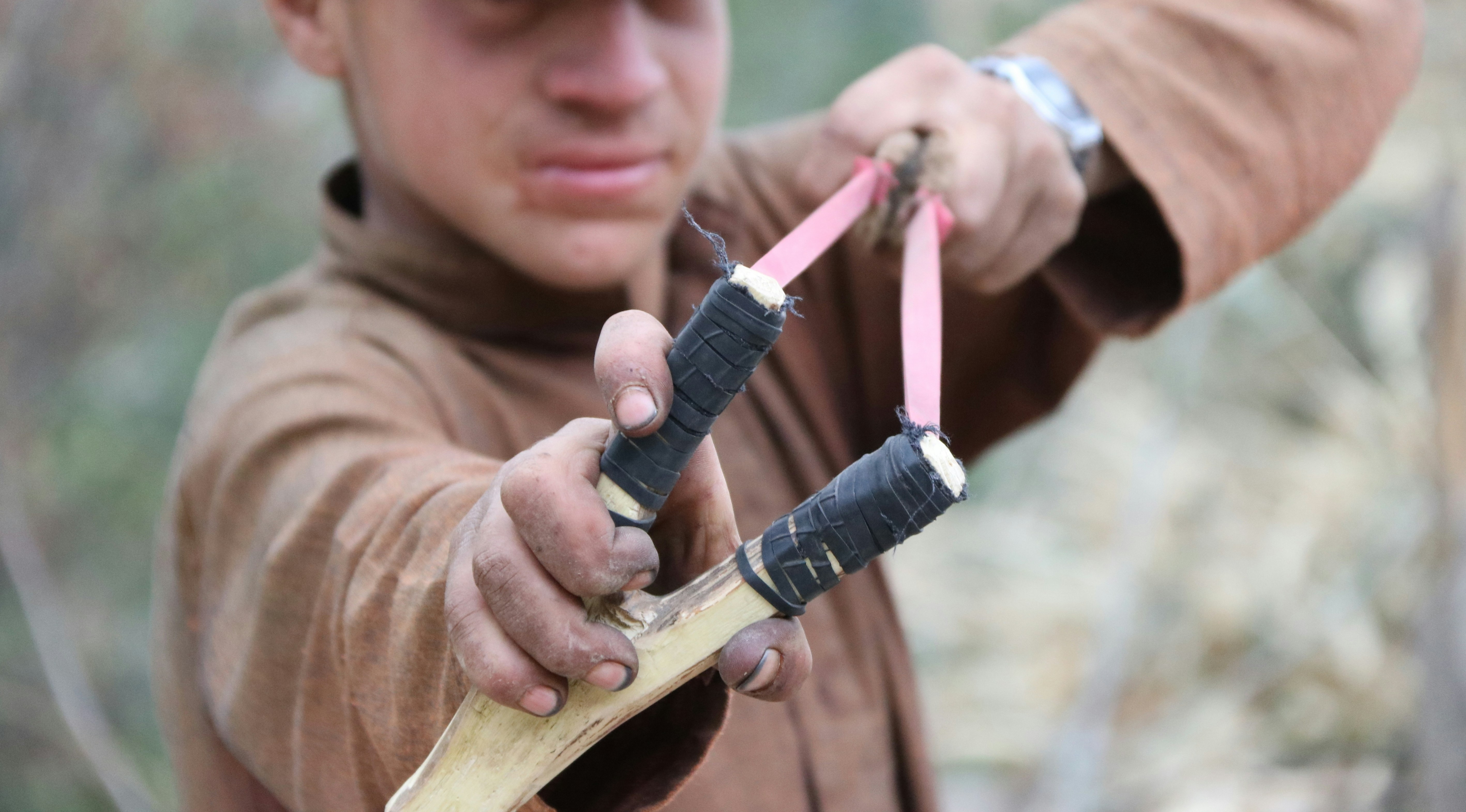
Today we hear the classic story of David and Goliath. When I was teaching high school theology classes on Scripture this was one of my favorite examples to bring up when telling the class that the Bible is not a children’s book. I think this story loses much of its meaning when we try to water it down to make it kid friendly so it can be painted on a nursery wall right next to Noah’s Ark. The reality is that the spiritual life is messy and it is often a battle. 

Today’s first reading reminds us of the messiness of life but also of the fact that we are called to engage in it with courage and strength. Notice though, God is not calling us to rely on our own strength, if He was, He would not have picked David for this monumental task. God wants us to rely on His strength, specifically when a spiritual battle is called for. 

This reminds me of some things I often share with our OCIA groups. The overwhelming question I get from new converts is, how can I possibly go and preach the Good News? They believe that if they don’t have a theology degree, they will get tripped up and misrepresent the Gospel. Although we certainly need to be careful not to misrepresent the Gospel, we also need to realize the power of Scripture and the power of God. God is the One who equips and calls. 

Similar to David who was ill equipped by his own strength to handle the monumental task set before him, we are also unequipped until Jesus specifically calls us and gives us what we need to accomplish the task. All of us have been called to preach the Good News and make disciples of all nations. By that very call, God has given us what we need to be effective from within our own circumstances. For some this may not be defending the faith with facts but more just sharing their story of conversion and love of God. 

Either way, we are called, like David, to accept the task in front of us while relying on the grace and strength of Christ and the cross. He will equip us for what He calls us to do, but we have to have the faith to believe that and then the courage to take up the task. 

Today’s first reading gives us a perfect example of the monumental things that can be done when we rely on the grace of God. Evangelization is not nearly as hard as what David faced in this passage of scripture. God made the impossible quite possible, and He can do the same for you and the people in your life that are waiting to hear the Good News. Let’s take up the call this week with a renewed vigor and purpose. 

From all of us here at Diocesan, God bless! 

Contact the author


Hoy escuchamos la clásica historia de David y Goliat. Cuando enseñaba teología sobre las Escrituras en la escuela secundaria, este era uno de mis ejemplos favoritos al explicarles que la Biblia no es un libro para niños. Creo que esta historia pierde mucho de su significado cuando intentamos diluirla para que sea apropiada para niños y así poder pintarla en la pared de una habitación infantil junto al Arca de Noé. La realidad es que la vida espiritual es complicada y, a menudo, una batalla.

La primera lectura de hoy nos recuerda lo complicada que es la vida, pero también que estamos llamados a vivirla con valentía y fortaleza. Sin embargo, note que Dios no nos llama a confiar en nuestras propias fuerzas; si fuera así, no habría elegido a David para esta tarea monumental. Dios quiere que confiemos en su fuerza, especialmente cuando se requiere una batalla espiritual.

Esto me recuerda algunas cosas que a menudo comparto con los grupos de OCIA. La pregunta abrumadora que recibo de los nuevos conversos es: ¿cómo puedo ir a predicar la Buena Nueva? Creen que si no tienen un título en teología, se equivocarán y tergiversarán el Evangelio. Si bien debemos tener cuidado de no tergiversar el Evangelio, también debemos reconocer el poder de las Escrituras y el poder de Dios. Dios es quien equipa y llama.

Al igual que David, quien, con sus propias fuerzas, no estaba capacitado para afrontar la tarea monumental que le encomendaron, nosotros también estamos desprovistos de herramientas hasta que Jesús nos llama específicamente y nos da lo necesario para llevarla a cabo. Todos hemos sido llamados a predicar la Buena Nueva y hacer discípulos de todas las naciones. Por ese mismo llamado, Dios nos ha dado lo necesario para ser eficaces en nuestras propias circunstancias. Para algunos, esto puede no ser defender la fe con hechos, sino más bien compartir su historia de conversión y amor a Dios.

De cualquier manera, estamos llamados, como David, a aceptar la tarea que tenemos por delante, confiando en la gracia y la fuerza de Cristo y de la cruz. Él nos capacitará para lo que nos llama a hacer, pero debemos tener la fe para creerlo y luego la valentía para asumir la tarea. 

La primera lectura de hoy nos da un ejemplo perfecto de las cosas monumentales que se pueden lograr cuando confiamos en la gracia de Dios. La evangelización no es tan difícil como la que enfrentó David en este pasaje de la Escritura. Dios hizo posible lo imposible, y puede hacer lo mismo por ti y por las personas en tu vida que esperan escuchar la Buena Nueva. Aceptemos el llamado esta semana con vigor y propósito renovados.

De parte de todos nosotros aquí en Diocesan, ¡Dios te bendiga!

Comunicarse con el autor

Tommy Shultz is a Business Development Representative for Diocesan. In this role he is committed to bringing the best software to dioceses and parishes while helping them evangelize on the digital continent. Tommy has worked in various diocese and parish roles since his graduation from Franciscan University with a Theology degree. He hopes to use his skills in evangelization, marketing, and communications, to serve the Church and bring the Good News to all. His favorite quote comes from St. John Paul II, who said, “A person is an entity of a sort to which the only proper and adequate way to relate is love.”

Feature Image Credit: Awais Jamil, https://unsplash.com/photos/boy-using-slingshot-RyCp8LFHl84

The views and opinions expressed in the Inspiration Daily blog are solely those of the original authors and contributors. These views and opinions do not necessarily represent those of Diocesan, the Diocesan staff, or other contributors to this blog.

The Sabbath: A Time to Rest / El Sabbat: Un Tiempo para Descansar

In today’s Gospel, Jesus and His disciples walk through the grain fields on the Sabbath, and the hungry disciples begin to pick heads of grain to eat. The Pharisees accuse them of harvesting, which would have violated the Sabbath law against any form of “work”. 

Jesus responds with Scripture, recalling how King David ate the “bread of offering,” a food reserved for priests, when he and his men were hungry and had no other means of obtaining food on the Sabbath. Then Jesus speaks the words that reframe everything: “The sabbath was made for man, not man for the Sabbath.” These words remind me that God’s law was never meant to burden us but to set us free, guiding us into true life with Him.

How often I forget that rest is part of God’s design. I can easily fill every moment with work, my never-ending to-do list, screen time, and countless other distractions, convincing myself that I’m being productive. My friend says that I am the master of productive procrastination! Yet without the Sabbath, without pausing to be renewed in God’s presence, my soul grows weary. Jesus, Lord of the Sabbath, calls me to trust Him enough to stop striving (even when I stay busy just to  delay a deadline or avoid a task), and to simply rest.

The disciples’ hunger assures me that God cares for even our most basic needs. The Sabbath is not about legalism but about relationship. It is God’s way of saying: “Let Me provide for you. Let Me be enough,” because He is! 

When I rest in Him, I acknowledge that He is in control and that my worth does not come from constant doing but from being His beloved. Jesus’ gentle invitation is: step away from the noise, trust in My provision, and receive the gift of rest. For in resting with Him, I discover strength, peace, and a deeper awareness of His love.

Contact the author


En el Evangelio de hoy, Jesús y sus discípulos caminan por los campos de trigo en el Sabbat, y los discípulos hambrientos comienzan a sacar espigas para comer. Los fariseos los acusan de estar cosechando, lo cual habría violado la ley sabática contra cualquier forma de “trabajo”.

Jesús responde con un pasaje de las Escrituras, recordándoles cómo el rey David comió los “panes sagrados”, un alimento reservado para los sacerdotes, cuando él y sus compañeros tenían hambre y no tenían otra forma de obtener alimento en el Sabbat. Entonces Jesús pronuncia las palabras que lo replantean todo: “El sábado se hizo para el hombre, y no el hombre para el sábado”. Estas palabras me recuerdan que la ley de Dios nunca fue concebida para ser una carga, sino para liberarnos, guiándonos a la verdadera vida con Él.

Con cuánta frecuencia me olvido que el descanso es parte del diseño de Dios. Puedo llenar fácilmente cada momento con trabajo, mi interminable lista de tareas pendientes, tiempo frente a la pantalla e innumerables distracciones, convenciéndome de que estoy siendo productiva. Mi amiga dice que soy una maestra de la procrastinación productiva. Sin embargo, sin el Sabbat, sin detenerme a renovarme en la presencia de Dios, mi alma se cansa. Jesús, el Señor del Sabbat, me llama a confiar en Él lo suficiente como para dejar de esforzarme (incluso cuando me mantengo ocupada solo para retrasar una fecha límite o evitar una tarea) y simplemente descansar.

El hambre de los discípulos me asegura que Dios se preocupa incluso por nuestras necesidades más básicas. El Sabbat no se trata de legalismo, sino de relación. Es la forma en que Dios dice: “Déjame proveer para ti. Déjame ser suficiente”, ¡porque lo es!

Cuando descanso en Él, reconozco que Él tiene el control y que mi valor no proviene de hacer cosas constantemente, sino de ser su amado. La tierna invitación de Jesús es: aléjate del ruido, confía en Mi provisión y recibe el regalo del descanso. Porque al descansar con Él, descubro fuerza, paz y una conciencia más profunda de Su amor.

Comunicarse con la autora

Allison Gingras (www.ReconciledToYou.com ) shares an everyday Catholic faith with humor and honesty. Her writing includes The Handy Little Guide to Novenas (OSV), Encountering Signs of Faith (Ave Maria Press), the Stay Connected Journals for Catholic Women (OSV), and her newest book, Jesus Heals (OSV), published in 2025. Allison is the Director of Digital Evangelization for Family Rosary USA.

Feature Image Credit: Nordseher, pixabay.com/photos/woman-park-leisure-pensive-outlook-7301470/

The views and opinions expressed in the Inspiration Daily blog are solely those of the original authors and contributors. These views and opinions do not necessarily represent those of Diocesan, the Diocesan staff, or other contributors to this blog.

What Does God Want From Us? / ¿Qué quiere Dios de nosotros?

There have been many times in my life when the feelings of frustration and despair have overwhelmed me to the point that I looked upward toward heaven and asked God, “What am I supposed to do?  What more can I do?” Today’s readings point out what we can do: be obedient, submit to God’s will, look to God for help, praise God, stay disciplined, and be present to what is in front of you.

And all of those behaviors need to be in place before a crisis. Saul is in crisis because of his disobedience to what God directed him to do. He only did part of what he was told. I think we often do something similar. We have a problem, we pray, and we receive a solution during that prayer time. But we are not sure we like that solution so we keep praying about it. We continue to discern. Sometimes we ask others what they think is a good solution. We pray some more. We are using prayer as procrastination. God was clear. Deep in our soul we know what He said, yet, we hesitate, or like Saul, do a portion of what God asked of us and then wonder why things are not working out.

We cannot give ourselves halfway to God. We cannot follow some of His plans for us and some of other people’s. God does nothing halfway for us, so let us honor Him and do all that He asks. During this season of Ordinary Time, it is a great time to instill good spiritual practices and become disciplined about our faith life. When we spend time with God and learn to be with Him, we can learn how He reaches us and guides us. Here are some ideas:

– Go to a weekday Mass once or twice a week.

– Go to Adoration once a week. No chapel nearby? Have an hour of prayer at home.

– Spend 10 minutes a day in silence; when that is a habit, move to 15 and then 20 minutes. Take three deep breaths, bless yourself, and say, “Hear I am Lord.” When time is up, write down what you received in prayer.

– Ask God for help before you begin solving a problem.

– When you hear a prompting from God, act on it immediately and fully.

– Read one chapter of one of the Gospels per day.

So, what does God want from us? Faithfulness. It may seem like He wants more than we can give. Maybe we are afraid to give Him all of ourselves, especially the parts we do not like or keep hidden. What I know though, is that when I give God everything, His faithfulness far surpasses mine. Because he is God and He gives in abundance. He makes us new, from the inside out. Today, decide on one concrete behavior to implement to give yourself more fully to God. 

Contact the author


Muchas veces en mi vida, la frustración y la desesperación me han abrumado tanto que he mirado al cielo y le he preguntado a Dios: “¿Qué debo hacer? ¿Qué más puedo hacer?” Las lecturas de hoy nos indican lo que podemos hacer: ser obedientes, someternos a la voluntad de Dios, buscar su ayuda, alabarlo, mantener la disciplina y estar atentos a lo que tenemos por delante.

  Y todos esos comportamientos deben estar presentes antes de una crisis. Saúl está en crisis por su desobediencia a lo que Dios le ordenó hacer. Solo hizo una parte de lo que se le dijo. Creo que a menudo hacemos algo similar. Tenemos un problema, oramos y recibimos una solución durante ese tiempo de oración. Pero no estamos seguros de que nos guste esa solución, así que seguimos orando. Seguimos discerniendo. A veces preguntamos a otros qué creen que es una buena solución. Oramos un poco más. Estamos usando la oración como una forma de procrastinar. Dios fue claro. En lo más profundo de nuestra alma sabemos lo que Él dijo, pero dudamos o, como Saúl, hacemos solo una parte de lo que Dios nos pidió y luego nos preguntamos por qué las cosas no salen bien.

No podemos entregarnos a Dios a medias. No podemos seguir algunos de sus planes para nosotros y otros planes de los demás. Dios no hace nada a medias por nosotros, así que honrémoslo y hagamos todo lo que Él nos pide. Durante este Tiempo Ordinario, es un buen momento para inculcar buenas prácticas espirituales y ser disciplinados en nuestra vida de fe. Cuando pasamos tiempo con Dios y aprendemos a estar con Él, podemos aprender cómo trabaja en nosotros y nos guía. Aquí hay algunas ideas:

– Asiste a misa entre semana una o dos veces por semana.

– Asiste a la Adoración una vez por semana. ¿No tienes una capilla cerca? Dedica una hora de oración en casa.

– Pasa 10 minutos al día en silencio; cuando se convierta en un hábito, pasa a 15 y luego a 20 minutos. Respira profundamente tres veces, bendícete y di: “Heme aquí, Señor”. Cuando se acabe el tiempo, escribe lo que recibiste en oración.

– Pide ayuda a Dios antes de empezar a resolver un problema.

– Cuando escuches una inspiración de Dios, actúa de inmediato y plenamente.

– Lee un capítulo de un Evangelio al día.

Entonces, ¿qué quiere Dios de nosotros? La fidelidad. Puede parecer que quiere más de lo que podemos dar. Quizás tengamos miedo de entregarle todo de nosotros mismos, especialmente las partes que no nos gustan o que mantenemos ocultas. Sin embargo, lo que sé es que cuando le doy todo a Dios, su fidelidad supera con creces la mía. Porque él es Dios y da en abundancia. Nos renueva por dentro y por fuera. Hoy, decide un comportamiento concreto que puedas implementar para entregarte más plenamente a Dios.

Comunicarse con la autora

Deanna G. Bartalini, M.Ed., M.P.A. is a certified spiritual director, retreat leader, speaker, and writer with decades of experience serving the Church. She is the founder of LiveNotLukewarm.com, works on the retreat team at Our Lady of Florida Passionist Spiritual Center, and is an Unbound prayer minister.  She has served as a religious education director, youth minister, liturgical coordinator, and stewardship director. She writes for SpiritualDirection.comCatholicMom.comDiocesan.com, and Women in the New Evangelization (WINE). Deanna is the author of The Stay Connected Journals for Catholic Women, Invite the Holy Spirit into your Life, and has contributed to the Catholic Mom’s Prayer Companion, as well as Digital Ministry and Leadership in Today’s Church.
Feature Image Credit: Submitted by Author

The views and opinions expressed in the Inspiration Daily blog are solely those of the original authors and contributors. These views and opinions do not necessarily represent those of Diocesan, the Diocesan staff, or other contributors to this blog.

I Know a Guy / Conozco a un tipo

Before he became an Apostle and author of the fourth Gospel, John was a disciple of an unusual man who lived in the desert and ate locusts. The Baptist, as he was known, explained to his followers that he had been told to make straight the path for the Messiah, to prepare the way of the Lord. What their people had longed for for centuries was coming soon, and John the Baptist was called to help the people be ready. John the disciple believed him as did his friend Andrew. So, when the Baptist’s cousin appeared on the scene and this compelling figure proclaimed, “Behold, the Lamb of God, who takes away the sin of the world,” John and Andrew were prepared to recognize the Messiah. Then Andrew told his brother Peter, and soon after, a Church was born.

John the Baptist’s unusual life — from his unlikely conception, to leaping in his mother’s womb upon Mary’s greeting, to baptising the Savior Himself — was geared toward helping people know Jesus. He was dedicated to his mission even if the people of his time thought he was a little weird. He was an odd, yet compelling messenger. Even Herod, who would eventually put the Baptizer to death, found himself drawn to John and enjoyed listening to him speak.

John the Baptist got people talking as he set the stage for the greater One to follow. The word about Jesus spread as people told their families and friends about a guy they knew who knew a guy. And the word about Jesus still spreads that way.

We are called to be like John the Baptist, to make straight the path and prepare the way of the Lord. Yes, the world may think we’re a little weird sometimes for believing what we do and striving to live out what we believe, but few of us will pay the price John the Baptist did for speaking up about Jesus.

Can we find the courage to be like John the Baptist? Can we live lives of faith that draw the curious toward us, and then urge those people toward the Source of the light? Can we tell the world that we know a Guy who came to make all things new? When we do, we stand with John as he proclaims, “Now I have seen and testified that he is the Son of God.”

Contact the author


Antes de convertirse en apóstol y autor del cuarto Evangelio, Juan fue discípulo de un hombre diferente que vivía en el desierto y comía langostas. El Bautista, como se le conocía, explicó a sus seguidores que se le había encomendado allanar el camino del Mesías y preparar el camino del Señor. Lo que su pueblo había anhelado durante siglos llegaría pronto, y Juan el Bautista fue llamado a ayudar al pueblo a estar preparado. Juan, el discípulo, le creyó, al igual que su amigo Andrés. Así, cuando el primo del Bautista apareció en escena y esta figura cautivadora proclamó: “Éste es el Cordero de Dios, el que quita el pecado del mundo”, Juan y Andrés estaban preparados para reconocer al Mesías. Entonces Andrés se lo contó a su hermano Pedro, y poco después, nació una Iglesia.

La vida extraordinaria de Juan el Bautista – desde su improbable concepción, hasta saltar en el vientre de su madre al saludo de María, y bautizar al mismo Salvador – estuvo orientada a ayudar a la gente a conocer a Jesús. Se dedicó a su misión aunque la gente de su tiempo lo considerara un poco raro. Era un mensajero peculiar, pero convincente. Incluso Herodes, quien finalmente condenaría a muerte al Bautista, se sintió atraído por Juan y disfrutaba escucharlo hablar.

Juan el Bautista causó que empezara a hablar la gente al preparar el camino para el Gran Maestro que lo siguiera. La noticia de Jesús se difundió cuando la gente contó a sus familiares y amigos sobre un tipo que conocían, que conocía a otro tipo. Y la noticia de Jesús todavía se difunde de esta forma.

Estamos llamados a ser como Juan el Bautista, a enderezar el camino y preparar el camino del Señor. Sí, el mundo puede pensar que a veces somos un poco raros por creer lo que creemos y esforzarnos por vivir lo que creemos, pero pocos pagaremos el precio que pagó Juan el Bautista por hablar de Jesús.

¿Podemos tener la valentía de ser como Juan el Bautista? ¿Podemos vivir vidas de fe que atraigan a los curiosos hacia nosotros y luego los impulsen hacia la Fuente de la luz? ¿Podemos decirle al mundo que conocemos a un Tipo que vino para hacer nuevas todas las cosas? Cuando lo hacemos, nos ponemos de pie junto a Juan mientras proclama: “yo lo vi y doy testimonio de que éste es el Hijo de Dios”.

Comunicarse con la autora

Pamela Kavanaugh is a grateful wife, mother, and grandmother who has dedicated her professional life to Catholic education. Though she has done her very best to teach her students well in the subjects of language and religion, she knows that she has learned more than she has taught. She lives, teaches, and writes in southwest suburban Chicago.

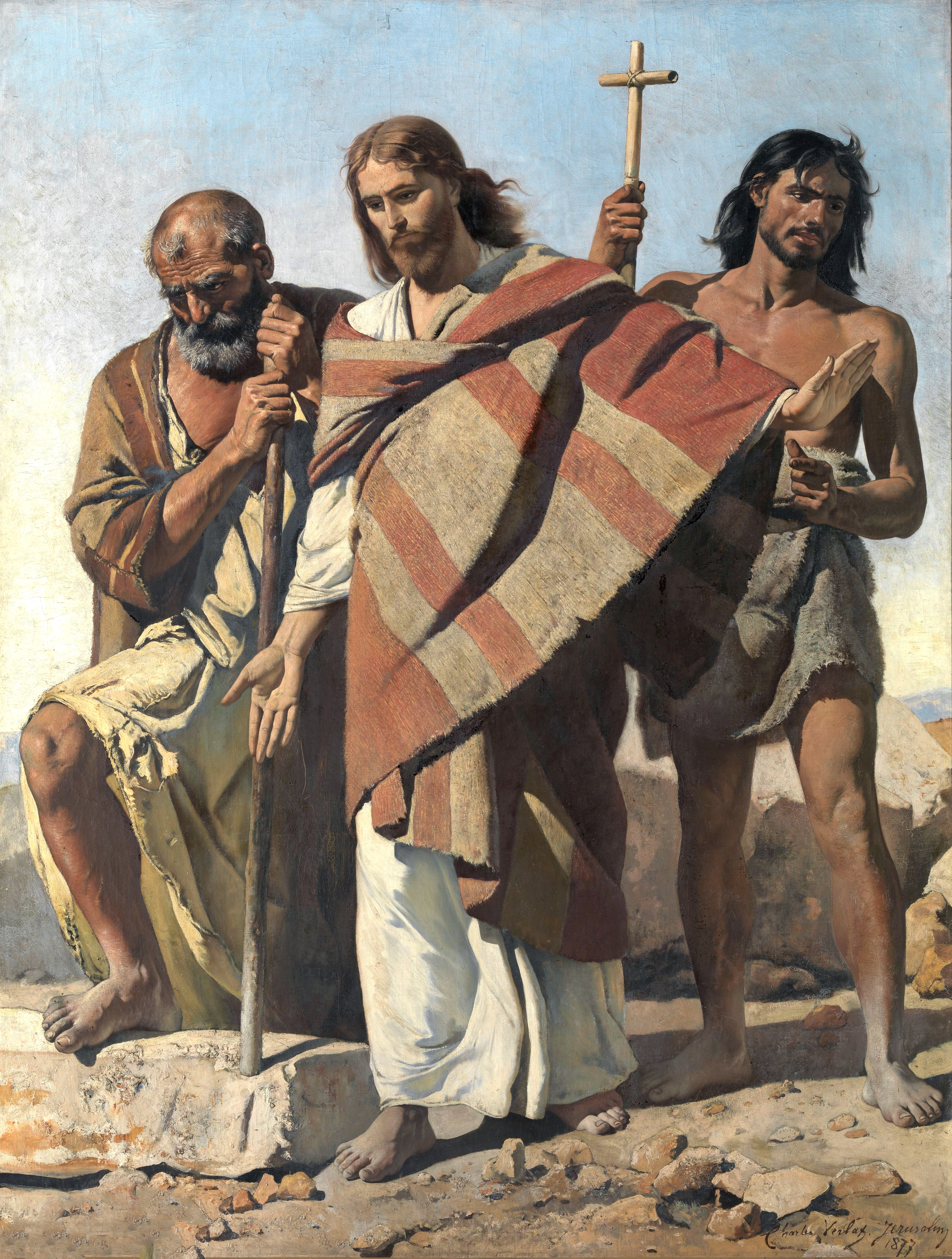
Feature Image Credit: Charles Verlat, art.diocesan.com/stock-photo/jesus-between-saint-peter-and-saint-john-baptist-2319/

The views and opinions expressed in the Inspiration Daily blog are solely those of the original authors and contributors. These views and opinions do not necessarily represent those of Diocesan, the Diocesan staff, or other contributors to this blog.

Field Hospital / Hospital de Campaña

In today’s Gospel the Pharisees ask Jesus’ disciples, “Why does he eat with tax collectors and sinners?” Although the Pharisees are not asking out of genuine curiosity, but rather to trip up Jesus, I lean in to His response. “Those who are well do not need a physician, but the sick do. I did not come to call the righteous but sinners.”

It’s often said that the Church is a “field hospital”, not a “museum for saints”. If we’re honest, we can all attest to sin and sickness, both in and outside of the Church. I find one big difference between those who frequent the sacraments, and those who don’t (or don’t go to church) is that the first group acknowledges they need the Divine Healer. There are plenty in the second group who know they need healing, but they seek sources other than God. They don’t believe in God or they believe God is a harsh judge who won’t or can’t help them, so they stay away.

Many discover that the meal of Jesus indeed changes things, sometimes profoundly, as do the other sacraments. And so they return to the field hospital for more. Observers note these people tend to spend a whole lot of time at church and, having found healing themselves, often minister to others. They also discovered the treasury of the saints and befriended these pillars of holiness and faith as well. While reading about the saints, they learn that the closer they got to Jesus, the more they recognized their smallness, neediness, and own sinfulness. 

So, if these saints saw themselves as needy and sinful, what does that make me? Someone who continually needs the field hospital. Because He came for the sick. He came for me.

Contact the Author


En el Evangelio de hoy, los fariseos preguntan a los discípulos de Jesús: “¿Por qué su maestro come y bebe en compañía de publicanos y pecadores?” Aunque los fariseos no preguntan por curiosidad genuina, sino para confundir a Jesús, me inclino a recibir su respuesta: “No son los sanos los que tienen necesidad del médico, sino los enfermos. Yo no he venido a llamar a los justos, sino a los pecadores”.

Se suele decir que la Iglesia es un “hospital de campaña”, no un “museo de santos”. Siendo honestos, todos podemos dar fe del pecado y la enfermedad, tanto dentro como fuera de la Iglesia. Encuentro una gran diferencia entre quienes frecuentan los sacramentos y quienes no (o no van a la iglesia) es que los primeros reconocen que necesitan al Sanador Divino. Hay muchos en el segundo grupo que saben que necesitan sanación, pero buscan otras fuentes aparte de Dios. No creen en Dios o creen que Dios es un juez severo que no quiere o no puede ayudarlos, así que se mantienen alejados.

Muchos descubren que la cena de Jesús realmente cambia las cosas, a veces profundamente, al igual que los demás sacramentos. Y por eso regresan al hospital de campaña en busca de más. Los observadores señalan que estas personas tienden a pasar mucho tiempo en la iglesia y, tras encontrar la sanación, a menudo ministran a otros. También descubren el tesoro de los santos y se hacen amigos de estos pilares de santidad y fe. Al leer sobre los santos, aprenden que cuanto más se acercaban a Jesús, más reconocían su pequeñez, necesidad y su propia pecaminosidad.

Entonces, si estos santos se veían necesitados y pecadores, ¿cómo debo verme a mi misma? Alguien que necesita continuamente del hospital de campaña. Porque Él vino por los enfermos. Vino por mí.

Comunicarse con la autora


Frances Smit is a children’s book author, a Catechist (of the Good Shepherd), educator, and mom. She serves in-the-pews Catholics seeking MORE through stories that hold space for an encounter with God. She desires everyone to experience that with God, there is always MORE.   https://fbsmit.substack.com/  and  https://www.francessmit.com/

Feature Image Credit: Pixabay stock image, pixabay.com/photos/hospital-bed-doctor-surgery-1802679/

The views and opinions expressed in the Inspiration Daily blog are solely those of the original authors and contributors. These views and opinions do not necessarily represent those of Diocesan, the Diocesan staff, or other contributors to this blog.

Whole Again / Sanos de nuevo

“Which is easier, to say to the paralytic, ‘Your sins are forgiven,’ or to say, ‘Rise, pick up your mat, and walk’?”

This is Christ’s question to the skeptical scribes who doubt Him after He forgives the sins of the paralyzed man. He challenges their doubt by not only forgiving the paralyzed man’s sins but also healing the man’s body. In doing so, He reveals to His onlookers, believers and skeptics alike, that He has authority over body and soul, the kind of authority that belongs to God alone. Only the Author of Life can fully heal physical and spiritual illness.

Yet Christ’s healing here isn’t just about His divine authority. It also reveals His deep love for us, His desire for us to know the deadly consequences of sin and the salvific power of His grace. This, and all His miracles of healing, are meant to show His followers, including us, two incredibly important truths.

The first is the debilitating nature of sin. Christ’s earthly ministry often involved healing the sick and afflicted. But more importantly than that, He forgave sins, and He ultimately died for our sins. His death and Resurrection are proof of the tragic cost of sin, the ultimate cost. Yet His suffering is also what has freed us from the chains of sin and its eternal punishment, death. 

In today’s Gospel, Christ forgives the paralytic man’s sins even before healing his body, revealing to us that sickness of the soul is serious, far more serious than even a lifelong physical disability. Modern medicine might heal some ailments, but it can’t erase sin or prevent death. God’s forgiveness can. He sent His Son to become Man, to tell us and show us through His death and Resurrection that His Love restores us completely. He is the great Healer, not only of the body, but more importantly, of the soul. 

This is the second truth, greater even than the first: Christ loves us to the point of wholeness. He is Love and Life Itself. His love is torrential; it completely wipes out not only our sins, but even the physical consequences of sin, like suffering, and death without resurrection. He loves us back to life again.

Christ’s greatest gift to us, the truth about His life and death and Resurrection, is that His love is infinitely more powerful than even sin and death. He is the Healer and the Life-giver. He restores us and makes us new – not just “fine,” or “back to normal,” but new. He can create good out of nothing. His love can restore us wholly from the ravages of sin.

Your forgiveness has already been earned. All He asks is that you receive it from Him. Do we have the same humility, the same faith as the paralyzed man? Are we also willing to break through walls to ask Christ for His healing love? How desperately do you want to be made new? He wants it even more than that. Trust in Him!

Contact the author


“¿Qué es más fácil, decirle al paralítico: ‘Tus pecados te son perdonados’ o decirle: ‘Levántate, recoge tu camilla y vete a tu casa’?

Esta es la pregunta de Cristo a los escribas escépticos que dudaban de Él después de perdonar los pecados del paralítico. Él desafía sus dudas no sólo perdonando los pecados del paralítico, sino también sanando su cuerpo. Al hacerlo, revela a quienes lo observaban, creyentes y escépticos por igual, que Él tiene autoridad sobre el cuerpo y el alma, la clase de autoridad que solo le pertenece a Dios. Solo el Autor de la Vida puede sanar completamente la enfermedad física y espiritual.

Sin embargo, el hecho de que Cristo sana no se trata solo de su autoridad divina. También revela su profundo amor por nosotros, su deseo de que conozcamos las consecuencias mortales del pecado y el poder salvífico de su gracia. Esto, y todos sus milagros de sanación, tienen el propósito de mostrar a sus seguidores, incluyéndonos a nosotros, dos verdades increíblemente importantes. 

La primera es la naturaleza debilitante del pecado. El ministerio terrenal de Cristo a menudo implicó sanar a los enfermos y afligidos. Pero aún más importante, perdonó los pecados y, finalmente, murió por los nuestros. Su muerte y resurrección son prueba del trágico costo del pecado, el costo máximo. Sin embargo, su sufrimiento es también lo que nos ha liberado de las cadenas del pecado y de su castigo eterno: la muerte.

En el Evangelio de hoy, Cristo perdona los pecados del paralítico incluso antes de sanar su cuerpo, revelándonos que la enfermedad del alma es grave, mucho más grave que una discapacidad física de por vida. La medicina moderna puede curar algunas dolencias, pero no puede borrar el pecado ni evitar la muerte. El perdón de Dios sí puede. Envió a su Hijo a hacerse hombre, para decirnos y mostrarnos mediante su muerte y resurrección que su amor nos restaura por completo. Es el gran Sanador, no solo del cuerpo, sino, aún más importante, del alma.

Esta es la segunda verdad, mayor aún que la primera: Cristo nos ama hasta la plenitud. Él es Amor y Vida Misma. Su amor es torrencial; borra por completo no solo nuestros pecados, sino incluso las consecuencias físicas del pecado, como el sufrimiento y la muerte sin resurrección. Nos devuelve la vida con su amor.

El mayor regalo de Cristo para nosotros, la verdad sobre su vida, muerte y resurrección, es que su amor es infinitamente más poderoso que incluso el pecado y la muerte. Él es el Sanador y el Dador de Vida. Él nos restaura y nos hace nuevos; no solo “más o menos” o “normales de nuevo”, sino nuevos. Él puede crear algo bueno de la nada. Su amor puede restaurarnos completamente de los estragos del pecado.

Tu perdón ya se ha ganado. Solo te pide que lo recibas de Él. ¿Tenemos la misma humildad, la misma fe que el paralítico? ¿Estamos dispuestos a derribar muros para pedirle a Cristo su amor sanador? ¿Cuánto deseas ser renovado? Él lo desea aún más. ¡Confía en Él!

Comunicarse con la autora

Hailing from Nashville, Catherine is a graduate of Christendom College with a lifelong passion for words. Her love of writing and her Catholic Faith continue to shape her as a freelance editor, copywriter, and (aspiring) novelist, where she pursues her passions for the love and greater glory of God.

Feature Image Credit: Luis Ruiz, pexels.com/photo/person-stand-on-sand-1774929/

The views and opinions expressed in the Inspiration Daily blog are solely those of the original authors and contributors. These views and opinions do not necessarily represent those of Diocesan, the Diocesan staff, or other contributors to this blog.

Make Me Clean / Cúrame

One weekend at the softball fields, while his sister played in an all-day tournament, my young son spent the day with other children in a sandbox. Before the last game he became aware of the grimy status of his outward appearance with the dirt of the day smudged across his face and hands. His little voice still rings out in my memory, “Mama, I dirty! Make me clean.” So I took him into the bathroom and, working with soap and water, gave him a good scrubbing with paper towels until we revealed a shiny clean face and hands.

Some years later, when it was time for my son to learn about the Sacrament of Reconciliation, I reminded him of this experience. In Confession, we go before the Lord with the dirt of our days clinging to our soul and we ask Him, “Lord make me clean.” We repent of our sinful ways, ask for forgiveness and healing, and promise to do better tomorrow. Jesus answers us the way He responds to the man with leprosy, “I do will it. Be made clean.”

When was the last time you sought Jesus in the sacrament of Reconciliation? Is it time to return? It doesn’t matter how much time has passed or what you’ve done in your life since the last time you went to Reconciliation. He waits patiently for us to notice our dirty hands and face, the smudged sin on our soul. He is there for us to seek him out, to humbly bow and ask for His forgiveness.

Come and ask Him, Lord if you wish, you can make me clean. There is nothing that we cannot ask Him for when we have true repentance. Come before Jesus. Approach Him with a contrite and humble heart and he will make you clean. 

Jesus, as I consider all the sores and stains of my sin, I truly repent and seek your forgiveness. If you wish, you can make me clean.

Contact the Author


Un fin de semana en los campos de sóftbol, ​​mientras su hermana jugaba en un torneo que duraba todo el día, mi hijo pequeño pasó el día con otros niños en un arenero. Antes del último partido, se dio cuenta de lo sucio que estaba su aspecto exterior, con la suciedad del día manchada en la cara y las manos. Su vocecita aún resuena en mi memoria: “¡Mami, ‘toy sucio! Límpiame”. Así que lo llevé al baño y, con agua y jabón, lo froté bien con papel toalla hasta que vimos su cara y sus manos limpias y relucientes.

Años después, cuando llegó el momento de que mi hijo aprendiera sobre el Sacramento de la Reconciliación, le recordé esta experiencia. En la Confesión, nos presentamos ante el Señor con la suciedad de nuestros días pegada al alma y le pedimos: “Señor, hazme limpio”. Nos arrepentimos de nuestros pecados, pedimos perdón y sanación, y prometemos mejorar mañana. Jesús nos responde como le respondió al leproso: “Quiero. Queda limpio”.

¿Cuándo fue la última vez que buscaste a Jesús en el sacramento de la Reconciliación? ¿Es hora de volver? No importa cuánto tiempo haya pasado ni qué hayas hecho en tu vida desde la última vez que fuiste a la Reconciliación. Él espera pacientemente a que nos demos cuenta de nuestras manos y rostro sucios, de la mancha de pecado en nuestra alma. Él está ahí para que lo busquemos, para que nos inclinemos humildemente y le pidamos perdón.

Ven y pídele: “Señor, si quieres, puedes curarme”. No hay nada que no podamos pedirle cuando estamos verdaderamente arrepentidos. Ven ante Jesús. Acércate con un corazón contrito y humilde, y te limpiará.

Jesús, al considerar todas las llagas y manchas de mi pecado, me arrepiento de verdad y busco tu perdón. Si quieres, puedes limpiarme.

Comunicarse con la autora


Shelly Henley Kelly is a wife, mother of three, and native Texan who writes and records a podcast with her sister on Of Sound Mind and Spirit and is a regular contributor to Catholic Mom. When not writing or recording, Shelly can be found volunteering as a Youth Ministry Catechist, keeping the scorebook at her son’s baseball games, diving deep into historical research, or hiding with a good book in between games.

Feature Image Credit: Submitted by Author

The views and opinions expressed in the Inspiration Daily blog are solely those of the original authors and contributors. These views and opinions do not necessarily represent those of Diocesan, the Diocesan staff, or other contributors to this blog.

Transition Time / Tiempo de transición

I am a little breathless as I read today’s Gospel passage. Mark doesn’t give us a lot of time to breathe between one event and the next. Jesus shows up, “immediately” begins healing, then heals some more, then it’s evening and He’s still healing. Jesus gets up very early to pray, is sought out almost immediately, and goes out to keep healing all over Galilee. Phew! 

There is urgency and immediacy in Jesus’ attitude in the Gospel of Mark. He doesn’t wait to get started but dives right into the needs before Him. It reminds me of a quote by J.R.R. Tolkien in The Lord of the Rings: “It’s the job that’s never started that takes longest to finish.” Jesus’ public ministry was only three years long and we can really feel the press of time in the way Mark chooses to write his Gospel. 

While rest is obviously an important part of life, it is not what life revolves around. Even in the midst of pressure, Jesus takes time to be alone with His Father in solitude, but when the Apostles come to Him He doesn’t grow exasperated that they interrupted His prayer time. He doesn’t say, “Five more minutes guys, come on!” He hears the needs of the people and goes out to them, ready to continue His work. 

There are many things we can consider from this passage and the Gospel of Mark in general. What stands out to me is Jesus’ lack of transition time. He just moves from one thing to the next. It challenges me to consider how I often use transition time as an excuse to not do something I need to do. I don’t really want to clean the bathroom, and I just finished cleaning the stove, so surely I’ve earned a five minute scroll on my phone before moving onto the next job. As you may have guessed, it is rarely ever just five minutes. 

Instead of doing the work I know I need to do, I find excuses to drag things out, which ultimately, as Tolkien rightly points out, makes the whole ordeal even longer. Again, rest is important, but it must be part of a rightly ordered day and not used as an excuse to avoid what needs doing.

Contact the author


Me quedo sin aliento al leer el pasaje del Evangelio de hoy. Marcos no nos da mucho tiempo para respirar entre un evento y otro. Jesús llega, “enseguida” comienza a sanar, luego sana un poco más, luego anochece y sigue sanando. Jesús se levanta muy temprano para orar, lo buscan casi de inmediato y sale a seguir sanando por toda Galilea. ¡Uf!

Hay urgencia e inmediatez en la actitud de Jesús en el Evangelio de Marcos. No espera para empezar, sino que se sumerge completamente en las necesidades que tiene a la mano. Me hace acordar de una cita de J.R.R. Tolkien en El Señor de los Anillos: “El trabajo que nunca se empieza es el que tarda más en finalizarse”. El ministerio público de Jesús duró solo tres años y podemos sentir la presión del tiempo en la forma en que Marcos decide escribir su Evangelio.

Si bien el descanso es, sin duda, una parte importante de la vida, no es lo primordial. Incluso en medio de la presión, Jesús se toma un tiempo para estar a solas con su Padre, pero cuando los apóstoles se le acercan, no se desespera porque han interrumpido su tiempo de oración. No dice: “¡Hombre! ¡Cinco minutos más, por favor muchachos!” Escucha las necesidades de la gente y sale a su encuentro, dispuesto a continuar su obra.

Hay muchas cosas que podemos considerar de este pasaje y del Evangelio de Marcos en general. Lo que más me llama la atención es la falta de tiempo de transición de Jesús. Simplemente pasa de una cosa a otra. Me reta a pensar en cómo a menudo utilizo el tiempo de transición como excusa para no hacer algo que necesito hacer. No tengo muchas ganas de limpiar el baño y acabo de limpiar la estufa, así que seguramente me he ganado cinco minutos de ver mi teléfono antes de pasar a la siguiente tarea. Como habrán adivinado, rara vez son solo cinco minutos.

En lugar de hacer el trabajo que sé que tengo que hacer, busco excusas para alargar las cosas, lo que, a fin de cuentas, como señala Tolkien, alarga aún más el asunto. Nuevamente, el descanso es importante, pero debe ser parte de un día bien ordenado y no utilizado como excusa para evitar lo que hay que hacer.

Comunicarse con la autora

Kate Taliaferro is an Air Force wife and mother. She is blessed to be able to homeschool, bake bread and fold endless piles of laundry. When not planning a school day, writing a blog post or cooking pasta, Kate can be found curled up with a book or working with some kind of fiber craft. Kate blogs at DailyGraces.net.

Feature Image Credit: RuslanSikunov, pixabay.com/photos/clock-alarm-clock-coffee-cup-8592484/

The views and opinions expressed in the Inspiration Daily blog are solely those of the original authors and contributors. These views and opinions do not necessarily represent those of Diocesan, the Diocesan staff, or other contributors to this blog.

Do You Know Who You Are? / ¿Sabes Quién Eres?

In today’s Gospel, Jesus continues His travels, astounding the people with His power and authority. Even unclean spirits respond to His orders, and the people are amazed. When we read these stories, it can be hard to imagine why anyone doubted for a moment who Jesus was and what His arrival meant. But doubt they did, and mankind has continued to doubt ever since.

Many times since Jesus’ life, death and resurrection, the Church He founded has strived to hold the rudder toward true north. Storms of misunderstandings, disagreements, and disputes have been part of the Church since her beginning, but through it all she moves forward.

One of those storms was raging during the life of the saint we celebrate today. A convert who discovered Jesus through Scripture, Saint Hilary lived in the fourth century during the Arian heresy, which denied the divinity of Jesus Christ. When Hilary refused to condemn Saint Athanasius who had spoken out against the heresy, he was exiled. Rather than bowing to his persecution, he used his time in exile to study and to write, and he became an even more powerful defender of Christ’s divinity. He also composed hymns to spread the faith more broadly yet.

According to Saint Hilary, the heretics of his time had lost sight of their true identity. “They didn’t know who they were,” he said. His mission was to remind them, and to remind us, of exactly who we are. We are children of a loving God who have inherited eternal life through belief in Jesus Christ, the Son of God, the same Jesus Christ who worked his wonders that day in Capernaum.

There is a worldly misconception that living a life of faith means avoiding the storms of life. On the contrary, as Saint Hilary and so many other powerful witnesses have shown us, true discipleship walks us into the storm, not away from it. But a life of faith, rooted in a confident understanding of exactly who we are, offers calm amid the storm. It grants us a sense of purpose and hope we will be carried safely to the other side.

Contact the author


En el Evangelio de hoy, Jesús continúa sus viajes, asombrando a la gente con su poder y autoridad. Incluso los espíritus inmundos responden a sus órdenes, y la gente queda maravillada. Al leer estas historias, puede ser difícil imaginar cómo alguien pudiera dudar por un instante de quién era Jesús y qué significaba su llegada. Pero dudaron, y la humanidad ha seguido dudando desde ese entonces.

Muchas veces, desde la vida, muerte y resurrección de Jesús, la Iglesia que él fundó se ha esforzado por mantener el rumbo recto. Tormentas de malentendidos, desacuerdos y disputas han formado parte de la Iglesia desde sus inicios, pero a pesar de todo, sigue adelante.

Una de esas tormentas azotó la vida del santo que celebramos hoy. San Hilario, un converso que descubrió a Jesús a través de las Escrituras, vivió en el siglo IV durante la herejía arriana, que negaba la divinidad de Jesucristo. Cuando Hilario se negó a condenar a San Atanasio, quien se había pronunciado en contra de la herejía, fue exiliado. En lugar de ceder ante la persecución, dedicó su tiempo en el exilio a estudiar y escribir, convirtiéndose en un defensor aún más enérgico de la divinidad de Cristo. También compuso himnos para difundir la fe aún más ampliamente.

Según san Hilario, los herejes de su tiempo habían perdido de vista su verdadera identidad. “No sabían quiénes eran”, dijo. Su misión era recordarles, y recordarnos a nosotros, quiénes somos. Somos hijos de un Dios amoroso que hemos heredado la vida eterna mediante la fe en Jesucristo, el Hijo de Dios, el mismo Jesucristo que obró sus maravillas aquel día en Cafarnaúm.

Existe la idea errónea global de que vivir una vida de fe significa evitar las tormentas de la vida. Por el contrario, como nos han demostrado san Hilario y tantos otros testigos influyentes, el verdadero discipulado nos lleva hacia la tormenta, no lejos de ella. Pero una vida de fe, arraigada en una comprensión segura de quiénes somos, ofrece calma en medio de la tormenta. Nos otorga un sentido de propósito y la esperanza de que seremos llevados sanos y salvos al otro lado.

Comunicarse con la autora

Pamela Kavanaugh is a grateful wife, mother, and grandmother who has dedicated her professional life to Catholic education. Though she has done her very best to teach her students well in the subjects of language and religion, she knows that she has learned more than she has taught. She lives, teaches, and writes in southwest suburban Chicago.

Feature Image Credit: Brett Jordan, pexels.com/photo/brown-wooden-scrabble-tiles-on-white-table-7416851/

The views and opinions expressed in the Inspiration Daily blog are solely those of the original authors and contributors. These views and opinions do not necessarily represent those of Diocesan, the Diocesan staff, or other contributors to this blog.