A Good Measure Received / Una buena medida recibida

Today’s Gospel theme is a familiar one. Framed in mercy, Jesus tells us to stop judging. He uses a clear directive: Stop. It is a word that conveys an urgency, a need. Something must cease immediately. 

It is probably natural to take Jesus’ words and apply them as an examination of conscience. How have we fallen short in the call to be merciful to others? How have we judged wrongly, condemned harshly? But, perhaps today we could consider a different angle. 

Often it can appear that we are guilty of projecting onto others what, in fact, we are harshly imposing on ourselves. And it is very hard to cease doing unto another what we unceasingly do to ourselves. Maybe today, then, we let ourselves be the object of Jesus’ words.

Let’s imagine Jesus directing his words to us. And let us imagine that He is speaking with a very tender, patient tone.  It might sound something like this: “Beloved, Please stop judging yourself. You are not a just judge. I am. So, please stop. Please stop condemning yourself. That is a trap. I did not come to condemn you, I came to free you, to save you. So, please stop. And, please forgive yourself for falling short. I have already forgiven you. I love you. You can forgive yourself.

Finally, I ask you to be merciful to yourself, just as the Father, who always shows mercy, is merciful to you. Why deny to yourself what your Father is so freely offering you?”

It’s easy to want to “work out” our relationships with others, but maybe the first relationship to consider is the one we have with ourselves. Invite Jesus to help you there. Let His words direct you today to pour out a good measure upon your own tender human heart.

Contact the Author


El tema del Evangelio de hoy es conocido. Enmarcado en la misericordia, Jesús nos dice que dejemos de juzgar. Nos da una orden clara: “No juzguen…no condenen…” No es una palabra que transmite urgencia, necesidad. Algo debe cesar de inmediato.

Es natural que tomemos las palabras de Jesús y las apliquemos como un examen de conciencia. ¿En qué hemos fallado en el llamado a ser misericordiosos con los demás? ¿En qué hemos juzgado mal, en qué hemos condenado con dureza? Pero quizás hoy podríamos considerar una perspectiva diferente.

A menudo parece que proyectamos en los demás lo que, en realidad, nos imponemos con dureza a nosotros mismos. Y es muy difícil dejar de hacer a otros lo que constantemente nos hacemos a nosotros mismos. Quizás hoy, entonces, nos permitamos ser el objeto de las palabras de Jesús.

Imaginemos a Jesús dirigiéndose a nosotros. E imaginemos que nos habla con un tono muy tierno y paciente. Podría sonar algo así: “Amado, por favor, deja de juzgarte. Tú no eres un juez justo. Yo lo soy. Así que, por favor, para. Por favor, deja de condenarte. Eso es una trampa. No vine a condenarte, vine a liberarte, a salvarte. Así que, por favor, para. Y, por favor, perdónate por tus fallos. Yo ya te he perdonado. Te amo. Tú puedes perdonarte. Finalmente, te pido que seas misericordioso contigo mismo, así como el Padre, que siempre muestra misericordia, es misericordioso contigo. ¿Por qué negarte a ti mismo lo que tu Padre te ofrece tan generosamente?”

Es fácil querer “arreglar” nuestras relaciones con los demás, pero quizás la primera relación que debemos considerar es la que tenemos con nosotros mismos. Invita a Jesús a que te ayude en eso. Deja que sus palabras te guíen hoy para derramar una buena medida sobre tu propio corazón humano tan sensible.

Comunicarse con la autora


Raine Pyne is a longtime public school educator. She is married to Greg, who is also an educator. They have five sons, three dogs, and one cat, plus hundreds of adolescent students and countless stacks of books. Raine is a former parish catechist and women’s retreat leader. She is a student at the Theology of the Body Institute and a member of the Word on Fire Institute’s Writing Community. She is passionate about learning, language, and the ever deepening journey of faith.

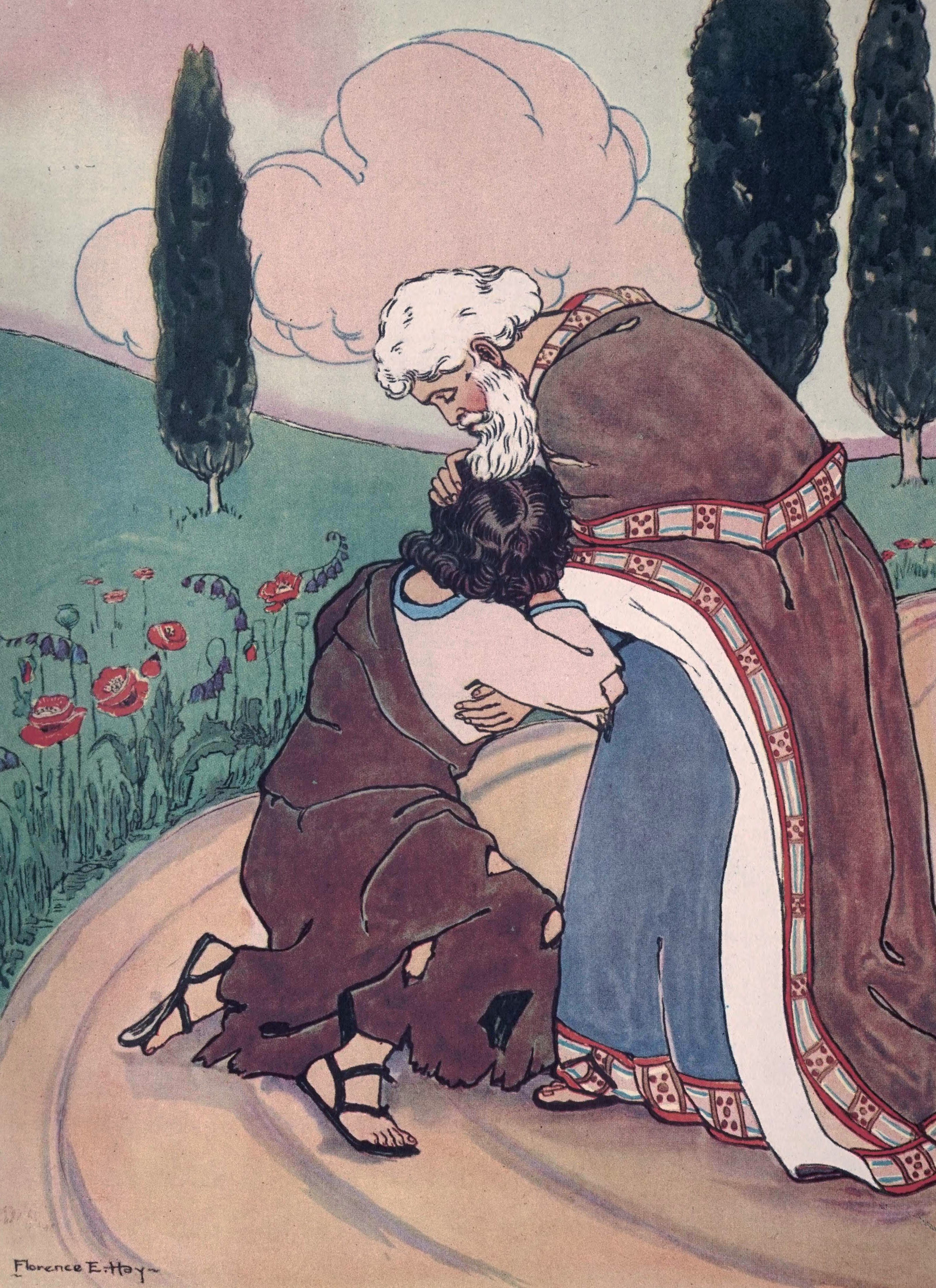
Feature Image Credit: Florence E. Hay, art.diocesan.com/stock-photo/went-forth-to-meet-his-long-lost-son-22970/

The views and opinions expressed in the Inspiration Daily blog are solely those of the original authors and contributors. These views and opinions do not necessarily represent those of Diocesan, the Diocesan staff, or other contributors to this blog.
Let Your Light Shine / Deja brillar tu luz

In the Gospel reading for today, Jesus, after seeing His crowd of followers, sits down and decides to teach them. Something He saw in the people propelled Jesus to take the time to sit down on the side of a mountain and teach what we would come to know as the Sermon on the Mount. In part of this teaching, Jesus leads the people through a series of statements highlighting the blessings of divine happiness.  One of these blessings reveals how deeply Jesus cares about and understands the nature of our human hearts. He desires our holiness so that we might share in the Father’s Kingdom with Him. According to Matthew, Jesus says, “Blessed are the clean of heart, for they will see God.” 

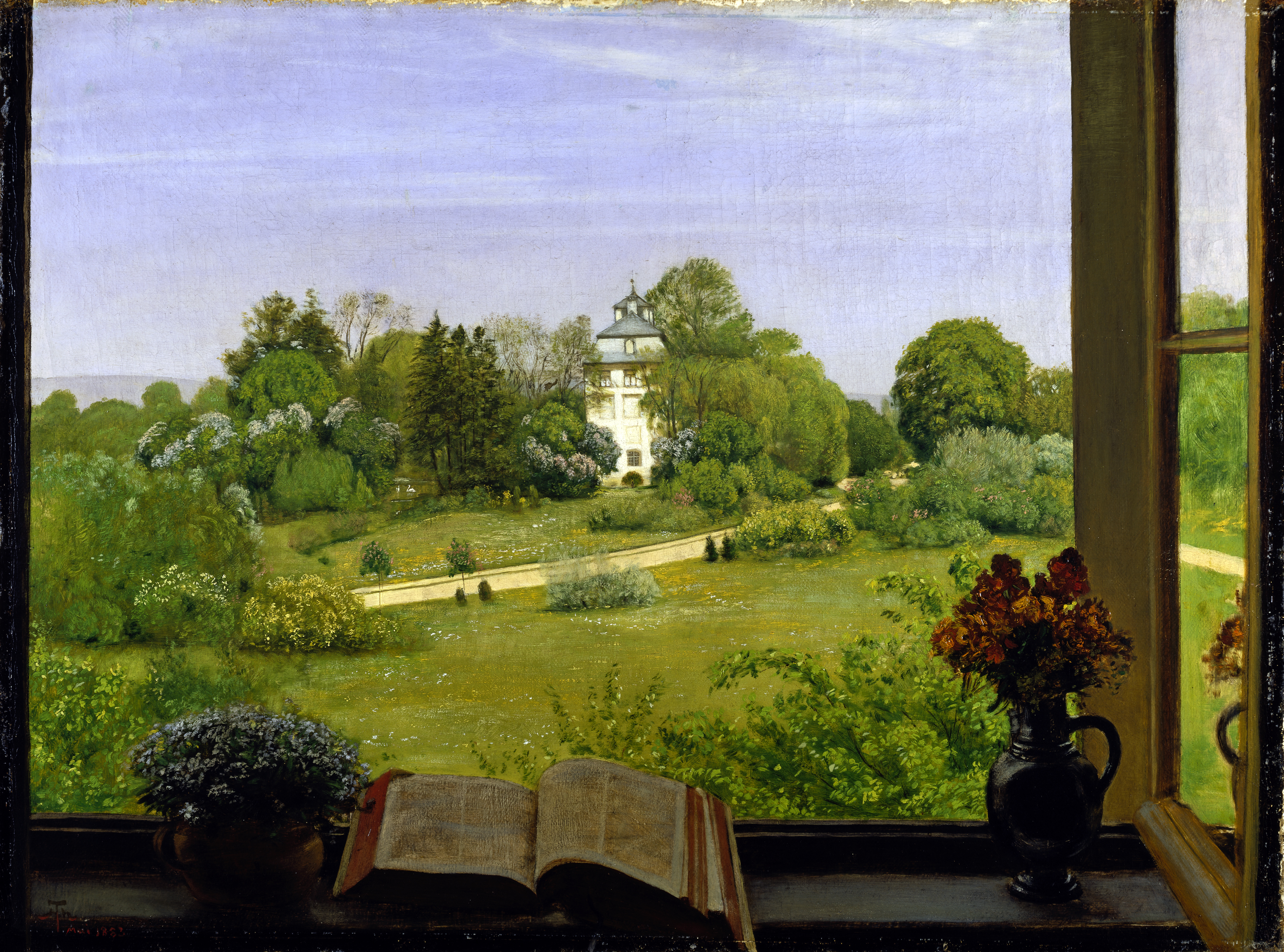
It is an act of humility to consider the cleanliness of our hearts. But like a smudged window, darkened gradually by grime, our hearts can and do become sullied by sin. This shadowing of heart space can happen subtly, almost imperceptibly. And just as it’s hard to see the view through a grime-covered window, it is hard to recognize God at work in our lives when the view from our hearts has become blocked. The light simply struggles to filter in.

In today’s first reading, the prophet Zephaniah urges the people to seek God.  He speaks of those who see the Lord, a people “humble and lowly,” a remnant chosen by God who “shall do no wrong and speak no lies; nor shall there be found in their mouths a deceitful tongue”. These, the remnant, are people of a clean heart. 

This level of humility is challenging, but today Psalm 146 also assures us the Lord is working for the good of the lowly, for our good, and will keep faith forever. We need not be afraid to consider the state of hearts—the Lord is with us, and in Him we can (and should) take refuge. Paul, too, reminds us in his letter to the people of Corinth that the chosen are called not through any merits of their own, but to fulfill God’s mission. Imagine our hearts as magnificent stained glass adorning a cathedral. The more we allow the light to shine through them, the more God’s glory is illuminated.

Today, let us make every effort to tend to our whole hearts so that as we seek God, we might also see Him. Just as the simple attention to the task of cleaning a window can make it shine and sparkle, so too that type of attention applied to the care of our own hearts will allow God’s light to move through freely. And suddenly the view becomes very clear.

Contact the Author


En la lectura del Evangelio de hoy, Jesús, tras ver la multitud de sus seguidores, se sienta y decide enseñarles. Algo que vio en la gente lo impulsó a sentarse en la ladera de una montaña y enseñar lo que llegaríamos a conocer como el Sermón del Monte. En parte de esta enseñanza, Jesús guía a la gente a través de una serie de afirmaciones que resaltan las bendiciones de la felicidad divina. Una de estas bendiciones revela cuán profundamente Jesús se preocupa y comprende la naturaleza de nuestros corazones humanos. Desea nuestra santidad para que podamos compartir con él el Reino del Padre. Según Mateo, Jesús dice: “Dichosos los limpios de corazón, porque verán a Dios”.

Es un acto de humildad considerar la limpieza de nuestro corazón. Pero como una ventana sucia, oscurecida gradualmente por la suciedad, nuestro corazón puede mancharse, y de hecho eso pasa, a causa del pecado. Esta opacidad del espacio del corazón puede ocurrir de forma sutil, casi imperceptible. Y así como es difícil ver el paisaje a través de una ventana sucia, es difícil reconocer la obra de Dios en nuestras vidas cuando la visión de nuestros corazones se ha visto bloqueada. La luz simplemente no puede entrar fácilmente.

En la primera lectura de hoy, el profeta Sofonías insta al pueblo a buscar a Dios. Habla de quienes ven al Señor, un pueblo “pobre y humilde”, un puñado de gente elegido por Dios que “No cometerá maldades ni dirá mentiras; no se hallará en su boca una lengua embustera”. Estas personas son gente de corazón limpio.

Este nivel de humildad es desafiante, pero hoy el Salmo 146 también nos asegura que el Señor obra por el bien de los humildes, por nuestro bien, y que mantendrá su fe para siempre. No debemos tener miedo de considerar el estado de nuestros corazones: el Señor está con nosotros, y en Él podemos (y debemos) refugiarnos. Pablo también nos recuerda en su carta a los corintios que los elegidos son llamados no por méritos propios, sino para cumplir la misión de Dios. Imaginemos nuestros corazones como magníficos vitrales que adornan una catedral. Cuanto más dejamos que la luz brille a través de ellos, más se ilumina la gloria de Dios.

Hoy, esforcémonos por cuidar nuestro corazón con todo nuestro ser para que, al buscar a Dios, también podamos verlo. Así como la simple atención a la tarea de limpiar una ventana puede hacerla brillar y resplandecer, también ese tipo de atención aplicada al cuidado de nuestro propio corazón permitirá que la luz de Dios circule libremente. Y de repente, la visión se vuelve mucho más clara.

Comunicarse con la autora


Raine Pyne is a longtime public school educator. She is married to Greg, who is also an educator. They have five sons, three dogs, and one cat, plus hundreds of adolescent students and countless stacks of books. Raine is a former parish catechist and women’s retreat leader. She is a student at the Theology of the Body Institute and a member of the Word on Fire Institute’s Writing Community. She is passionate about learning, language, and the ever deepening journey of faith.

Feature Image Credit: Hans Thoma, art.diocesan.com/stock-photo/view-of-holzhausenpark-7467/

The views and opinions expressed in the Inspiration Daily blog are solely those of the original authors and contributors. These views and opinions do not necessarily represent those of Diocesan, the Diocesan staff, or other contributors to this blog.

To Whom Does My Path Lead? / ¿A quién me lleva mi camino?

The scene of today’s Gospel reading takes place across from the Jordan River. John, the cousin of Jesus, has been baptizing people in the waters of the Jordan, and his inquisitors want to know why. They demand to know who he is and with what authority he acts.

John’s testimony evokes the feel of a courtroom interrogation: John “admitted, and he did not deny it, but admitted.” A denial would attempt to close the door on the conversation, but admission allows the door to open. John is not shying away from the question, “Who are you?” We can imagine his tone, full of anticipation, as he replies, “I am not the Christ.” John the Baptist knows who he is, and he knows who he is not, and he wants to tell us about the One who Is.

The priests and Levites, though, are unsatisfied and continue to take John through a process of elimination: If you’re not the Christ, then who are you? If not Elijah, then who? If not the prophet, then who? Finally, John replies and fully claims his identity: “‘I am the voice of the one crying in the desert, ‘Make straight the way of the Lord.’”

Long ago, the prophet Isaiah spoke of this voice offering hope to God’s people, a promise of comfort, encouragement and empowerment—the voice that would reveal the glory of the Lord (Is 40:5). John is that voice, and he is announcing that the Lord’s glory has finally arrived and we should prepare to receive Him. This is good news!

There is so much we can learn from the testimony of John the Baptist, but perhaps most importantly is a lesson about the power of identity. Do we know who we are and who we are not? Or, better yet, do we know Whose we are? John the Baptist did, so he did not cower when he was questioned. He was not only prepared to speak the truth, but to claim that truth as the authority for his actions.

Today we are invited to consider how to make straight the path of the Lord in our own lives. Let us look to John the Baptist as a model of someone whose identity is completely rooted in the glory of the Lord. And then, when we are called to give testimony, may we draw upon the grace and authority of our own baptism. Our identity rests in Christ as well. Let us claim that truth today.

Contact the Author


La escena del Evangelio de hoy transcurre frente al río Jordán. Juan, el primo de Jesús, ha estado bautizando en las aguas del Jordán, y sus inquisidores quieren saber por qué. Exigen saber quién es y con qué autoridad actúa.

El testimonio de Juan evoca la sensación de un interrogatorio judicial: Juan “reconoció y no negó quién era”. Una negación intentaría cerrar la puerta a la conversación, pero la admisión permite que la puerta se abra. Juan no rehúye la pregunta: “¿Quién eres, pues?”. Podemos imaginar su tono, lleno de anticipación, al responder: “Yo no soy el Mesías”. Juan el Bautista sabe quién es y quién no es, y quiere hablarnos de Aquel que Sí es.

Sin embargo, los sacerdotes y levitas están insatisfechos y siguen sometiendo a Juan a un proceso de eliminación: Si no eres el Cristo, ¿quién eres? Si no eres Elías, entonces ¿quién eres? Si no eres el profeta, ¿quién eres? Finalmente, Juan responde y afirma plenamente su identidad: “Yo soy la voz del que grita en el desierto: ‘Enderecen el camino del Señor’”.

Hace mucho tiempo, el profeta Isaías habló de esta voz que ofrecía esperanza al pueblo de Dios, una promesa de consuelo, ánimo y empoderamiento: la voz que revelaría la gloria del Señor (Is 40,5). Juan es esa voz, y anuncia que la gloria del Señor finalmente ha llegado y que debemos prepararnos para recibirla. ¡Estas son buenas noticias!

Hay mucho que podemos aprender del testimonio de Juan el Bautista, pero quizás lo más importante es una lección sobre el poder de la identidad. ¿Sabemos quiénes somos y quiénes no somos? O, mejor aún, ¿sabemos a quién pertenecemos? Juan el Bautista sí lo sabía, así que no se acobardó cuando lo cuestionaron. No solo estaba dispuesto a decir la verdad, sino a afirmar que esa verdad era la autoridad de sus acciones. 

Hoy se nos invita a reflexionar sobre cómo enderezar el camino del Señor en nuestras vidas. Consideremos a Juan el Bautista como modelo de alguien cuya identidad está completamente arraigada en la gloria del Señor. Y entonces, cuando seamos llamados a dar testimonio, que podamos inspirarnos en la gracia y la autoridad de nuestro propio bautismo. Nuestra identidad también reside en Cristo. Reclamemos esta verdad hoy.

Comunicarse con la autora


Raine Pyne is a longtime public school educator. She is married to Greg, who is also an educator. They have five sons, three dogs, and one cat, plus hundreds of adolescent students and countless stacks of books. Raine is a former parish catechist and women’s retreat leader. She is a student at the Theology of the Body Institute and a member of the Word on Fire Institute’s Writing Community. She is passionate about learning, language, and the ever deepening journey of faith.

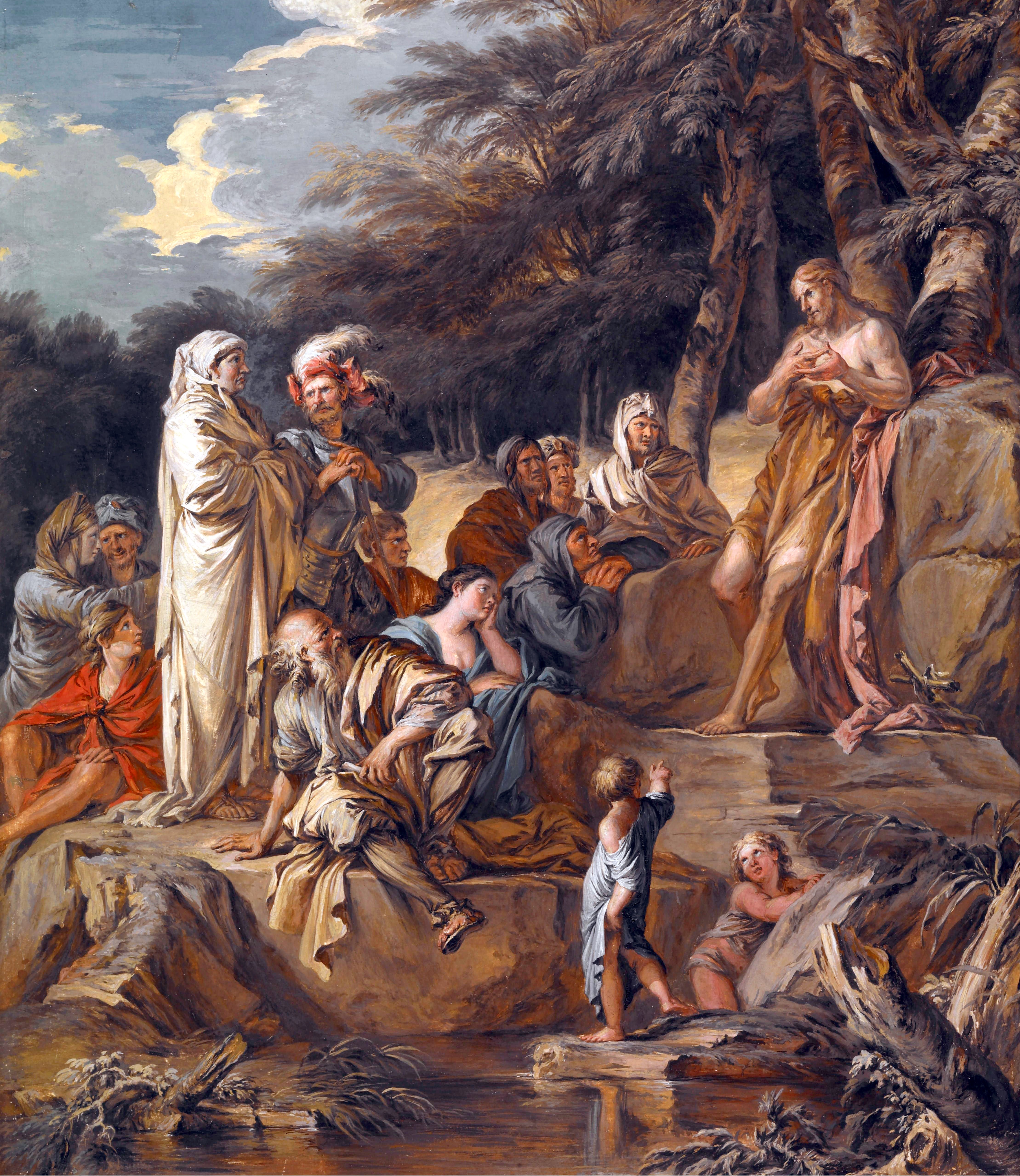
Feature Image Credit: Joseph Goupy, art.diocesan.com/stock-photo/st-john-preaching-in-the-wilderness-21126/

The views and opinions expressed in the Inspiration Daily blog are solely those of the original authors and contributors. These views and opinions do not necessarily represent those of Diocesan, the Diocesan staff, or other contributors to this blog.