Whole Again / Sanos de nuevo

“Which is easier, to say to the paralytic, ‘Your sins are forgiven,’ or to say, ‘Rise, pick up your mat, and walk’?”

This is Christ’s question to the skeptical scribes who doubt Him after He forgives the sins of the paralyzed man. He challenges their doubt by not only forgiving the paralyzed man’s sins but also healing the man’s body. In doing so, He reveals to His onlookers, believers and skeptics alike, that He has authority over body and soul, the kind of authority that belongs to God alone. Only the Author of Life can fully heal physical and spiritual illness.

Yet Christ’s healing here isn’t just about His divine authority. It also reveals His deep love for us, His desire for us to know the deadly consequences of sin and the salvific power of His grace. This, and all His miracles of healing, are meant to show His followers, including us, two incredibly important truths.

The first is the debilitating nature of sin. Christ’s earthly ministry often involved healing the sick and afflicted. But more importantly than that, He forgave sins, and He ultimately died for our sins. His death and Resurrection are proof of the tragic cost of sin, the ultimate cost. Yet His suffering is also what has freed us from the chains of sin and its eternal punishment, death. 

In today’s Gospel, Christ forgives the paralytic man’s sins even before healing his body, revealing to us that sickness of the soul is serious, far more serious than even a lifelong physical disability. Modern medicine might heal some ailments, but it can’t erase sin or prevent death. God’s forgiveness can. He sent His Son to become Man, to tell us and show us through His death and Resurrection that His Love restores us completely. He is the great Healer, not only of the body, but more importantly, of the soul. 

This is the second truth, greater even than the first: Christ loves us to the point of wholeness. He is Love and Life Itself. His love is torrential; it completely wipes out not only our sins, but even the physical consequences of sin, like suffering, and death without resurrection. He loves us back to life again.

Christ’s greatest gift to us, the truth about His life and death and Resurrection, is that His love is infinitely more powerful than even sin and death. He is the Healer and the Life-giver. He restores us and makes us new – not just “fine,” or “back to normal,” but new. He can create good out of nothing. His love can restore us wholly from the ravages of sin.

Your forgiveness has already been earned. All He asks is that you receive it from Him. Do we have the same humility, the same faith as the paralyzed man? Are we also willing to break through walls to ask Christ for His healing love? How desperately do you want to be made new? He wants it even more than that. Trust in Him!

Contact the author


“¿Qué es más fácil, decirle al paralítico: ‘Tus pecados te son perdonados’ o decirle: ‘Levántate, recoge tu camilla y vete a tu casa’?

Esta es la pregunta de Cristo a los escribas escépticos que dudaban de Él después de perdonar los pecados del paralítico. Él desafía sus dudas no sólo perdonando los pecados del paralítico, sino también sanando su cuerpo. Al hacerlo, revela a quienes lo observaban, creyentes y escépticos por igual, que Él tiene autoridad sobre el cuerpo y el alma, la clase de autoridad que solo le pertenece a Dios. Solo el Autor de la Vida puede sanar completamente la enfermedad física y espiritual.

Sin embargo, el hecho de que Cristo sana no se trata solo de su autoridad divina. También revela su profundo amor por nosotros, su deseo de que conozcamos las consecuencias mortales del pecado y el poder salvífico de su gracia. Esto, y todos sus milagros de sanación, tienen el propósito de mostrar a sus seguidores, incluyéndonos a nosotros, dos verdades increíblemente importantes. 

La primera es la naturaleza debilitante del pecado. El ministerio terrenal de Cristo a menudo implicó sanar a los enfermos y afligidos. Pero aún más importante, perdonó los pecados y, finalmente, murió por los nuestros. Su muerte y resurrección son prueba del trágico costo del pecado, el costo máximo. Sin embargo, su sufrimiento es también lo que nos ha liberado de las cadenas del pecado y de su castigo eterno: la muerte.

En el Evangelio de hoy, Cristo perdona los pecados del paralítico incluso antes de sanar su cuerpo, revelándonos que la enfermedad del alma es grave, mucho más grave que una discapacidad física de por vida. La medicina moderna puede curar algunas dolencias, pero no puede borrar el pecado ni evitar la muerte. El perdón de Dios sí puede. Envió a su Hijo a hacerse hombre, para decirnos y mostrarnos mediante su muerte y resurrección que su amor nos restaura por completo. Es el gran Sanador, no solo del cuerpo, sino, aún más importante, del alma.

Esta es la segunda verdad, mayor aún que la primera: Cristo nos ama hasta la plenitud. Él es Amor y Vida Misma. Su amor es torrencial; borra por completo no solo nuestros pecados, sino incluso las consecuencias físicas del pecado, como el sufrimiento y la muerte sin resurrección. Nos devuelve la vida con su amor.

El mayor regalo de Cristo para nosotros, la verdad sobre su vida, muerte y resurrección, es que su amor es infinitamente más poderoso que incluso el pecado y la muerte. Él es el Sanador y el Dador de Vida. Él nos restaura y nos hace nuevos; no solo “más o menos” o “normales de nuevo”, sino nuevos. Él puede crear algo bueno de la nada. Su amor puede restaurarnos completamente de los estragos del pecado.

Tu perdón ya se ha ganado. Solo te pide que lo recibas de Él. ¿Tenemos la misma humildad, la misma fe que el paralítico? ¿Estamos dispuestos a derribar muros para pedirle a Cristo su amor sanador? ¿Cuánto deseas ser renovado? Él lo desea aún más. ¡Confía en Él!

Comunicarse con la autora

Hailing from Nashville, Catherine is a graduate of Christendom College with a lifelong passion for words. Her love of writing and her Catholic Faith continue to shape her as a freelance editor, copywriter, and (aspiring) novelist, where she pursues her passions for the love and greater glory of God.

Feature Image Credit: Luis Ruiz, pexels.com/photo/person-stand-on-sand-1774929/

The views and opinions expressed in the Inspiration Daily blog are solely those of the original authors and contributors. These views and opinions do not necessarily represent those of Diocesan, the Diocesan staff, or other contributors to this blog.

Make Me Clean / Cúrame

One weekend at the softball fields, while his sister played in an all-day tournament, my young son spent the day with other children in a sandbox. Before the last game he became aware of the grimy status of his outward appearance with the dirt of the day smudged across his face and hands. His little voice still rings out in my memory, “Mama, I dirty! Make me clean.” So I took him into the bathroom and, working with soap and water, gave him a good scrubbing with paper towels until we revealed a shiny clean face and hands.

Some years later, when it was time for my son to learn about the Sacrament of Reconciliation, I reminded him of this experience. In Confession, we go before the Lord with the dirt of our days clinging to our soul and we ask Him, “Lord make me clean.” We repent of our sinful ways, ask for forgiveness and healing, and promise to do better tomorrow. Jesus answers us the way He responds to the man with leprosy, “I do will it. Be made clean.”

When was the last time you sought Jesus in the sacrament of Reconciliation? Is it time to return? It doesn’t matter how much time has passed or what you’ve done in your life since the last time you went to Reconciliation. He waits patiently for us to notice our dirty hands and face, the smudged sin on our soul. He is there for us to seek him out, to humbly bow and ask for His forgiveness.

Come and ask Him, Lord if you wish, you can make me clean. There is nothing that we cannot ask Him for when we have true repentance. Come before Jesus. Approach Him with a contrite and humble heart and he will make you clean. 

Jesus, as I consider all the sores and stains of my sin, I truly repent and seek your forgiveness. If you wish, you can make me clean.

Contact the Author


Un fin de semana en los campos de sóftbol, ​​mientras su hermana jugaba en un torneo que duraba todo el día, mi hijo pequeño pasó el día con otros niños en un arenero. Antes del último partido, se dio cuenta de lo sucio que estaba su aspecto exterior, con la suciedad del día manchada en la cara y las manos. Su vocecita aún resuena en mi memoria: “¡Mami, ‘toy sucio! Límpiame”. Así que lo llevé al baño y, con agua y jabón, lo froté bien con papel toalla hasta que vimos su cara y sus manos limpias y relucientes.

Años después, cuando llegó el momento de que mi hijo aprendiera sobre el Sacramento de la Reconciliación, le recordé esta experiencia. En la Confesión, nos presentamos ante el Señor con la suciedad de nuestros días pegada al alma y le pedimos: “Señor, hazme limpio”. Nos arrepentimos de nuestros pecados, pedimos perdón y sanación, y prometemos mejorar mañana. Jesús nos responde como le respondió al leproso: “Quiero. Queda limpio”.

¿Cuándo fue la última vez que buscaste a Jesús en el sacramento de la Reconciliación? ¿Es hora de volver? No importa cuánto tiempo haya pasado ni qué hayas hecho en tu vida desde la última vez que fuiste a la Reconciliación. Él espera pacientemente a que nos demos cuenta de nuestras manos y rostro sucios, de la mancha de pecado en nuestra alma. Él está ahí para que lo busquemos, para que nos inclinemos humildemente y le pidamos perdón.

Ven y pídele: “Señor, si quieres, puedes curarme”. No hay nada que no podamos pedirle cuando estamos verdaderamente arrepentidos. Ven ante Jesús. Acércate con un corazón contrito y humilde, y te limpiará.

Jesús, al considerar todas las llagas y manchas de mi pecado, me arrepiento de verdad y busco tu perdón. Si quieres, puedes limpiarme.

Comunicarse con la autora


Shelly Henley Kelly is a wife, mother of three, and native Texan who writes and records a podcast with her sister on Of Sound Mind and Spirit and is a regular contributor to Catholic Mom. When not writing or recording, Shelly can be found volunteering as a Youth Ministry Catechist, keeping the scorebook at her son’s baseball games, diving deep into historical research, or hiding with a good book in between games.

Feature Image Credit: Submitted by Author

The views and opinions expressed in the Inspiration Daily blog are solely those of the original authors and contributors. These views and opinions do not necessarily represent those of Diocesan, the Diocesan staff, or other contributors to this blog.

Transition Time / Tiempo de transición

I am a little breathless as I read today’s Gospel passage. Mark doesn’t give us a lot of time to breathe between one event and the next. Jesus shows up, “immediately” begins healing, then heals some more, then it’s evening and He’s still healing. Jesus gets up very early to pray, is sought out almost immediately, and goes out to keep healing all over Galilee. Phew! 

There is urgency and immediacy in Jesus’ attitude in the Gospel of Mark. He doesn’t wait to get started but dives right into the needs before Him. It reminds me of a quote by J.R.R. Tolkien in The Lord of the Rings: “It’s the job that’s never started that takes longest to finish.” Jesus’ public ministry was only three years long and we can really feel the press of time in the way Mark chooses to write his Gospel. 

While rest is obviously an important part of life, it is not what life revolves around. Even in the midst of pressure, Jesus takes time to be alone with His Father in solitude, but when the Apostles come to Him He doesn’t grow exasperated that they interrupted His prayer time. He doesn’t say, “Five more minutes guys, come on!” He hears the needs of the people and goes out to them, ready to continue His work. 

There are many things we can consider from this passage and the Gospel of Mark in general. What stands out to me is Jesus’ lack of transition time. He just moves from one thing to the next. It challenges me to consider how I often use transition time as an excuse to not do something I need to do. I don’t really want to clean the bathroom, and I just finished cleaning the stove, so surely I’ve earned a five minute scroll on my phone before moving onto the next job. As you may have guessed, it is rarely ever just five minutes. 

Instead of doing the work I know I need to do, I find excuses to drag things out, which ultimately, as Tolkien rightly points out, makes the whole ordeal even longer. Again, rest is important, but it must be part of a rightly ordered day and not used as an excuse to avoid what needs doing.

Contact the author


Me quedo sin aliento al leer el pasaje del Evangelio de hoy. Marcos no nos da mucho tiempo para respirar entre un evento y otro. Jesús llega, “enseguida” comienza a sanar, luego sana un poco más, luego anochece y sigue sanando. Jesús se levanta muy temprano para orar, lo buscan casi de inmediato y sale a seguir sanando por toda Galilea. ¡Uf!

Hay urgencia e inmediatez en la actitud de Jesús en el Evangelio de Marcos. No espera para empezar, sino que se sumerge completamente en las necesidades que tiene a la mano. Me hace acordar de una cita de J.R.R. Tolkien en El Señor de los Anillos: “El trabajo que nunca se empieza es el que tarda más en finalizarse”. El ministerio público de Jesús duró solo tres años y podemos sentir la presión del tiempo en la forma en que Marcos decide escribir su Evangelio.

Si bien el descanso es, sin duda, una parte importante de la vida, no es lo primordial. Incluso en medio de la presión, Jesús se toma un tiempo para estar a solas con su Padre, pero cuando los apóstoles se le acercan, no se desespera porque han interrumpido su tiempo de oración. No dice: “¡Hombre! ¡Cinco minutos más, por favor muchachos!” Escucha las necesidades de la gente y sale a su encuentro, dispuesto a continuar su obra.

Hay muchas cosas que podemos considerar de este pasaje y del Evangelio de Marcos en general. Lo que más me llama la atención es la falta de tiempo de transición de Jesús. Simplemente pasa de una cosa a otra. Me reta a pensar en cómo a menudo utilizo el tiempo de transición como excusa para no hacer algo que necesito hacer. No tengo muchas ganas de limpiar el baño y acabo de limpiar la estufa, así que seguramente me he ganado cinco minutos de ver mi teléfono antes de pasar a la siguiente tarea. Como habrán adivinado, rara vez son solo cinco minutos.

En lugar de hacer el trabajo que sé que tengo que hacer, busco excusas para alargar las cosas, lo que, a fin de cuentas, como señala Tolkien, alarga aún más el asunto. Nuevamente, el descanso es importante, pero debe ser parte de un día bien ordenado y no utilizado como excusa para evitar lo que hay que hacer.

Comunicarse con la autora

Kate Taliaferro is an Air Force wife and mother. She is blessed to be able to homeschool, bake bread and fold endless piles of laundry. When not planning a school day, writing a blog post or cooking pasta, Kate can be found curled up with a book or working with some kind of fiber craft. Kate blogs at DailyGraces.net.

Feature Image Credit: RuslanSikunov, pixabay.com/photos/clock-alarm-clock-coffee-cup-8592484/

The views and opinions expressed in the Inspiration Daily blog are solely those of the original authors and contributors. These views and opinions do not necessarily represent those of Diocesan, the Diocesan staff, or other contributors to this blog.

Do You Know Who You Are? / ¿Sabes Quién Eres?

In today’s Gospel, Jesus continues His travels, astounding the people with His power and authority. Even unclean spirits respond to His orders, and the people are amazed. When we read these stories, it can be hard to imagine why anyone doubted for a moment who Jesus was and what His arrival meant. But doubt they did, and mankind has continued to doubt ever since.

Many times since Jesus’ life, death and resurrection, the Church He founded has strived to hold the rudder toward true north. Storms of misunderstandings, disagreements, and disputes have been part of the Church since her beginning, but through it all she moves forward.

One of those storms was raging during the life of the saint we celebrate today. A convert who discovered Jesus through Scripture, Saint Hilary lived in the fourth century during the Arian heresy, which denied the divinity of Jesus Christ. When Hilary refused to condemn Saint Athanasius who had spoken out against the heresy, he was exiled. Rather than bowing to his persecution, he used his time in exile to study and to write, and he became an even more powerful defender of Christ’s divinity. He also composed hymns to spread the faith more broadly yet.

According to Saint Hilary, the heretics of his time had lost sight of their true identity. “They didn’t know who they were,” he said. His mission was to remind them, and to remind us, of exactly who we are. We are children of a loving God who have inherited eternal life through belief in Jesus Christ, the Son of God, the same Jesus Christ who worked his wonders that day in Capernaum.

There is a worldly misconception that living a life of faith means avoiding the storms of life. On the contrary, as Saint Hilary and so many other powerful witnesses have shown us, true discipleship walks us into the storm, not away from it. But a life of faith, rooted in a confident understanding of exactly who we are, offers calm amid the storm. It grants us a sense of purpose and hope we will be carried safely to the other side.

Contact the author


En el Evangelio de hoy, Jesús continúa sus viajes, asombrando a la gente con su poder y autoridad. Incluso los espíritus inmundos responden a sus órdenes, y la gente queda maravillada. Al leer estas historias, puede ser difícil imaginar cómo alguien pudiera dudar por un instante de quién era Jesús y qué significaba su llegada. Pero dudaron, y la humanidad ha seguido dudando desde ese entonces.

Muchas veces, desde la vida, muerte y resurrección de Jesús, la Iglesia que él fundó se ha esforzado por mantener el rumbo recto. Tormentas de malentendidos, desacuerdos y disputas han formado parte de la Iglesia desde sus inicios, pero a pesar de todo, sigue adelante.

Una de esas tormentas azotó la vida del santo que celebramos hoy. San Hilario, un converso que descubrió a Jesús a través de las Escrituras, vivió en el siglo IV durante la herejía arriana, que negaba la divinidad de Jesucristo. Cuando Hilario se negó a condenar a San Atanasio, quien se había pronunciado en contra de la herejía, fue exiliado. En lugar de ceder ante la persecución, dedicó su tiempo en el exilio a estudiar y escribir, convirtiéndose en un defensor aún más enérgico de la divinidad de Cristo. También compuso himnos para difundir la fe aún más ampliamente.

Según san Hilario, los herejes de su tiempo habían perdido de vista su verdadera identidad. “No sabían quiénes eran”, dijo. Su misión era recordarles, y recordarnos a nosotros, quiénes somos. Somos hijos de un Dios amoroso que hemos heredado la vida eterna mediante la fe en Jesucristo, el Hijo de Dios, el mismo Jesucristo que obró sus maravillas aquel día en Cafarnaúm.

Existe la idea errónea global de que vivir una vida de fe significa evitar las tormentas de la vida. Por el contrario, como nos han demostrado san Hilario y tantos otros testigos influyentes, el verdadero discipulado nos lleva hacia la tormenta, no lejos de ella. Pero una vida de fe, arraigada en una comprensión segura de quiénes somos, ofrece calma en medio de la tormenta. Nos otorga un sentido de propósito y la esperanza de que seremos llevados sanos y salvos al otro lado.

Comunicarse con la autora

Pamela Kavanaugh is a grateful wife, mother, and grandmother who has dedicated her professional life to Catholic education. Though she has done her very best to teach her students well in the subjects of language and religion, she knows that she has learned more than she has taught. She lives, teaches, and writes in southwest suburban Chicago.
Feature Image Credit: Brett Jordan, pexels.com/photo/brown-wooden-scrabble-tiles-on-white-table-7416851/

The views and opinions expressed in the Inspiration Daily blog are solely those of the original authors and contributors. These views and opinions do not necessarily represent those of Diocesan, the Diocesan staff, or other contributors to this blog.

The Time is Now / Ahora es el momento indicado

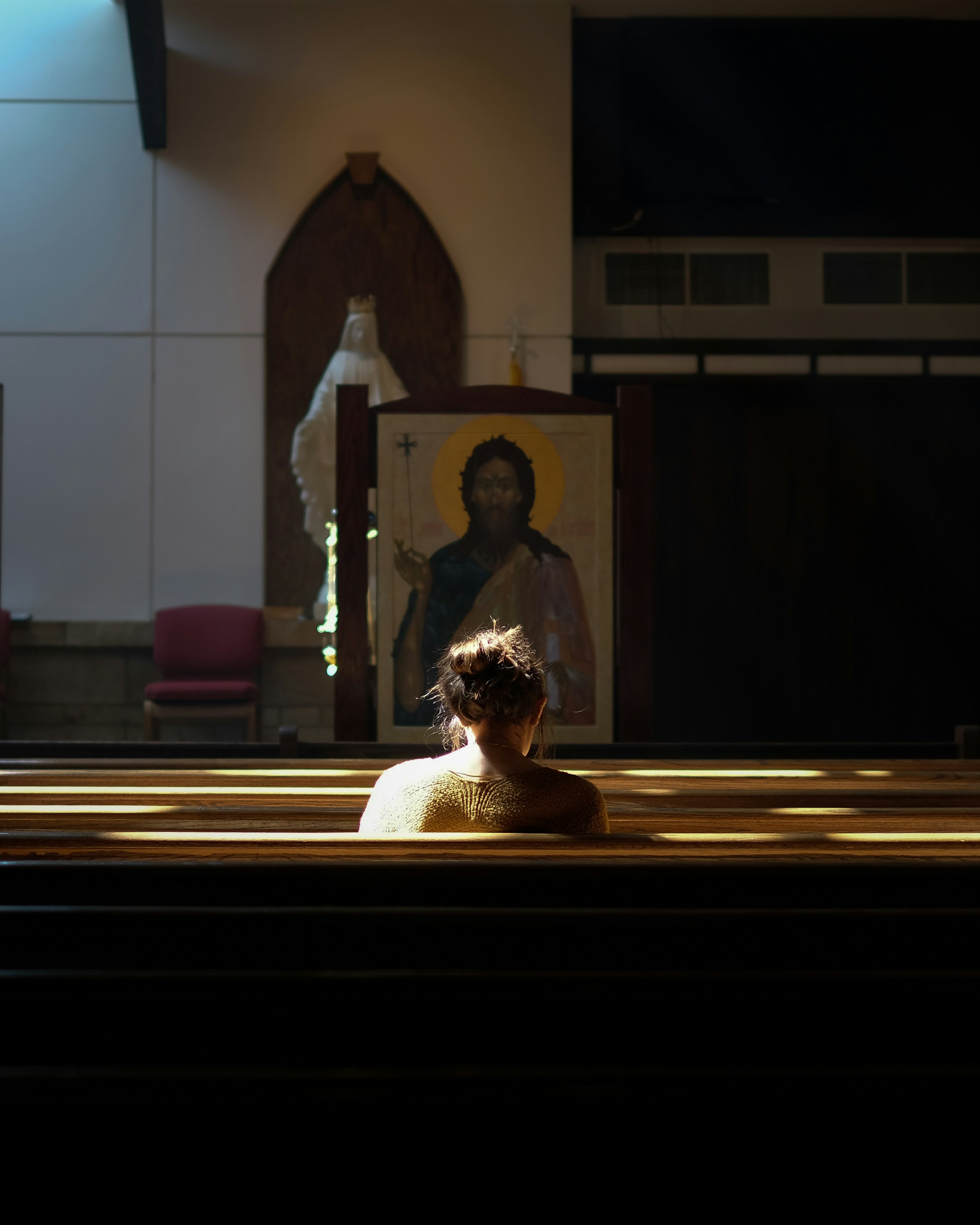
I love God with all my heart and genuinely wish to live a life of holiness, as He calls us all to do.  However, I’ve become distracted by life and stopped putting God first. I feel terrible, but repairing my relationship with Him seems a bit overwhelming. 

A million questions run through my brain. Am I ready to live a life completely dedicated to God?  Can I surrender all that I am to Him? How do I live a holy life? What about my propensity to sin?  How do I get started living for Christ again? Shouldn’t I get my life sorted out first? This sounds like too much to deal with today, so why not tackle it when I’m more rested, focused, and have the time and strength to focus on God clearly?  

Jesus tells us in today’s Gospel that the time is now.  “The Kingdom of God is at hand.” I hear Him telling me, “Stop procrastinating. Stop waiting until you think the time is perfect; just take the first step, and then the next step. I am here with you.” 

I plead, “Lord, how do I do what you are asking of me?  Where do I begin?” He nudges me to read through today’s Gospel again. “Repent and believe in the Gospel,” comes into focus. That line is very familiar because we hear it on Ash Wednesday as we receive ashes.  When I hear it on the first day of Lent, it is a balm to my heart because I know Jesus is reminding me that it is never too late to begin again, no matter my sin, my feeling of being lost or distracted in this world, or my attitude of procrastination.  

During Lent, we know it is a time to begin anew in preparation for Easter Sunday.  But what about on this first Monday of Ordinary Time? Do I start again today? My eyes wander back to the Gospel reading.  “This is the time of fulfillment.”  Yes, Jesus is saying, the time is now.  I need to stop putting off my relationship with Him. This is my reminder to take action. My Lord is waiting for me. He is calling me to the Sacrament of Reconciliation, to make a good confession and accept His loving mercy in my life.  

With that mercy, I can dedicate my life to Him and walk with Him on my journey of faith.  And when I stumble or get distracted again, which He knows I will, I will again hear His words from today’s Gospel reading. “Repent and believe in the Gospel.”

What am I waiting for? What are you waiting for? The time is now.

Contact the Author


Amo a Dios con todo mi corazón y sinceramente deseo vivir una vida de santidad, como Él nos llama a todos a hacer. Sin embargo, la vida me ha distraído y he dejado de poner a Dios en primer lugar. Me siento fatal, pero reparar mi relación con Él me resulta un poco abrumador.

Un millón de preguntas me rondan la cabeza. ¿Estoy listo para vivir una vida completamente dedicada a Dios? ¿Puedo entregarle todo lo que soy? ¿Cómo vivo una vida santa? ¿Qué pasa con mi propensión al pecado? ¿Cómo puedo empezar a vivir para Cristo de nuevo? ¿No debería poner mi vida en orden primero? Esto parece demasiado para lidiar hoy, así que ¿por qué no abordarlo cuando esté más descansada, concentrada y tenga el tiempo y la fuerza para enfocarme en Dios con claridad?

Jesús nos dice en el Evangelio de hoy que el tiempo es ahora: “el Reino de Dios ya está cerca”. Lo oigo decirme: “Deja de procrastinar. Deja de esperar hasta que creas que es el momento perfecto; simplemente da el primer paso, y luego el siguiente. Estoy aquí contigo”. 

Suplico: “Señor, ¿cómo hago lo que me pides? ¿Por dónde empiezo?” Me invita a leer de nuevo el Evangelio de hoy. “Arrepiéntanse y crean en el Evangelio” se hace evidente. Esa frase me resulta muy familiar porque la escuchamos los Miércoles de Ceniza al recibir las cenizas. Cuando la escucho el primer día de Cuaresma, es un bálsamo para mi corazón porque sé que Jesús me recuerda que nunca es tarde para empezar de nuevo, sin importar mi pecado, mi sensación de estar perdido o distraído en este mundo, o mi actitud de procrastinación.

Durante la Cuaresma, sabemos que es tiempo de empezar de nuevo en preparación para el Domingo de Pascua. Pero ¿qué pasa en este primer lunes del Tiempo Ordinario? ¿Empiezo de nuevo hoy? Mis ojos regresan a la lectura del Evangelio y leo: “Se ha cumplido el tiempo”. Sí, Jesús dice, el momento es ahora. Necesito dejar de posponer mi relación con Él. Este es mi recordatorio para actuar. Mi Señor me espera. Me llama al Sacramento de la Reconciliación para hacer una buena confesión y aceptar su amorosa misericordia en mi vida.

Con esa misericordia, puedo dedicarle mi vida y caminar con él en mi camino de fe. Y cuando vuelva a tropezar o distraerme, cosa que Él sabe que ocurrirá, volveré a escuchar sus palabras del Evangelio de hoy: “Arrepiéntanse y crean en el Evangelio”.

¿Para qué espero? ¿Para qué esperas tú? Ahora es el momento indicado.

Comunicarse con la autora


Lisa Henley Jones is a wife, mom, and native Texan. Her life is influenced by her Catholic faith and she shares it through writing and on her podcast, Of Sound Mind and Spirit, together with her sister, Shelly Kelly. For fun, Lisa enjoys reading, walking, dating her husband, and wearing the college colors of her young adult kids.

Feature Image Credit: Josh Applegate, unsplash.com/photos/woman-sitting-on-church-pew-during-daytime-FEbL32XEgzY

The views and opinions expressed in the Inspiration Daily blog are solely those of the original authors and contributors. These views and opinions do not necessarily represent those of Diocesan, the Diocesan staff, or other contributors to this blog.

The Baptism of Jesus / El Bautismo de Jesús

As a mother of five children and an aunt to 26 more, I have attended my fair share of baptisms. They are always beautiful and joyful occasions, celebrations of a new member being added to God’s family. But most of them have also had their mishaps, as tends to happen when little kids are involved. Whether it be a last minute dirty diaper, an older sibling running up to the baptismal font right in the middle of the ceremony, or the baby screaming during the whole affair, baptisms, like most moments in life, are not perfect. 

What is perfect is the sacramental and sanctifying grace that is poured into the soul of the newly baptized. What is perfect is the great love that God has for us in granting us this palpable moment of unity with Him. What is perfect is this opportunity for family and friends to witness an indelible mark being placed on the baby’s soul, sealing them for an eternity with God.

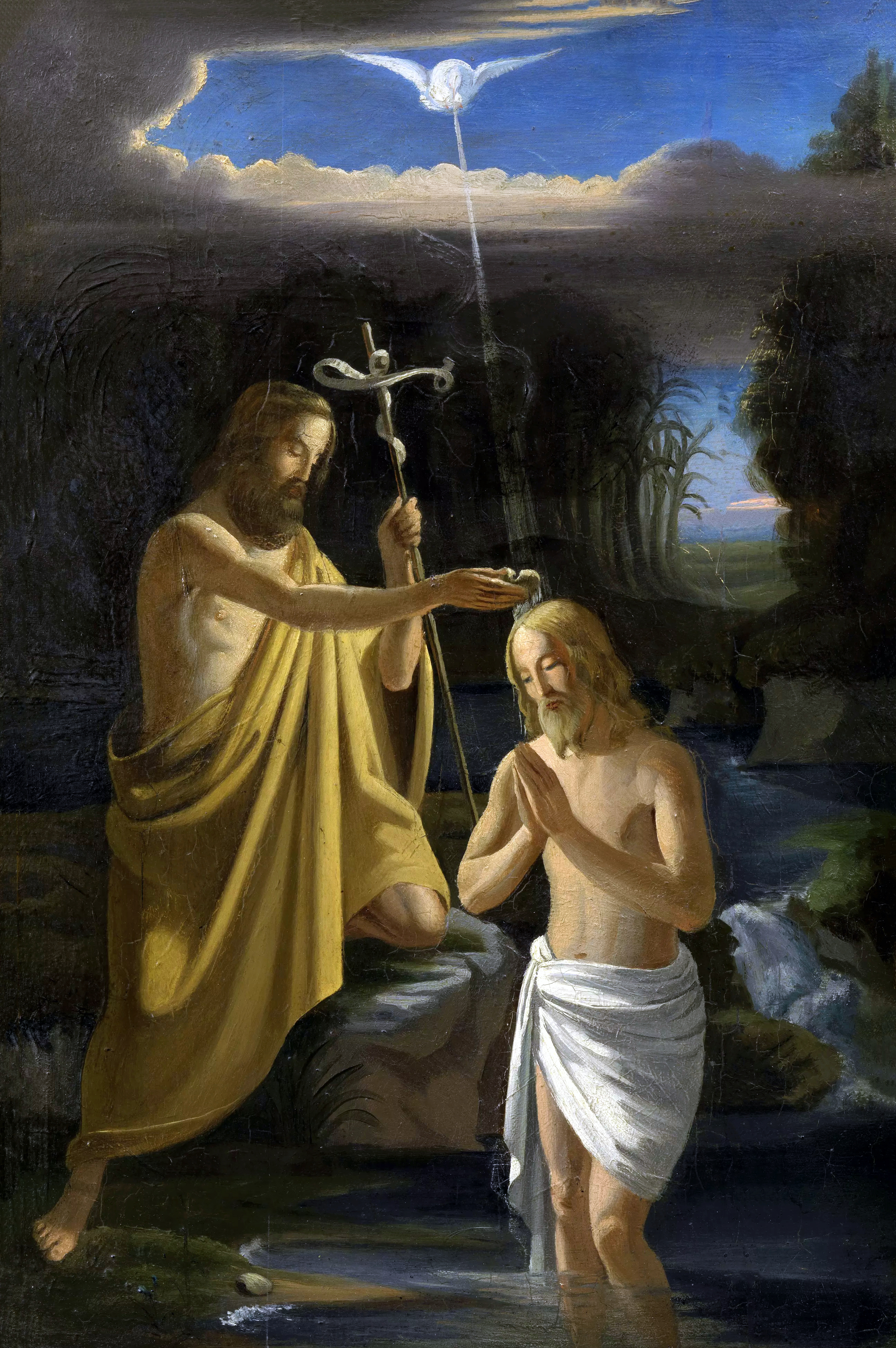
In today’s Gospel, we read about the Baptism of Jesus. What a powerful witness that the Son of God Himself chose to be baptized by a human being. What a powerful manifestation of the Holy Trinity, both audibly and visibly present. What a powerful way to show us just how important baptism is. 

I invite you to place yourself in this moment. Imagine the confusion of John the Baptist, being asked to baptize God. Imagine the awe of the others present upon seeing the heavens being opened. Imagine their fright when a voice boomed down from the heavens. Did the bystanders run away in fear? Did they kneel in adoration? Did they stand there frozen in shock? What would you do? What are you feeling called to do now, in this moment, as you reflect upon this passage?

Contact the Author


Como madre de cinco hijos y tía de 26 más, he asistido a bastantes bautizos. Siempre son ocasiones hermosas y alegres, celebraciones de la llegada de un nuevo miembro a la familia de Dios. Pero la mayoría también han tenido sus contratiempos, como suele ocurrir con los niños pequeños. Ya sea un pañal sucio a última hora, un hermano mayor corriendo a la pila bautismal en medio de la ceremonia, o el bebé llorando durante todo el evento, los bautizos, como la mayoría de los momentos de la vida, no son perfectos.

Algo que sí es perfecto es la gracia sacramental y santificadora que se derrama en el alma del recién bautizado. Algo que sí es perfecto es el gran amor que Dios nos tiene al concedernos este momento palpable de unidad con Él. Algo que sí es perfecto es esta oportunidad para que familiares y amigos sean testigos de cómo se deja una marca indeleble en el alma del bebé, sellándolo para la eternidad con Dios.

En el Evangelio de hoy, leemos sobre el Bautismo de Jesús. Qué poderoso testimonio que el propio Hijo de Dios eligiera ser bautizado por un ser humano. Qué poderosa manifestación de la Santísima Trinidad, tanto audible como visiblemente presente. Qué poderosa manera de mostrarnos la importancia del bautismo.

Los invito a ponerse en la escena. Imaginen la confusión de Juan el Bautista al ser invitado a bautizar a Dios. Imaginen el asombro de los presentes al ver los cielos abrirse. Imaginen su miedo cuando una voz resonó desde el cielo. ¿Los presentes huyeron por miedo? ¿Se arrodillaron en adoración? ¿Se quedaron paralizados por el shock? ¿Qué harían ustedes? ¿Qué se sienten llamados a hacer ahora, en este momento, al reflexionar sobre este pasaje?

Comunicarse con la autora


Tami Urcia is a midwestern gal from a large Catholic family. As a young adulthood she was a missionary in Mexico, where she studied theology and philosophy. After returning stateside bilingual, she gained a variety of work experience, traveled extensively and finished her Bachelor’s Degree at Brescia University. She loves organizing and simplifying things, watching her children play sports, deep conversations with close family and friends and finding unique ways to brighten others’ day with Christ’s love. She works full time at Diocesan in the Software Department and manages the Inspiration Daily reflections. She is also a contributing writer on CatholicMom.com and BlessedIsShe.net.
Feature Image Credit: Unknown Artist, art.diocesan.com/stock-photo/baptism-of-christ-22148/

The views and opinions expressed in the Inspiration Daily blog are solely those of the original authors and contributors. These views and opinions do not necessarily represent those of Diocesan, the Diocesan staff, or other contributors to this blog.

Pick me! Pick me! / ¡Escójeme a mi! ¡Escójeme a mi!

We were moving my son out of our home and into his new apartment. I asked, “Should I put this box here?”  He replied, “Ask her!” he said, referring to his future bride. This is actually happening. My son is getting married soon. They rented an apartment and he planned to live there alone until the wedding when his bride would join him. 

Realization struck me at that moment. My son viewed the apartment, not as his, but rather as theirs. He was giving his future bride complete control over organization and décor, something I had always been in charge of before. My competitive nature bristled at this and my motherly heart felt some difficult things. There was someone new. Someone whose opinion mattered more than mine. 

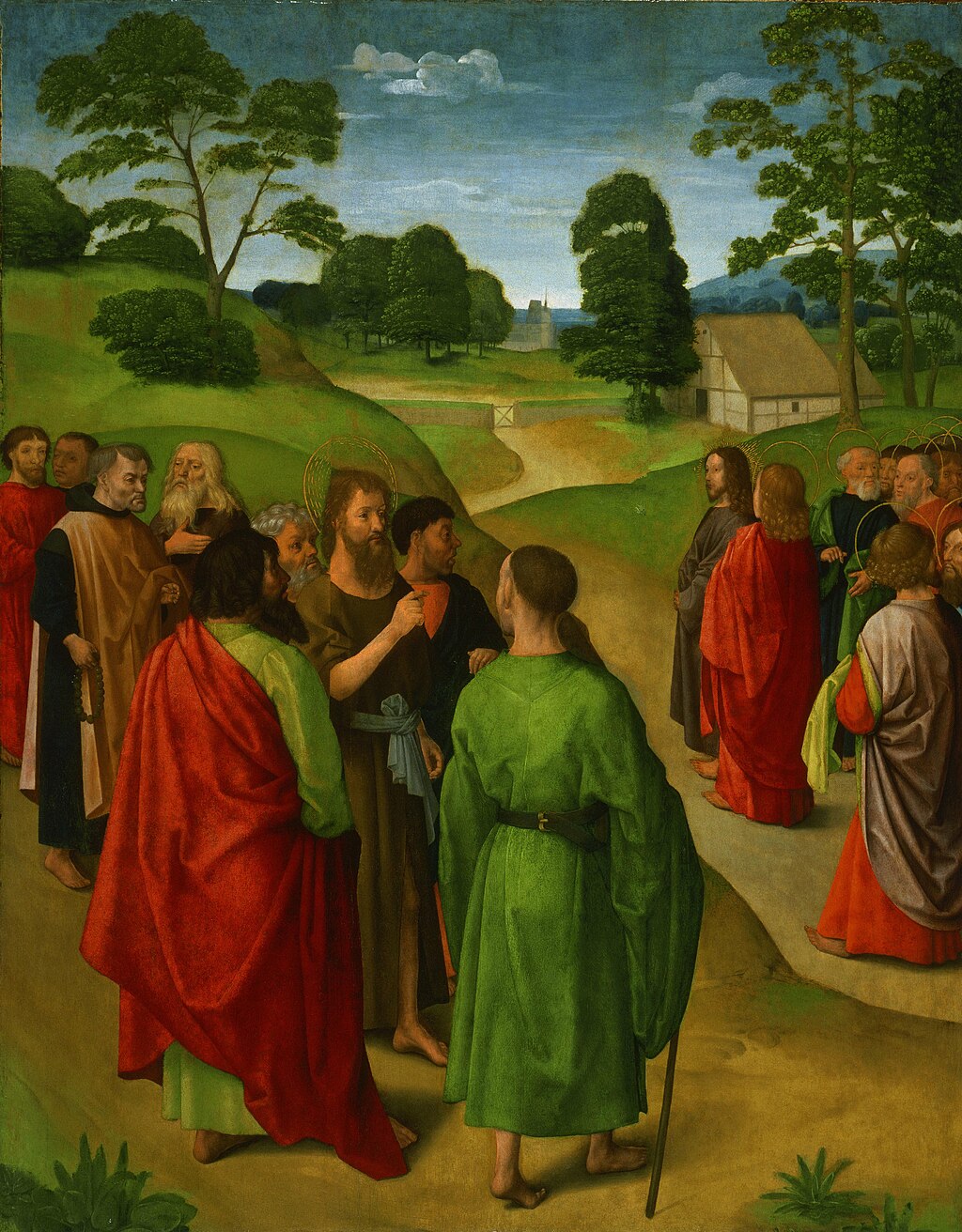
In today’s Gospel, there is someone new baptizing and the people approach John in confusion.  Accustomed to everyone following John, someone else is now doing the same thing, drawing attention away from John. This new man’s opinion mattered more. Many people were leaving John to follow him. John’s disciples, in their competitive nature, challenged John, perhaps attempting to spark envy in him. Isn’t it natural to want to be the most important, the leader, the most popular? 

However, John’s response surprises them. He finds joy in recognizing Jesus as the Messiah. He reminds his followers that the Bridegroom is more important than the Best Man. The role of the Best Man is to be the one who “stands and listens for him, [and] rejoices greatly at the bridegroom’s voice.” 

By saying, “He must increase; I must decrease,” John demonstrates true humility. When we are in charge of something or are doing something we are good at, there is often no space for anyone else to enter in – not unless we decrease, become less, stop hogging the spotlight. 

We all have a gift, a purpose, a time and a place to practice that gift. John knew his gift, his place. He knew when to step up and when to back down. His example helps us to realize that sometimes we are not the star of the show but rather a warm-up act or a supporting role – whether at work, in ministry, or in our social life. Or even in our own family, when our own sons become bridegrooms and their future wives become the ones on whose opinion they rely. 

Reflecting on this Gospel, I can see that it is time for me to decrease, to step back. And with a smile, I looked at this new woman whom my son loves enough to spend his life with, and asked, “where would you like this box?”

Contact the Author


Estábamos mudando a mi hijo de nuestra casa a su nuevo apartamento. Le pregunté: “¿Pongo esta caja aquí?” Él respondió: “¡Pregúntale a ella!”, refiriéndose a su futura esposa. Esto está sucediendo de verdad. Mi hijo se iba a casar. Alquilaron un apartamento y él planeaba vivir allí solo hasta la boda, cuando su esposa se reuniría con él.

En ese momento, me di cuenta. Mi hijo veía el apartamento no como suyo, sino como de ellos dos. Le estaba dando a su futura esposa control total sobre la organización y la decoración, algo que yo siempre había hecho. Mi naturaleza competitiva se irritó ante esto y mi corazón maternal sintió algunas dificultades. Había alguien nuevo. Alguien cuya opinión importaba más que la mía.

En el Evangelio de hoy, hay una persona nueva bautizando y la gente se acerca a Juan confundida. Acostumbrados a que todos siguieran a Juan, alguien más ahora hace lo mismo, desviando la atención de Juan. La opinión de este nuevo hombre importaba más. Muchos dejaban a Juan para seguirlo. Los discípulos de Juan, en su naturaleza competitiva, lo desafiaron, quizás intentando despertar su envidia. ¿No es natural querer ser el más importante, el líder, el más popular?

Sin embargo, la respuesta de Juan los sorprende. Encuentra gozo al reconocer a Jesús como el Mesías. Les recuerda a sus seguidores que el Novio es más importante que el Padrino. El rol del Padrino es ser quien “lo acompaña y lo oye hablar, [y] se alegra mucho de oír su voz”.

Al decir: “Es necesario que él crezca y que yo venga a menos”, Juan demuestra verdadera humildad. Cuando estamos a cargo de algo o hacemos algo en lo que tenemos mucho talento, a menudo no hay espacio para que nadie más intervenga, a menos de que disminuyamos, nos volvamos menos, y dejemos de acaparar la atención.

Todos tenemos un don, un propósito, un tiempo y un lugar para practicar ese don. Juan conocía su don, su lugar. Sabía cuándo dar un paso al frente y cuándo ceder. Su ejemplo nos ayuda a comprender que a veces no somos la estrella, sino más bien un telonero o tenemos un papel secundario, ya sea en el trabajo, en el ministerio o en nuestra vida social. O incluso en nuestra propia familia, cuando nuestros hijos se convierten en novios y sus futuras esposas en quienes confían.

Al reflexionar sobre este Evangelio, veo que es hora de disminuir, de dar un paso atrás. Y con una sonrisa, miré a esta nueva mujer a quien mi hijo ama lo suficiente como para compartir su vida con ella, y le pregunté: “¿Dónde quieres esta caja?”

Comunicarse con la autora


Margaret Gartlgruber longs for moms to know: You are enough! It is not what you accomplish that matters – God delights in you every single moment simply just for being you! A semi-retired stay-at-home mom, wife, author, blogger, freelance writer, lay RC member Margaret blogs at https://ruledbybananas.com/. Contributing St. Monica to the Cloud of Witness book, you can learn more by signing up to her St. Monica Novena, and get free copy of 15 Simple Morning Prayers.

Feature Image Credit: Master of the St. John’s Altarpiece, Public domain, commons.wikimedia.org/wiki/File:Saint_John_the_Baptist_Pointing_Out_Christ_as_the_Lamb_of_God_Philadelphia_Museum_of_Art_Cat._347.jpg

The views and opinions expressed in the Inspiration Daily blog are solely those of the original authors and contributors. These views and opinions do not necessarily represent those of Diocesan, the Diocesan staff, or other contributors to this blog.

A Witness of God’s Existence / Testimonio de la existencia de Dios

When I was 17, something happened to me that marked me for life, and today I want to share it with you. It all started with a stomachache while I was in a college prep class. I didn’t pay much attention to it at first, but the pain kept getting worse and worse. Late that evening, my parents took me to the emergency room and I was diagnosed with appendicitis. They wheeled me into the operating room around midnight, and the doctors gave me a local anesthetic (epidural).

For the first few moments I could still hear the doctors speaking, but gradually my eyes began to close. Suddenly I saw the best moments of my life flash before me like photographs, until I perceived God’s presence and saw the silhouette of Jesus surrounded by an indescribable light. At that moment, I felt a peace that cannot be found in this world.

The first reading says, “If we accept human testimony, the testimony of God is surely greater. Now the testimony of God is this, that he has testified on behalf of his Son.” Almost 30 years have passed since this event, but I can give human testimony that God truly exists.

In the end, they brought me back to life using electrode paddles and cured me of my appendicitis. Like the leper who approached Jesus saying, “Lord, if you wish, you can make me clean,” God wanted to heal me.

Now that I have come back, I can tell all of you that God exists, He is real, and Heaven is real. Our hope for healing is in God. Doctors are God’s instruments to aid in physical recovery, but we must also be healed in spirit to reach Heaven and be with God. “Let us give thanks and praise to the Lord” (Responsorial Psalm) because in Him is the hope of eternal life.

Contact the author


Cuando tenía 17 años me ocurrió un hecho que me marcó para toda la vida y hoy quiero compartirles. Todo comenzó con un dolor estomacal cuando estaba en clases de preparación para ingresar a la universidad. No le presté mucha atención al comienzo, pero luego se fue haciendo peor el dolor. Llegando la noche mis padres me terminan llevando al hospital de emergencia y me diagnosticaron apendicitis. Entré a media noche a la sala de operaciones y los doctores pusieron anestesia local (epidural). 

Mientras tanto, escuchaba a los médicos hablar pero luego mis ojos se comenzaron a cerrar hasta que vi cómo pasaban rápidamente los mejores momentos de mi vida cómo fotografías hasta sentir y ver la silueta de Jesús con una luz indescriptible. En este momento sentía una paz que no hay en este mundo. 

En la primera lectura, dice “Si aceptamos el testimonio de los hombres, el testimonio de Dios vale mucho más y ese testimonio es el que Dios ha dado de su Hijo”. Han pasado casi 30 años desde este suceso, pero puedo dar testimonio humano de que Dios existe. 

Al final me volvieron a la vida con unos paneles de electroshock y me curaron de la apendicitis. Cómo el leproso que se acercó a Jesus diciendo, “Señor, si quieres, puedes curarme” Dios quiso curarme. 

Al devolverme ahora puedo decirles a todos ustedes que Dios sí existe, es real y el Cielo es real. La esperanza de sanación está en Dios. Los doctores son sólo instrumentos de Dios para llegar a la recuperación del cuerpo, pero también debemos curar nuestro espíritu para llegar al cielo y estar junto con Dios. “Demos gracias y alabemos al Señor” (Salmo Responsorial) porque en Él está la esperanza de la vida eterna.

Comunicarse con el autor

Felix Urcia was born in Lima, Peru. He moved the U.S. to complete his college degree in Computer Science at Northern Kentucky University. He is passionate about his faith, his family, education and soccer. When he is not homeschooling and caring for his young children he enjoys personal programing projects and sports analysis. He and wife live in a small town in Western Michigan where they enjoy spending time with their five children.


Feature Image Credit: Danist Soh, unsplash.com/photos/aerial-photograph-of-clouds-5D47VsGV86c

The views and opinions expressed in the Inspiration Daily blog are solely those of the original authors and contributors. These views and opinions do not necessarily represent those of Diocesan, the Diocesan staff, or other contributors to this blog.

Caffeinated by the Spirit / Cafeinado por el Espíritu

Saint Luke tells us that Jesus returned to Galilee “in the power of the Spirit.” Can we just pause there? Most mornings, I can barely make it to my desk, fueled by my coffee. But Jesus reminds us that the true fuel for life—and for accomplishing whatever mission God calls us to—is the Holy Spirit.

In the synagogue, Jesus reads from the Book of Isaiah, boldly declaring good news for the poor, freedom for captives, sight for the blind, and release for the oppressed. Then He does something extraordinary. He sits down and says, “Today this Scripture is fulfilled in your hearing.” Talk about a mic-drop moment!

What amazes me is that this isn’t just ancient history. Through baptism and confirmation, that same Spirit rests upon us. Think about it. The same Spirit that raised Jesus from the dead lives in us! That’s so remarkable, I can scarcely comprehend it! 

We are invited—yes, even through our piles of laundry, hectic schedules, and less-than-perfect prayer lives—to be His disciples, joining in His mission to share the Good News. Sometimes I think, Really, Lord? Me? I can barely balance my checkbook, how on earth can I help liberate captives? But God delights in working through our weakness. He just asks us to show up, Spirit-powered, willing to be His hands and heart in the world.

This passage reminds me that the Gospel isn’t fulfilled in grand, headline-worthy gestures. It’s fulfilled in my hearing, and then in my doing: forgiving that hurt, offering a smile when I don’t feel like it, or calling the friend who’s been on my heart. These small acts of love become Spirit-charged when surrendered to Christ.

So my prayer today is simple: Come, Holy Spirit. Be my fuel, my courage, my joy. Let me live like Jesus, in the power of the Spirit, not just the power of caffeine.

Contact the author


San Lucas nos dice que Jesús regresó a Galilea “con la fuerza del Espíritu”. ¿Podemos detenernos allí? Casi todas las mañanas, apenas llego a mi escritorio, con la energía de mi café. Pero Jesús nos recuerda que el verdadero combustible para la vida – y para cumplir cualquier misión a la que Dios nos llame – es el Espíritu Santo.

En la sinagoga, Jesús lee el libro de Isaías, proclamando con valentía la buena nueva para los pobres, la libertad para los cautivos, la vista para los ciegos y la liberación para los oprimidos. Luego hace algo extraordinario. Se sienta y dice: “Hoy mismo se ha cumplido este pasaje de la Escritura que acaban de oír”. ¡Qué momento tan sorprendente!

Lo que me asombra es que esto no es solo una historia antigua. A través del bautismo y la confirmación, ese mismo Espíritu reposa sobre nosotros. Piénsenlo. ¡El mismo Espíritu que resucitó a Jesús vive dentro de nosotros! ¡Es tan extraordinario que me cuesta comprenderlo! 

Estamos invitados —sí, incluso con nuestras montañas de ropa sucia, agendas apretadas y vidas de oración imperfectas— a ser sus discípulos, uniéndonos a su misión de compartir la Buena Nueva. A veces pienso: ¿En serio, Señor? ¿Yo? Apenas puedo llevar mis cuentas, ¿cómo puedo ayudar a liberar a los cautivos? Pero Dios se deleita en obrar a través de nuestra debilidad. Simplemente nos pide que nos presentemos, impulsados ​​por el Espíritu, dispuestos a ser sus manos y su corazón en el mundo.

Este pasaje me recuerda que el Evangelio no se cumple con grandes gestos que llenan los titulares. Se cumple en mi escucha y luego en mi acción: perdonando el daño hecho, ofreciendo una sonrisa cuando no tengo ganas, o llamando a un amigo que ha estado presente en mis pensamientos. Estos pequeños actos de amor se llenan del poder del Espíritu cuando se entregan a Cristo.

Así que mi oración de hoy es sencilla: Ven, Espíritu Santo. Sé mi combustible, mi valentía, mi alegría. Permíteme vivir como Jesús, en el poder del Espíritu, no solo en el poder de la cafeína.

Comunicarse con la autora

Allison Gingras (www.ReconciledToYou.com ) shares an everyday Catholic faith with humor and honesty. Her writing includes The Handy Little Guide to Novenas (OSV), Encountering Signs of Faith (Ave Maria Press), the Stay Connected Journals for Catholic Women (OSV), and her newest book, Jesus Heals (OSV), published in 2025. Allison is the Director of Digital Evangelization for Family Rosary USA.

Feature Image Credit: StockSnap, pixabay.com/photos/book-pages-sheet-novel-bible-2572101/

The views and opinions expressed in the Inspiration Daily blog are solely those of the original authors and contributors. These views and opinions do not necessarily represent those of Diocesan, the Diocesan staff, or other contributors to this blog.

Educated in Faith / Educados en la fe

As adults, we are certain that we know the world around us, and have spent enough time on Earth to believe that we understand the world and how it works. When there is something new to learn, we go about it practically. We read articles and books. We take classes and ask those who already have the knowledge we are seeking. We dutifully move forward in knowledge. 

On the contrary, a child who is just beginning to learn might get upset. They might enjoy learning the alphabet but struggle with reading and throw the book down, upset that they can’t pronounce the words. They might enjoy learning to count, but cry over a math problem that they just can’t comprehend. They haven’t been in school long enough to understand that if they stick with it and move forward little by little, they will learn in time. 

The apostles were adults, knowing their lives, understanding the world around them as it always had been, until Jesus turned their world upside-down. Confused after watching Jesus feed 5,000 men with only five loaves and two fishes, Jesus sends his disciples out in the boat to meet him on the other side, near Bethsaida. They were rowing against the wind, and the waves tossed them about. As they struggled physically, their minds struggled with the miracle they had just witnessed. The world they knew was disappearing, and they pushed ahead with uncertainty. 

Then Jesus appeared, walking past them on the water as they struggled in the boat. As adults, they thought they understood Jesus, but they reacted like terrified children, crying out, unable to comprehend the reality before them. When Jesus entered the boat, the winds died down. They should have been comforted, but unlike adults willing to learn, they reacted like children and hardened their hearts. 

Today is the Feast of St. Raymond of Penyafort, who became a Dominican friar in 1222. Born of a noble and wealthy family, Raymond was well educated and taught in seminary. Pope Gregory IX tasked him to put together a millennium of papal texts in a comprehensive order, so he spent years organizing all the texts while he continued his ministry in relative comfort until his retirement. But he was pulled out of retirement to lead his order and ended up traveling from one Dominican house to another until he found himself exhausted at the age of seventy. He didn’t react to his second career as a child, crying out to God asking why he had to work so hard. He embraced the work as an adult, filled with faith and surrender.

May we follow the example of St. Raymond and trust in the works of God that we see all around us, learning how to become better followers each and every day.

Contact the Author


Como adultos, estamos seguros de conocer el mundo que nos rodea y hemos pasado suficiente tiempo en la Tierra como para creer que lo entendemos y cómo funciona. Cuando hay algo nuevo que aprender, lo hacemos de forma práctica. Leemos artículos y libros. Tomamos clases y preguntamos a quienes ya poseen el conocimiento que buscamos. Avanzamos en el conocimiento con constancia.

Por el contrario, un niño que apenas empieza a aprender podría molestarse. Puede que disfrute aprendiendo el alfabeto, pero tenga dificultades para leer y tire el libro, molesto por no poder pronunciar las palabras. Puede que disfrute aprendiendo a contar, pero llore por un problema de matemáticas que simplemente no comprende. No han estado en la escuela lo suficiente como para comprender que si perseveran y avanzan poco a poco, aprenderán con el tiempo.

Los apóstoles eran adultos, conocían sus vidas y entendían el mundo que los rodeaba como siempre había sido, hasta que Jesús les puso el mundo patas arriba. Confundidos tras ver a Jesús alimentar a 5.000 hombres con solo cinco panes y dos peces, Jesús envía a sus discípulos en la barca a encontrarlo en la otra orilla, cerca de Betsaida. Remaban contra el viento, y las olas los zarandeaban. Mientras luchaban físicamente, sus mentes luchaban con el milagro que acababan de presenciar. El mundo que conocían estaba desapareciendo, y seguían adelante con incertidumbre.

Entonces Jesús apareció, caminando junto a ellos sobre el agua mientras forcejeaban en la barca. De adultos, creían comprender a Jesús, pero reaccionaron como niños aterrorizados, gritando, incapaces de comprender la realidad que tenían ante sí. Cuando Jesús subió a la barca, el viento se tranquilizó. Deberían haber sido consolados, pero a diferencia de los adultos dispuestos a aprender, reaccionaron como niños y endurecieron sus corazones.

Hoy es la fiesta de San Raimundo de Peñafort, quien se convirtió en fraile dominico en 1222. Nacido en una familia noble y adinerada, Raimundo recibió una buena educación y enseñó en el seminario. El papa Gregorio IX le encargó recopilar un milenio de textos papales en un orden completo, por lo que dedicó años a organizarlos mientras continuaba su ministerio con relativa comodidad hasta retirarse. Sin embargo, fue llamado a salir de su retiro para dirigir la orden y terminó viajando de una casa dominicana a otra hasta que se sintió exhausto a los setenta años. No reaccionó como un niño a su segunda carrera, clamando a Dios y preguntándole por qué tenía que trabajar tan duro. Abrazó el trabajo como adulto, lleno de fe y entrega.

Que sigamos el ejemplo de San Raimundo y confiemos en las obras de Dios que vemos a nuestro alrededor, aprendiendo a ser mejores seguidores día tras día.

Comunicarse con la autora


Anita Renaghan is the author of several books including literary fiction, science fiction, and a young adult trilogy. She loves a good character study and has been many characters herself including: an aircraft mechanic in the Air Force, a college graduate, a second degree blackbelt, lost, a waitress and bartender, a wife and mother, an account executive, found, and a constantly inventive singer-songwriter. Anita is interested in sharing her faith with others through her writings and story characters. Her website is anitarenaghan.com 

Feature Image Credit: Pixabay, www.pexels.com/photo/umbrella-against-sky-247487/

The views and opinions expressed in the Inspiration Daily blog are solely those of the original authors and contributors. These views and opinions do not necessarily represent those of Diocesan, the Diocesan staff, or other contributors to this blog.

Light in the Darkness / Luz en la oscuridad

Today is my sixty-first birthday. I would love to be able to reminisce about a bucket list of interesting adventures from my sixtieth year, but those twelve months humbled me as I found myself caring for young grandchildren who live with us, accompanying my parents as they faced the struggles of aging, taming my anxieties about young adult children, and walking with my husband through prostate cancer. 

For years I dreaded my post-Christmas, dead of Pennsylvania, winter birthday. My mother likes to recall that I was born in a Pittsburgh snowstorm. What can there be to celebrate in the darkest days of winter? The back to back celebrations of All Hallows Eve and All Saints, Thanksgiving, Advent, and Christmas left me desperate for Ordinary Time. I had no room for one more slice of cake.

I clung to the Feast of Epiphany, which was originally always celebrated on January 6. I could follow my star, be enlightened about faith, and worship the newborn king. But in the 1970’s, Catholic Churches in the United States began moving the feast to the first Sunday after January 1st. I felt robbed. 

I spent time looking up saints who had feast days on Jan. 6 and again felt deflated. I felt no connection to Saint André Bessette, a sickly priest of the Congregation of the Holy Cross, who spent most of his life as doorkeeper at Notre Dame College in Montreal. But then, in January 1998, we got the news that a baby girl was born on January 5th in the Pacific coastal plain town of Escuintla, Guatemala. We would be adopting a second child. The proximity of our birthdays reawakened my gratitude for life. 

In today’s Gospel we are told that when Jesus saw the crowds “his heart was moved with pity for them, for they were like sheep without a shepherd; and he began to teach them many things.” It reminds me of the words of Isaiah: “The people who sit in darkness have seen a great light, on those dwelling in a land overshadowed by death light has arisen.” (Isa 9:2) The infertility my husband and I suffered was never cured, but the gift of our four children through adoption has granted us a share in that “profound peace” the psalmist speaks of.  

Most saint-of-the-day reflections on St. André, the eighth of twelve children born to French Canadians, say nothing of the fact that he was orphaned and adopted at age 12. When I discovered this overlooked fact it was an epiphany. This humble man who did the most menial of jobs for his congregation became known for the thousands of people who came to him for healing. Devoted to St. Joseph, St. André said that all healing came through the foster father of Jesus. St. André died on Jan. 6, 1937, just four years before my parents were born.  I was further taken aback when I discovered that, of all things, he is the patron saint of home caregivers

Lord be our light in the darkness. Saint André Bessette, pray for us!

Contact the Author


Hoy cumplo sesenta y un años. Me encantaría poder recordar una lista de aventuras interesantes de mis sesenta años, pero esos doce meses me hicieron sentir humilde al encontrarme cuidando a mis nietos pequeños que viven con nosotros, acompañando a mis padres en sus luchas por la vejez, controlando mis ansiedades por mis hijos adultos jóvenes y acompañando a mi esposo en su lucha contra el cáncer de próstata.

Durante años no me gustaba mi cumpleaños invernal, que caía después de la Navidad, en Pensilvania. A mi madre le gusta recordar que nací en una tormenta de nieve en Pittsburgh. ¿Qué se puede celebrar en los días más oscuros del invierno? Las celebraciones consecutivas de la Víspera de Todos los Santos y el Día de Todos los Santos, el Día de Acción de Gracias, el Adviento y la Navidad me llenaron de ansias por llegar al Tiempo Ordinario. No tenía espacio para un trozo más de pastel.

Me aferré a la Fiesta de la Epifanía, que originalmente se celebraba siempre el 6 de enero. Podía seguir a mi estrella, recibir iluminación sobre la fe y adorar al Rey recién nacido. Pero en la década de 1970, las iglesias católicas de Estados Unidos comenzaron a trasladar la fiesta al primer domingo después del primero de enero. Me sentí toda desanimada.

Pasé tiempo buscando los santos que se celebraban el 6 de enero y, de nuevo, me sentí desanimada. No sentía ninguna conexión con San Andrés Bessette, un sacerdote enfermizo de la Congregación de la Santa Cruz, que pasó la mayor parte de su vida como portero en el Colegio Notre Dame de Montreal. Pero entonces, en enero de 1998, recibimos la noticia del nacimiento de una niña el 5 de enero en Escuintla, un pueblo de la llanura costera del Pacífico, en Guatemala. Íbamos a adoptar a nuestra segunda hija. La proximidad de nuestros cumpleaños reavivó mi gratitud por la vida.

En el Evangelio de hoy se nos dice que Jesús vio una numerosa multitud y “se compadeció de ellos, porque andaban como ovejas sin pastor, y se puso a enseñarles muchas cosas”. Me recuerda las palabras de Isaías: “El pueblo que habitaba en tinieblas vio una gran luz; sobre los que habitaban en tierra de sombras de muerte, la luz resplandeció” (Isaías 9,2). La infertilidad que sufrimos mi esposo y yo nunca se curó, pero el don de nuestros cuatro hijos por adopción nos ha permitido compartir esa “paz” de la que habla el salmista.

La mayoría de las reflexiones sobre san Andrés, el octavo de doce hijos de francocanadienses, no mencionan que quedó huérfano y fue adoptado a los 12 años. Cuando descubrí este hecho pasado por alto, fue una gran revelación. Este hombre humilde, que realizaba los trabajos más serviles para su congregación, se hizo conocido por las miles de personas que acudían a él en busca de sanación. Devoto de san José, san Andrés decía que toda sanación provenía del padre adoptivo de Jesús. San Andrés falleció el 6 de enero del 1937, solo cuatro años antes de que nacieran mis padres. Me quedé aún más sorprendida al descubrir que, entre todas las cosas, es el santo patrón de los cuidadores de seres queridos.

Señor, sé nuestra luz en la oscuridad. ¡San Andrés Bessette, ruega por nosotros!

Comunicarse con la autora


Beth Casteel, wife of 36 years, mother of four and grandmother of two, writes with a passion for uncovering the stories of ordinary people. She worked as a newspaper reporter and editor and has advanced degrees in communication studies and creative writing. She contributed to Cloud of Witnesses, 25 Stories of Saintly Inspiration and Intercession, and has written essays for both sacred and secular publications. Her work can be seen on substack bethcasteel.substack.com/ and at bethcasteel.com.
Feature Image Credit: Couleur, pixabay.com/photos/winter-landscape-trees-frost-snow-4532412/

The views and opinions expressed in the Inspiration Daily blog are solely those of the original authors and contributors. These views and opinions do not necessarily represent those of Diocesan, the Diocesan staff, or other contributors to this blog.

Repent! / ¡Arrepiéntanse!

It’s impressive how many people followed Jesus when He walked the earth and what they left behind to do it. Our Gospel speaks of Jesus teaching in synagogues and proclaiming the Gospel of the Kingdom. When He called the people to “Repent, for the Kingdom of heaven is at hand,” His fame spread to all of Syria (Matthew 4:17).

Of course, we understand that Jesus is God, and that it would be difficult for anyone not to follow Him if they were open to His message. But it’s still impressive that “great crowds from Galilee, the Decapolis, Jerusalem, and Judea, and from beyond the Jordan followed him” (Matt. 4:25). The miracles are only one part of it. The Gospel mentions that He cured the sick and exorcised the possessed, but the great crowds that followed Him stayed with Him after the healings took place. There was something more with Jesus.

When the people followed Jesus for an extended period of time, they did so to hear His teachings. His miracles were immediate and powerful but His teachings were new every day. The people heard something profound and waited for further explanation, or wanted to hear more where that came from. What captivated the crowds was what they heard from the mouth of the Word, things that changed the way they saw themselves and God. God was speaking to them in real time.

Today we hear the core of Jesus’ message, which drew so many to leave everything behind and continue following Him: “Repent, for the Kingdom of heaven is at hand.” This might seem strange to us: Why would anyone be so attracted to repentance? Didn’t John the Baptist preach the same thing?

The Greek word for repent, “metanoeo,” means to change one’s mind for the better. It isn’t just giving up sin, but reorienting your whole life toward God. The people had been focused on following particular regulations and remaining righteous through the law, but Jesus came and told them to change on a more fundamental level. With His teachings and parables He taught them to see things in a completely different light. This he shared with John the Baptist, reorienting the people at a basic level.

But John wasn’t Jesus. What Jesus had that John did not is divinity. And humanity. Jesus came to bring us to Himself, to unite humanity and divinity. He calls us to repent, to change our minds, to turn toward Himself and imitate Him. We do not just change our minds from what keeps us from God, we embrace a life of union with Him. Let us be like the crowds that followed Him, wanting to live every day with Him, never missing an opportunity to commune with the Infinite.

Contact the author


Es impresionante la cantidad de personas que siguieron a Jesús cuando estuvo en la tierra y lo que dejaron atrás para hacerlo. El Evangelio de hoy habla de Jesús enseñando en sinagogas y proclamando el Evangelio del Reino. Cuando dijo a la gente, “Conviértanse, porque ya está cerca el Reino de los cielos”, su fama se extendió por toda Siria (Mateo 4,17).

Por supuesto, entendemos que Jesús es Dios, y que sería difícil para cualquiera no seguirlo si estuviera abierto a su mensaje. Pero aun así es impresionante que lo seguían “grandes muchedumbres venidas de Galilea, Decápolis, Jerusalén, Judea y Transjordania” (Mateo 4,25). Los milagros son solo una parte. El Evangelio menciona que curó a los enfermos y exorcizó a los poseídos, pero las grandes multitudes que lo siguieron permanecieron con él después de las curaciones. Había algo más en Jesús.

Cuando la gente siguió a Jesús durante un largo período de tiempo, lo hicieron para escuchar sus enseñanzas. Sus milagros fueron inmediatos y poderosos, pero sus enseñanzas eran nuevas cada día. La gente escuchaba algo profundo y esperaba una explicación más profunda, o quería saber de dónde provenía. Lo que cautivó a las multitudes fue lo que oyeron de la boca de la Palabra, cosas que cambiaron su perspectiva sobre sí mismos y sobre Dios. Dios les hablaba dentro del tiempo real.

Hoy escuchamos la esencia del mensaje de Jesús, que atrajo a tantos a dejarlo todo y seguirlo: “Conviértanse, porque ya está cerca el Reino de los cielos”. Esto podría parecernos extraño: ¿Por qué alguien se sentiría tan atraído por el arrepentimiento? ¿Acaso Juan el Bautista no predicó lo mismo?

La palabra griega para arrepentirse, “metanoeo”, significa cambiar de opinión para mejor. No se trata solo de abandonar el pecado, sino de reorientar toda la vida hacia Dios. La gente se había centrado en seguir ciertas normas y mantenerse justa mediante la ley, pero Jesús vino y les dijo que cambiaran a un nivel más fundamental. Con sus enseñanzas y parábolas, les enseñó a ver las cosas desde una perspectiva completamente diferente. Esto lo compartió con Juan el Bautista, reorientando a la gente desde un punto de vista básico.

Pero Juan no era Jesús. Lo que Jesús tenía y Juan no tenía es la divinidad. Y también la humanidad. Jesús vino para acercarnos a sí mismo, para unir a la humanidad y la divinidad. Nos llama al arrepentimiento, a cambiar de opinión, a volvernos hacia él e imitarlo. No solo cambiamos de opinión sobre lo que nos aleja de Dios, abrazamos una vida de unión con él. Seamos como las multitudes que lo seguían, deseando vivir cada día con él, sin perder nunca la oportunidad de convivir con el Infinito.

Comunicarse con el autor

David Dashiell is a freelance author and editor in the Nashville, Tennessee area. He has three children, a degree in theology, and enjoys writing about philosophy, theology, culture, music, and comedy. You can find his personal blog, Serious Daydreams, on Substack. He is also the editor of the anthology Ever Ancient, Ever New: Why Younger Generations Are Embracing Traditional Catholicism, available through TAN Books.

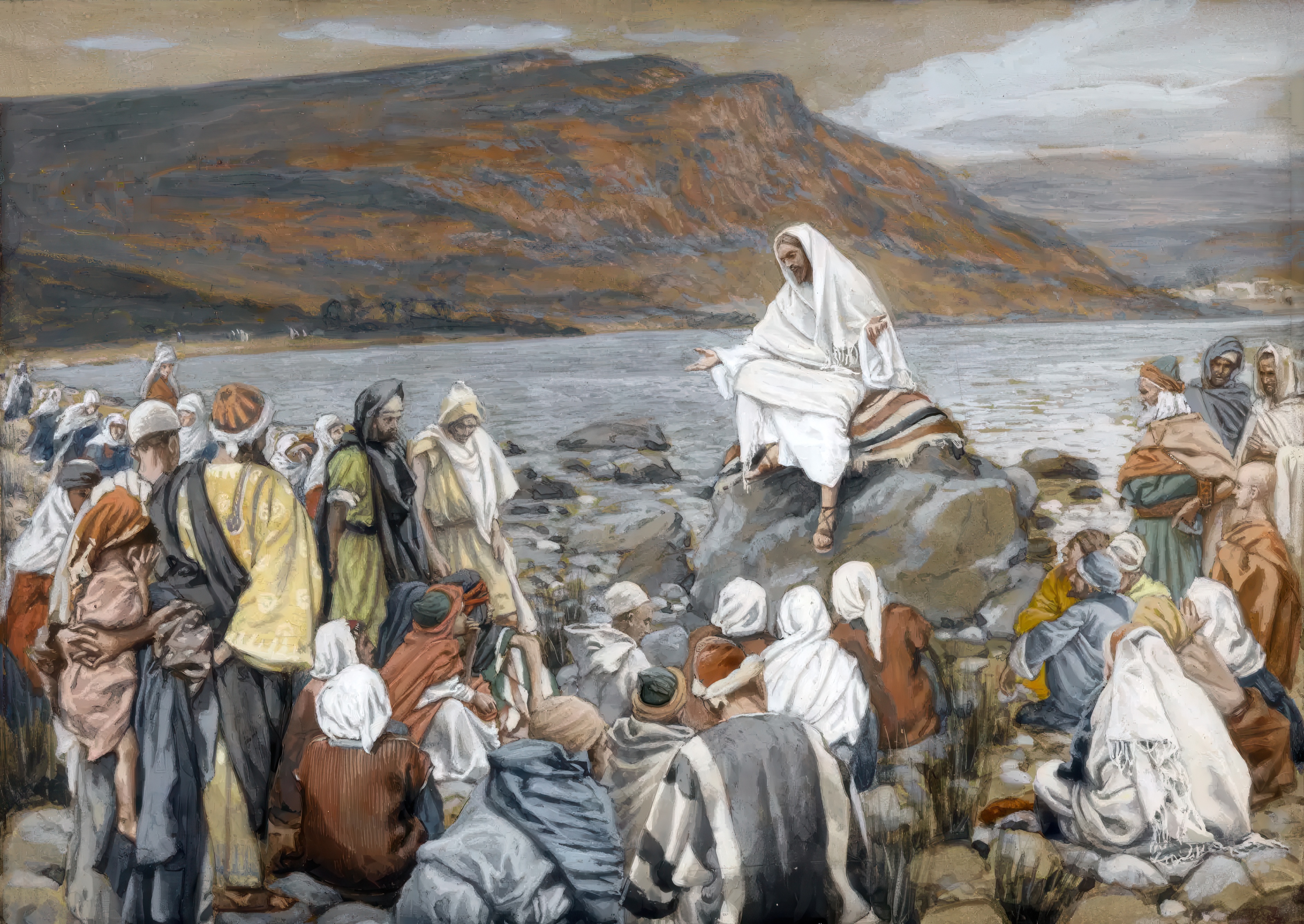
Feature Image Credit: James Tissot, art.diocesan.com/stock-photo/jesus-teaches-the-people-by-the-sea-25929/

The views and opinions expressed in the Inspiration Daily blog are solely those of the original authors and contributors. These views and opinions do not necessarily represent those of Diocesan, the Diocesan staff, or other contributors to this blog.