
There is No Lukewarm / No hay un entremedio

Would we have believed it? If we had been among the crowd that witnessed the miracle in today’s Gospel, would we have stood amazed at the power of God, or would we have been looking for the trick? Do we try to rationalize it thinking that it’s by the power of demons that He drives out demons? Or maybe we would have been among those other doubters who, upon witnessing the first miracle, demand another as proof of the first.

As for me, I like to imagine that I would have stood in awe and wonder at the glory on display in front of me, but if Christ were to come again in my lifetime, and His miracles happened on the streets of my town, I’m afraid I would be just as distracted and looking for the scam as those in the Gospel. 

Jesus is who He says he is. By this time in Luke’s Gospel, He has calmed the sea, healed the hemorrhaging woman, raised Jairus’s daughter from the dead (but they were keeping that one on the down-low), and fed the five thousand. Why do the people doubt the miracle they see? The people had been longing for their Messiah for centuries, dreaming of what it would be like when He finally arrived. Now, here He was, but rather than riding in triumphant and wreaking vengeance on all who had mistreated them, He was turning what they knew upside down, asking them to change everything to follow Him.

Then Jesus explains that the people are like the strong man, fully armed, guarding his palace. They’ve got it covered. They feel safe, and in control. They are comfortable with what they know. But now, here comes this greater power that can scatter that armor and it’s daunting.

Maybe the people in the crowd doubted because, if Jesus was who He said He was, too much would be asked of them. Maybe it was easier to write Jesus off as a fake than to stand up and answer His call. Could they be kind of intrigued by Jesus, but not quite buy the whole deal? No. Jesus’ response indicates there is no lukewarm. “Whoever is not with me is against me, and whoever does not gather with me scatters.”

Those standing in the crowd that day had only had a few months to get to know their Savior. We’ve had a lifetime, buoyed by centuries of wisdom from holy men and women who’ve preceded us. He calls each of us today as He called that crowd gathered in the Holy Land. “You know in your heart who I am. Now you are either with me or against me.”

How will you answer?

Contact the author


¿Lo hubiéramos creído? Si hubiéramos estado entre la multitud que presenció el milagro del Evangelio de hoy, ¿nos hubiéramos quedado asombrados ante el poder de Dios o hubiéramos estado buscando algún truco? ¿Intentamos racionalizarlo pensando que es por el poder de los demonios que expulsa a los demonios? O tal vez habríamos estado entre esos escépticos que, al presenciar el primer milagro, exigen otro como prueba del primero.

En cuanto a mí, quisiera imaginar que me hubiera quedado maravillada ante la gloria que se desplegaba ante mí, pero si Cristo volviera en mi vida y sus milagros ocurrieran en las calles de mi ciudad, desafortunadamente creo que estaría igual de distraída y buscando algún engaño que las personas en el Evangelio de hoy.

Jesús es quien dice ser. Para este momento del Evangelio de Lucas, Jesús ya había calmado el mar, sanado a la mujer que sufría de hemorragia, resucitado a la hija de Jairo (aunque esto se mantenía en secreto) y alimentado a los cinco mil. ¿Por qué dudaba la gente del milagro que presenciaban? Llevaban siglos anhelando a su Mesías, soñando con su llegada. Y ahora, allí estaba, pero en lugar de llegar triunfante y vengarse de quienes los habían maltratado, estaba transformando radicalmente su forma de vida, pidiéndoles que cambiaran todo para seguirlo.

Luego Jesús explica que la gente era como un hombre fuerte, completamente armado, que custodiaba su palacio. Se sentían seguros, confiados y en control. Estaban cómodos con lo que conocían. Pero ahora, llegaba un poder superior capaz de destruir esa armadura, y eso los intimidaba.

Quizás la multitud dudaba porque, si Jesús era quien decía ser, se les exigiría demasiado. Quizás era más fácil tachar a Jesús de farsante que responder a su llamado. ¿Podrían tener cierta curiosidad sobre quién era Jesús pero sin llegar a creer en él por completo? No. La respuesta de Jesús indica que no hay un entremedio: “El que no está conmigo, está contra mí; y el que no recoge conmigo, desparrama”.

Quienes estaban entre la multitud aquel día apenas habían tenido unos meses para conocer a su Salvador. Nosotros hemos tenido toda una vida, fortalecidos por siglos de sabiduría de hombres y mujeres santos que nos precedieron. Él nos llama a cada uno hoy como llamó a aquella multitud reunida en la Tierra Santa: “Ustedes saben en su corazón quién soy. Ahora bien, o están conmigo o están contra mí”.

¿Cómo responderás?

Comunicarse con la autora

Pamela Kavanaugh is a grateful wife, mother, and grandmother who has dedicated her professional life to Catholic education. Though she has done her very best to teach her students well in the subjects of language and religion, she knows that she has learned more than she has taught. She lives, teaches, and writes in southwest suburban Chicago.

Feature Image Credit: Brendan Church, unsplash.com/photos/white-and-black-one-way-printed-road-signages-pKeF6Tt3c08

The views and opinions expressed in the Inspiration Daily blog are solely those of the original authors and contributors. These views and opinions do not necessarily represent those of Diocesan, the Diocesan staff, or other contributors to this blog.


Teach With Words / Enseñar con palabras

I think St. Francis Assisi would be a little upset with the often attributed (but not historically verified) quote: “Preach the Gospel always, when necessary, use words.” We are absolutely called to preach the Gospel with our lives. However, Jesus tells us very specifically in today’s Gospel that, “whoever obeys and teaches these commandments will be called greatest in the Kingdom of Heaven” (Matthew 5:19). Jesus calls us to be obedient and to teach.

First up is obedience. Another oft-used phrase is, “You can’t give what you don’t already have.” It would be very challenging indeed to stand up in front of a classroom and teach students on a subject matter you yourself have never studied. In order to know the Commandments, we have to learn about them. And in learning about them, we come to learn that they require obedience, trust, and faith. Commandments are not rules like, “Eat your vegetables” or “Wash your hands before supper.” They provide the framework for relationship. The Commandments invite us into relationship with God, and with one another.

As we come to know the Commandments more fully, we enter more deeply into our relationship with God. This, then, is what we are teaching. It’s not just a laundry list of rules. It’s relationship. Relationships require communication in order to grow. That means we have to talk with one another about our relationship with God, with the Church, and with the Commandments. We have to share our experiences of life with one another. 

This is where the teaching comes into play. Society loves experts, people who know what they know and talk about it often with authority. Teachers, through training and experience, are authorities on learning. But they are not the only ones when it comes to sharing the Good News. Jesus doesn’t say that only teachers with certificates get to teach about God, as if Sunday morning catechists have a monopoly on matters of faith. He calls all people to announce the Good News of the Kingdom. To announce, to proclaim – with words as well as with deeds. That means you and I are specifically called in our present circumstance to speak about Jesus and our relationship with him. The work of teaching isn’t something we can pass on or think we aren’t good enough for.

Thankfully, we don’t do this work alone. Jesus sent the Holy Spirit to fill us and guide us as we obey and teach. We can open ourselves and our situations up to the Holy Spirit, asking Him to infuse our speech with his wisdom. We do not teach from our own authority but from humility, recognizing that we are sinners in need of mercy, just like the person we are talking to. When we speak about Jesus, when we share our experiences of faith, we are teaching and modeling what Christian discipleship looks like. It is a relationship built upon obedience and love for God.

Contact the author


Creo que San Francisco de Asís se molestaría un poco con la cita que se le atribuye con frecuencia (pero que no está históricamente verificada): “Predica siempre el Evangelio; si es necesario, utiliza palabras”. Estamos llamados a predicar el Evangelio con nuestras vidas. Sin embargo, Jesús nos dice muy específicamente en el Evangelio de hoy que el que “cumpla [estos preceptos] y los enseñe, será grande en el Reino de los cielos” (Mateo 5,19). Jesús nos llama a ser obedientes y a enseñar.

Primero viene la obediencia. Otra frase común es: “No se puede dar lo que no se tiene”. Sería muy difícil ponerse frente a un aula y enseñar a los alumnos sobre un tema que uno mismo nunca ha estudiado. Para conocer los mandamientos, tenemos que aprender sobre ellos. Y al aprender sobre ellos, comprendemos que requieren obediencia, confianza y fe. Los mandamientos no son reglas como “Come tus verduras” o “Lávate las manos antes de cenar”. Forman el marco para la relación interpersonal. Los Mandamientos nos invitan a una relación con Dios y entre nosotros.

A medida que conocemos mejor los Mandamientos, profundizamos nuestra relación con Dios. Esto, pues, es lo que enseñamos. No se trata solo de una lista de normas, sino de una relación. Las relaciones requieren comunicación para crecer. Esto significa que debemos hablar entre nosotros sobre nuestra relación con Dios, con la Iglesia y con los Mandamientos. Debemos compartir nuestras experiencias de vida.

Aquí es donde entra en juego la enseñanza. La sociedad valora a los expertos, a quienes saben lo que saben y hablan de ello con autoridad. Los maestros, gracias a su formación y experiencia, son autoridades en el conocimiento. Pero no son los únicos a la hora de compartir la Buena Nueva. Jesús no dice que solo los maestros titulados puedan enseñar sobre Dios, como si los catequistas de los domingos tuvieran el monopolio de la fe. Él llama a todos a anunciar la Buena Nueva del Reino. A anunciarla, a proclamarla, tanto con palabras como con obras. Eso significa que tú y yo estamos llamados específicamente, en nuestra situación actual, a hablar de Jesús y de nuestra relación con él. La labor de enseñar no es algo que podamos delegar ni para lo que podamos sentirnos incapaces.

Afortunadamente, no hacemos esta labor solos. Jesús envió al Espíritu Santo para llenarnos y guiarnos mientras obedecemos y enseñamos. Podemos abrirnos al Espíritu Santo, tanto a nosotros mismos como a nuestras circunstancias, pidiéndole que ilumine nuestras palabras con su sabiduría. No enseñamos desde nuestra propia autoridad, sino desde la humildad, reconociendo que somos pecadores necesitados de misericordia, al igual que la persona con quien hablamos. Cuando hablamos de Jesús, cuando compartimos nuestras experiencias de fe, enseñamos y mostramos cómo es el discipulado cristiano. Es una relación basada en la obediencia y el amor a Dios.

Comunicarse con la autora

Kate Taliaferro is an Air Force wife and mother. She is blessed to be able to homeschool, bake bread and fold endless piles of laundry. When not planning a school day, writing a blog post or cooking pasta, Kate can be found curled up with a book or working with some kind of fiber craft. Kate blogs at DailyGraces.net.
Feature Image Credit: Jarmoluk, pixabay.com/photos/apple-books-classroom-red-apple-256263/

The views and opinions expressed in the Inspiration Daily blog are solely those of the original authors and contributors. These views and opinions do not necessarily represent those of Diocesan, the Diocesan staff, or other contributors to this blog.

Forgiving Doesn’t Mean Forgetting / Perdonar no significa olvidar

I love the scene in The Chosen that tells the story in today’s Gospel. Peter makes no bones about how resentful he is of Matthew and his tax-collecting ways.  As he grapples with this unavoidable relationship, he confides in Jesus.  Jesus, loving both Matthew and Peter, sees both sides.  He then shows Peter how his own sins contributed to the situation with Matthew. In the show, you can see it dawn on Peter that he, too, was at fault. He recognizes his need for forgiveness first, which then allows him to forgive Matthew. 

The hurts of others can wound us. We can struggle to see the big picture. But Jesus sees it.  Maybe this is why, in the Lord’s prayer, he tells us, “Forgive us our sins as we forgive those who sin against us”.  I never realized it before, but this is one thought in one sentence. Forgiving and being forgiven must go together.  Our own sins are entangled in sins against us. We do not get a pass on our sins simply because the other person’s sins may be worse.  This means we must change our focus to see our own sins, no matter how small.  

Jesus says to forgive seventy-seven times.  When we are hurting, this can seem daunting.  But think about how many times you have asked for God’s forgiveness. Think of how many times you have said the Lord’s Prayer last week. Last year. Your lifetime. How many times you have gone to confession.  How many Acts of Contrition you have made.  Has Jesus forgiven you seventy-seven times? We can get to that number quickly even just praying the Our Father each day. God is constantly forgiving us. 

It does not mean that we have to live as if it never happened.  Even in this Gospel, while the Master forgave his servant, he did not forget.  The Lord’s Prayer tells us to forgive others, but says nothing about forgetting.  Forgiveness is a decision made in the heart but it does not get rid of the wounds or the memory.  In fact, we don’t possess the power to not feel an offense nor the “magic” to erase the hurt away from our mind and heart.  

However, we can empower ourselves by practicing virtue. The repetitive act of forgiving people their smaller transgressions can strengthen our heart to tackle forgiving the hard things when they come.  By cultivating the virtue of forgiveness, we can learn to let the faults of others slide over us. In this way, we can realize what we can control. We can gain peace. We can allow ourselves to be loved by our Lord and Savior.  Soon, our wounds can begin to heal. 

Is there someone in your life you struggle to forgive?  We obtain grace when Jesus forgives us in the Sacrament of Reconciliation.  I wonder if we can practice using that same grace to help us forgive others. Let’s resolve to think of one person to work on forgiving every time we pray the Our Father. Let’s see if it takes seventy-seven times.

Contact the Author


Me encanta la escena en la serie The Chosen que cuenta la historia del Evangelio de hoy. Pedro no oculta su resentimiento hacia Mateo y su costumbre de recaudar impuestos. Mientras lidia con esta relación inevitable, lo conversa con Jesús. Jesús, que ama tanto a Mateo como a Pedro, comprende ambas perspectivas. Luego le muestra a Pedro cómo sus propios pecados contribuyeron a la situación con Mateo. En la serie, se puede ver cómo Pedro comprende que él también tuvo la culpa. Reconoce primero su necesidad de perdón, lo cual le permite perdonar a Mateo.

El dolor ajeno puede herirnos. A veces nos cuesta ver el panorama completo. Pero Jesús sí lo ve. Quizás por eso, en el Padrenuestro, nos dice: “Perdónanos nuestros pecados, como también nosotros perdonamos a los que nos ofenden”. Nunca me había dado cuenta, pero esto resume una idea en una sola frase. Perdonar y ser perdonado deben ir de la mano. Nuestros propios pecados están entrelazados con los pecados cometidos contra nosotros. No se nos exime de nuestros pecados simplemente porque los de otra persona sean peores. Esto significa que debemos cambiar nuestra perspectiva para reconocer nuestros propios pecados, por pequeños que sean.

Jesús dice que perdonemos setenta y siete veces. Cuando sufrimos, esto puede parecer abrumador. Pero piensa en cuántas veces le has pedido perdón a Dios. Piensa en cuántas veces has rezado el Padrenuestro la semana pasada, el año pasado, o a lo largo de tu vida. Piensa en cuántas veces te has confesado y cuántos actos de contrición has hecho. ¿Te ha perdonado Jesús setenta y siete veces? Podemos llegar a esa cifra rápidamente incluso rezando el Padrenuestro cada día. Dios nos perdona constantemente.

Esto no significa que tengamos que vivir como si nada hubiera pasado. Incluso en este Evangelio, aunque el Maestro perdonó a su siervo, no lo olvidó. El Padrenuestro nos dice que perdonemos a los demás, pero no dice nada sobre olvidar. El perdón es una decisión del corazón, pero no borra las heridas ni el recuerdo. De hecho, no tenemos el poder de no sentirnos ofendidos ni la “magia” para borrar el dolor de nuestra mente y corazón.

Sin embargo, podemos fortalecernos practicando la virtud. El acto repetitivo de perdonar las pequeñas faltas de los demás puede fortalecer nuestro corazón para perdonar las cosas difíciles cuando lleguen. Al cultivar la virtud del perdón, podemos aprender a dejar que las faltas de los demás no nos afecten. De esta manera, podemos darnos cuenta de lo que sí podemos controlar. Podemos alcanzar la paz. Podemos permitirnos ser amados por nuestro Señor y Salvador. Pronto, nuestras heridas comenzarán a sanar.

¿Hay alguien en tu vida a quien te cuesta perdonar? Recibimos la gracia cuando Jesús nos perdona en el Sacramento de la Reconciliación. Me pregunto si podemos practicar el uso de esa misma gracia para ayudarnos a perdonar a los demás. Propongámonos pensar en una persona que podemos intentar a perdonar cada vez que recemos el Padrenuestro. A ver si nos demoramos setenta y siete veces.

Comunicarse con la autora


Margaret Gartlgruber longs for moms to know: You are enough! It is not what you accomplish that matters – God delights in you every single moment simply just for being you! A semi-retired stay-at-home mom, wife, author, blogger, freelance writer, lay RC member Margaret blogs at https://ruledbybananas.com/. Contributing St. Monica to the Cloud of Witness book, you can learn more by signing up to her St. Monica Novena, and get free copy of 15 Simple Morning Prayers.

Feature Image Credit: MART PRODUCTION, pexels.com/photo/a-person-inside-a-confessional-7219828/

The views and opinions expressed in the Inspiration Daily blog are solely those of the original authors and contributors. These views and opinions do not necessarily represent those of Diocesan, the Diocesan staff, or other contributors to this blog.

Loving the Unknown / Amar a los desconocidos

“We’re super big in Europe” was my nascent band’s favorite way of coping with the fact that very few people had heard of us, let alone deigned to attend our shows. We were in fact not popular in Europe. We could better be described as Bob Dylan’s bio pic: “A Complete Unknown”. 

Today’s Gospel provoked this memory of the self-deprecating sense of humor of my bandmates and I. It’s the story of Jesus telling his fellow Nazarene’s how “no prophet is accepted in his own native place” (Luke 4:24). There is great theological significance to Jesus’ proclamation, a significance that’s well beyond me to unpack. But, I couldn’t help but notice myself feeling what his childhood friends and neighbors must have felt. I could just imagine them spouting out, “Oh, really guy. You’re such a big deal?!” 

The crowd was so angry at what Jesus said in this passage and the one prior (Luke 4:16-23) that they tried to run Him off of a cliff! Being Jesus and all, he was able to “pass through the midst of them and went away” (Luke 4:30).  I could not help but notice this feeling of contempt for Jesus as I read. Not overwhelming, but it was there. These movements in my own heart and mind made me wonder: “Where do I have contempt for Christ in my life?” Not an easy question to ask, but an important and honest one. 

One of the ways Christ is still with us is in the poor and needy. Jesus himself told us, “Whatever you do for the least of these, you do for me.” Do I love the vulnerable and unknown well? No, not really. If we love a Lord humble enough to be eaten, we should dare to love Him in all of His humblest forms. And today is a great day to do that.

Contact the Author


“Somos superfamosos en Europa” era la forma favorita de mi naciente banda de lidiar con el hecho de que muy poca gente había oído hablar de nosotros, y mucho menos se dignaba a asistir a nuestros conciertos. De hecho, no éramos populares en Europa. Podríamos describirnos mejor como la foto de Bob Dylan en su biografía: “Un completo desconocido”.

El Evangelio de hoy me trajo este recuerdo del humor autocrítico que mis compañeros y yo compartíamos. Es la historia de Jesús diciéndoles a sus compañeros nazarenos que “nadie es profeta en su tierra” (Lucas 4,24) cuando no fue recibido bien. La proclamación de Jesús tiene una gran importancia teológica, una importancia que me supera. Pero no pude evitar sentir lo mismo que debieron sentir sus amigos de la infancia y vecinos. Me los imaginaba exclamando: “¡Ah, sí, verdad! ¿Te crees tan importante?”

La multitud estaba tan enfurecida por lo que Jesús dijo en este pasaje y en el anterior (Lucas 4:16-23) que ¡intentaron arrojarlo por un precipicio! Siendo Jesús, pudo pasar “por en medio de ellos” y alejarse de allí (Lucas 4:30). Al leer eso, no pude evitar notar ese sentimiento de desprecio hacia Jesús. No era demasiado fuerte, pero de todos modos allí estaba. Estas reflexiones me hicieron preguntarme: “¿En qué aspectos de mi vida siento desprecio por Cristo?” No es una pregunta fácil, pero sí es importante y sincera.

Una de las maneras en que Cristo sigue presente entre nosotros es a través de los pobres y necesitados. Jesus nos ha confirmado, “Lo que hiciste a uno de estos mis hermanos más pequeños, a mí me lo has hecho también”. ¿Amo bien a los vulnerables y desconocidos? No, la verdad es que no. Si amamos a un Señor lo suficientemente humilde como para ser consumido por nosotros, deberíamos atrevernos a amarlo en todas sus formas más humildes. Y hoy es un gran día para hacerlo.

Comunicarse con el autor


Matthew is a student at the Catholic Psych Institute to one day provide Mentorship  – a daily service that integrates and aligns the best of the Psychological sciences with Catholic Anthropology and Spirituality. To learn more about Mentorship or read more from Matthew, join his newsletter (coming soon).

Feature Image Credit: Ben White, unsplash.com/photos/a-group-of-young-children-standing-next-to-each-other-PtBu0CmK3jI

The views and opinions expressed in the Inspiration Daily blog are solely those of the original authors and contributors. These views and opinions do not necessarily represent those of Diocesan, the Diocesan staff, or other contributors to this blog.

The Ripple Effects of Encountering Christ / El efecto dominó del encuentro con Cristo

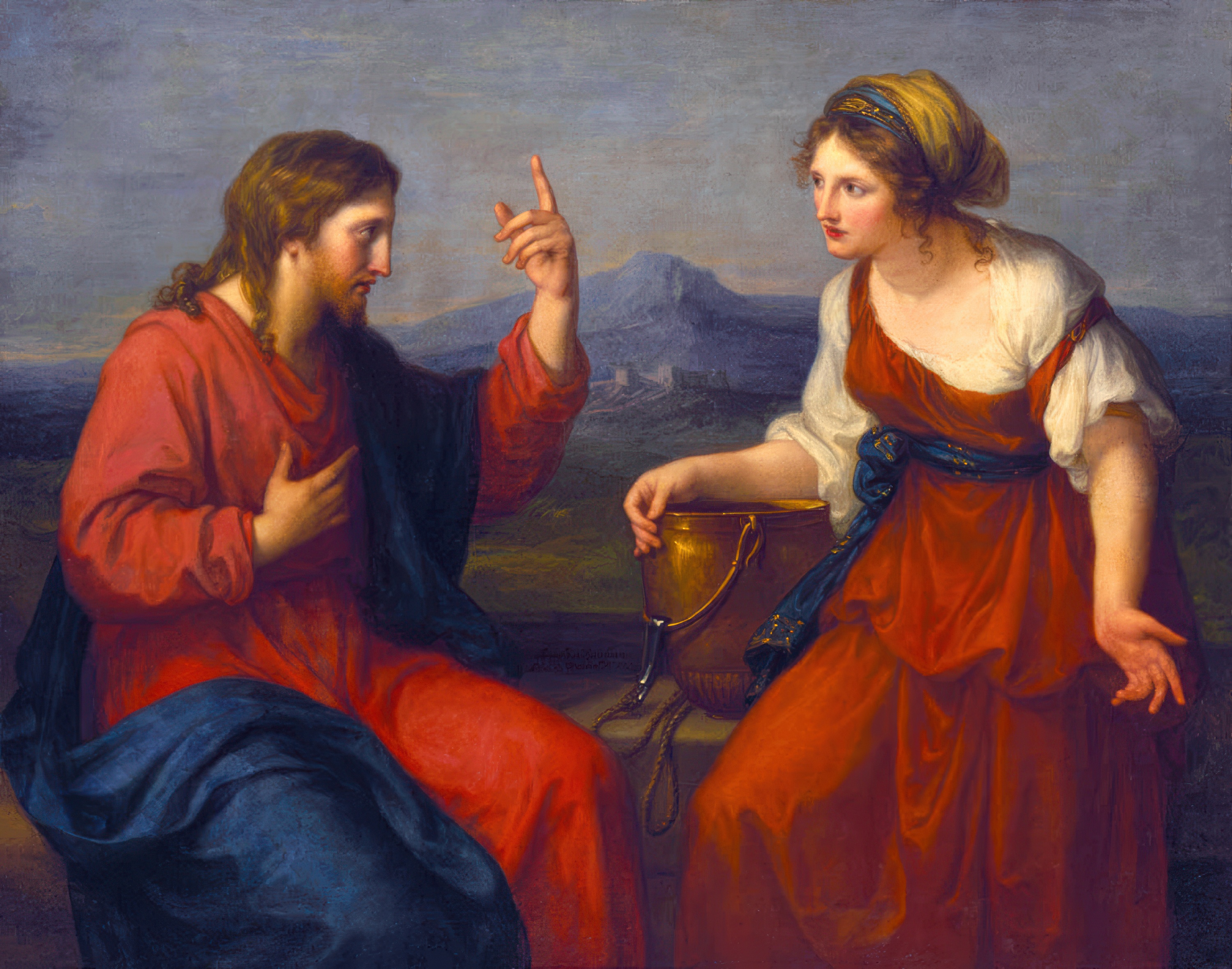
Every nuance of the encounter between Jesus and the Samaritan woman reveals His merciful, loving, and compassionate heart. It begins with the place He chooses to meet her—Samaria, a land considered unclean by Jewish standards. Her presence at the well, especially at noon, suggests she is avoiding others, burdened by shame. Yet Jesus waits for her and initiates conversation.

This meeting is no accident. Jesus meets her figuratively and literally where she is, as she is. He does not wait for repentance or transformation. He thirsts for her soul, just as He thirsts for each of us. She represents all of humanity: sinful, unworthy, a general hot mess, yet deeply loved.

Jesus offers her Living Water—not a temporary relief, but eternal satisfaction. He quenches not only earthly needs but the deeper thirst of the soul. His mission is mercy; He came to die so that we might live with Him forever. Through this encounter, He begins the work of reconciliation, expiating the sin that separates us from the Father.

Jesus approaches her with gentleness, not reproach. He reveals her truth, but only after establishing trust. She feels safe, ready to hear and respond. In prayer, Scripture, and the Sacraments, He meets us in the same way—where we are, in the reality of our lives. First, He offers His gifts; then, in love, He shows us what keeps us from full communion with God. Then He invites us to respond.  

Jesus presents the Samaritan woman with a choice: to remain as she is or to become who He  has created her to be. How symbolic that she runs off to evangelize, leaving her water jar behind, renewed and overflowing with joy, eager to share the Good News. The ripple effect is profound. Those she tells come to believe, not just because of her words, but because they encounter Jesus themselves.

This story teaches us that authentic encounters with Christ transform not only the individual but entire communities. Jesus meets us in our thirst, offers us Himself, and sends us forth to share His mercy.

Contact the author


Cada detalle del encuentro entre Jesús y la samaritana revela su corazón misericordioso, amoroso y compasivo. Comienza con el lugar que elige para encontrarse con ella: Samaria, una tierra considerada impura según los estándares judíos. Su presencia en el pozo, especialmente al mediodía, sugiere que está evitando a los demás, abrumada por la vergüenza. Sin embargo, Jesús la espera e inicia una conversación.

Este encuentro no es casual. Jesús la encuentra, figurativa y literalmente, dónde está, tal como es. No espera arrepentimiento ni transformación. Anhela su alma, así como anhela la de cada uno de nosotros. Ella representa a toda la humanidad: pecadora, indigna, imperfecta, pero profundamente amada.

Jesús le ofrece Agua Viva, no un alivio temporal, sino satisfacción eterna. Sacia no solo las necesidades terrenales, sino también la sed más profunda del alma. Su misión es la misericordia; vino a morir para que pudiéramos vivir con Él para siempre. A través de este encuentro, Él comienza la obra de reconciliación, expiando el pecado que nos separa del Padre.

Jesús se acerca a ella con dulzura, no con reproche. Le revela su verdad, pero solo después de ganarse su confianza. Ella se siente segura, dispuesta a escuchar y responder. En la oración, las Escrituras y los Sacramentos, Él nos encuentra de la misma manera: donde estamos, en la realidad de nuestras vidas. Primero, nos ofrece sus dones; luego, con amor, nos muestra lo que nos impide la plena comunión con Dios. Después, nos invita a responder.

Jesús le presenta a la samaritana una decisión: permanecer como está o llegar a ser quien Él la creó para ser. Qué simbólico que salga corriendo a evangelizar, dejando atrás su cántaro, renovada y rebosante de alegría, deseosa de compartir la Buena Noticia. El efecto dominó es profundo. Aquellos a quienes se lo cuenta llegan a creer, no solo por sus palabras, sino porque se encuentran con Jesús mismo también.

Esta historia nos enseña que los encuentros auténticos con Cristo transforman no solo al individuo, sino a comunidades enteras. Jesús nos encuentra en nuestra sed, se ofrece a sí mismo y nos envía a compartir su misericordia.

Comunicarse con la autora

Allison Gingras (www.ReconciledToYou.com ) shares an everyday Catholic faith with humor and honesty. Her writing includes The Handy Little Guide to Novenas (OSV), Encountering Signs of Faith (Ave Maria Press), the Stay Connected Journals for Catholic Women (OSV), and her newest book, Jesus Heals (OSV), published in 2025. Allison is the Director of Digital Evangelization for Family Rosary USA.

Feature Image Credit: Angelika Kauffman, art.diocesan.com/stock-photo/christ-and-the-samaritan-woman-at-the-well-23114/

The views and opinions expressed in the Inspiration Daily blog are solely those of the original authors and contributors. These views and opinions do not necessarily represent those of Diocesan, the Diocesan staff, or other contributors to this blog.

The Comforts of Home / Las comodidades del hogar

After a long journey, it is always nice to have someone pick you up from the airport so you can feel like you are home before you arrive. No waiting for a taxi. You see your loved one and smile with joy, and are whisked away in the comfort of the car. While traveling may be exciting, the difficult part of being away from home ends early when you see your friend or family member arrive to greet you. 

In The Parable of the Lost Son, Jesus tells us about a young man who squanders his inheritance and yet is welcomed home with open arms. The son, who hoped to return to his father’s home as a mere servant, is clothed and fed at a banquet given in his honor. His seat is restored at his father’s table without even having to ask. This amazes him.

For anyone who is lukewarm about God, this parable is your invitation to return to God the Father through Jesus. He is waiting for you to remember Him and to realize that you can find Him at home in the Church. He is waiting for you to journey home and call out to him in prayer. 

I did this years ago, returning to a life of faith and prayer. I wandered into church for Mass filled with a sense of inner shame from having been away so long, but there was no scolding. I was not sent back to religious education to make up for being away. I confessed to God that I was wrong, and I was immediately welcomed back to supper at His table. Anyone can take this path and need not be afraid. 

Having already made that journey, now it is the last part of the parable that I need to keep in mind. The more I attend Mass and volunteer to serve others, the easier it is to expect God to be more attentive to me. Like the elder son in the parable who stayed and served his father, it is easy to expect some sign of honor. But I must be content in my heart to know that God loves me. First or last, God’s love alone is the reward. And like the traveler who is picked up by a loved one at the airport to complete the journey in comfort, the elder son was living in the comfort of his father’s home all along.

Contact the Author


Después de un largo viaje, siempre es agradable que alguien te recoja en el aeropuerto para que te sientas en casa incluso antes de llegar, sin tener que esperar un taxi. Ves a tu ser querido, sonríes con alegría y te lleva cómodamente en el auto. Si bien viajar puede ser emocionante, la parte difícil de estar lejos de casa termina pronto cuando ves llegar a tu amigo o familiar para recibirte.

En la Parábola del Hijo Pródigo, Jesús nos habla de un joven que malgasta su herencia y, sin embargo, es recibido con los brazos abiertos. El hijo, que esperaba regresar a la casa de su padre como un simple sirviente, es vestido y alimentado en un banquete ofrecido en su honor. Le devuelven su lugar en la mesa de su padre sin que lo tenga que pedir. Esto lo asombra al joven.

Para cualquiera que sea tibio en su relación con Dios, esta parábola es una invitación a regresar a Dios Padre a través de Jesús. Él espera que lo recuerdes y que te des cuenta de que puedes encontrarlo en casa, en la Iglesia. Él te espera esperando a que regreses a casa y le invoques en oración.

Yo lo hice hace años, retomando una vida de fe y oración. Entré a la iglesia para la misa con un sentimiento de vergüenza por haber estado tanto tiempo ausente, pero no hubo reproches. No me enviaron de vuelta a la catequesis para compensar mi ausencia. Le confesé a Dios mi error, y fui inmediatamente recibido de nuevo en su mesa. Cualquiera puede tomar este camino y no tiene por qué temer.

Habiendo realizado ya ese viaje, ahora debo recordar la última parte de la parábola. Cuanto más asisto a misa y me ofrezco como voluntario para servir a los demás, más fácil es esperar que Dios me preste más atención. Como el hijo mayor de la parábola que se quedó a servir a su padre, es fácil esperar alguna muestra de honor. Pero debo contentarme en mi corazón con saber que Dios me ama. Aunque sea la primera o la última, el amor de Dios es la única recompensa. Y igual que el viajero que un ser querido recoge en el aeropuerto para completar el viaje con comodidad, el hijo mayor había estado viviendo en la comodidad del hogar de su padre todo este tiempo.

Comunicarse con la autora


Anita Renaghan is the author of several books including literary fiction, science fiction, and a young adult trilogy. She loves a good character study and has been many characters herself including: an aircraft mechanic in the Air Force, a college graduate, a second degree blackbelt, lost, a waitress and bartender, a wife and mother, an account executive, found, and a constantly inventive singer-songwriter. Anita is interested in sharing her faith with others through her writings and story characters. Her website is anitarenaghan.com 

Feature Image Credit: mali maeder, pexels.com/photo/brown-and-gray-house-1483064/

The views and opinions expressed in the Inspiration Daily blog are solely those of the original authors and contributors. These views and opinions do not necessarily represent those of Diocesan, the Diocesan staff, or other contributors to this blog.

Life as a Vineyard / La vida como una viña

In today’s Gospel, Jesus preaches a parable about a landowner and his vineyard, more specifically, about the tenants he assigned to care for the vineyard. I’ve seen and heard many reflections about this parable but when meditating over it this time, I saw it in a different light.

 Consider this: instead of looking at yourself as the tenants, look at yourself as the vineyard. Think about the kind of people you allow into your space and who you allow to affect your soul. Those are your tenants. When the Lord decides to work in your life, to come looking for good fruit, will the tenants throw Him out? 

Jesus gives us a warning here about who helps us produce fruit in our lives. Be mindful of how those “tenants” react when God works in your life. Remember that iron sharpens iron, and that only good soil can produce good fruit. 

Contact the author


En el Evangelio de hoy, Jesús predica una parábola sobre un propietario y su viña, más específicamente, sobre los viñadores que encargó de cuidarla. He visto y escuchado muchas reflexiones sobre esta parábola, pero al meditar en ella esta vez, la vi desde una perspectiva diferente.

Piensa en esto: en lugar de verte como uno de los viñadores, mírate como la viña. Reflexiona sobre el tipo de personas a las que permites entrar en tu vida y a quienes dejas influir en tu alma. Esos son tus viñadores. Cuando el Señor decide obrar en tu vida, buscando buen fruto, ¿los viñadores lo echarán fuera?

Aquí Jesús nos está advirtiendo sobre quiénes nos ayudan a dar fruto en nuestras vidas. Presta atención a cómo reaccionan esos “viñadores” cuando Dios obra en tu vida. Recuerda que el hierro afila al hierro y que solo la tierra fértil puede producir buen fruto.

Comunicarse con la autora

Lily is a Michigan native and cradle Catholic who has spent most of her life exploring her own reasons to embrace her faith fully. She attended Franciscan University of Steubenville, where she discovered the beauty of her personal relationship with Christ and the Church. After college, she worked in Montessori Education for three years and recently transitioned to nannying. She was recently married and spends most of her time reading, and enjoying her dog and family!

Feature Image Credit: Sven Wilhelm, unsplash.com/photos/green-trees-during-daytime-2cRXSWyMHA8

The views and opinions expressed in the Inspiration Daily blog are solely those of the original authors and contributors. These views and opinions do not necessarily represent those of Diocesan, the Diocesan staff, or other contributors to this blog.

Blessed Are They Who Hope in the Lord / Dichoso el hombre que confía en el Señor

A while back, my siblings and I started a tradition of getting together for a meal and wholesome conversation every few months. It’s just us, those who grew up together under the same roof with the same two parents. I do not take for granted how fortunate I am that all eight of us live within a 40 mile radius of each other. I know there are families that have only two children and one lives on the east coast and one on the west, only seeing each other once a year over the holidays. 

God has allowed us this time of adult siblinghood to share with each other, listen to each other, and support one another. Something that was brought up recently at one of these gatherings is that none of us are well off. We all either live paycheck to paycheck or at least do not have the means to live luxuriously. We went on to consider that perhaps that is on purpose, so that each of us would have the opportunity to rely heavily on the grace of God and never cease to draw close to Him. 

Today’ Gospel offers up the familiar story of poor Lazarus and the rich man. In this case, poor and rich referred to their financial status, their spiritual status being quite the opposite. The rich man’s wealth afforded him fine dining and commodities, but also presumption. He no longer relied on God, nor had a relationship with Him, much less loved Him. Lazarus, however lacking in human comfort, was more than rewarded in eternal life as he was “carried away by the angels to the bosom of Abraham.” 

The first reading further drives home this point: “Cursed is the man who trusts in human beings, who seeks his strength in flesh, whose heart turns away from the Lord… Blessed is the man who trusts in the Lord, whose hope is the Lord. He is like a tree planted beside the waters…In the year of drought it shows no distress, but still bears fruit.” 

Now I don’t claim to live in some sort of utopia. My family has its issues just like any other family. We have endured three divorces over the past three years, separated parents, and members dealing with addiction, mental illness and chronic health problems. We have people who are overworked and underpaid, children who are not angels, and tempers that are not tempered. Yet through it all, we are there for each other, and we try to help each other turn our hearts toward God and put our hope in Him. I pray that no matter what kind of family situation you find yourself in, you may be blessed to do the same. For “Blessed are they who hope in the Lord.” (Psalm Response)

Contact the Author


Hace un tiempo, mis hermanos y yo comenzamos la tradición de reunirnos cada tres o cuatro meses para compartir una comida y una conversación agradable. Solo somos nosotros, los que crecimos juntos bajo el mismo techo, con los mismos padres. Valoro enormemente la fortuna que tengo de que los ocho vivamos a menos de 65 kilómetros de distancia. Sé que hay familias con solo dos hijos, uno que vive en la costa este y otro en la oeste, que solo se ven una vez al año durante las fiestas.

Dios nos ha permitido disfrutar de este tiempo de hermandad adulta para compartir, escucharnos y apoyarnos mutuamente. Algo que surgió recientemente en una de estas reuniones es que ninguno de nosotros tiene una buena situación económica. Todos vivimos al día o, al menos, no tenemos los medios para vivir con lujos. Al reflexionarlo, pensamos que capaz es a propósito, para que cada uno de nosotros tenga la oportunidad de depender plenamente de la gracia de Dios y de acercarnos siempre a Él.

El Evangelio de hoy nos presenta la conocida historia del pobre Lázaro y el hombre rico. En este caso, pobre y rico se referían a su estatus económico, mientras que su estado espiritual era todo lo contrario. La riqueza del hombre rico le permitía disfrutar de comidas exquisitas y comodidades, pero también de arrogancia. Ya no confiaba en Dios, ni tenía una relación con Él, y mucho menos lo amaba. Lázaro, aunque carecía de comodidades humanas, fue recompensado con creces en la vida eterna cuando “los ángeles lo llevaron al seno de Abraham”.

La primera lectura refuerza esta idea: “Maldito el hombre que confía en el hombre, que en él pone su fuerza y aparta del Señor su corazón.… Bendito el hombre que confía en el Señor y en él pone su esperanza. Será como un árbol plantado junto al agua… en año de sequía no se marchitará ni dejará de dar frutos”.

Ahora bien, no pretendo vivir en una utopía. Mi familia tiene sus problemas, como cualquier otra. Hemos afrontado tres divorcios en los últimos tres años, padres separados y miembros que lidian con adicciones, enfermedades mentales y problemas de salud crónicos. Tenemos personas sobrecargadas de trabajo y mal pagadas, hijos que no son unos santos y temperamentos que a veces se descontrolan. Sin embargo, a pesar de todo, nos apoyamos mutuamente y tratamos de ayudarnos a acercar nuestros corazones a Dios y depositar nuestra esperanza en Él. Le pido a Dios para que, sin importar la situación familiar en la que te encuentres, tengas la bendición de hacer lo mismo. Porque “Dichoso [es] el hombre que confía en el Señor” (Salmo responsorial).

Comunicarse con la autora


Tami Urcia is a midwestern gal from a large Catholic family. As a young adulthood she was a missionary in Mexico, where she studied theology and philosophy. After returning stateside bilingual, she gained a variety of work experience, traveled extensively and finished her Bachelor’s Degree at Brescia University. She loves organizing and simplifying things, watching her children play sports, deep conversations with close family and friends and finding unique ways to brighten others’ day with Christ’s love. She works full time at Diocesan in the Software Department and manages the Inspiration Daily reflections. She is also a contributing writer on CatholicMom.com and BlessedIsShe.net.
Feature Image Credit: Helena Lopes, unsplash.com/photos/four-person-hands-wrap-around-shoulders-while-looking-at-sunset-PGnqT0rXWLs

The views and opinions expressed in the Inspiration Daily blog are solely those of the original authors and contributors. These views and opinions do not necessarily represent those of Diocesan, the Diocesan staff, or other contributors to this blog.

A Different Kind of Kingdom / Un Reino Diferente

As Jesus draws closer to Jerusalem—and everything He knows that will take place while He is there—He tries to prepare his Apostles for what is coming. Despite His efforts, it seems that they still aren’t getting it. Jesus uses plain language to tell them that they will “hand him over to the Gentiles to be mocked and scourged and crucified” (Matthew 20:19). Yet even with this clear explanation, His Apostles just don’t get it.

The mother of James and John comes to Jesus to advocate for their place of prestige in Jesus’ Kingdom. We know that this request ultimately comes from James and John themselves because Jesus’ response is directed to them. The brothers still think that the kingdom that Jesus has come to establish will be a worldly one. They expect Jesus to have earthly authority, and they want to secure their place next to the future king.

Indeed, Jesus has come to establish a kingdom, but it is not what they are expecting. This Kingdom will be won not with the sword but by the King willingly giving his life. In this Kingdom, the first shall be last. Those who wield earthly power will be powerless. Those who seem weak and insignificant will have authority. In this new Kingdom, Jesus explains, “whoever wishes to be great among you shall be your servant; whoever wishes to be first among you shall be your slave.”

It is easy to judge the Apostles as we read this Gospel 2,000 years later. Jesus spoke so clearly to His followers, yet they just didn’t get it. We should hesitate before condemning their thoughts, because we can get caught in similar thinking. When things are going well in our lives, it’s easy to praise God. We may start to believe that God is blessing us because we deserve it. We think that so long as we continue to attend Mass, say our prayers, and live a holy life, the Lord will continue to bless us with earthly success and happiness.

When things don’t go according to our plans, when we realize that when we and our loved ones are suffering, we start to think that God has forgotten us. We might even think we have done something to deserve being forsaken by God. We, like the Apostles in today’s Gospel, can’t believe that God’s plan actually involves painful and awful realities. Just as Jesus dying on the cross was God’s will for His life, our suffering and struggles aren’t God rejecting us, but rather the path that the Lord uses to draw us to Himself.

When we embrace each cross we welcome the Kingdom of God. By choosing to take the lowest place and serve we are exalted. When we feel like we have nothing left, God gives us riches beyond our imagination. This Kingdom is worth more than any earthly thing, we simply have to accept that this won’t always look the way we expect.

Contact the Author


A medida que Jesús se acerca a Jerusalén —y a todo lo que sabe que ocurrirá allí— intenta preparar a sus Apóstoles para lo que se avecina. A pesar de sus esfuerzos, parece que aún no lo comprenden. Jesús les dice con claridad que “va a ser entregado a los sumos sacerdotes y a los escribas, que lo condenarán a muerte y lo entregarán a los paganos para que se burlen de él, lo azoten y lo crucifiquen” (Mateo 20,19). Sin embargo, incluso con esta explicación tan clara, sus apóstoles no lo entienden.

La madre de Santiago y Juan se acerca a Jesús para interceder por ellos y pedirles que les otorguen un lugar de prestigio en su Reino. Sabemos que esta petición proviene, en última instancia, de los propios Santiago y Juan, porque la respuesta de Jesús va dirigida a ellos. Los hermanos aún creen que el reino que Jesús ha venido a establecer será terrenal. Esperan que Jesús tenga autoridad terrenal y quieren asegurarse un lugar junto al futuro rey.

En efecto, Jesús ha venido a establecer un reino, pero no es el que ellos esperan. Este Reino no se conquistará con la espada, sino con la entrega voluntaria de la vida del Rey. En este Reino, los primeros serán los últimos. Quienes ejercen el poder terrenal serán impotentes. Quienes parecen débiles e insignificantes tendrán autoridad. En este nuevo Reino, Jesús explica: “El que quiera ser grande entre ustedes, que sea el que los sirva, y el que quiera ser primero, que sea su esclavo”.

Es fácil juzgar a los Apóstoles al leer este Evangelio 2000 años después. Jesús habló con tanta claridad a sus seguidores, pero no lo comprendieron. Deberíamos reflexionar antes de condenar sus ideas, porque podemos caer en razonamientos similares. Cuando las cosas nos van bien, es fácil alabar a Dios. Podemos llegar a creer que Dios nos bendice porque lo merecemos. Pensamos que, mientras sigamos asistiendo a misa, rezando y llevando una vida santa, el Señor continuará bendiciéndonos con éxito y felicidad terrenales.

Cuando las cosas no salen como las planeamos, cuando nos damos cuenta de que nosotros y nuestros seres queridos sufrimos, empezamos a pensar que Dios nos ha olvidado. Incluso podríamos llegar a creer que hemos hecho algo para merecer su abandono. Al igual que los Apóstoles del Evangelio de hoy, nos cuesta creer que el plan de Dios implique realidades dolorosas y terribles. Así como la muerte de Jesús en la cruz fue la voluntad de Dios para su vida, nuestro sufrimiento y nuestras luchas no son un rechazo de Dios, sino el camino que el Señor usa para acercarnos a sí mismo.

Cuando aceptamos cada cruz, damos la bienvenida al Reino de Dios. Al elegir ocupar el lugar más humilde y servir, somos exaltados. Cuando sentimos que ya no nos queda nada, Dios nos da riquezas inimaginables. Este Reino vale más que cualquier cosa terrenal; simplemente debemos aceptar que no siempre se verá como esperamos.

Comunicarse con la autora


Maria Riley is a passionate Catholic author and speaker who loves volunteering or playing board games when she’s not writing or mom-ing around with her four daughters. Her award-winning Catholic children’s chapter book series, Adventures with the Saints, is endorsed by her bishop. Visit her at MariaRileyAuthor.com or on social media @mariarileyauthor. She and her family live in Kansas.

Feature Image Credit: Unknown Artist, art.diocesan.com/stock-photo/sermon-on-the-mount-19217/

The views and opinions expressed in the Inspiration Daily blog are solely those of the original authors and contributors. These views and opinions do not necessarily represent those of Diocesan, the Diocesan staff, or other contributors to this blog.

Begin Again / Volver a empezar

My season of humility is now. With a family of six, my husband and I share responsibilities that many outsource, alternating the day to day tasks of caring for our four children ages ten to almost one. While he seems to effortlessly get through meal preparation, dishes needing to be cleaned, and shuttling our kids around the many ways I keep them out of the house, most days I feel coming up far too short, and barely staying afloat. Most of the time when it’s my turn to be home, I quickly give in to exasperation, with frustration and exhaustion early on. I just can’t seem to manage the little tasks that seem to never end, at least not with the love God desires of me.

Humility seems very countercultural. Society teaches one should try to build themselves up to be the best they can be. In essence, this results in status and power. Kids go to school and are taught they can do anything. They are also encouraged to be popular, or be at the top of the class. Unconsciously we grow up wanting to prove ourselves worthy. It is a shock to our system when, reflecting on the teachings of Christ, he says to become a servant. 

Paradoxically, even among those we love most, such as our own family, we can fight against this. I have often cried out, “I am not your slave!” I progressively become louder and less patient as each day goes by as I want to be seen. I am looking for gratitude or at least to feel validation that this is where I’m supposed to be, and making a difference.

As Catholics, we must teach one another that it’s ok to be unnoticed. Rather than expect acknowledgement and praise from the world, we should value as most important the opinion of God, who sees us in secret. The Saints are a prime example of emanating humility, imitating to the best of their ability their Rabbi, Jesus Christ. Mary, Queen of the Universe, and St Joseph, are a model as well of service and relentless love for each other. Throughout history, many others have prevailed as well, teaching that true love exists. Rather than seek to be recognized in return for what I do, each day I have with my family is a new chance to begin again, to serve them in love as I would God himself.

O Jesus, meek and humble of heart, help me to imitate your ways, asking for nothing in return.

Contact the author


Mi tiempo de humildad ha llegado. Con una familia de seis, mi esposo y yo compartimos responsabilidades que muchos delegan, turnándonos para cuidar a nuestros cuatro hijos, de entre diez años y casi un año de edad. Mientras que él parece manejar sin esfuerzo la preparación de la comida, lavar los platos y llevar a los niños de un lado a otro (ya que los mantengo fuera de casa de mil maneras), la mayoría de los días siento que me quedo corta y apenas logro mantenerme a flote. Casi siempre cuando me toca estar en casa, me dejo vencer por la exasperación, la frustración y el cansancio. Simplemente no logro gestionar las pequeñas tareas que parecen interminables, al menos no con el amor que Dios espera de mí.

La humildad parece ir en contra de la cultura dominante. La sociedad enseña que uno debe esforzarse por ser la mejor versión de sí mismo. En esencia, esto se traduce en estatus y poder. Los niños van a la escuela y les enseñan que pueden lograr cualquier cosa. También se les anima a ser populares o a ser el mejor de su promoción. Inconscientemente, crecemos queriendo demostrar nuestra valía. Resulta chocante para nosotros cuando, al reflexionar sobre las enseñanzas de Cristo, nos dice que nos convirtamos en siervos.

Paradójicamente, incluso entre quienes más amamos, como nuestra propia familia, podemos resistirnos a esto. A menudo he gritado: “¡Yo no soy tu esclava!” mientras va pasando cada día, mi voz se vuelve más fuerte y mi paciencia más impaciente, pues anhelo ser reconocida. Busco gratitud o, al menos, sentir que este es mi lugar y que estoy logrando algo.

Como católicos, debemos enseñarnos mutuamente que está bien pasar desapercibidos. En lugar de esperar reconocimiento y alabanza del mundo, debemos valorar como primordial la opinión de Dios, quien nos observa en secreto. Los santos son un ejemplo perfecto dlae humildad, imitando lo mejor que pudieron a su Rabí, Jesucristo. María, Reina del Universo, y San José, son también un modelo de servicio y amor incondicional. A lo largo de la historia, muchos otros también han triunfado, demostrando que el amor verdadero existe. En lugar de buscar reconocimiento por lo que hago, cada día que paso con mi familia es una nueva oportunidad para empezar de nuevo, para servirles con amor como si fuera Dios mismo.

Oh Jesús, manso y humilde de corazón, ayúdame a imitar tus caminos, sin pedir nada a cambio.

Comunicarse con la autora

Dr. Alexis Dallara-Marsh is a board-certified neurologist who practices in Bergen County, NJ. She is a wife to her best friend, Akeem, and a mother of four little ones on Earth and two others in heaven above.


Feature Image Credit: Fa Barboza, unsplash.com/photos/woman-in-brown-coat-with-black-beaded-necklace-4NHywrmfTkk

The views and opinions expressed in the Inspiration Daily blog are solely those of the original authors and contributors. These views and opinions do not necessarily represent those of Diocesan, the Diocesan staff, or other contributors to this blog.

A Good Measure Received / Una buena medida recibida

Today’s Gospel theme is a familiar one. Framed in mercy, Jesus tells us to stop judging. He uses a clear directive: Stop. It is a word that conveys an urgency, a need. Something must cease immediately. 

It is probably natural to take Jesus’ words and apply them as an examination of conscience. How have we fallen short in the call to be merciful to others? How have we judged wrongly, condemned harshly? But, perhaps today we could consider a different angle. 

Often it can appear that we are guilty of projecting onto others what, in fact, we are harshly imposing on ourselves. And it is very hard to cease doing unto another what we unceasingly do to ourselves. Maybe today, then, we let ourselves be the object of Jesus’ words.

Let’s imagine Jesus directing his words to us. And let us imagine that He is speaking with a very tender, patient tone.  It might sound something like this: “Beloved, Please stop judging yourself. You are not a just judge. I am. So, please stop. Please stop condemning yourself. That is a trap. I did not come to condemn you, I came to free you, to save you. So, please stop. And, please forgive yourself for falling short. I have already forgiven you. I love you. You can forgive yourself.

Finally, I ask you to be merciful to yourself, just as the Father, who always shows mercy, is merciful to you. Why deny to yourself what your Father is so freely offering you?”

It’s easy to want to “work out” our relationships with others, but maybe the first relationship to consider is the one we have with ourselves. Invite Jesus to help you there. Let His words direct you today to pour out a good measure upon your own tender human heart.

Contact the Author


El tema del Evangelio de hoy es conocido. Enmarcado en la misericordia, Jesús nos dice que dejemos de juzgar. Nos da una orden clara: “No juzguen…no condenen…” No es una palabra que transmite urgencia, necesidad. Algo debe cesar de inmediato.

Es natural que tomemos las palabras de Jesús y las apliquemos como un examen de conciencia. ¿En qué hemos fallado en el llamado a ser misericordiosos con los demás? ¿En qué hemos juzgado mal, en qué hemos condenado con dureza? Pero quizás hoy podríamos considerar una perspectiva diferente.

A menudo parece que proyectamos en los demás lo que, en realidad, nos imponemos con dureza a nosotros mismos. Y es muy difícil dejar de hacer a otros lo que constantemente nos hacemos a nosotros mismos. Quizás hoy, entonces, nos permitamos ser el objeto de las palabras de Jesús.

Imaginemos a Jesús dirigiéndose a nosotros. E imaginemos que nos habla con un tono muy tierno y paciente. Podría sonar algo así: “Amado, por favor, deja de juzgarte. Tú no eres un juez justo. Yo lo soy. Así que, por favor, para. Por favor, deja de condenarte. Eso es una trampa. No vine a condenarte, vine a liberarte, a salvarte. Así que, por favor, para. Y, por favor, perdónate por tus fallos. Yo ya te he perdonado. Te amo. Tú puedes perdonarte. Finalmente, te pido que seas misericordioso contigo mismo, así como el Padre, que siempre muestra misericordia, es misericordioso contigo. ¿Por qué negarte a ti mismo lo que tu Padre te ofrece tan generosamente?”

Es fácil querer “arreglar” nuestras relaciones con los demás, pero quizás la primera relación que debemos considerar es la que tenemos con nosotros mismos. Invita a Jesús a que te ayude en eso. Deja que sus palabras te guíen hoy para derramar una buena medida sobre tu propio corazón humano tan sensible.

Comunicarse con la autora


Raine Pyne is a longtime public school educator. She is married to Greg, who is also an educator. They have five sons, three dogs, and one cat, plus hundreds of adolescent students and countless stacks of books. Raine is a former parish catechist and women’s retreat leader. She is a student at the Theology of the Body Institute and a member of the Word on Fire Institute’s Writing Community. She is passionate about learning, language, and the ever deepening journey of faith.

Feature Image Credit: Florence E. Hay, art.diocesan.com/stock-photo/went-forth-to-meet-his-long-lost-son-22970/

The views and opinions expressed in the Inspiration Daily blog are solely those of the original authors and contributors. These views and opinions do not necessarily represent those of Diocesan, the Diocesan staff, or other contributors to this blog.

Listen to Him / Escúchenlo

Today’s readings are pretty straightforward. Abraham is called by God, and he goes as the Lord directs him. The psalmist waits on God to watch over him and deliver him. Paul instructs Timothy to bear his share of hardship for the sake of the Gospel. Jesus is transfigured before the three Apostles, and the Father tells them to listen to Him. In each of these readings, God calls, and invites them to respond. 

God calls, we respond – a very simple formula, but there is a deceptiveness to it. In each of these cases, it is a demanding call. Abraham is called to leave the land of his kinsfolk and go to a foreign land, one that he knows nothing about except that God will show it to him. When? He doesn’t know. The psalmist prays to be delivered from death and to be shielded, implying that his situation is urgent. Paul’s call implies that Timothy will undergo trials. And Jesus’ Apostles will soon discover exactly what “listening to Him” means in their particular cases.

The act is simple, but the implications are complex. And this is the case for all of us. When God calls, we are invited to respond: “Yes,” “Whatever the Lord wills, I will do,” or “Speak, O Lord; Your servant is listening.” But the consequences will echo for the rest of our lives, in ways seen and unseen. Abraham’s acceptance of the call meant the birth of the Jewish people and, ultimately, the Messiah. The psalmist’s response led to a lifetime of trust in and favor from God. Timothy’s response led to a successful bishopric and a race ran well. The three Apostles’ responses led to their far-reaching evangelical efforts and their martyrdom.

This can seem daunting, so the examples in today’s readings help to calm us. Ultimately, it is good to know what their listening and following was founded on: unconditional trust in God. It is not always advisable to accept whatever someone proposes to us, but these men knew that God is not like others. He always knows what is best for us. Sometimes we may not understand His actions, but they are always trustworthy.

The readings remind us of the importance and the practical benefit of being docile to the will of God. When we know that God is calling us to something, when we are confident that the invitation comes from Him, the only sensible choice is to move forward. Just like Abraham did, as soon as we hear the call, may we pack up and be on our way.

Contact the author


Las lecturas de hoy son bastante claras. Dios llama a Abraham, y él va según la guía del Señor. El salmista espera que Dios lo proteja y lo libre. Pablo le indica a Timoteo que soporte su parte de las dificultades por causa del Evangelio. Jesús se transfigura ante los tres apóstoles, y el Padre les dice que lo escuchen. En cada una de estas lecturas, Dios llama y los invita a responder.

Dios llama, nosotros respondemos: una fórmula muy simple, pero algo deceptiva. En cada caso, es una llamada exigente. Abraham es llamado a dejar la tierra de sus padres e ir a una tierra extranjera, de la que no sabe nada, excepto que Dios se la mostrará. ¿Cuándo? No lo sabe. El salmista pide para ser librado de la muerte y protegido, lo que implica que su situación es urgente. El llamado de Pablo implica que Timoteo pasará por pruebas. Y los apóstoles de Jesús pronto descubrirán exactamente lo que significa “escucharlo” en sus casos particulares.

El acto es sencillo, pero sus implicaciones son complejas. Y esto nos sucede a todos. Cuando Dios nos llama, se nos invita a responder: “Sí”, “Haré lo que el Señor quiera” o “Habla, Señor; tu siervo escucha”. Pero las consecuencias resonarán durante el resto de nuestras vidas, de maneras visibles e invisibles. La aceptación del llamado por parte de Abraham significó el nacimiento del pueblo judío y, en última instancia, del Mesías. La respuesta del salmista lo llevó a una vida de confianza en Dios y a recibir su favor. La respuesta de Timoteo lo llevó a un obispado exitoso y a una carrera triunfal. Las respuestas de los tres apóstoles los impulsaron a realizar una labor evangelizadora de gran alcance y a su martirio.

Esto puede parecer abrumador, por lo que los ejemplos de las lecturas de hoy nos ayudan a tranquilizarnos. En definitiva, es bueno saber en qué se fundamentó su escucha y su seguimiento: en la confianza incondicional en Dios. No siempre es aconsejable aceptar todo lo que alguien nos propone, pero estos hombres sabían que Dios no es como los demás. Él siempre sabe lo que es mejor para nosotros. A veces, puede que no entendamos sus acciones, pero siempre son dignas de confianza.

Las lecturas nos recuerdan la importancia y el beneficio práctico de someternos a la voluntad de Dios. Cuando sabemos que Dios nos llama a algo, cuando estamos seguros de que la invitación viene de Él, la única opción sensata es seguir adelante. Como hizo Abraham, en cuanto oigamos el llamado, preparemos todo y pongámonos en marcha.

Comunicarse con el autor

David Dashiell is a freelance author and editor in the Nashville, Tennessee area. He has three children, a degree in theology, and enjoys writing about philosophy, theology, culture, music, and comedy. You can find his personal blog, Serious Daydreams, on Substack. He is also the editor of the anthology Ever Ancient, Ever New: Why Younger Generations Are Embracing Traditional Catholicism, available through TAN Books.

Feature Image Credit: Romualdo Locatelli, commons.wikimedia.org/wiki/File:Romualdo_Locatelli_-_Caravan_in_the_desert.jpg

The views and opinions expressed in the Inspiration Daily blog are solely those of the original authors and contributors. These views and opinions do not necessarily represent those of Diocesan, the Diocesan staff, or other contributors to this blog.