Resting in the Peace of Christ / Descansando en la paz de Cristo

As I settle into a pew to spend time in adoration, my worry and anxieties for the day riddle my body with tension, and my mind is clouded and busy.  When my eyes settle on Jesus in the Blessed Sacrament on the altar, I take a deep breath.  My pulse begins to slow, my body starts to relax, and my mind clears as words of gratitude fill my thoughts.  “Thank you, Lord, for being present for me. Thank you for this opportunity to see you, sit with you, and love you.” 

A sense of peace fills me. God is here. All the worries of the day pass away as I focus on my Lord, present in this great silence. Jesus’ words in today’s Gospel fill my head. “Peace be with you.” I respond, “Yes, Lord, I hear you. You want us to have peace in our days.”  

As I sit for an hour in adoration, I ponder the remainder of the Gospel reading which tells us about the doubts and disbelief of the disciples. I’m not sure I’ve ever focused on the disciples in this particular Scripture passage. It strikes me that the disciples were clearly anxious, bothered, and fearful over what was happening. 

These are men who knew Jesus, walked with Him, learned at His feet, and yet they were troubled. Jesus reassures them, eats with them, and teaches them.  He reminds them who He is by doing the same things He did with them before His death and resurrection. They break bread, spend time with Jesus, and learn at His feet. They are offered peace.

We also are gifted much time with Jesus, yet many of us are anxious just like the Apostles were. Our lives are full of distractions, concerns, and worries.  We rush from place to place. Yet Jesus is offering us the same thing He did to the Apostles: to spend time with Him, at Mass, in the Scriptures, and in adoration when possible.  He is offering us His peace.  

Let us pray: Thank you, Lord, for the gift of your peace.  Remind me to keep my eyes fixed on You and spend time learning from You and resting in Your peace.

Contact the Author


Mientras me siento en una banca para pasar un tiempo en adoración, mis preocupaciones y ansiedades del día llenan mi cuerpo de tensión, y mi mente está nublada y agitada. Cuando mis ojos se centran en Jesús en el Santísimo Sacramento en el altar, respiro profundamente. Mi pulso comienza a disminuir, mi cuerpo empieza a relajarse y mi mente se aclara mientras palabras de gratitud llenan mis pensamientos. “Gracias, Señor, por estar presente para mí. Gracias por esta oportunidad de verte, estar contigo y amarte”.

Una sensación de paz me inunda. Dios está aquí. Todas las preocupaciones del día desaparecen mientras me concentro en mi Señor, presente en este gran silencio. Las palabras de Jesús en el Evangelio de hoy resuenan en mi mente: “La paz esté con ustedes”. Respondo: “Sí, Señor, te escucho. Quieres que tengamos paz en nuestras vidas”.

Mientras permanezco una hora en adoración, reflexiono sobre el resto de la lectura del Evangelio que nos habla de las dudas e incredulidad de los discípulos. No estoy segura de haber prestado atención a los discípulos anteriormente en este pasaje bíblico en particular. Me llama la atención que los discípulos estaban claramente ansiosos, preocupados y temerosos por lo que estaba sucediendo.

Estos hombres conocían a Jesús, caminaron con Él, aprendieron a sus pies, y sin embargo estaban turbados. Jesús los tranquiliza, come con ellos y les enseña. Les recuerda quién es haciendo las mismas cosas que hacía con ellos antes de su muerte y resurrección. Comparten el pan, pasan tiempo con Jesús y aprenden a sus pies. Se les ofrece la paz.

Nosotros también recibimos el don de pasar mucho tiempo con Jesús, sin embargo, muchos de nosotros estamos ansiosos, al igual que los apóstoles. Nuestras vidas están llenas de distracciones, preocupaciones y ansiedades. Corremos de un lado a otro. Sin embargo, Jesús nos ofrece lo mismo que les ofreció a los apóstoles: pasar tiempo con Él, en la Misa, en las Escrituras y en la adoración cuando sea posible. Nos ofrece su paz.

Oremos: Gracias, Señor, por el don de tu paz. Recuérdame mantener mis ojos fijos en Ti y que pase tiempo aprendiendo de Ti y descansando en tu paz.

Comunicarse con la autora


Lisa Henley Jones is a wife, mom, and native Texan. Her life is influenced by her Catholic faith and she shares it through writing and on her podcast, Of Sound Mind and Spirit, together with her sister, Shelly Kelly. For fun, Lisa enjoys reading, walking, dating her husband, and wearing the college colors of her young adult kids.

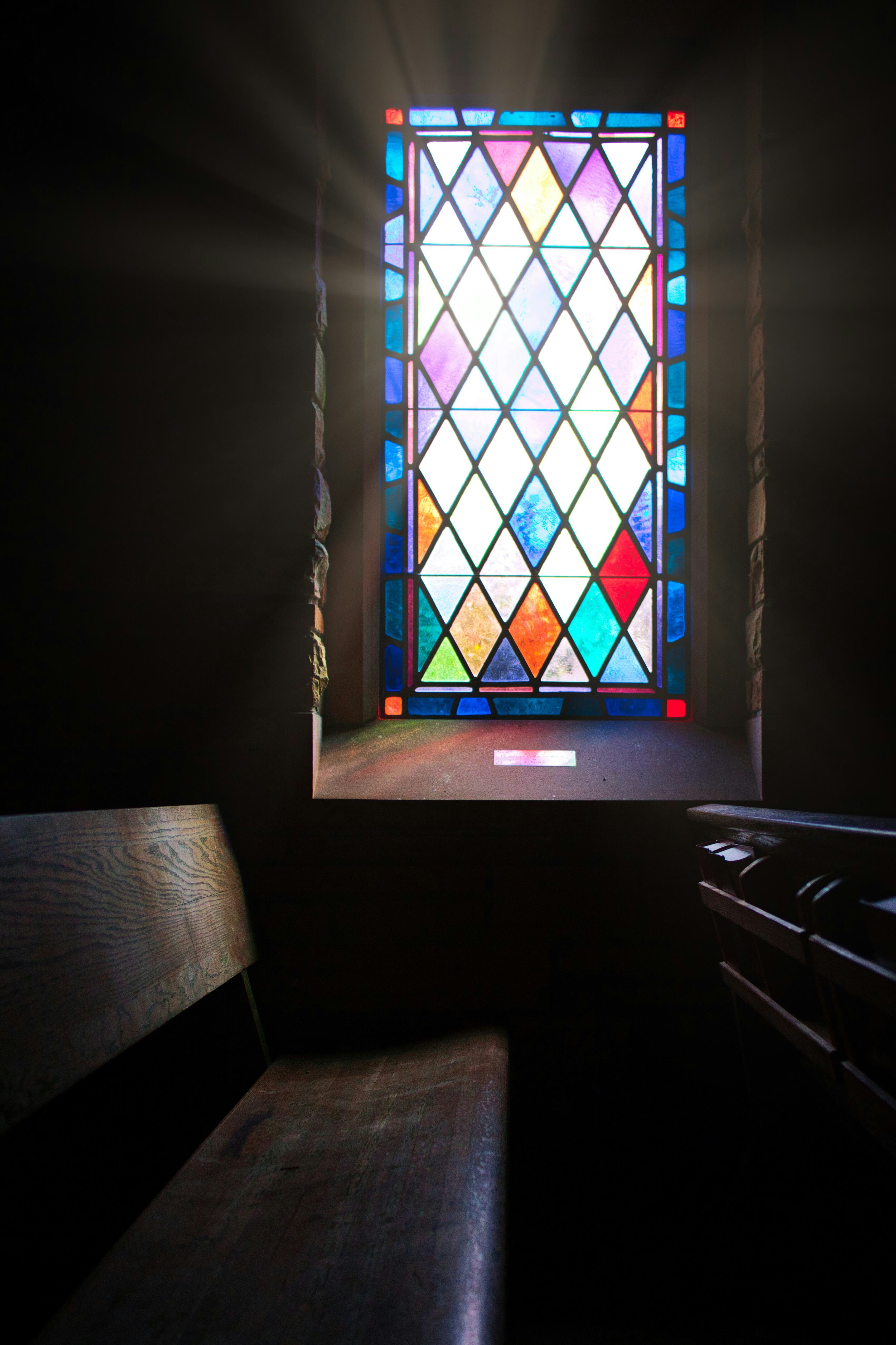
Feature Image Credit: Shane Hoving, unsplash.com/photos/a-stained-glass-window-YYOpQckcOt4

The views and opinions expressed in the Inspiration Daily blog are solely those of the original authors and contributors. These views and opinions do not necessarily represent those of Diocesan, the Diocesan staff, or other contributors to this blog.

Walking with Jesus / Caminando con Jesús

Let’s not only contemplate the original travelers in today’s Gospel walking along the Road to Emmaus, but let us go one step further and see ourselves walking along this road. First, begin considering the two weary disciples, hearts heavy with disappointment, their hopes shattered, only to discover that Jesus has been walking beside them the entire time. I can’t help but see myself in their steps. How many times have I trudged along my own “Emmaus road,” replaying worries, hurts, or unanswered prayers, certain that God must be far away, only to realize later that He is always present in every moment?

I find it interesting that Jesus doesn’t interrupt them to say, “Hey, Guys, It’s me Jesus! I am right here!” Instead, He listens. He lets them speak their sorrow. Then, gently and patiently, He opens the Scriptures for them. This is the Jesus I’ve been blessed to come to know and love: The One who meets us where we are, who walks our pace, who allows our questions and confusion, and who leads us—inch by inch—back into truth.

Do you, like the disciples, recognize Jesus in the breaking of the bread? Their eyes are opened not through a lecture or a miracle, but through a simple, familiar gesture, in the simplicity of bread. It reminds me that God often reveals Himself in small moments—quiet prayer, a line from Scripture, the rhythm of the Rosary, the kindness of a friend. Grace slips in subtly, almost imperceptibly, until suddenly we realize our hearts have been burning all along.

The disciples’ response is an invitation for us today: once they recognized Jesus, they didn’t stay where they were. They ran back to share the good news. When Christ meets us in our own wandering, He does so not just to console us, but to send us. We become authentic witnesses of faith—imperfect, ordinary, yet filled with the fire of His presence. May our hearts burn within us, too, as we walk with Him.

Contact the author


No solo contemplemos a los viajeros del Evangelio de hoy caminando hacia Emaús, sino que vayamos un paso más allá y veamos a nosotros mismos caminando por ese camino. Primero, pensemos en los dos discípulos cansados, con el corazón abatido por la decepción, sus esperanzas destrozadas, solo para descubrir que Jesús ha estado caminando a su lado todo el tiempo. No puedo evitar verme reflejado en sus pasos. ¿Cuántas veces he recorrido con dificultad mi propio “camino de Emaús”, repasando preocupaciones, heridas u oraciones sin respuesta, segura de que Dios debe estar lejos, solo para darme cuenta después de que Él siempre está presente en cada momento?

Me parece interesante que Jesús no los interrumpa para decir: “¡Hola, señores, soy yo, Jesús! ¡Estoy aquí!” En cambio, los escucha. Les permite expresar su dolor. Luego, con gentileza y paciencia, les abre las Escrituras. Este es el Jesús que he tenido la bendición de conocer y amar: Aquel que nos encuentra donde estamos, que sigue nuestro ritmo, que nos permite afrontar nuestras preguntas y confusiones, y que nos guía, poco a poco, de vuelta a la verdad.

¿Reconoces, como los discípulos, a Jesús al partir el pan? Sus ojos se abren no por un discurso ni un milagro, sino por un gesto sencillo y familiar, en la sencillez del pan. Me recuerda que Dios a menudo se revela en los pequeños momentos: una oración silenciosa, un verso de la Escritura, el ritmo del Rosario, la bondad de un amigo. La gracia se cuela sutilmente, casi imperceptiblemente, hasta que de repente nos damos cuenta de que nuestros corazones han estado ardiendo todo el tiempo.

La respuesta de los discípulos es una invitación para nosotros hoy: una vez que reconocieron a Jesús, no se quedaron donde estaban. Corrieron de vuelta a compartir la buena noticia. Cuando Cristo nos encuentra en nuestro propio peregrinar, lo hace no solo para consolarnos, sino para enviarnos. Nos convertimos en auténticos testigos de la fe: imperfectos, ordinarios, pero llenos del fuego de su presencia. Que nuestro corazón arda también dentro de nosotros mientras vamos caminando con Él.

Comunicarse con la autora

Allison Gingras (www.ReconciledToYou.com ) shares an everyday Catholic faith with humor and honesty. Her writing includes The Handy Little Guide to Novenas (OSV), Encountering Signs of Faith (Ave Maria Press), the Stay Connected Journals for Catholic Women (OSV), and her newest book, Jesus Heals (OSV), published in 2025. Allison is the Director of Digital Evangelization for Family Rosary USA.

Feature Image Credit: EveraldoBrito, pixabay.com/photos/road-against-light-dust-golden-7400333/

The views and opinions expressed in the Inspiration Daily blog are solely those of the original authors and contributors. These views and opinions do not necessarily represent those of Diocesan, the Diocesan staff, or other contributors to this blog.

Sent by Jesus / Enviado por Jesús

When the disciples came to inspect the tomb, they did not find Jesus’ body there, and they went away. They were full of action, running to the tomb, finding nothing, then leaving. But Mary of Magdala remained behind, weeping. She was still, crying, bending over into the tomb. She saw angels who spoke to her, which must have been extraordinary, but her only thought was of Jesus and where they had taken His body.  

She was so confused in her sorrow that she didn’t recognize Jesus when He spoke directly to her. Sometimes in our own lives we must endure, waiting and weeping, lost and distraught. We might get caught up in our emotions so that we can’t see the way forward. We can get trapped in the darkness of despair, and when we can’t see our way out, we forget that there is a way out. But time and faith can turn us toward the light. 

Jesus tells Mary to deliver a message to His disciples. The disciples were just there, but they already went away. It was Mary’s delay at the tomb, lost in her sadness, that put her in the position to see Jesus, to touch Him, and to speak to Him. If she had gone away with the others, she would have missed out. Delayed in her sorrow, she was in the position to be the first to see Jesus resurrected. She was the person sent by Jesus to deliver the message. 

The agony of loss is experienced differently, and everyone takes their own time in healing. Like Mary of Magdala, we can be delayed in our sorrow, but that delay may be the pathway to next steps, steps we are called to walk as messengers sent by Jesus.

Contact the Author


Cuando los discípulos fueron a inspeccionar la tumba, no encontraron el cuerpo de Jesús y se marcharon. Estaban llenos de actividad, corrieron a la tumba y cuando no encontraron nada se marcharon. Pero María Magdalena se quedó allí llorando – inmóvil, con lágrimas en los ojos, inclinándose hacia la tumba. Vio a los ángeles que le hablaban, lo cual debió ser extraordinario, pero su único pensamiento era en Jesús y adónde habían llevado su cuerpo.

Estaba tan confundida en su dolor que no reconoció a Jesús cuando le habló directamente. A veces, en nuestras vidas, tenemos que perdurar, esperando y llorando, perdidos y angustiados. Podemos dejarnos llevar por nuestras emociones y no ver el camino a seguir. Podemos quedar atrapados en la oscuridad de la desesperación, y cuando no vemos la salida, olvidamos que una existe. Pero el tiempo y la fe pueden guiarnos hacia la luz.

Jesús le dice a María que les dé un mensaje a sus discípulos. Los discípulos acababan de llegar, pero ya se habían ido. Fue la demora de María en el sepulcro, sumida en su tristeza, lo que la puso en condiciones de ver a Jesús, tocarlo y hablar con él. Si se hubiera ido con los demás, se lo habría perdido. Retrasada en su dolor, pudo ser la primera en ver a Jesús resucitado. Fue la persona enviada por Jesús para transmitir el mensaje.

La agonía de la pérdida se vive de manera diferente, y cada persona se toma su tiempo para sanar. Al igual que María Magdalena, podemos demorarnos en nuestro dolor, pero esa demora puede ser el camino hacia los siguientes pasos, pasos que estamos llamados a dar como mensajeros enviados por Jesús.

Comunicarse con la autora


Anita Renaghan is the author of several books including literary fiction, science fiction, and a young adult trilogy. She loves a good character study and has been many characters herself including: an aircraft mechanic in the Air Force, a college graduate, a second degree blackbelt, lost, a waitress and bartender, a wife and mother, an account executive, found, and a constantly inventive singer-songwriter. Anita is interested in sharing her faith with others through her writings and story characters. Her website is anitarenaghan.com 

Feature Image Credit: Tobias Bjørkli, pexels.com/photo/stone-wall-2360682/

The views and opinions expressed in the Inspiration Daily blog are solely those of the original authors and contributors. These views and opinions do not necessarily represent those of Diocesan, the Diocesan staff, or other contributors to this blog.

Crossing the Bridge / Cruzar el puente

Driving up Iron Bridge Road for the first time, I was terrified. This road in my New Jersey neighborhood shoots straight up the mountain, cresting at a one-lane bridge. I call it Scary Bridge because you cannot see the other side while crossing…you only hope you’ll make it over in one piece. I was already afraid of heights, but being new to the area, I wanted to see where the road led.  I made the choice to conquer this fear. 

Approaching the bridge, I honked my horn to alert any oncoming drivers. Then, crawling at what must’ve been 5 mph over that rickety bridge, I prayed. And when I finally reached the other side, my breath left me as I took in what must be one of the most beautiful views I had ever seen. The hills and valleys opened around me in a sweeping panorama. That bridge taught me something about what happens when we act even while afraid. 

Mary Magdalene and the other Mary faced their own “scary bridge” on Easter morning. Fearful and uncertain after witnessing the earthquake, the angels and most importantly, the empty tomb, they also felt joy and excitement. Making a choice, they ran to tell the others. They had no idea what this path would mean for their lives.  And Behold!  Jesus met them and greeted them on their way! 

In stark contrast, the soldiers who also witnessed this great miracle were afraid… but rather than becoming overjoyed, their fear was mixed with dread. They had lost the body they were hired to guard.  They had a lot to lose: their jobs, their families, their very lives. “Some of the guard” went to tell the chief priests.  When offered a bribe to lie, the soldiers took it.  

But not all of them. Scripture says some of the guard went to the priests. Not all. We aren’t told what happened to the others…could Jesus have met them too?  Could we hope that some of them recognized Jesus and changed their lives to follow him? 

How many times do we allow fear to paralyze us when we see a bridge but can’t see the other side? It can be hard to know how we’re supposed to respond. But even when we feel shaky, we can let Jesus guide our actions. He may not pick us up and carry us over the scary bridges we face, but if we move forward to cross them, He will be with us. If we take one step, Jesus can direct the next step, and the next.  Despite our fear, He can help us make it over the bridge in one piece. And let me tell you, the view will be worth it.

Contact the Author


Cuando conduje por primera vez por Iron Bridge Road, estaba aterrorizada. Esta carretera en mi vecindario de Nueva Jersey sube directamente por la montaña, culminando en un puente de un solo carril. Lo llamo el Puente del Miedo porque no se ve el otro lado al cruzarlo… solo esperas llegar al otro lado sano y salvo. Ya tenía miedo a las alturas, pero como recién me había mudado a esta área, quería ver hasta dónde llegaba la carretera. Decidí vencer este miedo.

Al acercarme al puente, toqué el claxon para alertar a los conductores que venían en sentido contrario. Luego, avanzando a lo que debían ser 8 km/h sobre ese puente destartalado, recé. Y cuando finalmente llegué al otro lado, me quedé sin aliento al contemplar una de las vistas más hermosas que jamás había visto. Las colinas y los valles se extendían a mi alrededor en un panorama impresionante. Ese puente me enseñó algo sobre lo que sucede cuando actuamos a pesar del miedo.

María Magdalena y la otra María se enfrentaron a su propio “puente del miedo” en la mañana de Pascua. Temerosas e inseguras después de presenciar el terremoto, los ángeles y, lo más importante, la tumba vacía, también sintieron alegría y emoción. Tomando una decisión, corrieron a contárselo a los demás. No tenían ni idea de lo que este camino significaría para sus vidas. ¡Y he aquí! ¡Jesús las encontró y las saludó en el camino!

Exactamente lo opuesto, los soldados que también presenciaron este gran milagro tuvieron miedo… pero en lugar de llenarse de alegría, su miedo se mezcló con pavor. Habían perdido el cuerpo que se les había encomendado custodiar. Tenían mucho que perder: sus trabajos, sus familias, sus propias vidas. “Algunos soldados de la guardia” fueron a contárselo a los sumos sacerdotes. Cuando les ofrecieron un soborno para que mintieran, los soldados lo aceptaron.

Pero no todos. Las Escrituras dicen que “algunos” de los guardias fueron a ver a los sacerdotes. No todos. No se nos dice qué les sucedió a los demás… ¿Podría Jesús haberlos encontrado también? ¿Podemos esperar que algunos de ellos reconocieran a Jesús y cambiaran sus vidas para seguirlo?

¿Cuántas veces permitimos que el miedo nos paralice cuando vemos un puente pero no podemos ver el otro lado? Puede ser difícil saber cómo debemos reaccionar. Pero incluso cuando nos sentimos inseguros, podemos dejar que Jesús guíe nuestras acciones. Quizás no nos tome en brazos y nos lleve al otro lado de los puentes que nos dan miedo, pero si avanzamos para cruzarlos, Él estará con nosotros. Si damos un paso, Jesús puede guiar el siguiente, y el siguiente. A pesar de nuestro miedo, Él puede ayudarnos a cruzar el puente sanos y salvos. Y déjenme decirles que la vista valdrá la pena.

Comunicarse con la autora


Margaret Gartlgruber longs for moms to know: You are enough! It is not what you accomplish that matters – God delights in you every single moment simply just for being you! A semi-retired stay-at-home mom, wife, author, blogger, freelance writer, lay RC member Margaret blogs at https://ruledbybananas.com/. Contributing St. Monica to the Cloud of Witness book, you can learn more by signing up to her St. Monica Novena, and get free copy of 15 Simple Morning Prayers.

Feature Image Credit: Larisa-K, pixabay.com/illustrations/bridge-forest-fantasy-trees-light-19513/

The views and opinions expressed in the Inspiration Daily blog are solely those of the original authors and contributors. These views and opinions do not necessarily represent those of Diocesan, the Diocesan staff, or other contributors to this blog.

Run to Him / Corra hacia Él

Today’s passage begins with “On the first day of the week…” In Jesus’ time, the Jewish calendar considered the Sabbath (Saturday) as the last day of the week. This was based on the Old Testament understanding of creation, when God rested on the seventh day and blessed it. Although most of the world today views Monday as the first day of the week, in the Judeo-Christian tradition and ancient Jewish custom, Sunday is seen as the first day.

When I reflected on this reading, my first thought was of Mary of Magdala. Putting myself in her shoes, she probably wasn’t able to sleep all night because her Lord and God had just been crucified. Sometimes the Lord uses that quiet early morning time, while it is still dark and before the world takes over our thoughts, to speak to our souls. Perhaps He nudged her to go see the tomb, so she jumped up because the urge wouldn’t go away. She finds the tomb open. With her heart racing, she runs back to Peter and the other disciple to tell them what she saw. 

Then Simon Peter and John (the other disciple) rush quickly to the tomb, their minds filled with confusion. John gets there first, looks inside and sees the burial cloths, but doesn’t go in. Then Peter arrives, in a heightened state of mind, wondering, “Where is my Lord?” He goes into the tomb and John follows him. John enters, sees, and believes.

By leaving the headcloth neatly folded and set aside, Jesus shows them that His body was not robbed, nor was there any violence or ransacking. He gave them this sign to show the disciples and Mary of Magdala that He had risen voluntarily, of His own accord. 

The last sentence of this passage reminds us that they did not yet understand the Scripture that He had to rise from the dead. We have the gift of already knowing this, for we have the Bible, the Word of God, giving us reason to rejoice. 

For Mary Magdalene, Jesus was her life and her salvation. Even amid fear and uncertainty she ran to Him. We can also have that same relationship with Jesus. He is waiting for us to simply ask and to listen for His whisper: “I Am” and “I love you.” This Easter, let us run to our Risen Lord and respond “Here I am” and “I love you too.” 

Contact the Author


El pasaje de hoy comienza con “al amanecer del primer día de la semana…”. En tiempos de Jesús, el calendario judío consideraba el sábado como el último día de la semana. Esto se basaba en la comprensión del Antiguo Testamento sobre la creación, cuando Dios descansó el séptimo día y lo bendijo. Aunque la mayor parte del mundo hoy considera el lunes como el primer día de la semana, en la tradición judeocristiana y la antigua costumbre judía, el domingo se considera el primer día.

Cuando reflexioné sobre esta lectura, mi primer pensamiento fue en María Magdalena. Poniéndome en su lugar, probablemente no pudo dormir en toda la noche porque su Señor y Dios acababa de ser crucificado. A veces, el Señor usa ese momento tranquilo de la madrugada, mientras aún está oscuro y antes de que el mundo invade nuestros pensamientos, para hablar a nuestras almas. Quizás Él la impulsó a ir a ver la tumba, así que ella se levantó de un salto porque el impulso no desaparecía. Encuentra la tumba abierta. Con el corazón acelerado, corre de regreso a Pedro y al otro discípulo para contarles lo que vio.

Entonces Simón Pedro y Juan (el otro discípulo) corren rápidamente hacia la tumba, con la mente llena de confusión. Juan llega primero, mira dentro y ve las telas funerarias, pero no entra. Luego llega Pedro en un estado de gran agitación, preguntándose: “¿Dónde está mi Señor?” Entra en la tumba y Juan lo sigue. Juan entra, ve y cree.

Al dejar el sudario cuidadosamente doblado y a un lado, Jesús les muestra que su cuerpo no fue robado, ni hubo violencia ni saqueo. Les dio esta señal para mostrar a los discípulos y a María Magdalena que había resucitado voluntariamente, por su propia cuenta.

La última frase de este pasaje nos recuerda que aún no entendían la Escritura que decía que Él tenía que resucitar de entre los muertos. Nosotros tenemos el don de saber esto, porque tenemos la Biblia, la Palabra de Dios, que nos da motivos para regocijarnos.

Para María Magdalena, Jesús era su vida y su salvación. Incluso en medio del miedo y la incertidumbre, corrió hacia Él. Nosotros también podemos tener esa misma relación con Jesús. Él está esperando que simplemente le pidamos y escuchemos su susurro: “Yo soy” y “Te amo”. En esta Pascua, corramos hacia nuestro Señor resucitado y respondamos: “Aquí estoy” y “Yo también te amo”.

Comunicarse con la autora


Marti Garcia’s passions are her retired life and growing deeper in her Catholic faith. Marti is a Sacristan/EM, facilitates small groups, and assists as a First Communion Catechist for parents. Being a parent educator and writer for 35 years, she recently published a children’s chapter book on Amazon, The Ladybugs. You can find her at her blog: MartiGarcia.org, or thewaterisshallow.com, or her cohost podcast, findingacommonthread.com, which is coming soon.

Feature Image Credit: Pisit Heng, unsplash.com/photos/brown-rock-formation-during-daytime-ci1F55HaVWQ

The views and opinions expressed in the Inspiration Daily blog are solely those of the original authors and contributors. These views and opinions do not necessarily represent those of Diocesan, the Diocesan staff, or other contributors to this blog.

Easter: An Encounter that Changes Our Lives / La Pascua: Un encuentro que cambia nuestras vidas

Mary Magdalene and the other Mary quietly set out to the place of their sorrow, where their Lord was laid in a tomb. What were the thoughts that swirled around in their hearts during the early hours after the Sabbath. Images of the Friday before, of Calvary, of the cold tomb, of the stone rolled between them and Jesus. They came to grieve, and yet, their desire to be near the Master they loved—and who so loved them—placed them at the heart of the greatest moment in history.

Suddenly the earth trembled. An angel of the Lord descended from heaven, rolling back the stone. Flashes of lightning lit up the inner shadows of their sadness, wiping away tears and memories and fear-filled anticipation, replacing it with the face of an angel. As they ran with hearts racing—carrying both fear and joy—Jesus Himself met them. He met them on the road, right where they were. And He repeated the words the angel had said moments before: “Do not be afraid. Go…” He would be going ahead of them and would meet them in Galilee. 

On Easter in 2012, Benedict XVI declared : “Every Christian relives the experience of Mary Magdalene. It involves an encounter which changes our lives: the encounter with a unique Man who lets us experience all God’s goodness and truth, who frees us from evil not in a superficial and fleeting way, but sets us free radically, heals us completely and restores our dignity…Dear brothers and sisters! If Jesus is risen, then – and only then – has something truly new happened, something that changes the state of humanity and the world. Then he, Jesus, is someone in whom we can put absolute trust; we can put our trust not only in his message but in Jesus himself, for the Risen One does not belong to the past, but is present today, alive” (Urbi et Orbi Message, 4/8/2012).

Friend, in all your busyness, in your care for others, in your worry over the state of the world,
hear this: you also are standing right now at the greatest moment in history as the clap of victory and the trumpet of glory announce: The tomb is empty. And Jesus is already ahead of you.

You do not carry this day alone. You are not holding the world together by your effort.
You are not running toward an uncertain end—You are being met by the Risen One who has already gone ahead of you. So breathe. Let this be your resurrection morning, too.

Jesus, Risen One, let your joy rise in my heart at dawn. Let me be a quiet bearer of the truth every soul so longs to hear: The tomb is empty. Christ is alive and present today among us. All is made new. Alleluia.

Contact the author


María Magdalena y la otra María se dirigieron en silencio al lugar de su dolor, donde su Señor yacía en un sepulcro. ¿Qué pensamientos les rondaban en el corazón durante la madrugada después del Sabbat? Imágenes del viernes anterior, del Calvario, de la tumba fría, de la piedra que se interponía entre ellas y Jesús. Vinieron a llorar, y sin embargo, su deseo de estar cerca del Maestro que amaban —y que tanto las amaba— las colocó en el corazón del momento más grande de la historia.

De repente, la tierra tembló. Un ángel del Señor descendió del cielo, removiendo la piedra. Relámpagos iluminaron las sombras internas de su tristeza, enjugando lágrimas, recuerdos y la anticipación llena de miedo, reemplazándolas con el rostro de un ángel. Mientras corrían con el corazón acelerado, cargando con miedo y alegría, Jesús mismo las encontró. Las encontró en el camino, justo donde estaban. Y repitió las palabras que el ángel había dicho momentos antes: “No tengan miedo. Vayan…”. Él iría delante de ellos y se encontraría con ellos en Galilea.

En la Pascua de 2012, el Papa Benedicto XVI declaró: “Todo cristiano revive la experiencia de María Magdalena. Es un encuentro que cambia la vida: el encuentro con un hombre único, que nos hace sentir toda la bondad y la verdad de Dios, que nos libra del mal, no de un modo superficial, momentáneo, sino que nos libra de él radicalmente, nos cura completamente y nos devuelve nuestra dignidadQueridos hermanos y hermanas: si Jesús ha resucitado, entonces –y sólo entonces– ha ocurrido algo realmente nuevo, que cambia la condición del hombre y del mundo. Entonces Él, Jesús, es alguien del que podemos fiarnos de modo absoluto, y no solamente confiar en su mensaje, sino precisamente en Él, porque el resucitado no pertenece al pasado, sino que está presente hoy, vivo” (Mensaje Urbi et Orbi, 4/8/2012). 

Amigo, en medio de tus ocupaciones, en tu cuidado de los demás, en tu preocupación por el estado del mundo, escucha esto: tú también te encuentras ahora mismo en el momento más grande de la historia, mientras el aplauso de la victoria y la trompeta de gloria anuncian: La tumba está vacía. Y Jesús ya está delante de ti.

No llevas este día solo. No estás sosteniendo el mundo con tu esfuerzo. No corres hacia un final incierto; te estás encontrando con el Resucitado que ya se ha adelantado. Así que respira. Que esta sea también tu mañana de resurrección.

Jesús, Resucitado, que tu alegría aflore en mi corazón al amanecer. Permíteme ser un portador silencioso de la verdad que toda alma anhela escuchar: La tumba está vacía. Cristo está vivo y presente hoy entre nosotros. Todo es nuevo. Aleluya.

Comunicarse con la autora

Sr. Kathryn J. Hermes

Sr. Kathryn James Hermes, FSP, is an author and offers online evangelization as well as spiritual formation for people on their journey of spiritual transformation and inner healing. Website: www.touchingthesunrise.com My Books: https://touchingthesunrise.com/books/
Public Facebook Group: https://www.facebook.com/groups/srkathrynhermes/ HeartWork Spiritual Formation Group: https://touchingthesunrise.com/heartwork/

Feature Image Credit: Josh Withers, pexels.com/photo/the-resurrection-of-christ-painting-in-tapestry-gallery-vatican-city-27063870/

The views and opinions expressed in the Inspiration Daily blog are solely those of the original authors and contributors. These views and opinions do not necessarily represent those of Diocesan, the Diocesan staff, or other contributors to this blog.

Good Friday / Viernes Santo

As we hear the Passion narrative read, it may be hard for us to enter into it because it is so familiar. The scourging is familiar. The crown of thorns is familiar. The mocking is familiar. The crucifix is familiar. The spear is familiar. Because of this familiarity, we may fail to be properly shocked. Because this kind of cruelty and mockery and suffering IS shocking. 

But even more shocking is the merciful love that motivates it. We may fail to be properly shocked by this stupendous mercy and love as well. Because we are accustomed to being those who have been saved, accustomed to having a Savior, accustomed to the way of grace and the closeness of our God in the sacraments, we often fail to see how absolutely helpless and hopeless we truly are on our own.

We were lost. Mankind, and each and every one of us individually, were hopelessly lost. We had been captured by the Enemy of all that is good, chained to sin and death and despair, ruled over by one who hates us. Filled with infirmity and stricken with suffering, alone and running in our own futile circles and unable to free ourselves. We were all lost sheep, in a land that was doomed to death.

But Love came to bear our infirmities, to endure our sufferings. Love entered our doomed world to overcome the enemy in the most surprising and shocking way: He was “pierced for our offenses, crushed for our sins… cut off from the land of the living and smitten for the sin of his people.” What we earned by our sin and selfishness, He absorbed into himself; “the Lord was pleased to crush him in infirmity.” He freely and peacefully surrendered His life as an offering for sin; He suffered, died, and was buried. For me. For you.

He became the Man of Sorrows so that we could know true joy. He took away our sins by carrying them in His own person to Calvary so that we could be redeemed. He endured darkness so that we could know light; he overcame death so that we could live forever.

May we be properly shocked and shaken at the mysterious ways of God, which wrought our salvation to eternal life with Him through the horrific execution of His only-begotten Son. May we be properly shocked at the infinite and incomprehensible love of the Savior, Who willingly laid down his life, pouring himself out utterly, for us poor sinners, whom he loves. 

There is no greater love. And that is what makes this Friday “Good”.

Contact the author


Al escuchar la narración de la Pasión, puede resultarnos difícil conmovernos profundamente porque nos resulta muy familiar. La flagelación es familiar. La corona de espinas es familiar. Las burlas son familiares. El crucifijo es familiar. La lanza es familiar. Debido a esta familiaridad, quizás no nos conmocionemos como deberíamos. Porque este tipo de crueldad, burla y sufrimiento ES impactante.

Pero aún más impactante es el amor misericordioso que lo motiva. Quizás tampoco nos conmocionemos como deberíamos ante esta estupenda misericordia y amor. Porque estamos acostumbrados a ser los que hemos sido salvados, acostumbrados a tener un Salvador, acostumbrados al camino de la gracia y a la cercanía de nuestro Dios en los sacramentos, a menudo no logramos ver cuán absolutamente indefensos y desesperados somos por nosotros mismos.

Estábamos perdidos. La humanidad, y cada uno de nosotros individualmente, estábamos irremediablemente perdidos. Habíamos sido capturados por el Enemigo de todo lo bueno, encadenados al pecado, a la muerte y a la desesperación, gobernados por alguien que nos odia. Llenos de debilidad y afligidos por el sufrimiento, solos y dando vueltas en nuestros propios círculos inútiles e incapaces de liberarnos. Éramos todas ovejas perdidas, en una tierra condenada a la muerte.

Pero el Amor vino a cargar con nuestras debilidades, a soportar nuestros sufrimientos. El Amor entró en nuestro mundo condenado para vencer al enemigo de la manera más sorprendente e impactante: Él fue “traspasado por nuestras rebeliones, triturado por nuestros crímenes... Lo arrancaron de la tierra de los vivos, lo hirieron de muerte por los pecados de mi pueblo”. Lo que merecíamos por nuestro pecado y egoísmo, Él lo absorbió en sí mismo; “El Señor quiso triturarlo con el sufrimiento”. Él entregó libre y pacíficamente su vida como ofrenda por el pecado; sufrió, murió y fue sepultado. Por mí. Por ti.

Se convirtió en el Hombre de Dolores para que pudiéramos conocer la verdadera alegría. Quitó nuestros pecados llevándolos en su propia persona al Calvario para que pudiéramos ser redimidos. Soportó la oscuridad para que pudiéramos conocer la luz; venció la muerte para que pudiéramos vivir para siempre.

Que nos conmocionemos y nos estremezcamos ante los misteriosos caminos de Dios, que obró nuestra salvación a la vida eterna con Él a través de la horrible ejecución de su Hijo unigénito. Que nos conmueva profundamente el amor infinito e incomprensible del Salvador, quien voluntariamente entregó su vida, entregándose por completo por nosotros, pobres pecadores, a quienes tanto ama.

No existe amor más grande. Y eso es lo que hace que este viernes sea “Santo”.

Comunicarse con la autora

Kathryn Mulderink, MA, is married to Robert, Station Manager for Holy Family Radio. Together they have seven children (including Father Rob), and eleven grandchildren. She is President of the local community of Secular Discalced Carmelites and has published five books and many articles. Over the last 30 years, she has worked as a teacher, headmistress, catechist, Pastoral Associate, and DRE, and as a writer and voice talent for Catholic Radio. Currently, she serves the Church by writing and speaking, and by collaborating with various parishes and to lead others to encounter Christ and engage their faith. Her website is www.KathrynTherese.com

Feature Image Credit: falco, pixabay.com/photos/passion-good-friday-church-christ-1138007/

The views and opinions expressed in the Inspiration Daily blog are solely those of the original authors and contributors. These views and opinions do not necessarily represent those of Diocesan, the Diocesan staff, or other contributors to this blog.

A Gift Received / Un don recibido

Today, Holy Thursday, we celebrate the Institution of the Eucharist, and we hear of the washing of the feet. The Eucharist is an unfathomable gift, God in the flesh, His Body and Blood, acting in us for our holiness and salvation. The washing of the feet was another gift, unfathomable to those who received it.

As Jesus said to Peter, “What I am doing, you do not understand now, but you will understand later” (John 13:7). Why was this so hard for Peter to accept? We know that washing feet was something more fit for a servant. Peter must have been embarrassed and ashamed, first expressing his bewilderment: “Master, are you going to wash my feet?” (John 13:6).

But Jesus insists. Let’s pause here. Jesus isn’t just doing a nice thing or giving an extraordinary gift. He’s saying something deeper. To wash another’s feet is, yes, to place oneself in the position of a servant. But it’s not just about humility. It’s an indication that the person being washed is worthy of being served.

Jesus confirms this when Peter shifts his intention: “Master, then not only my feet, but my hands and head as well” (John 13:9). Perhaps Peter thinks that Jesus is washing his feet because He believes that Peter is too sinful to proceed as His apostle and needs to be cleaned. Not so. Jesus says, “Whoever has bathed has no need except to have his feet washed, for he is clean all over; so you are clean, but not all” (John 13:10). John emphasizes the application of this statement to Judas, but we can also see that Jesus is acknowledging Peter’s cleanliness. He has bathed, so he only needs his feet washed. He is “clean all over.”

This is deeply affirming for Peter and for us. First, Peter thought it beneath Jesus to wash his feet, because he considered himself to be equal to a servant. Then he believes that Jesus is making a statement about his sinfulness, prompting him to ask to be washed all over rather than only in part, to make up for the filth that covers him completely. But Jesus revises his perception.

It is not that we are so depraved and sinful that God needs to stoop down and wash our feet, and it is not that we are so worthless that He can’t bring Himself to wash any more of us than that. It’s that He gives us the free gift of cleansing us because He made us good and worthy of such cleansing. We need His help not because we are hopeless, but because He desires to give to us and affirm the goodness in us, which is an echo of His infinite goodness.

The gift is freely given, and we are invited to freely accept it, as Peter did. Yes, God is infinitely greater than us. And yes, He made us good. And with His cleansing grace, we can be even better. 

Contact the author


Hoy, Jueves Santo, celebramos la Institución de la Eucaristía y escuchamos el relato del lavatorio de los pies. La Eucaristía es un don incomprensible, Dios hecho carne, su Cuerpo y su Sangre, actuando en nosotros para nuestra santidad y salvación. El lavatorio de los pies fue otro don, incomprensible para quienes lo recibieron.

Como Jesús le dijo a Pedro: “Lo que estoy haciendo tú no lo entiendes ahora, pero lo comprenderás más tarde”. ¿Por qué le resultaba tan difícil a Pedro aceptar esto? Sabemos que lavar los pies era una tarea propia de un siervo. Pedro debió sentirse avergonzado y humillado, expresando primero su desconcierto: “Señor, ¿me vas a lavar tú a mí los pies?”

Pero Jesús insiste. Detengámonos aquí. Jesús no solo está haciendo una buena acción ni dando un regalo extraordinario. Está diciendo algo más profundo. Lavar los pies de otro es, sí, ponerse en la posición de un siervo. Pero no se trata solamente de la humildad. Es una indicación de que la persona a la que se le lavan los pies es digna de ser servida.

Jesús lo confirma cuando Pedro cambia de parecer: “En ese caso, Señor, no sólo los pies, sino también las manos y la cabeza”. Quizás Pedro pensó que Jesús le lavaba los pies porque creía que era demasiado pecador para seguir siendo su apóstol y necesitaba ser purificado. No es así. Jesús dice: “El que se ha bañado no necesita lavarse más que los pies, porque todo él está limpio. Y ustedes están limpios, aunque no todos”. Juan enfatiza la aplicación de esta afirmación a Judas, pero también podemos ver que Jesús reconoce la pureza de Pedro. Se ha bañado, por lo que solo necesita que le laven los pies. “[T]odo él está limpio”.

Esto es profundamente reconfortante para Pedro y para nosotros. Primero, Pedro pensó que era indigno de Jesús lavarle los pies, porque se consideraba igual a un siervo. Luego creyó que Jesús estaba haciendo una declaración sobre su pecaminosidad, lo que lo llevó a pedir que lo lavaran por completo, en lugar de solo en parte, para compensar la suciedad que lo cubría por completo. Pero Jesús corrige su percepción. No es que seamos tan depravados y pecadores que Dios tenga que humillarse para lavarnos los pies, ni que seamos tan indignos que Él no pueda lavarnos más que eso. La verdad es que Él nos ofrece gratuitamente la purificación porque nos creó buenos y dignos de tal purificación. Necesitamos su ayuda no porque seamos casos perdidos, sino porque Él desea darnos y afirmar la bondad que hay en nosotros, que es un reflejo de su bondad infinita.

El don se nos da gratuitamente, y estamos invitados a aceptarlo libremente, como lo hizo Pedro. Sí, Dios es infinitamente más grande que nosotros. Y sí, Él nos creó buenos. Y con su gracia purificadora, podemos ser aún mejores.

Comunicarse con el autor

David Dashiell is a freelance author and editor in the Nashville, Tennessee area. He has three children, a degree in theology, and enjoys writing about philosophy, theology, culture, music, and comedy. You can find his personal blog, Serious Daydreams, on Substack. He is also the editor of the anthology Ever Ancient, Ever New: Why Younger Generations Are Embracing Traditional Catholicism, available through TAN Books.

Feature Image Credit: Lambert van Noort, art.diocesan.com/stock-photo/christ-washing-the-feet-of-apostles-7533/

The views and opinions expressed in the Inspiration Daily blog are solely those of the original authors and contributors. These views and opinions do not necessarily represent those of Diocesan, the Diocesan staff, or other contributors to this blog.

Ears to Hear / Oídos para escuchar

“Morning after morning he opens my ear that I may hear; and I have not rebelled, have not turned back” (Isaiah 50:4-5). 

Isaiah’s suffering servant from today’s first reading captures three key points for our consideration. First, discipleship is a day to day commitment—it begins anew each morning. Second, our ears are opened that we may hear the Lord God speak, but we are not forced to hear. Third, there is always the possibility we may rebel, for our free will allows us to choose, or change, the direction we are heading. 

These considerations, in turn, create a spotlight for approaching the Gospel reading of the day, as Matthew recounts how Judas Iscariot negotiates with the chief priests and then waits for the opportunity to hand Jesus over to them. It is important to remember that Judas was one of the chosen twelve. With open ears, he had heard the call of Christ and responded, and Jesus drew him into His inner circle. Yet something must have shifted in Judas’s heart along the way, for he rebelled. And if he rebelled, Judas must have stopped hearing. 

Jesus knew this. He loved Judas and he knew his heart, just as he knows the inner depths of each of our hearts. How poignant then for Him to speak to His disciples these words about one of His own, sharing with them at table: “The Son of Man indeed goes, as it is written of him, but woe to that man by whom the Son of Man is betrayed” (Matthew 26:24). 

Jesus knew what awaited Him. He knew He was to be crucified, as it had been written. But what if Jesus also knew that His crucifixion would come even without the betrayal of Judas? Was it written that Judas had to be a betrayer? Like the suffering servant, Judas could have called upon the Lord for help and he would not have been disgraced (Isaiah 50:7). Jesus was there, near him, waiting.  But Judas didn’t reach out to Him, and the outcome of his choices yielded devastating effects. Therefore, Judas’s disgrace becomes our lesson.

May we choose to hear, taking no moment for granted. May we remember that unlike Judas, Jesus’s ears were opened to the voice of the Father, morning after morning, and He trusted. Even in the anticipation of his death, Jesus did not rebel, did not turn back. Instead, He trusted. In doing so Jesus was able to fully surrender His will to the Father. May we, each day, do the same.

Contact the Author


“Mañana tras mañana, el Señor despierta mi oído, para que escuche yo, como discípulo. El Señor Dios me ha hecho oír sus palabras y yo no he opuesto resistencia ni me he echado para atrás” (Isaías 50,4-5).

El siervo sufriente de Isaías, de la primera lectura de hoy, nos presenta tres puntos claves para nuestra reflexión. Primero, el discipulado es un compromiso diario: comienza de nuevo cada mañana. Segundo, nuestros oídos se abren para que podamos escuchar al Señor Dios hablar, pero no estamos obligados a escuchar. Tercero, siempre existe la posibilidad de que nos rebelemos, ya que nuestro libre albedrío nos permite elegir o cambiar la dirección que seguimos.

Estas consideraciones, a su vez, nos ayudan a comprender el pasaje del Evangelio que leemos hoy, donde Mateo relata cómo Judas Iscariote negocia con los sumos sacerdotes y luego espera la oportunidad para entregar a Jesús. Es importante recordar que Judas era uno de los doce elegidos. Con los oídos abiertos, había escuchado el llamado de Cristo y había respondido, y Jesús lo había incluido en su círculo íntimo. Sin embargo, algo debió haber cambiado en el corazón de Judas en el camino, pues se rebeló. Y si se rebeló, Judas debió haber dejado de escuchar.

Jesús lo sabía. Amaba a Judas y conocía su corazón, así como conoce las profundidades de cada uno de nuestros corazones. ¡Qué conmovedor entonces que les dijera a sus discípulos estas palabras sobre uno de los suyos, compartiendo la mesa con ellos: “Porque el Hijo del hombre va a morir, como está escrito de él; pero ¡ay de aquel por quien el Hijo del hombre va a ser entregado!” (Mateo 26:24)

Jesús sabía lo que le esperaba. Sabía que sería crucificado, como estaba escrito. Pero ¿y si Jesús también supiera que su crucifixión ocurriría incluso sin la traición de Judas? ¿Estaba escrito que Judas tenía que ser un traidor? Al igual que el siervo sufriente, Judas podría haber invocado al Señor pidiendo ayuda y no habría sido deshonrado (Isaías 50,7). Jesús estaba allí, cerca de él, esperando. Pero Judas no se acercó, y el resultado de sus decisiones tuvo consecuencias devastadoras. Por lo tanto, la deshonra de Judas se convierte en nuestra lección.

Que elijamos escuchar, sin tomar nada por hecho. Recordemos que, a diferencia de Judas, los oídos de Jesús estaban atentos a la voz del Padre, mañana tras mañana, y Él confiaba. Incluso ante la inminencia de su muerte, Jesús no se rebeló ni retrocedió. Al contrario, confió. De esta manera, Jesús pudo entregar completamente su voluntad al Padre. Que nosotros, cada día, hagamos lo mismo.

Comunicarse con la autora


Raine Pyne is a longtime public school educator. She is married to Greg, who is also an educator. They have five sons, three dogs, and one cat, plus hundreds of adolescent students and countless stacks of books. Raine is a former parish catechist and women’s retreat leader. She is a student at the Theology of the Body Institute and a member of the Word on Fire Institute’s Writing Community. She is passionate about learning, language, and the ever deepening journey of faith.

Feature Image Credit: Philip Schumacher, https://art.diocesan.com/stock-photo/the-last-supper-16264/

The views and opinions expressed in the Inspiration Daily blog are solely those of the original authors and contributors. These views and opinions do not necessarily represent those of Diocesan, the Diocesan staff, or other contributors to this blog.

It Was Night / Era de noche

It is Tuesday of Holy Week. We are nearing the holiest days of the year, the Triduum, and after hearing the Gospel of the Passion last Sunday, our hearts should be aching with anticipation of the events we are called to enter into with our Lord, the One we love, the One who willingly endures all these things for you and for me.

Maybe we feel courageous this year and want to do much to remain with the Lord.

Maybe we feel squeamish at the thought of meditating on the Passion.

Maybe we feel nothing, indifferent, as if it has little bearing on our daily concerns.

If we are courageous, Jesus may warn us that we will deny Him three times.

If we are squeamish, he may plead with us, “Could you not watch one hour with me?” (Matt. 26:40).

If we are feeling nothing, we may need to ask for the grace of deeper insight, so that we can appreciate the gravity of these days.

No matter what we feel, we should take some time this week to be still before Him, look on His agonizing face, and recall the prophetic words of the Psalm: “I looked for someone to take pity, but there was none; for comforters, but I found none. They gave me poison for food, and for my thirst they gave me vinegar to drink” (Psalm 69:20-21).

It is night. The darkness of impending death and the tomb weigh on Holy Week. Let us not be afraid to look upon Him who we have pierced (Zech. 12:10, Jn 19:37), to look on what our sins have wrought, to spend time making the quiet effort to be with the agonizing Heart of the One who gave all for love of us, because we know that on the other side of the tomb is the light of the Resurrection.

Contact the author


Es martes de la Semana Santa. Nos acercamos a los días más sagrados del año, el Triduo Pascual, y después de escuchar el Evangelio de la Pasión el domingo pasado, nuestros corazones deberían estar llenos de emoción, anticipando los acontecimientos a los que estamos llamados a unirnos con nuestro Señor, a quien amamos, quien voluntariamente sufrió todo esto por ti y por mí.

Tal vez este año nos sintamos valientes y deseemos esforzarnos por permanecer cerca al Señor.

Tal vez nos incomode la idea de meditar en la Pasión.

Tal vez no sintamos nada, seamos indiferentes, como si no tuviera relevancia en nuestras preocupaciones diarias.

Si somos valientes, Jesús puede advertirnos que lo podríamos llegar a negar tres veces.

Si nos incomoda, puede suplicarnos: “¿No pudiste velar conmigo ni una hora?” (Mt 26,40).

Si no sentimos nada, tal vez necesitemos pedir la gracia de una comprensión más profunda, para poder apreciar la trascendencia de estos días. 

Sin importar lo que sintamos, esta semana debemos dedicar un tiempo a estar en silencio ante Él, contemplar su rostro agonizante y recordar las palabras proféticas de los Salmos: “Busqué quien se compadeciera, y no lo hallé; busqué consoladores, y no los encontré. Me dieron veneno por comida, y para mi sed me dieron a beber vinagre” (Salmo 69,20-21).

Es de noche. La oscuridad de la muerte inminente y la tumba pesan sobre la Semana Santa. No temamos mirar a Aquel a quien traspasamos (Zac 12,10 y Juan 19,37), a contemplar las consecuencias de nuestros pecados, a dedicar tiempo a hacer un intento silencio de estar con el Corazón agonizante de Aquel que lo dio todo por amor a nosotros, porque sabemos que al otro lado de la tumba está la luz de la Resurrección.

Comunicarse con la autora

Kathryn Mulderink, MA, is married to Robert, Station Manager for Holy Family Radio. Together they have seven children (including Father Rob), and eleven grandchildren. She is President of the local community of Secular Discalced Carmelites and has published five books and many articles. Over the last 30 years, she has worked as a teacher, headmistress, catechist, Pastoral Associate, and DRE, and as a writer and voice talent for Catholic Radio. Currently, she serves the Church by writing and speaking, and by collaborating with various parishes and to lead others to encounter Christ and engage their faith. Her website is www.KathrynTherese.com

Feature Image Credit: leandro_monsieur, pixabay.com/photos/jesus-jesus-christ-crucifixion-5703825/

The views and opinions expressed in the Inspiration Daily blog are solely those of the original authors and contributors. These views and opinions do not necessarily represent those of Diocesan, the Diocesan staff, or other contributors to this blog.

Let Her Keep This / Deja que guarde esto

After Jesus raises Lazarus from the dead, He returns to Bethany and dines with Lazarus and his sisters.  Mary lavishes Jesus’ feet with costly aromatic nard. Around them, crowds press in to gawk at the miracle worker and see for themselves the man who, rumor has it, staggered out from his tomb. Judas Iscariot then accuses Mary of wasting the costly oil that could have been used for the poor. Jesus replies, “Leave her alone. Let her keep this for the day of my burial.”

Jesus’ response refers not to the poor but to what’s about to happen in a mere six days. When we avoid distractions such as neck-craning and nodding at reprimands, we may notice something: the Lord’s message. “Let her keep this for the day of my burial,” He says. I wonder what He means by this. Certainly, he wasn’t referring to the costly oil that was all absorbed into His skin and no longer available to keep.

When someone dies, we recall the last things we said and did with them. While Mary may not have known it at the time, Jesus knew that her most lavish act would be her last encounter with Him while He was alive. What a consolation it must have been for Mary that she had given Jesus her best when she heard the shocking news of His death. So the this, in “let her keep this,” I conclude, refers to the memory of her last time with her Savior. 

Mary didn’t know of Jesus’ imminent departure, yet she lavished costly oil upon Him. Unlike Mary, we do know what’s to come during Holy Week. What will we lavish upon Him?

Contact the Author


Después de resucitar a Lázaro, Jesús regresó a Betania y cenó con él y sus hermanas. María ungió los pies de Jesús con costoso aceite aromático de nardo. A su alrededor, una multitud se agolpaba para contemplar al hacedor de milagros y ver por sí mismos al hombre que, según los rumores, había salido tambaleándose de su tumba. Judas Iscariote acusó entonces a María de malgastar el óleo costoso que podría haberse usado para los pobres. Jesús respondió: “Déjenla. Esto lo tenía guardado para el día de mi sepultura”.

La respuesta de Jesús no se refería a los pobres, sino a lo que estaba a punto de suceder en tan solo seis días. Cuando evitamos distracciones como estirar el cuello y asentir ante las reprimendas, podemos notar algo: el mensaje del Señor. “Esto lo tenía guardado para el día de mi sepultura”, dijo. Otra traducción dice que guarde esto para el dia de mi sepultura. Me pregunto qué quiso decir con esto. Ciertamente, no se refería al costoso aceite que había sido absorbido por su piel y que ya no se podía guardar.

Cuando alguien muere, recordamos lo último que dijimos e hicimos con esa persona. Aunque María quizá no lo supiera en ese momento, Jesús sabía que su acto más generoso sería su último encuentro con Él en la vida. Qué consuelo debió sentir María al haberle dado lo mejor de sí a Jesús cuando recibió la terrible noticia de su muerte. Por lo tanto, concluyo que esto se refiere al recuerdo de su último momento con su Salvador.

María no sabía de la inminente partida de Jesús, pero aun así le derramó óleo costoso. A diferencia de María, nosotros sí sabemos lo que sucederá durante la Semana Santa. ¿Qué le vamos a derramar nosotros?

Comunicarse con la autora


Frances Smit is a children’s book author, a Catechist (of the Good Shepherd), educator, and mom. She serves in-the-pews Catholics seeking MORE through stories that hold space for an encounter with God. She desires everyone to experience that with God, there is always MORE.   https://fbsmit.substack.com/  and  https://www.francessmit.com/

Feature Image Credit: ali mousavi, https://unsplash.com/photos/white-ceramic-vase-on-white-table-EWIfwcLPALQ

The views and opinions expressed in the Inspiration Daily blog are solely those of the original authors and contributors. These views and opinions do not necessarily represent those of Diocesan, the Diocesan staff, or other contributors to this blog.

A Week to Feel His Profound Love / Una semana para sentir su profundo amor

Today’s Gospel reading reveals the depths of divine love through Jesus’ suffering and sacrifice. This passage is enormously long! As we stand to listen to the Gospel proclaimed during Mass, you may feel your knees buckle a little or your back begin to ache. Small children in the pews will fiddle and whine. Altar servers’ arms will grow tired from holding their candles. You will also feel your heart break as we recall Jesus’ pain and suffering, our contribution to His pain, and the profundity of His love for us. 

The physical discomfort that you’ll likely experience at Mass today is part of the genius of the Catholic liturgy. The twinges of pain or discomfort that we experience while listening to Matthew’s account of the Passover meal, Jesus’ agony in the Garden of Gethsemane, his trial, passion, death, and burial, is part of the point. We may offer our discomfort as a miniscule, participation in Jesus’ crucible ordeal. By the mere act of standing for the Gospel, we may draw closer to Jesus’ cross and understand his profligate and sacrificial love for us more fully. 

Entering into Holy Week, we have just a few more days to rededicate ourselves to our Lenten penances, mortifications, and fasts, to get to confession, and to prepare our hearts for Easter. Throughout Lent, and especially as we listen to today’s Gospel, our hearts are filled with compassion and gratitude for Jesus’ suffering. Our Lenten offerings may not have been easy, as suffering rarely is, but our physical work truly prepares our hearts and souls to receive all that Jesus offers us. 

Though today’s Gospel passage is full of trials, Jesus, as a deliberate and loving participant in humanity’s redemption, also reminds us of God’s goodness. Jesus promises us that goodness prevails. During the Passover meal, Jesus gives the disciples His body and blood. And on the cross He offers that same body and blood in death for the salvation of all. 

As the baptized Christians, we participate sacramentally in Jesus’ death and resurrection. Entering into the waters of baptism, we die to sin, and emerging, we rise incorporated into Jesus’ divine sonship. This is a sonship whereby we participate in the life of Jesus eternally. We know that without the cross there is no resurrection. Rather than avoid suffering this week, let us unite our sufferings to Jesus and prepare our hearts for Easter’s victory over death and the opening of the promise of heaven.

Contact the author


La lectura del Evangelio de hoy revela la profundidad del amor divino a través del sufrimiento y sacrificio de Jesús. ¡Este pasaje es muy extenso! Al ponernos de pie para escuchar el Evangelio proclamado durante la Misa, es posible que sientas que te flaquean un poco las rodillas o que te duela la espalda. Los niños pequeños en las bancas se pondrán inquietos o capaz llorarán. Los brazos de los monaguillos se cansarán de sostener las velas. También sentirás que se te parte el corazón al recordar el dolor y el sufrimiento de Jesús, nuestra contribución a su dolor y la profundidad de su amor por nosotros.

La incomodidad física que probablemente experimentes en la Misa de hoy forma parte de la esencia de la liturgia católica. Las leves molestias o incomodidades que sentimos al escuchar el relato de Mateo sobre la cena de Pascua, la agonía de Jesús en el Huerto de Getsemaní, su juicio, pasión, muerte y sepultura, son parte fundamental de la liturgia. Podemos ofrecer nuestra incomodidad como una minúscula participación en la pasión de Jesús. Con tan solo pararnos para escuchar Evangelio, podemos acercarnos a la cruz de Jesús y comprender más plenamente su amor generoso y sacrificial por nosotros.

Al comenzar la Semana Santa, nos quedan pocos días para renovar nuestro compromiso con las penitencias, mortificaciones y ayunos de Cuaresma, para confesarnos y preparar nuestros corazones para la Pascua. Durante toda la Cuaresma, y ​​especialmente al escuchar el Evangelio de hoy, nuestros corazones se llenan de compasión y gratitud por el sufrimiento de Jesús. Nuestras ofrendas cuaresmales tal vez no hayan sido fáciles, pues rara vez lo es el sufrimiento, pero nuestro trabajo físico prepara verdaderamente nuestros corazones y almas para recibir todo lo que Jesús nos ofrece.

Aunque el pasaje del Evangelio de hoy está lleno de pruebas, Jesús, como participante deliberado y amoroso en la redención de la humanidad, también nos recuerda la bondad de Dios. Jesús nos promete que la bondad prevalecerá. Durante la cena pascual, Jesús les da a los discípulos su cuerpo y su sangre. Y en la cruz ofrece ese mismo cuerpo y esa misma sangre en su muerte por la salvación de todos. 

Como cristianos bautizados, participamos sacramentalmente de la muerte y resurrección de Jesús. Al entrar en las aguas del bautismo, morimos al pecado y, al salir, resucitamos incorporados a la filiación divina de Jesús. Esta filiación nos permite participar eternamente de la vida de Jesús. Sabemos que sin la cruz no hay resurrección. En lugar de evitar el sufrimiento esta semana, unamos nuestros sufrimientos a Jesús y preparemos nuestros corazones para la victoria de la Pascua sobre la muerte y la apertura de la promesa del cielo.

Comunicarse con la autora

Elizabeth Tomlin is the author of Joyful Momentum: Building and Sustaining Vibrant Women’s Groups and contributing author to the Ave Prayer Book for Catholic Mothers. She is General Counsel for the Archdiocese for the Military Services, USA. Elizabeth is an Army wife and mother of three and currently lives in Oklahoma. You can find her at @elizabethannetomlin on social media and she blogs at JoyfulMomentum.org 

Feature Image Credit: congerdesign, pixabay.com/photos/wooden-cross-wood-good-friday-3262919/

The views and opinions expressed in the Inspiration Daily blog are solely those of the original authors and contributors. These views and opinions do not necessarily represent those of Diocesan, the Diocesan staff, or other contributors to this blog.