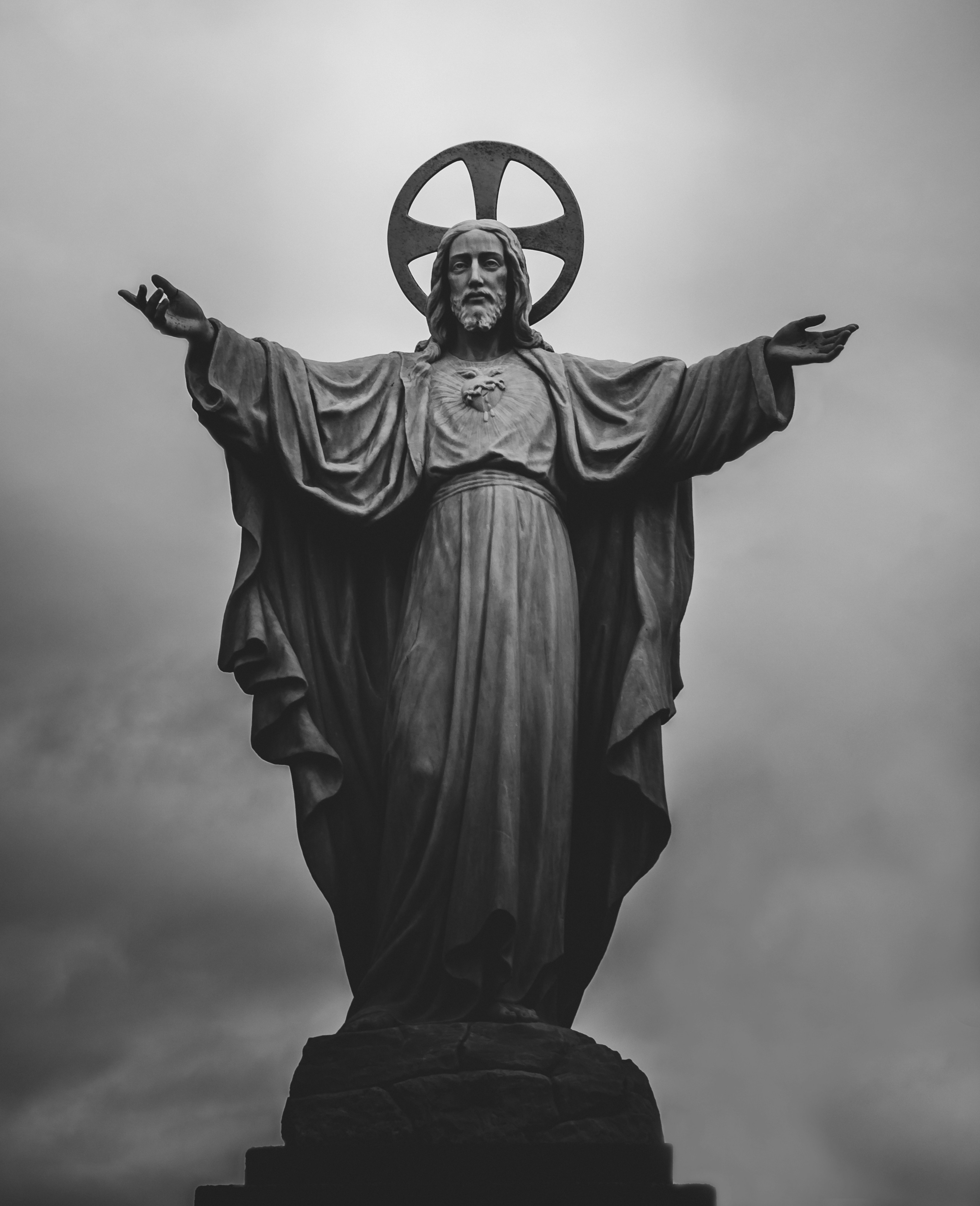
Follow Me / Sígueme

Matthew, the tax collector, has a personal encounter with Jesus marked by a simple instruction: “Follow me.” What did Matthew see in Jesus’ gaze which signaled to him that following would bring something greater? This change of heart causes him to leave his unworthy tax post quickly and follow Jesus. Perhaps he felt an acceptance and love he was not used to, but deeply longed for, which drove him to become the great evangelist who wrote the Gospel of Matthew. 

Can you imagine just meeting a stranger and trusting them completely? We live in a world full of deception, where scammers target our hard-earned money. Having almost fallen victim several times, I’m very cautious about where I place my trust. Who can we truly trust these days? A relationship with the Lord is built on trust.   

Help me to follow You each day, Jesus, and trust in You.

It is the love of Christ that changes our hearts from chasing worldly things to longing for what is eternal. Jesus invites us into a relationship with Him, helping us to see His presence in our lives. He desires our love but respects our free will to choose to follow Him. 

Help me to follow You each day, Jesus, and fully embrace Your love. 

His love is free; we don’t need to earn it or be pious to receive it. He accepts us wherever we are. We are never too unclean to approach Jesus because he calls sinners, not the righteous. The Lord never gave up on Peter, despite his three denials. The Lord knows us intimately, with all our weaknesses. His Sacred Heart longs to be united with ours if we choose to make that commitment. It’s never too late to do the right thing. 

Help me to follow You each day, Jesus, with sincere dedication to You.  

Levi hosted a banquet for Jesus to show his appreciation for being chosen. Jesus attended despite the Pharisees’ disapproval, who couldn’t accept His fellowship with sinners. Yet, Jesus was undeterred by their rebuke, responding, “Those who are healthy do not need a physician, but the sick do. I have not come to call the righteous to repentance but sinners.” Jesus always spoke the truth, even when it was deemed unacceptable by others.  

Help me to follow You each day, Jesus, and walk in Your truth.     

Standing firm in God’s truth is challenging in a world that often distorts reality. We might stay silent out of fear of offending others or, worse, provoking them. But I don’t want to settle for the illusion of truth; I want God’s truth. Today’s psalm reads, “Teach me your way, O Lord, that I may walk in your truth.” 

Sharing our knowledge and love of Jesus is a gift, allowing us to plant small seeds of faith in the lives of others, especially the poor, whom Jesus loved so well. As the fruits of the Kingdom of God take root, we will hear Jesus’ familiar voice calling, “Follow me!”

Contact the Author


Mateo, el recaudador de impuestos, tiene un encuentro personal con Jesús marcado por una simple instrucción: “Sígueme”. ¿Qué vio Mateo en la mirada de Jesús que le indicó que seguirlo traería algo más grande? Este cambio de actitud lo lleva a dejar rápidamente su indigno puesto de recaudador de impuestos para seguir a Jesús. Quizás sintió una aceptación y un amor a los que no estaba acostumbrado, pero que anhelaba profundamente, y lo impulsó a convertirse en el gran evangelista que escribió el Evangelio de Mateo.

¿Te imaginas recién haberte encontrado con un desconocido y decidir confiar plenamente en él? Vivimos en un mundo lleno de engaños, donde los estafadores se aprovechan de nuestro dinero duramente ganado. Habiendo estado a punto de ser víctima varias veces, soy muy cauteloso con respecto a dónde deposito mi confianza. ¿En quién podemos confiar verdaderamente hoy en día? Una relación con el Señor se basa en la confianza.

Ayúdame a seguirte cada día, Jesús, y a confiar en ti.

Es el amor de Cristo lo que transforma nuestros corazones para dejar de perseguir las cosas mundanas y anhelar lo eterno. Jesús nos invita a una relación con él, ayudándonos a ver su presencia en nuestras vidas. Él desea nuestro amor, pero respeta nuestro libre albedrío para elegir seguirlo.

Ayúdame a seguirte cada día, Jesús, y a abrazar plenamente tu amor.

Su amor es gratuito; no necesitamos ganárnoslo ni ser piadosos para recibirlo. Él nos acepta dondequiera que estemos. Nunca somos demasiado impuros para acercarnos a Jesús porque él llama a pecadores, no a justos. El Señor nunca se dio por vencido con Pedro, a pesar de sus tres negaciones. El Señor nos conoce íntimamente, con todas nuestras debilidades. Su Sagrado Corazón anhela unirse al nuestro si elegimos comprometernos a Él. Nunca es demasiado tarde para hacer lo correcto.

Ayúdame a seguirte cada día, Jesús, con sincera dedicación a ti.

Leví ofreció un banquete para Jesús como muestra de su agradecimiento por haber sido elegido. Jesús asistió a pesar de la desaprobación de los fariseos, quienes no podían aceptar su comunión con los pecadores. Sin embargo, Jesús no se dejó intimidar por su reprimenda y respondió: “No son los sanos los que necesitan al médico, sino los enfermos. No he venido a llamar a los justos, sino a los pecadores”. Jesús siempre decía la verdad, incluso cuando otros la consideraban inaceptable.

Ayúdame a seguirte cada día, Jesús, y a vivir en tu verdad.

Mantenerse firme en la verdad de Dios es un desafío en un mundo que a menudo distorsiona la realidad. Podemos quedarnos callados por miedo a ofender a otros o, peor aún, a provocarlos. Pero no quiero conformarme con la ilusión de la verdad; quiero la verdad de Dios. El salmo de hoy dice: “Señor, enséñame a seguir fielmente tus caminos”.

Compartir nuestro conocimiento y amor por Jesús es un regalo que nos permite sembrar pequeñas semillas de fe en la vida de los demás, especialmente en la de los pobres, a quienes Jesús tanto amó. A medida que los frutos del Reino de Dios arraiguen, escucharemos la voz familiar de Jesús que nos llama: “¡Sígueme!”

Comunicarse con la autora


Charlene Unterkofler is a Catholic convert who nurtures her spiritual growth by serving the poor in the Society of St. Vincent de Paul and guiding the formation of other Vincentians through her writing and workshops. She co-authored “Cloud of Witnesses, 25 Stories of Saintly Inspiration and Intercession,” with the PraiseWriters community. She enjoys playing cribbage with her husband and reading to her grandsons. Discover more at gentleservant.com.

Feature Image Credit: Arturo Rey, unsplash.com/photos/grayscale-photograph-of-jesus-christ-statue-CvnVk7GGQCg

The views and opinions expressed in the Inspiration Daily blog are solely those of the original authors and contributors. These views and opinions do not necessarily represent those of Diocesan, the Diocesan staff, or other contributors to this blog.


The Bridegroom and the Bride / El Novio y la novia

I have found in my marriage that there are seasons: sweet times, such as vacations together, quiet talks, or laughing with the kids, and difficult times, including arguments, illness, financial distress, and prolonged physical distance. There are times when we feel very close and really sense that “the two become one” and other times when we feel distant, as if we don’t even know who the other is.

As spouses, we are called to give ourselves to each other in each situation, but the way we give of ourselves changes from one time to another. It is easy to give and receive love when we are physically and emotionally close or when things are going well, but more difficult when we feel distant or disagree about something major. Working through a fragile forgiveness and reconciliation takes a different sort of giving and receiving than having a light-hearted conversation.

Marriage models the relationship God invites us to have with Him. We, the Church, are the bride, and Jesus is the Bridegroom. Jesus has given Himself to us in the Incarnation, while walking among us, and through the cross, and He continues to give Himself to us in the Eucharist and in countless other ways. Though we do not experience Jesus in the same way that His disciples did, who physically walked and talked with Him, Jesus continues to give of Himself for us, His bride. 

Similarly, we humans are called to not only receive Him but to give ourselves back to Him in a reciprocal way, as spouses receive from the other and give themselves in return. This will look different in times of joy and consolation than it does in times of difficulty and dryness. It also looks different for us now than it did during the time that Jesus physically walked the earth. 

Jesus said in today’s reading, “The days will come when the bridegroom is taken away from them, and then they will fast” (Mt 9:15). Just as the cross is a way in which Jesus gives Himself to us, fasting – a sacrifice we make out of love for Him – is a way that we can give ourselves back to Him and unite ourselves with Him. When giving of ourselves is most difficult, when it is sacrificial, is often when it is the most transforming. The gifts that require more of us demonstrate the greatest love and help love to grow the most. 

Let us continue to give of ourselves in various ways, including fasting, until we meet the Bridegroom face-to-face and are united with Him in the heavenly banquet.

Contact the author


He descubierto que en mi matrimonio hay diferentes épocas: momentos dulces, como vacaciones juntos, charlas tranquilas o risas con los niños, y momentos difíciles, como discusiones, enfermedades, dificultades económicas y una distancia física prolongada. Hay momentos en los que nos sentimos muy unidos y realmente sentimos que “los dos se convierten en uno” y otros en los que nos sentimos distantes, como si ni siquiera nos conocieramos.

Como esposos, estamos llamados a entregarnos el uno al otro en cada situación, pero la forma en que nos entregamos cambia de un momento a otro. Es fácil dar y recibir amor cuando estamos física y emocionalmente unidos o cuando las cosas van bien, pero es más difícil cuando nos sentimos distantes o discrepamos sobre algo importante. Superar un perdón y una reconciliación frágiles requiere una forma de dar y recibir diferente a la de tener una conversación informal.

El matrimonio modela la relación que Dios nos invita a tener con Él. Nosotros, la Iglesia, somos la novia, y Jesús es el Novio. Jesús se entregó a nosotros en la Encarnación, al caminar entre nosotros y a través de la cruz, y continúa entregándose en la Eucaristía y de innumerables otras formas. Aunque no experimentamos a Jesús de la misma manera que sus discípulos, quienes físicamente caminaron y hablaron con él, Jesús continúa entregándose por nosotros, su novia.

De igual manera, los seres humanos estamos llamados no solo a recibirlo, sino a entregarnos a Él de manera recíproca, como los esposos reciben del otro y se entregan a cambio. Esto se verá diferente en tiempos de alegría y consuelo que en tiempos de dificultad y aridez. También se ve diferente para nosotros ahora que durante el tiempo en que Jesús caminó físicamente sobre la tierra.

Jesús dijo en la lectura de hoy: “vendrán días en que les quitarán al esposo, y entonces sí ayunarán” (Mt 9,15). Así como la cruz es una forma en que Jesús se entrega a nosotros, el ayuno —un sacrificio que hacemos por amor a Él— es una forma de devolvernos a Él y unirnos a Él. Cuando entregarnos es más difícil, cuando es un sacrificio, es a menudo cuando resulta más transformador. Los dones que exigen más de nosotros demuestran el mayor amor y ayudan a que el amor crezca al máximo.

Sigamos entregándonos de diversas maneras, incluyendo el ayuno, hasta que nos encontremos cara a cara con el Novio y nos unamos a Él en el banquete celestial.

Comunicarse con la autora

Kimberly Andrich writes from the perspective of having a hidden, chronic illness and experiencing a deep, continuous conversion through being yoked to Jesus in the day-to-day trials and joys of life. She is a wife, mother of 5, and daughter of the King. Kimberly also writes for Catholicmom.com and on fallingonhisgrace.substack.com.

Feature Image Credit: freestocks, unsplash.com/photos/sitting-woman-leaning-on-mans-shoulder-facing-lake-during-golden-hour-a1Fmxesw31g

The views and opinions expressed in the Inspiration Daily blog are solely those of the original authors and contributors. These views and opinions do not necessarily represent those of Diocesan, the Diocesan staff, or other contributors to this blog.

We Have Choices / Tenemos opciones

God has given us the gift of free will. In the first reading today Moses is explaining, very clearly, the choices the people of Israel have and the outcomes of those choices. Walk with God by obeying His commandments and you will live, have descendants, and land. Turn away from God, and you will “certainly perish.”  Moses asks them to choose life, choose the blessing, love God, hold onto Him and obey Him.  And, for a time, the people do choose God’s way and life is good. And then, they fall away because it is hard to resist the other choices the world offers.

We are just beginning Lent, our opportunity to make choices that will lead us toward God, repentance, purification, and a life of blessing. It may not seem like the small sacrifices we offer up in this season make a difference. But they do. They ask us to be more conscious and disciplined in our faith life. These small mortifications can be the way we pick up our cross and follow Jesus.

What are our Lenten crosses? Maybe we decided not to put cream or sugar in our coffee or tea. Maybe we stop snacking between meals or get up 15 minutes early to pray. Maybe we read Scripture before we watch TV or pray the rosary with our family. There are so many possible Lenten penances that we can take up, so many choices. 

Then there are the crosses we are asked to take up: caring for our elderly parents, spouse, or friend in need. Do we feel they have been thrust on us without our agreement, but are still our responsibility? Even those crosses are choices we make as we decide how to handle them. 

The one thing we can always choose is our attitude in any given circumstance. In the book, Man’s Search for Meaning, Viktor E. Frankl says, “Everything can be taken from a man but one thing: the last of the human freedoms—to choose one’s attitude in any given set of circumstances, to choose one’s own way.”

As we begin Lent with our various penances and crosses, both those we have chosen and those we have been given, let’s think about the attitude we have toward these penances and crosses. Let our will, enriched by God’s grace, lead us closer and closer to Jesus and His suffering. If we can model our attitude after that of Jesus, who suffered and died for us, our Lent will be less about our suffering and more about offering our suffering up for others.

Contact the author


Dios nos ha dado el don del libre albedrío. En la primera lectura de hoy, Moisés explica con mucha claridad las opciones que tiene el pueblo de Israel y las consecuencias de esas decisiones. Camina con Dios obedeciendo sus mandamientos y vivirás, tendrás descendencia y tierra. Aléjate de Dios y “perecerás sin remedio”. Moisés les pide que elijan la vida, elijan la bendición, amen a Dios, se aferren a Él y le obedezcan. Y, por un tiempo, el pueblo elige el camino de Dios y la vida es buena. Pero luego, se alejan porque es difícil resistir las otras opciones que ofrece el mundo.

Apenas estamos comenzando la Cuaresma, la cual nos da la oportunidad de tomar decisiones que nos llevarán hacia Dios, el arrepentimiento, la purificación y una vida de bendición. Puede parecer que los pequeños sacrificios que ofrecemos en este tiempo no hagan ninguna diferencia. Pero no es cierto. Nos piden ser más conscientes y disciplinados en nuestra vida de fe. Estas pequeñas mortificaciones pueden ser la manera de tomar nuestra cruz y seguir a Jesús.

¿Cuáles son nuestras cruces de Cuaresma? Quizás decidimos no ponerle crema ni azúcar al café o al té. Quizás dejamos de merendar entre comidas o nos levantamos 15 minutos antes para rezar. Quizás leemos las Escrituras antes de ver la televisión o rezamos el rosario en familia. Hay tantas penitencias cuaresmales que podemos adoptar, tantas opciones.

Luego vienen las cruces que no hemos elegido pero se nos pide tomar: cuidar de nuestros padres ancianos, de nuestro esposo o de un amigo necesitado. ¿Sentimos que nos las han impuesto sin nuestro consentimiento, pero que siguen siendo nuestra responsabilidad? Incluso esas cruces son decisiones que tomamos al decidir cómo manejarlas.

Lo único que siempre podemos elegir es nuestra actitud en cualquier circunstancia. En el libro Man’s Search for Meaning (El hombre en busca de sentido), Viktor E. Frankl dice: “Todo se le puede quitar del hombre, menos una cosa: la última de las libertades humanas: elegir la propia actitud en cualquier circunstancia, elegir su propio camino”. 

Al comenzar la Cuaresma con nuestras diversas penitencias y cruces, tanto las que hemos elegido como las que se nos han dado, reflexionemos sobre nuestra actitud hacia ellas. Dejemos que nuestra voluntad, enriquecida por la gracia de Dios, nos acerque cada vez más a Jesús y a su sufrimiento. Si podemos imitar la actitud de Jesús, quien sufrió y murió por nosotros, nuestra Cuaresma se centrará menos en nuestro sufrimiento y más en ofrecerlo por los demás.

Comunicarse con la autora

Deanna G. Bartalini, M.Ed., M.P.A. is a certified spiritual director, retreat leader, speaker, and writer with decades of experience serving the Church. She is the founder of LiveNotLukewarm.com, works on the retreat team at Our Lady of Florida Passionist Spiritual Center, and is an Unbound prayer minister.  She has served as a religious education director, youth minister, liturgical coordinator, and stewardship director. She writes for SpiritualDirection.comCatholicMom.comDiocesan.com, and Women in the New Evangelization (WINE). Deanna is the author of The Stay Connected Journals for Catholic Women, Invite the Holy Spirit into your Life, and has contributed to the Catholic Mom’s Prayer Companion, as well as Digital Ministry and Leadership in Today’s Church.
Feature Image Credit: Marcus Urbenz, unsplash.com/photos/an-aerial-view-of-a-wooden-walkway-in-the-woods-gYgDcCYob_s

The views and opinions expressed in the Inspiration Daily blog are solely those of the original authors and contributors. These views and opinions do not necessarily represent those of Diocesan, the Diocesan staff, or other contributors to this blog.

Return to God With Your Whole Heart / Volver a Dios con todo tu corazón

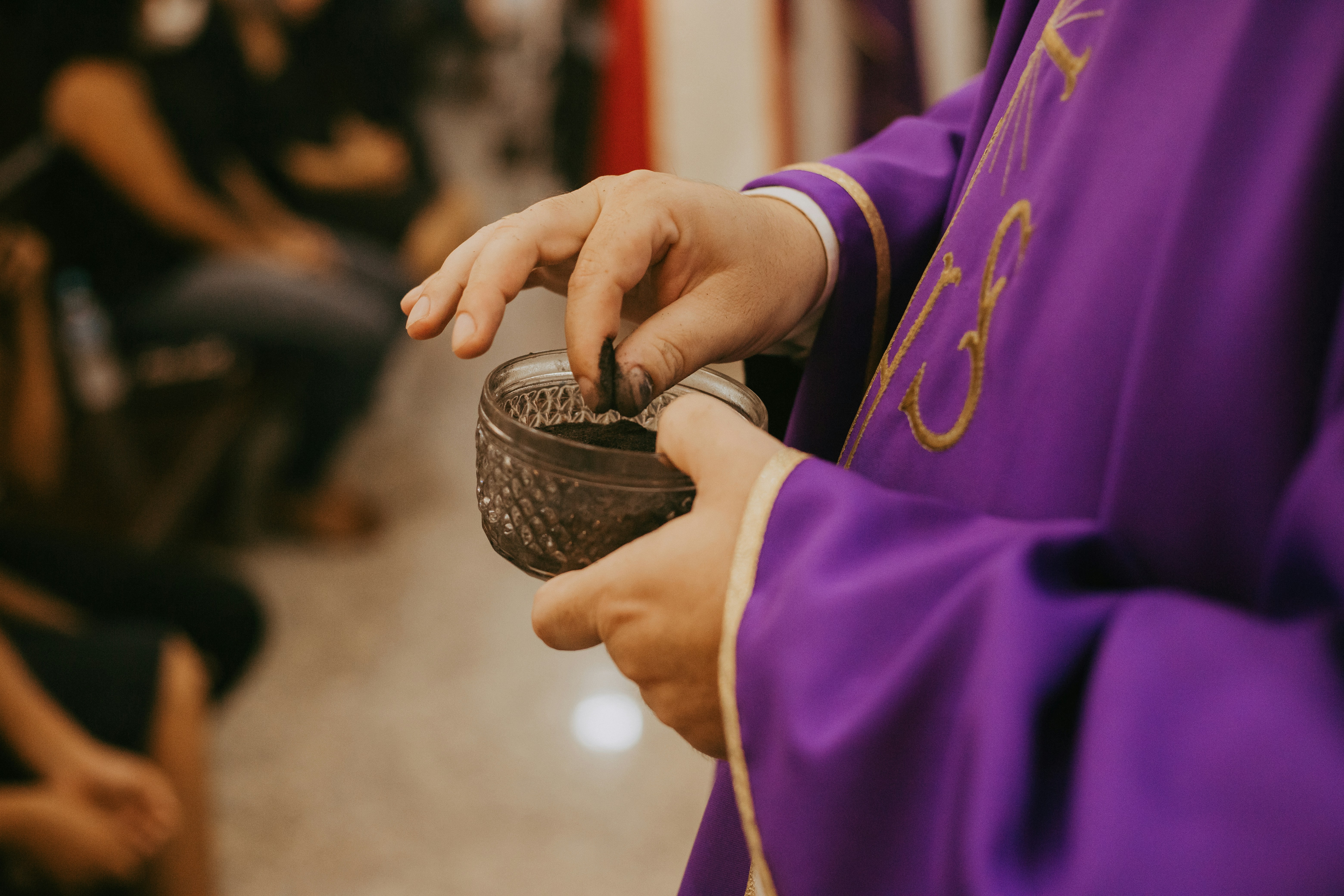
Today we begin the great season of Lent. It always seems to arrive so quickly after Christmas and this year is no exception. The tree and decorations have been put away and all the parties have come and gone. We may feel like our homes and our souls are a bit barren. And indeed they are. 

Lent is a time for simplification, for focusing on the essential, for cleaning our interior homes, so to speak. It is a time of introspection, of growth, of healing, of preparation. Many parishes host Exodus 90 groups for men and Fiat 90 groups for women during this time. They invite us to make sacrifices, to cast off what comforts us for a time, to increase our participation in prayer and the sacraments. 

Lent is a time to focus on the essential, to hone in on what is most important in our lives. So, what is most important to you? I would love to say I have my priorities straight and have God first, family second and job third, but is that reflected in how I spend my time and energy? Am I first and foremost a woman of prayer and a missionary disciple? Do I take after our Blessed Mother in my own mothering and in my own marriage? Do I shine the light of Christ in my workplace and give my all during work hours? 

Sadly, I often fail miserably. But Lent is a wonderful opportunity to begin again, to start afresh, to make a sincerely profound examination of conscience and choose to choose love, over and over again. Let us be encouraged by today’s readings to “go to your inner room” to “pray to your Father in secret” (see Gospel) and thus “return to [God] with your whole heart” (see first reading).

Contact the Author


Hoy comenzamos la gran temporada de Cuaresma. Siempre parece llegar tan rápido después de la Navidad, y este año no es la excepción. El árbol y las decoraciones ya se han guardado y todas las fiestas han pasado. Quizás sintamos que nuestros hogares y nuestras almas están un poco vacíos. Y de hecho lo están.

La Cuaresma es un tiempo para simplificar, para centrarnos en lo esencial, para limpiar nuestro interior, por así decirlo. Es un tiempo de introspección, de crecimiento, de sanación, de preparación. Muchas parroquias organizan grupos de Éxodo 90 para hombres y Fiat 90 para mujeres durante este tiempo. Nos invitan a hacer sacrificios, a dejar de lado lo que nos consuela por un tiempo, a aumentar nuestra participación en la oración y los sacramentos.

La Cuaresma es un tiempo para centrarnos en lo esencial, para enfocarnos en lo más importante de nuestras vidas. Entonces, ¿qué es lo más importante para ti? A mí me encantaría decir que tengo mis prioridades claras y que Dios viene primero, la familia segundo y el trabajo tercero, pero ¿se refleja eso en cómo invierto mi tiempo y mi energía? ¿Soy, ante todo, una mujer de oración y una discípula misionera? ¿Me asemejo a nuestra Santísima Madre en mi maternidad y en mi matrimonio? ¿Brillo con la luz de Cristo en mi trabajo y me entrego por completo durante las horas de trabajo?

Lamentablemente, a menudo fracaso horriblemente. Pero la Cuaresma es una oportunidad maravillosa para empezar de nuevo, para empezar de cero, para hacer un profundo y sincero examen de conciencia y escoger elegir el amor, una y otra vez. Dejémonos animar por las lecturas de hoy a “entra en tu cuarto, cierra la puerta y ora ante tu Padre, que está allí en lo secreto” (ver el Evangelio) y así volver a Dios con todo el corazón (ver primera lectura).

Comunicarse con la autora


Tami Urcia is a midwestern gal from a large Catholic family. As a young adulthood she was a missionary in Mexico, where she studied theology and philosophy. After returning stateside bilingual, she gained a variety of work experience, traveled extensively and finished her Bachelor’s Degree at Brescia University. She loves organizing and simplifying things, watching her children play sports, deep conversations with close family and friends and finding unique ways to brighten others’ day with Christ’s love. She works full time at Diocesan in the Software Department and manages the Inspiration Daily reflections. She is also a contributing writer on CatholicMom.com and BlessedIsShe.net.
Feature Image Credit: Thays Orrico, unsplash.com/photos/a-person-in-a-purple-robe-holding-a-cup-JoCCv4jcoYo

The views and opinions expressed in the Inspiration Daily blog are solely those of the original authors and contributors. These views and opinions do not necessarily represent those of Diocesan, the Diocesan staff, or other contributors to this blog.

It Is Finished / Todo está cumplido

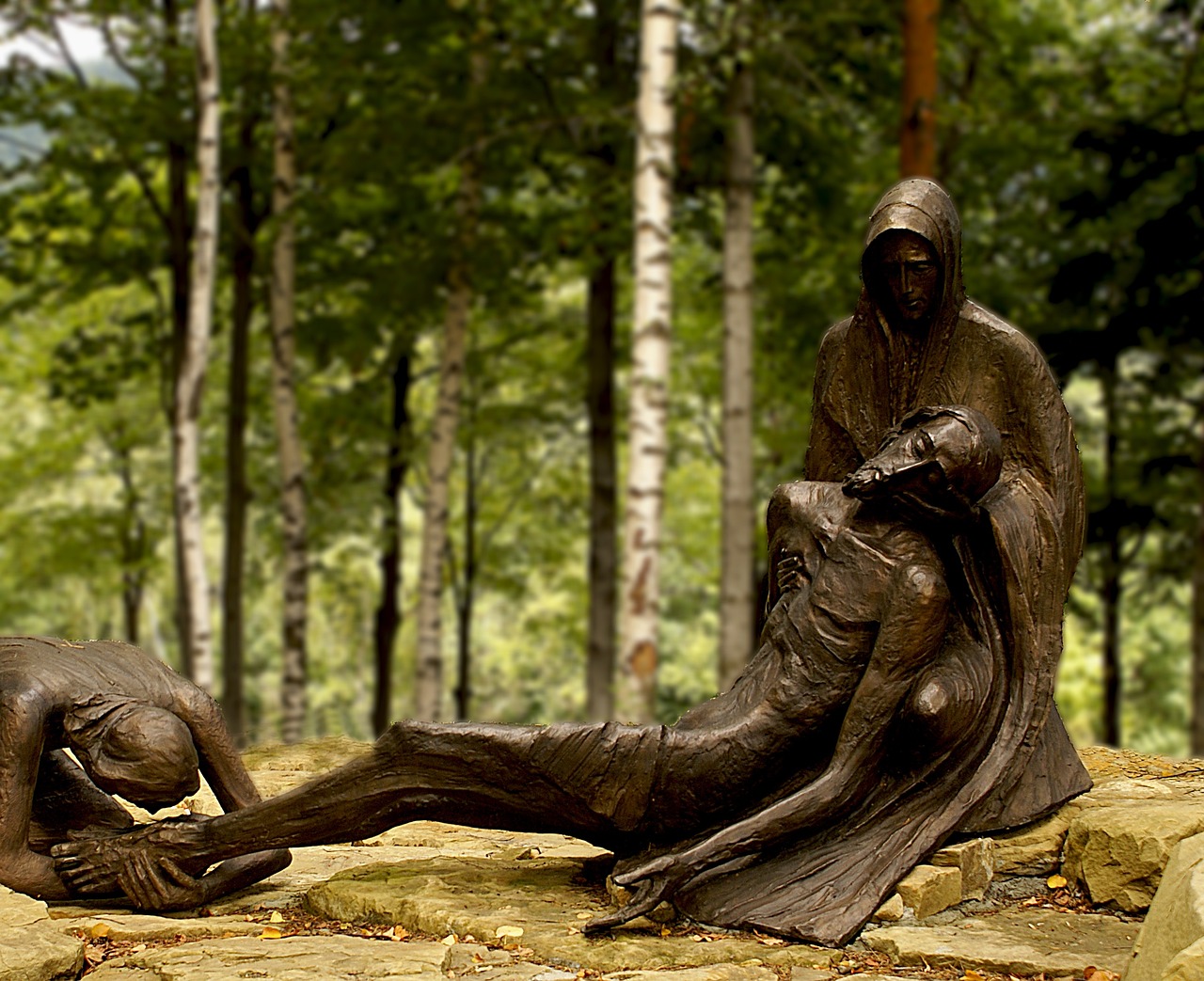
During this Triduum, we are focused closely on our Savior’s last and most difficult days on earth.

Reading St. John’s narrative of Christ’s Passion and Death, no more words are needed, and yet our hearts are overflowing with gratitude and awe at this graphic expression of the great love that overflows from the Heart of Jesus for each one of us.

He freely laid down His life for us, the life of the only Son of God in the flesh. He allowed His pure Heart, the Heart of Incarnate Love, to be pierced and poured out for us. As the great High Priest, Jesus offered the supreme Sacrifice to our eternal Father to atone for our sins, the Sacrifice that is offered each day on the altar at every Mass. Because of this great Sacrifice, we are able to become sons and daughters of God.

And as we look on Him whom we have pierced, whose beauty was distorted by our selfishness and whose wholeness was crushed for our sins, we begin to understand that he bore the guilt of us all. His serenity and his obedience to the Father were steadfast in spite of cruelty and mockery and torture. “Like a lamb led to the slaughter,” He allowed himself to be condemned and killed. He freely laid down His life, He “surrendered himself to death,” to give us the abundant life for which we are created.

Today, I look at the scene on Calvary and know that it is I who have crucified my Lord. My own selfwardness and refusal to love him and my neighbor as I should have caused the sufferings I see as He is sentenced, scourged, mocked, crowned with thorns, and nailed to the cross He embraced for love of me. Forgive me, Lord. Open my heart to this scene and teach me how to suffer with you, to be one with you, for others.

St. Paul tells us that we can make up in our own bodies what is lacking in the sufferings of Christ (Col 1:4). What was lacking? Did Jesus hold anything back? No. He gave everything for us. So what is lacking in the sufferings of Christ is the suffering of his Mystical Body – what is lacking is MY suffering. He did not hold anything back; Jesus just “left me a little room” to join Him there on the Cross. 

Lord, help me to understand that in bearing life’s difficulties with patience and generosity and offering them in union with your own Passion, you allow me to join you there, to take my place near you in this act of redemption, and in some mysterious way to help relieve the pain your heart bore. Teach me how to take up my own cross each day (Luke 9:23), and follow you more closely, in love and humility.  Lord, I thank you for dying on the cross for me.

Contact the author


Durante este Triduo Pascual, nos centramos de cerca en los últimos y más difíciles días de nuestro Salvador en la tierra.

Al leer el relato de San Juan sobre la Pasión y Muerte de Cristo, no se necesitan más palabras, y sin embargo nuestros corazones están rebosantes de gratitud y asombro ante esta expresión gráfica del gran amor que desborda del Corazón de Jesús por cada uno de nosotros.

Entregó libremente su vida por nosotros, la vida del único Hijo de Dios en la carne. Permitió que su Corazón puro, el Corazón del Amor Encarnado, fuera traspasado y derramado por nosotros. Como el gran Sumo Sacerdote, Jesús ofreció el Sacrificio supremo a nuestro Padre eterno para expiar nuestros pecados, el Sacrificio que se ofrece cada día en el altar en cada Misa. Debido a este gran Sacrificio, podemos convertirnos en hijos e hijas de Dios.

Y cuando miramos a Él que hemos traspasado, cuya belleza fue distorsionada por nuestro egoísmo y cuya integridad fue aplastada por nuestros pecados, comenzamos a entender que Él cargó con la culpa de todos nosotros. Su serenidad y su obediencia al Padre fueron firmes a pesar de la crueldad, la burla y la tortura. “Como un cordero llevado a degollar”, permitió que lo condenaran y lo mataran. Libremente entregó su vida, “se entregó a la muerte”, para darnos la vida abundante para la que fuimos creados.

Hoy, miro la escena del Calvario y sé que soy yo quien ha crucificado a mi Señor. Mi propio egoísmo y mi falta de amarlo a Él y a mi prójimo como debería haber ha causado los sufrimientos que veo mientras lo sentencian, lo azotan, lo burlan, lo coronan de espinas y lo clavan en la cruz que abrazó por amor a mí. Perdóname, Señor. Abre mi corazón a esta escena y enséñame a sufrir contigo, a ser uno contigo, por los demás.

San Pablo nos dice que podemos suplir en nuestro propio cuerpo lo que falta a los sufrimientos de Cristo (Col 1,4). ¿Qué faltaba? ¿Jesús no se entregó completamente? No. Él lo dio todo por nosotros. Así que lo que falta a los sufrimientos de Cristo es el sufrimiento de su Cuerpo Místico; lo que falta es MI sufrimiento. Jesús se entregó completamente; simplemente “me dejó un pequeño espacio” para unirme a Él allí en la Cruz.

Señor, ayúdame a entender que al soportar las dificultades de la vida con paciencia y generosidad y ofrecerlas en unión con tu propia Pasión, me permites unirme a Ti allí, tomar mi lugar cerca de Ti en este acto de redención, y de alguna manera misteriosa ayudar a aliviar el dolor que tu corazón soportó. Enséñame a tomar mi propia cruz cada día (Lc 9,23), y a seguirte más de cerca, en amor y humildad. Señor, te doy gracias por morir en la cruz por mí.

Comunicarse con la autora

Kathryn Mulderink, MA, is married to Robert, Station Manager for Holy Family Radio. Together they have seven children (including Father Rob), and eleven grandchildren. She is President of the local community of Secular Discalced Carmelites and has published five books and many articles. Over the last 30 years, she has worked as a teacher, headmistress, catechist, Pastoral Associate, and DRE, and as a writer and voice talent for Catholic Radio. Currently, she serves the Church by writing and speaking, and by collaborating with various parishes and to lead others to encounter Christ and engage their faith. Her website is www.KathrynTherese.com

Feature Image Credit: uroburos, pixabay.com/photos/way-of-the-cross-jesus-suffering-712001/

The views and opinions expressed in the Inspiration Daily blog are solely those of the original authors and contributors. These views and opinions do not necessarily represent those of Diocesan, the Diocesan staff, or other contributors to this blog.

Extra-Special Delivery / Una Entrega Muy Especial

We have arrived at the Easter Triduum, the summit of the Liturgical year, when Christ’s Paschal Mystery is unfolded for us in a continuous stream of worship, from the Mass of the Lord’s Supper this evening all the way through Evening Prayer on Easter Sunday.

The Scripture readings for Holy Thursday begin with the story of Passover, which might seem like a finicky set of directions for getting a lamb for dinner, but the eyes of faith reveal so much more. The Israelites can’t get just any lamb, it must be male and unblemished. The lamb then serves more than one function: It is food – nourishment for the Israelites’ coming journey; it is sacrifice – slaughtered to provide blood to mark the Israelites’ doorways; it is deliverance – the blood at the door will save the Israelites from death.

Yes, the Passover lamb prefigures the Paschal Lamb of God, Jesus Christ, His only Son. Jesus institutes the Eucharist, His very Body and Blood, as spiritual food to feed us on our way through life. Jesus is sacrifice, dying for us on the cross on Good Friday, shedding His blood to reunite us with the love of God the Father. And He is deliverer, for His death and resurrection conquer death and deliver us from our sins.

I have always found it interesting that Holy Thursday Mass does not use the Last Supper account of Matthew, Mark or Luke, which all tell us how Jesus said, “This is my Body.” Instead, we learn of the institution of the Eucharist from St. Paul, writing to the Corinthians.  Paul was not at table in the Upper Room, but he was told the story, and he tells it to us, in the same way the faith was spread in the early days of the Church.

So what we do hear in this evening’s Gospel instead is part of John’s account of the Last Supper. And while John was at table, he doesn’t mention the institution of the Eucharist. His Gospel was apparently written many years after Matthew’s, Mark’s and Luke’s, so perhaps he decided people already knew that part of the story, and he wanted us to know what else happened.

As John tells it, Jesus spent His last night with His Apostles teaching them — about faith, about love, about service. Jesus gave us His Body and Blood, but John reminds us He also gave us a new commandment: Love one another as Jesus has loved us. And He washed their feet to remind them, and us, to serve one another. 

Jesus did His job of feeding us, sacrificing Himself for us, and delivering us from sin and death. He also told the disciples to do their job of believing, loving and serving. Let us spend this Easter Triduum entering even deeper into the Paschal Mystery’s importance in our lives, and our roles in the world because of it.

Contact the author


Hemos llegado al Triduo Pascual, la cumbre del año litúrgico, cuando el Misterio Pascual de Cristo se revela para nosotros en un flujo continuo de adoración, desde la Misa de la Cena del Señor esta tarde hasta las Oraciones de la Noche en el Domingo de Pascua.

Las lecturas de las Sagradas Escrituras para el Jueves Santo comienzan con la historia de la Pascua del Antiguo Testamento, que puede parecer un conjunto de instrucciones meticulosas para conseguir un cordero para la cena, pero los ojos de la fe revelan mucho más. Los israelitas no podrían conseguir cualquier cordero, debe ser macho y sin defecto. Así el cordero cumple más de una función: es alimento – nutriente para el viaje venidero de los israelitas; es sacrificio – inmolado para proporcionar sangre para marcar las puertas de los israelitas; es liberación – la sangre en la puerta salvará a los israelitas de la muerte.

Sí, el cordero pascual prefigura al Cordero Pascual de Dios, Jesucristo, Su único Hijo. Jesús instituye la Eucaristía, su propio Cuerpo y su propia Sangre, como alimento espiritual para alimentarnos en el caminar de la vida. Jesús es sacrificio, muriendo por nosotros en la cruz el Viernes Santo, derramando su sangre para reunirnos con el amor de Dios Padre. Y es libertador, porque su muerte y resurrección vencen a la muerte y nos liberan de nuestros pecados.

Siempre me ha parecido interesante que en la Misa del Jueves Santo no leemos el relato de la Última Cena de Mateo, Marcos o Lucas, que nos cuentan que Jesús dijo: “Este es mi Cuerpo”. En cambio, aprendemos de la institución de la Eucaristía a través de San Pablo, que escribe a los corintios. Pablo no estaba a la mesa en el aposento alto, pero le contaron la historia y él nos la cuenta a nosotros, de la misma forma que se difundió la fe en los primeros días de la Iglesia.

Así que lo que escuchamos en el Evangelio de esta tarde es parte del relato de Juan sobre la Última Cena. Y mientras Juan estaba a la mesa, no menciona la institución de la Eucaristía. Su Evangelio fue escrito aparentemente muchos años después del de Mateo, Marcos y Lucas, así que tal vez decidió que la gente ya conocía esa parte de la historia y quería que supiéramos qué más sucedió.

Como lo cuenta Juan, Jesús pasó su última noche con sus apóstoles enseñándoles sobre la fe, el amor y el servicio. Jesús nos dio su Cuerpo y su Sangre, pero Juan nos recuerda que también nos dio un nuevo mandamiento: amarnos unos a otros como Jesús nos ha amado. Y les lavó los pies para recordarles a ellos y a nosotros que nos sirvamos unos a otros.

Jesús cumplió su misión de alimentarnos, sacrificarse por nosotros y liberarnos del pecado y la muerte. También les dijo a los discípulos que cumplieran su misión de creer, amar y servir. Pasemos este Triduo Pascual profundizando aún más en la importancia del Misterio Pascual en nuestras vidas y en nuestro papel en el mundo a causa de él.

Comunicarse con el autor

Mike Karpus is a regular guy. He grew up in Michigan’s Upper Peninsula, graduated from Michigan State University and works as an editor. He is married to a Catholic school principal, raised two daughters who became Catholic school teachers at points in their careers, and now relishes his two grandchildren, including the older one who is fascinated with learning about his faith. He also has served on a Catholic school board, a pastoral council and a parish stewardship committee. He currently is a lector at Mass, a Knight of Columbus, Adult Faith Formation Committee member and a board member of the local Habitat for Humanity organization. But mostly he’s a regular guy.
Feature Image Credit: Kat Smith, pexels.com/photo/shallow-focus-photography-of-white-sheep-on-green-grass-678448/

The views and opinions expressed in the Inspiration Daily blog are solely those of the original authors and contributors. These views and opinions do not necessarily represent those of Diocesan, the Diocesan staff, or other contributors to this blog.

Spy Wednesday / Miércoles del espía

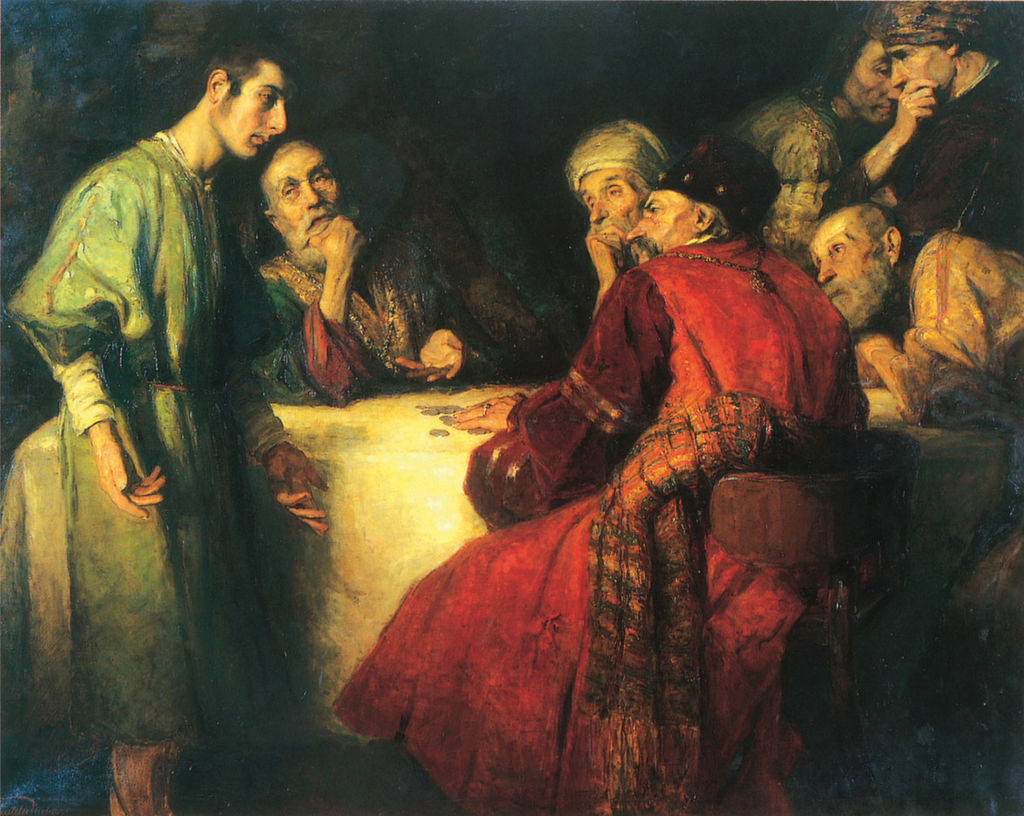
I recently told Jesus that if “x”, “y”, and “z” were true about Him, then I didn’t want Him. Those words echoed in my mind for days with an anguish deeper than the pain that caused me to utter them. How could I speak to my Lord with such hatred? How could I treat my best Friend with such harsh and bitter distrust? Some of life’s trials are too hard for me to bear on my own and my behavior is obviously not always in line with my beliefs. 

But, thank God it’s Wednesday of Holy Week (also known as “Spy Wednesday” due to Judas’ betrayal) and the hope of new beginnings is just around the bend. Judas’ story may hit hard if we recognize that all of us at one point or another have been in his shoes and have rejected our Lord. Today is a beautiful opportunity to let Jesus root out those wounds of sin to restore our loyalty to Him. We must first examine the reasons why we, like Judas, might betray Jesus.

Judas was a part of Jesus’s inner circle, an apostle entrusted to carry out the mission of growing the infant Church. I propose that Judas, like most of us, lost sight of God for a moment. Sometimes in our grief, self-centeredness, cynicism, and hopelessness we lose sight of who God is and what He is about. We forget that we are His and we are made for relationship with Him. 

Was Judas hoping to gain something by following Jesus? If Judas really believed that Jesus was the Messiah, perhaps he was disappointed when he realized that Jesus wouldn’t become a political ruler. There would be no status change for the Jews and no political gain for Judas. Many of us can relate to the anger and pain of dashed hopes. It may not be about social status, but the loss of a child, a job, the feeling of being stuck, or something else. Sometimes we allow life’s let downs to blind us from God and His plan. We hold too tightly to our dreams and unknowingly turn our backs on Jesus by slowly hardening our hearts, stonewalling God, and disbelieving that God has good plans for us.

Fear also motivates our sin. What could Judas have been afraid of? Maybe as Jesus’ imminent death sank in, the fear of wasting three years of his life prompted a yearning to get something out of the deal. Or, maybe he finally felt like he belonged to something greater and the impending doom of his Rabbi caused him to panic, so he tried to wiggle his way into another circle of belonging. Fear instigates many peculiar behaviors such as gossiping, betrayal, and altogether rejecting the other. 

Reflecting on the dispositions of our soul is essential to a relationship with God. I encourage you to enter into the Triduum with humility, honesty, and contrition. Know that God’s mercy is greater than our sins and his friendship is sweeter than any earthly gain.

Contact the author


Hace poco le dije a Jesús que si “x”, “y”, y “z” eran ciertas acerca de Él, entonces yo no lo quería. Esas palabras resonaron en mi mente durante días con una angustia más profunda que el dolor que me hizo pronunciarlas. ¿Cómo podría hablarle a mi Señor con tanto odio? ¿Cómo podría tratar a mi mejor amigo con una desconfianza tan dura y amarga? Algunas de las pruebas de la vida son demasiado duras para soportar sola y mi comportamiento obviamente no siempre está en línea con mis creencias.

Pero, gracias a Dios, es miércoles de Semana Santa (también conocido como “miércoles del espía” debido a la traición de Judas) y la esperanza de nuevos comienzos está a la vuelta de la esquina. La historia de Judas puede ser un duro golpe si reconocemos que todos nosotros en un momento u otro hemos estado en su lugar y hemos rechazado a nuestro Señor. Hoy es una hermosa oportunidad para dejar que Jesús arranque esas heridas del pecado para restaurar nuestra lealtad hacia Él. Primero debemos examinar las razones por las que nosotros, como Judas, podríamos traicionar a Jesús.

Judas era parte del círculo íntimo de Jesús, un apóstol encargado de llevar a cabo la misión de hacer crecer la Iglesia primitiva. Propongo que Judas, como la mayoría de nosotros, perdió de vista a Dios por un momento. A veces, en nuestro dolor, egocentrismo, cinismo y desesperanza, perdemos de vista quién es Dios y qué hace. Olvidamos que somos suyos y que estamos hechos para tener una relación con él. 

¿Judas esperaba ganar algo al seguir a Jesús? Si Judas realmente creía que Jesús era el Mesías, tal vez se sintió decepcionado cuando se dio cuenta de que Jesús no se convertiría en un gobernante político. No habría ningún cambio de estatus para los judíos ni ninguna ganancia política para Judas. Muchos de nosotros podemos identificarnos con la ira y el dolor de las esperanzas frustradas. Puede que no se trate de un estatus social, sino de la pérdida de un hijo, un trabajo, la sensación de estar estancados o algo más. A veces permitimos que las decepciones de la vida nos cieguen y nos impidan ver a Dios y su plan. Nos aferramos demasiado a nuestros sueños y, sin darnos cuenta, le damos la espalda a Jesús al endurecer lentamente nuestro corazón, poner trabas a Dios y no creer que Dios tiene buenos planes para nosotros.

El miedo también motiva nuestro pecado. ¿De qué podría haber tenido miedo Judas? Tal vez, cuando se dio cuenta de la muerte inminente de Jesús, el miedo de perder tres años de su vida provocó un anhelo de obtener algo a cambio. O tal vez por fin sintió que pertenecía a algo más grande y la inminente perdición de su rabino le hizo entrar en pánico, por lo que trató de abrirse camino hacia otro círculo de pertenencia. El miedo instiga muchos comportamientos peculiares, como el chisme, la traición y el rechazo total del otro.

Reflexionar sobre las disposiciones de nuestra alma es esencial para una relación con Dios. Los animo a entrar en el Triduo con humildad, honestidad y contrición. Sepan que la misericordia de Dios es más grande que nuestros pecados y su amistad es más dulce que cualquier ganancia terrenal.

Comunicarse con la autora

Former NPS Park Ranger, Catholic educator, and Youth Minister, Melissa Lucca now spends her days evangelizing family and neighbors as a stay-at-home mom. She holds an MA in Theology from the Augustine Institute and pursues personal study in her spare time. Melissa loves Ignatian Spirituality, Mother Mary, and rock climbing. If you don’t hear her and her kiddo laughing at home, then they are probably out on an adventure!

Feature Image Credit: János Pentelei Molnár, https://en.wikipedia.org/wiki/Thirty_pieces_of_silver

The views and opinions expressed in the Inspiration Daily blog are solely those of the original authors and contributors. These views and opinions do not necessarily represent those of Diocesan, the Diocesan staff, or other contributors to this blog.

What Should We Do on Holy Tuesday? / ¿Qué debemos hacer el Martes Santo?

Here we are on Tuesday of Holy Week. Take a wild guess as to what happens on this day. Really? It’s National, “take a wild guess day.” Do you think the Apostles had any guesses as to what lay ahead for them? 

I’ve always wondered what can be done to include Tuesday into the essence and activities of Holy Week. What are you doing today? Some follow the Jewish tradition of cleaning houses in preparation for the Passover. Sounds good, but I would much rather clean up my soul than my whole house. 

I am searching for that one ah-ha moment to add to today. Today is also called “Fig Tuesday”, based on Matthew 21:18-22. Jesus was returning to Jerusalem from Bethany and encountered a figless fig tree. He cursed the fig tree and it withered to show them the power of God. He ends by proclaiming that whatever you ask for in prayer with faith, you will receive. Now that’s an idea. 

Let’s start today by spending our Tuesday of Holy Week in prayer and blessings. Maybe we can even call it “Follow Tuesday”. Like the Apostles, you and I can follow Jesus to the Mount of Olives. We can start by going on a journey of prayer, planning, preparation, and blessings to guide us into the Tridium. First, we can pray for current needs and special intentions, and add a prayer for all those preparing to enter into the Catholic faith this Easter. Second, we can plan out how to follow Jesus to the Resurrection, maybe stopping by a local Catholic church and privately saying the Stations of the Cross? Third, we could clean our houses and say the sorrowful mysteries of the rosary. Typical ideas during Holy Week are fasting and contemplation, but maybe we could invite friends over and enjoy their presence like Jesus and the Apostles did on that Tuesday. Bake a fig dessert, and chat about what is to come. 

As Catholics, we respect Holy Week. We appreciate the tradition of observing our faith. It also gives us a sense of community as we gather together. Many of us have spent our whole lives enmeshed in these traditions, yet we haven’t incorporated the Tuesday of Holy Week. We don’t know much about it.  Jesus knew what lay ahead. His parables were presented to help the Apostles understand the journey of His Passion and Death. We can take all these examples and begin our journey with Him into His Passion, Death, and Resurrection this Tuesday of Holy Week. Now to look up a good fig recipe!

Contact the Author


Estamos en el martes de Semana Santa. Adivina qué sucede hoy día. ¿En serio? Es el día nacional de “adivinar”. ¿Crees que los Apóstoles podían adivinar lo que les esperaba?

Siempre me he preguntado qué se puede hacer para incluir el martes en la esencia y las actividades de la Semana Santa. ¿Qué estás haciendo hoy? Algunos siguen la tradición judía de limpiar las casas en preparación para la Pascua. Suena bien, pero yo preferiría limpiar mi alma que toda mi casa.

Estoy buscando ese momento de revelación para agregar al día de hoy. Hoy también se llama “Martes de higos”, según Mateo 21,18-22. Jesús regresaba a Jerusalén desde Betania y se encontró con una higuera sin higos. Maldijo a la higuera y se secó para mostrarles el poder de Dios. Termina proclamando que todo lo que pidas en oración con fe, lo recibirás. Esa sí que es una idea.

Comencemos hoy pasando nuestro martes de Semana Santa en oración y bendiciones. Tal vez incluso podamos llamarlo “Martes de seguimiento”. Como los Apóstoles, tú y yo podemos seguir a Jesús al Monte de los Olivos. Podemos comenzar por emprender un viaje de oración, planificación, preparación y bendiciones que nos guíen hacia el Triduo. Primero, podemos orar por las necesidades actuales y las intenciones especiales, y agregar una oración para todos aquellos que se preparan para entrar en la fe católica esta Pascua. Segundo, podemos planificar cómo seguir a Jesús hasta la Resurrección, tal vez pasando por una iglesia católica local y rezando en privado el Vía Crucis. Tercero, podríamos limpiar nuestras casas y rezar los misterios dolorosos del rosario. Las ideas típicas durante la Semana Santa son el ayuno y la contemplación, pero tal vez podríamos invitar a unos amigos y disfrutar de su presencia como lo hicieron Jesús y los Apóstoles ese martes. Hornear un postre de higos y charlar sobre lo que está por venir.

Como católicos, respetamos la Semana Santa. Apreciamos la tradición de observar nuestra fe. También nos da un sentido de comunidad cuando nos reunimos. Muchos de nosotros hemos pasado toda la vida enredados en estas tradiciones, pero no hemos sabido incorporar el martes de Semana Santa. No sabemos mucho sobre ello. Jesús sabía lo que nos esperaba. Sus parábolas fueron presentadas para ayudar a los Apóstoles a entender el recorrido de Su Pasión y Muerte. Podemos tomar todos estos ejemplos y comenzar nuestro recorrido con Él en Su Pasión, Muerte y Resurrección este martes de Semana Santa. ¡Ahora, a buscar una buena receta con higos!

Comunicarse con la autora


Marti Garcia’s passions are her retired life and growing deeper in her Catholic faith. Marti is a Sacristan/EM, facilitates small groups, and assists as a First Communion Catechist for parents. Being a parent educator and writer for 35 years, she recently published a children’s chapter book on Amazon, The Ladybugs. You can find her at her blog: MartiGarcia.org, or thewaterisshallow.com, or her cohost podcast, findingacommonthread.com, which is coming soon.

Feature Image Credit: Arina Krasnikova, pexels.com/photo/a-woman-kissing-the-sculpture-of-jesus-christ-5418221/

The views and opinions expressed in the Inspiration Daily blog are solely those of the original authors and contributors. These views and opinions do not necessarily represent those of Diocesan, the Diocesan staff, or other contributors to this blog.

Turn Your Gaze to Jesus / Dirige tu mirada hacia Jesús

For 40 days of the sacred season of Lent, we have been renewing and purifying our hearts, practicing self-denial and imitating God in his kindness by sharing with those who are in need, practicing virtue and fasting, overturning what the Preface for the First Sunday of Lent calls, “all the snares of the ancient serpent.”

Today, as we step over the threshold into the holiest of weeks, we encounter Mary of Bethany, her sister Martha, and their brother Lazarus. The Church puts the brakes on our preparation so that we may turn our gaze to Jesus, so that we may learn to serve Him, and love Him, and console Him, and surrender to Him. 

There is a silence and calm inside this little home of Martha, Mary, and Lazarus. Step into Holy Week by stopping in the house of Bethany. Martha is quietly providing for Jesus and His band of apostles. Unruffled by the demands placed on her as hostess, and also quietly confident in Jesus as the Resurrection and the Life, she finds a prayerful peace within her loving service of the Friend who has meant so much to her. 

Mary breaks a jar of costly nard and anoints the feet of Jesus. She had purchased the perfume with all the resources she had. Drying her Lord’s feet, not with a towel, but with her hair, she gave to Him all she was. Nard is a powerful fragrance used in preparation for burial. When applied to the skin or hair, its scent would fill an entire house and the aroma would remain for weeks. 

In a few days time, Jesus would be arrested, brought before the Sanhedrin, mocked and scourged and crowned with thorns, condemned by Pilate and crucified on Calvary. When He was alone in prison, when He sat on a mock throne and received the jeering of the guards who robed Him in purple as they pressed thorns into His head, as He struggled and stumbled to Calvary, the scent of Mary’s loving gift comforted Him. Even as He died, He knew that countless souls through history would, like Mary, seek to love and console Him.   

Lazarus, called out from the tomb four days after his death, sat beside Jesus. He knew that many were believing in Jesus now because of this miracle, and he realized that others wanted Jesus dead because of him. Perhaps he felt confused about what he should feel. Nevertheless, Lazarus remained at table with Jesus, staying near him, supporting him in any way he could.

So as you begin this Holy Week and you turn your gaze to Jesus, take a moment of peaceful prayer. Are you like Martha with her quiet service? Like Mary with her extravagant love? Like Lazarus, remaining near him? Or is there another way in which you are with Jesus this year as you enter Holy Week?

Contact the author


Durante los 40 días de la sagrada temporada de Cuaresma, hemos estado renovando y purificando nuestros corazones, practicando la abnegación e imitando a Dios en su bondad al compartir con los necesitados, practicando la virtud y el ayuno, derribando lo que el Prefacio del Primer Domingo de Cuaresma llama “todas las trampas de la serpiente antigua”.

Hoy, al cruzar el umbral hacia la semana más santa, nos encontramos con María de Betania, su hermana Marta y su hermano Lázaro. La Iglesia pone freno a nuestra preparación para que volvamos nuestra mirada hacia Jesús, para que aprendamos a servirlo, amarlo, consolarlo y entregarnos a Él.

Hay silencio y calma dentro de esta casita de Marta, María y Lázaro. Entremos en la Semana Santa deteniéndonos en la casa de Betania. Marta está cuidando silenciosamente a Jesús y a su grupo de apóstoles. Sin inmutarse por las exigencias que se le imponen como anfitriona, y también confiando tranquilamente en Jesús como la Resurrección y la Vida, encuentra una paz de oración en su servicio amoroso al Amigo que ha significado tanto para ella.

María rompe un frasco de nardo costoso y unge los pies de Jesús. Había comprado el perfume con todos los recursos que tenía. Secando los pies de su Señor, no con una toalla, sino con su cabello, le dio todo lo que era. El nardo es una fragancia poderosa que se utiliza en preparación para el entierro. Cuando se aplica sobre la piel o el cabello, su aroma llenaría una casa entera y permanecería durante semanas.

En pocos días, Jesús sería arrestado, llevado ante el Sanedrín, burlado, azotado y coronado de espinas, condenado por Pilato y crucificado en el Calvario. Cuando estaba solo en la prisión, cuando se sentaba en un trono simulado y recibía las burlas de los guardias que lo vestían de púrpura mientras le clavaban espinas en la cabeza, mientras luchaba y tropezaba hacia el Calvario, el aroma del regalo amoroso de María lo reconfortaba. Incluso mientras moría, sabía que innumerables almas a lo largo de la historia, como María, buscarían amarlo y consolarlo.

Lázaro, llamado a salir de la tumba cuatro días después de su muerte, se sentó al lado de Jesús. Sabía que muchos estaban creyendo en Jesús ahora debido a este milagro, y que, por lo mismo, otros querían que Jesús muriera. Tal vez se sentía confundido sobre lo que debía sentir. Sin embargo, Lázaro permaneció en la mesa con Jesús, permaneciendo cerca de él, apoyándolo en todo lo que podía.

Así que, al comenzar esta Semana Santa y dirigir tu mirada hacia Jesús, toma un momento para la oración silenciosa. ¿Eres como Marta con su servicio silencioso? ¿Como María con su amor extravagante? ¿Como Lázaro, permaneciendo cerca de él? ¿O hay otra manera en la que estás con Jesús este año al entrar en la Semana Santa?

Comunicarse con la autora

Sr. Kathryn J. Hermes

Sr. Kathryn James Hermes, FSP, is an author and offers online evangelization as well as spiritual formation for people on their journey of spiritual transformation and inner healing. Website: www.touchingthesunrise.com My Books: https://touchingthesunrise.com/books/
Public Facebook Group: https://www.facebook.com/groups/srkathrynhermes/ HeartWork Spiritual Formation Group: https://touchingthesunrise.com/heartwork/

Feature Image Credit: David Trinks, unsplash.com/photos/a-statue-of-a-man-holding-a-baby-hBcr0cYlvHU

The views and opinions expressed in the Inspiration Daily blog are solely those of the original authors and contributors. These views and opinions do not necessarily represent those of Diocesan, the Diocesan staff, or other contributors to this blog.

Christ’s Modesty and Our Own / La modestia de Cristo y la nuestra

Today we begin Holy Week, when we walk beside Jesus during the long and painful journey of His Passion, Death and Resurrection. Today we read the account of the Passion, and it can seem as long as this week. We don’t like to face the hard, the difficult and the painful, but if we want to grow, it is necessary.

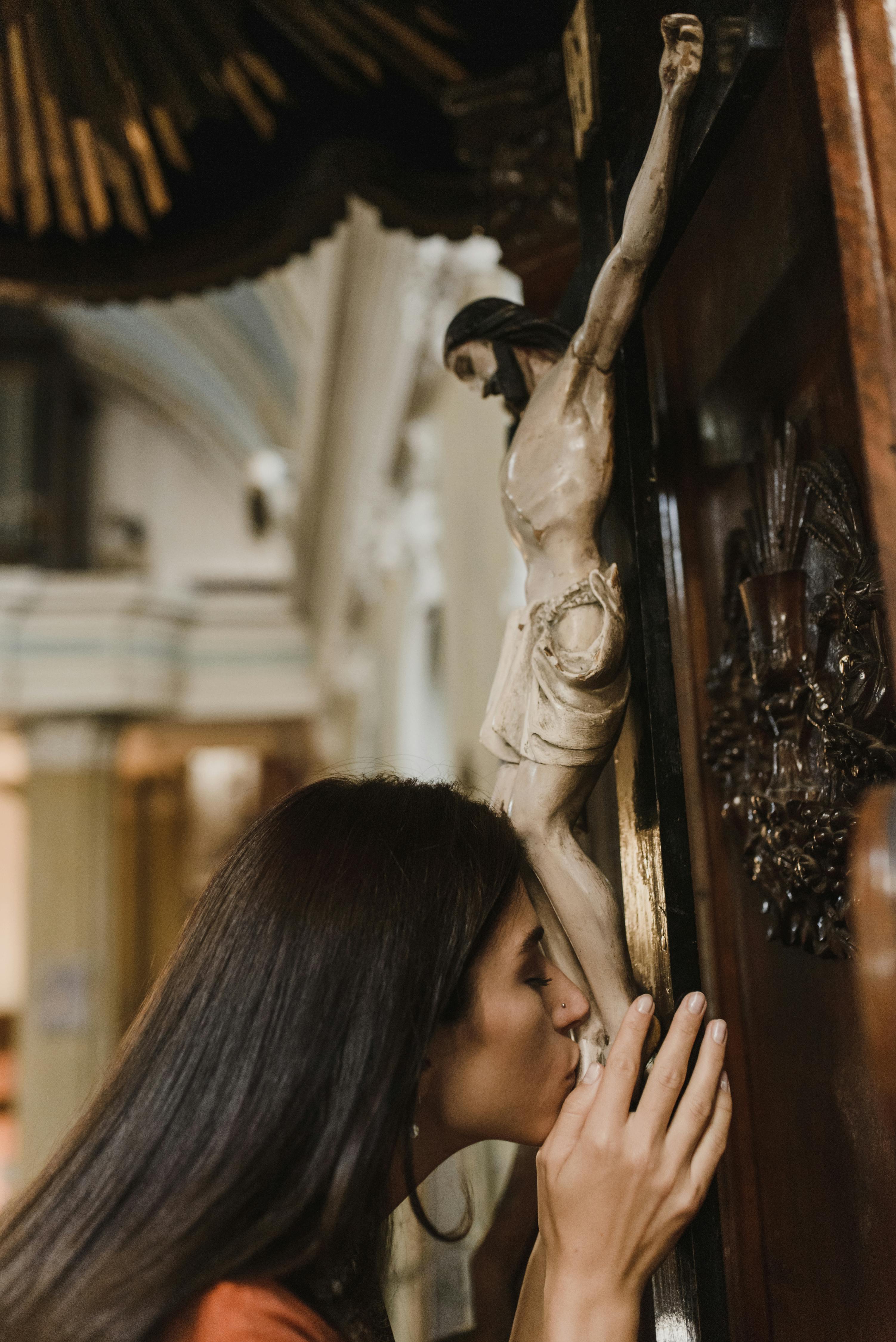
One thing that strikes me is how they ripped off Jesus’ clothes before crucifying Him. He was a person who respected Himself and others. He was a man of modesty, and they left him hanging there naked. I can’t imagine the humiliation He suffered, all for us… at the same time it makes me think of how our society no longer values ​​modesty, and it makes me even more sad.

We should dress appropriately according to where we are, but we should always have respect for ourselves and others. A phrase from the philosopher Confucius comes to mind: “Respect yourself so that others will respect you.” Also, the second great commandment our Lord gave us is “Love your neighbor as yourself.” Many phrases from different sources could be analyzed more deeply regarding this topic and conclusions can be drawn.

I once heard a priest say in one of his homilies, “Girls come to church naked and boys come in shorts and sandals!” It may sound harsh, but the reality is that we should go to church to seek God, not a boyfriend or more attention by wearing short clothing, showing more skin than necessary or very short or tight shirts that leave nothing to the imagination. I have even noticed how uncomfortable many girls are, pulling down on their skirts or shorts to see if they will stretch any further.

Although all this may be controversial, it seems to me like sin at its finest. I understand that we are all different and not everyone has the same intentions, but dressing like this can be a temptation for those around them and a poor example for younger girls.

If we leave the church environment and go out into the “real world”, many will view them as sexual objects, a means to satisfy the flesh. There are many wolves in sheep’s clothing looking for their prey. So if you dress provocatively at church what can you expect when you are out in the world? Do not wait until you have a horrible experience to dress modestly. Although many think they know everything when they are young, they should listen to their closest relatives and true friends who will tell them the truth.

In conclusion, love yourselves more, so that others will respect you. Look at Jesus Christ on the cross to realize what true love is. He will help you love yourself more and find pure love with someone who loves you for who you are, not because you have shown off parts of your body. May the outpouring of grace from Christ’s Passion and Death help us to love God and love ourselves more.

Contact the author


Hoy empezamos la semana santa, cuando caminamos al lado de Jesús en el camino largo y doloroso de su pasión, muerte y resurrección. Hoy leemos el relato de la pasión, y puede parecer tan largo como esta semana. No nos gusta enfrentar lo duro, lo difícil y lo doloroso, pero si queremos crecer, es necesario. 

Una cosa que me llama la atención es cómo le arrancaron la ropa a Jesus antes de crucificarlo. Era una persona que se respetaba a sí mismo y a los demás. Era un hombre de pudor, y lo dejaron colgado allí desnudo. No puedo imaginarme la humillación que sufrió, todo por nosotros… y al mismo tiempo me hace pensar en cómo nuestra sociedad ya no valora la modestia, y me pone mas triste aun. 

El modo de vestir debe ser de acuerdo al lugar donde vayas, pero siempre debe haber un respeto para uno mismo y los demás. Una frase del filósofo Confucius “Respetate a ti mismo para que los demás te respeten” me viene a la mente. El segundo gran mandamiento que el Señor nos dio dice “Ama a tu prójimo cómo a ti mismo”. Varias frases al respeto se podrían analizar más profundamente para sacar conclusiones. 

Había un sacerdote que decía en una de sus homilías, “¡Las chicas vienen calatas a la iglesia y los chicos vienen en short y sandalias!” Puede sonar rudo, pero la realidad es que ir a la iglesia es ir en busca de Dios y no buscar novio o estar llamando la atención con la vestimenta corta,  mostrando la pierna más de lo debido o polos muy cortos o pegados que no dejan nada a la imaginación. Hasta se ve a muchas chicas incómodas para sentarse o pararse, y se están jalando la faldita o short para abajo para ver si se estira más. 

Aunque puede ser controversial todo esto, pareciera el pecado en su máxima expresión.  Entiendo que no todos son iguales y tampoco todos tienen las mismas intenciones, pero vistiéndose así se vuelven tentación para los que están alrededor y mal ejemplo para las niñas más jóvenes. 

Si salimos del ambiente de la iglesia, y salimos al “mundo real”, muchos van a verlas cómo un objeto sexual, el cual el objetivo es satisfacer la carne. Hay muchos lobos vestidos de corderos buscando su presa para saciarse. Entonces si en la iglesia se visten “llamativamente” ¿qué se puede esperar cuando están afuera? No esperen tener esa horrible experiencia para recién volver a la modestia. Aunque muchas piensan saberlo todo por la juventud, hay que escuchar a los familiares más cercanos y los verdaderos amigos que te dicen la verdad. 

En conclusión, ámense más, para que los demás te respeten. Miren a Jesucristo en la cruz y dense cuenta de lo que es el verdadero amor de Dios. Él te ayudará a quererte más y a encontrar el amor verdadero en una persona que te ame por quien eres, no porque has demostrado partes de tu cuerpo. Que la efusión de gracia de la pasión y muerte de Cristo nos ayude a amar a Dios y a amarnos más a nosotros mismos.

Comunicarse con el autor

Felix Urcia was born in Lima, Peru. He emigrated the U.S. to complete his college degree in Computer Science at Northern Kentucky University. He is passionate about his faith, his family, education and soccer. When he is not homeschooling and caring for his young children he enjoys personal programing projects and sports analysis. He and wife live in a small town in Western Michigan where they enjoy spending time with their five children.


Feature Image Credit: Joice Kelly, unsplash.com/photos/man-in-orange-long-sleeve-shirt-sitting-on-gray-couch-rXrMy7mXUEs

The views and opinions expressed in the Inspiration Daily blog are solely those of the original authors and contributors. These views and opinions do not necessarily represent those of Diocesan, the Diocesan staff, or other contributors to this blog.

Anyway / De todos modos

Do you ever feel that some people are only with you in the happy moments of your journey but disappear when things get hard? I’m sure we’ve all felt that way. However, I wonder how many of us have felt the opposite? I have. Some people have come into my life during the difficult times because they want to see me fail. Now, that’s a hard pill to swallow. 

I notice this same concept in today’s Gospel. When Mary and Martha were mourning, many members of their community came to help and grieve with them. However, some of them came with ulterior motives; when they saw that Jesus was there, they went right to the Pharisees to turn him in. In this situation, Jesus knew who was there to mourn, and who was there only for their own benefit and to gossip. Even so, Jesus didn’t withhold His miracle of love for Lazarus because he understood deeply something Saint Mother Teresa so eloquently put into words:  

“People are often unreasonable, illogical, and self-centered; forgive them anyway. 

If you are kind, people may accuse you of selfish, ulterior motives; be kind anyway. 

If you are successful, you will win some false friends and some true enemies; succeed anyway.

If you are honest and frank, people may cheat you; be honest and frank anyway. 

What you spend years building, someone could destroy overnight; build anyway. 

If you find serenity and happiness, they may be jealous; be happy anyway. 

The good you do today, people will often forget tomorrow; do good anyway. 

Give the world the best you have, and it may never be enough; give the world the best you’ve got anyway. 

You see, in the final analysis, it is between you and God; it was never between you and them anyway.”

Contact the author


¿Alguna vez has sentido que algunas personas solo te acompañan durante los momentos felices de tu viaje, pero desaparecen cuando las cosas se ponen difíciles? Estoy segura de que todos nos hemos sentido así. Sin embargo, me pregunto cuántos de nosotros hemos sentido lo contrario. Yo sí. Algunas personas han llegado a mi vida durante los momentos difíciles porque quieren verme fracasar. Y esto es muy difícil de aceptar.

Noto este mismo concepto en el Evangelio de hoy. Cuando María y Marta estaban de luto, muchos miembros de su comunidad vinieron a ayudar y a llorar con ellas. Sin embargo, algunos de ellos vinieron con motivos ulteriores; cuando vieron que Jesús estaba allí, fueron directamente a los fariseos para denunciarlo. En esta situación, Jesús sabía quién estaba allí para llorar y quién estaba allí solo para su propio beneficio y para chismear. Aun así, Jesús no retuvo su milagro de amor por Lázaro porque comprendió profundamente algo que la Santa Madre Teresa expresó con tanta elocuencia:

“La gente a menudo es irrazonable, ilógica y egocéntrica; Perdónalos de todas formas.

Si eres amable, la gente puede acusarte del egoísmo, de motivos ulteriores; sé amable de todos modos.

Si tienes éxito, ganarás algunos falsos amigos y algunos verdaderos enemigos; ten éxito de todos modos.

Si eres honesto y franco, la gente puede engañarte; sé honesto y franco de todos modos.

Lo que pasaste años construyendo, alguien podría destruirlo de la noche a la mañana; construye de todos modos.

Si encuentras serenidad y felicidad, pueden estar celosos; sé feliz de todos modos.

El bien que haces hoy, la gente a menudo lo olvidará mañana; haz el bien de todos modos.

Dale al mundo lo mejor que tienes, y puede que nunca sea suficiente; dale al mundo lo mejor que tienes de todos modos.

Porque en el análisis final es entre tú y Dios; nunca fue entre tú y ellos de todos modos”.

Comunicarse con la autora

Lily, age 23, is a Michigan native and cradle Catholic who has spent most of her life exploring her own reasons to embrace her faith fully. She attended Franciscan University of Steubenville, where she discovered the beauty of her personal relationship with Christ and the Church. After college, she worked in Montessori Education for three years and recently transitioned to nannying. She is excitedly preparing for marriage in May 2025 and spends most of her time reading, wedding planning, and enjoying her dog and family!


Feature Image Credit: Daniel Reche, pexels.com/photo/photo-of-woman-raising-both-hands-1556691/

The views and opinions expressed in the Inspiration Daily blog are solely those of the original authors and contributors. These views and opinions do not necessarily represent those of Diocesan, the Diocesan staff, or other contributors to this blog.

Resistance / Resistencia

In today’s Gospel, Jesus is in Jerusalem and His opponents try to stone Him. They question, challenge, and accuse Him. Although there is an abundance of evidence that Jesus is the Son of God, they resist. No amount of evidence will open their minds and hearts to the Truth. 

Emile Zola was like that. He was an avowed atheist who lived at the time of Mary’s appearance at Lourdes. He traveled there with a woman who was sick and disfigured, expecting to prove that it was a hoax, but the woman was completely healed before his eyes. Like the opponents of Jesus, Zola, in the hardness of his heart, refused to believe. 

Sometimes, in the hardness of our hearts, we refuse to believe what we read and hear in the Bible and what we see with our own eyes. We believe in God, but what about His teachings? Are there truths that we resist? Perhaps one of the following misbeliefs hits home:

Do I believe that God loves me, even when I am a hot mess? I can accept that he loves all of humanity, but I resist the idea of his particular love for me. 

Do I believe in miracles? I can accept the miracles described in the Gospels, but I am skeptical about miracles happening today, in my life. I think miracles ended with the death of the apostles. 

Do I believe in the gravity of sin? I can accept that historically evil people will go to Hell, but I think if I’m a good person as I define it, I’m going to Heaven. My sins don’t have much impact on my eternal soul. 

Do I believe that Hell is real? I can accept that Jesus spoke about Hell, but that was only to scare us into being good. Hell is empty. 

In each of these areas, we resist truth by believing the lies of Satan. There is abundant evidence supporting the truth, yet we believe the lie. 

Where is the evidence? 1) In Scripture: Jesus tells us the truth. 2) In our personal experiences: God is active in our lives and the lives of those we love. 3) In the witness of others we know: people share their testimony about God’s miracles in their lives. 

If the evidence is there, why do we resist? It could be because we’ve been conditioned that way: If I have not known love, I might believe I am unloveable. It could be because we don’t want to change: I like my life as it is and to believe in more would require me to change. It might be wishful thinking: everyone goes to Heaven so I’ll live my life as I like. 

The Psalmist tells us, “ I called upon the Lord and…he heard my voice”. Spend time in prayer today calling upon the Lord. Ask Him to show you where your heart is hardened and give Him permission to heal you. End the resistance and embrace the abundant life Jesus promised. 

Contact the author


En el Evangelio de hoy, Jesús está en Jerusalén y sus adversarios intentan apedrearlo. Lo cuestionan, lo retan y lo acusan. Aunque hay abundante evidencia de que Jesús es el Hijo de Dios, se resisten. Ninguna cantidad de evidencia abrirá sus mentes y corazones a la Verdad.

Emile Zola era así. Era un ateo declarado que vivió en la época de la aparición de María en Lourdes. Viajó allí con una mujer enferma y desfigurada, esperando demostrar que era un engaño, pero la mujer fue completamente sanada ante sus ojos. Al igual que los adversarios de Jesús, Zola, en la dureza de su corazón, se negó a creer.

A veces, en la dureza de nuestro corazón, nos negamos a creer lo que leemos y escuchamos en la Biblia y lo que vemos con nuestros propios ojos. Creemos en Dios, pero ¿creemos en sus enseñanzas? ¿Hay verdades a las que nos resistimos? Tal vez una de las siguientes creencias erróneas te llame la atención:

¿Creo que Dios me ama, incluso cuando soy un desastre? Puedo aceptar que ama a toda la humanidad, pero me resisto a la idea de su amor particular por mí.

¿Creo en los milagros? Puedo aceptar los milagros descritos en los Evangelios, pero soy escéptico sobre los milagros que ocurren hoy en mi vida. Creo que los milagros terminaron con la muerte de los apóstoles.

¿Creo en la gravedad del pecado? Puedo aceptar que las personas históricamente malvadas irán al infierno, pero creo que si soy una buena persona, como yo lo defino, iré al cielo. Mis pecados no tienen mucho impacto en mi alma eterna.

¿Creo que el infierno es real? Puedo aceptar que Jesús habló sobre el infierno, pero eso fue solo para asustarnos para que seamos buenos. El infierno está vacío.

En cada una de estas áreas, nos resistimos a la verdad al creer las mentiras de Satanás. Hay abundante evidencia que respalda la verdad, pero creemos la mentira.

¿Dónde está la evidencia? 1) En las Escrituras: Jesús nos dice la verdad. 2) En nuestras experiencias personales: Dios está activo en nuestras vidas y en las vidas de aquellos que amamos. 3) En el testimonio de otros que conocemos: las personas comparten su testimonio sobre los milagros de Dios en sus vidas.

Si la evidencia está ahí, ¿por qué nos resistimos? Puede ser porque hemos sido condicionados de esa manera: si no he conocido el amor, podría creer que no soy digno de ser amado. Puede ser porque no queremos cambiar: me gusta mi vida como es y creer en más requeriría que cambie. Puede ser una ilusión: todos van al cielo, así que viviré mi vida como me guste.

El salmista nos dice: “Invoqué al Señor… él escuchó mi voz”. Dedica tiempo hoy a orar e invocar al Señor. Pídele que te muestre dónde está endurecido tu corazón y dale permiso para sanarte. Ponle fin a la resistencia y abraza la vida abundante que Jesús prometió.

Comunicarse con la autora

Colleen Orchanian is a podcaster, blogger, and spiritual director who desires to help others have a more profound encounter with God. She is the author of three books: Nearer My God to Thee, Times of Grace, and Lingering with God. Her podcast is Food for Thought (Spiritually Speaking). You can learn more at ColleenOrchanian.com.

Feature Image Credit: svklimkin, unsplash.com/photos/woman-punching-the-air-during-golden-hour-Md449nTVCXk

The views and opinions expressed in the Inspiration Daily blog are solely those of the original authors and contributors. These views and opinions do not necessarily represent those of Diocesan, the Diocesan staff, or other contributors to this blog.